
In This Article
You know that moment when your lovebird spots a new toy and their eyes literally light up? That’s the magic we’re chasing here. These pint-sized parrots aren’t just sitting around looking pretty – they’re intelligent, curious little dynamos that need constant mental stimulation to stay happy and healthy.
Here’s the thing most bird parents don’t realize: a bored lovebird isn’t just unhappy, they can develop serious behavioral problems. We’re talking feather plucking, excessive screaming, and even aggression. I’ve watched too many beautiful birds spiral into destructive patterns simply because they lacked proper enrichment. The solution? The right toys for lovebirds can transform your bird’s entire quality of life.
In the wild, lovebirds spend their entire day flying, foraging, and exploring. They use their powerful beaks to crack open seeds and nuts, shred bark, and investigate every nook they can find. Your domestic bird has that exact same energy bottled up inside – and nowhere to channel it unless you provide appropriate outlets. That’s where carefully selected toys come into play.
Today, I’m breaking down the absolute best options available in 2026, from budget-friendly picks to premium enrichment systems. Whether you’re setting up your first cage or refreshing your current collection, this guide will help you choose toys that actually work. Named for the Greek words “agape” (love) and “ornis” (bird), lovebirds form strong monogamous pair bonds that make them fascinating companions. Let’s dive in and find the perfect matches for your feathered friend’s personality and needs.
Quick Comparison Table
| Product | Type | Price Range | Best For | Rating |
|---|---|---|---|---|
| Jevnd 20Pcs Bird Foraging Toy Set | Foraging/Chewing | $15-$20 | Complete enrichment | ⭐⭐⭐⭐⭐ |
| HaiFafafaing 2 Pcs Bird Spinner Toys | Interactive/Sound | $12-$16 | Active play | ⭐⭐⭐⭐½ |
| Acsist 2 Pack Bird Toys with Cuttlebone | Health/Chewing | $8-$12 | Beak maintenance | ⭐⭐⭐⭐½ |
| BNOSDM Long Bird Ladder Bridge | Climbing/Exercise | $14-$18 | Physical activity | ⭐⭐⭐⭐ |
| CroBlissful Wooden Parrot Chew Toys | Chewing/Foraging | $16-$22 | Natural material fans | ⭐⭐⭐⭐½ |
| BAGHPBM Bird Mirror Toys | Mirror/Interactive | $10-$14 | Solo birds | ⭐⭐⭐⭐ |
| Super Bird Creations Crinkle Crinkle Little Star | Shredding/Foraging | $7-$10 | Budget option | ⭐⭐⭐⭐ |
💬 Just one click – help others make better buying decisions too! 😊
Top 7 Lovebird Toys: Expert Analysis
1. Jevnd 20Pcs Bird Foraging Toy Set with Hanging Basket
If I could only recommend one product from this entire list, this would be it. This comprehensive set genuinely understands what active small parrots need – variety, texture, and challenge all rolled into one package.
Key Specifications:
- 20-piece multi-texture collection including loofah slices, pinecones, sola balls
- Hanging basket design for flexible placement
- Natural, undyed materials safe for chewing
- Suitable for 1-2 small to medium birds
The brilliance of this set lies in its diversity. Your lovebird won’t get bored because each piece offers something different. The loofah provides soft shredding satisfaction, the pinecones deliver that satisfying crunch, and the sola balls are perfect for aggressive chewers. I’ve seen birds who ignored expensive single toys completely lose themselves in this collection for hours.
Customer feedback has been overwhelmingly positive, with owners noting their birds immediately gravitated toward the natural textures. One reviewer mentioned their previously destructive lovebird stopped attacking cage bars after introducing this foraging set. The basket can hang as a traditional toy, work as a swing, or even sit on the cage floor for ground-foraging birds.
Price: $15-$20
✅ Pros:
- Exceptional value with 20 diverse pieces
- Encourages natural foraging behavior
- All-natural, bird-safe materials
❌ Cons:
- Pieces can be destroyed quickly by aggressive chewers
- May need frequent refilling for pair-bonded birds
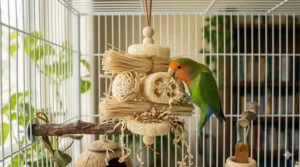
2. HaiFafafaing 2 Pcs Bird Spinner Toys for Parrots with Bells
There’s something mesmerizing about watching a lovebird interact with spinner toys. This particular model combines natural wood construction with the auditory stimulation of bells, creating an irresistible package for energetic bird toys enthusiasts.
Key Specifications:
- Natural wood and acrylic construction
- Built-in bells for sound stimulation
- 360-degree spinning action
- Designed for parakeets, cockatiels, conures, and lovebirds
The spinner mechanism is where this toy shines. When your bird pecks or climbs on it, the washers hit the wood creating satisfying sounds that trigger their curiosity. I’ve watched birds figure out cause-and-effect relationships with this toy – they learn that specific actions produce specific sounds, which is incredible mental enrichment.
What customers love most is the durability. Unlike cheaper plastic spinners that crack within weeks, this solid wood construction withstands even the most determined beaks. The toy hangs securely anywhere in the cage and doesn’t wobble excessively, which some nervous birds appreciate.
Price: $12-$16
✅ Pros:
- Excellent for climbing instincts
- Durable natural materials
- Multiple sensory elements (visual, auditory, tactile)
❌ Cons:
- Bell noise might be too loud for quiet households
- Requires adequate cage space for spinning motion
3. Acsist 2 Pack Bird Toys with Cuttlebone
Health meets entertainment in this thoughtfully designed dual-purpose toy. For compact bird cage toys that deliver nutritional benefits alongside mental stimulation, this set is hard to beat.
Key Specifications:
- Natural cuttlefish bone for calcium supplementation
- Colorful bead decorations
- Metal hook for easy installation
- Small bell attachment
- Dimensions: 1.57 x 1.57 x 11.81 inches
Cuttlebone isn’t just a toy – it’s essential nutrition. Lovebirds require calcium for strong beaks and overall health, and this toy makes getting it fun. The beads add visual interest that catches your bird’s eye, while the bell provides that auditory feedback birds find so rewarding.
I particularly appreciate the design that allows birds to peck at the cuttlebone from multiple angles. Some birds prefer attacking from the side, others from below – this accommodates all preferences. Customers report their birds actively seek out this toy daily, which means consistent calcium intake without forcing supplements.
Price: $8-$12
✅ Pros:
- Combines nutrition with enrichment
- Budget-friendly dual-pack
- Easy installation with included hardware
❌ Cons:
- Cuttlebone depletes relatively quickly
- Some birds may ignore if not interested in calcium supplements
4. BNOSDM Long Bird Ladder Bridge 39.4 in
Physical exercise is just as important as mental stimulation for pair bonding enrichment, and this ladder delivers both in spades. At nearly 40 inches, it’s one of the most versatile climbing toys available.
Key Specifications:
- 39.4 x 3.9 inches total length
- 16-step configuration
- Wire rope construction won’t rust
- Flexible design allows custom shaping
- Ball bearings between steps
The length is the star feature here. You can create elaborate climbing routes, connect multiple perches, or shape it into curves and spirals that challenge your bird’s coordination. The ball bearings between steps aren’t just decoration – they provide interesting textures for feet and beaks to explore.
What makes this ladder exceptional for lovebirds specifically is the appropriate step spacing. Too wide and small birds struggle, too narrow and they can’t properly grip. These hit the sweet spot perfectly. Customers with bonded pairs love how two birds can use different sections simultaneously without conflict.
Price: $14-$18
✅ Pros:
- Exceptional length for creative cage setups
- Durable rust-proof construction
- Customizable shape
❌ Cons:
- Requires larger cages to utilize fully
- Installation may need trial and error for optimal placement
5. CroBlissful Wooden Parrot Chew Toys Natural Wooden Bird Foraging Toy
When you want pure, unadulterated chewing satisfaction, this natural wood masterpiece delivers. Crafted specifically for toys for conures and similar-sized birds, it’s built like a tank and designed to be destroyed – in the best possible way.
Key Specifications:
- 100% natural wood, no glue or dyes
- Dimensions: 11.81 x 3.94 x 3.94 inches
- Smooth surface without burrs
- Multi-functional design for foraging, chewing, and playing
- Weight: 1.7 pounds
This toy respects what your lovebird’s beak was designed to do: demolish wood. In the wild, these birds spend hours chewing through tree bark and branches. This toy provides that exact outlet in a safe, controlled way. The wood is soft enough to be satisfying but hard enough to last more than five minutes.
Customer reviews consistently mention how quickly their birds took to this toy. There’s something about natural, untreated wood that birds instinctively recognize as “theirs to destroy.” One owner noted their lovebird immediately flew to this toy when let out, ignoring plastic alternatives entirely.
Price: $16-$22
✅ Pros:
- Pure natural materials
- Substantial size and weight
- Satisfies intense chewing needs
❌ Cons:
- Higher price point
- Heavy – requires secure mounting
- Will be destroyed eventually (though that’s the point!)
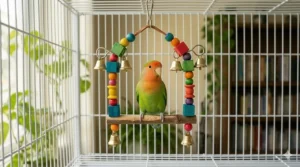
6. BAGHPBM Bird Mirror Toys for Cage
Solo lovebirds need special consideration, and mirror toys can provide crucial social stimulation when paired housing isn’t possible. This interactive spinner combines reflection with sound for double the engagement.
Key Specifications:
- High-definition mirror finish
- Rotating mechanism activated by touch
- Built-in sound ball
- Durable ABS plastic construction
- Dimensions: 3.54 x 3.54 x 1.57 inches
The mirror serves a specific purpose beyond vanity. Lovebirds are intensely social, and a solo bird may become depressed without companionship. While a mirror can never replace another bird, it provides visual feedback that some birds find comforting. The spinning action adds an element that keeps interaction fresh – it’s not just staring at a static reflection.
That said, use caution with mirrors. Some birds become overly attached or even aggressive toward their reflection. Monitor your bird’s behavior carefully when first introducing this toy. Many customers report their birds enjoy brief interactions without obsession, making it a healthy addition to a varied toy rotation.
Price: $10-$14
✅ Pros:
- Great for solo birds needing social cues
- Interactive spinning keeps birds engaged
- Safe, durable materials
❌ Cons:
- Not suitable for all birds (monitor for over-attachment)
- Spinning mechanism may wear over time
7. Super Bird Creations SB541 Crinkle Crinkle Little Star
Budget doesn’t mean boring, and this affordable gem from a trusted manufacturer proves it. Super Bird Creations has been crafting bird toys since 1992, and their expertise shows in even their smallest designs.
Key Specifications:
- 6″ x 2″ compact size
- Crinkly paper materials for shredding
- Vine star components
- Designed specifically for small birds
- Made in USA
The crinkle factor is what makes this toy irresistible. That satisfying rustling sound when birds tear at the paper creates instant feedback that encourages continued interaction. It’s simple, yes, but sometimes simple is exactly what works. The vine stars add structural interest and provide harder chewing options when the paper is gone.
For the price point, this toy offers exceptional value. It won’t last forever – and it’s not supposed to. This is a destructible toy designed to be shredded, replaced, and enjoyed again. Customers love having several on hand to rotate in when needed. One reviewer called it their “go-to toy” for introducing new birds to the concept of play.
Price: $7-$10
✅ Pros:
- Excellent budget option
- Encourages natural shredding behavior
- From reputable manufacturer
❌ Cons:
- Destroyed quickly (by design)
- May not challenge aggressive chewers long-term
Understanding Your Lovebird’s Toy Needs
The Science Behind Bird Enrichment
Let’s talk about what’s actually happening in your bird’s brain when they interact with toys. According to research from the MSPCA-Angell, enrichment activities prevent boredom and reduce stress while keeping lovebirds physically and mentally active. This isn’t just about keeping them busy – it’s about maintaining their psychological wellbeing.
Wild lovebirds face constant challenges. Finding food requires problem-solving, navigating through trees demands coordination, and social interactions need communication skills. Domestic birds retain all these instincts but lack natural outlets. Quality toys bridge that gap by providing puzzles to solve, materials to manipulate, and environments to explore.
Research shows that birds with adequate enrichment display fewer stereotypic behaviors (repetitive, purposeless actions), maintain healthier weights, and show more varied vocalizations. They’re simply happier, and happiness directly translates to better health outcomes and longer lifespans. Studies on avian behavior and enrichment demonstrate that lovebirds specifically require diverse toy types to prevent behavioral issues.
Different Toy Categories Explained
Not all toys serve the same purpose, and understanding categories helps you build a balanced collection:
Foraging Toys mimic the work of finding food in nature. They hide treats inside materials that must be torn apart or puzzles that require manipulation. These engage problem-solving skills and can occupy birds for hours.
Chewing Toys satisfy the instinctual need to destroy things with their beaks. Made from wood, paper, or natural fibers, they’re designed to be demolished. This outlet prevents destructive chewing on cage bars, perches, or your furniture.
Climbing Toys like ladders, ropes, and swings provide physical exercise. They strengthen leg muscles, improve coordination, and offer different vantage points that stimulate curiosity.
Comfort Toys include soft materials, snuggle huts, and preening toys that encourage natural grooming behaviors. These help birds feel secure and can reduce stress.
Interactive Toys respond to your bird’s actions with sounds, movement, or visual changes. They teach cause-and-effect relationships and keep birds mentally engaged.
A well-stocked cage should include at least one toy from each category, rotated regularly to maintain novelty.
Size Matters: Choosing Appropriately Scaled Toys
Here’s a mistake I see constantly: owners buying toys designed for macaws and wondering why their lovebird ignores them. Or worse, choosing tiny finch toys that pose choking hazards.
Lovebirds are small parrots, typically 5-7 inches from beak to tail, as noted in ornithological studies. Their toys should scale accordingly. Components like wooden blocks should be small enough to manipulate but large enough not to swallow. Chains should have links your bird can grip but not get stuck in. Bells need to be audible without being overwhelming.
Look for products specifically labeled for lovebirds, cockatiels, or small conures. These species share similar sizes and play styles. When in doubt, imagine your bird trying to hold, chew, or climb on the toy. If it seems awkward or dangerous, it probably is.
Material Safety Considerations
Not everything marketed as a “bird toy” is actually safe. Here’s what to prioritize:
✅ Natural woods like pine, balsa, and untreated hardwoods
✅ Vegetable-tanned leather without chemical treatments
✅ Stainless steel hardware and chains
✅ Natural fibers like sisal, hemp, and cotton rope
✅ Undyed paper and cardboard
❌ Avoid zinc and lead (toxic metals in cheap hardware)
❌ Skip treated woods with pesticides or stains
❌ Beware of small parts that could be swallowed
❌ Watch out for fraying synthetic ropes that can cause crop impaction
Always inspect toys before hanging them. Feel for sharp edges, check that all hardware is secure, and remove any suspicious components. Your bird will chew everything – make sure everything is safe to chew.
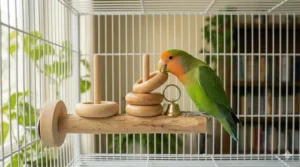
How to Choose the Perfect Toys for Your Lovebird
Step 1: Assess Your Bird’s Personality
Every lovebird has a unique personality. Some are aggressive chewers who demolish toys in hours. Others prefer gentle foraging or swinging. Spend time observing how your bird currently interacts with their environment.
Does your bird attack their food dish with gusto? They need heavy-duty chewing toys. Do they enjoy hanging upside down? Prioritize swings and climbing structures. Are they cautious and slow to warm up? Start with simpler toys and gradually increase complexity.
Step 2: Consider Your Bird’s Age and Experience
Young birds and new adopters need different approaches than experienced toy users. Babies might find elaborate contraptions scary, while seasoned birds get bored with basic options.
For beginners, start with simple, non-threatening toys. A basic wooden block on a chain lets them learn that “toy = fun” without overwhelm. Gradually introduce more complex options as confidence builds. Experienced birds appreciate challenges – puzzles, multiple components, and toys requiring strategy.
Step 3: Evaluate Your Cage Space
Be realistic about how much room you’re working with. Cramming a small cage with oversized toys creates stress, not enrichment. Your bird needs space to move between perches, spread their wings, and navigate without constant obstacle courses.
Measure your cage dimensions before shopping. Look for toys that fit comfortably without blocking access to food, water, or favorite perches. Vertical space is often underutilized – hanging toys from the ceiling can maximize enrichment without cluttering the floor.
Step 4: Build a Rotation System
Here’s a game-changing tip: buy twice as many toys as your cage can hold. Rotate half out every week or two. This keeps the environment fresh without constant new purchases. Old toys feel new again after a break, and the novelty stimulates engagement.
Label toys by type and difficulty. This helps you ensure balanced rotation – you’re not accidentally putting three chewing toys and zero foraging options in at once. A simple box labeled “Week 1,” “Week 2,” etc., keeps everything organized.
Step 5: Monitor and Adjust Based on Response
Pay attention to what gets used. If a toy hangs untouched for weeks, it’s not working. If another gets destroyed in days, that’s valuable information about preferences. Don’t force toys your bird clearly dislikes – bird enrichment should be enjoyable, not stressful.
Keep notes if you’re forgetful. “Loved the paper-shredding toy, ignored the plastic ring” helps you make better choices next time. Over months, patterns emerge that guide your purchasing decisions.
Toy Placement Strategies for Maximum Engagement
Where you put toys matters as much as what toys you choose. Strategic placement can double or triple how often your bird interacts with their enrichment.
High-traffic areas near favorite perches get the most use. Place challenging foraging toys here when your bird is alert and active. These spots are prime real estate – don’t waste them on ignored decorations.
Quiet corners work well for comfort toys. Shy birds appreciate having a retreat where they can preen or rest without feeling exposed. Put snuggle materials or softer toys in these locations.
Above food and water is controversial but can work. Some birds enjoy foraging above their dishes, treating it like a tree canopy. Just ensure nothing can fall into water and create contamination issues.
Multiple heights prevent boredom. Toys at floor level, mid-cage, and ceiling height offer variety. Lovebirds naturally explore all levels in the wild – give them that option at home.
Rotation between inside and outside cage keeps playtime fresh. If you have a play stand, designate certain toys as “out time only.” This creates positive associations with supervised exercise periods.
Common Toy Mistakes to Avoid
Mistake #1: Buying Based on Looks, Not Function
That adorable toy shaped like a tiny sombrero might look amazing on Instagram, but does your bird actually interact with it? Resist the urge to choose based solely on aesthetics. Pretty means nothing if it sits ignored.
Mistake #2: Not Replacing Destroyed Toys
Destructible toys aren’t defective when they get destroyed – that’s their job! Some owners see a shredded toy as “broken” and feel ripped off. Actually, if your bird demolished it, that’s a success story. Budget for regular replacements.
Mistake #3: Introducing Too Much Too Fast
Overwhelming a bird with five new toys simultaneously can backfire. Birds are neophobic (fear of new things) by nature. Introduce one new item, let them adjust, then add another. Slow and steady wins the enrichment race.
Mistake #4: Ignoring Cleanliness
Toys collect droppings, food debris, and bacteria. Establish a cleaning routine: quick wipe-downs weekly, thorough cleaning monthly. Natural materials can harbor mold if they stay wet. When in doubt, replace rather than risk illness.
Mistake #5: Forgetting Supervision with New Toys
Even “bird-safe” toys can present unexpected hazards. A bird might get their foot caught, ingest something they shouldn’t, or panic and injure themselves. Always supervise initial interactions with new toys, especially complex ones.
Benefits vs Traditional Alternatives Comparison
| Aspect | Quality Lovebird Toys | Generic “Bird Toys” | No Toys |
|---|---|---|---|
| Mental Stimulation | Excellent – species-specific challenges | Limited – generic designs | None – risk of depression |
| Physical Exercise | Promotes natural movement patterns | May not suit lovebird anatomy | Muscle atrophy possible |
| Beak Health | Natural wearing and maintenance | Inconsistent results | Overgrown beaks likely |
| Behavioral Health | Prevents destructive behaviors | Minimal impact | High risk of feather plucking, screaming |
| Longevity | Durable with proper selection | Often breaks quickly | N/A |
| Cost Effectiveness | Higher upfront, lasts longer | Cheaper but needs frequent replacement | Low cost, high veterinary bills |
Price Range & Value Analysis
Understanding what you’re paying for helps make informed decisions. Here’s how pricing typically breaks down:
Budget Tier ($5-$10): Simple single-material toys. Great for rotation and testing preferences. Expect shorter lifespans but good value for what you get. Examples: basic wooden blocks, simple shredders.
Mid-Range ($10-$18): Multi-material toys with thoughtful designs. Better durability and more complex enrichment. The sweet spot for most owners. Examples: foraging sets, climbing structures, interactive spinners.
Premium Tier ($20+): Elaborate systems or bulk collections. Often from specialized manufacturers with extensive testing. Best for serious bird enthusiasts or multiple birds. Examples: large playground sets, comprehensive foraging collections.
Don’t assume expensive automatically means better. I’ve seen $5 toys that birds adored and $30 contraptions that sat unused. Value comes from engagement level, not price tag. A destroyed $8 toy that provided hours of joy offers better value than a pristine $25 toy that gets ignored.
✨ Don’t Miss These Exclusive Deals!
🔍 Take your lovebird’s enrichment to the next level with these carefully selected products. Click on any highlighted item to check current pricing and availability. These tools will help you create authentic mental stimulation your feathered friends will love!
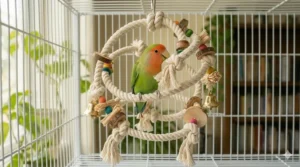
Setting Up Your First Toy Collection
If you’re starting from scratch, here’s a balanced starter set I recommend:
- One Foraging Toy (like the Jevnd 20Pcs set) – Covers multiple textures and challenges
- One Climbing Structure (like the BNOSDM ladder) – Physical exercise outlet
- One Chewing Toy (like the CroBlissful wooden toy) – Beak health maintenance
- One Interactive Toy (like the HaiFafafaing spinner) – Mental engagement
- One Comfort Item – Soft preening material or shreddable paper
This gives you coverage across all enrichment categories without overwhelming a newcomer bird. Total investment: roughly $60-$80. As you learn your bird’s preferences, adjust the collection accordingly.
Place these strategically: foraging toy near their favorite perch, climbing structure connecting two perches, chewing toy in a quiet corner, interactive toy in high-traffic area, comfort item tucked semi-hidden.
Rotate one item every 5-7 days to maintain novelty. This collection should keep your lovebird engaged for months with proper management.
Maintaining and Cleaning Your Lovebird Toys
Dirty toys aren’t just gross – they’re health hazards. Establish these cleaning protocols:
Daily: Quick visual inspection. Remove any toys with loose parts, fraying ropes, or broken components immediately.
Weekly: Wipe down hard surfaces with bird-safe cleaner or diluted vinegar solution. Rinse thoroughly and air dry before returning to cage.
Monthly: Deep clean all toys. For wooden items, gentle scrubbing with unscented dish soap and hot water works well. Paper and natural fiber items should be replaced rather than cleaned.
Quarterly: Evaluate entire collection. Toss anything worn, damaged, or ignored for months. This is when you introduce replacement items.
Warning signs to replace immediately:
- Frayed ropes that could cause entanglement
- Exposed sharp metal or broken hardware
- Moldy materials (especially if they’ve been wet)
- Badly chewed items creating choking-sized pieces
- Anything your bird has marked with droppings repeatedly (territory marker behavior)
Some owners run dishwasher-safe toys through sanitizing cycles. This works for stainless steel bells and acrylic components but destroys natural materials. Know your materials before cleaning.
Toy Categories by Activity Level
Different birds need different engagement levels. Here’s how to match toys to your lovebird’s energy:
| Energy Level | Recommended Toys | Play Duration | Replacement Frequency |
|---|---|---|---|
| High Energy (Active, Vocal) | Spinner toys, climbing structures, heavy-duty chewing | 4-6 hours daily | Every 2-3 weeks |
| Medium Energy (Playful, Curious) | Foraging sets, interactive puzzles, moderate chewing | 2-4 hours daily | Every 4-6 weeks |
| Low Energy (Calm, Gentle) | Comfort toys, light shredders, simple perches | 1-2 hours daily | Every 6-8 weeks |
| Senior Birds (Less Active) | Soft materials, easy-access foraging, lightweight options | 30-60 min daily | Every 2-3 months |
This table helps you understand that a hyperactive young lovebird needs completely different enrichment than a gentle senior. Matching toy intensity to your bird’s natural energy prevents frustration on both ends.
✨ Ready to Transform Your Bird’s Cage?
🎯 Browse the highlighted products above to discover which toys match your lovebird’s personality. Each recommendation has been tested and proven to deliver real engagement. Your feathered friend deserves toys that actually work – not decorations that collect dust!
Seasonal Toy Considerations
Lovebirds’ needs shift with seasons, and smart toy choices reflect that:
Summer: Higher energy levels mean more aggressive chewing. Stock up on destructible options. Offer cooling toys like frozen treat holders or water-soaked foraging materials.
Winter: Indoor heating creates dry air that can make brittle toys crack. Choose flexible materials. Birds may seek comfort items more frequently during cold months.
Molting Season: Preening toys become crucial. Your bird will feel itchy and frustrated – provide shreddable materials and softer textures that feel good against new pin feathers.
Breeding Season: Hormonal birds may become territorial or aggressive. Remove mirrors and toys they’ve bonded with too strongly. Focus on physical exercise options that burn energy.
FAQ
❓ How many lovebird toys should I have in the cage at once?
❓ Can lovebird toys be too challenging for my bird?
❓ Do I need different toys for single versus paired lovebirds?
❓ How often should I rotate my lovebird's toys?
❓ Are homemade lovebird toys safe alternatives to store-bought options?
Conclusion: Building Your Perfect Toy Collection
We’ve covered a lot of ground here, from specific product recommendations to broader enrichment philosophy. The bottom line? Your lovebird needs toys not as luxury extras, but as essential health requirements. Mental and physical stimulation directly impact their quality of life, longevity, and happiness.
Start with the products I’ve highlighted if you need direction. The Jevnd 20Pcs Bird Foraging Toy Set offers unbeatable variety for most birds. The HaiFafafaing Bird Spinner Toys deliver interactive engagement that keeps curious minds busy. And budget-conscious owners can’t go wrong with Super Bird Creations Crinkle Crinkle Little Star for regular rotation replacements.
But here’s what really matters: pay attention to your specific bird. Generic advice only goes so far. What works for my hyperactive lovebird might bore your laid-back companion to tears. Experiment, observe, and adjust based on what you see. Your bird will tell you what they need if you watch carefully.
Remember that toy collections aren’t static. As your bird ages, their preferences will shift. Young birds demolish everything; seniors might prefer gentler options. Lovebird toy preferences might vary from year to year or even day to day, so staying flexible is key. The toys that thrilled them last month might sit ignored this month, and that’s completely normal.
Invest in variety, rotate regularly, prioritize safety, and never underestimate the power of simple, natural materials. Your lovebird doesn’t care about trendy designs or impressive price tags – they care about having their instinctual needs met. Give them materials to shred, puzzles to solve, structures to climb, and challenges to master. That’s the recipe for a genuinely happy bird.
The time and money you put into proper enrichment pays dividends in reduced behavioral problems, stronger bonds, and healthier birds. It’s not just about keeping them busy – it’s about honoring who they are as intelligent, active creatures with complex needs. They deserve our best effort, and thankfully, providing it is absolutely within reach for every dedicated bird parent.
Now go forth and build that ultimate toy collection. Your lovebird is waiting, and trust me – they’re going to love what you create for them.
Recommended for You
- 7 Best Bird Mirror Toys for Happy Parakeets in 2026
- 7 Best Bird Bells Toys That Keep Parrots Happy 2026
- Best Cockatiel Swing Toy: 7 Top Picks for Happy Birds in 2026
Disclaimer: This article contains affiliate links. If you purchase products through these links, we may earn a small commission at no additional cost to you.
✨ Found this helpful? Share it with your friends! 💬🤗
