
In This Article
Bringing home your first parakeet should be exciting, not overwhelming. Yet most new budgie owners make the same rookie mistake—buying a cage and then scrambling to figure out what else they need. I’ve watched countless people return to pet stores three or four times in the first week, picking up forgotten perches, toys, and feeding cups they didn’t realize were essential.
A parakeet starter cage kit solves this headache by bundling everything your new feathered friend needs in one package. These complete setups include the cage, perches, feeding dishes, toys, and often extras like cuttlebones and mineral blocks. The real value isn’t just convenience—it’s knowing that someone with bird expertise curated the combination so you’re not accidentally pairing incompatible accessories or missing critical safety features.
What most buyers overlook is that not all starter kits are created equal. The $40 budget option might technically include “everything,” but those flimsy plastic perches can cause foot problems, and undersized cages restrict natural movement. Meanwhile, premium kits in the $120-$180 range often provide barely more cage space than mid-range options—you’re paying for brand recognition, not better living conditions for your bird. The sweet spot for most first-time parakeet owners sits between $60-$100, where you get quality construction, proper bar spacing, and accessories that won’t need replacing within the first month.
In this guide, I’ll walk you through seven real-world parakeet starter kits currently available on Amazon, breaking down what makes each one worth considering and which buyer profile they suit best. Whether you’re setting up for a single budgie or a pair, working with limited space, or planning to upgrade later, you’ll find the practical details that product descriptions never mention.
Quick Comparison: Top Parakeet Starter Cage Kits at a Glance
| Product | Cage Size | Bar Spacing | Best For | Price Range |
|---|---|---|---|---|
| Prevue Pet Products Round Roof Kit | 13.5″L × 11″W × 16″H | 3/8″ | Single budgie, budget-conscious | $50-$70 |
| Capuca Small Bird Travel Kit | 11.8″L × 9″D × 15.3″H | 0.4″ | Temporary/travel use | $35-$50 |
| Yaheetech 52″ Flight Cage | 18″L × 18″W × 52″H | 3/8″ | Pair of parakeets, upgrade-minded | $80-$110 |
| VEVOR 30″ Flight Cage | 29.9″L × 18.1″W × 17.9″H | 0.4″ | Horizontal flight space priority | $70-$95 |
| Vision L01 Bird Home | 29.5″L × 15.7″W × 20.5″H | 0.4″ | Mess containment, modern design | $90-$120 |
| Penn-Plax Parakeet Kit | 14″L × 11″W × 14.5″H | 3/8″ | Complete beginner package | $55-$75 |
| Yaheetech 40″ Open-Top Cage | 18″L × 18″W × 40″H | 3/8″ | Out-of-cage playtime focus | $75-$100 |
Looking at this comparison, the Yaheetech 52″ Flight Cage delivers the best overall value for parakeet owners planning to keep their birds long-term—the extra vertical space justifies the slightly higher price, and the included stand means you won’t be buying furniture separately. Budget buyers should note that the Prevue Round Roof Kit provides adequate starter housing but will likely require a cage upgrade within 12-18 months as your bird matures. For those prioritizing mess control (a real concern in apartments or small spaces), the Vision L01 unique design actually catches most seed hulls and feather debris before they hit your floor—that alone can be worth the premium for some households.
💬 Just one click — help others make better buying decisions too! 😊
✨ Don’t Miss These Exclusive Deals!
Top 7 Parakeet Starter Cage Kits: Expert Analysis
1. Prevue Pet Products Round Roof Parakeet Starter Kit
The Prevue Pet Products Round Roof Kit represents what I call the “functional minimum”—everything a single parakeet needs to settle in comfortably without unnecessary frills. The 13.5″ × 11″ × 16″ dimensions with 3/8” bar spacing meet basic safety standards for budgies, though the compact footprint means this works best as a first home for young birds or a temporary setup while you research larger options.
What the spec sheet won’t tell you is that the included accessories actually matter more than the cage size here. You get two hooded plastic cups (smart design—keeps food dry), two plastic perches, a cuttlebone, wooden ladder, mineral treat, and rotating toy selection. In my experience, the plastic perches are the weak link—they’re smooth and don’t encourage natural foot exercise the way textured wood perches do. Plan to swap those out for natural wood dowels within the first month. The removable bottom tray uses a grill design that keeps droppings separate from your bird’s living space, making daily cleaning genuinely quick.
Customer feedback consistently praises the assembly simplicity (under 15 minutes for most buyers) but notes the cage feels “starter-sized” after about six months. One recurring theme: this kit shines for people adopting their first budgie and genuinely uncertain if bird ownership will stick. If it does, you upgrade. If not, you haven’t invested $150 in a deluxe setup you’re now trying to resell.
Pros:
✅ Complete accessory bundle—truly ready from day one
✅ Budget-friendly entry point for first-time owners
✅ Easy cleaning with pullout tray and removable grill
Cons:
❌ Limited space for active adult parakeets
❌ Plastic perches need immediate replacement for foot health
This kit typically runs in the $50-$70 range depending on seasonal sales. Best for: cautious first-time bird owners who want to start small and scale up based on their parakeet’s personality and their own commitment level.
2. Capuca Small Bird Travel Cage Starter Kit
The Capuca Small Bird Travel Kit fills a specific niche that most new owners don’t realize they need—portability. Measuring just 11.8″L × 9″D × 15.3″H and weighing barely 2.3 pounds, this kit was designed for vet visits, short-term quarantine, or bringing your budgie to a second home. The 0.4″ wire spacing keeps even small parakeets secure, and the metal hooks let you hang the cage from a tree branch during supervised outdoor time.
Here’s what makes this different from a permanent home setup: the lightweight carbon steel construction means the bars flex slightly under pressure. That’s fine for a three-hour car ride to the vet but concerning for a bird that spends eight hours daily climbing and hanging. The slide-out tray cleaning system works identically to full-size models, and the dual feeder doors let you refresh food without opening the main cage—a genuinely useful feature when your bird is already stressed from travel.
What customers appreciate most is the dual-purpose value. You buy this as your “travel cage” but it doubles as a hospital cage if your parakeet gets sick and needs isolation from cage-mates, or as a temporary introduction space when adding a second bird to your household. Multiple buyers mention using it as their budgie’s “outdoor daytime cage” on nice weather days, providing fresh air exposure without the risk of full free-flight.
Pros:
✅ Ultra-portable for vet visits and travel
✅ Doubles as quarantine/hospital cage
✅ Metal hooks for outdoor hanging options
Cons:
❌ Too small for permanent housing
❌ Lightweight construction less stable for daily climbing
Typically priced in the $35-$50 range. Best for: owners who already have a primary cage and need a secondary setup for specific scenarios, or apartment dwellers who want a legitimate outdoor cage option for balcony time.
3. Yaheetech 52″ Flight Cage with Rolling Stand
Now we’re talking serious parakeet real estate. The Yaheetech 52″ Flight Cage provides 18″L × 18″W × 52″H of vertical space on a wheeled stand—exactly what budgies need since they’re climbers more than horizontal fliers in captivity. The 3/8″ bar spacing is parakeet-specific (wider spacing risks head entrapment), and the powder-coated metal construction means this cage will outlast most of the budget options by years.
What sets this apart is the rolling stand with storage shelf underneath. That shelf becomes invaluable for storing bulk food, toys, cleaning supplies—all the parakeet ownership essentials you’ll accumulate. The four caster wheels mean you can relocate the entire setup for cleaning behind furniture or moving it to different rooms as your schedule changes. I’ve seen owners position this near a window during morning hours for natural light, then wheel it to a quieter room before evening screen time.
The pullout tray slides out smoothly even when fully loaded with debris, and the metal grate separates your bird from droppings effectively. Multiple customers note the cage doors are large enough to reach all corners for cleaning and toy installation without contorting your arm at weird angles—sounds minor until you’re doing it three times weekly. The included perches and feeders are functional but basic; most owners upgrade to natural wood branches within the first month for better foot health.
Customer feedback splits into two camps: those thrilled with the height for their energetic parakeets, and those who underestimated the 52-inch total height and struggle to fit it under low ceilings or in standard-height rooms with ceiling fans. Measure your space carefully—this cage needs about 56 inches of clearance when you factor in the stand.
Pros:
✅ Exceptional vertical space for climbing budgies
✅ Rolling stand makes relocation effortless
✅ Storage shelf for supplies keeps everything organized
Cons:
❌ Requires significant floor and vertical space
❌ Assembly takes 30-45 minutes (multiple panels)
Priced around $80-$110 depending on finish color (black costs slightly more than white). Best for: owners committed to providing long-term housing for one or two parakeets, with adequate room height and floor space.
4. VEVOR 30″ Flight Cage with Slide-Out Tray
The VEVOR 30″ Flight Cage takes a different approach—prioritizing horizontal space over vertical. At 29.9″L × 18.1″W × 17.9″H, this cage gives your parakeet room to make short flights from perch to perch, more closely mimicking how budgies move in their natural Australian habitat where they fly between shrubs rather than climbing tall trees.
The 0.4″ grid spacing (slightly larger than some competitors but still safe for parakeets) uses high-strength carbon steel with waterproof coating. What I appreciate about VEVOR’s construction is the reinforced corners—budget cages often have weak points where top and bottom panels connect, but this model uses metal corner braces that eliminate flexing. The cage door includes a safety latch design specifically engineered for clever birds; parakeets are notorious for learning to open simple hook closures, but VEVOR’s dual-action latch requires simultaneous motions most budgies can’t master.
The stackable design is where this gets interesting for owners planning to keep multiple birds. You can purchase two units and stack them vertically with the included conversion kit, creating a divided space for breeding pairs or introducing new birds slowly. The removable tray features waterproof paint coating, making cleanup genuinely simple—dried droppings wipe away instead of requiring scraping like untreated metal trays.
Customer reviews consistently praise the value proposition—you’re getting flight-cage-quality construction at starter-kit prices. The trade-off is minimal included accessories; VEVOR provides basic perches and feeding boxes but expects you to supplement with additional toys and enrichment items. Think of this as buying the foundation and customizing the interior yourself.
Pros:
✅ Horizontal flight space encourages natural movement
✅ Stackable design for multi-bird households
✅ Reinforced construction outlasts budget competitors
Cons:
❌ Limited included accessories compared to “complete” kits
❌ Horizontal footprint requires more floor space than vertical cages
Typically priced $70-$95. Best for: intermediate owners who understand their bird’s specific needs and prefer to choose accessories themselves, or those planning multi-bird setups.
5. Vision L01 Bird Home for Parakeets
The Vision L01 represents a completely different design philosophy. At 29.5″L × 15.7″W × 20.5″H, it uses a deep-base architecture where the bottom 8 inches is solid plastic rather than wire—drastically reducing the mess that escapes traditional cages. If you’ve ever swept up seed hulls three times daily, you’ll understand why this matters. The design creates air currents that push debris downward into the contained base rather than outward onto your floor.
What makes Vision cages unique is the exterior access to food and water cups. Small doors on the outside let you refill dishes without opening the main cage or disturbing your bird—reducing stress during daily maintenance and preventing escape attempts from particularly bold parakeets. The multi-grip perches included with Vision cages have varying diameters (10mm, 12mm, 15mm) which actually promotes foot health by giving your bird different gripping exercises, similar to how wild budgies land on branches of different thicknesses.
The knock-down assembly uses a click-snap system that genuinely takes five minutes to set up. No tools required, no confusing diagrams—the panels lock together intuitively. For renters who move frequently or people who need to disassemble the cage for deep cleaning, this is a legitimate advantage. The modern aesthetic with clear panels makes this cage look like furniture rather than a utilitarian bird enclosure—some buyers specifically chose Vision for this reason when cage placement in living areas was non-negotiable.
The price point sits higher than wire-only cages, and you’re paying partially for the patented design and partially for legitimate mess reduction. Customer feedback from apartment dwellers is overwhelmingly positive; those with houses and dedicated bird rooms are more mixed since the mess-containment benefit matters less when you have a designated cleanup space.
Pros:
✅ Superior mess containment with deep-base design
✅ Exterior food/water access reduces bird stress
✅ Tool-free assembly in under 10 minutes
Cons:
❌ Higher price point than traditional wire cages
❌ Solid base reduces airflow compared to all-wire designs
Priced in the $90-$120 range. Best for: apartment dwellers, neat-focused households, or owners placing cages in high-visibility living areas where aesthetics matter.
6. Penn-Plax Parakeet Starter Kit
The Penn-Plax Parakeet Kit delivers what I call “curated completeness”—not just a cage with basic accessories, but a thoughtfully selected bundle that addresses first-week parakeet ownership challenges. The 14″L × 11″W × 14.5″H white birdcage includes wood perches (finally, not plastic!), food and water cups, a play swing, mineral treat, cuttlebone, cement perch, perch covers, and a kabob toy. That’s more accessory variety than most competitors provide.
What Penn-Plax understands is that new budgie owners don’t just need “a perch”—they need texture variety for foot health. The cement perch helps naturally trim nails and beak, the wood perches provide comfortable roosting spots, and the perch covers add soft landing areas. The kabob toy introduces foraging behavior early, encouraging your parakeet to work for treats rather than just eating from a dish—important enrichment for preventing boredom behaviors.
The 3/4″ bar spacing is slightly wider than the 3/8” standard—perfectly safe for parakeets but worth noting if you plan to house very young chicks. The impact-resistant plastic base features high sides that do control seed scatter better than low-profile models. The swing-out front door includes dual locks, addressing the “my budgie figured out how to escape” problem that plagues single-latch designs.
Customer reviews praise the value-for-money proposition; at this price point, you’re getting accessories that would cost $30-$40 if purchased separately. The critique is predictable—the cage itself is starter-sized, suitable for roughly 12-18 months before most parakeets benefit from more space. Think of this as the “complete semester abroad” pack—everything you need for a defined period, knowing you’ll invest in permanent setup later.
Pros:
✅ Most comprehensive accessory bundle in this comparison
✅ Natural wood perches from day one
✅ Dual-lock door prevents escape artists
Cons:
❌ Compact cage size limits long-term use
❌ 3/4″ bar spacing wider than ideal for very young chicks
Typically priced $55-$75. Best for: brand-new bird owners who want every possible essential included upfront, planning to upgrade cage size within 1-2 years.
7. Yaheetech 40″ Open-Top Bird Cage
The Yaheetech 40″ Open-Top Cage introduces the play-top concept—the cage roof opens and latches securely in the up position, creating a built-in playground area where your parakeet can spend supervised time outside the main enclosure without actually leaving the cage structure. At 18″L × 18″W × 40″H total (28″ cage height, 12″ stand), this provides excellent vertical space plus the bonus top area.
The open-top design transforms how you interact with your bird. Instead of reaching into the cage to retrieve your parakeet for handling time, you simply open the top, let them climb up, and work with them in that neutral space. Many parakeets feel less territorial about the top area than the interior of their cage, making step-up training and socialization smoother. The included dowel perch secures across the open top, giving your budgie a designated landing spot.
The powder-coated steel construction with oxidant-resistant finish means this cage handles humidity from bird baths and daily misting without developing rust spots—a common complaint with budget cages after 6-12 months of use. The 360-degree caster wheels lock in place, preventing unwanted rolling during vigorous play sessions. The slide-out tray and bottom grate separate cleanly for washing, and the feeder doors provide exterior access for food/water replenishment.
Customer feedback highlights two distinct use patterns: owners using the open-top feature daily for socialization, and those who keep it latched closed most of the time and essentially have a standard cage with unused bonus space. If you’re unsure about your bird’s tameness or your commitment to daily handling, this might be overengineering the setup. But for hands-on owners who view their parakeet as an interactive companion rather than display pet, the open-top architecture becomes genuinely valuable.
Pros:
✅ Play-top design encourages out-of-cage interaction
✅ Versatile—works as standard cage or socialization station
✅ Rust-resistant finish for long-term durability
Cons:
❌ Open-top feature requires supervision (not for unsupervised free time)
❌ Taller overall height limits placement options
Priced around $75-$100. Best for: owners committed to regular handling and training sessions, with space for taller cage configurations.
Setting Up Your Parakeet Starter Cage Kit: First 48 Hours Matter
Most new parakeet owners focus entirely on where to position the cage and completely miss the setup details that actually impact their bird’s stress levels during those critical first days. Here’s what the instruction manuals don’t tell you.
Pre-Assembly Prep (Do This Before Your Bird Arrives)
Assemble the cage 24-48 hours before bringing your parakeet home. This gives you time to fix any issues without a stressed bird watching you fumble with panels. Position the assembled cage at its permanent location—moving it repeatedly in the first week confuses birds trying to orient themselves in a new environment.
Stock the food and water dishes but don’t fill them yet. Run the dishes through a dishwasher cycle or hand-wash with bird-safe soap to remove manufacturing residue. Yes, even brand-new dishes need this step—metal shavings and plastic coating chemicals can contaminate food.
The Perch Placement Strategy Everyone Gets Wrong
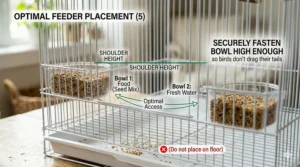
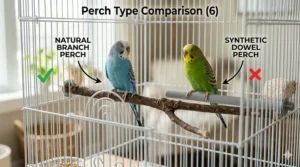
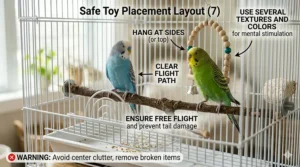
Don’t install perches at the exact heights they show in product photos. Parakeets need staggered levels—place the highest perch near (but not directly against) the cage top where your bird will roost at night, a mid-level perch near food/water for comfortable eating, and a low perch for daytime lounging. Never position perches directly above food dishes; droppings will contaminate meals.
Natural wood branches should be your first upgrade, but don’t remove the included perches immediately. Let your bird acclimate for 3-5 days before making changes—too many simultaneous adjustments increase stress.
Food and Water During Transition
Fill water dishes only halfway initially. Parakeets in new environments sometimes thrash nervously and can drown in deep water while disoriented. Increase water depth gradually over the first week.
Stick with whatever food the breeder or pet store was feeding for the first 72 hours, even if you plan to transition to better nutrition later. Dietary changes compound relocation stress. After three days, begin mixing small amounts of your chosen pellet blend with the familiar food, gradually shifting the ratio over 10-14 days.
The Covering Debate: To Cover or Not to Cover
Covering the cage at night isn’t mandatory, but it does provide defined day/night cycles that help regulate parakeet sleep patterns. Use a breathable fabric (thin cotton sheet, purpose-made cage cover) never solid plastic or heavy blankets that restrict airflow. Cover three sides, leaving the front partially open for air circulation.
During the first week, cover the cage whenever household activity becomes chaotic—unexpected guests, loud TV volume, energetic children playing nearby. This gives your parakeet a “safe zone” to retreat to while learning which household sounds are normal versus threatening.
Beginner vs. Advanced Parakeet Owners: Matching Kit to Experience Level
The starter kit you need depends heavily on whether this is your first bird ever or your fifth parakeet. Here’s how to match products to experience levels.
True Beginners (Never Owned a Bird)
If you’re entering bird ownership with zero experience, prioritize complete bundles like the Penn-Plax Kit or Prevue Round Roof Kit. Yes, experienced owners will tell you to buy a bigger cage and customize accessories—ignore them. You don’t yet know if your parakeet will love mirrors or destroy them, prefer swings or ignore them, need multiple cuttlebones or never touch them.
Complete starter kits let you learn your bird’s preferences without $100 invested in accessories that collect dust. After 3-6 months, you’ll understand what YOUR specific parakeet enjoys, and then you can invest in targeted upgrades. The cage will likely need replacing around the 12-18 month mark anyway as your bird matures and needs more space.
Budget $60-$85 for the initial kit, then plan an additional $30-$50 for first-year upgrades (natural wood perches, rotating toy selection, potential cage size increase).
Intermediate Owners (Previous Small Pet Experience)
If you’ve successfully kept hamsters, guinea pigs, or other small animals, you understand daily cleaning routines and the importance of environmental enrichment—you just haven’t worked with birds specifically. You’re ready for something like the VEVOR 30″ Flight Cage or Yaheetech 40″ Open-Top that provides solid foundations but expects you to source enrichment yourself.
Skip the toy-heavy bundles and invest in cage quality instead. You already know how to research species-specific needs, identify safe materials, and create engaging environments. The $70-$100 price point gets you durable construction that won’t need replacing, and you’ll supplement with researched accessories that match your parakeet’s personality.
Your learning curve is behavioral, not logistical—understanding parakeet body language, vocalizations, and social needs rather than figuring out basic cage maintenance.
Advanced Owners (Multiple Birds or Species Experience)
If you’re adding a parakeet to a household that already includes cockatiels, conures, or other birds, you’re shopping for specific features rather than complete packages. The Vision L01 makes sense if mess containment is your priority across multiple cages. The Yaheetech 52″ Flight Cage works if you’re converting a bird room and need stackable, expandable options.
At this level, you’re likely modifying whatever kit you buy anyway—replacing perches immediately, removing or adding dividers, installing specialized feeding systems. Focus on structural quality and design features (accessibility, cleaning efficiency, integration with existing setups) rather than what accessories come bundled.
Common Mistakes When Buying Your First Parakeet Cage Kit
New owners make predictable errors that experienced bird keepers spot instantly. Here are the ones that actually impact your parakeet’s wellbeing, plus the mistakes that just waste money.
Mistake #1: Choosing Cages Based on Aesthetics Over Function
That decorative cage shaped like a Victorian mansion looks adorable in your living room. It’s also probably a nightmare to clean, impossible to arrange perches properly in, and features bar spacing too wide for safe parakeet housing. Cages are safety equipment first, furniture second.
The fix: Choose based on dimensions, bar spacing, and door size. Worry about color after verifying those fundamentals. Most quality cages come in black or white anyway—pick whichever matches your room and move on.
Mistake #2: Believing “Starter Kit” Means “Everything Forever”
Marketing departments love the word “complete,” but starter kits are exactly that—starters. The Prevue Round Roof Kit works beautifully for a 3-month-old budgie settling into a new home. That same bird at 10 months needs twice the space and triple the enrichment. Buying a starter kit knowing you’ll upgrade isn’t a mistake. Buying a starter kit expecting it to last 10 years is wishful thinking.
The fix: Budget for the starter kit plus a future cage upgrade. Either plan a larger purchase in 12-18 months, or skip the starter kit entirely and invest in a properly-sized cage like the Yaheetech 52″ Flight Cage from day one.
Mistake #3: Ignoring Bar Spacing Because “It Looks Secure”
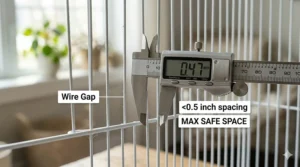
Bar spacing over 1/2 inch allows parakeet heads to slip through bars—and potentially get trapped if their body doesn’t fit through the same gap. Cute small bird? Needs small bar spacing. This isn’t negotiable.
The fix: Verify bar spacing is 3/8″ to 1/2″ maximum. If the product listing doesn’t specify, don’t buy it. Manufacturers that skip this critical spec often cut other safety corners too.
Mistake #4: Buying Based on “Number of Included Accessories” Without Quality Assessment
Ten toys sound better than three toys, right? Not when those ten toys are all mirror-based (many parakeets become aggressive toward their reflection) or made with easily-destroyed plastic that creates choking hazards. The Penn-Plax Kit includes fewer pieces than some competitors but focuses on functional essentials rather than quantity.
The fix: Read what accessories are included, not how many. Prioritize kits with natural wood perches, cuttlebones, and food dishes over those with six plastic toys.
Mistake #5: Positioning Cages in “Pretty” Locations That Stress Birds
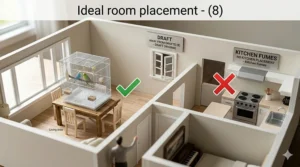
The cage looks perfect centered in front of your floor-to-ceiling windows where it gets amazing natural light! It also exposes your parakeet to temperature swings, predator bird sightings through the glass, and excessive direct sunlight that overheats the cage. Birds need stable environments more than they need views.
The fix: Position cages against solid walls (not windows), away from drafty areas (doors, AC vents, windows), in rooms with consistent temperature and moderate foot traffic. Boring locations make happy birds.
Parakeet Starter Cage Kit vs. Individual Components: True Cost Comparison
Let’s break down whether starter kits actually save money or if you’re paying a convenience premium.
The Itemized Approach: Buying Separately
If you purchase each component individually to replicate a typical starter kit:
- Cage (14″×11″×16″, wire construction): $35-$45
- Natural wood perches (3 pieces, varying diameters): $12-$18
- Food and water dishes (2 of each, stainless steel): $15-$20
- Cuttlebone and mineral block: $5-$8
- Toys (basic ladder, swing, chew toys – 4 pieces): $20-$30
- Bottom grate and slide-out tray (if not included with cage): $10-$15
Total individual purchase: $97-$136
The Starter Kit Approach
Comparable starter kit (Penn-Plax or Prevue Round Roof): $55-$75
Savings: $22-$61 depending on component quality
Here’s where it gets interesting though. Those individual components are YOUR choice—you select stainless steel dishes over plastic, natural wood over dowels, species-appropriate toys over generic options. The starter kit makes those choices for you, and not always optimally.
The Real-World Hybrid Strategy
Smart buyers do this: Purchase a mid-range starter kit ($60-$75), then immediately upgrade 2-3 components:
- Replace plastic perches with natural wood branches: $12-$15
- Add one high-quality foraging toy: $8-$12
- Upgrade to ceramic or stainless steel dishes: $10-$15
Total hybrid cost: $90-$117
You’re still below the fully-individualized approach, you’ve addressed the weakest components in most starter kits, and you’ve avoided decision paralysis trying to select from 47 different toy options when you don’t yet know what your bird prefers.
How to Choose the Right Size Parakeet Cage Kit
Cage size guidelines online are frustratingly vague—”as large as possible” doesn’t help when you’re comparing specific products. Here’s the practical framework.
The Minimum Survivable Space
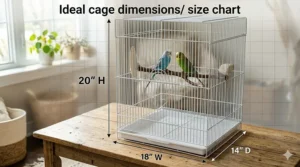
Absolute minimum for a single parakeet: 18″ wide × 18″ deep × 18″ tall. This provides enough room for two perches at different heights and short flights between them. Anything smaller restricts natural movement and increases feather-damaging behaviors. The Prevue Round Roof Kit at 13.5″×11″×16″ technically falls below this minimum—acceptable as a temporary setup (first 3-6 months) but genuinely too small for long-term housing.
The Comfortable Single-Bird Standard
For one adult parakeet’s permanent home: 24″ wide × 18″ deep × 24″ tall minimum. This allows proper wing stretching, multiple perch arrangements, and enough space that your bird isn’t constantly navigating around toys and dishes. The VEVOR 30″ Flight Cage exceeds this in horizontal space, while the Yaheetech 40″ Open-Top exceeds it vertically.
The Pair or Breeder Configuration
Two parakeets need approximately 1.5× the space of a single bird, not 2×—they’ll share perching areas and don’t both fly simultaneously constantly. Aim for 30″ wide × 20″ deep × 30″ tall minimum. The Yaheetech 52″ Flight Cage works perfectly here; the extra vertical space lets you install perches at multiple levels so birds can maintain individual territories when desired.
The “They Grow Up” Factor Everyone Forgets
That 8-week-old budgie you just brought home weighs about 25 grams. At 8 months, they’ll weigh 40-45 grams and have full adult plumage. Their cage needs don’t change much, but their activity level and territorial instincts increase dramatically. A cage that looked spacious with a quiet juvenile feels cramped with an energetic adult performing their full behavioral repertoire.
This is why starter kits measuring 14″×11″×14″ work initially but need replacing—they’re sized for juvenile budgies, not mature adults.
Bar Spacing: The Non-Negotiable Number
Regardless of overall cage size, parakeet bar spacing must stay between 3/8″ and 1/2″. Smaller spacing makes climbing awkward. Larger spacing risks head entrapment. This is why you can’t just buy a “small parrot cage” and assume it’s suitable—cockatiels and conures need 1/2″ to 3/4″ spacing, which is unsafe for parakeets.
Accessories Every Parakeet Starter Cage Kit Should Include (And Ones You’ll Need to Buy Separately)
Let’s separate the genuinely essential from the nice-to-have extras.
Non-Negotiable Essentials
These items must be present on day one:
- Food and water dishes – Minimum two of each (one backup set for cleaning rotation). Stainless steel or ceramic beats plastic for durability and hygiene.
- Multiple perches at varying heights – At least three perches in different diameters (10mm, 12mm, 15mm range) to exercise foot muscles properly. Natural wood branches beat uniform dowels.
- Cuttlebone or mineral block – Critical for calcium and beak maintenance. These wear down and need monthly replacement.
- Bottom grate – Separates droppings from living space, preventing fecal contact with food or your bird’s feet.
- Removable tray – Makes daily waste removal possible without dismantling the entire cage.
Most starter kits include all five essentials. Where they differ is quality—plastic perches vs. wood, small shallow dishes vs. properly-sized bowls, flimsy trays vs. reinforced metal.
The “Week Two” Additions
These items dramatically improve your parakeet’s quality of life but aren’t day-one critical:
- Foraging toys – Kabobs, treat balls, puzzle boxes that make birds work for food. Prevents boredom and mimics natural seed-searching behavior.
- Swings and ladders – Movement enrichment. Parakeets love swings; position them away from food/water to avoid contamination from waste.
- Bath house – Some budgies love bathing, others prefer being misted. Provide options.
- Additional perches – Natural branches from safe wood species (apple, willow, pine) with bark intact provide texture variety and chewing opportunities.
The Penn-Plax Kit excels here—it includes foraging toys and multiple perch types from the start. The VEVOR Flight Cage expects you to source these yourself.
Items You’ll Buy Separately (No Kit Includes These)
- Replacement perches – Budget $10-$15 monthly for natural wood branches as birds chew through them.
- Rotating toy selection – Parakeets get bored with the same toys. Budget $15-$25 quarterly for new enrichment options.
- Cage liner or substrate – Paper towels, newspaper, or commercial bird cage liner for the bottom tray. Budget $10-$15 monthly.
- Cleaning supplies – Bird-safe disinfectant, scrub brushes, waste scoops. One-time purchase around $20-$30.
Parakeet Care Beyond the Cage: What Starter Kits Don’t Tell You
The cage kit handles housing—it doesn’t address the other 80% of parakeet ownership. Here’s what you need to know before your bird arrives.
The Social Requirement No Product Listing Mentions
Parakeets are flock animals. In Australia, they travel in groups of dozens to hundreds. A single caged budgie experiences constant low-level stress from isolation—it’s biologically unnatural for them. Your options: get two parakeets instead of one, or commit to 2-3 hours daily of direct human interaction to serve as flock replacement.
If you choose two birds, same-gender pairs work best for non-breeding situations. Two males typically bond easily. Two females can be territorial but usually settle after 2-3 weeks. Male-female pairs will almost certainly breed if provided nesting opportunities—be prepared for that responsibility or keep genders separate.
Dietary Reality vs. Marketing
The seed mix that comes with starter kits is nutritionally incomplete. Wild parakeets eat seeds, yes—but also grasses, vegetables, fruits, and insects. The modern pellet-based diet (60-70% pellets, 20-30% fresh foods, 10% treats including seeds) better replicates nutritional needs.
Transitioning from seeds to pellets takes 2-3 weeks. Mix small amounts of pellets with familiar seeds, gradually shifting the ratio. Don’t remove seed completely until you verify your bird is eating pellets—stubborn individuals will starve themselves rather than try new foods. According to PetMD, proper parakeet nutrition requires balanced pellet formulations that address the micronutrient deficiencies in seed-only diets.
Veterinary Care Isn’t Optional
Parakeets hide illness until they’re critically sick—it’s a survival instinct from their prey species status. By the time you notice symptoms, the condition is often advanced. Annual wellness checks with an avian vet (not a general practice vet—specialized avian vets have different training) catch problems early.
Budget $150-$250 for initial wellness exam and baseline bloodwork, then $75-$125 for annual checkups. Emergency vet visits can run $300-$800. Pet insurance for birds exists but has limited coverage; most owners maintain emergency funds instead.
The Time Commitment Reality Check
Daily tasks: 15-20 minutes for food/water refresh, waste tray cleaning, general health observation.
Weekly tasks: 30-45 minutes for cage deep-cleaning, perch washing, toy rotation.
Monthly tasks: 1-2 hours for full cage disinfection, accessory replacement, health assessment.
If that time commitment feels overwhelming, parakeets might not fit your current lifestyle. They’re lower-maintenance than dogs but significantly more involved than fish.
FAQ: Your Parakeet Starter Cage Kit Questions Answered
❓ How long can I keep a parakeet in a starter cage kit before upgrading?
❓ Can I use a parakeet starter cage kit for two budgies?
❓ What's the difference between parakeet cages and budgie cages?
❓ How often do I need to replace accessories in a parakeet starter kit?
❓ Do parakeet starter cage kits work for other small birds like finches or canaries?
Conclusion: The Best Parakeet Starter Cage Kit for Your Situation
After analyzing seven complete setups, here’s the honest bottom line: the “best” parakeet starter cage kit depends entirely on your specific circumstances, not universal rankings.
If you’re a first-time bird owner genuinely uncertain about long-term commitment, the Prevue Pet Products Round Roof Kit or Penn-Plax Parakeet Kit make perfect sense. You get everything needed to start successfully without overspending on space your bird might not need if ownership doesn’t work out. Plan for a cage upgrade in 12-18 months if you and your parakeet click.
For buyers who’ve researched thoroughly and know they’re committed long-term, skip the intermediate steps entirely. Invest in the Yaheetech 52″ Flight Cage from day one. Yes, it’s more expensive upfront, but you’ll avoid the “buy twice” tax where you purchase a starter kit and then a proper cage within the same year. The quality construction and appropriate sizing mean this cage serves your parakeet’s entire 7-15 year lifespan.
Apartment dwellers and mess-conscious owners should seriously consider the Vision L01. The premium price becomes justified when you calculate time saved on daily floor cleaning and reduced friction with roommates or family members annoyed by seed scatter. The design works particularly well in shared living spaces where your parakeet’s cage sits in communal areas.
Multi-bird households or owners planning to expand their flock benefit most from the VEVOR 30″ Flight Cage—the stackable design and reinforced construction make it easy to scale up as your bird family grows. Start with one unit for your first parakeet, add a second when you introduce a companion, and potentially stack them for space efficiency.
The critical insight that most new owners miss: your parakeet’s needs will evolve over their first year significantly more than the following decade. A cage that works perfectly at 3 months might frustrate them at 12 months, but a cage that works at 12 months likely continues working for years. Budget with this reality in mind—either plan for the upgrade, or invest in permanent housing from the start.
Regardless of which kit you choose, remember that the cage is just the foundation. Your parakeet’s quality of life depends on social interaction, environmental enrichment, proper nutrition, and veterinary care far more than cage brand or accessory count. The best starter kit is the one that lets you focus your energy on learning your bird’s unique personality and needs rather than stressing about equipment inadequacy.
Recommended for You
- 7 Best Small Bird Cage for 2 Parakeets – 2026
- 7 Best Parakeet Cages in 2026 – Expert Reviews & Top Picks
- 7 Safe Bird Toys Materials Your Parrot Actually Needs (2026)
Disclaimer: This article contains affiliate links. As an Amazon Associate, I earn from qualifying purchases. If you purchase products through these links, we may earn a small commission at no additional cost to you.
✨ Found this helpful? Share it with your friends! 💬🤗
