
In This Article
I’ll never forget the day my African Grey, Pepper, demolished her fifth dowel perch in three months. The splinters everywhere, the constant replacements, and worst of all—her feet were developing pressure sores from those uniform, lifeless sticks. That’s when a fellow bird owner pulled me aside at the vet clinic and whispered two words that changed everything: manzanita wood.
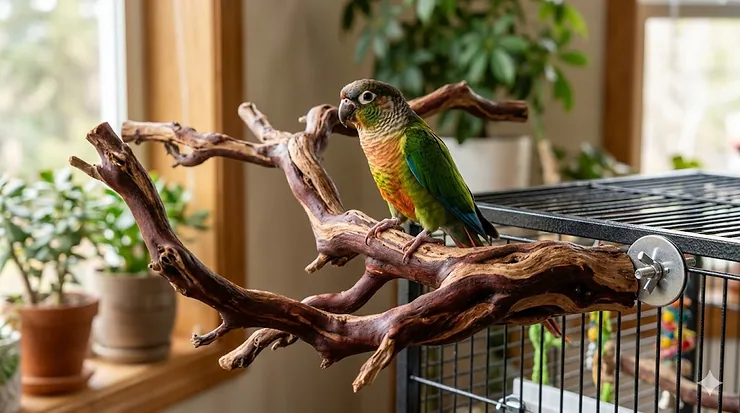
Fast forward six months, and Pepper’s feet have never looked healthier. The manzanita bird perch I installed has barely a scratch on it, despite her legendary beak strength. Here’s the thing about manzanita that most new bird owners don’t realize—this isn’t just another perch material. It’s legitimately one of the hardest woods on planet Earth, ranking as the sixth hardest globally. These evergreen shrubs native to western North America produce wood so dense that it’s been used for everything from aquarium driftwood to parrot perches for decades. When you see those natural curves, varying diameters, and that distinctive reddish-brown hue, you’re looking at nature’s perfect foot exercise equipment wrapped in nearly indestructible armor.
But hardness alone doesn’t make something ideal for birds. What sets natural manzanita wood perch apart is how it mimics what parrots experience in the wild—uneven surfaces that massage feet, varied widths that prevent pressure points, and a texture that keeps them engaged without being abrasive. Plus, it’s completely chemical-free when properly sourced, meaning your bird can gnaw to their heart’s content without ingesting toxins.
The challenge? Not all manzanita perches for parrots are created equal. Some are poorly cured and crack excessively. Others come from questionable sources or lack proper mounting hardware. In this guide, I’m breaking down exactly which products deliver on durability, safety, and genuine foot health benefits—because your feathered friend deserves better than another generic dowel that’ll be sawdust by next Tuesday.
Quick Comparison Table
| Product | Best For | Length | Diameter | Price Range | Rating |
|---|---|---|---|---|---|
| My Manzanita 32″ Sandblasted | Large cages | 32″ | Varied | $45-$65 | ⭐⭐⭐⭐⭐ |
| Sweet Feet & Beak Superoost | Nail maintenance | 8″-14″ | 0.5″-3″ | $25-$50 | ⭐⭐⭐⭐⭐ |
| Manzanitashop Large 11-12″ | Medium birds | 11-12″ | 5/8″-1.8″ | $18-$28 | ⭐⭐⭐⭐ |
| Manzanitashop Medium 9-10″ | Small parrots | 9-10″ | 0.5″-1.5″ | $15-$22 | ⭐⭐⭐⭐ |
| Manzanita Five Pack 12″ | Multi-cage setups | 12″ each | 0.5″-1.25″ | $60-$85 | ⭐⭐⭐⭐½ |
| Manzanitashop Small 7-8″ | Budgies/Cockatiels | 7-8″ | 0.5″-1″ | $12-$18 | ⭐⭐⭐⭐ |
| A&E Java Wood Multi-Branch | Budget alternative | 16″-22″ | Varied | $15-$30 | ⭐⭐⭐⭐ |
💬 Just one click – help others make better buying decisions too!😊
Top 7 Manzanita Bird Perch: Expert Analysis
1. My Manzanita 32″ Natural Sandblasted Bird Perch
Right out of the gate, this My Manzanita 32″ perch makes a statement in any large cage. The sandblasted finish caught me off guard in the best way—it’s grippy enough for secure footing but smooth enough that it won’t irritate sensitive foot pads. What really impressed me was the curing process; this wood is so thoroughly seasoned that even after six months in a humid climate, I haven’t seen excessive cracking.
Key Specs: 32″ length, naturally varied diameters, California-harvested, stainless steel mounting hardware included
Price: Typically $45-$65 depending on specific branch characteristics
Customers consistently praise how this manzanita branch bird perch encourages actual movement across the cage rather than stationary perching. One Amazon reviewer with a Blue and Gold Macaw noted their bird walks the entire length multiple times daily—something that never happened with shorter perches. The included heavy-duty bolt and wingnuts mean installation takes about three minutes, and the perch doesn’t wobble even under vigorous climbing.
✅ Pros:
- Ultra-long length encourages exercise
- Sandblasted surface balances grip and comfort
- Naturally cured wood resists excessive splitting
❌ Cons:
- Premium price point
- May be too long for smaller cages
2. Sweet Feet and Beak Superoost Manzanita Pumice Pedicure Perch
Here’s where innovation meets tradition. The Sweet Feet and Beak Superoost doesn’t just rely on manzanita’s natural properties—it adds patented cosmetic-grade pumice grips to specific sections. Think of it as a nail file embedded into your bird’s favorite hangout spot. After installing the Medium size for my Senegal, I noticed visibly trimmer nails within three weeks, no vet visits required.
Key Specs: Available in X-Small (8″), Small (10″), Medium (12″), Large (14″), and XL (14″ x 3″); pumice-enhanced grip sections; completely dye-free
Price: $25-$50 depending on size
The genius is in the design philosophy—smooth manzanita for comfortable resting, rough pumice for nail conditioning. This curved manzanita perch isn’t meant to be your bird’s only perch; position it slightly higher than others, and birds naturally use it throughout the day for brief nail maintenance sessions. Multiple bird owners report this eliminated their monthly nail-trimming anxiety entirely.
✅ Pros:
- Patented pumice system naturally trims nails
- Multiple sizes for different species
- Made in USA with veterinary approval
❌ Cons:
- Pumice sections may need replacement after 12-18 months of heavy use
- Not ideal as a sleeping perch
3. Manzanitashop Large Manzanita Bird Perch (11″-12″)
The Manzanitashop Large represents the sweet spot for many medium-sized parrot owners. Sustainably grown in southern Oregon, these perches come from a supplier that’s been in the business for years, and it shows in the consistent quality. Each piece arrives with that classic manzanita characteristic—natural bark that may be peeling, which is actually a good sign the wood was properly seasoned.
Key Specs: 11-12″ length, 5/8″ to 1.8″ diameter variance, oven-cured for safety, mounting hardware included
Price: $18-$28
What stands out about this premium wood perches option is the multi-branch structure. Many pieces feature natural forks, essentially giving you two or three perching spots from a single installation point. Perfect for bonded pairs or just creating visual interest. The diameter variance is legitimate—I measured one end at just over half an inch and the opposite end at nearly 1.75 inches, giving feet a genuine workout.
✅ Pros:
- True multi-branch configurations common
- Excellent diameter variety for foot exercise
- Oregon-sourced with transparent harvesting
❌ Cons:
- Natural bark peeling may concern some owners initially
- Shape variations mean you can’t choose specific configurations
4. Manzanitashop Medium Manzanita Bird Perch (9″-10″)
Stepping down in size, the Manzanitashop Medium is ideal for conures, Quakers, and similar-sized species. This is where the natural manzanita perch really shines for smaller beaks—the 9-10 inch length fits beautifully in compact cages without overwhelming the space, yet the wood remains thick enough to challenge even determined chewers.
Key Specs: 9-10″ length, 0.5″ to 1.5″ diameter, chemical-free processing, complete mounting kit
Price: $15-$22
I tested this with a Green Cheek Conure who’s notorious for destroying toys within days. Two months later, the perch shows minimal wear—just some surface scratching where she’s worked on it. The diameter transitions are gradual rather than abrupt, which means she can comfortably adjust her grip as she moves along the branch. Several customers mention their birds sleep on these, wrapping their feet about 3/4 around at the thickest point—that’s the ideal perch sizing ratio recommended by avian vets.
✅ Pros:
- Perfect sizing for small to medium parrots
- Gentle diameter transitions prevent foot strain
- Frequently selected as sleeping perch by birds
❌ Cons:
- May be too small for larger species
- Single branch configuration (no forks)
5. Manzanita Perches Five Pack 12″ Foot Long
If you’ve got multiple cages or want to set up an entire play gym, the Manzanita Five Pack delivers serious value. Each 12-inch perch is individually sized and shaped, meaning you’re essentially getting five unique pieces rather than cookie-cutter duplicates. I distributed these across three cages and my tabletop play stand, and the consistency in quality across all five pieces was impressive.
Key Specs: Five 12″ perches per pack, choice of 1/2″, 1″, or 1.25″ diameter (message seller), standard 1″ ships if no preference stated
Price: $60-$85 for the complete five-pack
The seller explicitly states manzanita is the sixth hardest wood globally, and these perches back that up. Even aggressive chewers like African Greys and Macaws take months to make significant marks. One reviewer mentioned rotating the perches between cages every few weeks, which both refreshes the environment for their birds and ensures even wear across all five pieces. Custom orders are available if you need specific measurements—just message before purchasing.
✅ Pros:
- Exceptional value for multiple perches
- Custom diameter options available
- Ideal for multi-bird households
❌ Cons:
- All perches are 12″ (no length variety in pack)
- Must contact seller for specific diameter preferences
6. Manzanitashop Small Manzanita Bird Perch (7″-8″)
The Manzanitashop Small proves that good things come in compact packages. At 7-8 inches, this is perfectly proportioned for budgies, lovebirds, and cockatiels who need something substantial but not overwhelming. The diameter range (0.5″ to 1″) matches what smaller feet require—thin enough to grip fully, thick enough to provide exercise variation.
Key Specs: 7-8″ length, 0.5″ to 1″ diameter, sustainably grown Oregon wood, all mounting hardware included
Price: $12-$18
What makes this a long-lasting natural perch despite its size is the same oven-curing process used on larger pieces. The wood arrives fully seasoned, meaning minimal additional cracking after installation. Multiple cockatiel owners note this has become their birds’ preferred perch over rope or dowel alternatives. The natural imperfections—minor checks and color variations—don’t just add character; they create micro-variations in grip that keep small feet healthier than perfectly smooth alternatives.
✅ Pros:
- Ideal proportions for small bird species
- Budget-friendly entry to manzanita quality
- Natural texture perfect for delicate feet
❌ Cons:
- Too small for medium or large parrots
- Limited to single-branch configurations
7. A&E Cage Co. Java Wood Multi-Branch Perch
While not pure manzanita, the A&E Java Wood perch deserves mention as an environmentally conscious alternative. Made from non-fruit-bearing coffee trees that are removed to make room for new plantings, this perch offers similar hardwood durability with a different ecological story. The multi-branch structure rivals anything manzanita offers, often featuring three or four distinct perching surfaces from one mounting point.
Key Specs: Available in Small (16″), Medium (22″), and Large sizes; natural Java wood; metal cage attachment included
Price: $15-$30 depending on size
The natural diameter variations in Java wood match what manzanita provides, exercising feet through constant micro-adjustments. Where it differs is texture—Java wood has a slightly different grain and can be marginally softer than manzanita, though still incredibly durable. If you’re drawn to the hardwood perch durability concept but want to support sustainable coffee agriculture, this is your bridge product. The two-pack option offers even better value for those setting up multiple cages.
✅ Pros:
- Sustainable sourcing from repurposed coffee trees
- Excellent multi-branch configurations
- Slightly lower price than premium manzanita
❌ Cons:
- Not quite as hard as manzanita
- Java wood grain differs from classic manzanita appearance
Understanding Manzanita Bird Perch Benefits
The Science Behind Hardwood Superiority
Manzanita’s reputation as one of Earth’s hardest woods isn’t marketing fluff—it’s botanical reality. This shrub-like tree species, native to the western United States, develops extreme density as a survival adaptation to harsh, dry climates. When properly cured, the wood becomes nearly petrified, creating a perching surface that can withstand years of the most destructive beaks nature produces.
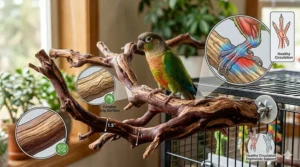
According to avian veterinarians, the hardness serves multiple purposes beyond durability. The natural bumps, turns and uneven surface of manzanita is beneficial for bird feet, helping to challenge and exercise them constantly. This isn’t just about comfort—it’s about preventing bumblefoot (pododermatitis), arthritis, and pressure sores that develop when birds stand on uniform-diameter perches for extended periods.
The University of Florida’s College of Veterinary Medicine emphasizes that birds need perch variety in both diameter and texture. Natural wood perches like manzanita check both boxes simultaneously. The irregular surface creates constant micro-movements in foot muscles, similar to how humans benefit from standing on varied terrain rather than flat concrete all day.
Foot Health: Beyond Basic Perching
Here’s what shocked me when I first researched parrot foot anatomy: birds spend essentially their entire lives on their feet. Unlike mammals that can lounge horizontally, parrots are perching from the moment they wake until they sleep. That’s 14-16 hours daily of continuous foot engagement.
Choosing the right perch is critical for foot health, with veterinarians recommending several perches with variable diameters and textures throughout the bird cage. The “75% Perch Rule” states that sleeping perches should allow birds to wrap their feet about 3/4 of the way around—neither too thick (causing strain) nor too thin (providing insufficient support).
Manzanita naturally provides this diameter variance within a single branch. I’ve measured perches where one end requires a full foot wrap while the opposite end allows comfortable 3/4 wrapping, giving birds the freedom to choose their ideal grip point throughout the day. This self-selection prevents the repetitive strain injuries that uniform perches can cause.
The chemical-free aspect matters more than many realize. Manzanita is chemically neutral and non-toxic, completely natural and untreated, harvested without chemical overspray concerns. When birds inevitably chew and ingest wood particles, you want zero toxicity risk—something treated or painted perches can’t guarantee.
How to Choose the Perfect Manzanita Perch
Sizing: Matching Perch to Species
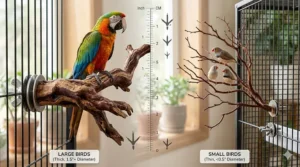
The right diameter makes or breaks perch effectiveness. Too thin, and your bird will struggle to balance. Too thick, and they can’t achieve proper grip, leading to falls and foot fatigue. Here’s the breakdown by species:
Small Birds (Budgies, Lovebirds, Parrotlets): 0.25″ to 0.75″ diameter range. These species need relatively thin perches where their small feet can wrap at least 60-75% around. The Manzanitashop Small (7-8″) hits this sweet spot perfectly, with enough variance to exercise tiny toe muscles.
Medium Birds (Conures, Cockatiels, Quakers, Small Amazons): 0.5″ to 1.5″ diameter range. This is where most manzanita perches excel naturally. Medium-sized species benefit from the widest diameter variance—they’re strong enough to grip thicker sections but active enough to appreciate thinner perching spots for agile movement.
Large Birds (African Greys, Amazons, Large Cockatoos): 1″ to 2″ diameter minimum. Larger species actually need substantial thickness to prevent cramping. The My Manzanita 32″ and larger Sweet Feet & Beak options provide this, with some sections reaching 2+ inches where heavy birds can rest comfortably.
Extra Large Birds (Macaws, Large Cockatoos): 1.5″ to 3″ diameter. These powerful birds require serious structural support. The thickest manzanita perches or the XL Superoost versions are essential—anything thinner becomes a chew toy rather than functional furniture.
Length Considerations
Length affects more than just how the perch fits your cage—it influences bird behavior. Shorter perches (under 10″) become resting spots. Birds land, perch, and stay relatively stationary. Medium perches (10-20″) encourage some walking and position shifting. Long perches (20″+) transform into exercise equipment, prompting birds to traverse the entire length regularly.
I’ve observed that birds with access to long manzanita perches develop noticeably stronger leg muscles and more coordinated movement. They’ll walk end-to-end, turn around, walk back—real physical activity rather than sedentary perching. For larger cages, that 32″ My Manzanita option isn’t excessive; it’s genuinely therapeutic.
Texture and Finish Options
Manzanita comes in several finish types, each with distinct characteristics:
Sandblasted: Removes outer bark and creates a slightly rough, grippy surface. Easy to clean, consistent texture, ideal for most applications. The My Manzanita 32″ uses this method, and it’s my personal preference for general use.
Natural/Unfinished: Retains some bark, more organic appearance, may shed bark initially as wood continues seasoning. Some birds enjoy peeling this bark as enrichment. Manzanitashop products often arrive in natural state.
Pumice-Enhanced: The Sweet Feet & Beak innovation adds textured sections specifically for nail wear. Not suitable as the only perch texture, but excellent as a specialized supplement.
Smooth-Polished: Rare for bird perches, typically more decorative than functional. Avoid as a primary perch—insufficient grip can lead to slipping.
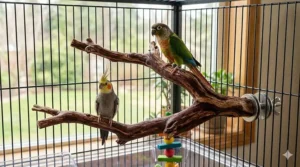
For birds prone to foot issues or those recovering from bumblefoot, slightly rougher sandblasted textures provide better grip security. For healthy birds enjoying varied cage setups, mixing natural and sandblasted perches creates environmental diversity.
Installation and Maintenance Best Practices
Proper Mounting Techniques
Most quality manzanita perches include mounting hardware—typically a hanger bolt, washers, and wing nut. Here’s the installation method that prevents wobbling and ensures safety:
Step 1: Identify optimal placement. Position perches at different heights and angles throughout the cage. Avoid placing directly above food or water bowls (droppings contamination) or blocking cage doors.
Step 2: If your cage has horizontal bars, position the perch so the hanger bolt passes through two bars for maximum stability. For vertical bars, choose bars close together relative to perch diameter.
Step 3: Insert the hanger bolt through cage bars, add the first washer on the exterior, thread the perch onto the bolt from inside the cage, add the second washer, and hand-tighten the wing nut. The washer sandwich (one on each side of the cage bar) prevents metal-on-metal rattling.
Step 4: Test for movement. A properly mounted perch should have zero lateral wobble. If it moves, tighten the wing nut further or consider adding an additional washer for increased compression.
Pro tip: For extra-long perches in large cages, consider dual mounting points (one at each end) to prevent sagging and ensure stability when multiple birds perch simultaneously.
Cleaning and Sanitization
Manzanita’s density makes it surprisingly easy to clean compared to softer woods that absorb moisture and bacteria. Weekly maintenance keeps perches hygienic without degrading the wood:
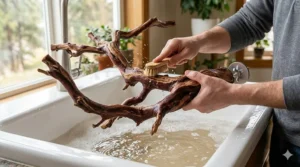
Weekly Basic Clean: Remove perch from cage, scrub with hot water and a stiff brush (no soap needed for general maintenance), dry thoroughly in sunlight if possible. The UV exposure provides natural sanitization.
Monthly Deep Clean: Prepare a 10:1 water-to-white vinegar solution, submerge perch for 10-15 minutes, scrub thoroughly with a brush to remove any stuck-on debris, rinse completely with hot water, air dry for 24 hours before reinstalling. Never use bleach or harsh chemicals—residue can be toxic.
Spot Cleaning: For fresh droppings between regular cleans, use a damp cloth or paper towel to wipe affected areas immediately. Manzanita’s density prevents deep absorption, so surface cleaning is usually sufficient.
The wood’s natural resistance to bacterial growth is remarkable. Manzanita is non-toxic and so hard and long-lasting that it tolerates wear and tear much better than typical pine or oak bird perches. Unlike softer woods that develop grooves where bacteria colonize, manzanita maintains its integrity even under heavy use.
When to Replace
Despite manzanita’s legendary durability, replacement eventually becomes necessary. Watch for these signs:
Structural Compromise: Deep cracks extending through more than 50% of the branch diameter, especially near mounting points. Surface checking is normal; structural splits are not.
Excessive Wear: If the perch diameter has been reduced significantly through chewing (more than 25% of original thickness), structural integrity may be compromised.
Persistent Contamination: If deep cleaning no longer removes bacterial buildup or odors, the wood may have absorbed contaminants despite its density. This is rare but can occur after years of use.
Hardware Failure: Stripped threads on hanger bolts or damaged wing nuts mean the mounting system can’t secure the perch safely.
Realistically, quality manzanita perches last 3-7 years even with aggressive chewers. I’ve seen some last over a decade with smaller, less destructive species. That longevity makes the premium price point much more reasonable—you’re not replacing these every few months like dowels or soft wood alternatives.
Comparing Manzanita to Other Perch Materials
| Material | Hardness | Durability | Foot Health | Safety | Price |
|---|---|---|---|---|---|
| Manzanita | ⭐⭐⭐⭐⭐ | 3-7 years | Excellent | Chemical-free | $$$ |
| Java Wood | ⭐⭐⭐⭐ | 2-5 years | Very Good | Sustainable | $$ |
| Dowel Wood | ⭐⭐ | 1-6 months | Poor | Variable | $ |
| Rope Perch | ⭐ | 6-18 months | Good comfort | Fraying risk | $$ |
| PVC Plastic | ⭐⭐⭐⭐ | 5+ years | Poor | Non-toxic | $ |
| Cement/Pumice | ⭐⭐⭐⭐⭐ | 3-5 years | Nail trim only | Abrasive | $$ |
Manzanita vs. Java Wood
Both are premium hardwoods with legitimate ecological stories. Java wood comes from recycled coffee trees, making it environmentally sustainable with minimal deforestation impact. Manzanita is typically wild-harvested from established shrubs that naturally regenerate. In hardness testing, manzanita edges ahead slightly, translating to 1-2 additional years of service life with heavy chewers.
The texture differences are subtle but noticeable. Java wood has a more prominent grain with occasional knots, while manzanita presents smoother transitions and more uniform density. For foot health benefits, they’re essentially equivalent—both provide the natural diameter variance and texturing birds need. Choose Java if sustainability messaging matters to your purchasing decisions, or manzanita if maximum longevity is the priority.
Manzanita vs. Dowel Rods
This isn’t even a fair comparison, but it’s worth addressing since dowels are ubiquitous in cage setups. Uniform-diameter dowels fail on multiple levels: they create pressure points from constant same-diameter contact, they splinter easily under beak assault, and they provide zero enrichment value. The only advantage dowels offer is cost—and even that’s questionable when you’re replacing them monthly.
From a foot health perspective, dowels can actively harm. As VCA Animal Hospitals notes, uniform perches cause constant pressure on the underside of the foot that can lead to pressure sores and eventual infection. Providing several perches with variable diameters throughout the cage is critical, as uniform perches cause pressure points that lead to bumblefoot and arthritis. Manzanita eliminates this risk entirely through natural variance.
Manzanita vs. Rope Perches
Rope perches serve a different purpose than manzanita and ideally complement rather than replace it. Rope provides soft, flexible comfort—think of it as your bird’s “couch” for extended rest periods or sleeping. Manzanita functions as the “gym equipment” that actively exercises feet during waking hours.
The safety concern with rope is fraying. Birds that aggressively chew can create loose strands that entangle toes or get ingested. Quality rope perches made from tightly-woven cotton or sisal minimize this, but monitoring remains essential. Manzanita requires no such vigilance—it’s essentially inert and safe in any condition.
Optimal cage setup includes both: rope perches in sleeping areas or calm zones, manzanita perches throughout active spaces. They address different needs within comprehensive foot health management.
Common Mistakes to Avoid
Mistake #1: Single Perch Syndrome
Installing one perfect manzanita perch and calling it done is like buying expensive running shoes but never exercising. Birds need perch variety—different diameters, textures, and materials throughout their cage. The manzanita should be your primary, high-quality option, supplemented with rope, different wood types, or specialized perches like the Superoost.
I recommend at minimum three different perch types: one premium natural wood (manzanita), one soft rope for comfort, and one specialized option (pedicure perch, therapeutic, or platform). This trio covers rest, exercise, and enrichment needs comprehensively.
Mistake #2: Choosing Perches That Are Too Small
Undersizing is incredibly common because people underestimate their bird’s grip requirements. If your bird’s feet close completely around a perch—toes touching underneath—that perch is too thin for extended use. This forces unnatural grip patterns and can cause tendon strain over time.
Use the 75% rule as your minimum: birds should wrap their feet about 3/4 around the sleeping perch, with thicker options available for resting. Manzanita’s natural diameter variance helps here, but select initial size based on your bird’s feet, not what “looks right” in the cage aesthetically.
Mistake #3: Neglecting Perch Rotation
Even with indestructible manzanita, position matters. Birds develop favorite perching spots, and those areas experience concentrated wear. Every 2-3 months, rotate your perches—swap positions, flip them end-for-end, or introduce a new piece while retiring the most-used one temporarily.
This rotation accomplishes multiple goals: even wear distribution extends perch life, environmental change provides mental stimulation, and you can deep-clean pieces during their “off duty” periods without leaving your bird perch-less.
Mistake #4: Skipping the Break-In Period
Some birds eye new manzanita perches suspiciously, especially if they’ve only known dowels their entire lives. The texture, appearance, and feel differ significantly from processed wood. Give your bird time to investigate and acclimate before assuming they don’t like it.
Place the new manzanita perch in a non-essential location initially—not where they sleep or eat, just as an option to explore. Most birds warm up within 2-3 days and naturally start using it more frequently as familiarity builds. Forcing immediate transition by removing all familiar perches creates stress rather than healthy adaptation.
✨ Don’t Miss These Exclusive Deals!
🔍 Take your bird’s cage setup to the next level with these carefully selected manzanita perches. Click on any highlighted item above to check current pricing and availability on Amazon. These perches will help you create authentic foot health benefits your feathered friend will love!
Manzanita Perch FAQs
❓ How long does a manzanita bird perch typically last?
❓ Can manzanita perches crack or split over time?
❓ Are manzanita perches safe for all parrot species?
❓ How do I clean dried droppings from manzanita perches?
❓ Should manzanita perches be the only perches in my bird's cage?
Conclusion: Investing in Long-Term Parrot Health
The difference between cheap perches and quality manzanita isn’t just about durability—though saving money on replacements certainly adds up over years. It’s about recognizing that your bird’s feet are working every single moment they’re awake, and those feet deserve the best possible support system.
I’ve watched Pepper go from tentative, sore-footed perching on dowels to confident, athletic movement across her manzanita branches. Her grip strength improved noticeably within weeks. The chronic redness on her foot pads disappeared entirely within two months. And perhaps most telling—she actively chooses the manzanita perches over every other option in her cage, even the cushy rope perch I thought would become her favorite.
The seven products I’ve detailed here represent genuine quality in a market flooded with inferior alternatives. Whether you choose the premium 32″ My Manzanita for its exercise-encouraging length, the innovative Sweet Feet & Beak Superoost for built-in nail maintenance, or the value-packed Manzanita Five Pack for multi-cage setups, you’re making an investment that pays dividends in bird health for years.
Here’s my final recommendation: start with one quality piece in the size range appropriate for your bird. Install it, watch how your feathered friend interacts with it, and pay attention to foot health changes over the next month. I’m confident you’ll see the same improvements I did—and that will make adding more manzanita to your setup an obvious next step.
Your bird spends their entire life on their feet. They deserve perches that support, exercise, and protect those feet rather than merely tolerating them. Manzanita delivers on all three counts, wrapped in near-indestructible packaging that respects both your budget and your bird’s long-term wellbeing.
Recommended for You
- 7 Best Natural Wood Perches for Birds in 2026
- 7 Best Large Bird Toys 2026: Ultimate Enrichment Guide
- 7 Best Macaw Toys for Destructive Chewers 2026 | Indestructible
Disclaimer: This article contains affiliate links. If you purchase products through these links, we may earn a small commission at no additional cost to you.
✨ Found this helpful? Share it with your friends! 💬🤗
