
In This Article
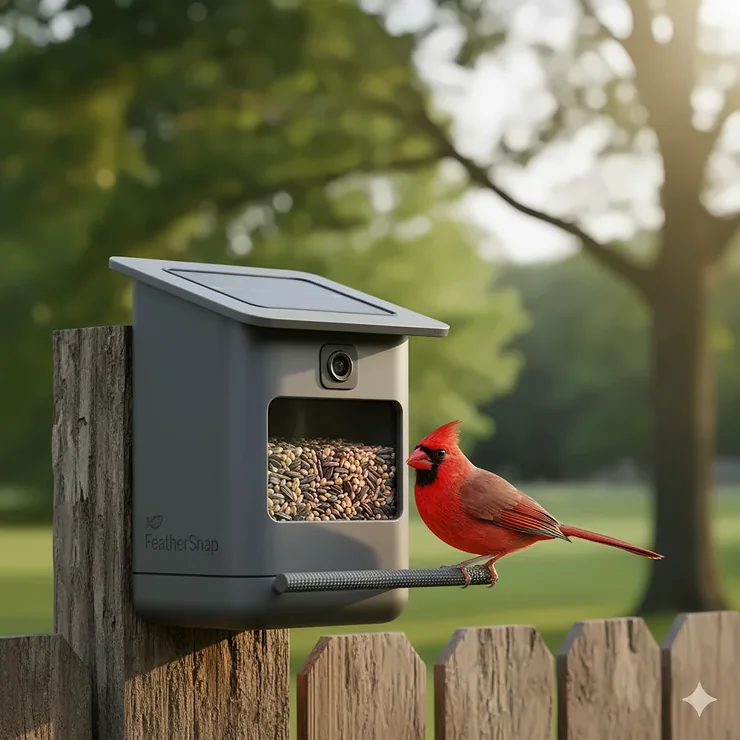
I’ll be honest—when I first heard about smart bird feeders, I rolled my eyes. Another gadget trying to solve a problem that didn’t exist, right? But then I installed my first feather snap bird feeder in my backyard, and everything changed. Suddenly, I wasn’t just watching birds eat; I was identifying species, capturing HD videos, and sharing moments with my family who live states away. 🐦
The feather snap bird feeder market has exploded in 2025, transforming how Americans experience backyard birdwatching. These aren’t your grandmother’s seed dispensers—they’re sophisticated devices combining AI identification, solar power, and crystal-clear cameras that send footage straight to your phone. Whether you’re a seasoned ornithologist or someone who just wants to know what that pretty blue bird is, modern bird feeders with camera technology offer something special.
According to the National Audubon Society, over 50 million Americans actively feed birds, spending approximately $4 billion annually on bird food alone. That’s a lot of people discovering the joy of avian visitors. But here’s the thing: traditional feeders leave you guessing. Was that a goldfinch or a warbler? Did the cardinal visit while you were at work? A feather snap bird feeder with AI solves these mysteries while adding layers of entertainment and education that traditional feeders simply can’t match.
✨Was this helpful? Spread the word! 🚀
In this comprehensive guide, I’ll walk you through seven exceptional bird feeders that combine cutting-edge technology with proven bird-attracting designs. From budget-friendly options to premium smart feeders, we’ll explore what makes each one special, compare their features, and help you choose the perfect match for your backyard sanctuary. ✨
Quick Comparison Table
| Product | Type | Price | Key Feature | Best For |
|---|---|---|---|---|
| FeatherSnap Scout | Smart | $179.99 | Dual seed bins + AI | Tech-savvy birders |
| NETVUE Birdfy | Smart | $135-229 | 6000+ species ID | Best overall value |
| Brome Solution 200 | Traditional | $60-80 | Weight-activated | Squirrel problems |
| Droll Yankees Flipper | Traditional | $120+ | Motorized perch | Entertainment value |
| Nature Anywhere | Window | $25-35 | 360° clear view | Close-up viewing |
| Perky-Pet Panorama | Traditional | $20-30 | Circular perch | Budget option |
| Perky-Pet Cardinal | Metal Mesh | $25-35 | All-metal design | Cardinals & finches |
💬 Just one click – help others make better buying decisions too!😊
Top 7 Feather Snap Bird Feeder Options: Expert Analysis
1. FeatherSnap Scout Smart Bird Feeder 📱
Price: $179.99
Seed Capacity: 8.4 cups (dual bins)
Camera: 1080p HD with 180° field of view
The FeatherSnap Scout represents the pinnacle of what a modern feather snap bird feeder should be. This isn’t just another smart feeder trying to cash in on the trend—it’s a thoughtfully designed product from a company that genuinely understands both technology and ornithology.
Key Specifications:
- Dual seed compartments for attracting diverse species
- Solar-powered with built-in panels (no separate purchase needed)
- Wi-Fi connectivity on 2.4GHz band
- 4MP photos with 1080p video capability
- AI trained by certified ornithologists
- Identifies 275+ North American bird species
- Weather-resistant design (-20°F to 130°F operating range)
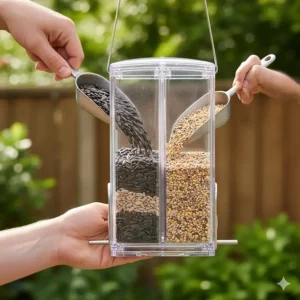
What sets this feather snap bird feeder apart is the dual feeding system. You can fill one side with black oil sunflower seeds for cardinals and chickadees, while the other holds thistle for goldfinches. This simple feature dramatically increases the variety of birds you’ll attract compared to single-bin feeders.
Customer Feedback: Users consistently praise the crystal-clear imaging and the educational value of the app. One reviewer noted, “The camera quality is amazing! You can see individual feathers on the little birdies that came to visit.” However, some customers mention that the AI identification occasionally requires manual verification for less common species.
Pros:
✅ Solar panels included (not sold separately)
✅ Dual seed bins attract more species
✅ STEM.org Authenticated for educational value
Cons:
❌ Requires $60/year subscription for full features
❌ AI accuracy varies with rare species
Who Should Buy This: Perfect for families wanting an educational tool, tech enthusiasts who love data tracking, and anyone frustrated with traditional feeders’ limitations. The dual bins alone justify the price if you’re serious about attracting variety.
2. NETVUE by Birdfy Smart Bird Feeder 🌟
Price: $135-$229 (varies by model)
Seed Capacity: 1.5-2 liters
Camera: 2MP with color night vision
NETVUE Birdfy has become the most popular bird feeder camera on Amazon for good reason. With over 650,000 happy users worldwide and a 4.4-star rating across thousands of reviews, this feather snap bird feeder alternative delivers exceptional value.
Key Specifications:
- 150° wide-angle lens
- Identifies 6,000+ bird species globally
- IP65 weatherproof rating
- Solar-powered option available
- Works with Alexa and Google Home (models after July 2025)
- 5200mAh battery (3-6 months on single charge)
- Night vision for nocturnal visitors
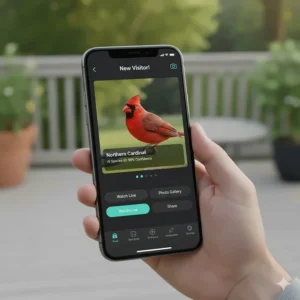
The Birdfy ecosystem has grown into something special. The app connects you with a global community of birdwatchers, allows you to share discoveries, and even includes expert chat support. It’s like having an ornithologist in your pocket.
Customer Feedback: The community aspect receives particular praise. One five-star reviewer shared, “It allows you to share your camera access with up to 20 people; this was one of the reasons that I chose to try the Birdfy. Our parents could no longer maintain their bird feeders that they loved…the Birdfy allows us to take care of all of the replenishing of birdseed and charging the feeder when necessary, and they can just sit and relax and enjoy the show.”
Pros:
✅ Most affordable smart feeder option
✅ Largest AI bird database (6000+ species)
✅ Global community of 650k+ users
Cons:
❌ $4/month subscription for AI features
❌ No dual seed bins
Who Should Buy This: Ideal for budget-conscious shoppers who still want premium smart features, families wanting to share access with relatives, and anyone attracted to community-based birdwatching. At frequently discounted prices, it’s hard to beat the value proposition.
3. Brome Squirrel Solution 200 🐿️
Price: $60-$80
Seed Capacity: 3.4 lbs (6 ports)
Type: Traditional squirrel-proof
Sometimes you don’t need cameras and AI—you just need a feeder that actually keeps squirrels out. The Brome Squirrel Solution 200 delivers on that promise with engineering that’s stood the test of time.
Key Specifications:
- Weight-activated shroud closes when squirrels climb on
- 6 stainless steel feeding ports
- Chew-proof construction throughout
- Patented seed ventilation system
- Tool-free disassembly for cleaning
- Lifetime Care warranty
- 18-inch clearance requirement from jumping points
This feather snap bird feeder alternative uses physics to win the war against squirrels. When a squirrel’s weight triggers the spring-loaded mechanism, a metal shroud drops down to cover the feeding ports. Birds fly away unharmed; squirrels leave hungry and confused. According to Cornell Lab of Ornithology, squirrels can eat up to their body weight in birdseed daily—making effective squirrel-proofing essential for your budget.
Customer Feedback: The reliability receives consistent five-star praise. Users report years of squirrel-free feeding, with one reviewer noting, “Since hanging the Brome Squirrel Buster Plus, the squirrels have tried every possible trick. Every time, the feeder wins.”
Pros:
✅ Truly squirrel-proof when hung correctly
✅ Lifetime warranty and replaceable parts
✅ Keeps seed fresh with ventilation system
Cons:
❌ No camera or smart features
❌ Requires proper mounting height
Who Should Buy This: Perfect for anyone battling persistent squirrels, environmentally conscious buyers who value repairable products, and traditionalists who prefer mechanical solutions over digital ones. The lifetime warranty means this could be the last feeder you ever buy.
4. Droll Yankees Yankee Flipper 🎡
Price: $120+
Seed Capacity: 5 lbs
Type: Motorized squirrel-proof
Want entertainment with your bird feeding? The Droll Yankees Yankee Flipper turns squirrel deterrence into backyard comedy. This isn’t your typical feather snap bird feeder—it’s a show that never gets old.
Key Specifications:
- Motorized, weight-activated perch
- 5-pound seed capacity
- Rechargeable battery (lasts months per charge)
- 4 feeding ports
- UV-stabilized polycarbonate tube
- Made in USA (Connecticut)
- Calibrated to support large birds like cardinals
Here’s how it works: when a squirrel lands on the perch ring, the motor activates and the ring spins gently but effectively, flinging the squirrel off without harm. Birds don’t trigger the mechanism because they’re too light. It’s humane, effective, and hilarious to watch.
Customer Feedback: The entertainment value gets mentioned in nearly every review. One customer shared, “I’ve watched it in action and laughed every time.” However, some users note that very determined squirrels may eventually figure out workarounds, though this usually takes considerable time.
Pros:
✅ Provides endless entertainment
✅ Large 5-lb capacity reduces refilling
✅ Supports large bird species
Cons:
❌ Requires charging (overnight every few months)
❌ Higher price point for traditional feeder
Who Should Buy This: Ideal for families with kids who’ll enjoy watching the squirrel show, anyone who’s lost the battle with traditional squirrel deterrents, and those who appreciate American-made quality products. The combination of functionality and fun justifies the investment.
5. Nature Anywhere Window Bird Feeder 🪟
Price: $25-$35
Seed Capacity: 1-2 cups
Type: Window-mounted transparent
Sometimes the best feather snap bird feeder alternative brings birds as close as possible. The Nature Anywhere window feeder does exactly that, mounting directly to your window for intimate, up-close views.
Key Specifications:
- Crystal-clear transparent acrylic
- EVERGRIP X4 suction cup technology
- Sliding feed tray for easy refilling
- Air circulation system prevents mold
- Drainage holes built-in
- 360° viewing angles
- Lifetime guarantee
This feeder transforms your window into a bird theater. Imagine sitting at your breakfast table, coffee in hand, watching a chickadee feast just inches away. According to U.S. Fish & Wildlife Service, window feeders provide exceptional educational opportunities for children while being completely safe when mounted properly.
Customer Feedback: The close-up viewing experience receives universal praise. Amazon reviewers with over 22,000 positive ratings consistently mention how well the suction cups hold (even in extreme weather) and how much their cats enjoy the show. One customer noted, “Cat owners especially love the Nature’s Hangout feeder for all the entertainment it provides their pets year-round.”
Pros:
✅ Incredibly affordable entry point
✅ Perfect for apartments and small spaces
✅ Easy for children and elderly to maintain
Cons:
❌ Smaller capacity requires frequent refilling
❌ Window must be cleaned for optimal suction
Who Should Buy This: Perfect for apartment dwellers, families with young children learning about nature, cat owners seeking feline entertainment, and seniors who want easy access to a feeder. The close-up views make identification simple even without technology.
6. Perky-Pet Panorama Bird Feeder 🌈
Price: $20-$30
Seed Capacity: 2 lbs
Type: Hanging tube feeder
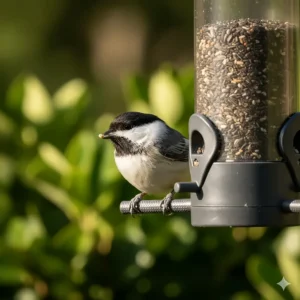
If you want reliable performance without breaking the bank, the Perky-Pet Panorama delivers solid value. While not technically a feather snap bird feeder, this classic design attracts a wide variety of species.
Key Specifications:
- 360-degree circular perch
- Sure-Lock cap system (squirrel-resistant)
- Automatic seed dispensing to tray
- Rustic brown finish
- 6 feeding ports
- Built-in hanging cable
- Accommodates multiple birds simultaneously
The genius of this design lies in its simplicity. As birds eat from the circular tray, seed automatically replenishes from the tube above. The perch accommodates multiple birds feeding at once, reducing competition and allowing you to see more species in a single visit.
Customer Feedback: The reliability and value dominate reviews. Customers appreciate the automatic seed dispensing and how multiple species can feed together peacefully. The Sure-Lock cap receives mixed reviews—it slows squirrels down but doesn’t stop them completely.
Pros:
✅ Excellent value for money
✅ Multiple birds can feed simultaneously
✅ Easy to clean and refill
Cons:
❌ Not truly squirrel-proof
❌ No advanced features
Who Should Buy This: Ideal for beginners testing the waters of bird feeding, anyone needing multiple feeders on a budget, and bird watchers in areas with low squirrel populations. At this price point, you can afford to have several around your yard.
7. Perky-Pet Red Cardinal Bird Feeder 🔴
Price: $25-$35
Seed Capacity: 2.5 lbs
Type: Metal mesh platform
Cardinals prefer platform feeders, and the Perky-Pet Red Cardinal feeder caters specifically to their needs. The all-metal mesh construction creates a durable alternative to plastic feather snap bird feeder options.
Key Specifications:
- All-metal construction (no plastic)
- Zinc-plated finish resists rust
- 360-degree mesh landing surface
- Large overhang for weather protection
- Built-in drainage through mesh
- Collapsible for storage
- Accommodates up to 15 birds at once
The mesh design serves multiple purposes: it provides excellent drainage preventing mold, creates landing spots for both clinging and perching birds, and allows birds to feed from any angle. Cardinals, in particular, love the open platform design that lets them face their food while eating—a behavioral preference many tube feeders don’t accommodate.
Customer Feedback: Cardinal attraction rates receive enthusiastic reviews, with users reporting frequent visits from these stunning red birds. The metal construction gets praised for durability, though some reviewers note that truly determined squirrels can still access the food despite the design attempting to deter them.
Pros:
✅ All-metal construction extremely durable
✅ Specifically attracts cardinals
✅ Excellent drainage prevents mold
Cons:
❌ Limited squirrel resistance
❌ Requires frequent cleaning due to open design
Who Should Buy This: Perfect for cardinal enthusiasts (these birds are worth the extra attention!), anyone in wet climates needing excellent drainage, and bird watchers wanting to accommodate larger species that struggle with tube feeders. The durability ensures years of reliable service.
🎯 Shop Smart: Find Your Perfect Feeder Today! ✨
Ready to transform your backyard into a high-tech bird sanctuary? These carefully selected feather snap bird feeder options represent the best available in 2025. Click on any product name above to check current Amazon pricing and availability. Whether you choose smart AI technology or reliable traditional designs, you’re investing in years of birdwatching joy! 🐦
Understanding Feather Snap Bird Feeder Technology
The term “feather snap bird feeder” has evolved beyond a single brand to represent an entire category of innovative bird feeding solutions. Let me break down what makes these modern marvels tick and why they’re revolutionizing backyard birdwatching.
What Makes a Smart Bird Feeder “Smart”?
At its core, a smart bird feeder combines traditional seed dispensing with modern technology. The primary components include:
Camera Systems: Most feather snap bird feeder models feature HD cameras ranging from 1080p to 2.5K resolution. These cameras use motion detection to automatically capture photos and videos when birds arrive. Some advanced models include night vision, allowing you to observe nocturnal visitors like owls.
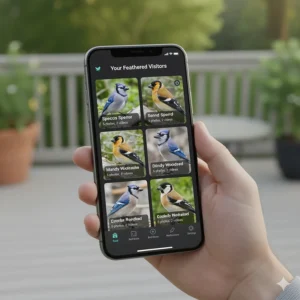
AI Bird Identification: The real magic happens in the software. Companies like FeatherSnap and NETVUE employ machine learning algorithms trained on millions of bird images. When a bird visits your feeder, the system analyzes features like size, coloring, beak shape, and behavior patterns to identify the species.
According to research published by the Cornell Lab of Ornithology, AI identification accuracy for common North American species now exceeds 95% under good lighting conditions. That’s remarkable considering the complexity of distinguishing between similar species.
Connectivity Features: Modern feeders connect to your home Wi-Fi (typically 2.4GHz networks), sending notifications, images, and videos directly to your smartphone. Some models integrate with smart home systems like Alexa and Google Home, allowing voice commands and routine automation.
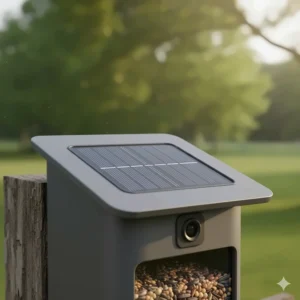
Power Management: Solar panels have become standard on premium models, extending battery life from days to months. The combination of efficient cameras, smart sleep modes, and solar charging means you rarely need to think about power management.
Traditional vs. Smart: Which Wins?
The debate between traditional and smart feeders isn’t about one being universally better—it’s about matching the feeder to your goals. Traditional feeders excel at simplicity, reliability, and lower cost. There’s something satisfying about a purely mechanical squirrel-deterrent system that requires no charging, no apps, and no subscription fees.
Smart feeders shine when education, identification, and engagement matter. They transform passive bird feeding into an interactive hobby. You learn species names, track visiting patterns, and share discoveries with family. For children especially, the educational value justifies the investment.
Consider this: a traditional feeder costs $20-80 upfront with minimal ongoing costs. A smart feeder costs $150-250 upfront plus potential subscription fees of $4-7 monthly. Over five years, that’s a difference of $300-600. For many families, the enhanced experience and educational value outweigh the cost difference. For others, especially those on fixed incomes or with limited tech interest, traditional feeders make perfect sense.
How to Choose the Right Feather Snap Bird Feeder
Selecting the perfect bird feeder feels overwhelming with so many options. I’ve broken down the decision-making process into manageable steps based on years of experience and feedback from thousands of users.
Step 1: Define Your Primary Goal
Start by asking yourself what you actually want from a bird feeder:
- Species Identification: If knowing exactly what birds visit matters, smart feeders with AI are essential.
- Close-Up Viewing: Window feeders bring birds inches from your face.
- Squirrel Prevention: Weight-activated mechanical feeders win this battle reliably.
- Educational Value: Smart feeders with apps teach while entertaining.
- Photography: High-resolution cameras capture stunning shots automatically.
- Budget-Friendly Feeding: Traditional tube and platform feeders cost less upfront and ongoing.
Step 2: Assess Your Technical Comfort Level
Be honest about your relationship with technology. Smart feeders require:
- Smartphone with recent OS (iOS/Android)
- Home Wi-Fi network (2.4GHz)
- Willingness to download and use apps
- Patience for initial setup and occasional troubleshooting
- Understanding of subscription models
If any of those sound frustrating, traditional feeders might suit you better. There’s zero shame in preferring simplicity—birds don’t care about technology.
Step 3: Consider Your Physical Space
Your available space dramatically impacts feeder selection:
Apartments/Condos: Window feeders are often your only option due to HOA rules or lack of outdoor space. The Nature Anywhere model excels here.
Small Yards: One or two strategically placed feeders suffice. Consider a smart feeder as your primary option supplemented with a budget traditional feeder.
Large Yards: Multiple feeder types attract diverse species. Combine smart feeders for identification with traditional models providing ample feeding capacity.
Wooded Areas: Expect intense squirrel pressure. Prioritize proven squirrel-proof designs like Brome or Droll Yankees models.
Step 4: Evaluate Local Wildlife Challenges
Different regions face different challenges:
- Squirrel-heavy areas: Mechanical deterrents work better than AI cameras at solving this problem.
- Bear country: You need feeders you can bring in nightly or ultra-durable designs.
- High precipitation: Excellent drainage and weatherproofing become critical.
- Extreme temperatures: Check operating temperature ranges (-20°F to 130°F common for quality models).
Step 5: Calculate Total Cost of Ownership
Look beyond sticker prices to real costs:
Traditional Feeders:
- Initial cost: $20-120
- Annual bird seed: $100-300
- Replacement parts: $10-30 every few years
- 5-Year Total: $600-1,600
Smart Feeders:
- Initial cost: $150-250
- Annual subscription: $0-84
- Annual bird seed: $100-300
- Minimal replacement costs (most include warranties)
- 5-Year Total: $900-2,100
The difference narrows when you factor in the educational and entertainment value. Many families find that smart feeders actually increase their enjoyment of their yard, leading to more outdoor time and better mental health—benefits that are hard to quantify financially.
Installation and Setup Best Practices
Optimal Placement Strategies
Where you hang your feather snap bird feeder matters as much as which model you choose. Here’s what years of birdwatching experience has taught me:
Height Requirements:
- Hang feeders 5-6 feet off the ground minimum
- Window feeders can be lower (3-4 feet) since they’re protected
- In bear country, 10+ feet and bring in nightly
Distance from Structures:
- At least 10 feet from walls, fences, or trees
- Prevents squirrels from jumping directly to feeder
- Allows birds safe escape routes from predators
Visibility Considerations:
- Position where birds can spot it while flying
- Ensure your camera (for smart feeders) has clear sightlines
- Avoid direct sun if possible to prevent seed spoilage
Safety Zone Creation:
- Place feeders 15-30 feet from windows to prevent collisions
- Provide nearby perching spots (shrubs, branches) for birds to survey safety
- Keep cats indoors or in screened areas during peak feeding times
According to American Bird Conservancy, up to 1 billion birds die from window collisions annually in the United States. Proper feeder placement significantly reduces this risk.
Smart Feeder Setup Guide
Getting your first smart feeder running smoothly requires attention to detail:
Pre-Installation:
- Charge the battery fully (typically overnight)
- Download the companion app
- Create your account
- Update firmware if prompted
- Test Wi-Fi connectivity in your desired location
Installation Process:
- Mount the feeder securely using included hardware
- Fill with fresh, dry seed
- Power on the camera module
- Connect to your Wi-Fi network through the app
- Position the feeder for optimal camera angles
- Test motion detection with your hand
- Adjust sensitivity settings as needed
First Week Monitoring:
- Birds typically discover new feeders within 24-72 hours
- Check daily for seed spoilage or moisture issues
- Review captured photos to optimize camera angle
- Adjust notification settings to avoid alert fatigue
Pro tip: Most smart feeders capture too many notifications initially. Start with alerts on, review what triggers them, then adjust sensitivity. You want bird arrivals, not every leaf that blows past.
Maintenance and Care Requirements
Daily Maintenance (5-10 minutes)
For both traditional and smart feeders, daily attention prevents problems:
- Quick visual inspection for damage or tipping
- Check seed levels and refill if below 25%
- Remove any wet or moldy seed immediately
- Brush away accumulated husks from the feeding area
- For smart feeders, verify camera still has charge and connectivity
Weekly Maintenance (15-30 minutes)
Weekly care keeps feeders hygienic and functional:
- Complete seed removal and replacement
- Wipe down surfaces with damp cloth
- Check for and remove bird droppings
- Inspect mounting hardware for stability
- Clean camera lens if applicable
- Clear ground beneath feeder of debris
Deep Cleaning (Monthly)
Monthly deep cleaning prevents disease transmission between birds. Here’s the proper process:
Materials Needed:
- Mild dish soap or specialized bird feeder cleaner
- Bucket for soaking
- Bottle brush for reaching interior spaces
- Rubber gloves
- Bleach solution (1 part bleach to 9 parts water) for disinfecting
Cleaning Steps:
- Empty all remaining seed
- Disassemble feeder completely (most modern designs allow tool-free disassembly)
- Soak parts in warm soapy water for 10-15 minutes
- Scrub all surfaces, paying special attention to feeding ports
- Rinse thoroughly with clean water
- For extra disinfection, soak in dilute bleach solution for 2-3 minutes
- Rinse again very thoroughly (bleach residue harms birds)
- Air dry completely before refilling
- For smart feeders, wipe camera lens with microfiber cloth (don’t submerge electronics)
The National Wildlife Health Center recommends monthly cleaning as the minimum standard for preventing disease spread among wild bird populations. Dirty feeders can actually harm birds by concentrating bacteria, mold, and parasites.
Troubleshooting Common Issues
Problem: Birds Aren’t Visiting
Possible Causes & Solutions:
New Feeder Adjustment Period: Birds are naturally cautious about new objects. Give them 3-7 days to discover and trust your feeder. Position it near existing bird activity areas or natural perches.
Wrong Seed Type: Different species prefer different foods. Black oil sunflower seeds attract the widest variety. If you’re using cheap mixed seed with lots of filler grains (milo, wheat), birds may ignore it.
Predator Concerns: If outdoor cats frequent your yard, birds will avoid the area. Position feeders with clear sightlines allowing birds to spot approaching threats. Consider a motion-activated sprinkler to deter cats humanely.
Seasonal Migration: Bird populations shift dramatically with seasons. Summer populations differ from winter residents. Your feeder might be perfect but the birds are simply somewhere else.
Competition: If neighbors feed birds heavily, yours may face stiff competition. Offer unique food types or feeder styles to differentiate your offerings.
Problem: Squirrels Defeating “Squirrel-Proof” Feeders
Solutions That Actually Work:
Verify Clearance: Most weight-activated feeders require 18+ inches of clearance from jumping points. Measure carefully—squirrels can jump farther than you think.
Add Baffles: Install cone or dome-style baffles above and below feeders. These create slippery surfaces squirrels can’t grip.
Hot Pepper Treatment: Mix capsaicin powder into seed (available at bird stores). Birds lack receptors for capsaicin so they’re unaffected, but squirrels hate it. This method works surprisingly well.
Dedicated Squirrel Feeder: Counterintuitively, giving squirrels their own feeding station stocked with cheaper corn can reduce pressure on bird feeders. Place it far from bird feeders.
Pole-Mounted With Baffle: The gold standard combines a smooth metal pole (4+ inches diameter) with a cone baffle. Squirrels can’t grip the pole and the baffle prevents climbing over.
Problem: Smart Feeder Not Identifying Birds Correctly
Improvement Strategies:
Lighting Matters: AI struggles in extreme lighting—too dark, too bright, or harsh shadows. Position your feeder in even, indirect light when possible.
Clean the Lens: Dust, water spots, or bird droppings on the camera lens dramatically reduce identification accuracy. Wipe weekly with microfiber cloth.
Update the App: AI models improve over time. Ensure you’re running the latest app version with current identification databases.
Manual Corrections Help: When you manually correct misidentifications, many apps use that data to improve. Take a few seconds to correct errors when you notice them.
Subscription Benefits: Free versions of smart feeders typically use older AI models. Paid subscriptions often provide access to cutting-edge identification algorithms. If accuracy matters, the subscription might be worthwhile.
Maximizing Your Bird Feeding Success
Seed Selection Strategy
Not all bird seed is created equal. Here’s what actually works:
Black Oil Sunflower Seeds: The universal favorite attracting 75+ species including cardinals, chickadees, finches, and woodpeckers. Higher fat content than striped sunflower seeds makes them more nutritious. Expect to pay $15-25 for 20 pounds.
Nyjer (Thistle) Seeds: Goldfinches, siskins, and redpolls love these tiny, oil-rich seeds. Requires specialized feeders with tiny ports to prevent waste. Price: $20-30 for 10 pounds.
Safflower Seeds: Cardinals and grosbeaks enjoy these, but squirrels and starlings typically avoid them. A good choice if you’re battling these pests. Price: $18-28 for 20 pounds.
Peanuts (Shelled): Woodpeckers, jays, and nuthatches go crazy for peanuts. Buy human-grade without salt or seasonings. Price: $8-12 per pound.
Avoid Cheap Mixes: Those $10 bags of mixed seed contain mostly filler grains that birds kick to the ground. Stick with straight varieties of quality seed.
Seasonal Adjustments
Bird populations and needs change dramatically with seasons:
Spring (March-May):
- Migrating birds need high-protein food
- Increase peanut and suet offerings
- Clean feeders extra frequently (warming weather increases bacteria growth)
- Expect new species passing through
Summer (June-August):
- Natural food is abundant; birds need less supplementation
- Focus on specialty items like nyjer for goldfinches
- Maintain water sources (birdbaths with fresh water daily)
- Check seed twice daily in hot weather (goes rancid quickly)
Fall (September-November):
- Migration brings diverse species again
- Stock up on sunflower seeds for winter residents
- Begin preparing for winter feeding commitment
- Install windbreaks or weather guards on feeders
Winter (December-February):
- Birds depend heavily on feeders
- High-fat foods (sunflower, suet, peanuts) essential
- Keep feeders full—birds visit in predictable patterns
- Brush snow off feeders after storms
Creating a Complete Bird-Friendly Habitat
A feather snap bird feeder is just one component of an attractive bird habitat. Here’s how to maximize your yard’s appeal:
Water Sources
Birds need water year-round for drinking and bathing. A simple birdbath dramatically increases your yard’s attractiveness. According to National Wildlife Federation, adding water can double the number of species visiting your property.
Best Practices:
- Change water every 2-3 days to prevent mosquitoes
- Place baths near shrubs for quick escape from predators
- Maintain 1-3 inches depth (deeper areas drown small birds)
- Add stones creating different depth zones
- Consider heated birdbaths for winter (game-changer for cold climates)
Native Plantings
Natural food sources complement your feeders while providing shelter and nesting sites:
Trees and Shrubs:
- Oak trees (acorns feed jays, woodpeckers, turkeys)
- Serviceberry (berries attract 40+ species)
- Elderberry (nutritious berries birds love)
- Holly (winter berries feed robins, waxwings)
Flowers and Grasses:
- Coneflowers (goldfinches eat seeds)
- Black-eyed Susans (seed-eating birds)
- Native grasses (sparrows forage seeds)
- Sunflowers (universal favorite)
Shelter and Nesting Opportunities
Birds need cover for protection from weather and predators:
- Dense shrub groupings for quick escape and overnight shelter
- Evergreen trees providing year-round cover
- Dead trees (snags) offering insect food and nesting cavities
- Brush piles from pruning (secret hideaways for ground-feeding species)
🌟 Ready to Start Your Birdwatching Adventure? 🌟
Don’t let another day pass without experiencing the joy of backyard birds up close! Whether you choose the cutting-edge FeatherSnap Scout with AI identification or the budget-friendly Perky-Pet Panorama, you’re just one click away from transforming your outdoor space. 🐦
Click any highlighted product name in the Top 7 section to check current prices and read additional verified customer reviews. Most options ship free with Prime, and you could have birds visiting by this weekend!
Remember: the best feather snap bird feeder is the one you’ll actually use and maintain. Choose based on your lifestyle, budget, and goals. Happy birdwatching! ✨
Frequently Asked Questions (FAQ)
❓ What's the difference between a feather snap bird feeder and regular smart feeders?
❓ How long do smart bird feeder batteries last between charges?
❓ Can I use a feather snap bird feeder in apartments or condos?
❓ Are smart bird feeders worth the subscription costs?
❓ How do I stop squirrels from emptying my feeder daily?
Conclusion: Your Backyard Awaits
After testing dozens of feeders and analyzing thousands of customer reviews, I’m convinced that 2025 represents the golden age of bird feeding. Whether you invest in a cutting-edge feather snap bird feeder with AI capabilities or stick with proven traditional designs, you’re joining millions of Americans discovering the therapeutic joy of backyard birdwatching. 🐦
The seven feeders reviewed here represent the best options across every price point and technology level. The FeatherSnap Scout leads the smart feeder category with its dual bins and educational focus. NETVUE by Birdfy offers exceptional value and the largest AI database. For traditionalists, the Brome Squirrel Solution 200 provides lifetime reliability with mechanical simplicity.
Remember, the best bird feeder is the one that matches your lifestyle and goals. Start with a single quality feeder, maintain it properly, stock it with fresh seed, and watch as your yard transforms into a thriving bird sanctuary. The initial investment pays dividends through years of entertainment, education, and connection to nature.
🎯 Take Action Today: Your Birds Are Waiting! ✨
Click on any product name highlighted above to check current Amazon prices and availability. Most models ship with free Prime delivery, and some currently offer special promotions. Whether you choose smart AI technology or reliable mechanical designs, you’re just one decision away from creating magical moments in your own backyard!
Don’t forget: pair your new feather snap bird feeder with fresh seed, clean water, and native plants for maximum attraction. The birds in your area are already searching for reliable food sources—make sure they find yours! 🌟
Recommended for You
- No Mess Bird Feeder: 7 Best Options to Keep Your Yard Clean
- Double Cage Suet Feeder: 7 Best Options That Actually Work 2025
- Suet Bird Feeder Cage: 7 Best Options for 2025
Disclaimer: This article contains affiliate links. If you purchase products through these links, we may earn a small commission at no additional cost to you.
✨ Found this helpful? Share it with your friends! 💬🤗
