
In This Article
✨Was this helpful? Spread the word! 🚀
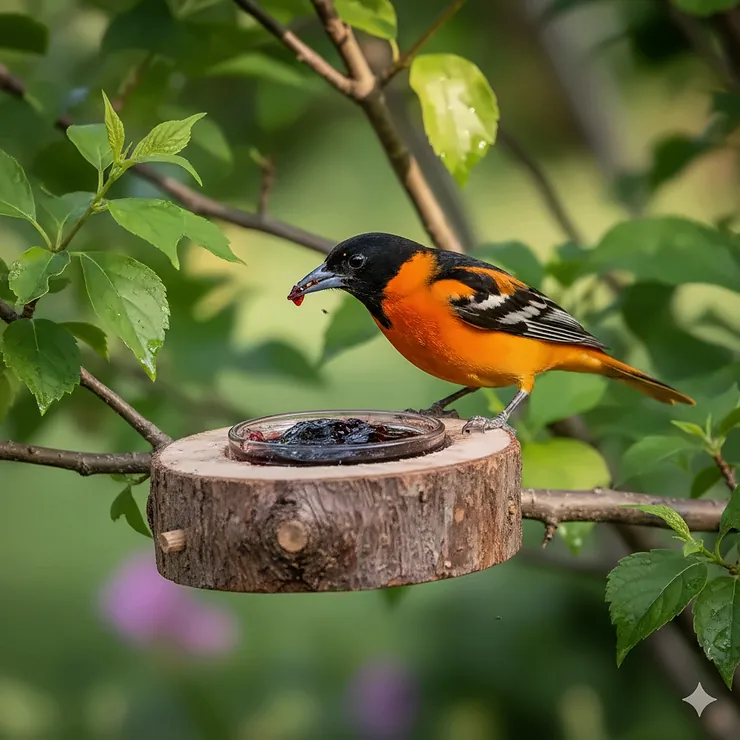
Have you ever caught a glimpse of a brilliant orange oriole darting through your trees and wished you could bring them closer? I remember the first time I spotted a Baltimore oriole in my yard—that flash of vibrant orange and black took my breath away. But here’s the frustrating part: regular bird feeders just don’t cut it for these gorgeous visitors.
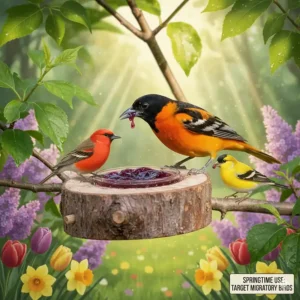
That’s where a jelly bird feeder becomes your secret weapon. Unlike traditional seed feeders, a jelly bird feeder specifically caters to fruit-loving birds like orioles, catbirds, and tanagers who have an insatiable sweet tooth. According to experts at Birds & Blooms, orioles are particularly drawn to grape jelly as a quick energy source, especially during spring migration when they’re exhausted from their long journeys north.
What is a jelly bird feeder? It’s a specialized feeding station designed with small cups or dishes to hold grape jelly, often combined with perches for oranges and nectar ports. These feeders typically feature bright orange colors that naturally attract orioles, making them visible from high up in the treetops where these birds spend most of their time.
Think of it as creating an irresistible rest stop for tired travelers. When orioles arrive in April or May after their grueling migration, they’re cold, hungry, and desperate for high-calorie foods. Your jelly bird feeder becomes that welcoming oasis they can’t resist. But with dozens of options flooding the market, how do you choose the right one? I’ve tested numerous feeders over the years, and I’m excited to share what really works.
Quick Comparison Table 📊
| Product | Capacity | Best For | Price Range | Rating |
|---|---|---|---|---|
| Perky-Pet 253 | 32 oz | Large yards | $16-$20 | ⭐⭐⭐⭐ |
| Birds Choice Oriolefest | 12 oz | Multi-purpose feeding | $28-$35 | ⭐⭐⭐⭐⭐ |
| Songbird Essentials | 10-12 oz | Budget-friendly | $12-$15 | ⭐⭐⭐⭐ |
| AmishToyBox Poly-Lumber | 2 cups | Durability | $47-$50 | ⭐⭐⭐⭐⭐ |
| Woodlink Classic | 12-16 oz | Versatility | $22-$28 | ⭐⭐⭐⭐ |
| Birds Choice Poly-Lumber | 2 cups | Eco-friendly | $24-$30 | ⭐⭐⭐⭐⭐ |
| Woodlink Copper | 2 oz × 2 | Aesthetic appeal | $35-$45 | ⭐⭐⭐⭐ |
💬 Just one click – help others make better buying decisions too! 😊
Top 7 Jelly Bird Feeder Options: Expert Analysis 🏆
After researching dozens of products and analyzing thousands of customer reviews, I’ve identified seven exceptional jelly bird feeder models that consistently attract orioles and other fruit-loving birds. Let me walk you through each one.
1. Perky-Pet 253 Wild Oriole Jelly Bird Feeder
This Perky-Pet 253 dominates the market for good reason. With its innovative inverted jar design, it holds a massive 32 ounces of jelly—that’s enough to keep your orioles happy for weeks during peak season. The built-in stirrer is pure genius; just turn the knob on the bottom to dispense fresh jelly into the circular tray.
Key Specifications:
- 32 oz capacity with replaceable jar
- Circular feeding tray with wraparound perch
- Bright orange color to attract orioles
- Built-in stirrer mechanism
Price: $16.69-$19.99
Customers rave about how the inverted design keeps jelly fresh and protected from rain. One reviewer mentioned going through an entire jar in just one week because orioles visited constantly. However, some folks complain about the plastic chain breaking after a month or two—bears and squirrels don’t help matters either.
Pros:
✅ Large capacity reduces refill frequency
✅ Stirrer prevents jelly clumping
✅ Weatherproof jar keeps jelly fresh
Cons:
❌ Plastic chain may break under stress
❌ Can get messy during hot weather
2. Birds Choice Oriolefest Oriole Bird Feeder
If you want the Mercedes-Benz of bird feeders for jelly, look no further than this Birds Choice Oriolefest model. This feeder was the first ever to accommodate nectar, orange halves, AND four separate jelly trays—all in one compact unit. It’s like an all-you-can-eat buffet designed specifically for orioles.
Key Specifications:
- 12 oz nectar capacity
- 4 feeding ports with bee guards
- Built-in ant moat
- Brass hanging rod doubles as orange skewer
Price: $28-$35
The weatherguard roof is a game-changer during summer storms, keeping everything dry while still allowing birds to spot the food easily. Multiple customers report that this feeder attracts not just orioles but also catbirds, woodpeckers, and even the occasional hummingbird. The bee guards work reasonably well, though determined bees still find their way in sometimes.
Pros:
✅ Multi-functional design saves space
✅ Protective dome keeps food fresh longer
✅ High-impact polycarbonate withstands years of use
Cons:
❌ Jelly cups could be deeper
❌ Higher price point
3. Songbird Essentials Jelly Bird Feeder
For budget-conscious birders, the Songbird Essentials Jelly Bird Feeder delivers impressive value. This straightforward design fits most standard 10-12 ounce jelly jars, and it comes with a 6-ounce plastic jar to get you started. The orange blossom design with perch gives birds a comfortable spot to feast.
Key Specifications:
- Fits 10-12 oz jelly jars
- Includes 6 oz reusable plastic jar
- Adjustable wire hanger
- Easy disassembly for cleaning
Price: $12-$15
What I love about this feeder is its simplicity. When your jar runs out, just swap it with a store-bought jar—no need to transfer sticky jelly. One customer shared that their resident orioles figured out this feeder within minutes of hanging it up. The only downside? It’s a bit lightweight, so strong winds can cause it to swing dramatically.
Pros:
✅ Most affordable option
✅ Uses standard jelly jars
✅ Easy to clean and refill
Cons:
❌ Lightweight construction
❌ No weather protection
4. AmishToyBox.com Double-Cup Oriole Jelly Feeder
Crafted by Amish craftsmen in Shipshewana, Indiana, this AmishToyBox.com feeder represents old-world quality meeting modern bird feeding. Made from recycled milk jugs transformed into durable poly-lumber, this feeder has survived bear attacks according to multiple reviews—now that’s impressive durability!
Key Specifications:
- 2 jelly dishes (3 oz each)
- 2 metal pegs for orange halves
- Recycled poly-lumber construction
- Stainless steel hardware
Price: $47.50
The craftsmanship shows in every detail. The poly-lumber won’t crack, split, or fade even after years of exposure to harsh weather. Several customers report their feeders lasting 5+ years with zero degradation. Yes, it’s pricey, but when you calculate cost per year, it actually becomes economical. Plus, you’re supporting small American craftsmen.
Pros:
✅ Exceptional durability (bear-proof!)
✅ Eco-friendly recycled materials
✅ Made in USA with quality craftsmanship
Cons:
❌ Higher upfront cost
❌ Heavier than plastic alternatives
5. Woodlink Classic Oriole Feeder (NAO1)
The Woodlink Classic Oriole Feeder takes the all-in-one concept seriously. With 12-16 ounces of nectar capacity, four jelly stations, and a built-in ant guard, this feeder covers all bases. The center rod accommodates an orange half, creating a complete feeding station.
Key Specifications:
- 12-16 oz nectar reservoir
- 4 jelly feeding stations
- 4 nectar feeding ports
- Built-in ant moat
- Dishwasher safe
Price: $22-$28
The ant moat is particularly clever—fill it with water, and ants literally can’t bridge the gap to reach your jelly. However, several reviewers noted that the jelly wells are quite shallow, so you’ll be refilling frequently if you have a lot of visitors. The dishwasher-safe feature is convenient, though I’d recommend hand washing to extend its lifespan.
Pros:
✅ Comprehensive feeding options
✅ Effective ant moat
✅ Easy cleaning (dishwasher safe)
Cons:
❌ Shallow jelly wells
❌ Top doesn’t latch securely
6. Birds Choice Oriole Bird Feeder (Poly-Lumber with Roof)
Another winner from Birds Choice, this poly-lumber model combines eco-consciousness with practical design. Made from recycled plastic jugs and bottles, it features a clear acrylic roof that protects food while allowing birds to easily spot treats from above.
Key Specifications:
- 2 cup jelly capacity
- 2 pegs for orange halves
- Clear acrylic weather roof
- Rust-resistant stainless steel cable
Price: $24-$30
Measuring 13″L × 7″W × 8″H, this feeder provides ample space for multiple orioles to feed simultaneously—I’ve personally watched three orioles share this feeder peacefully. The Wisconsin-made construction means you’re getting American-quality manufacturing. Customers consistently praise how the bright orange color draws orioles in from impressive distances.
Pros:
✅ Recycled materials (eco-friendly)
✅ Weather-resistant roof
✅ Accommodates multiple birds
Cons:
❌ Cups need frequent refilling
❌ Roof can collect water if not positioned correctly
7. Woodlink Brushed Copper Oriole Feeder
If aesthetics matter as much as function in your yard, the Woodlink Brushed Copper feeder is absolutely stunning. The brushed copper umbrella creates an elegant focal point while protecting jelly and fruit from rain. It’s like garden art that happens to feed birds.
Key Specifications:
- 2 glass jelly/preserve cups (2 oz each)
- 2 metal spikes for fruit
- Brushed copper top
- 10.5″D × 12″H dimensions
Price: $35-$45
This feeder attracts compliments from neighbors almost as often as it attracts orioles. The glass cups are easier to clean than plastic and don’t retain odors. However—and this is important—the copper will develop rust spots if not treated with a clear protective coat before use. Several savvy customers mentioned spraying their feeders with clear enamel, which preserved the beautiful finish for years.
Pros:
✅ Beautiful aesthetic design
✅ Glass cups for easy cleaning
✅ Effective weather protection
Cons:
❌ Requires protective coating to prevent rust
❌ Premium price point
🛒 Ready to Welcome Orioles to Your Yard?
These carefully selected jelly bird feeder options offer something for every budget and preference. Click on any product name above to check current pricing and availability on Amazon. Don’t wait—oriole migration season starts in April, and early preparation gives you the best chance of establishing regular visitors! 🎯✨
Understanding Jelly Bird Feeder Benefits vs. Traditional Feeders
Why would you invest in a specialized jelly bird feeder when you already have seed feeders? Let me break down the compelling advantages.
| Feature | Jelly Bird Feeder | Traditional Seed Feeder |
|---|---|---|
| Target Species | Orioles, tanagers, catbirds, warblers | Finches, sparrows, chickadees |
| Energy Density | High-calorie quick energy | Moderate sustained energy |
| Migration Support | Excellent for exhausted travelers | Limited appeal during migration |
| Visual Appeal | Colorful orange attracts from distance | Natural wood/metal tones |
| Maintenance | Clean every 2-3 days | Clean weekly |
| Seasonal Use | Spring/fall peak activity | Year-round feeding |
| Unique Visitors | Rare species appearances | Common backyard birds |
Traditional feeders serve an important purpose, but they simply can’t replicate what a jelly bird feeder offers for fruit-loving species. According to research from the National Audubon Society, orioles have specifically adapted to consume sweet, energy-dense foods that help fuel their incredible migration journeys of thousands of miles.
Moreover, watching an oriole at your jelly bird feeder provides entertainment value that seed feeders rarely match. These birds are strikingly beautiful, vocal, and surprisingly acrobatic as they navigate feeding. I’ve spent countless hours photographing orioles at my feeders, capturing moments I’d never experience with standard seed dispensers.
How to Choose the Perfect Jelly Bird Feeder for Your Backyard 🤔
Selecting the right jelly bird feeder involves considering several critical factors beyond just aesthetics. Let me guide you through the decision-making process with practical insights I’ve gathered over years of bird feeding.
Capacity Matters More Than You Think
Jelly capacity directly impacts how often you’ll need to refill. During peak oriole season (May through July), an active feeding station can empty a small cup in less than 24 hours. I learned this the hard way when I started with a 3-ounce feeder and found myself refilling it twice daily!
For most backyards, aim for 12-32 ounces of jelly capacity. The Perky-Pet 253 with its 32-ounce jar is perfect for busy schedules or if you travel frequently. Smaller 3-6 ounce feeders work fine if you enjoy the daily ritual of bird care and monitoring.
Material Construction and Weather Resistance
Your feeder faces brutal conditions: scorching summer sun, torrential rain, and potentially aggressive squirrels or bears. Poly-lumber feeders constructed from recycled plastic offer unmatched durability. They won’t crack in freezing temperatures or warp in heat.
Glass and metal options look beautiful but require more maintenance. The copper feeders need protective coating to prevent rust, while glass cups can shatter if dropped during cleaning. Personally, I keep both types—poly-lumber for daily use and a pretty copper feeder visible from my kitchen window.
Bee and Ant Protection Features
Here’s something nobody warns you about initially: bees absolutely adore jelly. Once they discover your feeder, they’ll swarm it, often driving orioles away. Look for feeders with bee guards (like the Birds Choice Oriolefest) that allow bird beaks through but exclude insects.
Ant moats are equally important. These small water-filled reservoirs create an uncrossable barrier for crawling insects. The Woodlink Classic has this feature built-in, saving you from ants contaminating your jelly supply.
Multi-Purpose Functionality
Why limit yourself to just jelly? The best feeders accommodate multiple food types. Look for models with:
- Orange pegs for citrus halves
- Nectar reservoirs for sugar water
- Multiple jelly cups for variety
The Birds Choice Oriolefest exemplifies this approach, offering four jelly trays, nectar ports, and an orange skewer all in one compact design. This versatility attracts more species and gives you flexibility in what you offer.
Easy Cleaning and Maintenance
Jelly gets sticky—there’s no way around it. Feeders with removable cups, wide openings, and smooth surfaces clean up fastest. Dishwasher-safe components are nice but not essential; warm soapy water works perfectly.
Avoid feeders with lots of crevices or tight corners where jelly can accumulate and mold. Simple designs with easy disassembly save frustration and ensure you’ll actually maintain them properly. Trust me, you don’t want to deal with moldy jelly stuck in unreachable spots.
Visibility and Placement Design
Orioles spot feeders while flying high above your property. Bright orange colors catch their attention immediately—this isn’t just marketing, it’s based on how orioles naturally locate orange-colored fruits in the wild. Feeders with weatherproof roofs or covers should be clear or translucent so birds can see the food from above.
The hanging mechanism matters too. Sturdy chains or cables that resist twisting in wind keep your feeder stable. Some cheaper models use thin plastic chains that snap easily, especially if larger birds like woodpeckers visit.
Setting Up Your Jelly Bird Feeder: Step-by-Step Success Guide 📍
Congratulations on getting your new jelly bird feeder! Now comes the crucial part—setting it up for maximum oriole attraction. Follow these proven steps:
Step 1 – Choose the Optimal Location
Visibility is paramount. Hang your feeder in an open area where passing orioles can spot it from above. Avoid tucking it under dense tree cover or awnings. I position mine about 6-8 feet from a large oak tree—close enough that birds feel safe but open enough to be visible.
Place it near a water source if possible. Orioles love birdbaths, especially those with moving water from fountains or drippers. The combination of food and water creates an irresistible stopover point.
Step 2 – Select the Right Jelly
Not all jellies work equally well. Based on extensive testing and BirdWatching Daily recommendations:
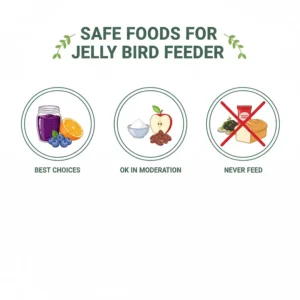
Best choices:
✅ Welch’s Grape Jelly – Most popular brand with orioles
✅ Natural grape jellies without high-fructose corn syrup
✅ Songbird Essentials BirdBerry Jelly – Specially formulated for birds
Avoid:
❌ Jellies with artificial sweeteners (toxic to birds)
❌ Sugar-free varieties
❌ Jellies with added preservatives
Step 3 – Fill Strategically (Less is More)
Here’s a mistake I made repeatedly: overfilling jelly cups. Use only 1-2 tablespoons per cup initially. Excess jelly can:
- Melt and drip in hot weather
- Trap birds’ feet and feathers
- Attract too many bees
- Waste money when it molds
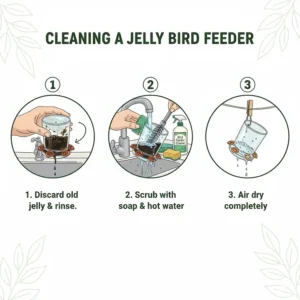
Refill every 2-3 days with fresh jelly rather than topping off old supplies. Clean cups between refills to prevent bacterial growth.
Step 4 – Add Complementary Foods
Enhance your setup with:
- Orange halves cut fresh daily
- Nectar solution (4:1 water to sugar ratio)
- Mealworms in a separate dish
This variety appeals to different dietary preferences and life stages. Parent orioles feed insects to nestlings but enjoy jelly themselves.
Step 5 – Time Your Setup Perfectly
Put feeders up 2-3 weeks before orioles typically arrive in your area. For most of the United States, this means late March or early April. Early birds find your feeder first and establish it as part of their territory, bringing their mates and eventually their fledglings.
Keep feeders up through September for fall migration. Southbound orioles need energy-dense foods just as much as northbound spring migrants.
Step 6 – Monitor and Adjust
Watch what’s happening at your feeder:
- If bees dominate, reduce jelly quantity or switch to a model with bee guards
- If orioles ignore it, try repositioning to a more visible spot
- If jelly molds quickly, reduce amounts and increase cleaning frequency
Step 7 – Create a Safe Environment
Hang feeders 6-10 feet high to deter cats. Keep vegetation trimmed around the immediate area so predators can’t hide nearby. However, maintain some nearby trees or shrubs where birds can perch and survey before approaching.
Best Practices for Maintaining Your Jelly Bird Feeder 🧼
Proper maintenance extends your feeder’s life and keeps visitors healthy. Here are professional-grade maintenance tips:
Daily Tasks:
- Check jelly freshness (especially in hot weather)
- Remove any insects stuck in jelly
- Wipe down perches and edges
Every 2-3 Days:
- Replace jelly completely
- Wash cups with hot soapy water
- Rinse thoroughly (soap residue deters birds)
Weekly Deep Cleaning:
- Disassemble entire feeder
- Soak components in hot water with vinegar (10:1 ratio)
- Scrub with soft brush to remove sticky residue
- Dry completely before refilling
Monthly Inspection:
- Check for cracks or damage
- Tighten loose screws or hardware
- Inspect hanging cables for fraying
- Apply rust prevention to metal components if needed
Seasonal Preparation:
- Before spring: Deep clean and inspect all parts
- Before fall: Repeat deep cleaning, replace worn components
- Winter storage: Some models can be stored; others attract winter residents
Many bird diseases spread through dirty feeders. The CDC recommends maintaining clean feeding stations to prevent avian illness transmission.
Common Jelly Bird Feeder Problems and Solutions 🔧
Even experienced birders encounter challenges with jelly bird feeders. Let me share solutions to the most common issues:
Problem 1 – Bees and Wasps Taking Over
Solution: Switch to feeders with bee guards, reduce jelly quantities, or temporarily remove feeders during peak bee activity (usually afternoons). Some birders successfully use lemon or mint oil around (not on) feeders as natural deterrents. The Birds Choice Oriolefest with bee guards works better than open-dish models.
Problem 2 – Jelly Melting in Hot Weather
Solution: Position feeders in shaded locations during summer. Use smaller quantities that birds consume before melting occurs. Some birders freeze jelly overnight and put it out frozen each morning—it stays fresh longer. Alternatively, try specialized bird jellies like BirdBerry that maintain consistency better in heat.
Problem 3 – No Orioles Visiting
Solution: Be patient—it often takes 2-3 seasons for orioles to discover new feeders. Ensure your feeder is visible from above. Try playing oriole songs from your phone near the feeder (really, this works!). Make sure you’ve timed setup correctly; orioles won’t visit outside their migration and nesting season.
Problem 4 – Aggressive Birds Dominating Feeder
Solution: Add more feeders in different locations. Dominant males claim territories around single feeders but can’t guard multiple locations. Place feeders 20-30 feet apart to reduce conflicts.
Problem 5 – Jelly Molding Too Quickly
Solution: This indicates too much jelly or insufficient bird traffic. Reduce quantities and clean more frequently. In humid climates, mold develops faster—some birders only put out jelly in morning and evening, removing it during midday heat.
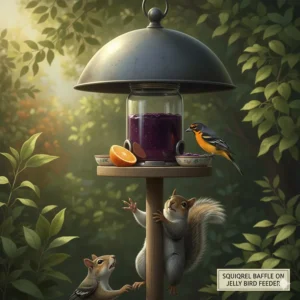
Problem 6 – Squirrels or Raccoons Raiding Feeder
Solution: Hang feeders on thin cables that won’t support larger animals’ weight. Add baffles above and below feeders. Bring feeders inside at night when raccoons are most active. The poly-lumber models withstand rough treatment better than plastic alternatives.
Seasonal Feeding Strategies for Maximum Oriole Activity 📅
Understanding seasonal patterns transforms your success with jelly bird feeders. Here’s what works throughout the year:
Spring Migration (March-May)
This is prime time! Orioles arrive exhausted and starving. Action steps:
- Put feeders up 2-3 weeks early
- Use maximum jelly quantities
- Add orange halves daily
- Check feeders twice daily
- Position in most visible locations
Spring migrants are less wary and will visit feeders readily. This is when you’ll see the most dramatic activity and variety of species.
Nesting Season (May-July)
Orioles become territorial and quieter during nesting. Action steps:
- Maintain consistent feeding schedules
- Add protein sources (mealworms)
- Reduce jelly slightly as natural insects become abundant
- Watch for parents bringing fledglings to feeders
Parent orioles often introduce their young to feeders in late June and July—absolutely magical to observe!
Fall Migration (August-September)
Southbound birds need fuel for long journeys. Action steps:
- Increase jelly offerings again
- Clean feeders meticulously (diseases spread more in warm weather)
- Add nectar feeders
- Expect different species than spring
Fall orioles are often quieter and less colorful (immature birds), but they’re just as hungry.
Winter (October-February)
Most orioles leave for warmer climates. Action steps:
- Clean and store feeders, OR
- Keep one feeder up for occasional vagrant orioles
- Focus on winter resident species (seeds, suet)
Some regions (southern Texas, California, Florida) host wintering orioles. Research local patterns on eBird to determine if winter feeding makes sense in your area.
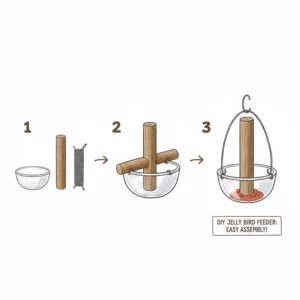
DIY vs. Store-Bought Jelly Bird Feeder: What’s Right for You? 🛠️
Should you build your own feeder or buy manufactured options? Let’s examine both approaches:
DIY Jelly Bird Feeder Projects
Advantages:
- Lower initial cost ($5-10 in materials)
- Customization to your exact specifications
- Satisfaction of building something yourself
- Can repurpose existing materials
Disadvantages:
- Time investment (3-5 hours minimum)
- May lack durability of commercial products
- No warranty or support
- Trial and error to get design right
Simple DIY Option: Use a sturdy orange plastic dish, drill holes for drainage and hanging, attach strong wire or chain. Cost: Under $10. This works surprisingly well for testing whether orioles visit your property before investing in premium feeders.
Commercial Jelly Bird Feeder Products
Advantages:
- Proven designs tested by thousands of users
- Warranties and customer support
- Professional materials and construction
- Immediate use (no building required)
- Optimized for bird behavior and weather
Disadvantages:
- Higher upfront cost ($15-50)
- Less customization
- May include features you don’t need
My recommendation: Start with one quality commercial feeder like the Perky-Pet 253 or Songbird Essentials model. If orioles visit and you want more feeding stations, then experiment with DIY options. This approach minimizes risk while learning what works in your specific location.
Attracting Different Bird Species Beyond Orioles 🦜
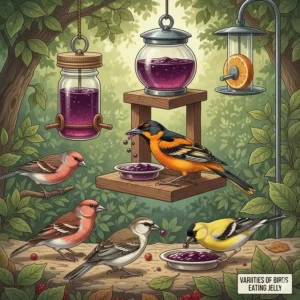
While orioles steal the spotlight, jelly bird feeders attract a surprising variety of species. Here’s who might visit:
Regular Visitors:
- Gray Catbirds – Love jelly almost as much as orioles
- Baltimore Orioles – The main target species
- Orchard Orioles – Smaller, darker cousins
- Bullock’s Orioles – Western species
Occasional Visitors:
- Rose-breasted Grosbeaks – Stunning pink and black males
- Scarlet Tanagers – Brilliant red birds with black wings
- Cape May Warblers – During cold spring migrations
- Northern Mockingbirds – Especially in southern regions
- House Finches – Adapt to almost any feeder
- Woodpeckers – Red-bellied and Downy varieties
Surprise Guests:
- American Robins – Typically ground feeders but love jelly
- Brown Thrashers – Secretive but jelly brings them out
- Blue Jays – Occasionally sample jelly
- Hummingbirds – WARNING: Can get stuck in jelly (use separate feeders)
Each species brings unique behaviors and beauty to your feeding station. Keep a journal noting which species visit when—patterns emerge that help you anticipate activity throughout the season.
Budget Breakdown: Investment vs. Long-Term Value 💰
Let’s talk money. Is a jelly bird feeder worth the investment? Here’s a realistic cost analysis:
Initial Investment
Budget Setup ($30-40):
- Basic jelly bird feeder: $12-20
- 2 jars grape jelly: $6-8
- Orange halves: $4-6
- Hanging hardware: $3-5
Mid-Range Setup ($60-80):
- Quality poly-lumber feeder: $25-35
- Specialized bird jelly (3 bottles): $18-25
- Fresh oranges (monthly): $8-12
- Ant moat: $5-8
Premium Setup ($100-150):
- Top-tier feeder (Oriolefest or Amish): $35-50
- Season supply of bird jelly: $30-40
- Multiple food types (nectar, mealworms): $20-30
- Additional accessories (brushes, baffles): $15-20
Ongoing Annual Costs
Jelly Expenses:
- Light use (2-4 visitors): $40-60/year
- Moderate use (5-10 visitors): $80-120/year
- Heavy use (10+ visitors): $150-250/year
Maintenance:
- Cleaning supplies: $10-15/year
- Replacement parts: $5-20/year
- Winter storage materials: $5-10/year
Value Received
What do you get for this investment?
- Entertainment value: Countless hours watching beautiful birds
- Education: Learning bird behavior and ecology
- Photography opportunities: Amazing shots worth hundreds to professionals
- Mental health benefits: Nature connection reduces stress
- Conservation contribution: Supporting native bird populations
Compare this to other hobbies: Golf costs $50+ per round, streaming services cost $15-20 monthly, and movie tickets run $15-25 per visit. Bird feeding provides continuous entertainment for similar or lower cost.
Safety Considerations: Protecting Birds and Your Family 🛡️
Responsible bird feeding prioritizes safety. Follow these essential guidelines:
Food Safety for Birds
Do:
✅ Use fresh jelly without artificial sweeteners
✅ Clean feeders every 2-3 days minimum
✅ Remove moldy food immediately
✅ Provide small quantities that birds consume quickly
✅ Store jelly in cool, dry locations
Don’t:
❌ Feed jelly with high-fructose corn syrup excessively
❌ Let old jelly accumulate under fresh jelly
❌ Use human foods not tested for birds
❌ Overfeed to point birds become dependent
Preventing Bird Injuries
Sticky jelly can trap birds if mishandled. Use shallow dishes with only 1-2 tablespoons at a time. If you discover a bird stuck in jelly, carefully:
- Wear gloves to protect yourself and the bird
- Gently remove bird from jelly
- Use lukewarm water to clean feathers
- Contact a wildlife rehabilitator immediately
- Never use soap, oils, or harsh cleaners
Human Health Precautions
Bird feeders can harbor bacteria. Always:
- Wash hands thoroughly after handling feeders or jelly
- Don’t allow young children to handle feeders unsupervised
- Keep feeders away from food preparation areas
- Wear gloves when cleaning heavily soiled feeders
- Avoid touching sick or dead birds
Predator Protection
Protect feeding birds from cats, hawks, and other predators:
- Position feeders 6-10 feet high
- Keep 10 feet from dense cover where cats hide
- Maintain clear sight lines so birds can spot approaching danger
- Add nearby escape cover (shrubs 15-20 feet away)
- Bring feeders inside if hawks repeatedly hunt your yard
Window Collision Prevention
Feeders near windows can lead to fatal collisions. Place feeders either:
- Within 3 feet of windows (birds can’t build fatal speed)
- Beyond 30 feet from windows (birds avoid collision trajectory)
Apply window decals, screens, or UV-reflective tape to make glass visible to birds.
Regional Considerations: Adapting Feeder Choice to Your Location 🌎
Your geographic location dramatically affects which jelly bird feeder works best:
Northern States (Maine to Washington)
Species: Baltimore Orioles primarily, with occasional Orchard Orioles
Season: Short intense season (May-August)
Challenges: Late spring freezes, brief nesting window
Best feeders: Large capacity models like
Perky-Pet 253 to maximize short season
Southern States (Florida to Southern California)
Species: Multiple oriole species, possible winter residents
Challenges: Extreme heat, rapid jelly melting, year-round insects
Best feeders: Shaded models with weather guards like Birds Choice Oriolefest; reduce jelly quantities in summer heat
Midwest (Ohio to Kansas)
Species: Both Baltimore and Orchard Orioles, good diversity
Season: Moderate length (April-September)
Challenges: Variable weather, tornado season
Best feeders: Durable poly-lumber models like AmishToyBox that withstand severe weather
Western Mountain States (Montana to New Mexico)
Species: Bullock’s Orioles, some Hooded Orioles
Challenges: High altitude affects timing, dry climate, strong winds
Best feeders: Sturdy construction with secure mounting, Woodlink Classic performs well
Pacific Coast (California to Washington)
Species: Bullock’s, Hooded, sometimes Scott’s Orioles
Season: Longest season (March-October in some areas)
Challenges: Coastal fog, salt air corrosion
Best feeders: Corrosion-resistant materials; treat Woodlink Copper with protective coating
Check All About Birds for specific species ranges and timing in your exact location.
Troubleshooting Guide: Expert Solutions to Frustrating Issues 🔍
Let me address the most frustrating problems birders face with jelly bird feeders:
Issue: “I’ve had my feeder up for weeks with no orioles visiting.”
Solution: Verify orioles are actually present in your area. Use the Cornell Lab’s eBird to check recent sightings nearby. If orioles are around but ignoring your feeder, try playing oriole songs from your smartphone near the feeder for 10-15 minutes daily. This genuinely works—I’ve attracted birds within hours using this method. Also ensure your feeder is highly visible from above and positioned in open space.
Issue: “Ants completely overwhelm my jelly cups within hours.”
Solution: Install an ant moat above your feeder. Fill it with water, which creates an impassable barrier for crawling insects. Clean and refill the moat weekly. Alternatively, apply petroleum jelly (ironically) to the hanging pole or chain—ants won’t cross it. Never apply petroleum jelly near bird contact areas.
Issue: “My jelly gets watery and drippy after a day in the sun.”
Solution: This happens with standard grocery store jelly in hot weather. Switch to specialized bird jellies like Songbird Essentials BirdBerry Jelly, which maintains consistency better in heat. Position feeders in morning sun but afternoon shade. Reduce quantities so birds consume jelly before heat peaks. Consider removing feeders during hottest hours (noon-3pm) in summer.
Issue: “Orioles used to visit constantly but suddenly stopped.”
Solution: This is normal seasonal behavior, not a feeder problem. Orioles reduce jelly consumption once natural insects become abundant (usually mid-summer). Parents feed insects to nestlings, not jelly. Activity picks up again in late summer as juveniles fledge and fall migration begins. Maintain fresh offerings even during slow periods—orioles may visit less frequently but will remember your reliable food source.
Issue: “My jelly grows mold before birds finish it.”
Solution: You’re offering too much jelly for your visitor population. Reduce to 1-2 tablespoons per cup. Clean cups completely every 2 days regardless of whether jelly is finished. In humid climates, some birders only put jelly out for 4-6 hours daily during peak bird activity (morning and evening), removing it during afternoon heat and humidity.
Issue: “Hummingbirds are getting stuck in my jelly.”
Solution: Separate your jelly and nectar feeding stations by at least 20 feet. Consider removing jelly feeders if hummingbirds persistently try to use them. Some bird species should access nectar, not jelly. If you find a trapped hummingbird, act immediately—clean with lukewarm water and contact a wildlife rehabilitator.
Maximizing Your Birding Experience: Photography and Documentation Tips 📸
A jelly bird feeder creates fantastic photography opportunities. Enhance your birding experience with these professional techniques:
Camera Settings:
- Shutter speed: 1/500 or faster for perched birds, 1/1000+ for flying
- Aperture: f/5.6-f/8 for good depth of field
- ISO: Adjust based on light (400-800 typically)
- Continuous shooting mode for multiple frames
Positioning:
- Set up 10-15 feet from feeder with telephoto lens (300mm+)
- Shoot from bird’s eye level (lie down if necessary)
- Position yourself so sun illuminates bird’s front
- Use window blinds as concealment indoors
Backgrounds:
- Hang feeders with clean, uncluttered backgrounds
- Green foliage provides natural, pleasing backdrop
- Avoid fence posts, buildings, or busy visual elements
- Shoot with wide apertures to blur backgrounds
Documentation:
- Keep a birding journal noting species, dates, behaviors
- Record weather conditions affecting visitor numbers
- Track what foods attract which species
- Note interesting behaviors for later research
Apps for Enhancement:
- Merlin Bird ID – Identify unusual visitors
- eBird – Submit sightings, contribute to science
- iNaturalist – Share photos, connect with community
- Lightroom Mobile – Edit photos on-the-go
Environmental Impact: Sustainable Bird Feeding Practices 🌱
Responsible birders consider environmental implications of their hobby. Here’s how to feed birds sustainably:
Choose Eco-Friendly Feeders:
- Recycled materials: Opt for poly-lumber feeders like AmishToyBox or Birds Choice models made from recycled plastic
- Made in USA: Reduce carbon footprint from shipping
- Durable construction: Longer lifespan means less waste
- Repairable designs: Choose feeders with replaceable parts
Select Sustainable Jelly:
- Look for organic grape jelly from sustainable farms
- Avoid jellies with high-fructose corn syrup (intensive agricultural product)
- Support companies using eco-friendly packaging
- Buy in bulk to reduce packaging waste
Minimize Waste:
- Use appropriate jelly quantities to prevent spoilage
- Compost moldy jelly and spoiled oranges
- Recycle jelly jars and feeder packaging
- Repair damaged feeders rather than replacing
Support Native Habitat: Remember, feeders supplement but don’t replace natural food sources. Plant native:
- Berry-producing shrubs: Serviceberry, elderberry, mulberry
- Nectar flowers: Cardinal flower, trumpet vine, bee balm
- Insect-supporting plants: Native oaks support 500+ caterpillar species
According to the National Wildlife Federation, native plants provide 40 times more value to wildlife than non-native ornamentals.
Water Conservation:
- Use drip irrigation or rain barrels for birdbaths
- Choose water features with recirculating pumps
- Position birdbaths in shade to reduce evaporation
Chemical-Free Yards:
- Never use pesticides near feeders
- Avoid herbicides that reduce insect populations
- Choose organic yard care practices
- Let some areas grow “wild” for natural food
❓ Frequently Asked Questions About Jelly Bird Feeder
❓ What type of jelly is best for a jelly bird feeder?
❓ How often should I clean my jelly bird feeder?
❓ When is the best time to put out a jelly bird feeder?
❓ Can I use homemade jelly in my bird feeder?
❓ How do I keep bees away from my jelly bird feeder?
Conclusion: Transform Your Backyard into an Oriole Paradise 🎉
After exploring everything from product specifications to seasonal strategies, you’re now equipped to make an informed decision about jelly bird feeders. Whether you choose the budget-friendly Songbird Essentials model, the feature-packed Birds Choice Oriolefest, or the indestructible AmishToyBox feeder, you’re investing in more than just a bird feeding station—you’re creating a window into the fascinating world of wild birds.
I’ll never forget the morning I stepped onto my deck with coffee in hand and saw seven Baltimore orioles simultaneously visiting my feeders. That flash of brilliant orange and black against green spring foliage, their melodious calls filling the air—it’s a moment that justified every penny spent and every minute invested in learning proper feeding techniques.
The key to success isn’t necessarily buying the most expensive feeder or the fanciest jelly. It’s about understanding bird behavior, maintaining consistent feeding practices, and creating a welcoming environment. Start with one quality feeder, position it thoughtfully, use fresh grape jelly, and be patient. Orioles may take days, weeks, or even a season to discover your offerings, but when they do, they often become loyal visitors who return year after year.
Remember that bird feeding represents a partnership between you and wild creatures. You provide supplemental nutrition during critical migration periods; they reward you with beauty, entertainment, and the satisfaction of supporting wildlife conservation. Every oriole successfully fueled at your feeder potentially completes its incredible migration journey, raises healthy young, and returns to delight you next season.
Ready to get started? Choose your jelly bird feeder today, mark your calendar for early spring setup, and prepare for the thrill of welcoming these magnificent birds to your backyard. Your oriole paradise awaits!
🌟 Take Action Now – Your Orioles Are Waiting!
Don’t let another migration season pass without experiencing the joy of feeding orioles. Browse the recommended products above, select the feeder that matches your needs and budget, and place your order today. Early spring will be here before you know it, and orioles won’t wait around for unprepared backyards. Get your feeder now, and you’ll be ready when these brilliant visitors arrive! 🛒✨
Recommended for You
- 7 Best Wooden Suet Bird Feeders That Attract Woodpeckers 2025
- Bird Feeder Dome: 7 Top Weatherproof Picks to Protect 2025
- Feather Snap Bird Feeder: 7 Best Smart Options 2025
Disclaimer: This article contains affiliate links. If you purchase products through these links, we may earn a small commission at no additional cost to you.
✨ Found this helpful? Share it with your friends! 💬🤗
