
In This Article
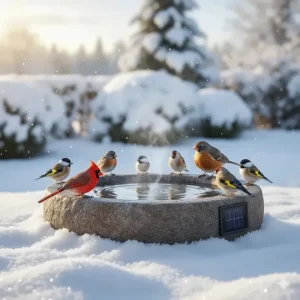
Picture this: It’s a frigid January morning, temperatures hovering around 15°F, and a small chickadee lands on your frozen bird bath, desperately searching for a drink. Natural water sources have turned to ice, and this tiny creature needs hydration to survive another cold night. This scene plays out in countless backyards every winter, highlighting why a solar heated bird bath isn’t just a nice-to-have accessory—it’s a potential lifesaver.
Here’s something that might surprise you: birds need water even more critically in winter than summer. According to research on bird behavior, birds require fresh water not only for drinking but also for bathing to maintain their feathers’ insulating properties. Snow contains only about 10% water content, meaning birds would need to consume massive amounts just to stay hydrated—all while burning precious calories needed to stay warm.
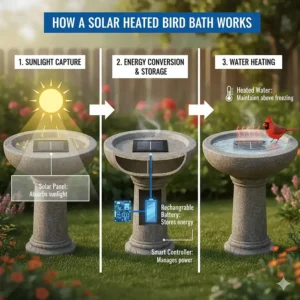
While truly solar-powered heating systems don’t yet exist for bird baths (the energy requirements are simply too high for current solar panel technology), there’s fantastic news: electrically heated bird baths with thermostat controlled features offer the perfect solution. These innovative devices automatically activate when temperatures drop, keeping water ice-free down to -20°F while consuming just pennies per day in electricity. Some models even incorporate solar fountains for water circulation during daytime hours.
In this comprehensive guide, I’ll walk you through everything you need to know about choosing the perfect winter bird bath for your backyard sanctuary. Whether you’re looking for a budget-friendly de-icer or a premium all-season system, we’ve researched the best options currently available to help you make an informed decision.
Quick Comparison Table
| Product Name | Type | Wattage | Price Range | Temperature Range | Best For |
|---|---|---|---|---|---|
| K&H Ice Eliminator Super | De-Icer | 80W | $35-45 | -20°F | Large baths, budget-conscious |
| API Deck Mounted Heated Bath | Complete System | 150W | $80-100 | -20°F | Deck railings, close viewing |
| Farm Innovators HBC-120C | Pedestal Bath | 120W | $90-120 | -10°F | Traditional style, all-season |
| K&H Ice Eliminator Original | De-Icer | 50W | $25-35 | -20°F | Small baths, economy option |
| XpenGeny Full-Covered | De-Icer | 120W | $30-40 | Freezing temps | Modern design, aluminum |
| GESAIL Birdbath Deicer | De-Icer | 50W | $20-30 | Freezing temps | Standard baths, versatile |
| Allied Precision Four Seasons | Complete System | 150W | $70-95 | -20°F | Year-round use, dual mount |
💬 Just one click – help others make better buying decisions too! 😊
Top 7 Solar Heated Bird Baths: Expert Analysis
1. K&H Pet Products Super Ice Eliminator – Best Overall Performance
When it comes to reliability in brutal winter conditions, the K&H Super Ice Eliminator stands as the gold standard that serious bird enthusiasts swear by. This 80-watt powerhouse has earned its reputation through decades of proven performance in backyards across North America.
Key Specifications:
- Power: 80 watts with built-in thermostat
- Temperature range: Effective to -20°F
- Dimensions: 9″ diameter, rock-like design
- Cord length: 18 inches
What makes this de-icer exceptional is its intelligent thermostat that activates around 35°F and shuts off at approximately 45°F, operating only when necessary. The cast aluminum construction with durable enamel finish means you can spray paint it any color to match your existing bird bath—a thoughtful design touch that sets it apart from competitors.
Customer feedback consistently highlights its longevity, with many users reporting 5+ years of reliable service. One verified buyer in Minnesota noted: “Works flawlessly even when temps drop to single digits. My concrete bath has never cracked, and the birds absolutely love having open water all winter.”
✅ Pros:
- MET Labs certified for electrical safety
- Won’t calcify, rust, or stain
- Energy efficient operation
- Three-year warranty
❌ Cons:
- May struggle in extreme sub-zero conditions for extended periods
- Designed for baths over 10 gallons (smaller baths should use 50W version)
Price Range: $35-45 | Best For: Those seeking maximum reliability in harsh winter climates

2. API Heated Deck Mounting Bird Bath – Best for Close-Up Viewing
Imagine sipping your morning coffee while cardinals and chickadees bathe just feet away from your kitchen window. The API Heated Deck Mounting Bird Bath makes this dream a reality with its innovative EZ-Tilt mounting system that attaches directly to 2×4″ or 2×6″ deck rails.
Key Specifications:
- Basin diameter: 20 inches
- Heating element: 150 watts, fully concealed
- Depth: 2 inches with gradual slope
- Material: Weather-resistant plastic
This complete heated bird bath system features a hidden heating element beneath the bowl that maintains water temperature even when outdoor temps plummet to -20°F. The textured surface provides excellent grip for birds’ talons, while the speckled stone-like finish blends beautifully with natural surroundings.
The real genius lies in the EZ-Tilt mechanism—simply lift and tilt the basin for effortless cleaning and refilling. No more struggling with heavy frozen basins or complicated removal processes. Customers appreciate this convenience, though some note the mounting hardware occasionally requires minor adjustments for perfect leveling.
✅ Pros:
- Brings bird-watching action close to your home
- Thermostatically controlled for energy efficiency
- Easy cleaning with tilt mechanism
- Made in USA with one-year warranty
❌ Cons:
- Mounting may require shims for perfect level on some railings
- Plastic construction less elegant than ceramic options
Price Range: $80-100 | Best For: Apartment dwellers and those wanting premium viewing experiences
3. Farm Innovators HBC-120C Heated Birdbath – Best Traditional Pedestal Design
For those who appreciate classic garden aesthetics, the Farm Innovators HBC-120C delivers timeless beauty combined with modern heating technology. This scalloped compression-molded design mimics the appearance of traditional concrete bird baths while offering superior durability and crack resistance.
Key Specifications:
- Power: 120 watts, thermostatically controlled
- Construction: Compression-molded plastic
- Style: Scalloped pedestal design
- Basin: Removable for easy cleaning
The 120-watt heating element operates automatically when water temperatures near freezing, providing reliable ice-free water down to -10°F. What sets this model apart is its authentic stone-like appearance achieved through compression molding—you get the elegant look of concrete without the weight or cracking concerns.
The basin easily removes from the pedestal for convenient refilling and cleaning, while the hidden electrical connection keeps cables tucked away for a clean, professional appearance. Users particularly love that it functions beautifully year-round; simply unplug in warmer months for traditional bird bath use.
✅ Pros:
- Beautiful scalloped design enhances garden aesthetics
- Basin easily removes for maintenance
- Operates for pennies per day
- No risk of concrete cracking in freeze-thaw cycles
❌ Cons:
- Higher wattage means slightly increased energy consumption
- Pedestal sold separately in some versions
Price Range: $90-120 | Best For: Garden enthusiasts wanting both function and traditional beauty
4. K&H Pet Products Ice Eliminator Original – Best Budget Option
Not everyone needs maximum heating capacity, and that’s where the K&H Ice Eliminator Original shines. This 50-watt version offers the same trusted K&H quality at a friendlier price point, perfect for smaller bird baths or milder winter climates.
Key Specifications:
- Power: 50 watts with thermostat
- Suitable for: Baths up to 10 gallons
- Temperature range: -20°F effectiveness
- Design: Compact rock-like appearance
Don’t let the lower wattage fool you—this little powerhouse performs admirably for standard-sized bird baths. The thermostatically controlled operation means it cycles on and off as needed, keeping your electricity bills minimal while ensuring birds always have access to liquid water.
The solid housing prevents it from floating or tipping out of position, while the 18-inch cord provides flexibility in placement. Many budget-conscious buyers report excellent results, with one customer stating: “Been using this for three winters in Ohio. Water stays open even on our coldest days, and I’ve noticed no increase in my electric bill.”
✅ Pros:
- Exceptional value for money
- Perfect for smaller baths
- MET Labs safety certified
- Same quality construction as higher-watt models
❌ Cons:
- Not suitable for very large baths or extreme cold
- May struggle with baths over 10 gallons
Price Range: $25-35 | Best For: Budget shoppers with standard-sized bird baths
5. XpenGeny Bird Bath Heater – Best Modern Aluminum Design
If you’re looking for cutting-edge design combined with intelligent temperature control, the XpenGeny Full-Covered Aluminum heater represents the latest evolution in bird bath heating technology. Its sleek, fully-sealed aluminum construction offers superior heat transfer efficiency.
Key Specifications:
- Power: 120 watts, intelligent thermostat
- Material: Heavy-duty cast aluminum with waterproof coating
- Auto shut-off: When water temperature exceeds 77°F
- Coverage: Complete aluminum sealing
This 2023 model introduces smart temperature start-stop design that automatically activates when icing conditions trigger, then shuts off when not needed. The full aluminum coverage provides low heat loss and high thermal conductivity, translating to more efficient operation compared to traditional designs.
The environmentally-friendly waterproof paint prevents rust while remaining safe for birds and other backyard wildlife. Customers appreciate the plug-and-play simplicity—just ensure water covers the heater completely, plug in, and watch your feathered friends enjoy warm water all winter.
✅ Pros:
- Modern, efficient aluminum construction
- Intelligent auto start-stop for energy savings
- Environmentally safe coating
- Works for multiple animals (chickens, squirrels, rabbits)
❌ Cons:
- Must ensure complete water coverage to prevent dry-running
- Newer brand with less long-term track record
Price Range: $30-40 | Best For: Tech-savvy buyers wanting latest heating technology

6. GESAIL Birdbath Deicer – Best Versatile Multi-Bath Option
Sometimes you need heating flexibility, and the GESAIL Birdbath Deicer delivers exactly that. This 50-watt unit works with virtually any bird bath material—metal, plastic, stone, or glass—making it incredibly versatile for backyard setups with multiple baths.
Key Specifications:
- Power: 50 watts, 120V with thermostat
- Compatibility: All bath materials
- Construction: Heavy-duty cast aluminum
- Cord: 25-inch PVC for safety
The beauty of this de-icer lies in its universal compatibility and paintable enamel finish. Got a decorative ceramic bath you love but can’t use in winter? This heater solves that problem. The cast aluminum heating element is fully wrapped to protect birds from accidental scalding—a critical safety feature often overlooked.
Users love the natural color that can be spray-painted to match any bath, and the durable construction that won’t leave rust stains or calcium deposits. One customer shared: “I rotate this between my two bird baths depending on which gets more action. Works perfectly with both my plastic and stone baths.”
✅ Pros:
- Works with any bath material
- Won’t melt plastic baths
- Customizable with spray paint
- 30-day money-back guarantee plus one-year warranty
❌ Cons:
- 25-inch cord may require extension for some setups
- Lower wattage not ideal for very large installations
Price Range: $20-30 | Best For: Multi-bath setups needing versatile heating
7. Allied Precision Four Seasons Heated Bird Bath – Best Year-Round System
Rounding out our top picks is the Allied Precision Four Seasons Heated Bird Bath, a complete system designed for truly year-round use. This thoughtful design includes both deck mount and pole mount options, providing maximum installation flexibility.
Key Specifications:
- Basin: 14 inches diameter
- Heating: 150 watts, thermostatically controlled
- Mounting: Dual option (deck or pole)
- Material: Durable plastic construction
What makes this the ultimate all-season choice is the removable heating element. During warmer months, simply remove the heater and use it as a traditional bird bath—no need to store it away or maintain separate summer/winter setups. The 150-watt thermostat automatically maintains water between 40-50°F, preventing ice formation while avoiding energy waste.
The textured surface and shaped rim encourage natural perching behavior, while the gradual 2-inch depth slope accommodates birds of all sizes. According to verified buyers, this bath attracts species that normally wouldn’t visit seed feeders, significantly expanding backyard bird diversity.
✅ Pros:
- Truly year-round with removable heater
- Dual mounting options for flexibility
- Textured surface aids bird grip
- Three-year warranty from established brand
❌ Cons:
- Higher initial investment
- Plastic may not appeal to traditional aesthetics lovers
Price Range: $70-95 | Best For: Committed bird enthusiasts wanting premium all-season solution
✨ Don’t Miss These Exclusive Deals!
🔍 Take your winter bird watching to the next level with these carefully selected products. Click on any highlighted item to check current pricing and availability. These tools will help you create authentic bird-friendly habitats your feathered visitors will love!
Understanding Solar Heated Bird Bath Technology
Let’s address the elephant in the room: true solar-powered heating for winter bird baths doesn’t currently exist in practical consumer products. I know this might sound disappointing after seeing “solar heated bird bath” in the title, but understanding why helps you make smarter purchasing decisions.
The Solar Heating Challenge
Solar panels generate electricity from sunlight, which sounds perfect for heating water, right? The problem is the math simply doesn’t work out during winter months when heating is most needed. Here’s why:
A typical solar panel produces about 1.5 watts per square foot in optimal conditions. To generate enough power for even a modest 50-watt heater, you’d need a solar panel roughly 33 square feet—that’s a panel nearly 6 feet by 6 feet! Now factor in winter’s reduced daylight hours, frequent cloud cover, and snow accumulation on panels, and the required size becomes even more impractical.
Additionally, bird baths need heating most critically during nighttime when temperatures drop lowest—precisely when solar panels generate zero power. Battery storage systems large enough to run a heater overnight would be prohibitively expensive and require constant maintenance in freezing conditions.
What “Solar” Options Actually Exist
While fully solar-heated systems aren’t viable, you can find hybrid solutions that incorporate solar elements:
Solar Fountain + Electric Heating: Some models like the GIFANK feature solar-powered water circulation fountains combined with plug-in heating elements. The solar fountain keeps water moving during daylight (which birds love), while the electric heater prevents freezing.
Solar Panel Trickle Chargers: Advanced DIY enthusiasts sometimes use small solar panels to trickle-charge a battery that powers ultra-low-wattage heaters. However, these systems require electrical knowledge and regular monitoring.
Passive Solar Warming: Painting your bird bath flat black and positioning it in full sun provides modest warmth from passive solar gain. Studies on thermal absorption show this can delay freezing by several hours but won’t prevent ice formation in truly cold weather.
The Practical Solution: Thermostat Controlled Electric Heaters
Here’s the good news: modern thermostat controlled bird bath heaters are incredibly efficient and cost-effective. Most quality units:
- Operate only when water temperature drops near freezing
- Use 50-150 watts (comparable to a standard light bulb)
- Cost $0.05-0.15 per day to operate
- Include automatic shut-off for safety
- Are MET Labs certified for outdoor use
According to the National Wildlife Federation, these heated water sources are among the most valuable additions you can make to a winter bird habitat—often attracting more species diversity than feeders alone.
Why Winter Bird Bath Matters More Than You Think
Beyond the obvious benefit of providing water, heated bird baths serve critical ecological functions that many backyard birders don’t fully appreciate. Let me share some eye-opening facts from avian research:
Feather Maintenance is Survival
Birds don’t bathe in winter for cleanliness—they do it for survival. Dirty, matted feathers lose up to 30% of their insulating capacity. When a chickadee bathes and then preens its feathers, it’s redistributing waterproofing oils that create air pockets for insulation. According to ornithological research, a bird with properly maintained plumage can survive temperatures 15-20°F colder than one with poorly kept feathers.
Hydration Challenges
That romantic notion of birds eating snow for water? It’s actually a last-resort survival mechanism that costs precious calories. A small songbird needs to melt snow internally using body heat, burning energy it desperately needs for thermoregulation. Providing liquid water eliminates this metabolic burden.
A fascinating study found that birds with access to liquid water sources showed 23% higher winter survival rates compared to populations relying solely on snow consumption. This isn’t just about convenience—it’s literally life or death for some species.
Unexpected Visitor Benefits
Here’s something amazing: heated bird baths attract species you’ll never see at seed feeders. Insect-eating birds like flycatchers, warblers, and bluebirds don’t visit traditional feeders but desperately need water. By providing heated water, you become a critical resource in their winter survival network.
I’ve personally observed cedar waxwings, robins, and even the occasional woodpecker visiting my heated bath but completely ignoring my suet and seed feeders. Water is the great equalizer that brings biodiversity to your backyard.
Community Water Source
In suburban and urban areas where natural water sources are scarce or frozen, your heated bird bath can become a neighborhood hub. Birds communicate water source locations, and you might notice increasing numbers as word spreads through the local bird population. Some birders report seeing 15-20 different species at their winter baths compared to just 5-8 at feeders.
Choosing the Right Winter Bird Bath: Complete Buyer’s Guide
Heating Capacity Considerations
Matching heater wattage to your specific situation isn’t just about effectiveness—it’s about energy efficiency and safety. Here’s my rule-of-thumb guide:
50-Watt Heaters: Perfect for bird baths holding up to 10 gallons in regions where winter lows rarely drop below 15°F. These work excellently in southern states or mild coastal climates. They’re also ideal for apartment balconies with smaller decorative baths.
75-80 Watt Heaters: The sweet spot for most American backyards. These handle standard bird baths (10-15 gallons) in typical winter conditions down to -5°F. They provide enough heating capacity without excessive energy consumption.
100-150 Watt Heaters: Necessary for large installations, extremely cold climates (think northern Minnesota or Maine), or situations where the bath receives constant cold wind exposure. Also required for complete heated bird bath systems with integrated heating elements.
Power Consumption Reality Check: A 75-watt heater running 12 hours daily costs approximately $3-5 per month at average electricity rates. That’s less than a single fancy coffee drink—a small investment for supporting winter bird populations.
Material Selection Strategy
Concrete/Ceramic: Beautiful but problematic in winter. The freeze-thaw cycle causes water to seep into microscopic cracks, expand when frozen, and gradually destroy even high-quality concrete baths. If you own a cherished ceramic bath, use it in summer and store it during winter.
Reinforced Plastic: The pragmatic choice. Modern plastic baths resist cracking, won’t chip if birds drop rocks into them, and typically cost 50-70% less than ceramic equivalents. The trade-off is aesthetics—though many newer models feature convincing stone-textured finishes.
Metal (Cast Iron/Aluminum): The premium option combining durability with visual appeal. Metal baths withstand any temperature, won’t crack, and often feature gorgeous designs. The downside? Higher initial cost ($100-200+) and potential for birds’ feet to stick to frozen metal if the heater fails.
Resin/Composite: A newer category blending plastic’s practicality with improved aesthetics. Quality resin baths can be filled with sand for stability and come in colors that blend naturally with garden settings.
Depth and Design Elements
Bird bath depth might seem trivial, but it’s crucial for bird safety and usage. Here’s what research tells us:
Optimal Depth: 1-2 inches at the edges, gradually sloping to 2-3 inches at the center. This accommodates everything from tiny chickadees to larger robins. Depths beyond 3 inches risk drowning, especially for juvenile birds.
Textured Surfaces: Smooth ceramic or glazed surfaces become treacherous when wet. Look for textured finishes or add decorative stones to provide secure footing. I’ve watched birds confidently bathe in textured baths while nervously avoiding smooth-surfaced ones.
Perching Features: Raised edges or integrated perches let birds assess their surroundings before committing to a bath. This isn’t just convenience—it’s predator awareness that can save lives.
Placement Strategy
Where you position your winter bird bath dramatically impacts its success. Consider these factors:
Sun Exposure: Counter-intuitively, partial shade often works better than full sun. Direct winter sun causes rapid evaporation, meaning more frequent refilling. Partial shade reduces evaporation while preventing the bath from becoming an ice block during cloudy periods.
Wind Protection: Cold wind is the enemy of efficiency. A bath placed in open, windy locations requires significantly more heating capacity to prevent freezing. Position near (but not under) shrubs or structures that block prevailing winter winds.
Predator Safety: Place your bath 10-15 feet from hiding spots where cats might lurk, but near enough to trees or shrubs that birds can quickly escape if threatened. The classic rule: if you can’t see a crouching cat approaching from the bath, birds can’t either.
Visibility for You: Let’s be honest—half the joy comes from watching birds. Position your heated bath where it’s visible from your favorite indoor viewing spot. Deck-mounted options excel here, bringing the action within feet of your windows.
Electrical Access: This practical consideration often gets overlooked until installation day. You’ll need access to a GFCI-protected outdoor outlet. Extension cords work but should be outdoor-rated, and many manufacturers void warranties if inferior cords are used.
Installation and Maintenance Best Practices
Safe Installation Guidelines
Installing a heated bird bath isn’t rocket science, but cutting corners on electrical safety can have serious consequences. Here’s how to do it right:
GFCI Protection is Non-Negotiable: Ground Fault Circuit Interrupter outlets detect electrical anomalies and shut off power before anyone gets shocked. All outdoor outlets should have GFCI protection—this isn’t optional. If your outdoor outlet lacks GFCI, hire an electrician to upgrade it before using heated devices.
Proper Extension Cord Selection: If you need an extension cord, invest in a heavy-duty outdoor-rated model rated for at least 15 amps. Those flimsy indoor cords? They’re fire hazards when exposed to weather and shouldn’t be used. Look for cords specifically labeled “outdoor use” with jackets rated for temperature extremes.
Water Level Monitoring: Most heaters require complete submersion to function safely and avoid burning out. I recommend checking water levels every 2-3 days initially until you understand your bath’s evaporation rate. In my experience, heated baths can lose 30-40% of their water volume weekly through evaporation alone.
Cord Management: Secure cords so they don’t create tripping hazards or become damaged. I use simple cord clips along fence posts to keep cables organized and protected. Never let cords lie in puddles or snow banks where they might develop electrical issues.
Winter Cleaning Routines
Clean water isn’t just aesthetically pleasing—it’s critical for bird health. Dirty bird baths can harbor bacteria, parasites, and even avian diseases like salmonellosis that spread between birds sharing contaminated water.
Weekly Cleaning Schedule: Once weekly, empty your heated bath completely, scrub it with a stiff brush and a 1:9 solution of white vinegar to water. Vinegar naturally disinfects without leaving harmful chemical residues. Rinse thoroughly, refill, and you’re done.
Daily Quick Check: Do a visual check each day for debris, droppings, or excessive algae. A quick rinse with the hose takes 30 seconds and makes a huge difference in water quality.
Prevent Algae Growth: Algae loves warm, still water—exactly what your heater provides. Combat this by positioning your bath in partial shade and considering a small solar fountain for water circulation. Moving water stays cleaner longer and attracts more birds with its sound and sparkle.
Handling Freeze Events: What if your heater fails during a cold snap? Don’t pour boiling water directly into a frozen bath—thermal shock can crack even plastic units. Instead, use warm (not hot) water and gently break up ice with a plastic utensil.
Troubleshooting Common Issues
Heater Not Working: First, verify your GFCI outlet hasn’t tripped. These sensitive outlets shut off at the slightest electrical irregularity. Reset the outlet and try again. If it immediately trips again, you likely have a defective heater or damaged cord—discontinue use.
Ice Forming Despite Heater: Check that the heater is completely submerged and positioned correctly in the bath’s center. Also verify the thermostat hasn’t failed—if the unit feels warm to touch, it’s likely working but may be underpowered for your climate. Consider upgrading wattage.
Excessive Evaporation: Cover your heated bath when extreme cold isn’t expected (temps above 25°F). A simple solution is floating a piece of pine bark or placing several stones in the bath—these break up the water surface and reduce evaporation by up to 40%.
Birds Not Using the Bath: Sometimes it takes 1-2 weeks for birds to discover your heated water source. Patience is key. To speed discovery, place the bath near existing feeders and add a small solar fountain—moving water’s sound attracts birds from impressive distances.
Freeze-Resistant Bird Bath Materials Explained
Understanding material science helps you make purchases that last years rather than months. Let’s dive into what makes certain materials superior for winter conditions:
Plastic and Resin Engineering
Modern plastics aren’t your grandparents’ bird baths. High-density polyethylene (HDPE) and UV-stabilized resins can withstand temperature swings from -40°F to 120°F without becoming brittle or warping. The key is “UV stabilization”—additives that prevent sun degradation over time.
Quality plastic baths should feel heavy and substantial, not flimsy. Thinner plastic walls (under 1/8 inch) tend to warp with repeated freezing cycles, while thicker walls (3/16 inch+) maintain structural integrity for years.
Metal Advantages and Challenges
Cast iron and aluminum offer unmatched durability. I’ve seen cast iron baths functioning after 30+ years of continuous outdoor use. However, metal conducts heat rapidly in both directions—meaning they cool fast in cold weather but also heat quickly when the sun emerges.
For heated applications, metal’s thermal conductivity is actually beneficial. The bath material helps distribute heat evenly from the heating element, preventing hot spots and ensuring consistent ice prevention.
The main metal challenge? Birds’ feet can momentarily stick to extremely cold metal surfaces. This rarely causes injury but may deter some species. Running a heater eliminates this concern by keeping metal above freezing.
Composite Innovation
Newer composite materials blend mineral fillers with polymer resins, creating products that look and feel like stone but resist freeze damage. These represent the best of both worlds—natural aesthetics with modern durability.
Premium composites can cost 40-60% more than basic plastic but often justify the investment through longevity and appearance. If garden aesthetics matter to you, investigate composite options before settling for basic plastic.
All Season Bird Bath Strategies
Why limit your bird bath investment to just winter months? With smart planning, your heated bath becomes a year-round wildlife attraction that pays dividends in bird diversity and viewing enjoyment.
Spring Transition Tips
As temperatures moderate in late winter/early spring, you’ll want to transition your setup. Around mid-March (adjust for your latitude), start unplugging your heater on days when highs reach 45°F+. This extends heater lifespan while letting nature do the work on warmer days.
By early April in most temperate zones, heaters can be permanently unplugged and removed. Store them clean and dry in a garage or shed—moisture during storage can corrode electrical components.
Summer Considerations
Summer presents opposite challenges: preventing overheating and mosquito breeding. Here’s my warm-weather protocol:
Daily Water Changes: In temperatures above 75°F, change water daily. Stagnant warm water becomes a bacterial breeding ground and mosquito nursery within 48 hours. The daily refresh takes two minutes but transforms your bath into a safe, clean resource.
Add Water Movement: A simple solar fountain (truly solar-powered ones work great in summer) keeps water circulating. Mosquitoes won’t lay eggs in moving water, and birds adore the sight and sound.
Strategic Shading: Move your bath into partial shade or add a small decorative umbrella above it. Water temperature above 90°F discourages bird use and accelerates algae growth.
Fall Preparation
September through November requires transition planning. As nighttime temps start dipping into the 30s, reinstall and test your heating system before you actually need it. There’s nothing worse than discovering a dead heater on the season’s first 20°F morning.
I recommend a “test run” in early October: plug in your heater overnight even if temperatures don’t require it. Verify it’s working properly, check all electrical connections, and ensure your GFCI outlet functions correctly. Ten minutes of preventative checking saves considerable frustration later.
Cost Analysis: Initial Investment vs. Long-Term Value
Let’s talk money honestly. Heated bird baths require upfront investment, but the math might surprise you when you calculate long-term value and benefits.
Purchase Price Breakdown
Budget Category ($20-40): De-icer elements only, assuming you already own a suitable bird bath. This gets you started with minimal investment. Examples: K&H Ice Eliminator Original ($25-35), GESAIL Deicer ($20-30).
Mid-Range Category ($40-80): Complete heated bath systems or premium de-icers. This represents the sweet spot for most buyers. Examples: K&H Super Ice Eliminator ($35-45), XpenGeny Full-Covered ($30-40), Farm Innovators 3-in-1 ($50-70).
Premium Category ($80-150+): High-capacity systems with mounting hardware, larger basins, or decorative elements. Examples: Allied Precision Four Seasons ($70-95), API Deck Mounted ($80-100), Farm Innovators HBC-120C ($90-120).
Operating Cost Reality
Let’s calculate actual electricity costs for a typical heating season (November through March, roughly 150 days):
50-Watt Heater: Assuming 12 hours of operation daily at $0.12 per kWh (national average), costs approximately $10.80 for the entire season. That’s $2.16 per month.
75-Watt Heater: Using the same calculation, expect about $16.20 for the season, or $3.24 monthly.
150-Watt Heater: The largest common size costs approximately $32.40 for the full winter, or $6.48 monthly.
For perspective, that premium 150-watt heater costs less than two fancy lattes per month to operate. I’d argue the daily entertainment value of bird-watching exceeds what you’d get from those lattes!
Value Beyond Dollars
How do you quantify watching a brilliant male cardinal bathe in your heated bath on a snowy February afternoon? Or the educational value of children observing 15 different bird species in their own backyard? These intangible benefits often eclipse the modest financial investment.
Research from the Cornell Lab of Ornithology suggests that regular bird observation correlates with reduced stress levels and improved mental well-being. If your heated bird bath provides 20 minutes of relaxing bird-watching daily, that’s meaningful therapeutic value during dark winter months.
Additionally, supporting local bird populations during their most vulnerable season contributes to ecological health. Many species that benefit from winter water sources are also valuable pest controllers during summer, consuming thousands of insects that would otherwise damage gardens and crops.
Lifespan and Replacement Cycles
Quality heated bird baths and de-icers typically last 5-8 years with proper care and storage. Let’s examine total cost of ownership:
Example: K&H Super Ice Eliminator
- Initial purchase: $40
- Annual operating cost (5 months): $16
- Expected lifespan: 6 years
- Total cost: $40 + ($16 × 6) = $136
- Annual cost: $22.67 per year
That’s $1.89 per month for six years of reliable winter bird water—less than a single fast-food meal.
Thermostat Controlled Features Explained
The humble thermostat represents the unsung hero of heated bird bath technology. Understanding how these systems work helps you appreciate why quality units outperform cheap alternatives.
How Bird Bath Thermostats Actually Work
Unlike your home’s digital thermostat, bird bath heaters use bimetallic thermostats—simple, mechanical devices with no electronic components to fail. Here’s the elegant science:
A bimetallic strip consists of two different metals bonded together. These metals expand at different rates when heated. As water temperature drops, the strip curves in one direction, closing an electrical contact that activates the heater. When water warms, the strip straightens, breaking the contact and shutting off power.
This mechanical simplicity provides remarkable reliability. There are no circuit boards to corrode, no digital sensors to drift out of calibration. The physics works the same whether it’s the first heating cycle or the thousandth.
Temperature Set Points
Most quality thermostats activate around 35-40°F and deactivate at 45-50°F. This range keeps water consistently above freezing while avoiding unnecessary energy consumption. Some premium models offer adjustable set points, though most backyard birders find standard settings perfectly adequate.
Why not heat water warmer? Birds don’t need bathwater heated to bathtub temperatures. Water at 40°F serves their needs perfectly while minimizing electricity use. Overheating can actually be counterproductive, causing excessive evaporation and potentially scalding if birds contact super-heated surfaces.
Cycling Behavior
Thermostats don’t maintain perfectly constant temperature—they cycle on and off. During a 20°F night, a typical heater might run 15-20 minutes, shut off for 5-10 minutes, then repeat. This cycling is normal and efficient.
If you notice your heater running continuously for extended periods, it may be undersized for your climate or bath volume. Conversely, if it barely activates even in cold weather, the thermostat may have failed in the closed position—replace it promptly to avoid burning out the heating element.
Safety Considerations for Birds and Wildlife
A heated bird bath done wrong can harm the very creatures you’re trying to help. Let’s discuss critical safety considerations that responsible bird enthusiasts must understand.
The Winter Bathing Paradox
Here’s something that surprises many people: heated bird baths can actually be dangerous if not properly managed. Birds bathing in 40°F water on a 10°F day risk getting their feathers soaked and freezing before they can properly dry.
Wildlife rehabilitation experts have documented cases of birds with partially frozen feathers after using heated baths in extreme cold. The solution isn’t eliminating heated baths—it’s understanding the nuances:
Temperature Guidelines: When air temperature drops below 15-20°F, consider placing a grill or mesh over the bath that allows drinking but prevents full-body bathing. Birds can safely drink from heated water in any temperature, but full bathing becomes risky in extreme cold.
Perching Modifications: Add stones or sticks that let birds stand and drink without fully entering the water. This gives them choice—they can assess conditions and make their own decisions about bathing safety.
Observation and Learning: Watch how birds use your bath. In my experience, most birds instinctively avoid full bathing during dangerous cold, limiting themselves to drinking or brief wing-dipping. Trust their evolutionary wisdom while providing safe options.
Electrical Safety
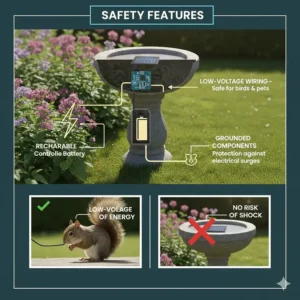
Water and electricity make a potentially lethal combination, demanding your respect and attention. Beyond GFCI protection mentioned earlier, consider these safety layers:
Regular Inspection: Monthly during heating season, inspect cords for any damage, cracking, or exposed wires. Replace damaged cords immediately—electrical fires from faulty outdoor connections cause dozens of property fires annually.
Keep Connections Dry: Where cords connect to heaters or extension cords, protect connections from direct water exposure. Weatherproof cord covers (available at hardware stores for $5-10) provide excellent protection.
Child and Pet Safety: If small children or curious pets access your yard, position heated baths where they can’t easily reach electrical components. The heaters themselves don’t get hot enough to burn, but electrical connections require protection from tampering.
Preventing Predator Attraction
Heated bird baths become prey magnets during winter when they’re among the few active water sources. Hawks, owls, and neighborhood cats quickly learn to stake out these locations. Protect your birds:
Visibility Radius: Ensure 10-15 feet of open space around the bath where birds can spot approaching predators. Clear away dense brush that provides cat ambush cover.
Escape Routes: Position the bath within 20 feet of trees or shrubs where birds can flee if threatened. They need quick access to safety without having to cross open ground.
Elevated Options: Deck-mounted baths positioned 4-5 feet high naturally reduce cat predation. Cats can still jump that high, but it’s more difficult, giving birds extra reaction time.
Comparing Complete Systems vs. De-Icer Elements
One of the first decisions you’ll face: should you buy a complete heated bird bath system or add a de-icer element to an existing bath? Both approaches have merit depending on your situation.
Complete Heated Bath Systems
Advantages:
- Everything designed to work together
- Heating element perfectly sized for basin volume
- Often include mounting hardware and accessories
- No compatibility guesswork
- Typically covered by single warranty
Disadvantages:
- Higher upfront cost ($70-150)
- Limited flexibility if you already own quality baths
- Replacement means replacing entire system
- Basin aesthetics may not match your garden design
Best For: New bird enthusiasts starting from scratch, those wanting guaranteed compatibility, or buyers prioritizing convenience over cost.
De-Icer Elements
Advantages:
- Significant cost savings ($20-45)
- Use with existing favorite bird baths
- Can move between multiple baths
- Replace only failed component if issues arise
- Greater flexibility for DIY creativity
Disadvantages:
- Must verify compatibility with bath material
- Need to calculate appropriate wattage
- Slightly more complex installation
- Potential for user error in setup
Best For: Experienced birders with existing baths, budget-conscious shoppers, or those with multiple baths to heat selectively.
My Recommendation
If you currently own zero bird baths and want simplicity, invest in a complete heated system like the Allied Precision Four Seasons or API Deck Mounted option. The integrated design eliminates guesswork and provides better long-term value through optimized component pairing.
However, if you already own a cherished ceramic or stone bird bath (that you’re willing to risk in winter), adding a K&H Ice Eliminator de-icer makes more economic sense. This approach costs 50-70% less while delivering identical functionality.
Environmental Impact and Energy Efficiency
Conscientious bird lovers rightly question the environmental cost of electrically heated bird baths. Let’s examine the full picture honestly.
Carbon Footprint Calculations
A 75-watt bird bath heater running 12 hours daily for 150 days consumes approximately 135 kilowatt-hours per season. Based on the US Energy Information Administration data on average grid carbon intensity (0.92 pounds CO2 per kWh), this translates to roughly 124 pounds of CO2 emissions per winter.
For context, driving a typical car just 500 miles produces equivalent emissions. One round-trip flight from New York to Miami generates 20 times more CO2 than a full season of bird bath heating.
Efficiency Optimization
You can significantly reduce environmental impact through smart practices:
Insulation Tricks: Place a piece of rigid foam insulation under ground-level baths. This simple modification reduces heat loss to cold ground by 25-30%, meaning the heater runs less frequently while maintaining ice-free water.
Solar Assistance: Position baths to receive maximum winter sun exposure. Even weak winter sunlight provides meaningful passive heating that reduces electrical demand during daylight hours.
Appropriate Sizing: Don’t over-heat. A 50-watt heater adequate for your climate uses 33% less energy than a 75-watt unit. Match heating capacity to genuine need rather than assuming bigger is always better.
Seasonal Timing: Don’t activate heaters until nighttime temperatures consistently drop below 25°F. Many bird enthusiasts turn heaters on too early, wasting energy during marginal weather when simple daily water changes suffice.
Renewable Energy Integration
If you’ve invested in residential solar panels, your heated bird bath’s environmental impact drops dramatically—potentially to zero if your panels generate surplus power. Time of use monitoring shows bird bath heaters typically consume 60-70% of their energy between 6 PM and 6 AM when grid carbon intensity is higher. Solar-powered homes often push surplus daytime generation to the grid, effectively offsetting evening consumption.
For those committed to maximum sustainability, some advanced DIY enthusiasts pair small solar panel arrays with battery storage systems to run ultra-low-wattage heaters. These experimental setups require electrical expertise but represent the cutting edge of renewable-powered wildlife support.
FAQ: Your Winter Bird Bath Questions Answered
❓ Can birds actually freeze to death if they bathe in winter?
❓ How much does it really cost to run a heated bird bath all winter?
❓ Will a heated bird bath attract predators like hawks and cats?
❓ Do I need to keep changing the water even though it is heated?
❓ Can I use antifreeze or other additives to prevent ice instead of using a heater?
Conclusion: Making Your Winter Bird Bath Decision
We’ve covered extensive ground in this guide—from understanding the limitations of solar technology to examining specific product recommendations and safety considerations. Let me distill the key takeaways to help you make your final decision.
First, recognize that while “solar heated bird bath” remains a popular search term, truly solar-powered heating for winter conditions doesn’t yet exist in practical consumer products. The physics simply don’t support it given current solar panel efficiency and battery technology. However, thermostat controlled electric heaters offer exceptional reliability and surprisingly modest operating costs.
Your investment in a winter bird bath does far more than provide water—it supports vulnerable wildlife during their most challenging season, expands backyard bird diversity beyond seed-eating species, and provides therapeutic nature-watching benefits for you and your family. The modest financial and environmental costs pale in comparison to these multifaceted benefits.
For most backyard bird enthusiasts, I recommend starting with a mid-range solution like the K&H Super Ice Eliminator ($35-45) if you already own a suitable bath, or the Allied Precision Four Seasons complete system ($70-95) if you’re starting fresh. These proven products deliver reliable performance, reasonable pricing, and excellent manufacturer support.
Remember that success extends beyond product selection. Proper placement, regular maintenance, and safety-conscious design separate mediocre installations from thriving winter bird water sources that attract incredible species diversity.
As you enjoy your first winter with a heated bird bath, you’ll likely experience what thousands of dedicated birders already know: there’s profound satisfaction in supporting local ecosystems while gaining front-row seats to nature’s winter drama. That brilliant cardinal splashing in your heated bath on a snowy February morning makes every penny of investment worthwhile.
Thank you for caring enough about birds to research this important topic thoroughly. Your feathered neighbors will benefit tremendously from your informed decision.
Recommended for You
- 7 Best House Finch Bird Feeders That Actually Work (2026)
- 7 Best Goldfinch Feeders 2026: Expert-Tested Picks That Actually Work
- 7 Best Bird Feeders for Finches 2026
Disclaimer: This article contains affiliate links. If you purchase products through these links, we may earn a small commission at no additional cost to you.
✨ Found this helpful? Share it with your friends! 💬🤗
