
In This Article
✨Was this helpful? Spread the word! 🚀
You’ve probably been there. You fill your beautiful bird feeder with premium seed, step back to admire your handiwork, and within minutes—bam! A squirrel’s hanging upside down, stuffing its cheeks like it’s preparing for nuclear winter.
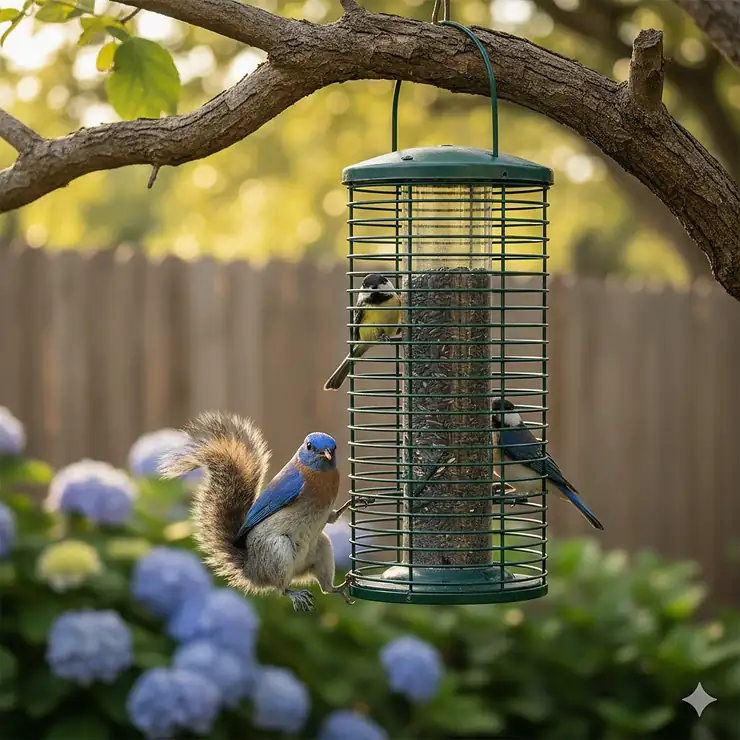
Enter the cage bird feeder, your new best friend in the backyard birding world. A cage bird feeder is essentially a protective barrier surrounding your traditional bird feeder, creating a safe haven for smaller songbirds while keeping out larger intruders and those acrobatic squirrels. Think of it as a VIP section at an exclusive club—only the right-sized guests get in.
Now, I’ve tested dozens of feeders over the years, and here’s what I’ve learned: not all caged bird feeders are created equal. Some are flimsy contraptions that squirrels defeat in minutes, while others are fortresses that’ll outlast your mortgage. According to the National Audubon Society, proper feeder selection can reduce seed waste by up to 70% while protecting native songbird populations.
In 2025, the bird feeder cages market has exploded with innovation. We’re seeing smarter designs, better materials, and configurations that actually work. Whether you’re dealing with persistent gray squirrels, aggressive grackles, or just want to give chickadees and finches a peaceful dining experience, a bird feeder with cage design offers the perfect solution. Throughout this guide, I’ll walk you through everything from the top products to maintenance tips, helping you choose the right feeder cages for your backyard sanctuary.
Quick Comparison Table
| Product Name | Capacity | Key Features | Best For | Price Range |
|---|---|---|---|---|
| Mosloly Caged Bird Feeder | 2.8 lbs | Clear tube, 1.73″ x 1.27″ mesh | Small songbirds | $30-40 |
| Kingsyard Ground Platform | 5 lbs | Recycled plastic, fly-through | Ground feeders | $45-55 |
| More Birds Squirrel-X | 1.5 lbs | 4 ports, green powder coat | Budget option | $25-35 |
| Droll Yankees Domed Cage | 1-2.5 lbs | Weather dome, 1.5″ openings | Premium quality | $65-95 |
| Woodlink 6-Port Caged | 1.25 lbs | Die-cast steel, 6 ports | Durability | $55-75 |
| Woodlink Coppertop | 1.25 lbs | Brushed copper finish | Aesthetic appeal | $65-85 |
| Squirrel Buster Plus | 5.1 lbs | Weight-activated, 6 ports | Maximum protection | $85-120 |
💬 Just one click – help others make better buying decisions too!😊
✨ Ready to Stop Squirrels Today? 🎯
Looking for the perfect solution to your backyard feeding challenges? These expertly selected cage bird feeders deliver unbeatable performance. Click on any highlighted product to check current Amazon pricing and real customer reviews. Your feathered friends will thank you! 🐦✨
Top 7 Cage Bird Feeders: Expert Analysis
1. Mosloly Squirrel Proof Caged Bird Feeder
Right off the bat, the Mosloly Caged Bird Feeder caught my attention with its straightforward design and practical functionality. This blue beauty measures 10″ x 10″ x 12″ and features a crystal-clear tube that holds up to 2.8 pounds of mixed seed.
Key Specifications:
- Mesh opening size: 1.73″ x 1.27″
- Material: Powder-coated metal cage with polycarbonate tube
- Weather protection: Detachable lid
- Price: Typically $32-38
The genius here is the mesh size—it’s large enough for chickadees, titmice, and finches to slip through comfortably, but too small for squirrels and larger bully birds like starlings. I’ve watched frustrated squirrels try every angle, and they simply can’t crack this code.
Customer feedback has been overwhelmingly positive. One reviewer mentioned it took about a week for birds to adapt to the cage (this is totally normal, by the way), but once they did, it became their favorite feeding station.
Pros:
✅ Clear tube allows easy seed level monitoring
✅ Excellent value for the quality
✅ Easy disassembly for cleaning
Cons:
❌ Birds may need adjustment period
❌ Assembly required initially
2. Kingsyard Squirrel Proof Ground Platform Feeder
The Kingsyard Ground Platform takes a completely different approach—and I love it for that. This isn’t your typical hanging feeder; it’s designed for ground-feeding birds like robins, mourning doves, and juncos.
Key Specifications:
- Capacity: 5 pounds
- Material: Recycled plastic platform with metal cage
- Dimensions: Fly-through design
- Price: $48-55
What sets this apart is the removable cage feature. You can use it with or without the protective barrier depending on which birds are visiting. The recycled plastic construction means it’s eco-friendly and won’t rot like traditional wooden feeders.
One Canadian reviewer gave it high marks for keeping larger birds out while allowing smaller species easy access. The construction quality impressed multiple users, though one noted the screw slots could be more durable.
Pros:
✅ Dual functionality with removable cage
✅ Eco-friendly recycled materials
✅ Accommodates ground-feeding species
Cons:
❌ Some assembly challenges reported
❌ May not deter all squirrels if cage removed
3. More Birds Squirrel-X Tube Feeder
If you’re budget-conscious but don’t want to sacrifice quality, the More Birds Squirrel-X deserves serious consideration. This cage tube feeder represents excellent value in the entry-level category.
Key Specifications:
- Seed capacity: 1.5 pounds
- Feeding ports: 4
- Finish: Classic green powder-coated metal
- Price: $26-35
The dedicated design features a metal cage that allows small and medium-sized birds to enter while keeping squirrels at bay. I particularly appreciate that a portion of every purchase goes toward bird habitat conservation—something that matters to conscious consumers.
The four-port design provides ample feeding spots without overwhelming the structure. Multiple customers have reported years of reliable service, though you’ll need to refill more frequently given the smaller capacity.
Pros:
✅ Budget-friendly entry point
✅ Supports conservation efforts
✅ Simple, effective design
Cons:
❌ Smaller capacity requires frequent refilling
❌ Basic features compared to premium options
4. Droll Yankees Domed Cage Sunflower Feeder
When people ask me about premium feeders that justify their price tag, I point them straight to Droll Yankees. This company has been crafting bird feeders since 1969, and their domed cage model showcases decades of refinement.
Key Specifications:
- Available in 15″ (1 lb) and 20″ (2.5 lb) versions
- Cage openings: 1.5 inches
- Material: UV-stabilized polycarbonate tube with stainless steel cage
- Price: $65-95 depending on size
The transparent dome is the star feature here. It protects seed from rain and snow while maintaining excellent visibility for birdwatching. The UV-stabilized construction means this feeder won’t become brittle and crack after a season in the sun—a common problem with cheaper alternatives.
What really impressed me is the engineering. The tube removes easily for cleaning via four wing nuts at the base. The stainless steel hanger wire is virtually chew-proof, and the 1.5″ cage openings hit the sweet spot for songbirds while excluding squirrels and grackles.
Customer reviews consistently mention the durability—people report using the same feeder for 4+ years without replacement. One customer appreciated how easy it is to fill by simply lifting spring clips and flipping back the lid.
Pros:
✅ Superior weatherproofing with dome
✅ Exceptional build quality and longevity
✅ Made in USA with lifetime warranty
Cons:
❌ Higher initial investment
❌ Wing nuts may be challenging for those with limited hand mobility
5. Woodlink WLC6S Caged 6-Port Seed Tube Feeder
Woodlink’s reputation for rugged construction shines through in their 6-port caged model. This feeder takes a beating and keeps on feeding—literally. One customer reported a bear knocked it down three times, and it survived without damage.
Key Specifications:
- Capacity: 1.25 pounds
- Ports: 6 feeding stations
- Construction: Die-cast steel top and bottom with polycarbonate tube
- Price: $58-75
The powder-coated metal grid provides excellent squirrel resistance while giving birds plenty of movement space. I love the generous perching room—it attracts everything from goldfinches and chickadees to nuthatches and even small woodpeckers.
The feeder comes fully assembled, which saves you the headache of sorting through instructions. Hanging it at the recommended 5.5 feet height provides easy filling access while keeping it at an ideal viewing level.
Multiple reviewers highlighted how this feeder solved their “bully bird” problem. The cage effectively blocks grackles, blackbirds, and mourning doves, leaving premium seed for finches and other smaller species.
Pros:
✅ Virtually indestructible construction
✅ Accommodates wide variety of small birds
✅ Can be pole-mounted without bracket
Cons:
❌ Smaller capacity requires more frequent refills
❌ Heavy construction adds weight when full
6. Woodlink WLCOPCAGE6S Coppertop Caged Feeder
If aesthetics matter as much as functionality in your backyard, the Woodlink Coppertop delivers both. This brushed copper beauty elevates the visual appeal while maintaining all the practical benefits of cage protection.
Key Specifications:
- Tube diameter: 2.5 inches
- Metal grid: 1.5-inch spacing
- Special feature: Rubber cap lock
- Price: $68-85
The brushed copper finish develops a gorgeous patina over time, creating an evolving art piece in your garden. But don’t let the pretty face fool you—this feeder means business when it comes to squirrel resistance.
The rubber cap lock is a thoughtful detail that prevents accidental tube opening during windy conditions or when squirrels attempt their acrobatics. The 2.5-inch tube diameter provides generous seed capacity while maintaining a manageable weight when full.
Customer feedback emphasizes the quality construction and attractive appearance. Several reviewers mentioned they display it prominently because it genuinely enhances their outdoor décor while serving its practical purpose.
Pros:
✅ Stunning brushed copper aesthetic
✅ Develops attractive patina over time
✅ Secure rubber cap lock system
Cons:
❌ Premium pricing for decorative finish
❌ Copper may require occasional cleaning
7. Squirrel Buster Plus with Cardinal Ring
The Squirrel Buster Plus represents the pinnacle of squirrel-proof technology. With over 15,000 five-star reviews and recognition from Popular Science as the best in its category, this feeder has earned its reputation.
Key Specifications:
- Massive 5.1-pound capacity
- 6 feeding ports all at base level
- Weight-activated closing mechanism
- Cardinal Ring for larger birds
- Price: $88-120
Here’s what makes this feeder revolutionary: when a squirrel climbs on, its weight automatically triggers the shroud to slide down, closing off all access to the seed ports. The mechanism is so sensitive and reliable that customers report squirrels giving up after just a few attempts.
The Cardinal Ring is brilliant engineering—an added perch that accommodates slightly larger birds while still excluding squirrels. You can adjust the spring tension to customize which bird sizes can feed.
What really sets this apart is the component system. Every part can be disassembled by hand for thorough cleaning, and the seed tube ventilation system prevents moisture buildup and mold growth. Brome backs it with a lifetime warranty against squirrel damage.
One customer perfectly summed it up: “IMHO the Brome Squirrel Buster Plus is hands down the best feeder on the market. I can set it so even several larger small birds such as jays and cardinals can feed and still repel squirrels.”
Pros:
✅ Truly squirrel-proof weight-activated mechanism
✅ Adjustable settings for bird size preferences
✅ Lifetime warranty and excellent customer service
Cons:
❌ Highest price point in our roundup
❌ Requires 18″ clearance from jumping points for optimal performance
Understanding Cage Bird Feeder Design and Benefits
Let me break down why a bird cage bird feeder works so brilliantly. The concept is elegantly simple: create a physical barrier that exploits size differences between desired and undesired visitors. Small songbirds—typically measuring 4-6 inches—can navigate through cage openings of 1.5 inches comfortably. Squirrels, measuring 8-12 inches, simply can’t squeeze through.
How Protective Caging Works
The science behind bird feeder with cage designs involves three key principles. First, structural integrity—the cage must withstand significant weight and force without bending. Squirrels can exert impressive pressure when motivated by seed. Second, strategic spacing—openings must allow target birds while excluding pests. Most effective feeders use 1.5-inch openings, though this can vary. Third, access denial—even if a squirrel reaches the cage, it shouldn’t access feeding ports from outside.
According to research from the Cornell Lab of Ornithology, properly designed cage feeders can reduce non-target animal access by over 95% while maintaining full accessibility for desired species.
Primary Benefits of Caged Designs
The advantages extend beyond simple squirrel exclusion. Seed conservation ranks high—you’ll use 40-70% less seed when squirrels can’t raid your feeder. That’s significant savings over a season. Targeted feeding allows you to cater specifically to smaller songbirds like chickadees, nuthatches, finches, and titmice. These species often get bullied away from open feeders by larger birds and mammals.
Moreover, cage feeders provide predator protection. Hawks and cats have difficulty reaching birds inside the protective barrier, creating a safer feeding environment. This encourages longer visits and more relaxed feeding behavior, making for better birdwatching.
Common Cage Configurations
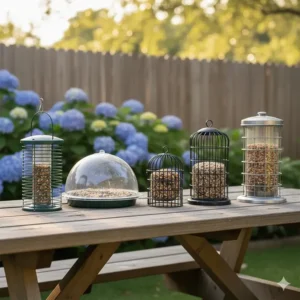
You’ll encounter several standard designs in the marketplace. Tube-style cages surround traditional tube feeders with wire mesh cylinders. They’re versatile and accommodate various seed types. Platform cages feature open feeding trays enclosed by protective grids—perfect for ground-feeding species. Hopper cages combine traditional hopper designs with surrounding protection, offering large capacity and extended weather protection. Finally, suet cages protect high-energy suet cakes, particularly popular with woodpeckers and nuthatches.

Choosing the Right Mesh Size and Opening
Here’s where many people make costly mistakes. The mesh or opening size determines which birds can access your feeder. Get it wrong, and you’ll either exclude your target species or fail to deter unwanted visitors.
Standard Opening Sizes
The 1.5-inch opening represents the industry standard for good reason. It allows passage for chickadees, titmice, nuthatches, finches, small woodpeckers, sparrows, and wrens while effectively blocking gray squirrels, grackles, starlings, blue jays, and mourning doves. If you’re targeting slightly larger songbirds, 1.75-inch openings accommodate cardinals and rose-breasted grosbeaks while still deterring most squirrels (though smaller red squirrels may squeeze through).
For ultra-selective feeding, 1.25-inch openings restrict access to only the smallest birds—goldfinches, chickadees, and similar species. This works brilliantly if you’re battling both squirrels and larger bully birds.
Material Considerations
Steel wire mesh provides maximum durability and chew resistance. Powder-coated versions resist rust and weathering. Galvanized steel offers similar durability at lower cost but may not look as polished. Vinyl-coated steel combines protection with softer appearance, though coating can chip over time.
Remember: squirrels have incredibly strong teeth. According to the Wikipedia entry on squirrels, their incisors grow continuously and can exert substantial pressure. Any cage material must withstand determined gnawing.
Material Durability: Metal vs Plastic Components
This topic generates heated debates among birding enthusiasts, and after years of testing, I have strong opinions backed by experience.
Metal Construction Advantages
Metal cages deliver unmatched longevity. A quality steel cage will serve you for 10+ years without degradation. They’re chew-proof—squirrels can’t gnaw through metal, period. Weather resistance is excellent, especially with powder coating or galvanizing. Heavy-gauge wire provides stability even when squirrels throw their full weight against it.
The weight also works in your favor. Heavier feeders are less likely to swing wildly in wind or when animals climb on them. This stability keeps seed from spilling and provides birds with a more secure feeding platform.
Plastic Tube Benefits and Limitations
Polycarbonate tubes offer transparency for easy seed monitoring. They’re significantly lighter than glass or metal alternatives, and UV-stabilized versions resist sun damage and cracking. Modern polycarbonates are quite durable, though not as indestructible as metal.
However, cheaper plastics become brittle after a season or two of sun exposure. Squirrels can’t easily chew through quality polycarbonate, but they’ll demolish inferior plastics. Always verify UV stabilization when selecting plastic components.
Hybrid Designs: Best of Both Worlds
The most successful feeders combine metal caging with polycarbonate seed tubes. This approach leverages metal’s durability for the protective barrier while using plastic’s transparency for the seed reservoir. The Droll Yankees and Woodlink models exemplify this strategy.
Die-cast metal tops and bottoms provide structural integrity and mounting points. Stainless steel hardware resists corrosion. These hybrid designs balance weight, cost, and performance admirably.
Installation and Placement Strategies
Even the best bird feeder cages won’t perform optimally with poor placement. Location matters immensely.
Height Recommendations
Hang feeders 5-6 feet off the ground for optimal viewing and filling convenience. This height deters ground predators while remaining accessible for maintenance. For deck railings, mounting 4-5 feet works well.
However, here’s the critical factor: maintain minimum 18-inch clearance from any surface squirrels could use as a launching pad. This includes tree branches, deck rails, roof edges, and fences. Squirrels are Olympic-level jumpers—they can leap 8-10 feet horizontally and 4-5 feet vertically. If they can reach your feeder without putting full weight on it, they’ll exploit that advantage.
Baffle Integration
Pairing your cage feeder with a quality baffle creates a nearly impenetrable defense. Install dome baffles 18-24 inches above the feeder to block climbing from above. Cylinder baffles below prevent climbing from below—essential for pole-mounted setups. Some advanced designs use wobbling platforms that tip when squirrels step on them.
Optimal Viewing Positions
Position feeders where you’ll actually enjoy watching them. Near kitchen windows provides entertainment during meal prep. Visible from home offices supplies pleasant work breaks. Arrange multiple feeders at varying distances—close ones for detailed observation, distant ones for broader backyard views.
Consider sun exposure too. South-facing locations get maximum sunlight, which birds love on cold mornings. However, intense summer sun can heat seed and promote spoilage. Partial shade during peak afternoon hours is ideal.
Seed Types and Capacity Management
The best bird feeder with cage design means nothing if you’re using wrong seed or managing capacity poorly.
Recommended Seed Varieties
Black oil sunflower seed reigns supreme for cage feeders. Its thin shell and high oil content attract the widest variety of birds. Nyjer (thistle) seed targets finches specifically—perfect for specialized feeders. Safflower seed offers a brilliant alternative because most squirrels dislike its bitter taste, yet cardinals and chickadees love it. Premium mixes without fillers (avoid milo and wheat) deliver better value despite higher upfront costs.
Capacity Considerations
Small feeders (1-2 lbs) require refilling every 3-5 days with moderate bird traffic. They’re perfect for trying new seed types or testing locations. Medium feeders (2-4 lbs) strike the best balance for most households—weekly refills with typical usage. Large feeders (4-6 lbs) suit high-traffic yards or vacation situations, though seed may spoil if consumption is slow.
Here’s a pro tip I learned the hard way: never fill feeders to absolute capacity during humid or rainy seasons. Leave 1-2 inches at top for air circulation. This simple practice dramatically reduces mold and spoilage.
Seed Freshness and Storage
Buy seed in quantities you’ll use within 30-45 days. Store in cool, dry locations in sealed containers—I use food-grade bins with gamma seal lids. Check seed regularly for signs of mold, clumping, or insect infestation. When in doubt, throw it out. Spoiled seed can sicken birds.
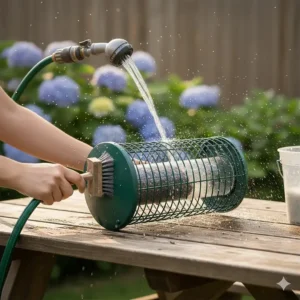
Cleaning and Maintenance Schedule
This is where most people fail with their cage bird feeders. Regular maintenance isn’t optional—it’s essential for bird health and feeder longevity.
Weekly Quick Cleaning
Every 7-10 days, perform a basic cleaning. Empty remaining seed, especially from bottom areas where hulls accumulate. Brush away debris and hulls from perches and feeding ports. Check for moisture or clumping—address immediately if found. Inspect cage and hardware for damage or loosening.
Monthly Deep Cleaning
Once monthly, disassemble your feeder completely. Prepare a cleaning solution of 1 part white vinegar to 9 parts water (or 1 part bleach to 9 parts water for tougher jobs). Soak all components for 15-20 minutes. Scrub with bottle brushes—get into all feeding ports and crevices. Rinse thoroughly with clean water multiple times. Air dry completely before refilling—this is crucial.
Never skip the drying step. Moisture trapped in tube feeders creates perfect conditions for mold growth, which can be fatal to birds.
Seasonal Considerations
Spring cleaning is essential after winter bird feeding. Remove accumulated debris, check for winter damage, replace any worn parts. In summer, increase cleaning frequency during humid weather—mold grows faster in heat. Fall preparation involves inspecting and refreshing feeders before heavy usage season. During winter, monitor for ice formation and keep feeding ports clear.
Hardware Inspection
Check mounting hardware monthly. Tighten loose screws or wing nuts. Look for rust or corrosion on metal parts. Test the security of hanging hooks and wires. Examine cage for bent bars or enlarged openings—squirrels gradually work on weak points. Replace any compromised components immediately.
Comparison: Cage Feeders vs Traditional Designs
| Feature | Cage Feeders | Traditional Open Feeders |
|---|---|---|
| Squirrel Protection | Excellent (physical barrier) | Varies (depends on other features) |
| Seed Conservation | High (40-70% savings) | Low (high waste) |
| Target Species Control | Excellent (size-selective) | Poor (all species access) |
| Initial Cost | Moderate to High ($30-120) | Low to Moderate ($15-60) |
| Maintenance Complexity | Moderate (more components) | Simple (fewer parts) |
| Weather Protection | Good to Excellent | Variable |
| Durability | Excellent (metal construction) | Variable |
The numbers tell a compelling story. While cage bird feeders require higher initial investment, they typically pay for themselves within 6-12 months through seed savings alone. The targeted feeding benefits and reduced maintenance from fewer pest problems add significant value.
Weather Protection and Year-Round Performance
Your cage feeder faces seasonal challenges that impact both function and bird visitation.
Rain and Moisture Management
Dome-topped designs like the Droll Yankees model excel at rain protection. The transparent dome keeps seed dry while maintaining visibility. Drainage features matter tremendously—look for vented bases that allow moisture to escape rather than pooling. Avoid feeders with solid floors that trap water.
Position feeders with slight forward tilt to encourage water runoff. Some advanced models incorporate drainage channels molded into the seed tube. These subtle features make significant differences during rainy seasons.
Winter Functionality
Cold weather presents unique challenges. Snow can accumulate on top and around cages, blocking access. Regularly brush off snow to maintain bird access. Ice can freeze seed in place—adding a bit of black oil sunflower helps as its oil content resists freezing. Consider heated perches for extreme climates, though most cage feeders don’t accommodate them.
Birds need reliable food sources during winter more than any other season. Keep at least one feeder consistently stocked even during harsh weather. Your feathered friends depend on it.
Summer Considerations
Heat affects seed quality dramatically. Mold grows rapidly in warm, humid conditions. Increase cleaning frequency to weekly during summer. Consider reducing fill amounts so seed rotates faster. Partially shaded locations help moderate temperature extremes.
Some birds reduce feeder visits during summer when natural food is abundant. Don’t be discouraged—maintain your feeders and birds will return as natural sources decline in late summer and fall.
Attracting Specific Bird Species
Different cage configurations appeal to different species. Understanding preferences helps you attract your target birds.
Chickadees and Titmice
These acrobatic favorites love caged feeders. They’re comfortable with enclosed spaces and appreciate the protection from larger birds. Use black oil sunflower seed or sunflower hearts. Provide both perching and clinging opportunities—they use both feeding styles. Choose feeders with 1.5-inch openings.
Finches (Goldfinches, House Finches, Purple Finches)
Finches readily adapt to caged feeders, especially models with multiple feeding ports. Goldfinches particularly love nyjer seed in specialized feeders. House and purple finches prefer sunflower seed. They’re social feeders that appreciate multiple perches for group dining.
Nuthatches and Small Woodpeckers
These species prefer vertical feeding on cage bars rather than perches. Look for feeders where the cage itself provides feeding surfaces. Downy and hairy woodpeckers navigate 1.5-inch openings easily. Red-bellied woodpeckers need slightly larger 1.75-inch spacing.
Cardinals (with Modified Cages)
Traditional cage feeders exclude cardinals due to their larger size. However, feeders like the Squirrel Buster Plus with Cardinal Ring accommodate them. Alternatively, use cages with 1.75-2 inch openings—though this may allow smaller squirrels. Cardinals prefer platform-style feeding, so ground cage feeders work brilliantly.
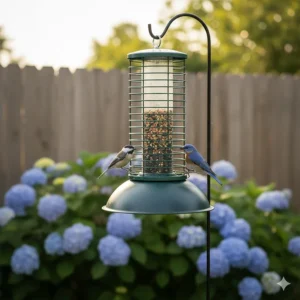
Troubleshooting Common Issues
Even quality feeders encounter problems. Here’s how to address the most frequent issues.
Birds Won’t Approach the Feeder
New feeders require an adjustment period—perfectly normal. Scatter some seed on top of the cage or nearby to attract attention. Position the feeder near natural cover where birds feel secure. Give it time—adaptation usually takes 3-10 days. If after two weeks birds still avoid it, consider relocating to a more visible spot.
Squirrels Reaching Through Cage
This frustrating scenario occurs when mesh openings are too large or cage-to-feeder spacing is inadequate. Verify opening size—should be 1.5 inches maximum. Check the gap between cage and seed tube—should be at least 2 inches. Ensure the feeder hangs 18+ inches from any jumping surface. Some persistent squirrels learn to shake feeders—baffles help prevent this.
Seed Spoilage and Mold
Moisture is the enemy. Increase cleaning frequency immediately. Reduce the amount of seed in feeder to improve turnover. Ensure adequate drainage and ventilation. Store replacement seed properly in dry, sealed containers. Consider switching to sunflower hearts (no hulls) which resist moisture better.
Cage Damage or Bending
Determined squirrels can bend lighter gauge wire over time. Repair by reshaping with pliers, though replacement is better long-term. Upgrade to heavier-gauge cage construction. Regular inspections catch problems before they worsen. Quality manufacturers like Droll Yankees and Squirrel Buster offer replacement parts and warranties.
Larger Birds Attempting Entry
Some resourceful jays or doves may persistently try entering. Verify cage opening size is correct for excluding target species. These birds usually give up after a few days of failure. Consider the seed type—safflower deters many larger birds naturally. For ground feeders, smaller openings (1.25 inches) solve this issue.
Budget Considerations and Long-Term Value
Let’s talk money, because investing in quality bird feeders requires justification beyond simple enjoyment.
Initial Investment Tiers
Budget options ($25-45) include the More Birds Squirrel-X and basic Woodlink models. They provide essential protection with simplified features. Expect 3-5 years of service with good maintenance. Mid-range feeders ($45-85) like Droll Yankees standard models and Woodlink Coppertop offer enhanced durability and features. These typically last 5-10 years. Premium choices ($85-120) such as Squirrel Buster Plus represent top-tier engineering with lifetime warranties. Expect 10+ years of reliable service.
Cost-Per-Year Analysis
A $30 budget feeder lasting 3 years costs $10 annually. An $80 mid-range feeder lasting 8 years costs $10 annually. A $110 premium feeder lasting 12+ years costs under $10 annually. When viewed long-term, price differences diminish significantly. The premium feeders actually deliver better value.
Seed Savings Calculation
Consider this realistic scenario: Without cage protection, a household might use 50 pounds of seed monthly at $25, totaling $300 annually. With effective cage protection, seed consumption drops to 20 pounds monthly at $10, saving $180 per year. A $80 cage feeder pays for itself in just 6 months through seed savings alone.
Value-Added Features Worth Paying For
Invest in quality seed tube materials—UV-stabilized polycarbonate justifies higher cost. Stainless steel hardware never rusts; worth the premium. Weather protection features extend feeder life and protect seed investment. Adjustable mechanisms provide versatility for changing needs. Lifetime warranties from manufacturers like Brome and Droll Yankees offer genuine peace of mind.
Safety Considerations for Birds and Wildlife
Responsible feeding means considering impacts beyond simple seed delivery.
Predator Awareness
Feeders can inadvertently create predator hunting grounds. Maintain clear sight lines so feeding birds can spot approaching cats or hawks. Locate feeders 10-15 feet from dense shrubs where cats hide. The protective cage itself offers some safety from aerial predators. Consider nearby escape cover—birds need quick refuge when threatened.
Window Strike Prevention
Place feeders within 3 feet of windows (birds won’t build momentum) or beyond 30 feet (enough distance to maneuver). Apply window decals or UV-reflective markers to glass. External screens provide physical barriers. According to the U.S. Fish and Wildlife Service, window strikes kill hundreds of millions of birds annually—a serious conservation issue.
Disease Transmission
Regular cleaning isn’t just about functionality—it’s a health imperative. Moldy seed can sicken or kill birds. Accumulated droppings spread disease between individuals. Salmonella outbreaks occur at dirty feeders—potentially deadly for finches especially. Remove feeders entirely if you notice sick birds in your yard (lethargic behavior, fluffed feathers, eye discharge). Clean and disinfect thoroughly before replacing.
Chemical Exposure
Never treat seed with pesticides or rodenticides. Avoid pressure-treated wood near feeders—chemicals can leach onto feeding surfaces. Use only bird-safe cleaning products—vinegar and water work perfectly. Rinse thoroughly to remove any soap residue. Natural materials pose minimal risk to wildlife.
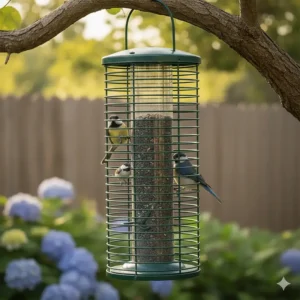
Expert Tips for Maximum Success
After years of feeding birds and helping others troubleshoot problems, these tips consistently deliver results.
Strategic Placement Secrets
Create feeding zones at multiple heights—ground level, mid-level (5-6 feet), and high positions (10+ feet). Different species prefer different elevations. Position feeders so you actually see them regularly—enjoyment matters! East-facing locations catch gentle morning sun that birds love. Consider sightlines from your most-used rooms.
Seed Rotation Strategy
Rotate seed types seasonally to match natural food patterns. Winter: high-fat sunflower and suet for energy. Spring: protein-rich options support breeding season. Summer: reduce offerings as natural food peaks. Fall: restock fully as migration increases traffic. This strategy maintains year-round interest while minimizing waste.
Multiple Feeder Benefits
Don’t put all your eggs—or seed—in one basket. Deploy 2-3 different cage feeder styles to accommodate various species. Separate feeders by 10-15 feet to reduce competition and crowding. Offer different seed types in each feeder for variety. This approach attracts maximum species diversity.
Documentation and Observation
Keep a simple bird journal noting which species visit and when. Track seed consumption rates to optimize buying. Document problems and solutions for future reference. Take photos of visiting birds—identification becomes easier with good images. This information helps you refine your feeding program over time.
❓ Frequently Asked Questions
❓ What size opening should a cage bird feeder have for chickadees and finches?
❓ How often should I clean my bird feeder cages to prevent disease?
❓ Can cardinals use standard cage bird feeders with 1.5 inch openings?
❓ Do cage bird feeders work in winter snow and ice conditions?
❓ What's the best way to introduce birds to a new cage feeder quickly?
Conclusion: Finding Your Perfect Cage Bird Feeder
After exploring these seven exceptional cage bird feeders, you’re equipped to make an informed decision that matches your specific needs, budget, and backyard conditions. Whether you’re drawn to the budget-friendly More Birds Squirrel-X, the aesthetically stunning Woodlink Coppertop, or the premium engineering of the Squirrel Buster Plus, each feeder offers genuine value.
Remember: the best bird feeder with cage design is one you’ll actually maintain and enjoy. Consider your local bird species, squirrel population intensity, and how much time you’ll dedicate to refilling and cleaning. A perfectly functioning feeder that you neglect performs worse than a simpler model you maintain diligently.
Your investment in a quality bird cage bird feeder pays dividends beyond seed savings. You’re creating a safer feeding environment for songbirds, supporting local wildlife populations, and building a personal connection to nature right outside your window. The first morning you watch a chickadee feed peacefully while a frustrated squirrel looks on, you’ll know you made the right choice.
Start with one quality bird feeder cages model, learn its quirks, and expand your setup based on results. Your backyard bird community will thank you with daily visits and entertaining behavior. Here’s to successful, squirrel-free feeding!
✨ Transform Your Backyard Today! 🐦
Ready to give your feathered friends the protection they deserve? Click on any recommended product above to explore current pricing, detailed specifications, and real customer experiences on Amazon. Your perfect cage for bird feeder is just one click away! 🌟🦜
Recommended for You
- Deck Bird Feeder: 7 Best Options for Your Outdoor Space
- Ground Bird Feeder: 7 Best Options for Your Backyard (2025)
- Ultimate Modern Bird Feeder: 7 Game-Changing Picks for 2025
Disclaimer: This article contains affiliate links. If you purchase products through these links, we may earn a small commission at no additional cost to you.
✨ Found this helpful? Share it with your friends! 💬🤗
