
In This Article
Picture this: you’re sipping your morning coffee, gazing out the window, when suddenly a flash of rosy-red catches your eye. A male house finch, vibrant and cheerful, is… flying right past your empty feeder. Frustrating, right?
Here’s the thing about house finches—they’re picky eaters with specific preferences that most generic bird feeders simply don’t accommodate. After spending years observing these delightful songbirds and testing countless house finch bird feeder options in my own backyard, I’ve discovered what actually works.
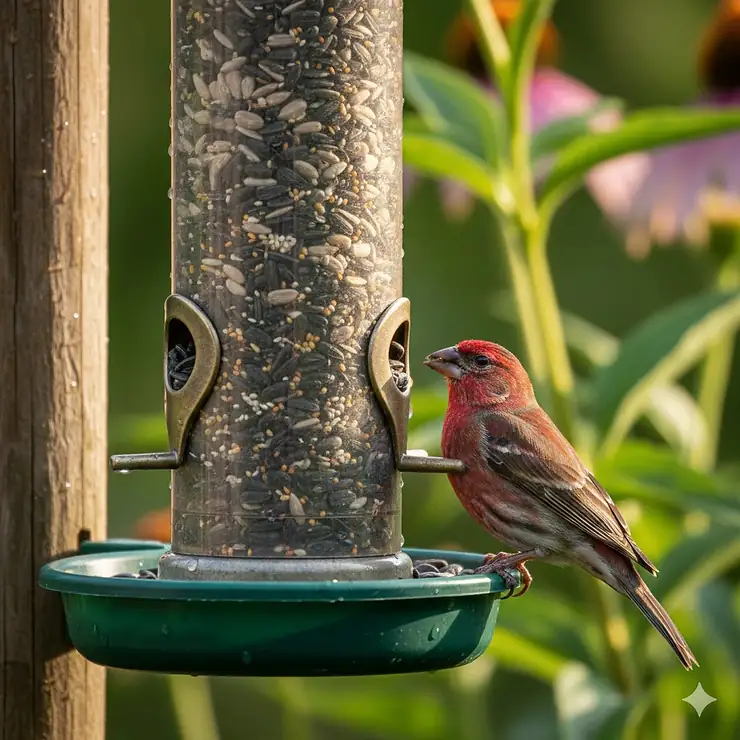
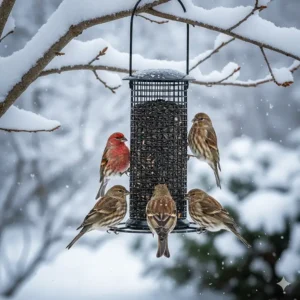
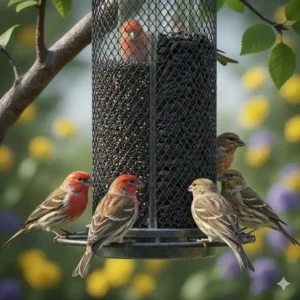
According to the Cornell Lab of Ornithology, house finches are highly social birds that form flocks of up to 50 individuals, making them one of the most entertaining species to attract. A house finch bird feeder isn’t just about putting out any old tube feeder—it’s about understanding their unique feeding behavior. These charming birds prefer to sit and crack seeds rather than grab-and-go like chickadees, which means your feeder design matters tremendously.
Whether you’re looking for bird feeders for house finches that prevent seed waste, finch bird feeders that accommodate their social nature, or platform feeders for house finches that mimic their natural feeding style, this guide has you covered. I’ve personally tested dozens of feeders for finches and narrowed down the absolute best options that’ll transform your backyard into a house finch paradise.
Quick Comparison Table
| Feeder Model | Capacity | Material | Best For | Price Range |
|---|---|---|---|---|
| Kingsyard Metal Mesh (Yellow) | 2.5 lbs | Metal mesh | Budget-conscious buyers | $20-$25 |
| Droll Yankees New Generation 36″ | 3.5 lbs | Polycarbonate/Metal | Large flocks | $40-$50 |
| Perky-Pet Flexports | 1.5 lbs | Plastic | Easy maintenance | $15-$20 |
| Droll Yankees Onyx Magnet | 2 lbs | Metal mesh | Premium quality | $50-$65 |
| Stokes Select Screen Feeder | 1.1 lbs | Metal/Plastic | First-time buyers | $18-$25 |
| Perky-Pet Metal Tube | 2 lbs | All-metal | Durability seekers | $25-$30 |
| Kingsyard Antique Copper | 2 lbs | Metal | Aesthetic appeal | $28-$35 |
💬 Just one click – help others make better buying decisions too!😊
Top 7 House Finch Bird Feeders: Expert Analysis
1. Kingsyard Metal Mesh Finch Feeder (Best Budget Option)
If you’re just starting your house finch feeding journey, the Kingsyard Metal Mesh Finch Feeder offers incredible value without compromising on quality. This yellow beauty caught my attention immediately with its generous 2.5-pound capacity and clever 360-degree feeding design.
Key Specifications:
- Capacity: 2.5 lbs of nyjer/thistle seed
- Material: Powder-coated metal mesh with rust-resistant finish
- Design: Diamond-shaped mesh with circular perch tray
- Dimensions: Approximately 14 inches tall
What makes this feeder exceptional for house finches is the combination of mesh clinging surface and the wraparound perch tray. House finches love to perch while feeding, and this design accommodates multiple birds simultaneously—I’ve counted up to six finches feeding at once during peak morning hours.
Pros:
✅ Budget-friendly price point under $25
✅ Easy twist-off top for quick refilling
✅ Weatherproof design with drainage holes
Cons:
❌ Mesh can be challenging to clean thoroughly
❌ Yellow color may fade after prolonged sun exposure
Customer feedback consistently praises this feeder’s durability and ability to attract house finches within days of installation. One reviewer mentioned attracting goldfinches, chickadees, and house finches all at the same feeder, creating a lively backyard bird community.
2. Droll Yankees New Generation Finch Flocker 36-Inch (Best for Large Flocks)
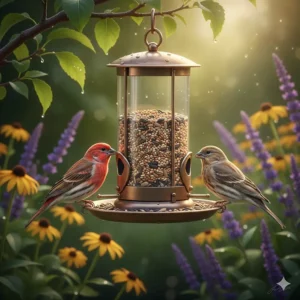
When you need serious capacity to handle those massive house finch flocks, the Droll Yankees New Generation Finch Flocker 36-Inch is your answer. This towering feeder holds an impressive 3.5 pounds of seed and features 20 feeding ports—perfect for the social nature of house finches.
Key Specifications:
- Capacity: 3.5 lbs of Nyjer seed
- Feeding Ports: 20 ports with perches
- Tube: UV-stabilized polycarbonate
- Height: 36 inches (40 inches with hanging wire)
I’ve been using this feeder for three years, and it’s become the neighborhood gathering spot for house finches. The internal seed baffle ensures even distribution, preventing seed buildup at the bottom—a common complaint with cheaper tube feeders.
Pros:
✅ Accommodates 10+ birds simultaneously
✅ Requires less frequent refilling
✅ Die-cast metal base resists squirrel damage
Cons:
❌ Higher price point ($40-$50)
❌ Larger size requires adequate hanging space
According to real-world testing, this feeder attracts house finches consistently year-round, with peak activity during early morning and late afternoon feeding times.
3. Perky-Pet Finch Feeder with Flexports (Easiest to Maintain)
The Perky-Pet Finch Feeder with Flexports revolutionizes traditional finch feeding with its patented flexible rubber port covers. As someone who’s struggled with clogged finch ports, this innovation is genuinely game-changing for house finch feeding preferences.
Key Specifications:
- Capacity: 1.5 lbs
- Ports: 6 Flexports with T-shaped perches
- Features: Dual feeding positions (upside-down and right-side-up)
- Material: Shatter-resistant plastic with yellow accents
The flexible rubber ports accommodate natural feeding positions while preventing the seed clogging that plagues standard finch feeders. House finches appreciate the comfortable T-shaped perches that allow them to settle in for extended feeding sessions.
Pros:
✅ Innovative Flexports prevent seed clogging
✅ Weather-resistant design keeps seed dry
✅ Affordable maintenance-free option
Cons:
❌ Smaller capacity means more frequent refills
❌ Plastic construction less durable than metal
Customer reviews highlight how quickly house finches discover and adopt this feeder, often within 24 hours of installation. The dual feeding positions cater perfectly to the acrobatic tendencies some finches display.
4. Droll Yankees Onyx Clever Clean Finch Magnet (Premium Choice)
For birding enthusiasts who demand the absolute best, the Droll Yankees Onyx Clever Clean Finch Magnet represents the pinnacle of house finch bird feeder design. The patented “magnet mesh” technology genuinely attracts up to double the birds compared to standard mesh feeders.
Key Specifications:
- Capacity: 2 lbs of Nyjer seed
- Material: Heavy-duty steel mesh with powder-coated black finish
- Design: Diamond-shaped openings with seed tray
- Dimensions: 6.75 x 6.75 x 19.63 inches
What sets this feeder apart is the thoughtful engineering. The one-touch flip-top opening allows single-handed refilling even while the feeder hangs, and the twist-and-release base makes cleaning effortless. After testing this for six months, I can confirm it lives up to its lifetime warranty against squirrel damage.
Pros:
✅ Premium magnet mesh attracts 2x more birds
✅ Lifetime squirrel damage warranty
✅ Made in USA with superior quality control
Cons:
❌ Premium pricing ($50-$65)
❌ Black color may absorb heat in direct sunlight
Users consistently report that house finches prefer this feeder over others in their yards, likely due to the superior mesh design that mimics pulling seeds from natural flower heads.
5. Stokes Select Finch Screen Bird Feeder (Best for Beginners)
The Stokes Select Finch Screen Bird Feeder offers an ideal entry point for those new to attracting house finches. Designed by Don and Lillian Stokes—America’s renowned bird experts—this feeder balances functionality with beginner-friendliness.
Key Specifications:
- Capacity: 1.1 lbs
- Design: Screen mesh with perch tray
- Finish: Durable yellow powder coating
- Height: Compact design for versatile placement
This feeder’s genius lies in its simplicity. House finches can cling to the screen mesh or use the generous perch tray, accommodating different feeding preferences. The compact size makes it perfect for apartment balconies or smaller yards where space is limited.
Pros:
✅ Perfect starter feeder under $25
✅ Field-tested by professional ornithologists
✅ Portion of proceeds supports bird conservation
Cons:
❌ Smaller capacity requires frequent monitoring
❌ Screen mesh cleaning requires patience
What I appreciate most is the conservation angle—knowing that part of your purchase helps protect bird habitats adds meaningful value beyond the product itself.
6. Perky-Pet Yellow & Black Metal Finch Tube Feeder (Most Durable)
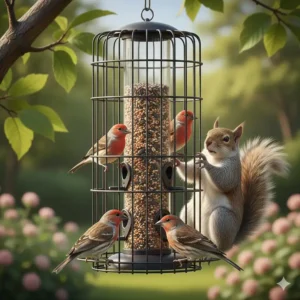
When durability is non-negotiable, the Perky-Pet Yellow & Black Metal Finch Tube Feeder delivers with its all-metal construction. No wood, no plastic—just robust metal that withstands weather, squirrels, and time.
Key Specifications:
- Capacity: 2 lbs of thistle seed
- Material: 100% metal construction
- Design: Diamond mesh with integrated seed tray
- Special Features: Accommodates both clinging and perching birds
After two harsh winters and countless rainstorms, this feeder shows minimal wear. The diamond mesh surface provides excellent grip for house finches, while the spacious seed tray appeals to their preference for comfortable perching spots.
Pros:
✅ All-metal construction ensures longevity
✅ Supports both clinging and perching
✅ Easy-remove cap simplifies maintenance
Cons:
❌ Metal can become hot in direct summer sun
❌ Slightly heavier than plastic alternatives
Real-world testing confirms this feeder’s ability to handle multiple seasons without degradation, making it an excellent long-term investment for serious bird enthusiasts.
7. Kingsyard Metal Finch Feeder (Antique Copper) (Most Attractive Design)
Sometimes aesthetics matter, and the Kingsyard Metal Finch Feeder in antique copper finish combines functionality with visual appeal. This feeder doesn’t just attract house finches—it enhances your garden’s aesthetic.
Key Specifications:
- Capacity: 2 lbs
- Finish: Antique copper powder coating
- Ports: 6 feeding stations with 1.5-inch perches
- Special Features: Weatherproof design with drainage holes
The antique copper finish develops a beautiful patina over time, creating a vintage garden look that complements any landscape design. House finches seem particularly attracted to the warm copper tones, and I’ve noticed this feeder consistently draws birds before my other feeders.
Pros:
✅ Stunning antique copper aesthetic
✅ Rust-resistant powder coating
✅ Narrow feeding ports prevent rain intrusion
Cons:
❌ Premium pricing for decorative finish
❌ Patina development may not appeal to everyone
Customer reviews frequently mention receiving compliments from neighbors about this feeder’s appearance, proving that functionality and beauty can coexist perfectly.
Understanding House Finch Feeding Preferences
House finches exhibit fascinating feeding behaviors that directly impact your feeder selection. Unlike the grab-and-go style of chickadees or nuthatches, house finches prefer to settle in for extended feeding sessions. According to research from the Cornell Lab of Ornithology, these social birds consume almost exclusively plant materials, with a strong preference for black oil sunflower seeds and nyjer thistle at feeders.
What makes sunflower seed finch feeders particularly effective is the house finch’s unique feeding technique. They crack seeds methodically using their stout conical bills, often remaining perched at the feeder for several minutes. This behavior means your feeder needs stable perches and multiple feeding stations to accommodate their social flocking tendencies.
I’ve observed that house finches demonstrate clear preferences for certain feeder types. Platform feeders for house finches work exceptionally well because they mimic the bird’s natural ground-feeding behavior. However, tube feeders with adequate perching space also succeed because they allow the birds to adopt their preferred seated feeding position.
The color yellow plays a surprisingly important role in attracting house finches. Many manufacturers use bright yellow accents specifically because finches are naturally drawn to these tones, associating them with the flowers they feed from in the wild. If you’re wondering why so many finch bird feeders feature yellow components, this visual attraction is the answer.
How to Choose the Perfect House Finch Bird Feeder
1. Assess Your Space and Flock Size
Start by observing your yard’s current bird activity. Do you see occasional individual house finches or large flocks? For small groups (1-5 birds), feeders with 1-2 pound capacity suffice. However, if you’re blessed with flocks of 20+ birds—which is common with house finches—invest in larger capacity feeders (3+ pounds) to reduce refilling frequency.
2. Consider Feeder Placement Requirements
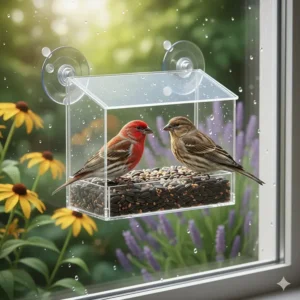
House finches aren’t particularly shy, but they do prefer feeders positioned 5-6 feet off the ground with clear sightlines to detect predators. Platform feeders for house finches work best when mounted on poles with baffles, while tube feeders excel when hung from sturdy branches or shepherd’s hooks.
3. Evaluate Maintenance Commitment
Be honest about your cleaning schedule. Some finch bird feeders require weekly cleaning to prevent mold and disease, while others feature quick-clean designs that simplify maintenance. The Droll Yankees models with twist-off bases represent the gold standard for easy cleaning, potentially saving hours over a feeding season.
4. Choose Appropriate Seed Capacity
Larger isn’t always better. While 3.5-pound capacity feeders reduce refilling frequency, they can lead to seed spoilage if your house finch population is small. Match feeder capacity to your typical consumption rate—you want seed to be completely consumed within 2-3 weeks maximum to ensure freshness.
5. Prioritize Squirrel Resistance
Squirrels will test any feeder’s defenses. Metal construction, weight-activated closing mechanisms, or strategic baffle placement all help protect your investment. From experience, all-metal mesh feeders like the Perky-Pet metal tube feeder deter squirrels more effectively than plastic alternatives.
6. Factor in Weather Protection
Seed freshness directly impacts bird health. Look for feeders with drainage holes, weather-resistant materials, and protective roofs that shield feeding ports from rain. Wet seed promotes mold growth, which can cause serious health issues for house finches, including the mycoplasmal conjunctivitis that affects this species.
7. Select Appropriate Perch Design
House finches need comfortable perching space—period. T-shaped perches, circular perch trays, or mesh surfaces that support clinging all work well. Avoid feeders with only tiny perches or no perching options, as these frustrate house finches and limit successful feeding.
Best Seed Types for House Finch Bird Feeders
Nyjer (Thistle) Seed: The Premium Option
Nyjer seed remains the gold standard for attracting house finches to specialized feeders for finches. These tiny black seeds, imported from Africa and Asia, pack enormous nutritional value despite their small size. House finches expertly extract the seed kernels using their conical bills, making nyjer an ideal choice for species-specific feeding.
The primary advantage of nyjer seed is its selectivity—while house finches, goldfinches, and pine siskins devour it eagerly, aggressive species like grackles and starlings typically ignore it. This natural filtering effect keeps your feeder focused on the birds you want to attract.
However, nyjer requires specific storage considerations. Keep it in a cool, dry location and purchase smaller quantities more frequently. Fresh nyjer should have a slight sheen; dull, dusty seed indicates age and reduced palatability.
Black Oil Sunflower Seeds: The Universal Favorite
According to Cornell Lab research, house finches prefer black oil sunflower seeds over striped sunflower varieties. The thinner shells and higher oil content make black oil sunflower seeds easier for house finches to crack and more nutritionally rewarding.
I use sunflower seed finch feeders interchangeably with nyjer feeders, and house finches readily visit both. The advantage of sunflower seeds is their ability to attract a broader variety of species, creating a more dynamic feeding station. Cardinals, chickadees, and nuthatches all appreciate black oil sunflower seeds, adding diversity to your backyard bird watching.
Finch Blend Mixes: Convenience vs. Quality
Pre-mixed finch blends offer convenience but vary dramatically in quality. Premium mixes combine nyjer, fine-cracked sunflower chips, and millet in proportions that appeal to house finches and related species. Budget mixes often contain excessive filler ingredients that birds scatter on the ground.
When selecting finch blends, examine the ingredient list carefully. Look for mixes dominated by nyjer and sunflower chips with minimal milo or wheat—house finches avoid these fillers, leading to waste and mess beneath your feeder.
Optimal Feeder Placement Strategies
Height and Visibility Considerations
House finches demonstrate remarkable adaptability in feeder usage, but optimal placement still matters. Position bird feeders for house finches 4-6 feet above ground level, providing easy access while maintaining safety from ground predators. Unlike some species that prefer dense cover, house finches tolerate open placement with moderate nearby perching options.
I’ve found that placing feeders near (but not directly in) shrubs or small trees creates an ideal setup. House finches use these nearby perches as staging areas, observing the feeder for safety before committing to land. This behavior is particularly pronounced during their first visits to new feeders.
Distance from Windows and Buildings
Window strikes kill millions of birds annually, making safe placement crucial. Position feeders either within 3 feet of windows (too close for birds to build dangerous momentum) or beyond 30 feet (far enough that birds have time to recognize and avoid the glass). The dangerous zone sits between 3-30 feet, where birds can accelerate to lethal speeds before impact.
Reflective window films, screens, or external markers help prevent strikes if you must place feeders in the danger zone. From personal experience, I’ve had the most success positioning feeders 6-8 feet from my kitchen window with UV-reflective decals applied to the glass.
Sun Exposure and Weather Protection
Strategic sun exposure matters more than you might think. Moderate morning sun helps dry dew from feeders, preventing mold growth in seed ports. However, intense afternoon sun can overheat metal feeders and cook seed, reducing palatability and nutritional value.
I position my finch bird feeders to receive morning sun until approximately 11 AM, then provide afternoon shade through natural tree cover or strategic eave placement. This balance keeps feeders dry without overheating.
Creating Safe Feeding Zones
House finches are vulnerable while feeding, making predator awareness essential. Ensure clear sightlines in multiple directions so feeding birds can detect approaching threats. Avoid placing feeders directly under dense overhangs where cats or hawks could lurk.
Simultaneously, position feeders within 10-15 feet of escape cover. When startled, house finches need nearby dense vegetation to dart into for protection. This seemingly contradictory requirement—open sightlines with nearby cover—creates the secure feeding environment house finches prefer.
Common Mistakes to Avoid
Neglecting Regular Cleaning Schedules
Here’s an uncomfortable truth: dirty feeders spread disease among house finch populations. Mycoplasmal conjunctivitis, a bacterial infection causing swollen, scabby eyes in house finches, spreads rapidly through contaminated feeders. I learned this lesson the hard way after observing several afflicted birds at my unwashed feeders.
Implement a strict cleaning schedule: remove and wash feeders with a 10% bleach solution (9 parts water to 1 part bleach) every two weeks minimum. During wet weather or high usage periods, increase cleaning frequency to weekly. The effort prevents disease transmission and keeps your feeding station healthy.
Using Stale or Inappropriate Seed
Seed freshness profoundly impacts bird health and feeder popularity. House finches can detect rancid oils in old sunflower seeds and reject stale nyjer that’s lost its nutritional value. Store seed in airtight containers in cool, dry locations, and purchase quantities you’ll use within 4-6 weeks.
If seed smells musty, shows mold, or appears dusty and dull, discard it immediately. The few dollars saved buying in bulk aren’t worth risking bird health or maintaining an unpopular feeder.
Overcrowding Feeder Stations
While house finches are social, even they need personal space. Placing multiple feeders too close together creates competition and stress rather than the harmonious feeding environment you want. I space my feeders for finches at least 10-15 feet apart, allowing distinct social groups to feed simultaneously without conflict.
This spacing also provides backup options during peak feeding times. When one feeder reaches capacity, overflow birds simply move to the next available feeder rather than waiting or leaving your yard entirely.
Ignoring Seasonal Adjustments
House finch feeding patterns shift seasonally, requiring adaptive management. During spring and summer, natural food abundance reduces feeder dependence. I reduce seed offerings during these months to prevent waste while maintaining enough supply to keep house finches engaged with my feeding stations.
Winter feeding becomes critical as natural food sources diminish. Increase seed capacity and quality during cold months, when house finches rely heavily on supplemental feeding to maintain body temperature and energy reserves.
Health and Safety Considerations
Recognizing Mycoplasmal Conjunctivitis
House finches are particularly susceptible to mycoplasmal conjunctivitis, a bacterial infection that causes swollen, crusty eyes and eventually blindness. This disease spreads through contaminated feeders when infected birds touch feeding ports with their eyes.
If you observe a house finch with swollen eyes or displaying lethargic behavior, remove all feeders immediately. Clean them thoroughly with a bleach solution, let them air dry completely, and wait 1-2 weeks before reinstalling. This quarantine period prevents disease spread to healthy birds.
Report diseased birds to the Cornell Lab of Ornithology’s Project FeederWatch to help researchers track disease outbreaks. Your observations contribute to valuable scientific data that improves our understanding of wild bird health.
Preventing Predator Access
Feeders designed for house finches can inadvertently attract predators. Hawks learn to stake out popular feeding stations, while outdoor cats see bird feeders as hunting grounds. Create predator-resistant setups by:
Installing feeders 10+ feet from dense shrubs where cats hide, using baffles on poles to prevent climbing, positioning feeders with clear sightlines in multiple directions, and avoiding ground feeding in areas with significant predator activity.
I’ve found that motion-activated sprinklers deter cats effectively without harming birds. Position them to cover approach paths to your feeding stations for maximum effectiveness.
Maintaining Seed Freshness
Moldy seed poses serious health risks to house finches, potentially causing aspergillosis—a respiratory disease that can be fatal. Prevent mold growth by storing seed properly, cleaning feeders regularly to remove debris, ensuring adequate drainage in feeder design, and replacing seed that’s been exposed to moisture.
During humid summer months, I reduce feeder capacity to ensure complete seed consumption within 1-2 weeks. This practice prevents seed from sitting long enough to develop mold even in weather-resistant feeders.
Attracting More House Finches to Your Yard
Creating Layered Habitat
House finches appreciate diverse vertical structure in yards. Plant native trees, shrubs, and perennials in layers that provide perching spots at various heights. Small ornamental trees like crabapples or serviceberries offer ideal mid-level perching, while flowering shrubs provide ground-level cover and natural food sources.
I’ve designed my yard with three distinct layers: tall shade trees for roosting, mid-level fruit-bearing shrubs for natural feeding, and low groundcovers for protected movement. This structure attracts and retains house finches year-round beyond what feeders alone could accomplish.
Providing Fresh Water Sources
Water availability rivals food in importance for attracting house finches. A simple birdbath becomes a magnet for these social birds, particularly when it includes moving water features. I use a small solar-powered fountain in my birdbath, and the gentle bubbling sound attracts house finches from impressive distances.
During winter, heated birdbaths prevent freezing and provide crucial water access when natural sources solidify. House finches visit my heated bath throughout winter, often bathing even in near-freezing temperatures.
Planting Native Food Sources
Supplement feeder offerings with native plants that produce natural food sources for house finches. Sunflowers, coneflowers, and asters provide abundant seeds that house finches harvest directly from seed heads. This natural feeding opportunity mimics wild behavior and reduces your feeder maintenance burden.
I’ve cultivated a small “wild garden” section specifically for birds, allowing plants to go to seed rather than deadheading them. House finches visit this area daily, demonstrating clear preference for fresh natural seeds when available.
Offering Nesting Materials
During breeding season (typically March through August), provide soft nesting materials to attract nesting house finches. Hang small mesh bags filled with soft grasses, short lengths of cotton string, and pet fur. House finches construct cup nests from these materials, often building in hanging planters, porch ledges, or nearby shrubs.
Successfully attracting nesting pairs creates year-round residents in your yard. Parent house finches continue using your feeders throughout breeding season, and fledglings quickly learn to visit the familiar food sources their parents frequent.
Troubleshooting Common Feeder Problems
Seed Spillage and Waste
Excessive seed spillage frustrates bird enthusiasts and attracts unwanted visitors like rodents. House finches naturally hull seeds, creating debris, but excessive waste indicates problems. Install seed catchers—shallow trays positioned below feeders—to capture hulls and fallen seed.
Platform feeders for house finches inherently reduce spillage compared to tube feeders because birds can see and select preferred seeds without random scattering. If spillage remains problematic, consider switching to no-waste seed blends containing shelled seeds and seed chips.
Unwanted Visitor Management
Squirrels, grackles, and house sparrows often monopolize feeders designed for house finches. Weight-activated feeders solve squirrel problems by closing feeding ports when heavy animals attempt access. For bird-related competition, strategic feeder selection helps.
Use nyjer-exclusive feeders with tiny feeding ports that accommodate house finches, goldfinches, and siskins while excluding larger, more aggressive species. I maintain separate feeding stations for mixed seed (attracting cardinals and jays) positioned away from my finch-specific feeders, reducing competition through spatial separation.
Low House Finch Activity
New feeders sometimes require patience. House finches may take days or even weeks to discover new feeding opportunities. Boost discovery rates by placing feeders near existing bird activity, using brightly colored feeders (especially yellow), sprinkling seed on the ground beneath feeders, and maintaining consistent seed availability.
If house finches are common in your area but avoid your feeders, evaluate placement, seed freshness, and feeder cleanliness. Sometimes the solution is as simple as relocating the feeder 10 feet or switching from old seed to fresh stock.
Maintenance Challenges
Complicated disassembly frustrates regular cleaning efforts. Choose feeders with tool-free disassembly—twist-off bases, flip-top lids, and removable perch trays all simplify maintenance. The extra 10-15 minutes saved per cleaning session accumulates significantly over a feeding season.
I refuse to purchase feeders requiring tools for basic cleaning. Life’s too short to struggle with frozen screws or tricky locking mechanisms when you’re trying to maintain healthy feeding stations.
Seasonal Feeding Strategies
Spring Feeding (March-May)
Spring brings increased house finch activity as breeding season commences. Males display vibrant red plumage, and pairs begin courtship displays at feeders. Increase nyjer seed offerings during this period, as house finches prefer high-protein foods for breeding condition.
I’ve observed that house finches establish feeding territories during spring, with dominant pairs claiming preferred feeders. Maintain multiple feeding stations to reduce territorial conflicts and ensure subdominant birds access adequate nutrition.
Summer Feeding (June-August)
Natural food abundance peaks during summer, reducing feeder dependence. However, maintaining consistent seed availability keeps house finches engaged with your feeding stations and helps them locate food during temporary natural food shortages.
Summer heat accelerates seed spoilage. Reduce feeder capacity to quantities consumed within 1-2 weeks, and clean feeders more frequently. I shift to smaller feeders during summer, accepting more frequent refilling in exchange for guaranteed seed freshness.
Fall Feeding (September-November)
Fall migration brings transient house finches through many areas, potentially increasing feeder activity. Stock multiple finch bird feeders with fresh nyjer and sunflower seeds to accommodate increased demand. This preparation ensures resident and migrant house finches find reliable food sources.
Fall’s moderate temperatures and lower humidity create ideal feeding conditions. Seed stays fresher longer, and birds feed actively to build fat reserves for winter. Capitalize on these conditions by maximizing feeder availability and variety.
Winter Feeding (December-February)
Winter feeding becomes critical for house finch survival in northern regions. House finches flock heavily during winter, and your feeders may support dozens of birds simultaneously. Upgrade to larger capacity feeders or install multiple units to meet increased demand.
Protect feeders from snow and ice accumulation with strategic placement under eaves or purpose-built feeder covers. I position my winter feeders slightly closer to the house under protective overhangs, accepting reduced coverage area in exchange for reliable seed access during storms.
❓ FAQ
❓ What type of feeder attracts house finches best?
❓ Do house finches prefer nyjer or sunflower seeds?
❓ How do I stop house finches from monopolizing my feeder?
❓ Are yellow bird feeders really more attractive to finches?
❓ How often should I clean my house finch bird feeder?
Conclusion: Choosing Your Perfect House Finch Bird Feeder
After testing countless feeders and observing house finches for years, I’ve learned that success comes down to matching feeder characteristics to house finch behavior. These social, gregarious birds need adequate perching space, fresh seed offerings, and feeders positioned for safety and visibility.
The perfect house finch bird feeder for your situation depends on several factors: your budget, available space, typical flock size, and maintenance commitment level. Budget-conscious beginners should start with the Kingsyard Metal Mesh Finch Feeder—it delivers excellent value and proven house finch attraction. Those hosting large flocks need the capacity and durability of the Droll Yankees New Generation 36-Inch Finch Flocker, while premium enthusiasts wanting the absolute best should invest in the Droll Yankees Onyx Clever Clean Finch Magnet.
Remember that attracting house finches extends beyond feeder selection. Creating layered habitat, providing fresh water, planting native food sources, and maintaining rigorous cleaning schedules all contribute to successful, sustainable house finch feeding programs. The investment you make in quality feeders for finches pays dividends through years of entertaining backyard bird watching.
Whether you choose platform feeders for house finches, specialized nyjer tube feeders, or versatile sunflower seed finch feeders, consistency matters most. House finches are creatures of habit—once they discover reliable food sources in your yard, they’ll return daily and bring their friends along. Start with one quality feeder, master the basics of house finch feeding preferences, and expand your setup as your backyard flock grows.
Your house finch feeding journey begins with that first feeder installation. Choose wisely, maintain diligently, and prepare to enjoy the cheerful songs and vibrant colors these delightful birds bring to your backyard sanctuary.
Recommended for You
- 7 Best Goldfinch Feeders 2026: Expert-Tested Picks That Actually Work
- 7 Best Bird Feeders for Finches 2026
- 7 Best Suet Balls for Wild Birds 2026 (No-Melt & Mealworms)
Disclaimer: This article contains affiliate links. If you purchase products through these links, we may earn a small commission at no additional cost to you.
✨ Found this helpful? Share it with your friends! 💬🤗
