
In This Article
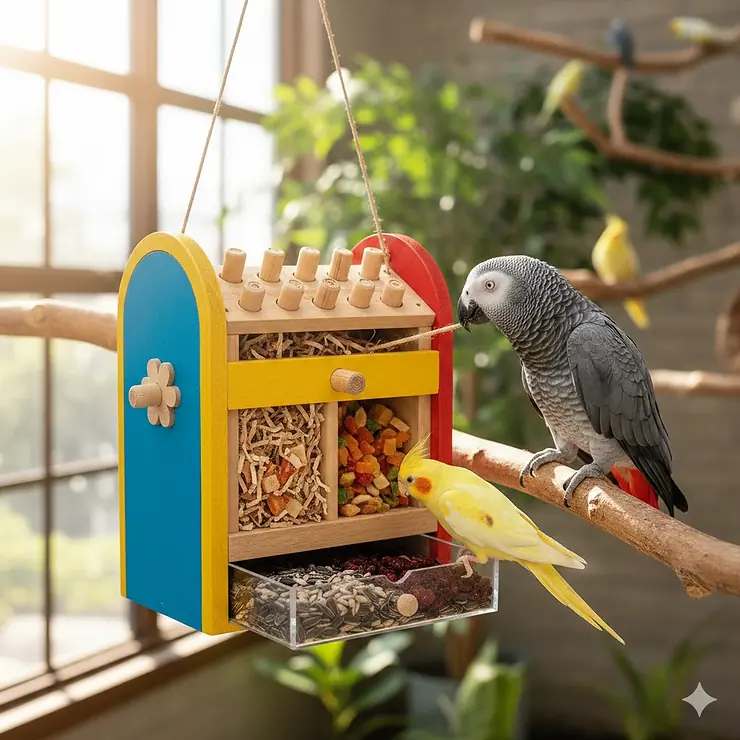
I remember watching my African Grey, Echo, methodically empty her food dish in under five minutes. Then she’d spend the next four hours screaming for attention. That’s when I realized: wild parrots spend 60-80% of their day foraging for food. My bird was done with “dinner” faster than I could make a cup of coffee.
A bird foraging box isn’t just another toy—it’s a psychological necessity. These cleverly designed enrichment tools transform mealtime into a mental workout, mimicking the natural behaviors your parrot would display in the wild. According to research published in Applied Animal Behaviour Science, foraging enrichment can double your bird’s daily foraging time from 2 hours to over 4 hours, approaching natural time budgets and significantly reducing stress-related behaviors like feather plucking and excessive screaming.
Whether you’re dealing with parrot foraging boxes for large macaws, wooden foraging box for birds that love to shred, or stackable bird foraging boxes for multi-bird households, choosing the right enrichment can transform your bird’s quality of life. This guide covers everything from budget-friendly options to premium acrylic bird foraging box designs that’ll keep even the smartest cockatoo entertained for hours.
Quick Comparison Table
| Product | Material | Best For | Price Range | Difficulty Level |
|---|---|---|---|---|
| Wepets Variety Foraging Box | Natural wood, loofah, seagrass | Small-medium birds | $14-18 | Beginner-Intermediate |
| Parrot Wizard Tough Guy | 100% solid wood | Heavy chewers | $25-30 | Intermediate |
| HOSUKU Natural Foraging Box | Pine cones, coconut, sola | All bird sizes | $16-22 | Beginner |
| Caitec Triple Foraging Box | Food-grade chipboard | Budget-conscious owners | $8-12 | Beginner |
| Super Bird Creations Bottom’s Up | Acrylic cups, plastic | Medium-large parrots | $22-28 | Intermediate-Advanced |
| Super Bird Creations Fun Box | 30+ toy pieces | Variety seekers | $18-24 | All levels |
| Faxco Acrylic Foraging Toy | Clear acrylic | Visual learners | $12-16 | Beginner-Intermediate |
💬 Just one click – help others make better buying decisions too!😊
Top 7 Bird Foraging Boxes: Expert Analysis
1. Wepets Variety Bird Foraging & Parrot Shredding Toys Box
If you’re looking for hide and seek bird toys that deliver serious value, the Wepets Variety Box consistently tops my recommendations. This isn’t your typical treat hiding boxes—it’s a treasure chest of natural textures specifically designed for enrichment activities parrots crave.
Key Specifications:
- Materials: Seagrass, loofah, crinkly paper, woven rattan, wheat straws, corrugated paper
- Dimensions: Approximately 8×6×2 inches
- Weight: 7.5 oz
The beauty of this wooden foraging box for birds lies in its diversity. Each box arrives packed with different natural materials—some boxes feature lotus pods, others include mahogany pods or bamboo weaving. This variety keeps even experienced foragers guessing. Customers report their cockatiels spend 2-3 hours daily exploring these boxes, with one owner noting her Caique “ignored every other toy for two weeks straight.”
✅ Pros:
- Incredible material variety (10+ different textures)
- Safe silica gel desiccant included for freshness
- Suitable for small to medium birds (cockatiels, conures, lovebirds)
❌ Cons:
- Lasts only 2-3 weeks with aggressive chewers
- May intimidate birds in smaller cages
Price: $14-18 | Customer Rating: 4.5/5 stars
2. Parrot Wizard Natural Foraging Box (Tough Guy)
For those dealing with destructive chewers, the Parrot Wizard Tough Guy is your solution. This solid wood fortress features four independent compartments that make it a marathon, not a sprint, for your feathered friend.
Key Specifications:
- Material: 100% chewable wood (no plastic or coloring)
- Size: 3.5×3.5 inches
- Mounting: Stainless steel hardware included
What sets this parrot foraging boxes apart is its graduated difficulty system. The walls vary in thickness, with strategic holes that guide beginners while challenging experienced foragers. One compartment might take 20 minutes to break into, while another could take days. It’s essentially stackable bird foraging boxes in one compact unit.
Customer feedback reveals this box doubles as a platform perch—birds will literally sit on top between foraging sessions. A cockatoo owner reported it lasted six months with daily use, making it exceptional value despite the higher upfront cost.
✅ Pros:
- Exceptional durability for large parrots
- Four independent chambers extend engagement
- Doubles as a perch
❌ Cons:
- Higher price point
- May be too challenging for beginners
Price: $25-30 | Customer Rating: 4.7/5 stars
3. HOSUKU Natural Bird Foraging & Parrot Shredding Toys Box
The HOSUKU Natural Box represents the perfect middle ground between affordability and quality. Unlike synthetic alternatives, this wooden foraging box for birds uses responsibly sourced pine cones, coconut shells, sola wood, and apple wood—materials your bird would encounter in nature.
Key Specifications:
- Materials: 100% natural wood (pine cones, coconut, apple wood)
- Design: Easy-access open box format
- Target species: Parakeets through medium parrots
What impressed me most was the “no installation required” design. You literally open the box and place it anywhere—cage floor, play stand, or even outside during supervised free time. Multiple reviewers mentioned their birds dragged these boxes around like prized possessions.
The wood selection is particularly thoughtful. Apple wood provides softer chewing for smaller beaks, while coconut shells challenge larger parrots. This makes it versatile across species, from budgies to small cockatoos.
✅ Pros:
- Zero harmful chemicals or dyes
- Promotes natural beak maintenance
- Suitable for wide range of species
❌ Cons:
- Shorter lifespan with heavy chewers (1-2 weeks)
- Natural materials may vary between batches
Price: $16-22 | Customer Rating: 4.6/5 stars
4. Caitec Featherland Paradise Triple Foraging Box
Budget-conscious bird owners, meet your new best friend. The Caitec Triple Foraging Box proves you don’t need to spend big to provide quality enrichment activities parrots need.
Key Specifications:
- Material: Food-grade durable chipboard
- Format: Three connected boxes with wooden blocks
- Available sizes: Small, medium, and large
Don’t let the cardboard construction fool you—this is food-grade chipboard designed for safe destruction. The three-box design creates a progressive challenge: easy access box, partially covered box, and fully enclosed mystery box. Interestingly, many customers report using these for rats and hamsters with equal success, though they were designed specifically as treat hiding boxes for birds.
One clever owner cuts the boxes apart after her bird tears into the first one, creating foot toys for continued use. The wooden blocks inside add texture variety and appeal to birds who prefer harder chewing materials.
✅ Pros:
- Unbeatable price (under $12)
- Three difficulty levels in one toy
- Replacement boxes available separately
❌ Cons:
- Consumable toy (expect 1-2 week lifespan)
- Not suitable for extra-large parrots
Price: $8-12 | Customer Rating: 4.6/5 stars
5. Super Bird Creations SB632 Foraging Bottom’s Up
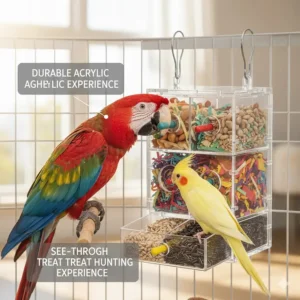
For those interested in acrylic bird foraging box options, the Super Bird Creations Bottom’s Up offers transparency that aids in training. Watching your bird problem-solve through clear acrylic cups is both educational and entertaining.
Key Specifications:
- Material: Dishwasher-safe acrylic cups with colorful plastic components
- Dimensions: 18″ x 2.5″
- Suitable for: Medium to large birds
This design targets medium to large parrots specifically—think African Greys, Amazons, and Mini Macaws. The clear acrylic cups let birds see treats inside, making it perfect for beginners who need visual encouragement. As confidence grows, you can partially obscure cups with paper to increase difficulty.
Customer feedback highlights the durability factor. Unlike wooden options that get destroyed, these acrylic cups withstand years of use. Simply wash them in the dishwasher, refill, and rehang. One Amazon reviewer reported five years of daily use with no significant wear.
✅ Pros:
- Dishwasher safe and reusable
- Clear visibility aids learning
- Excellent for wet foods (fruits, vegetables)
❌ Cons:
- Less natural than wood alternatives
- May be too easy for experienced foragers
Price: $22-28 | Customer Rating: 4.7/5 stars
6. Super Bird Creations SB1237 Foraging Fun Box
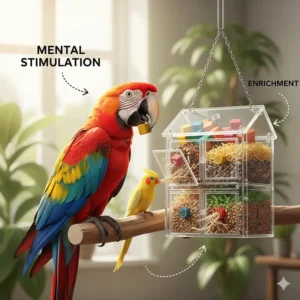
Think of the Super Bird Creations Fun Box as a starter kit for enrichment activities parrots need. With over 30 bird-safe toy pieces, it’s like Christmas morning every time you open it.
Key Specifications:
- Contents: 30+ pieces (finger traps, coconut flowers, jute sticks, vine balls)
- Material: Natural plant materials (balsa, pine)
- Recommended: Medium-sized birds (Ringnecks, Conures, Quakers)
What makes this different from traditional parrot foraging boxes is the modularity. You’re not buying one toy—you’re buying components to create dozens of foraging opportunities. Hide vine balls in food dishes. Wrap finger traps around perches. Stuff jute sticks into paper cups. Your creativity becomes the limiting factor.
Avian professionals worldwide recommend this collection specifically because it addresses multiple enrichment needs: foraging, chewing, manipulation, and exploration. One veterinarian I spoke with keeps these in her clinic to educate new parrot owners about proper enrichment.
✅ Pros:
- Exceptional variety (30+ pieces)
- Recommended by avian professionals
- Multiple uses beyond simple foraging
❌ Cons:
- Requires owner creativity
- Pieces can scatter during play
Price: $18-24 | Customer Rating: 4.8/5 stars
7. Faxco Parrot Creative Foraging Toy (Acrylic Feed Box)
Rounding out our list is the Faxco Acrylic Foraging Toy, perfect for visual learners and training purposes. This acrylic bird foraging box works particularly well for birds transitioning from bowl feeding to foraging.
Key Specifications:
- Material: Durable transparent acrylic
- Design: Rotating compartments with different opening mechanisms
- Size: Compact cage-mounted design
The transparency factor cannot be overstated for training. Birds can see exactly where treats are located, reducing frustration during the learning phase. As they master the concept, you can add paper barriers or stack multiple boxes for increased complexity (making it function like stackable bird foraging boxes).
However, one reviewer reported a Senegal Parrot disassembled the entire box within hours—a testament to both parrot intelligence and this product’s limitation with destructive species. It works best for small to medium birds who enjoy puzzles more than destruction.
✅ Pros:
- Excellent for training purposes
- Durable acrylic construction
- Multiple opening mechanisms
❌ Cons:
- Clever birds may disassemble hardware
- Less natural than wood alternatives
Price: $12-16 | Customer Rating: 4.3/5 stars
✨ Don’t Miss These Exclusive Deals!
🔍 Take your bird enrichment to the next level with these carefully selected products. Click on any highlighted item to check current pricing and availability. These tools will help you create authentic foraging experiences your feathered friend will love!
Understanding Bird Foraging Box Materials
The material composition of your bird foraging box dramatically impacts both safety and engagement. Let me break down what actually matters.
Wooden Foraging Boxes
Wooden foraging box for birds options dominate the market for good reason. Wood provides natural texture, satisfying destructibility, and zero toxic concerns when sourced properly. Pine, balsa, and hardwoods like manzanita offer different resistance levels—softer woods for beaks in training, harder woods for powerful chewers.
According to LafeberVet’s research on foraging enrichment, natural materials like wood trigger instinctive behaviors more effectively than synthetic alternatives. Birds in the wild spend hours stripping bark and excavating tree hollows. Wooden boxes replicate this experience authentically.
The downside? Wood is consumable. Budget $15-30 monthly for replacement wooden boxes depending on your bird’s destruction rate. However, many owners view this as a feature, not a bug—fresh textures prevent habituation.
Acrylic and Polycarbonate Options
Acrylic bird foraging box designs excel in three scenarios: training beginners, housing wet foods, and situations requiring long-term reusability. The transparency lets birds see rewards, reducing initial frustration.
Polycarbonate variants like those from Caitec feature in many zoo enrichment programs specifically because they withstand cleaning protocols while remaining bird-safe. You can fill these with fruit pieces, vegetable chunks, or even pellets soaked in juice without worrying about wood rot.
However, experienced foragers may lose interest quickly. The visual cues remove much of the challenge that keeps sessions engaging long-term.
Hybrid Designs
The best enrichment activities parrots respond to often combine materials. Picture a wooden box base with acrylic windows, or chipboard walls holding natural vine balls. These hybrid parrot foraging boxes offer visual interest plus tactile satisfaction.
Why Foraging Enrichment Matters: The Science
Let’s get serious about bird psychology for a moment. Wild parrots don’t just eat—they work for food. Research from ScienceDirect on environmental enrichment demonstrates that captive birds provided with foraging opportunities showed a 58% decrease in feather-damaging behaviors and a 43% decrease in self-directed stress behaviors.
Think about it: your parrot possesses problem-solving abilities rivaling a four-year-old child, yet we often ask them to eat from a dish. It’s like giving a chess grandmaster tic-tac-toe to play. No wonder behavioral issues develop.
The Foraging Time Budget Problem
Wild parrots allocate 4-8 hours daily to foraging activities. Captive parrots eating from bowls? Less than one hour. This leaves 7+ hours of cognitive capacity unutilized, often manifesting as:
- Feather plucking and self-mutilation
- Excessive screaming
- Aggression toward handlers
- Stereotypic behaviors (pacing, repetitive movements)
- Depression and lethargy
Studies published in the Rhode Island Parrot Rescue’s enrichment guide confirm that introducing hide and seek bird toys reduces these problems by 40-60% within weeks.
Cognitive Stimulation vs. Physical Exercise
Here’s what many owners miss: foraging isn’t primarily about physical activity. Yes, your bird will move more, but the real magic happens mentally. Each problem-solving session—whether figuring out how to open stackable bird foraging boxes or extracting treats from paper—strengthens neural pathways and releases dopamine.
Think of treat hiding boxes as crossword puzzles for birds. The difficulty should match skill level. Too easy? Boredom persists. Too hard? Frustration develops. Progressive challenge is key.
How to Choose the Right Bird Foraging Box
Size Matters (More Than You Think)
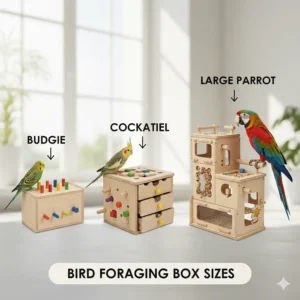
Small Birds (Budgies, Lovebirds, Parrotlets): Look for boxes under 6 inches with smaller entry holes. The Caitec Small Triple Foraging Box or compact versions from HOSUKU work perfectly. These species benefit from multiple simple challenges rather than one complex puzzle.
Medium Birds (Cockatiels, Conures, Quakers): The sweet spot is 6-10 inch boxes with varied difficulty. The Wepets Variety Box shines here, offering enough material to engage without overwhelming. These birds possess surprising problem-solving abilities—don’t underestimate them.
Large Birds (African Greys, Amazons, Macaws): Go big or go home. The Parrot Wizard Tough Guy or Super Bird Creations Bottom’s Up provide the durability and complexity these intelligent species demand. Large parrots can dismantle subpar products in minutes.
Experience Level Assessment
Beginner Foragers: Start with acrylic bird foraging box options where treats remain visible. The Faxco Acrylic Box or Caitec designs work brilliantly. Success builds confidence.
Intermediate Foragers: Wooden foraging box for birds with moderate concealment challenges nicely. The HOSUKU Natural Box or Wepets Variety Box provide enough difficulty without frustration.
Advanced Foragers: Stackable bird foraging boxes and multi-chamber designs like the Parrot Wizard Tough Guy keep experts engaged. These birds need legitimate challenges.
Material Preferences
Observe your bird’s natural behaviors. Shredders love paper-based options. Chewers prefer wood. Manipulators enjoy acrylic boxes with moving parts. Match the toy to the temperament.
DIY vs. Commercial: What Works Better?
I’ve tried both approaches extensively. Here’s the honest breakdown.
Commercial Advantages
Store-bought parrot foraging boxes undergo safety testing. No sharp edges, no toxic glues, no small parts that present choking hazards. Companies like Super Bird Creations and Caitec employ avian specialists to ensure products meet species-specific needs.
The variety also matters. Creating the material diversity found in the Wepets box would require sourcing loofah, seagrass, rattan, and a dozen other components separately—often costing more than the $15 retail price.
DIY Benefits
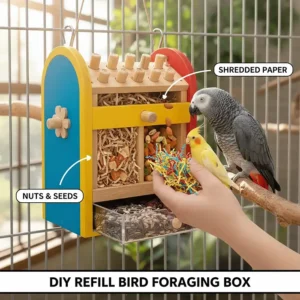
Customization reigns supreme with DIY treat hiding boxes. You can tailor difficulty precisely to your bird’s current skill level. Cardboard boxes stuffed with crinkle paper cost pennies and provide hours of engagement.
Many enrichment activities parrots enjoy come from creative owners using household items: paper bags filled with pellets, cardboard egg cartons with treats in each cup, paper towel tubes packed with shredded newspaper. These work surprisingly well.
The Hybrid Approach (My Recommendation)
Buy commercial wooden foraging box for birds products as your foundation. These provide quality materials and construction. Then supplement with DIY variations to provide novelty without breaking the bank.
For example, purchase the Super Bird Creations Fun Box for components. Use those components inside cardboard boxes, paper bags, or homemade foraging stations. You’re multiplying effectiveness while controlling costs.
Training Your Bird to Forage
Not all birds instinctively understand foraging boxes. Many captive-raised parrots have never worked for food. Here’s my proven training protocol.
Week 1: Introduction Phase
Place the bird foraging box in the cage without treats. Let your bird investigate at their own pace. Some birds attack new objects immediately; others need days to build confidence. Don’t force interaction.
Week 2: Easy Access
Fill the box with easily visible treats (favorite seeds, nuts, or pellets) without any barriers. Show your bird the treats inside. Let them succeed easily. You’re building positive associations.
Week 3: Light Challenge
Add minimal barriers—single sheets of paper over treats, or partially cover openings. Most birds will break through paper within minutes once they understand food waits inside.
Week 4+: Progressive Difficulty
Gradually increase complexity. Add more layers, use tougher materials, or introduce stackable bird foraging boxes with multiple chambers. Watch your bird’s body language—if frustration appears, dial back difficulty.
Common Training Mistakes
Mistake 1: Starting too difficult. Birds who fail repeatedly may abandon foraging entirely. Always begin easier than you think necessary.
Mistake 2: Removing regular food bowls immediately. Transition gradually. Keep bowls available until your bird confidently uses foraging boxes for 70-80% of meals.
Mistake 3: Using low-value rewards. Hide premium treats (nuts, dried fruit) not regular pellets. Make the effort worthwhile.
Maintenance and Safety Guidelines
Daily Inspection Routine
Check your wooden foraging box for birds daily. Look for:
- Splintered wood that could injure beaks or tongues
- Loose hardware (screws, clips, chains)
- Mold or bacterial growth (especially with wet foods)
- Excessive wear indicating replacement time
Replace boxes showing significant damage immediately. Treat hiding boxes are toys, not permanent fixtures.
Cleaning Protocols
Wooden boxes: Wipe with bird-safe disinfectant (diluted vinegar works well). Air dry completely before refilling. Most wooden options aren’t dishwasher safe.
Acrylic boxes: Dishwasher top rack or hand wash with hot soapy water. These withstand more aggressive cleaning, making them ideal for wet foods.
Natural material boxes: Many aren’t cleanable—they’re meant to be consumed. Replace when soiled.
Choking Hazard Awareness
Avoid bird foraging box designs with:
- Small parts under 1/4 inch (swallowing risk)
- Long strings or ropes (entanglement danger)
- Brittle plastics that shatter into sharp fragments
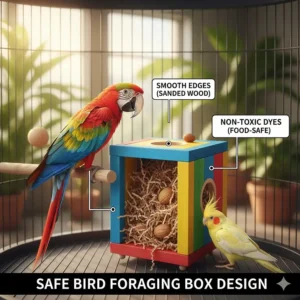
- Painted or dyed materials (toxicity concerns)
Advanced Foraging Strategies
Once your bird masters basic bird foraging box concepts, amp up the challenge with these techniques.
Rotation Systems
Never leave the same parrot foraging boxes in the cage permanently. Introduce toys for 3-5 days, then swap them out. This prevents habituation and keeps novelty high. Maintain a toy box with 6-8 options, rotating 2-3 into the cage at any time.
Multi-Station Setups
Position stackable bird foraging boxes at different heights and locations. This mimics wild foraging where food sources scatter across territory. Birds must remember multiple cache locations, exercising spatial memory.
Difficulty Escalation
Start each month with easier hide and seek bird toys. Gradually increase complexity through the month. Reset to easy at month’s start. This prevents learned helplessness while maintaining engagement.
Social Foraging
For multi-bird households, provide separate but visible treat hiding boxes. Birds learn from watching flockmates solve problems. This accelerates skill development naturally.
Troubleshooting Common Problems
“My Bird Ignores the Foraging Box”
Solution: Reduce difficulty dramatically. Place ultra-high-value treats (nuts for most species) barely concealed. Show your bird the treasure inside. Success breeds curiosity.
“The Box Gets Destroyed in Minutes”
Solution: Your bird needs tougher materials. Graduate from chipboard to solid wood (Parrot Wizard Tough Guy). Consider acrylic bird foraging box options that resist destruction.
“My Bird Seems Frustrated, Not Engaged”
Solution: Difficulty too high. Back up two levels. Better to master easy challenges than fail at hard ones. Frustration leads to toy aversion.
“I Can’t Afford to Keep Buying New Boxes”
Solution: Embrace DIY supplements. Cardboard boxes are free. Paper bags cost nothing. Reserve commercial wooden foraging box for birds as occasional treats while using homemade versions daily.
Seasonal Variation Ideas
Summer: Frozen Treats
Fill acrylic bird foraging box options with frozen fruit chunks. Your bird works to extract cooling treats. Particularly effective in hot climates.
Fall: Harvest Themes
Incorporate natural materials birds encounter in autumn: leaves, pinecones (cleaned and baked), small branches. Creates sensory variety beyond standard treat hiding boxes.
Winter: Warming Foods
Hide warm cooked sweet potato chunks or oatmeal in wooden foraging box for birds. The warmth adds another sensory dimension to foraging.
Spring: Fresh Growth
Introduce fresh herbs, edible flowers, and greens inside parrot foraging boxes. Connects your bird to seasonal rhythms.
Budget Breakdown: Annual Costs
Let’s talk money honestly. Quality enrichment activities parrots need don’t have to break the bank, but budgeting helps.
Budget Plan ($10-15/month, $120-180/year):
- One Caitec Triple Foraging Box monthly: $10
- DIY cardboard boxes and paper: $2
- Occasional natural branches: $3
Mid-Range Plan ($25-35/month, $300-420/year):
- Two premium boxes (HOSUKU, Wepets) monthly: $25
- Super Bird Creations Fun Box quarterly: $5/month average
- Natural materials and DIY supplements: $5
Premium Plan ($40-60/month, $480-720/year):
- Weekly box rotation (4 boxes monthly): $35
- Quarterly major purchases (Parrot Wizard Tough Guy): $8/month average
- Full toy rotation system: $15
Most owners find the mid-range plan optimal—enough variety to prevent boredom without excessive spending.
Brand Comparison: Value Analysis
| Brand | Price Point | Durability | Material Quality | Innovation |
|---|---|---|---|---|
| Super Bird Creations | High | Excellent | Premium | High |
| Caitec | Budget | Good | Good | Medium |
| Wepets | Mid | Good | Excellent | Medium |
| HOSUKU | Mid | Good | Premium | Low |
| Parrot Wizard | High | Exceptional | Premium | Medium |
Best Overall Value: Wepets offers premium materials at mid-range prices, making it my go-to recommendation for most owners.
Best Budget: Caitec delivers functional enrichment at unbeatable prices. Perfect for testing whether your bird enjoys foraging.
Best Premium: Parrot Wizard’s construction justifies the cost for large parrots. Six-month lifespan makes it cost-effective long-term.
Beyond Boxes: Complementary Enrichment
While bird foraging box options form the foundation, comprehensive enrichment activities parrots need extend further.
Foraging Wheels
Spinning mechanisms that dispense treats add mechanical complexity. Birds must understand cause-effect relationships: spin wheel, receive food.
Foraging Walls
Vertical surfaces with multiple concealment points. The Super Bird Creations Seagrass Foraging Wall exemplifies this category.
Puzzle Feeders
Require sequential steps (remove lid, pull drawer, flip compartment). These challenge cognitive abilities beyond simple treat hiding boxes.
Natural Perches
Not foraging-specific, but natural branches with bark provide continuous foraging opportunity as birds strip bark.
❓ Frequently Asked Questions
❓ What is the best bird foraging box for beginners?
❓ How often should I replace wooden foraging box for birds?
❓ Can multiple birds share one bird foraging box?
❓ Are acrylic bird foraging box options safe for heavy chewers?
❓ What treats work best in parrot foraging boxes?
Conclusion: Transforming Your Bird’s Life
The difference between a bored parrot and a mentally stimulated one often comes down to simple enrichment choices. That bird foraging box you invest $15 in today could prevent thousands in veterinary bills tomorrow by reducing stress-related behaviors.
I’ve watched countless birds transform from feather-plucking, screaming problems into confident, engaged companions simply by addressing their cognitive needs. The research is clear: foraging enrichment works. Wild parrots aren’t smarter than captive ones—they’re just busier.
Start simple. Pick one parrot foraging boxes from this list that matches your bird’s size and experience level. Introduce it gradually using the training protocol outlined above. Give it two weeks before judging results. Most importantly, remember that enrichment activities parrots need don’t stop at foraging—it’s the foundation upon which to build a comprehensive wellness program.
Your bird didn’t choose captivity, but you can choose to make that captivity as enriching, challenging, and fulfilling as possible. Every wooden foraging box for birds you introduce, every hide and seek bird toys session you create, every moment you invest in their mental health—it all adds up to a longer, happier life for your feathered family member.
Recommended for You
- 7 Best Bird Foraging Toys 2026 – Ultimate Mental Enrichment Guide
- 7 Best Stone Bird Baths Transform Your Garden 2026
- 7 Best Hanging Bird Baths That Birds Actually Love (2026)
Disclaimer: This article contains affiliate links. If you purchase products through these links, we may earn a small commission at no additional cost to you.
✨ Found this helpful? Share it with your friends! 💬🤗
