
In This Article
Have you ever watched your parrot solve a complex problem and thought, “Wow, that’s actually genius”? You’re not wrong. Research from Harvard University shows that African grey parrots can perform cognitive tasks beyond 5-year-old humans, demonstrating inference abilities that even apes struggle with. But here’s the catch – without proper mental stimulation, these brilliant birds can develop serious behavioral issues like feather plucking, screaming, and depression.
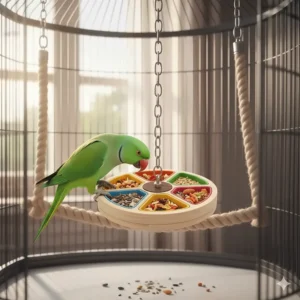
Bird puzzle toys aren’t just entertainment; they’re essential cognitive enrichment tools that tap into your parrot’s natural foraging instincts. In the wild, parrots spend 60-80% of their day searching for food, solving problems, and engaging their sharp minds. Captive birds need that same challenge, and that’s exactly what interactive feeding solutions provide.
I’ve spent countless hours researching and testing various parrot puzzle feeders to find options that genuinely engage birds while being safe and durable. The right treat dispensing bird toys can transform a bored, frustrated parrot into an engaged, happy companion. Whether you have a tiny budgie or a massive macaw, these problem solving toys offer the mental workout your feathered Einstein desperately needs.
What exactly are bird puzzle toys? They’re specialized enrichment devices designed to challenge your bird’s intelligence through food-based puzzles, requiring them to manipulate, rotate, pull, or strategize to access treats hidden inside.
Quick Comparison Table
| Product | Best For | Difficulty Level | Price Range | Material |
|---|---|---|---|---|
| Paradise Creative Foraging Wheel | Medium-Large Birds | Intermediate | $35-$48 | Polycarbonate |
| Super Bird 4 Way Forager | Medium-Large Birds | Beginner | $25-$32 | Acrylic/Plastic |
| FlidRunest Wooden Foraging Feeder | Small-Medium Birds | Intermediate | $18-$25 | Natural Wood |
| Super Bird Activity Wall | Medium Birds | Beginner | $22-$28 | Seagrass/Natural |
| All-Natural Tippy-Tower | All Sizes | Intermediate-Advanced | $24-$30 | Solid Wood |
| Bonka Disk Sneaker | Medium Birds | Beginner | $15-$22 | Plastic/Acrylic |
| Super Bird Bottom’s Up | Medium-Large Birds | Beginner-Intermediate | $14-$18 | Acrylic |
💬 Just one click – help others make better buying decisions too! 😊
Top 7 Bird Puzzle Toys – Expert Analysis
1. Paradise Toys Creative Foraging System Wheel Gen II
The Paradise Toys Creative Foraging System Wheel represents the gold standard in interactive parrot enrichment. This spinning puzzle feeder features six individual compartments that rotate on a polycarbonate wheel, requiring your bird to turn the knob and strategically access each chamber.
Key Specifications:
- Dimensions: 8″ x 6″ x 11″ (XL version), 6″ diameter wheel
- Material: Durable, dishwasher-safe polycarbonate
- Weight capacity: Suitable for Amazons, African Greys, Cockatoos, Macaws
Price Range: $35-$48 depending on size
Customer feedback consistently highlights how this wheel keeps birds engaged for hours. One African Grey owner noted their bird figured out the rotation system within minutes but still enjoys the challenge daily. The clear construction allows birds to see their rewards, which experienced foragers appreciate as it provides visual motivation.
✅ Pros:
- Extremely durable polycarbonate construction
- Dishwasher safe for easy cleaning
- Adjustable difficulty by varying treats
❌ Cons:
- Plastic mounting bracket can break with aggressive chewers
- May be too large for conures and smaller species
2. Super Bird Creations SB634 4 Way Forager
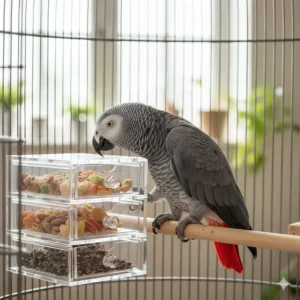
The Super Bird Creations 4 Way Forager offers an excellent entry point for birds new to cognitive enrichment birds activities. Four clear acrylic cups dangle from colorful chains, filled with vibrant plastic beads and gears that birds must navigate to access treats.
Key Specifications:
- Dimensions: 12″ x 7″ x 7″
- Material: Clear acrylic cups with bird-safe plastic components
- Target species: Ringnecks, Conures, Quakers, Caiques, African Greys
Price Range: $25-$32
This toy excels at building confidence in beginner foragers. The transparent cups show birds exactly what they’re working toward, reducing frustration while still providing mental challenge. Owners report it’s particularly effective for birds transitioning from simple bowl feeding to problem solving toys.
✅ Pros:
- Perfect beginner-level difficulty
- Colorful design attracts visual attention
- Easy to refill and clean
❌ Cons:
- Lighter birds may struggle with the swinging motion
- Plastic beads require supervision with aggressive chewers
3. FlidRunest Wooden Bird Foraging Feeder
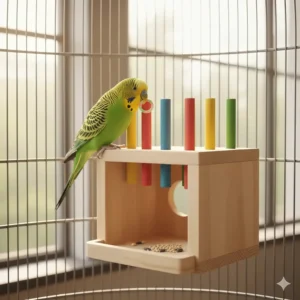
For bird owners seeking natural materials, the FlidRunest Wooden Bird Foraging Feeder delivers authentic texture and sustainable construction. This interactive puzzle features multiple compartments carved into solid wood, with varying depths that challenge birds to reach different treat levels.
Key Specifications:
- Dimensions: Approximately 10″ x 5″ x 3″
- Material: Natural, untreated solid wood
- Best for: Cockatiels, Parakeets, Lovebirds, Small Conures
Price Range: $18-$25
The wooden construction provides satisfying beak wear while birds work for food. Some customers note the compartments run shallow, limiting treat options, but this actually extends foraging time as birds must work harder for smaller rewards. One cockatiel owner mentioned it doubles as an excellent perch when treats are depleted.
✅ Pros:
- Natural wood encourages healthy beak wear
- Doubles as perch and foraging station
- Eco-friendly, biodegradable materials
❌ Cons:
- Shallow compartments limit treat size
- Wood may splinter with extremely aggressive chewers
4. Super Bird Creations SB699 Activity Wall
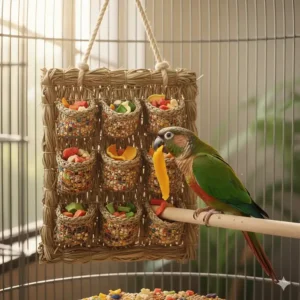
The Super Bird Creations Activity Wall transforms vertical cage space into an engaging foraging playground. This 12″ x 14″ seagrass mat comes adorned with vine chains, cardboard birdie bagels, pine slices, and acrylic beads that birds can shred, manipulate, and hide treats within.
Key Specifications:
- Dimensions: 12″ x 14″ x 3″
- Material: Natural seagrass mat with varied textures
- Target species: Ringnecks, Conures, Quakers, similar medium birds
Price Range: $22-$28
What makes this toy exceptional is its multi-sensory approach. Birds don’t just forage – they climb, shred, preen, and explore different textures simultaneously. The seagrass mat also provides a sense of security, making it ideal for more timid birds who prefer covered foraging stations.
✅ Pros:
- Combines foraging with shredding and climbing
- Natural materials safe for extensive chewing
- Provides psychological security
❌ Cons:
- Requires periodic replacement as birds shred it
- Can create mess with scattered seagrass bits
5. All-Natural Wood Parrot Foraging Toy Tippy-Tower
The All-Natural Wood Parrot Foraging Toy challenges even experienced birds with its tilting, balancing mechanism. This solid wood tower requires birds to carefully manipulate the structure without tipping it completely, adding a physical coordination element to the mental puzzle.
Key Specifications:
- Dimensions: Varies by size (Small: 4.6″ x 1.5″ x 1.5″)
- Material: Safe, chewable solid wood with non-toxic colors
- Suitable for: All parrot sizes from Budgies to Macaws
Price Range: $24-$30
Customer reviews emphasize this toy’s ability to combat boredom-related behaviors. The tilting mechanism means birds can’t simply brute-force their way to treats – they must think strategically. One Macaw owner reported their bird spent 45 minutes on the first attempt, showcasing genuine problem-solving behavior.
✅ Pros:
- Advanced difficulty keeps smart birds engaged longer
- Natural wood construction
- Adjustable difficulty by treat placement
❌ Cons:
- May frustrate beginners
- Requires supervision initially
6. Bonka Bird Toys 1886 Disk Sneaker
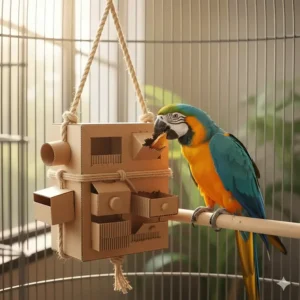
The quirky Bonka Bird Toys Disk Sneaker combines visual appeal with functional enrichment. A large colored disk topped with acrylic rings, beads, and dice hangs above four miniature sneakers that can be stuffed with treats, creating multiple foraging challenges in one toy.
Key Specifications:
- Dimensions: 10″ x 4″
- Material: Durable plastic disk with acrylic components
- Best for: Conures, Ringnecks, Quakers, medium-sized parrots
Price Range: $15-$22
The sneaker design is more than cute – these small compartments force birds to manipulate objects with their feet and beaks simultaneously, engaging different cognitive pathways. Bird owners love hiding various treat types in each sneaker to encourage complete exploration.
✅ Pros:
- Unique multi-challenge design
- Budget-friendly price point
- Colorful and visually stimulating
❌ Cons:
- Plastic construction less appealing to natural-focused owners
- Sneakers may detach with heavy use
7. Super Bird Creations SB632 Foraging Bottom’s Up
The Super Bird Creations Bottom’s Up features an ingenious upside-down cup design that forces birds to problem-solve in reverse. Clear acrylic cups hang inverted, requiring birds to reach up and inside to access treats – the opposite of natural feeding positions.
Key Specifications:
- Dimensions: 18″ x 2.5″
- Material: Clear acrylic cups with bird-safe hardware
- Target species: Medium to large birds
Price Range: $14-$18
This toy’s brilliance lies in its simplicity. By inverting the typical feeding angle, it creates a novel challenge that engages even birds who’ve mastered other food puzzle toys for birds. Customers report it’s particularly effective for birds who’ve become bored with standard foraging wheels.
✅ Pros:
- Novel upside-down approach
- Crystal clear cups show progress
- Compact design fits smaller cages
❌ Cons:
- Limited capacity compared to wheels
- Some birds initially confused by inverted design
💬 Call to Action
✨ Don’t Miss These Exclusive Deals!
🔍 Take your bird’s mental health to the next level with these carefully selected products. Click on any highlighted item to check current pricing and availability. These tools will help you create authentic cognitive enrichment your feathered companion will love!
Why Bird Puzzle Toys Matter for Parrot Intelligence
According to research published in Animal Cognition, parrots possess cognitive abilities comparable to great apes, including problem-solving, abstract concept processing, and even inference-by-exclusion – the ability to deduce answers through elimination. Yet captive parrots exhibit stereotypy rates reaching 40-42% in species like African Greys and Cockatoos, primarily due to insufficient cognitive stimulation.
The science is clear: mental enrichment directly impacts behavioral health. Studies from Cambridge Core demonstrate that cognitive learning enrichment significantly reduces stereotypical behaviors like feather plucking and excessive screaming. When birds engage with treat dispensing bird toys, they’re not just playing – they’re exercising neural pathways that evolved over millions of years.
Think about it: In nature, a wild parrot might spend six hours daily foraging, involving flight, problem-solving, social coordination, and spatial memory. A bowl of pellets? That takes 20 minutes. The remaining five hours and 40 minutes become a mental health crisis waiting to happen. Interactive feeding solutions bridge this devastating enrichment gap.
The Neurological Benefits
Parrot brains contain a region called the SpM (spiriform nucleus of the medial pallium) that’s proportionally larger than in most other birds. Research suggests this structure contributes to their exceptional intelligence, coordinating complex cognitive functions similar to human cerebral cortex pathways. When you provide problem solving toys, you’re literally exercising this remarkable brain region, promoting neural health and cognitive longevity.
Understanding Different Types of Bird Intelligence Toys
Foraging Wheels and Spinners
These rotating puzzles require birds to understand cause-and-effect relationships. By spinning the wheel, compartments align with an access point, teaching sequential thinking and delayed gratification. The Paradise Creative Foraging Wheel exemplifies this category, offering intermediate-level challenges that keep intelligent species engaged for extended periods.
Acrylic Puzzle Feeders
Transparent puzzle systems like the Super Bird 4 Way Forager provide visual feedback, allowing birds to see their goal while working toward it. This visibility reduces frustration for beginner foragers while still demanding problem-solving skills. The clear material also lets owners monitor treat levels without disturbing the bird’s concentration.
Natural Material Foraging Stations
Wooden and seagrass toys like the FlidRunest Wooden Feeder and Super Bird Activity Wall offer dual benefits: cognitive challenge plus natural texture for beak maintenance. These parrot puzzle feeders appeal to birds’ instinct to manipulate organic materials, providing sensory satisfaction alongside mental stimulation.
Multi-Level Complexity Systems
Advanced toys like the Tippy-Tower add physical coordination challenges to mental puzzles. Birds must balance dexterity with strategy, engaging both hemispheres of their brain simultaneously. This complexity makes them ideal for preventing boredom in highly intelligent species.
How to Choose the Right Bird Puzzle Toys
1. Assess Your Bird’s Current Skill Level
Start with beginner-level food puzzle toys for birds if your companion has never foraged before. The Super Bird Bottom’s Up or Bonka Disk Sneaker offer gentle introductions that build confidence without causing frustration. Experienced foragers need advanced challenges like the Tippy-Tower or multi-chamber wheels.
2. Consider Species-Specific Needs
Size matters tremendously. Small birds like budgies and cockatiels need appropriately scaled puzzles with smaller compartments. Large macaws and cockatoos require heavy-duty construction that withstands powerful beaks. The FlidRunest Wooden Feeder suits smaller species, while the Paradise Foraging Wheel handles the force of larger parrots.
3. Match Material to Chewing Style
Gentle nibblers do fine with acrylic and plastic toys. Aggressive chewers need natural wood or heavy-duty polycarbonate. I’ve seen cockatoos demolish cheap plastic puzzles in minutes, so invest in quality materials from the start.
4. Evaluate Cage Space
Vertical space often goes unused in bird cages. The Super Bird Activity Wall maximizes this real estate, perfect for smaller cages. Large aviaries can accommodate multiple puzzle types simultaneously, creating a comprehensive enrichment environment.
5. Factor in Cleaning Requirements
Dishwasher-safe options like the Paradise Foraging Wheel simplify maintenance, crucial for busy bird parents. Natural materials require more attention but offer superior enrichment value.
6. Budget for Variety
Don’t rely on a single toy. Rotate three to five different cognitive enrichment birds puzzles weekly to prevent boredom. A mix of difficulty levels and types keeps minds sharp and engaged.
7. Observe and Adjust
Watch how your bird interacts with each toy. Some parrots excel at manipulation puzzles but struggle with spatial challenges. Others are the opposite. Tailoring your selection to individual preferences maximizes enrichment benefits.
Setting Up Bird Puzzle Toys for Maximum Engagement
Strategic Placement
Position foraging toys at varying heights throughout the cage. This mimics natural foraging patterns where food sources exist at different elevations. Place one near the highest perch, another mid-cage, and a ground-level option if your bird enjoys floor exploration.
Gradual Introduction
Don’t hide treats completely on day one. Let birds see and access rewards easily at first, then gradually increase difficulty by covering compartments with paper, adding obstacles, or using more challenging mechanisms.
Treat Variety Matters
Rotate between nuts, seeds, dried fruits, vegetables, and favorite pellets. The unpredictability keeps birds motivated to check every puzzle. Occasionally include “jackpot” rewards like a whole almond to maintain enthusiasm.
Combine with Training
Use puzzle toys during training sessions. Ask for a trick, then allow access to the foraging wheel as a reward. This dual cognitive challenge – learning commands plus solving puzzles – provides exceptional mental stimulation.
Create Foraging Stations
Don’t just hang one toy and call it done. Establish multiple foraging stations using different toy types. Combine the Activity Wall with a Foraging Wheel and a Bottom’s Up feeder to create a comprehensive enrichment ecosystem.
Common Mistakes When Using Parrot Puzzle Feeders
Mistake #1: Making It Too Difficult Too Fast
I’ve watched frustrated birds give up on advanced puzzles when introduced too quickly. This learned helplessness can be hard to reverse. Always start easy and progress gradually, celebrating small victories.
Mistake #2: Inconsistent Availability
Offering puzzle toys sporadically confuses birds. Make foraging a daily routine, not an occasional treat. Consistency builds skills and prevents regression.
Mistake #3: Using Only One Type
Relying solely on foraging wheels neglects other cognitive skills. Balance rotation puzzles with manipulation challenges, spatial problems, and shredding opportunities for well-rounded development.
Mistake #4: Neglecting Maintenance
Dirty, broken toys become aversive rather than attractive. Clean weekly, inspect for damage daily, and replace worn components immediately.
Mistake #5: Ignoring Individual Preferences
Not every bird loves every toy. Some parrots prefer wood over acrylic, others vice versa. Pay attention to what excites your individual companion.
Health and Safety Considerations
Material Safety Standards
Always verify toys use bird-safe materials: untreated wood, stainless steel hardware, food-grade plastics, and non-toxic dyes. Avoid zinc, lead, and cheap plastics that can release harmful chemicals when chewed.
Size Appropriateness
Small parts present choking hazards for large birds, while oversized toys can injure tiny species. Match toy size to bird size – a budgie shouldn’t use macaw toys, and vice versa.
Supervision Requirements
Monitor initial interactions with any new puzzle toy. Some birds become overly focused and forget to eat regular meals, while others may get beaks or feet caught in mechanisms.
Regular Inspections
Weekly check for:
- Cracked or splintered components
- Loose hardware that could be swallowed
- Excessive wear creating sharp edges
- Mold or bacterial growth in crevices
When to Replace
Retire toys showing significant damage, even if birds still enjoy them. Safety always trumps enrichment value.
Advanced Foraging Enrichment Strategies
Seasonal Rotation
Cycle toys every three to four weeks to maintain novelty. Store retired puzzles for several months before reintroducing them – the gap makes them feel new again.
DIY Modifications
Enhance commercial toys with natural additions like pine cones, vine balls, or paper twists. These modifications increase complexity without purchasing entirely new systems.
Foraging Schedules
Create feeding routines that simulate natural patterns. Offer puzzle access in morning and late afternoon – times wild parrots typically forage most actively.
Social Foraging
For multi-bird households, provide communal puzzle stations. Watching flock members solve problems accelerates learning through social observation.
Progressive Difficulty Tracks
Design a curriculum that increases complexity over months. Start with simple cups, advance to spinning wheels, then tackle multi-step puzzles requiring several actions to access treats.
The Science of Parrot Problem Solving
Research by Dr. Irene Pepperberg at Harvard demonstrated that African Greys can perform inference-by-exclusion tasks at levels exceeding 5-year-old children. Her subject, Griffin, successfully completed four-cup tests that require understanding what’s NOT present to deduce what IS present elsewhere.
This level of abstract reasoning directly translates to puzzle toy success. When a bird spins a foraging wheel and finds an empty compartment, they can infer treats must be in other sections. This isn’t simple trial and error – it’s logical deduction.
Furthermore, studies show parrots possess “transfer learning” abilities. Skills learned on one puzzle type can be applied to novel challenges. A bird who masters the Paradise Foraging Wheel will approach the Tippy-Tower with existing problem-solving frameworks, adapting strategies rather than starting from scratch.
Memory and Spatial Cognition
Parrots remember puzzle solutions for months, even years. They also demonstrate spatial memory by recalling which foraging stations recently held high-value treats, prioritizing those locations during subsequent sessions. This sophisticated memory system makes rotating toys essential – familiarity leads to automation, reducing cognitive engagement.
Budget-Friendly Alternatives and DIY Options
Not everyone can afford premium bird puzzle toys immediately. Here are cost-effective strategies:
Paper Cup Puzzles
Stack paper cups with treats hidden between layers. Birds must tip and manipulate cups to access rewards. Cost: Pennies per toy.
Cardboard Foraging Boxes
Use clean cardboard boxes, egg cartons, or toilet paper rolls stuffed with shredded paper and treats. These disposable puzzles cost nothing but provide excellent enrichment.
Muffin Tin Foraging
Place treats in muffin tin compartments, covering some with paper circles. Simple but effective for building foraging confidence.
Pine Cone Puzzles
Wedge nuts and seeds into natural pine cones. The irregular surface creates a challenging but affordable treat dispensing bird toy.
Upgrade Over Time
Start with DIY options, then invest in quality commercial toys as budget allows. The Bonka Disk Sneaker ($15-22) offers professional construction at entry-level prices, making it an excellent first purchase.
Troubleshooting Common Foraging Challenges
Problem: Bird Ignores Puzzle Toys
Solution: Make treats extremely visible initially. Let birds see you place high-value rewards inside. Gradually increase concealment as confidence builds.
Problem: Bird Gets Frustrated and Gives Up
Solution: Reduce difficulty immediately. Success builds motivation; repeated failure creates learned helplessness.
Problem: Bird Solves Puzzles Too Quickly
Solution: Layer complexity by combining multiple toys, using less-preferred treats, or adding obstacles like paper barriers within compartments.
Problem: Bird Only Uses One Toy Type
Solution: Gradually reduce availability of preferred toys while making alternatives more appealing with premium treats. Don’t force, but gently guide exploration.
Problem: Bird Destroys Rather Than Forages
Solution: This is actually normal! Destructive play serves cognitive enrichment too. Provide separate chew toys and guide focus back to puzzle elements.
Integrating Puzzle Toys with Other Enrichment
Physical Exercise
Combine foraging stations with climbing opportunities. Place the Activity Wall at cage top, requiring flight or climbing to access – mental plus physical workout in one.
Social Interaction
Make foraging a bonding activity. Demonstrate puzzle solutions, celebrate successes verbally, and share rewards. This social component amplifies enrichment benefits.
Environmental Enrichment
Rotate cage layouts when introducing new puzzles. Fresh spatial arrangements plus novel cognitive challenges create comprehensive environmental enrichment.
Auditory Stimulation
Play species-appropriate sounds or music during foraging sessions. Multi-sensory experiences enhance neural engagement.
Long-Term Benefits of Cognitive Enrichment
Behavioral Improvements
Owners consistently report reduced screaming, biting, and feather destruction after implementing regular foraging routines. Engaged minds have no energy for problematic behaviors.
Enhanced Bonding
Birds who receive adequate mental stimulation are calmer, more confident, and more socially engaged with their human companions. Problem solving toys indirectly strengthen human-bird relationships.
Cognitive Longevity
Just like human brain training, regular mental exercise may delay age-related cognitive decline in parrots. Keep senior birds sharp with appropriate-difficulty puzzles.
Physical Health
Active foraging promotes exercise, preventing obesity and associated health issues. Birds who work for food maintain better body condition than those who bowl-feed exclusively.
Frequently Asked Questions
❓ How many bird puzzle toys does my parrot need?
❓ Can bird puzzle toys help with feather plucking?
❓ What treats work best in parrot puzzle feeders?
❓ How long should birds spend on food puzzle toys for birds daily?
❓ Are wooden or plastic treat dispensing bird toys better?
Conclusion: Investing in Your Parrot’s Cognitive Health
Bird puzzle toys represent far more than entertainment accessories – they’re essential welfare tools that honor your parrot’s remarkable intelligence. From the beginner-friendly Super Bird 4 Way Forager to the advanced All-Natural Tippy-Tower, each toy we’ve explored offers unique cognitive challenges that engage different aspects of avian intelligence.
Remember, your parrot’s brain evolved to solve complex problems across vast rainforest territories. Denying that cognitive capacity in captivity isn’t just boring – it’s cruel. The small investment in quality interactive feeding solutions pays enormous dividends in behavioral health, emotional well-being, and relationship quality.
Start today with one or two toys matched to your bird’s skill level. Observe, adjust, and expand your enrichment arsenal gradually. Your parrot’s brighter eyes, calmer demeanor, and enthusiastic engagement will confirm you’ve made the right choice. These brilliant creatures deserve challenges worthy of their incredible minds.
The seven products highlighted here represent the best available options in 2026, combining safety, durability, and genuine cognitive engagement. Whether you choose the rotating complexity of the Paradise Foraging Wheel or the multi-sensory appeal of the Super Bird Activity Wall, you’re taking a critical step toward providing the mental stimulation your companion desperately needs and absolutely deserves.
Recommended for You
- 7 Best Bird Foraging Boxes 2026
- 7 Best Bird Foraging Toys 2026 – Ultimate Mental Enrichment Guide
- 7 Best Stone Bird Baths Transform Your Garden 2026
Disclaimer: This article contains affiliate links. If you purchase products through these links, we may earn a small commission at no additional cost to you.
✨ Found this helpful? Share it with your friends! 💬🤗
