
In This Article
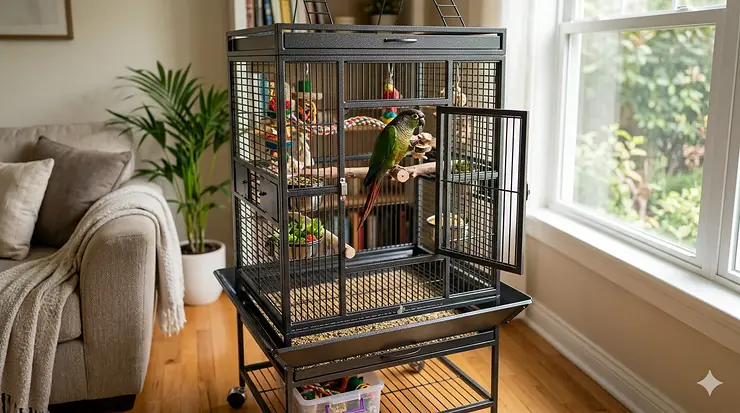
Let’s be honest — buying a cage for your conure is a bigger decision than most people expect. You’re not picking a box. You’re picking a home. And for a bird that’s equal parts Einstein and tornado, the wrong cage means a stressed bird, a frustrated owner, and a whole lot of regret.
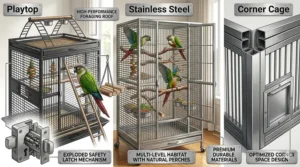
Conures are, without exaggeration, some of the most energetic, curious, and mischievous birds in the parrot family. According to avian researchers, conures require enriched environments with ample horizontal space to support their natural foraging and climbing instincts. A cage that’s too small doesn’t just limit their physical movement — it suppresses behavior, triggers feather plucking, and chips away at their psychological health. In other words, size actually matters here.
Finding the top rated conure cages in 2026 isn’t just about scrolling through Amazon and picking the tallest one with wheels. It’s about matching bar spacing to species, understanding the difference between a flight cage and a standard cage, and knowing which so-called “premium” features are actually worth paying for versus which are just marketing glitter.
In this guide, I’ve done the heavy lifting for you. I researched dozens of models currently available on Amazon, dug through hundreds of verified customer reviews, cross-referenced avian welfare recommendations, and tested the practical reality of what it means to live with these cages day-to-day — cleaning, feeding, bird-proofing and all. Whether you’re housing a small green cheek conure or a boisterous sun conure, there’s a perfect cage in this list for you.
Let’s find it.
Quick Comparison: Top Rated Conure Cages at a Glance
| Product | Dimensions (L×W×H) | Bar Spacing | Best For | Price Range |
|---|---|---|---|---|
| Yaheetech 69-Inch Extra Large Cage | 32″×18.5″×69″ | 0.4″ | Best overall / multi-bird flocks | $$ |
| Prevue Wrought Iron Select Playtop (3152BLK) | 24″×22″×65″ | 3/4″ | Premium pick / sun conure owners | $$$ |
| VIVOHOME 54 Inch Flight Cage | 31″×20.5″×54″ | 1/2″ | Green cheeks / flight space | $$ |
| Yaheetech 52” Flight King Cage | 31″×20.5″×52″ | 5/8″ | Mid-range value | $$ |
| Prevue Hendryx Madison 124COP | 20″×20″×29″ | 5/8″ | Small spaces / compact setups | $ |
| VIVOHOME 30 Inch Rolling Cage | 18″×14″×30″ | 1/2″ | Smaller conure species | $ |
| Yaheetech 63” Detachable Cage | 32″×18.5″×63″ | 5/8″ | Multiple birds / family flocks | $$ |
Reading the table: The two most critical columns are bar spacing and dimensions. For green cheek conures and similarly petite species, 1/2″ bar spacing is the gold standard. Sun conures and Jenday conures handle 5/8″–3/4″ comfortably. The VIVOHOME models dominate the narrower bar spacing category, making them the safer bet for smaller birds. Budget shoppers will note that the price difference between the $ and $$ tiers often comes down to rolling stand quality, accessory bundles, and construction weight — not necessarily cage size.
💬 Just one click — help others make better buying decisions too! 😊
Top 7 Conure Cages: Expert Analysis
1. Yaheetech 69-Inch Extra Large Bird Cage — Best Overall Pick
If there’s one cage that keeps showing up in experienced bird owner communities, it’s this one. The Yaheetech 69-Inch Extra Large measures 32″×18.5″×69″ with an impressively tight 0.4″ (approximately 3/8″) bar spacing — which actually makes it one of the safest options for conure species of all sizes. The three-tier interior design is what separates this model from a standard cage: each level is connected by ladders, dramatically expanding vertical usable area without eating up more floor space. For multi-bird households, this means individual perching zones, reduced competition, and a home that genuinely simulates the kind of vertical exploration conures perform in the wild.
The premium metal construction is covered with a rust-resistant, non-toxic hammertone paint finish — important because conures will spend considerable time chewing on bars, and cheaper finishes chip and flake within months. Two large front doors measuring 21″×9.8″ give comfortable hands-in access, and the crescent-style locks on each are designed specifically to defeat intelligent birds trying to work them open from the inside.
This cage is the right call for owners housing a bonded pair of conures or a mixed small-bird household. The tight bar spacing also means smaller species like green cheeks won’t face entrapment risks, making it a genuinely flexible choice across conure varieties.
Customer feedback is overwhelmingly positive about the sturdiness and the multi-tier layout. A common note: the assembly manual rewards patience — take the 45-60 minutes to tighten every bolt properly, and the final structure is impressively solid.
✅ Tight 0.4″ bar spacing — safe for all conure sizes
✅ 3-tier design maximizes vertical enrichment space
✅ Two large front doors with escape-proof crescent locks
❌ Included plastic accessories are basic and worth upgrading
❌ Assembly takes time — instructions could be clearer
Price range: Mid-$100s — exceptional value for the footprint and multi-tier feature set.
2. Prevue Pet Products Wrought Iron Select Playtop (Model 3152BLK) — Best Premium Option
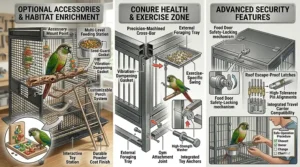
Prevue Pet Products has been making bird cages since 1869. That’s not a throwaway marketing line — it means replacement parts are actually available, customer support knows the product intimately, and quality control has had 150+ years of refinement. The 3152BLK measures 24″×22″×65″ with 3/4″ wire spacing and comes with something most cages in this range don’t offer: a genuine integrated playtop.
The 3/4″ bar spacing deserves a quick note: it sits on the wider end for conures, so this cage is best matched to medium-to-large conure species — sun conures, Jenday conures, blue-crowned conures — rather than petite green cheeks. For those species, the wider spacing combined with the cage’s substantial interior volume creates a genuinely roomy, stimulating environment.
The playtop on this model is the detail that sets it apart. It includes a wood perch, a ladder, and four stainless steel cups — not afterthought plastic ones. When you open the top, it transforms into an interactive play area where your bird can climb, forage, and engage with you face-to-face. For conures who crave social interaction, this design dramatically changes your daily routine in the best way.
The bird-proof bolt lock is legitimately escape-proof. The windbell secondary lock adds a second layer of security. If your conure has staged successful jailbreaks from other cages — and conures will try — this dual-mechanism design ends that pattern immediately.
Customer reviews consistently praise the sturdy construction and playtop convenience, though some note the weight makes repositioning a workout.
✅ Integrated playtop with stainless steel accessories
✅ Legendary brand with genuine replacement parts availability
✅ Dual bolt-and-windbell bird-proof locking system
❌ 3/4″ spacing — best for medium/larger conure species only
❌ Heavy unit — not easy to reposition frequently
Price range: Upper-$100s to low-$200s — justified for long-term, all-in owners.
3. VIVOHOME 54 Inch Wrought Iron Large Bird Flight Cage — Best Flight Cage for Green Cheeks
Here’s the thing about green cheek conures that most cage marketing misses: they’re horizontal climbers. They don’t sit on perches and look pretty — they scramble sideways across bars, hand-over-hand, like tiny feathered rock climbers. The VIVOHOME 54 Inch Flight Cage, at 31″×20.5″×54″ with a tight 1/2″ bar spacing, gives green cheeks exactly the horizontal runway they need.
The 1/2″ bar spacing is the headline spec here. Most conure cages default to 5/8″–3/4″, which works for sun conures and larger species — but a determined green cheek can sometimes squeeze its head through wider spacings, leading to panic injuries. VIVOHOME’s tighter spacing eliminates that risk entirely. It’s a small detail that matters enormously for bird safety.
This cage also carries a sustainability distinction: Amazon recognizes it for containing at least 50% recycled material and being made with chemicals safer for human health and the environment. For conscious shoppers, that matters.
The wrought iron build is coated with non-toxic powder finish, the rolling stand features four lockable casters, and the pull-out tray makes daily cleaning a realistic 90-second task rather than a 15-minute ordeal.
Reviews note that the assembly manual could be clearer, but overall construction quality receives consistently high marks, with owners highlighting the solid feel of the bars and smooth-rolling stand.
✅ 1/2″ bar spacing — ideal for green cheeks and smaller species
✅ Non-toxic powder coating; sustainability certifications
✅ Excellent horizontal flight space at 31″ length
❌ Assembly instructions could be better written
❌ White colorway shows marks more readily than black
Price range: Mid-$100s — strong value for a safety-focused flight design.
4. Yaheetech 52” Bird Cage — Flight King (B079JW8YCQ) — Best Mid-Range Value
The Yaheetech 52” Flight King strikes that rare balance between “actually big enough” and “won’t wreck your budget.” Measuring 31″×20.5″×52″ with 5/8″ bar spacing, it delivers genuine flight-cage proportions — notably the 31″ length, which allows real lateral movement — at a price point that doesn’t sting.
What distinguishes this model from Yaheetech’s other offerings is the thoughtful base storage shelf built into the rolling stand. Bird keeping generates stuff — bags of pellets, spray bottles, extra perches, the supplement powder your avian vet recommended. Having dedicated cage-side storage keeps your bird station organized instead of scattered across the room. It sounds like a minor detail until you’ve lived with a birdcage for a year and the surrounding floor has become its own ecosystem.
The pull-out tray lined with a removable grate handles cleaning well, and the 5/8″ bar spacing works perfectly for sun conures, Jenday conures, and similarly sized birds. Multiple feeder doors mean you can swap food and water without opening the main door and triggering your conure’s escape instincts.
Customer reviews praise the value proposition consistently, with most owners reporting it holds up well to daily use. A handful mention the bar gauge is slightly lighter than Prevue models, which is accurate but expected at this price tier.
✅ Excellent 31″ length for real lateral flight movement
✅ Practical base storage shelf — underrated daily convenience
✅ Multiple feeder door access; 5/8″ spacing for mid-size species
❌ Bar gauge slightly lighter than premium cages
❌ Locking mechanisms are functional but basic
Price range: Low-$100s — reliable, honest mid-range value.
5. Prevue Hendryx Madison Bird Cage (124COP) — Best Compact Option
Not everyone has the square footage for a towering flight cage. If you’re working with a studio apartment, a guest room, or need a secondary quarantine cage, the Prevue Hendryx Madison (124COP) is the compact solution that doesn’t compromise on quality. At 20″×20″×29″ with 5/8″ wire spacing, it’s sized for one small-to-medium conure and designed with all-welded unibody construction — meaning no loose joints, no wobble, no structural surprises after a few months.
The “made in the USA” distinction matters here. Prevue’s domestic manufacturing means tighter quality control and powder-coat finishes that properly adhere. The copper finish on the 124COP is genuinely attractive — it looks like a piece of furniture, which matters if your living room doubles as your bird room. This cage arrives completely assembled — no tools, no hours of puzzling over a parts diagram. Unbox, place, introduce bird. That’s it.
The landing-style front door swings down and doubles as a step-out platform — a design detail confident conures use immediately for step-up interactions. The grille-and-tray removable cleaning system makes daily cage maintenance a two-minute reality.
Customers love the build quality and aesthetic. The consistent advice from verified buyers: buy larger if this is the bird’s only cage, as active conures genuinely thrive with more space when given the option.
✅ All-welded unibody — zero structural weakness; arrives fully assembled
✅ Attractive copper finish; looks great in any room
✅ Landing-style door doubles as a step-out perch
❌ Minimum sizing for active species — best as secondary or quarantine cage
❌ No rolling stand included
Price range: Around $100–$150 — exceptional craftsmanship for the price tier.
6. VIVOHOME 30 Inch Height Wrought Iron Bird Cage with Rolling Stand — Best for Smaller Species
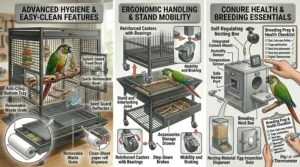
The VIVOHOME 30 Inch is the cage that makes sense when you’re housing a genuinely small conure — a green cheek, a black-cap, a dusky — and don’t want to overwhelm a petite bird with an enclosure that dwarfs them. At approximately 18″×14″×30″ with 1/2″ bar spacing, it creates a safe, appropriately scaled environment for smaller species.
What this cage does particularly well is safety-first design. The 1/2″ bar spacing is non-negotiable for small conures, and the wrought iron construction is non-toxic powder-coated. The rolling stand adds mobility at a size that makes the whole unit genuinely easy to move between rooms — a practical advantage for birds that benefit from social time in multiple areas of the home throughout the day.
The slide-out tray and removable grate make daily spot cleaning a genuine two-minute job, which matters more than people realize. Clean cages mean healthier birds; cages that are a chore to clean tend to get cleaned less often. VIVOHOME’s design removes that friction entirely.
This is the honest budget pick for small conure owners: not trying to compete with Prevue on prestige or Yaheetech on scale, just delivering exactly what a small bird needs at a price that leaves room in the budget for quality toys, good food, and vet visits.
Customer sentiment skews positive, with owners noting the solid feel for the price. Occasional feedback mentions spot-checking the paint upon arrival, though this is rare.
✅ 1/2″ bar spacing — safest for petite conure species
✅ Compact and mobile — genuinely easy to move between rooms
✅ Budget-friendly without obvious quality cuts
❌ Not spacious enough for sun conures or larger species
❌ Included accessories are basic and minimal
Price range: Under $80 — the budget pick that actually delivers.
7. Yaheetech 63” Detachable Parrot Cage — Best for Multi-Bird Households
When you’re housing two or more conures — or one highly social bird sharing space with a cockatiel or lovebird companion — the Yaheetech 63” Detachable Cage becomes a compelling option. At 32″×18.5″×63″ with 5/8″ bar spacing, it’s generously tall and offers enough internal volume for a small flock to establish territories, which matters enormously for inter-bird harmony.
The “detachable” design is genuinely practical: the cage separates cleanly from the stand, which simplifies deep cleaning and means the cage body can be moved independently if needed. For multi-bird households where cage hygiene is a more demanding routine — more birds means more mess — this operational flexibility is a real advantage. The 63″ total height positions the cage at a comfortable eye-level interaction zone, giving birds the height security they need while keeping them engaged with family activity.
Multiple feeding stations across the cage reduce resource competition, which is one of the primary triggers of inter-bird conflict in shared enclosures. If your bonded pair has ever had a territorial moment over the food cup, you’ll immediately understand why extra feeding stations matter.
Customer reviews praise the spaciousness and height consistently. The most repeated advice from verified buyers: take your time with assembly and tighten every bolt deliberately. A properly assembled unit is impressively stable.
✅ Exceptional height for multi-bird setups
✅ Detachable cage-from-stand design simplifies deep cleaning
✅ Multiple feeding stations minimize territorial conflicts
❌ 5/8″ spacing not ideal for the very smallest conure species
❌ Assembly takes patience — budget 45–60 minutes
Price range: Mid-$100s — fair for the scale and multi-bird functionality.
🔍 Ready to Upgrade Your Conure’s Home?
Take your bird’s wellbeing to the next level with these carefully selected cages. Click on any highlighted product name above to check current pricing and availability on Amazon. Your conure deserves the best — and so do you. 🦜
How to Set Up Your New Conure Cage: A Practical Guide
Buying the cage is step one. What happens in the first 48 hours after it arrives often determines whether your bird takes to it immediately or spends a week glaring at it suspiciously from the corner — and conures will glare.
Step 1: Wash everything before use. Even brand-new cages can have residual manufacturing dust, metal particulate, or packaging residue. Wipe down all bars with a damp cloth and let the cage air dry thoroughly before introducing your bird.
Step 2: Position it strategically. Conures are social creatures who stress when isolated. Place the cage in a room where family activity happens, but against a wall — not in the center of the room. One solid wall behind them creates a sense of security. Avian veterinarians consistently recommend placing bird cages away from direct drafts and kitchen fumes, which can be immediately dangerous to birds. The kitchen itself, especially near a stove, is always a no.
Step 3: Install perches at varying heights. The plastic dowel perches that come with most cages are a starting point, not an endpoint. Add natural wood perches of varying diameter — rope perches, java wood branches — to exercise your bird’s feet and prevent pressure sores. Different textures also prevent the monotony that leads to feather-destructive behavior over time.
Step 4: Don’t overstuff with toys immediately. New cage, existing bird — or any new cage introduction — requires acclimatization time. Start with two or three familiar toys in accessible positions. Add new items weekly. Conures investigate novelty on their own terms; overwhelming the space on day one triggers anxiety rather than excitement.
Step 5: Establish a cleaning routine before the bird moves in. Spot-clean the tray daily. Full tray and perch wipe-down every three to four days. Deep clean — removing everything, washing all surfaces with bird-safe cleaner — monthly. If that routine feels manageable before the bird is in the cage, you’ll actually maintain it. If it feels like a project, reconsider whether your chosen cage suits your daily lifestyle.

Conure Cage Buyer Profiles: Which Cage Is Right for You?
Not every buyer is shopping for the same reason. Here’s the breakdown by who you actually are.
The First-Time Conure Owner — You just brought home a green cheek conure and the pet store sold you something too small. You need a proper upgrade. Go for the VIVOHOME 54 Inch Flight Cage. It’s sized appropriately, the 1/2″ bar spacing is safe for your green cheek, and the price won’t terrify you while you’re still learning this whole parrot-parent thing. Redirect the money saved toward quality food and a vet visit within the first 30 days.
The Sun Conure Enthusiast — Sun conures are louder, bolder, and bigger than green cheeks. They need more space and they’ll test every latch you own. The Prevue 3152BLK with its 3/4″ spacing suits their larger frame perfectly, and the integrated playtop becomes part of your daily bonding routine. Worth every dollar for this species.
The Apartment Dweller — You love your conure. You also have roughly 650 square feet to work with. The Prevue Hendryx Madison 124COP slots beautifully into tight spaces and looks like intentional décor rather than a bird enclosure. For green cheeks or similar smaller species, it handles primary cage duties. For sun conures, use it as a secondary or travel cage.
The Multi-Bird Household — You’re past the “one bird” phase. The Yaheetech 63” Detachable Cage is your workhorse: tall, spacious, easy to deep-clean, and capable of housing a small community without creating a territorial nightmare. The Yaheetech 69-Inch multi-tier design is another strong contender here.
The “I Want The Best” Buyer — You’ve done the research. You’re not interested in replacing a cage in three years. Prevue Pet Products Wrought Iron Select with Playtop (3152BLK) is your answer. Heavier, pricier, and built to last a decade or more.
Common Mistakes When Buying a Conure Cage
These errors come up repeatedly, and they’re almost always avoidable.
Mistake 1: Buying on height alone. A 70-inch cage that’s only 16 inches wide is not a spacious cage — it’s a tall, narrow one. Conures are horizontal movers. Width and depth matter as much as height, sometimes more. Always check all three dimensions before ordering.
Mistake 2: Ignoring bar spacing. This isn’t a preference — it’s a safety requirement. A 3/4″ bar spacing on a small green cheek conure creates a documented head-entrapment risk. The right number: 1/2″ for small conures, 5/8″ for medium ones, 3/4″ for larger conure species. The American Federation of Aviculture recommends matching bar spacing precisely to body size for all captive parrots.
Mistake 3: Choosing round cages. Round cages create disorientation in birds, eliminate the corner perching security zones birds rely on, and reduce usable floor space significantly. Every avian welfare organization recommends rectangular cages. No exceptions.
Mistake 4: Underestimating cleaning demands. That gorgeous cage with intricate scrollwork looked beautiful in the product photo. It’s also a nightmare to clean because food, droppings, and debris trap in every decorative curve. Prioritize smooth, accessible bar designs with pull-out trays for daily maintenance realism.
Mistake 5: Skipping the latch assessment. Conures are escape artists. A simple spring latch that works on a parakeet becomes a five-second puzzle for a conure. The Prevue bolt-and-windbell dual system exists for exactly this reason. If the product listing doesn’t specifically describe the lock mechanism, search reviews for the phrase “my bird escaped.”
Conure Cage vs. Standard Parrot Cage: What’s Actually Different?
People often ask whether they can use a generic “small parrot” cage for a conure, or whether cages marketed specifically for the species are meaningfully different. The answer is nuanced.
A conure cage differs from a basic budgie or parakeet cage primarily in three ways: bar gauge, bar spacing range, and overall footprint. Conures are substantially stronger than budgies and will bend thin-gauge bars over time with their beaks, especially larger species like sun conures.
| Feature | Standard Budgie Cage | Quality Conure Cage | Large Parrot Cage |
|---|---|---|---|
| Bar spacing | 3/8″–1/2″ | 1/2″–3/4″ | 3/4″–1″ |
| Bar gauge | Light | Medium | Heavy |
| Minimum floor area | 18″×12″ | 24″×24″ | 36″×24″ |
| Locking mechanism | Basic spring | Dual/bolt | Heavy-duty bolt |
| Price range | $–$$ | $$–$$$ | $$$–$$$$ |
The comparison makes clear that a conure cage occupies a specific middle ground — too robust for budgies, appropriately sized and spaced for conure species, and not overly large or heavy-latched for African greys or similar bigger parrots. Buying outside that middle zone means you’re either overpaying for unnecessary scale or risking safety by underspending on bar strength and spacing.
Features That Actually Matter (And Those That Don’t)
Let’s separate genuine value-adds from cage marketing fluff.
Features that genuinely matter:
🔑 Dual-mechanism locks — Conures learn single-latch doors fast. If the listing says “secure lock,” that’s marketing. If it specifically mentions a secondary windbell or bolt mechanism, that’s actual security.
🔑 Pull-out tray with removable grate — Cages without a pull-out tray demand disassembly for cleaning. In practice, this means they get cleaned far less often, which harms bird health. Non-negotiable.
🔑 Non-toxic powder-coat certification — Some budget cages still use finishing processes with zinc content that leaches under persistent chewing. If the listing doesn’t confirm non-toxic coating, treat it as a red flag.
🔑 Horizontal bar placement — The best conure cages feature horizontal bars on at least two sides. Conures climb laterally; horizontal bars give them the natural grip points to do this. Vertical-bar-only designs frustrate instinctive behavior.
Features that don’t matter as much as advertised:
❌ Decorative scrollwork and ornate curves — Aesthetically appealing, practically terrible. Curves trap debris, resist cleaning tools, and provide zero enrichment your bird actually cares about.
❌ Included “starter” toys — Small plastic toys bundled into most cage packages are appropriate for a budgie, not a conure. Conures destroy them within days. Factor them out of your value assessment and budget separately for real enrichment.
❌ Color options — Whether your cage is black, white, or copper hammertone has zero impact on your bird’s wellbeing. Choose the finish that suits your room; don’t pay extra for color variants.
Long-Term Costs and Maintenance: What Owning a Conure Cage Really Costs
The sticker price of the cage is the beginning of the math, not the end.
A quality conure cage in the $100–$200 range represents a 10–20-year investment if properly maintained. Conures can live 20–30 years in captivity with proper care, according to the Association of Avian Veterinarians, which means the amortized cost of a $150 cage works out to roughly $7–$15 per year. That math makes the case for buying quality once rather than cheap twice.
The real ongoing costs are consistent but manageable. Perch replacement runs approximately $10–$30 annually, as natural wood perches wear down and should be rotated rather than sanitized indefinitely. Stainless steel food and water cups — the upgrade worth making from any included plastic versions — run $15–$25 once and last years. Bird-safe cage cleaning spray ($10–$15 for a large bottle) covers months of maintenance use.
The biggest variable: toys. A genuinely enriched conure needs rotated toy access — foraging toys, chew toys, puzzle feeders. Budget $15–$30 per month to keep novelty fresh. That’s a bird cost, not a cage cost. The cage itself, well-chosen, should be the last one you ever need.
Where people actually lose money: buying an underpowered cage, watching the bird’s behavior deteriorate from boredom and cramping, then buying a second adequate cage. The cost of the cage you’re replacing plus the cage you actually needed adds up to significantly more than buying the right cage the first time.

FAQ: Top Rated Conure Cages
❓ What is the minimum cage size for a conure?
❓ What bar spacing is safe for a green cheek conure cage?
❓ Can a sun conure and green cheek conure share a cage?
❓ How often should a conure cage be cleaned?
❓ Are stainless steel cages better than powder-coated wrought iron for conures?
Conclusion: Your Conure Deserves a Home, Not Just a Cage
Here’s what I want you to walk away with: the cage is not an accessory. For a bird that will likely share your home for two decades, the enclosure you choose sets the baseline quality of every single day of that bird’s life. Too small, and you create a stressed, behavior-disordered bird. Poorly latched, and you spend your mornings recapturing a conure from your ceiling fan. Right-sized with the right features, and you have a happy, confident bird that genuinely improves your daily life with its personality.
The top rated conure cages in this guide cover the full spectrum of what’s currently available on Amazon — from the budget-friendly VIVOHOME 30 Inch for small-space green cheek owners, to the generational investment that is the Prevue Wrought Iron Select with Playtop. There’s no universally correct answer; there’s only the answer that fits your bird, your space, and your lifestyle.
My overall recommendation: if you’re a first-time owner with a green cheek, go VIVOHOME 54 Inch. If you’re housing a sun conure and want it done right, Yaheetech 69-Inch Extra Large. If you’re investing for the long term and value legacy craftsmanship, Prevue 3152BLK is the one you won’t replace.
Your conure will spend 10–12 hours a day in that cage. Make it worth living in.
✨ Don’t Miss These Exclusive Deals!
🔍 Find Your Perfect Conure Cage Today!
Click any highlighted product name in this article to check current pricing and availability on Amazon. Supplies at these price points move fast — check availability before your top pick sells out! 🦜🛒
Recommended for You
- 7 Best Wrought Iron Cockatiel Cages in 2026
- 7 Best Cockatiel Cage with Play Top: Expert Picks 2026
- Best Cockatiel Cage for 2 Birds: 7 Top Picks (2026)
Disclaimer: This article contains affiliate links. As an Amazon Associate, I earn from qualifying purchases. If you purchase products through these links, we may earn a small commission at no additional cost to you.
✨ Found this helpful? Share it with your friends! 💬🤗
