
In This Article
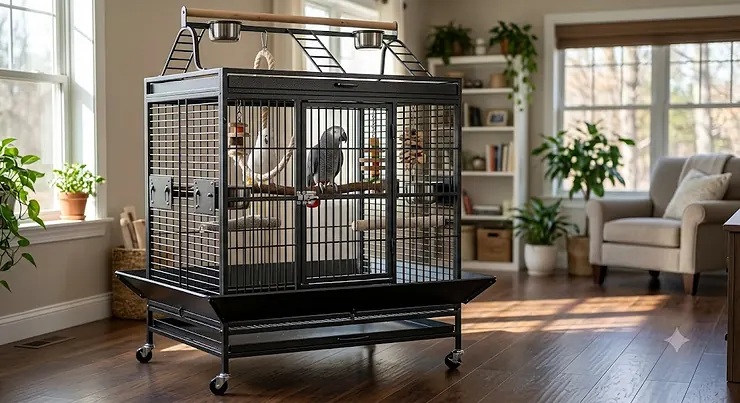
A heavy duty large bird cage is a reinforced enclosure built with thicker bars, stronger locks, and chew-resistant materials to withstand the daily assault of a big parrot’s beak. If you’ve ever walked into your bird room to find a “decorative” bar bent into a pretzel shape, you already know why the standard hardware-store cage doesn’t cut it here. Big parrots — macaws, cockatoos, African greys, Amazons — aren’t just strong; they’re bored, curious, and mechanically gifted in ways that would make a locksmith nervous.
I’ve spent the last few weeks digging through spec sheets, manufacturer bar-thickness claims, and the messy, honest world of aggregated customer reviews to figure out which cages actually survive contact with a serious beak and which ones just say “heavy duty” on the box. Bar gauge matters more than most listings admit, and so does the difference between a powder coat that’s merely thick and one that’s genuinely chip-resistant. Reviewers consistently flag two failure points: locks that a smart bird eventually solves, and bars that dent or bow under sustained pressure.
This guide breaks down seven real, currently available cages spanning budget wrought iron builds up to museum-grade stainless steel enclosures, with honest analysis of who each one actually suits — not just a features list lifted from a listing page. A 2024 parrot bite-force study used force transducers to measure real bite pressure across parrot species, confirming what any macaw owner already knows in their bones: these birds hit hard, and your cage needs to be engineered accordingly, not just labeled that way.
Quick Comparison Table
For readers in a hurry, here’s the fast version. Bar thickness and material tell you almost everything about how a cage will hold up to a determined chewer, while the “Best For” column tells you which bird and budget it actually matches.
| Cage | Material / Bar Thickness | Best For | Price Range |
|---|---|---|---|
| King’s Cages European Model 506 Napoleon Top | 6mm solid bar, steel or 304 stainless | Macaws, cockatoos, chronic escape artists | $1,800-$2,600 range |
| King’s Cages SLT 3628 Superior Line | 3.5-4mm powder-coated steel | Amazons, African greys, Senegals | $650-$900 range |
| 304 Stainless Steel XL Macaw Cage | 4-5mm SUS304 stainless | Humid climates, medical-grade needs | $1,200-$1,700 range |
| A&E Cage Company Large Stainless Steel Parrot Cage | 304-grade stainless, play top | Buyers wanting stainless without macaw pricing | $500-$750 range |
| Prevue Hendryx Wrought Iron Select Bird Cage | 3/4-inch spacing wrought iron | Conures, cockatiels, first serious upgrade | $180-$260 range |
| Yaheetech 69″ Play Top Rolling Parrot Cage | Wrought iron, hammertone finish | Budget-conscious multi-bird households | $140-$210 range |
| ZENY 68-Inch Playtop Parrot Cage | Wrought iron, rolling stand | Entry-level heavy duty on a tight budget | $120-$180 range |
Looking at the spread above, the jump from Yaheetech 69″ Play Top Rolling Parrot Cage to King’s Cages SLT 3628 Superior Line isn’t just price — it’s a genuine leap in bar gauge and lock security that matters once you’re housing a bird capable of real damage. Buyers on a tight budget shouldn’t assume the cheaper wrought iron options are flimsy, but they do ask for more vigilance about lock wear over time. If your bird has already bent bars or defeated a lock before, the stainless and 6mm options further down this list are where you’ll want to focus.
💬 Already have a favorite in mind? Scroll down to see exactly how it stacks up against the competition.
💬 Just one click — help other golfers find the right club for their game too!😊
Top 7 Heavy Duty Large Bird Cages: Expert Analysis
1. King’s Cages European Model 506 Napoleon Top — nearly indestructible 6mm solid bars
The standout feature here is simple: 6mm solid bar stock, thicker than almost anything else sold to home bird owners. That thickness isn’t cosmetic — it’s the difference between a bar that flexes under sustained beak pressure and one that doesn’t budge. At roughly 4 feet wide, 3 feet deep, and 6 feet 8 inches tall with an interior height of 5 feet 6 inches, this cage gives a macaw genuine wing-flap room, not just floor space. The 1-inch bar spacing is intentionally wide because at this bar thickness, a tighter spacing simply isn’t necessary for containment.
Based on the spec comparison with every other cage on this list, this is the one built specifically for birds that have already destroyed something else. What most buyers overlook about this model is that it’s available in either powder-coated steel or medical-grade 304 German stainless steel, so buyers in humid regions or those managing a bird with feather-destructive tendencies linked to metal sensitivity have a genuine non-galvanized option. Reviewers consistently report that the fold-down platform and Napoleon-style top double as valuable out-of-cage time real estate, which matters for a bird this size.
Real owner sentiment describes this model as essentially bite-proof for even the most persistent macaws and cockatoos, with long-term owners noting no bar deformation after years of daily beak contact — a claim the underlying 6mm gauge genuinely supports.
Pros:
- ✅ 6mm solid bars resist bending under serious bite force
- ✅ Available in true 304 stainless for humid or sensitive setups
- ✅ Interior height genuinely accommodates large macaw wingspans
Cons:
- ❌ Premium price puts it out of reach for casual buyers
- ❌ Shipping weight and crating require careful delivery planning
At around $1,800-$2,600 range depending on finish, this is the cage you buy once and never replace — the value case rests entirely on never needing a second cage for a large, destructive parrot.
2. King’s Cages SLT 3628 Superior Line — thickest powder coat in its price tier
The standout here is the powder coating itself: King’s Cages applies a noticeably thicker, harder finish than most competitors in the same price bracket. On a 36-inch by 28-inch by 69-inch frame with an interior height of roughly 45 inches, that finish matters because it’s the first thing a chewing beak actually contacts. A thin coat chips fast; a thick one resists for years.
Here’s what to weigh: the 5/8-inch bar spacing and reinforced front and feeder door locks are calibrated for African greys, Amazons, and Senegal parrots rather than the largest macaws — this is the “serious but not maximum” tier. Three swing-out feeder doors with stainless steel cups mean daily feeding doesn’t require opening the main door, which reviewers say meaningfully cuts down on escape attempts during routine care.
Aggregated customer sentiment for this line consistently praises the rolling caster mobility and the fact that the powder coat holds up visibly better after a year of active chewing than lower-tier competitors, though a handful of buyers note the knock-down assembly takes real time and a second set of hands.
Pros:
- ✅ Thicker powder coat resists chipping under daily beak contact
- ✅ Bird-proof front and feeder locks add real security
- ✅ Rolling casters make repositioning genuinely easy
Cons:
- ❌ Knock-down assembly is lengthy and tool-heavy
- ❌ Not rated for the largest macaw species
Priced in the $650-$900 range, this model earns its keep as the mid-tier workhorse for medium-large parrots without pushing into ultra-premium stainless pricing.
3. 304 Stainless Steel XL Macaw Cage — medical-grade steel that shrugs off humidity
The standout advantage is the SUS304 medical-grade stainless construction paired with genuinely thick 4-5mm bars — many competing “stainless” cages use thinner 2-3mm stock that reviewers say bends far more easily. At roughly 48 inches wide by 37.5 inches deep and over 72 inches tall including the play top, this is built for macaws and large cockatoos who need real vertical clearance.
What the spec sheet won’t tell you, but owner reports confirm, is that stainless steel’s non-porous surface makes a genuinely measurable difference in odor and bacterial buildup compared to painted finishes, especially in humid climates or multi-bird households. Two slide-out stainless trays (one for the play top, one for the cage floor) mean cleaning doesn’t require dismantling anything.
Reviewers who’ve owned this style of cage for extended periods report zero rust and no coating degradation, which lines up with why avian professionals frequently recommend stainless over powder coat for birds prone to picking at their enclosure.
Pros:
- ✅ 4-5mm bars are thicker than most “stainless” competitors
- ✅ Non-porous surface resists odor and bacterial buildup
- ✅ Dual slide-out trays simplify daily cleaning
Cons:
- ❌ Ships via freight in a wooden crate, complicating delivery
- ❌ Significant footprint requires real floor-space planning
In the $1,200-$1,700 range, this cage sits just under the ultra-premium King’s Cages European tier while still delivering genuine medical-grade material.
4. A&E Cage Company Large Stainless Steel Parrot Cage — stainless durability at a reachable price
The standout feature is offering true 304-grade stainless steel construction at a price point well below the macaw-specific stainless options above it. Composed of 18% chromium and 8% nickel, 304-grade steel is genuinely one of the more corrosion-resistant alloys available, and A&E backs the build with a 6-month manufacturer warranty on parts.
Based on the spec comparison, this cage is aimed at owners of mid-to-large parrots — think Amazons, greys, and smaller cockatoos — who want stainless steel’s chew-proof, non-toxic advantages without paying macaw-tier pricing. The play top ships with two ladders, a perch, and a toy hook already installed, which reviewers note saves real setup time versus cages that require separate playtop purchases.
Real buyer sentiment repeatedly mentions initial hesitation about ordering an expensive cage sight-unseen online, followed by satisfaction once the build quality and bird-proof front and feeder locks proved out in daily use.
Pros:
- ✅ True 304-grade stainless at a below-macaw-tier price
- ✅ Bird-proof front and feeder door locks included
- ✅ Backed by a 6-month manufacturer parts warranty
Cons:
- ❌ Smaller footprint than dedicated macaw-class cages
- ❌ Play top ladders show wear faster than the main frame
At around $500-$750 range, this is the clearest value pick for stainless-curious buyers who don’t need the largest possible enclosure.
5. Prevue Hendryx Wrought Iron Select Bird Cage — reinforced locks on a trusted frame
The standout feature is Prevue’s dual-lock system: a bird-proof bolt lock on the front door plus a separate windbell lock at the top, a belt-and-suspenders approach that reviewers say stops even persistent escape artists. At 24 inches by 22 inches by 65 inches with 3/4-inch wire spacing, this model is sized for cockatiels, conures, and similarly proportioned birds rather than full macaws.
Here’s what most buyers overlook: the interchangeable stainless steel cup system lets owners swap between short and deep cups without buying new hardware, and rounded-corner seed guards actually funnel debris back into the cage instead of just containing it loosely. Since 1869, Prevue has built a reputation specifically around this kind of practical, unglamorous engineering.
Aggregated review sentiment consistently praises the rolling casters and removable debris tray for making cleaning genuinely fast, with the recurring theme being that this cage “just works” for years without drama — exactly what you want from a mid-range daily-use enclosure.
Pros:
- ✅ Dual bolt-and-windbell lock system deters escape artists
- ✅ Interchangeable cup system adds real daily flexibility
- ✅ Established brand with a century-plus manufacturing track record
Cons:
- ❌ Wire spacing suits medium birds, not full-size macaws
- ❌ Playtop accessories are more basic than premium competitors
Priced around $180-$260 range, this is the natural first upgrade for owners moving a mid-size bird out of a starter cage.
6. Yaheetech 69″ Play Top Rolling Parrot Cage — best value chew-resistant wrought iron
The standout feature is the price-to-size ratio: a genuinely large wrought iron frame with a water- and oxidant-resistant finish, priced well under most of this list. Every door on this model locks individually, and the three feeder doors let owners refill food and water without opening the main door — a small design choice that reviewers consistently say reduces daily escape opportunities.
What the spec sheet won’t spell out, but user reports make clear, is that the four-sided seed guard and slide-out tray combination genuinely cuts down on daily sweeping, while the bottom grate keeps birds from standing directly in droppings. Based on the spec comparison with pricier options, the wrought iron gauge here is solid for small-to-medium parrots but isn’t rated for sustained macaw-level biting.
Real customer sentiment is largely positive on stability and assembly, with recurring five-star mentions of the smooth-rolling lockable casters; a smaller number of reviewers note the included instructions favor pictures over text, which occasionally slows first-time assembly.
Pros:
- ✅ Strong value for the overall footprint and bar gauge
- ✅ Individually locked doors on every access point
- ✅ Four-sided seed guard reduces daily cleanup
Cons:
- ❌ Not intended for full macaw-level bite pressure
- ❌ Assembly instructions rely heavily on diagrams alone
At roughly $140-$210 range, this is the pick for budget-conscious owners of small-to-medium parrots who still want genuine chew resistance.
7. ZENY 68-Inch Playtop Parrot Cage — budget-friendly heavy-duty starter
The standout feature is simply accessibility: a rolling stand, playtop, and wrought iron frame at the lowest price point on this list, making it a realistic entry into heavy duty territory for owners who aren’t ready for premium pricing yet. The design borrows the same general formula as pricier wrought iron competitors — locking doors, a slide-out tray, and a stand on casters — without the reinforced bar gauge of higher tiers.
Based on the spec comparison, this cage is best matched to smaller parrots and as a secondary or travel-adjacent enclosure rather than a sole full-time home for a heavy chewer. Reviewers consistently note it performs well for its price bracket, with several mentioning it as a practical starter cage while saving toward a stainless or 6mm upgrade down the line.
Aggregated sentiment flags that a determined large parrot can eventually work at the standard-gauge bars over time, which lines up with why this model earns its “starter” positioning rather than a top recommendation for the most destructive birds.
Pros:
- ✅ Lowest entry price for a genuinely large playtop cage
- ✅ Rolling stand simplifies repositioning around the home
- ✅ Familiar heavy duty large bird cage layout at a lower cost
Cons:
- ❌ Bar gauge lags behind the premium options on this list
- ❌ Not recommended as a sole cage for the most destructive chewers
At around $120-$180 range, this is the sensible starting point for owners easing into the heavy duty category without overspending upfront.
Practical Setup & Maintenance Guide
Getting a new heavy duty large bird cage right in the first 30 days matters more than most buyers expect. Start by placing the cage against at least one solid wall — birds feel more secure with a visual boundary behind them, and it reduces the temptation to work at corner joints from both sides. Before your bird ever goes in, run your own hands along every weld, hinge, and lock point checking for burrs or gaps; even premium cages can arrive with a stray sharp edge from shipping.
A common mistake in the first month is under-tightening or over-tightening lock mechanisms — too loose invites escape, too tight makes daily access a fight. Check every lock weekly for the first month while the bird is actively testing it, since this is when smart parrots like African greys and cockatoos figure out mechanisms fastest. For maintenance, wipe stainless steel weekly with a mild vinegar-water solution rather than harsh chemicals, and inspect powder-coated bars monthly for any chip that exposes bare metal underneath, since that’s exactly the spot a bird will focus on next.
Real-World Scenarios: Matching Cages to Owners
If you’re a first-time large parrot owner bringing home a rescued Amazon with a history of cage aggression, the King’s Cages SLT 3628 Superior Line offers the reinforced locks and thick powder coat to build trust safely without ultra-premium spending. If you’re managing multiple medium birds in an apartment and mobility matters as much as durability, the Yaheetech 69″ Play Top Rolling Parrot Cage balances chew resistance with a footprint that still fits through standard doorways.
If you’re housing a macaw with a documented history of destroying previous cages — bent bars, defeated locks, the works — the King’s Cages European Model 506 Napoleon Top is the realistic answer, since anything less than 6mm bar stock is likely to fail again eventually. And if you live somewhere humid or simply want the lowest-maintenance long-term option regardless of your bird’s chewing habits, either stainless option on this list solves problems a powder coat never fully will.
Problem → Solution: Fixing Common Heavy-Duty Cage Headaches
Problem: your bird has learned to open a supposedly bird-proof lock. Solution: add a small padlock or carabiner clip as a secondary barrier rather than replacing the whole cage — most escape-prone birds are defeating a single mechanism, not the entire door. Problem: powder coat is chipping at a specific high-traffic bite point. Solution: isolate and cover that spot with a stainless steel guard plate rather than waiting for it to spread, since exposed bare metal is where zinc exposure risk actually begins.
Problem: the cage looks fine but smells increasingly sour despite regular cleaning. Solution: check for moisture trapped under seed guards or in tray corners, since porous painted surfaces trap odor-causing bacteria that stainless steel simply doesn’t. Problem: bar spacing seems right on paper but your bird still gets its head stuck occasionally. Solution: re-measure your specific bird’s head width rather than trusting general species guidance, since individual variation is real and a slightly tighter-spaced cage solves this permanently.

How to Choose a Heavy Duty Large Bird Cage
- Start with bar thickness, not bar spacing. A cage advertised as heavy duty with bars under 3mm is working off marketing language more than engineering reality for a genuinely destructive large parrot.
- Match interior height and width to your bird’s full wingspan, not just its perched size, since cramped wing-flap room causes real welfare problems over time.
- Prioritize lock design over lock count. One well-engineered bird-proof bolt lock beats three simple latches a smart cockatoo will solve within a week.
- Decide on material honestly: stainless steel costs more upfront but never chips, while powder coat is lighter and cheaper but needs periodic inspection.
- Check feeder door placement. Doors that let you refill food and water without opening the main access point reduce daily escape opportunities meaningfully.
- Factor in mobility needs early, since a cage without casters that you later want to move becomes a two-person lifting project.
- Read aggregated review sentiment specifically for chewing damage reports, not just general satisfaction, since that’s the detail generic star ratings hide.
A common mistake buyers make here is assuming a bigger price tag automatically means a stronger strong parrot enclosure — bar gauge and lock engineering matter more than brand prestige or finish color, and it’s worth confirming both directly in the listing specs before buying.
Heavy Duty Cages vs Standard Powder-Coated Cages
| Factor | Heavy Duty / Reinforced | Standard Powder-Coated |
|---|---|---|
| Bar thickness | 3.5mm-6mm typical | Often 2-2.5mm |
| Chew resistance | Rated for large parrots | Best for small-medium birds |
| Lock security | Dual or bird-proof mechanisms | Often single basic latch |
| Best For | Macaws, cockatoos, destructive chewers | Budgies, cockatiels, canaries |
| Typical lifespan | Years of daily heavy use | Shorter under sustained biting |
The gap here isn’t marketing spin — a genuinely reinforced large parrot cage uses thicker raw material and stronger locking hardware specifically because manufacturers know what a macaw or cockatoo beak can do over months of daily contact. Standard powder-coated cages aren’t poorly made; they’re simply engineered for a different, lighter-biting audience, and using one for a serious chewer just accelerates the exact failures reviewers describe. If your bird has never shown destructive tendencies, a standard cage may genuinely be enough, but the moment you see bent bars or worked-at locks, it’s a clear signal to move up this comparison table.
What to Expect: Real-World Performance
On paper, bar thickness numbers are abstract, but in daily life they translate to specific, noticeable differences. A 6mm bar genuinely does not flex when a macaw applies sustained pressure — you can watch a bird try, give up, and redirect to a toy instead, which is the outcome you actually want. A 2-3mm bar under the same pressure will show visible bowing within weeks, and once metal deforms even slightly, birds seem to target that exact spot with renewed interest.
Lock mechanisms show a similar real-world pattern: simple slide latches get solved by smart species within days to weeks, while bird-proof bolt locks combined with a secondary windbell or carabiner genuinely hold for years. Reviewers across every price tier on this list consistently mention that stainless steel surfaces stay visually “new” far longer than powder coat, which — beyond aesthetics — signals the surface isn’t degrading in ways that could expose your bird to bare or chipped metal underneath.
Reinforced Large Parrot Cages for Serious Chewers and Destructive Parrots
Owners of genuinely destructive parrots — birds that have already defeated a previous enclosure — need to think differently than the average buyer. A destructive parrot cage isn’t just “bigger” or “thicker,” it’s specifically engineered around the failure points documented in real reviews: lock mechanisms, weld points, and any spot where two pieces of metal meet. What most buyers overlook is that a reinforced large parrot cage’s true test isn’t day one, it’s month six, once a bird has had time to methodically work every accessible surface.
For these owners, the 6mm bar stock on the King’s Cages European Model 506 Napoleon Top and the thick powder coat on the King’s Cages SLT 3628 Superior Line represent genuinely different engineering tiers than anything wrought iron under 3mm can offer. Reviewers managing known escape artists and chronic chewers consistently gravitate toward these two options specifically because lower-gauge alternatives have already failed them once.
Long-Term Cost & Maintenance: The True ROI of Durable Large Bird Housing
A cheaper cage that needs replacing every two to three years under sustained chewing isn’t actually cheaper once you run the math. If a budget wrought iron option in the $150 range needs replacing twice over six years, you’ve spent close to what a single premium stainless or 6mm cage would have cost upfront, plus the stress of transitioning your bird each time. Durable large bird housing, priced correctly the first time, is genuinely a one-purchase decision for most owners.
Maintenance costs matter too: powder-coated cages need periodic touch-up inspection and, occasionally, replacement parts if a coating chips badly enough to expose bare metal, while stainless steel effectively has no recurring maintenance cost beyond routine cleaning. According to the Merck Veterinary Manual, zinc toxicosis in pet birds can show up as shallow breathing, fluffed feathers, and reluctance to move, and it commonly stems from galvanized or improperly coated metal cages — a real cost consideration that goes well beyond dollars if a lower-quality coating fails.
✨ Ready to stop replacing cages every few years? Compare the durable options above and pick your last one.
Price Range & Value Analysis
| Price Tier | Range | What You Get |
|---|---|---|
| Entry | $120-$210 range | Wrought iron, standard locks, good for small-medium birds |
| Mid | $500-$900 range | Thicker powder coat or entry stainless, reinforced locks |
| Premium | $1,200-$2,600 range | 4-6mm stainless or ultra-thick steel, macaw-rated security |
Entry-tier cages deliver real value for owners of smaller, gentler-chewing birds, but stretching that tier to house a genuinely destructive macaw is a false economy once replacement costs enter the picture. Mid-tier options like King’s Cages SLT 3628 Superior Line and A&E Cage Company Large Stainless Steel Parrot Cage hit a sweet spot for most serious owners, offering real reinforcement without maximum spending. The premium tier only makes financial sense for owners of the largest, most destructive species, where anything less has already failed or is likely to.
✨ Don’t Miss These Exclusive Deals!
🔍 Take your bird’s living space to the next level with these carefully selected cages. Click on any highlighted model to check current pricing and availability. A properly reinforced enclosure means fewer replacements and a genuinely safer, happier bird for years to come!
Safety, Regulations & Compliance Guide
Material safety deserves real attention before purchase, not after. Coating formulas differ by manufacturer, and while most modern coatings contain no zinc, some imported powder-coated cages reportedly use zinc to speed up the coating-setting process, which is exactly why sourcing from established brands with documented material specs matters more than saving a few dollars on an unlabeled import. For deeper background on identifying and responding to metal exposure risk in pet birds, the LafeberVet heavy metal poisoning reference is a genuinely useful resource to bookmark.
Material choice ties directly into this risk profile: 304-grade stainless steel contains no zinc coating at all, which is a major reason avian professionals lean toward it for birds with a documented history of picking at their enclosure.
Beyond materials, confirm your cage’s bar spacing matches your specific bird’s head size to prevent entrapment, and always verify feeder and access door locks independently rather than assuming “bird-proof” claims on a listing are universally true for your particular species. Outdoor use introduces additional considerations around weather exposure and predator-proofing that indoor-only cages, including several models on this list, simply aren’t built to handle.

FAQ
❓ What is the best heavy duty large bird cage for a macaw?
❓ Are stainless steel bird cages actually chew-proof?
❓ How thick should bars be for a destructive parrot cage?
❓ Is a heavy duty large bird cage worth the extra cost?
❓ Can I use a heavy duty large bird cage outdoors?
Conclusion
Choosing a heavy duty large bird cage really comes down to being honest about your bird’s specific chewing history and size, then matching bar thickness and lock engineering accordingly rather than shopping by price or looks alone. Budget wrought iron options like the ZENY 68-Inch Playtop Parrot Cage and Yaheetech 69″ Play Top Rolling Parrot Cage genuinely serve smaller or gentler-chewing birds well, while mid-tier reinforced picks like the King’s Cages SLT 3628 Superior Line and A&E Cage Company Large Stainless Steel Parrot Cage cover most serious African grey, Amazon, and cockatoo households.
For the largest, most destructive macaws and cockatoos, the 304 Stainless Steel XL Macaw Cage and especially the King’s Cages European Model 506 Napoleon Top represent the tier where bar gauge finally matches beak strength permanently. Whichever tier fits your situation, the underlying advice stays the same: read aggregated chewing-damage reports specifically, verify lock design rather than lock count, and buy once instead of replacing twice.
✨ Don’t Miss These Exclusive Deals!
🔍 Give your bird the reinforced, chew-resistant home it deserves. Check current pricing on any of the seven models above and find the one that finally outlasts your parrot’s beak!
Recommended for You
- Large Bird Cage With Play Top: 7 Best Picks Ranked for 2026
- Stainless Steel Parrot Cage: 7 Rust-Proof Picks for 2026
- Amazon Parrot Cage Bar Spacing: 7 Safe Picks for 2026
Disclaimer: This article contains affiliate links. As an Amazon Associate, I earn from qualifying purchases. If you purchase products through these links, we may earn a small commission at no additional cost to you.
✨ Found this helpful? Share it with your friends! 💬🤗
