
In This Article
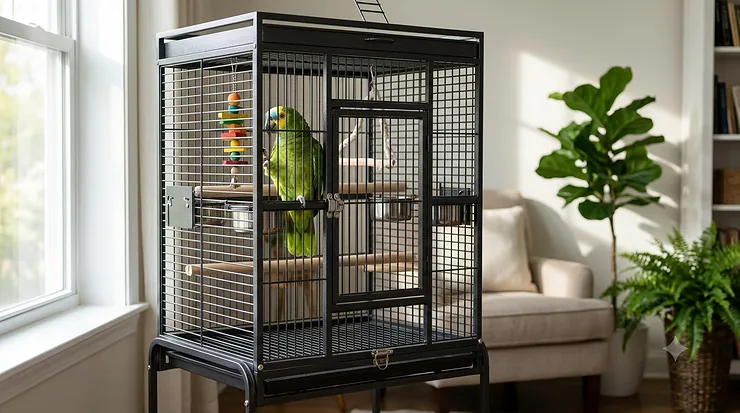
If you’ve ever watched an Amazon parrot try to fold its entire body into a cage two sizes too small, you already know why this list exists. These birds are barrel-chested, opinionated, and built like feathered linebackers — a dainty cockatiel cage just won’t cut it. Finding top rated amazon parrot cages isn’t about grabbing whatever’s cheapest at the pet store; it’s about matching bar spacing, floor space, and door size to a bird that chews, climbs, and occasionally headbutts its own furniture out of sheer enthusiasm.
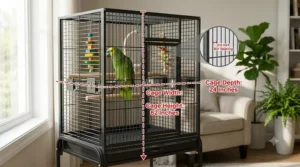
An Amazon parrot (genus Amazona) is a stocky, short-tailed, intensely social bird native to Latin America and the Caribbean, prized in aviculture for its talking ability and big personality — and one that needs generous horizontal space, not just height, to thrive in a home enclosure. That last part trips up a lot of first-time buyers, who assume a tall, narrow cage counts as “big.” It doesn’t, and we’ll get into exactly why below.
This guide walks through seven real, currently available cages spanning budget to premium, breaks down what actually matters when comparing them, and hands you a decision framework so you’re not just guessing. Whether you’re outfitting a first cage for a rescued Blue-fronted Amazon or upgrading your Yellow-nape’s cramped starter setup, you’ll find something here that fits both your bird and your living room. Let’s get into it.
Quick Comparison Table
| Cage | Best For | Exterior Size | Bar Spacing | Price Range |
|---|---|---|---|---|
| A&E Cage Co. 8040FL Double Macaw Cage | Multi-bird households | 80″L x 40″W x 74″H | 1″ | $1,200-$1,600 range |
| A&E 4040FL Platinum Flight Cage | Single active Amazon, max floor space | 40″L x 40″W x 76″H | 1″ | $700-$900 range |
| A&E Double Macaw Cage 6432 | Mid-size pair or roomy single | 64″L x 32″W x 73″H | 3/4″ | $550-$700 range |
| Prevue Wrought Iron Select 3154BLK | Best all-around value | 36″L x 24″W x 66″H | 3/4″ | $250-$350 range |
| Yaheetech 63″ Open Play Top | Budget-friendly large cage | 24″L x 22″W x 44.5″H (interior) | 1″ | under $280 |
| Yaheetech 69″ Play Top with Stand | Mid-range with rolling stand | 69″ total height | 3/4″ | $220-$300 range |
| Prevue Corner Playtop 3158BLK | Tight-corner apartments | 45″L x 30″W x 69″H | 3/4″-1″ | $330-$420 range |
Looking across the table, the clearest split is between cages built primarily for floor space (the A&E flight and double-macaw models) versus cages built primarily for height with a play top bolted on (the Prevue and Yaheetech entries). For a single Amazon, floor space wins almost every time — these birds walk and climb sideways more than they fly straight up. Budget shoppers shouldn’t panic, though: the Prevue 3154BLK punches well above its price bracket on interior usability, while the two premium A&E options only really justify their cost if you’re housing a pair or a particularly rambunctious bird that destroys weaker welds.
💬 Just one click — help others make better buying decisions too!😊
💬 Already have a favorite from the table above?
Jump straight to its full breakdown below — or keep reading for the case-by-case reasoning.
Top 7 Amazon Parrot Cages: Expert Analysis
1. A&E Cage Co. 8040FL Double Macaw Cage — most floor space of any cage here
The standout feature on this one is right there in the dimensions: 80 inches long by 40 inches wide, which is roughly the footprint of a small dining table. That’s not marketing fluff — it’s genuinely the most horizontal room you’ll find in a production cage without moving into custom aviary territory.
At 1-inch bar spacing and a removable center divider, this cage is engineered for flexibility as much as size. The divider means you can run it as one massive single-bird enclosure or split it into two separate habitats without buying a second cage outright — useful if you’re planning to eventually add a second Amazon or already co-house a bonded pair. Four swing-out feeder doors with stainless bowls mean daily refills don’t require opening the main door, which matters more than it sounds like once you’ve had a bird bolt past you mid-feeding.
Based on the spec comparison, this cage is really built for households, not apartments — at nearly 200 pounds assembled, it’s a commitment, not a rental-friendly purchase. Reviewers consistently note that the welds hold up to sustained beak pressure far better than lighter-gauge budget cages, and that the divider panel is sturdy enough to survive two birds testing it daily. A recurring critique in owner feedback is assembly time; plan on a full afternoon with two people.
Pros:
✅ Most floor space of any cage on this list
✅ Removable divider adds long-term flexibility
✅ Four independent feeder doors reduce daily disruption
Cons:
❌ Nearly 200 lbs — difficult to relocate once built
❌ Premium price puts it out of reach for casual buyers
At the mid-to-upper end of this category’s price range, this is the cage to buy once and never upgrade from — the value math works if you keep birds long-term.
2. A&E 4040FL Platinum Macaw Flight Cage — tallest single-bird footprint without sacrificing width
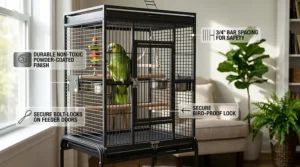
What jumps out here is the 40-by-40-inch square footprint paired with 76 inches of height — a cage that gives a single Amazon room to move in every direction rather than forcing it to pick between “wide” and “tall.”
The 1-inch bar spacing is on the wider end of what’s safe for Amazons (the general guideline tops out around 1 inch for this species), so it’s worth double-checking your particular bird’s beak and head size before committing, especially with smaller Amazon subspecies. At roughly 198 pounds, the build quality mirrors its double-macaw sibling — same wrought iron, same bird-proof front and feeder door locks.
What most buyers overlook about this model is that its square shape, rather than a long rectangle, actually suits corner and alcove placements better than the 8040FL while still delivering comparable vertical climbing room. Reviewers consistently describe the four-cup feeding system as a genuine time-saver, and several long-term owners report the powder coat resisting beak damage for years of daily chewing — though a few note that shipping damage on the crate corners isn’t uncommon and is worth inspecting for immediately on delivery.
Pros:
✅ Equal width and depth maximize usable floor space
✅ Sturdy 1″ bar spacing suited to large-beaked Amazons
✅ Four feeder doors with stainless cups included
Cons:
❌ 1″ spacing may be too wide for smaller Amazon subspecies
❌ Shipping damage reports on crate corners
Priced in the high hundreds, this sits squarely in premium territory — a strong choice if you want A&E’s build quality but don’t need the double-macaw’s extra footprint.
3. A&E Double Macaw Cage 6432 — best middle ground between size and price
The standout here is balance: 64 inches long by 32 inches wide gets you most of the floor-space benefit of the larger A&E models without tipping into four-figure pricing.
Exterior dimensions run 64″L x 32″W x 73″H with 3/4-inch bar spacing — tighter than its 1-inch siblings, which actually makes it a slightly safer default for Amazon subspecies with smaller heads and beaks, like some Yellow-naped and Lilac-crowned birds. The removable divider carries over from the larger 8040FL, so the same single-or-double flexibility applies here at a lower buy-in.
Here’s what to weigh: this cage gives up roughly 25% of the floor space of the 8040FL for a meaningful price drop, which for a single Amazon is often the smarter trade. Aggregated review sentiment on this model consistently praises the caster wheels for smooth rolling even on carpet, a detail cheaper cages routinely get wrong. A common complaint in user reviews is that the bottom grate can warp slightly under heavy foot traffic from larger birds, though this rarely affects function.
Pros:
✅ Strong floor-space-to-price ratio
✅ Tighter 3/4″ spacing suits more Amazon subspecies safely
✅ Divider allows future multi-bird flexibility
Cons:
❌ Bottom grate can warp under heavy use
❌ Still a two-person assembly job
In the mid-to-upper price band, this is arguably the sweet spot for buyers who want A&E’s engineering without the double-macaw’s price tag or footprint.
4. Prevue Pet Products Wrought Iron Select Bird Cage 3154BLK — best all-around value pick
The standout feature is simple: this cage delivers a genuinely usable 34.5″ x 22.75″ x 36.5″ interior with a full playtop for a fraction of what the A&E flight cages cost, which is exactly why it shows up on nearly every “top rated amazon parrot cage” list you’ll find.
At 3/4-inch wire spacing, it sits at the tighter end of what’s recommended for Amazons — fine for most individuals, though owners of larger-beaked subspecies should watch for any bar-bending over time. The included playtop adds a wood perch, ladder, and two stainless cups, effectively giving you a second activity zone stacked on top of the main enclosure. Four casters make it one of the easier cages on this list to reposition solo.
On paper this means you’re getting roughly 70% of the functional footprint of the premium options for less than a third of the price. Reviewers consistently report that the powder coat finish resists chewing damage better than expected for the price point, and Prevue backs the cage with a standard manufacturer warranty. A recurring theme in aggregated feedback is that the front door, while functional, is smaller than owners would like for reaching in to handle a bird directly — several suggest it’s better suited to birds comfortable stepping up onto an offered hand near the opening.
Pros:
✅ Best interior-space-per-dollar on this list
✅ Included playtop adds a genuine second activity zone
✅ Easy for one person to reposition via casters
Cons:
❌ Front door is smaller than premium alternatives
❌ 3/4″ spacing needs checking against larger-beaked subspecies
Firmly in the budget-to-mid range, this is the cage most first-time Amazon owners should start their search with.
🔍 Take Your Amazon Parrot’s Home to the Next Level
Click through on any highlighted pick above to check current pricing and availability — the right cage today saves you a stressful, expensive upgrade six months from now.
5. Yaheetech Extra Large Bird Cage 63″ Open Play Top — most affordable large-format option
What stands out is the price-to-size ratio: a 24″L x 22″W x 44.5″H interior with an open, Victorian archtop play area, positioned as one of the more budget-friendly large-format cages currently sold for Amazons.
The 1-inch bar spacing suits medium-to-large parrots, and every door — including the top-opening play area and the feeder doors — has its own individual lock, which matters more than buyers expect until the first time a clever Amazon figures out a shared locking mechanism. The wrought iron build with a hammertone powder coat is standard fare for this price bracket, and the four-wheel rolling stand with ball-shaped casters glides more smoothly than the fixed-caster budget cages a step below it.
What most buyers overlook about this model is that the open play top, while great for supervised interaction, also means less enclosed climbing space than a fully covered playtop design like the Prevue above — it’s a genuine trade-off, not a flaw. Reviewers consistently flag the individually locked doors as a standout safety feature at this price, and several long-term owners report the casters holding up well over years of repositioning. A common critique is that the interior height, while adequate, feels tighter than expected once perches and toys are installed.
Pros:
✅ Individual locks on every door, including feeder doors
✅ Smooth-rolling 360° caster stand
✅ Strong value at a genuinely budget price point
Cons:
❌ Open play top offers less enclosed climbing space
❌ Interior height feels tight once furnished
Sitting comfortably under $300, this is the pick for buyers who need “large” without the premium price tag attached to it.
6. Yaheetech 69″ Play Top Bird Cage with Rolling Stand — tallest budget option with enclosed playtop
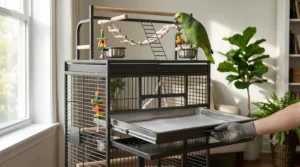
The headline feature is height combined with an enclosed, dome-style playtop rather than the open archtop of its 63″ sibling — giving a climbing Amazon more vertical real estate to work with in the same general price bracket.
Built from wrought iron with 3/4-inch bar spacing, it targets the tighter end of the recommended range, making it a reasonable fit across most Amazon subspecies. The rolling stand and stainless feeder cups mirror what you’d expect from the brand’s other models, and the covered playtop design keeps toys and mess more contained than an open-top alternative.
Here’s what to weigh: at 69 inches, this cage’s height advantage matters most if your Amazon is a committed climber that spends more time going up than moving side to side — otherwise the 63″ model’s larger open-play footprint may serve better. Aggregated owner sentiment describes the enclosed playtop as a meaningful upgrade for birds that get spooked by open-air perching, while a recurring complaint centers on the printed assembly instructions being harder to follow than the parts themselves suggest they should be.
Pros:
✅ Enclosed playtop adds contained vertical climbing space
✅ Tighter 3/4″ spacing suits more Amazon subspecies
✅ Rolling stand simplifies repositioning
Cons:
❌ Assembly instructions are frequently reported as unclear
❌ Less open floor space than rectangular alternatives
Priced similarly to the 63″ model, this is the better pick specifically for climbers over floor-walkers.
7. Prevue Pet Products Large Corner Bird Cage 3158BLK — best fit for tight apartment corners
The standout advantage is shape: at 45″L x 30″W x 69″H, this corner-format cage claims a room’s dead corner rather than eating into open floor space — a real solution for apartment dwellers who simply don’t have room for a rectangular 40″x40″ footprint.
Bar spacing runs 3/4″ to 1″ depending on section, and the included playtop, ladder, and debris tray follow the same formula as Prevue’s rectangular models. It’s worth being upfront here: several experienced Amazon owners on forums caution against corner cages generally, noting they can feel awkward to access and clean compared to rectangular designs, even though manufacturers market the shape as space-efficient. That’s a legitimate trade-off, not an invented one — if you have the floor space for a rectangular cage, most avian-experienced owners would steer you there first.
Reviewers consistently note the corner shape genuinely does reclaim otherwise-wasted room, and the large front door makes daily access easier than the shape might suggest at first glance. A common complaint is that assembly is more involved than rectangular cages, given the angled panels, and that the bar spacing transition between sections needs a closer look before buying if you have a larger-beaked subspecies. Reviewers consistently report the seed guard skirt keeping floor mess in check better than expected.
Pros:
✅ Reclaims unused corner floor space in tight rooms
✅ Large front door despite the angled footprint
✅ Seed guard skirt limits floor mess
Cons:
❌ More complex assembly due to angled panels
❌ Some experienced owners prefer rectangular cages generally
In the mid-price range, this is a legitimate space-saving option — just go in aware of the trade-offs corner-format cages carry.
Top 7 Cages: Specs & Value Comparison
| Cage | Weight | Playtop Included | Divider Option | Rating Trend | Best For |
|---|---|---|---|---|---|
| A&E 8040FL | ~198 lbs | No (flight style) | Yes | Consistently high | Pairs, breeders |
| A&E 4040FL | ~198 lbs | No (flight style) | No | Consistently high | Single, max floor space |
| A&E 6432 | Heavy, 2-person build | No (flight style) | Yes | Strong, mixed on grate | Mid-budget pairs |
| Prevue 3154BLK | Moderate | Yes | No | Strong value ratings | First-time buyers |
| Yaheetech 63″ | Moderate | Open-top | No | Strong for price | Budget large-format |
| Yaheetech 69″ | Moderate | Enclosed | No | Mixed on instructions | Climbers |
| Prevue 3158BLK | Moderate-heavy | Yes | No | Strong but niche | Corner apartments |
The pattern across this table is that the two A&E flight cages dominate on raw floor space and reviewer consistency but demand the largest footprint and budget, while the Yaheetech and Prevue entries trade some size for accessibility — both financially and in terms of apartment-friendly footprints. If your living situation can accommodate an 80-inch cage, the review data supports going big from day one rather than upgrading twice; if it can’t, the Prevue 3154BLK offers the most defensible middle ground between cost and usable space.
Amazon Parrot Enclosure Size: What You Actually Need
The minimum workable amazon parrot enclosure size is roughly 36 inches wide by 24-30 inches deep by 40-plus inches tall, with 3/4 to 1-inch bar spacing — but that’s a floor, not a target. The Association of Avian Veterinarians frames adequate caging as a form of environmental enrichment in its own right, and notes that undersized enclosures prevent birds from performing natural behaviors, which shows up later as feather picking, screaming, or other stress responses.
A few numbers to anchor this:
- Width and depth matter more than height for Amazons specifically, since they’re climbers and walkers first, fliers second, within a cage.
- A single Amazon needs roughly 1.5 to 2 times its wingspan of clear space to flap without hitting bars, toys, or bowls — for a mid-size Amazon, that generally lands you in 36-40 inch territory at minimum.
- Pairs need close to double the single-bird minimum, not a modest bump — a common mistake buyers make is assuming a slightly bigger cage will do for two birds.
- Bar spacing between 3/4″ and 1″ is the accepted safe range for Amazons; tighter risks trapped toes on smaller subspecies, wider risks head entrapment on some individuals.
- Door size matters as much as overall footprint — look for a front opening that’s roughly 60% or more of the cage face, since a cramped door makes daily handling genuinely harder.
If you’re outfitting a first cage, treat these as minimums to exceed, not targets to hit exactly — every product on this list either meets or comfortably beats them.
How to Choose the Best Amazon Parrot Cage
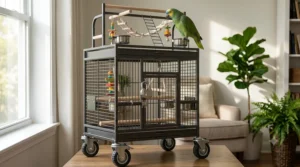
Picking the best amazon parrot cage for your specific bird comes down to seven decision points, roughly in order of importance:
- Start with bar spacing, not price. Confirm 3/4″ to 1″ spacing before anything else — this single spec determines whether the cage is even a candidate.
- Measure your space before you shop, not after. A cage that looks reasonable online can be shockingly large in person; tape off the footprint on your floor first.
- Prioritize floor space over height for a single Amazon. These birds are climbers and walkers more than fliers within a cage, so width and depth do more daily-life work than extra vertical inches.
- Check door size and count. A large main door plus separate feeder-access doors reduces daily stress on both you and the bird.
- Weigh material and finish. Powder-coated wrought iron dominates this category for good reason — verify the coating is marketed as zinc-free, since low-quality imports are the exception, not the rule, but worth a quick check per the manufacturer wire-spacing sizing reference most brands publish.
- Decide on mobility needs. Rolling casters matter more than they seem to if you’ll ever need to move the cage for cleaning, redecorating, or an outdoor day.
- Budget for furnishing, not just the cage. Perches, toys, and bowls add real cost on top of the base price — factor that in before comparing sticker prices across models.
Amazon Parrot Cage Reviews: What Real Owners Report
Aggregated amazon parrot cage reviews across the seven models above reveal a few consistent patterns worth calling out directly, since they show up far more reliably than any single five-star or one-star review would suggest on its own.
First, welds and grate strength are the single most-mentioned quality factor across every price tier — owners consistently flag bent bottom grates or stressed welds as the first sign a cage is undersized for their bird’s strength, regardless of listed weight capacity. Second, assembly difficulty is a near-universal complaint across every brand in this list, Prevue included; budget an afternoon and, ideally, a second set of hands, no matter which cage you choose. Third, reviewers repeatedly note that stainless steel cups outlast plastic ones by years, which is why every cage on this list ships with steel rather than plastic feeders.
Where reviews diverge sharply is on door design — some owners love vertical-swing main doors for one-handed access, while others prefer the horizontal landing-style doors on corner and dome-top models because their bird uses the door edge as a perch during handling. That’s a genuinely personal preference tied to how your individual bird behaves, not a right-or-wrong spec, and it’s worth reading a handful of recent reviews on your shortlisted model specifically before buying, since bird temperament varies enough that no single review type applies universally.
Large Amazon Parrot Cage vs Standard Cage: Why Size Wins
A large amazon parrot cage and a standard mid-size cage look similar in a product photo, but the day-to-day experience differs more than the extra square footage alone would suggest. Standard cages — think the 36″x24″ range — technically meet minimum guidelines, but they leave little room for the toy rotation, foraging setups, and multiple perch types that behavioral enrichment actually requires once you account for the bird itself taking up space too.
Large-format cages, by contrast, let you run two or three toys simultaneously without turning the interior into an obstacle course, and they give a stressed or newly-adopted bird room to retreat to a “safe corner” — something behaviorists specifically flag as important for birds transitioning into a new home. The trade-off is obvious: more floor space in your home, a higher price tag, and in most cases a heavier build that’s harder to relocate solo.
Value-wise, the math generally favors going larger from the start rather than upgrading twice. A mid-range large cage in the $550-$700 range that lasts a decade outperforms buying a $250 standard cage now and a $700 upgrade in eighteen months once your Amazon outgrows it behaviorally, even if not literally. Total cost of ownership, not sticker price, is the number that actually matters here.
Blue-Fronted & Yellow-Naped Amazons: Housing Notes by Species
Not every Amazon subspecies has identical housing needs, and lumping them all into one generic recommendation does a disservice to both smaller and larger individuals within the genus.
Blue Front Amazon Cage Considerations
A blue front amazon cage should generally sit at the larger end of the standard range — Blue-fronted Amazons (Amazona aestiva) run on the bigger side of the genus, with a correspondingly wider wingspan and a beak strong enough to test weaker welds over time. For this subspecies, the A&E 6432 or the Prevue 3154BLK’s tighter 3/4″ spacing both work well, though owners of particularly large individuals may find the extra floor space in the A&E 4040FL worth the price jump. Blue-fronts are known for high activity levels and vocal enthusiasm, so a cage with a full playtop gives that energy somewhere productive to go.
Yellow Nape Amazon Housing Considerations
Yellow nape amazon housing has slightly different priorities: Yellow-naped Amazons (Amazona auropalliata) tend to run marginally smaller-headed than Blue-fronts, which makes the tighter 3/4″ bar spacing on the Prevue and Yaheetech 69″ options a genuinely safer default rather than just a budget compromise. Yellow-napes are frequently described by owners as intensely bonded, one-person birds, and that temperament tends to pair well with cages that have larger front doors for easy step-up access — the Prevue 3154BLK and the corner-format 3158BLK both perform well here.
Across both subspecies, the core rule holds: measure your specific bird rather than assuming genus-wide averages apply, and size up if you’re ever choosing between two adjacent cage options.
Practical Setup & Maintenance Guide
Getting a new cage from box to bird-ready involves more than following the included diagram. First 48 hours: assemble on a drop cloth or old sheet, since powder-coated parts often carry a faint manufacturing residue worth wiping down with a damp cloth before anything touches your bird. Check every weld and hinge by hand before the first use — shipping stress occasionally loosens hardware that looks fine at a glance.
First 30 days, the most common mistake new owners make is overcrowding the cage immediately with every toy purchased. Start with two to three toys and one or two perch types, then add gradually as you learn what your specific Amazon actually engages with versus ignores. A weekly maintenance rhythm works well for most owners: wipe bars and perches every few days, do a full tray and grate deep-clean weekly, and inspect bar welds monthly for any signs of stress from chewing.
Optimization tricks that Amazon listings never mention: rotate perch diameters regularly to prevent foot fatigue, since a cage full of identical dowel perches — a mistake even some included accessories make — is harder on a bird’s feet than varied natural-wood perches. Positioning the cage against at least one solid wall, rather than fully exposed on all sides, tends to reduce stress-related behaviors in newly-housed birds, giving them a sense of a defensible space rather than being surrounded on all sides.
Real-World Scenarios: Which Cage Fits Your Amazon?
Scenario 1 — The apartment-dwelling first-time owner. Budget around $300, limited floor space, one Blue-fronted Amazon adopted from a rescue. The Prevue 3154BLK or the corner-format 3158BLK both work, depending on whether the apartment has usable rectangular wall space or only a spare corner. Either way, prioritize the smaller 3/4″ bar spacing given the rescue background and unknown temperament.
Scenario 2 — The established owner upgrading a cramped starter cage. Budget in the $550-$900 range, moderate space, a Yellow-nape that’s outgrown its first cage both physically and behaviorally. The A&E 6432 or 4040FL both deliver a meaningful size jump; the 6432’s tighter spacing is the safer default unless the bird is confirmed larger-beaked.
Scenario 3 — The multi-bird household planning ahead. Budget over $1,200, a dedicated bird room, and plans to eventually house a bonded pair. The A&E 8040FL’s removable divider makes it the only cage on this list that genuinely scales from one bird to two without a second purchase — start it as a single enclosure and split it later if needed.
Common Mistakes When Buying an Amazon Parrot Cage
Even experienced bird owners fall into a handful of predictable traps. Buying based on height alone tops the list — a tall, narrow cage looks impressive in a showroom but shortchanges an Amazon’s need for horizontal movement. Underestimating assembly time is close behind; nearly every cage on this list is a genuine two-person, multi-hour project, not a twenty-minute box-to-floor job.
Ignoring bar spacing in favor of price is a costly mistake, since a cage with spacing outside the safe range for your specific bird can mean an emergency vet visit down the line rather than a simple return. Skipping the “measure twice” step on floor space is another common issue — buyers routinely order a cage that technically fits the room but leaves no walking space around it, which matters for daily cleaning and interaction. Finally, treating the cage as a one-time purchase rather than budgeting for ongoing furnishing — perches, toys, bowl replacements — leads to sticker shock well after the return window closes.
Safety, Regulations & Non-Toxic Materials Guide
Metal toxicity is the single biggest safety consideration buyers overlook when comparing cages purely on size and price. Zinc toxicosis in particular has been documented across a wide range of companion bird species, with galvanized and coated birdcages listed among the recognized exposure sources in the MSD Veterinary Manual’s toxicology reference. Reputable manufacturers in this category — including every brand featured above — use powder coatings formulated to be zinc-free, but flaking, chipped, or heavily chewed coatings on any cage, regardless of brand, warrant inspection rather than assumption.
Practically, this means checking new cages for rough or incompletely coated welds before first use, watching for any paint or coating flaking over the cage’s lifespan, and replacing rather than patching a cage once base metal becomes exposed to chewing. It also means being skeptical of unusually cheap off-brand cages sold outside the manufacturers covered here, since coating quality control is exactly where budget-cutting tends to show up first. None of the seven cages above have documented zinc-related safety concerns in aggregated owner feedback, but the underlying risk is real enough across the category that it belongs in every buyer’s checklist, not just this article’s.
Long-Term Cost & Maintenance
Sticker price is only the first number in a cage’s real cost. Over a five-year ownership window, expect to add replacement perches (natural wood degrades faster than dowels but is better for foot health), periodic toy rotation, and eventually replacement feeder cups if plastic ones were included instead of stainless steel. Powder-coated wrought iron cages, properly maintained, routinely last a decade or more — several owners in aggregated Prevue and A&E reviews report cages still in daily use after 15-plus years, which meaningfully changes the cost-per-year math versus a cheaper cage replaced twice in that span.
Cost-per-use also favors the larger, sturdier cages once you factor in reduced likelihood of a mid-life upgrade. A $1,400 cage used daily for 15 years costs roughly $0.26 a day; a $280 cage replaced after four years due to wear or an outgrown fit costs a comparable amount but delivers a worse experience throughout. That framing doesn’t mean everyone should buy the most expensive option — it means the “cheap now” instinct deserves a second look against realistic replacement timelines.
Features That Actually Matter (And Those That Don’t)
Marketing copy across this category leans hard on features that sound impressive but rarely change day-to-day life. Decorative finishes and color options, for instance, matter for your living room aesthetic, not your bird’s welfare — pick based on what matches your space, not what the listing photo implies about quality. Excessive accessory counts (“comes with 10 toys!”) often mean lower-quality individual items rather than genuine added value; three well-chosen toys beat ten cheap ones.
What actually matters: door size and placement, verified bar spacing for your specific bird, weld and grate strength under real use, and caster quality if mobility matters to you. Feeder door count matters more than most buyers expect going in — the difference between reaching through the main door daily versus using dedicated feeder access adds up over years of use. Warranty terms are worth a genuine read, not just a glance, since coverage varies meaningfully between the brands featured here.
Buyer’s Decision Framework
Use this as a quick priority checklist when your shortlist has narrowed to two or three cages:
- If space is your main constraint, choose a corner-format or vertical playtop cage, because footprint efficiency matters more than raw floor space in a tight room.
- If budget is your main constraint, choose the Prevue 3154BLK or a Yaheetech open-top model, because they deliver the strongest usable-space-per-dollar without cutting safety-relevant specs.
- If you’re planning for a second bird eventually, choose a divider-equipped A&E model now, because retrofitting a divider setup later isn’t possible on cages that weren’t designed for it.
- If your Amazon is a confirmed climber over a walker, choose a taller enclosed-playtop cage, because vertical engagement will matter more than extra floor inches for that individual bird’s behavior.
- If your bird came from a rescue with unknown history, choose the tighter 3/4″ bar spacing option regardless of subspecies, because erring safe matters more than optimizing for a size you’re not certain fits.
🚨 Ready to Upgrade Your Amazon’s Home?
✨ Compare the picks above side by side, click through to check current availability, and give your bird the space it’s genuinely been asking for — one enclosure upgrade tends to pay for itself in a calmer, happier parrot.
FAQ
❓ What size cage does an Amazon parrot need?
❓ What is the best bar spacing for Amazon parrot cages?
❓ Are corner bird cages good for Amazon parrots?
❓ How much does a good Amazon parrot cage cost?
❓ Can two Amazon parrots share one cage?
Conclusion
Choosing among the top rated amazon parrot cages ultimately comes down to matching real specs — bar spacing, floor space, door size, build quality — to your specific bird’s subspecies, temperament, and your available room, rather than chasing the biggest number or the lowest price in isolation. The A&E flight and double-macaw cages deliver unmatched floor space for owners with the room and budget to support it, while the Prevue and Yaheetech lines prove that a genuinely functional, safe enclosure doesn’t require a four-figure spend to get right.
What ties every recommendation in this guide together is the same underlying principle: bigger and safer beats decorative and cheap, every single time, when the animal living in that space can’t advocate for an upgrade itself. Whichever of these seven you land on, you’re starting from a genuinely researched shortlist rather than a random storefront pick — and that’s the difference between a cage your Amazon tolerates and one it actually thrives in.
Recommended for You
- Best Cage for African Grey Lifespan: 7 Real Picks (2026)
- African Grey Cage Buying Guide: 7 Top Picks for 2026
- 7 Best African Grey Parrot Cages in 2026
Disclaimer: This article contains affiliate links. As an Amazon Associate, I earn from qualifying purchases. If you purchase products through these links, we may earn a small commission at no additional cost to you.
✨ Found this helpful? Share it with your friends! 💬🤗
