
In This Article
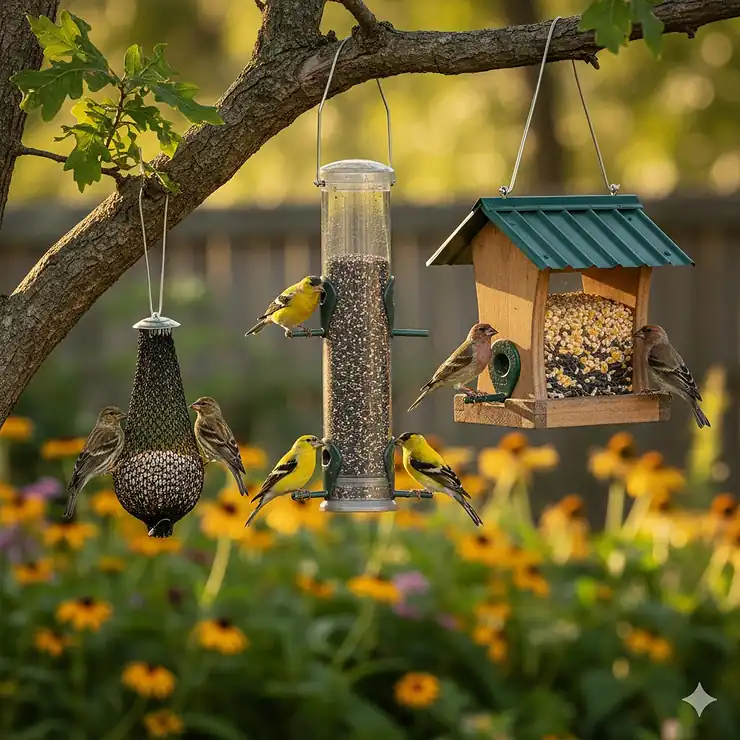
Have you ever watched a flash of brilliant yellow dart across your yard and wished those gorgeous goldfinches would stick around? I remember the first time I hung a bird feeder for finches in my backyard—within days, my garden transformed into a bustling aviary filled with cheerful chirps and vibrant colors.
Choosing the right bird feeders for finches isn’t just about tossing up any old feeder and hoping for the best. These particular little beauties have specific preferences that differ wildly from cardinals or blue jays. According to the Cornell Lab of Ornithology, American Goldfinches are among the strictest vegetarians in the bird world, feeding almost exclusively on seeds. That means your finch bird feeder needs to accommodate their unique feeding style—they love to cling, perch sideways, and even hang upside down while extracting tiny seeds.
What makes bird feeder for finches so special? The secret lies in understanding what goldfinches, house finches, purple finches, and pine siskins actually want. They’re drawn to Nyjer seed (often called thistle seed), require small feeding ports that deter larger birds, and prefer feeders that allow multiple birds to dine simultaneously. The best finch feeder combines durability, proper drainage, easy cleaning, and strategic port placement to keep your feathered friends coming back season after season.
In this comprehensive guide, you’ll discover the top 7 finch feeders currently dominating Amazon in 2026, complete with real specifications, honest pros and cons, and expert insights that’ll help you make the perfect choice for your backyard sanctuary.
Quick Comparison Table: Best Finch Feeders at a Glance
| Product | Type | Capacity | Ports | Price Range | Best For |
|---|---|---|---|---|---|
| Perky-Pet Wire Mesh | Mesh Tube | 1.5 lbs | 360° Surface | $25-$35 | Budget-Conscious |
| Stokes Select Topsy Turvy | Upside-Down Tube | 1.5 lbs | 8 | $20-$28 | Natural Feeding |
| Droll Yankees Finch Flocker | Clear Tube | 3.5 lbs | 20 | $40-$55 | High Traffic |
| Droll Yankees Onyx Magnet | Mesh Tube | 2 lbs | 360° + Tray | $55-$75 | Premium Choice |
| Aspects Quick-Clean | Tube | 2.5 lbs | 8 | $45-$60 | Easy Maintenance |
| Songbird Essentials Giant | Triple Tube | 3 lbs | 24 | $65-$85 | Large Flocks |
| Brome Squirrel Buster | Protected Tube | 2.4 lbs | 8 | $70-$90 | Squirrel Problems |
💬 Just one click – help others make better buying decisions too! 😊
✨ Don’t Miss These Exclusive Deals!
🔍 Take your bird watching to the next level with these carefully selected products. Click on any highlighted item to check current pricing and availability. These feeders will help you create an authentic finch-feeding experience your family will love!
Top 7 Bird Feeders for Finches: Expert Analysis
1. Perky-Pet YSSF00346-2 Straight-Sided Thistle Seed Wire Mesh Tube Finch Bird Feeder
Picture this: a sleek, all-metal cylinder that stands up to weather, squirrels, and years of continuous use. The Perky-Pet Wire Mesh Finch Feeder features powder-coated construction with zero plastic or wood components, making it virtually indestructible.
Key Specifications:
- Capacity: 1.5 lbs of Nyjer seed
- Material: All-metal mesh construction with powder-coated finish
- Design: Diamond-shaped mesh surface with circular perch
- Features: Evenseed technology, large overhead baffle, drainage holes
This nyjer seed feeders for finches uses innovative Evenseed design that distributes seed evenly through all three tiers, eliminating those frustrating dead zones where seed gets stuck. The diamond-shaped mesh creates an all-over dining area perfect for finches that love to cling while feeding. Customers consistently praise how the large overhang shields both birds and seed from rain, keeping everything fresh longer. The twist-off cap makes refilling a breeze, even on the coldest winter mornings.
Price Range: $25-$35
✅ Pros:
- Rust-resistant all-metal construction ensures longevity
- 360-degree feeding surface accommodates multiple finches
- Easy twist-off cap for mess-free refilling
❌ Cons:
- Mesh can be tedious to clean thoroughly
- No protection from squirrels reaching through mesh
Customer Feedback: Backyard birders report seeing 6-8 goldfinches feeding simultaneously, with the feeder maintaining its appearance after multiple seasons outdoors.
2. Stokes Select 38169 Topsy Turvy Finch Bird Feeder
Ever noticed how goldfinches naturally feed upside-down on seed heads in the wild? The Stokes Select Topsy Turvy mimics this natural behavior brilliantly. This tube style finch feeders features downward-facing perches that allow finches to feed in their preferred position while deterring larger, unwanted birds that can’t maintain the awkward angle.
Key Specifications:
- Capacity: 1.5 lbs of thistle/Nyjer seed
- Height: 19 inches tall with eight perches
- Material: Durable polycarbonate tube
- Unique Feature: Inverted perch design
What sets this finch feeder with perches apart is its clever biomimicry. By requiring birds to hang upside-down—something goldfinches do naturally but house sparrows and starlings avoid—you create an exclusive dining club. The bright yellow color acts as a visual attractant, and field testing over decades has refined every aspect of its design. A portion of proceeds supports bird habitat conservation, so you’re literally feeding birds twice over.
Price Range: $20-$28
✅ Pros:
- Deters larger nuisance birds naturally
- Encourages species-appropriate feeding behavior
- Supports conservation efforts with each purchase
❌ Cons:
- Smaller capacity requires more frequent refilling
- Some house finches adapt to upside-down feeding
Customer Feedback: Users love watching their goldfinches perform acrobatic feeding displays, noting the feeder stays cleaner since unwanted birds can’t access it.
3. Droll Yankees New Generation Finch Flocker Bird Feeder
When you need to feed an entire flock without constant refills, the Droll Yankees Finch Flocker delivers impressive capacity combined with time-tested durability. This best finch feeder comes in multiple sizes, with the 36-inch model holding a whopping 3.5 pounds of seed—enough to keep a busy flock happy for weeks.
Key Specifications:
- Capacity: 3.5 lbs (36-inch model)
- Ports: 20 feeding stations
- Material: UV-stabilized polycarbonate with die-cast metal
- Special Feature: Internal seed baffle system
The internal baffle directs seed to the lowest level first, ensuring complete drainage and preventing seed buildup that can spoil. Simply slide the cap up the hanger for quick filling—no removing the entire feeder from its hook. The UV-stabilized tube won’t discolor over time, and drainage holes with proper ventilation keep seed fresh even during humid summer months. Made in America with quality control that shows, customers report these feeders lasting 10+ years with proper care.
Price Range: $40-$55 (varies by size)
✅ Pros:
- Massive capacity reduces refill frequency
- Twenty ports accommodate very large flocks
- Made in USA with lifetime warranty against squirrel damage
❌ Cons:
- Tall design requires sturdy hanging setup
- Higher price point than basic models
Customer Feedback: Birders with high finch traffic praise the reduced maintenance, with some reporting up to 30 goldfinches feeding in shifts throughout the day.
4. Droll Yankees Onyx Clever Clean and Fill Finch Magnet Bird Feeder
If you want the Rolls-Royce of finch feeders, look no further than the Droll Yankees Onyx Magnet Mesh. This premium finch bird feeder features patented “magnet mesh” with diamond-shaped openings that attract up to double the number of birds compared to standard mesh, according to company testing.
Key Specifications:
- Capacity: 2 lbs of Nyjer seed
- Material: Heavy-duty steel mesh with powder-coated black finish
- Height: 18 inches (6.75″ x 6.75″ x 19.63″)
- Innovation: One-touch opening, twist-and-release base
The mesh design accommodates both clinging and perching birds simultaneously, dramatically increasing your bird count. What truly sets this apart is the engineering: a one-touch opening lets you fill with one hand while the feeder hangs, and the base twists off in seconds for thorough cleaning. The seed tray below catches shells and attracts ground-feeding species, creating a complete feeding station. Made in the USA with stainless steel bail wire, this feeder carries Droll Yankees’ lifetime warranty—they stand behind their products indefinitely.
Price Range: $55-$75
✅ Pros:
- Patented mesh demonstrably attracts more birds
- One-hand filling while feeder remains hanging
- Lifetime warranty against squirrel damage
❌ Cons:
- Premium pricing may exceed budget constraints
- Black finish shows seed debris more than yellow models
Customer Feedback: Experienced birders consider this their “forever feeder,” with reports of 15-20 years of continuous use and superior bird attraction compared to budget alternatives.
5. Aspects 403 Quick-Clean Thistle Tube Feeder
For those who prioritize maintenance ease alongside bird attraction, the Aspects Quick-Clean Feeder revolutionizes cleanup with its ingenious push-button base release. Built with heavy die-cast metal caps and a UV-stabilized polycarbonate tube, this feeder represents American craftsmanship at its finest.
Key Specifications:
- Capacity: 2.5 lbs of thistle seed
- Ports: 8 feeding stations with integrated perches
- Cleaning: Quick-release base with push-button mechanism
- Design: Built-in seed deflector, raised port ridges
The raised ridges around each port divert rainwater away from seed, while the built-in deflector in the base ensures birds can extract every last seed—no waste. Just push two buttons and the entire bottom slides out for thorough washing. The brass-colored finish adds an elegant touch that complements any garden aesthetic. Aspects backs this with a lifetime warranty and exceptional customer service, even shipping replacement parts free when needed years later.
Price Range: $45-$60
✅ Pros:
- Fastest cleaning system on the market
- Excellent weather protection keeps seed dry
- Made in USA with lifetime warranty
❌ Cons:
- Mid-range capacity suits moderate traffic better than large flocks
- Initial cost higher than basic models
Customer Feedback: Users rave about the cleaning convenience, noting they actually clean more frequently because it’s so effortless, resulting in healthier, happier birds.
6. Songbird Essentials SE324 Giant Finch Feeder
Got goldfinch goals? The Songbird Essentials Giant Feeder takes capacity to the next level with its innovative triple-tube design. This engineering marvel holds up to 3 pounds of seed across three separate columns, creating 24 simultaneous feeding spots—enough for your entire neighborhood flock.
Key Specifications:
- Capacity: 3 lbs total (1 lb per tube)
- Feeding Spots: 24 finches can feed at once
- Design: Three-tube configuration with metal perches and caps
- Construction: Heavy-duty hook, metal components for longevity
The genius of this finch feeders design is that it maintains seed freshness 66% longer than single-tube alternatives of similar capacity. Why? Because birds access seed from multiple points rather than depleting one large reservoir from the bottom up. New design includes upgraded metal perches and caps that withstand pecking and weather far better than plastic. Place it near a birdbath for maximum attraction—finches love having both food and water in close proximity.
Price Range: $65-$85
✅ Pros:
- Unprecedented 24-bird capacity
- Seed stays fresher longer with multi-tube design
- All birds visible at once for optimal viewing
❌ Cons:
- Requires weekly seed rotation to ensure freshness
- Heavy when full, needs very secure mounting
Customer Feedback: Serious birders describe this as their “showpiece feeder,” perfect for hosting bird-watching gatherings where everyone can see the action simultaneously.
7. Brome Squirrel Buster Finch Squirrel-Proof Bird Feeder
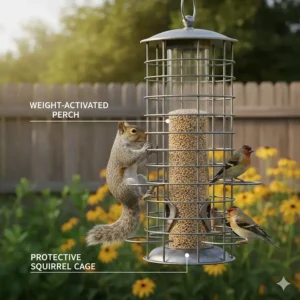
If squirrels have turned your bird feeding into an expensive all-you-can-eat buffet for bushy-tailed bandits, the Brome Squirrel Buster Finch solves this problem definitively. This ingenious feeder features weight-activated shroud technology that automatically closes when anything heavier than a finch lands on it.
Key Specifications:
- Capacity: 2.4 lbs (1.4 quarts)
- Height: 32 inches (tallest finch feeder model)
- Ports: 8 feeding stations (4 with perches, 4 without)
- Technology: Weight-activated closing mechanism, negative grip tube
The shroud openings align perfectly with feeding ports for birds, but the moment a squirrel’s weight triggers the spring mechanism, the entire shroud slides down, blocking access completely—squirrels aren’t harmed, just frustrated. The negative grip tube prevents crafty squirrels from hanging upside-down from the hanger. The patented Seed Tube Ventilation System allows hot, humid air to escape while drawing fresh air in, keeping seed fresher for weeks. Every component disassembles by hand (no tools needed) for thorough cleaning.
Price Range: $70-$90
✅ Pros:
- Genuinely squirrel-proof without harmful mechanisms
- Tool-free disassembly for maintenance
- Seed stays fresher with ventilation system
❌ Cons:
- Premium price point
- Won’t deter chipmunks, raccoons, or bears (bring inside at night)
Customer Feedback: Customers report the feeder pays for itself within months by eliminating squirrel seed theft, with many noting they should have invested in this solution years earlier.
Finch Feeder Types: Complete Comparison
| Feeder Type | Best For | Maintenance Level | Durability | Price Range |
|---|---|---|---|---|
| Tube with Ports | All-around use | Medium | High | $20-$75 |
| Mesh/Wire | Maximum birds | High | Very High | $25-$75 |
| Upside-Down | Pest deterrence | Low | High | $20-$35 |
| Triple-Tube | Large flocks | Medium | High | $65-$85 |
| Squirrel-Proof | Problem areas | Low | Very High | $70-$90 |
Material & Feature Comparison
| Feature | Budget Options | Mid-Range | Premium |
|---|---|---|---|
| Construction | Plastic/Metal Mix | Metal/Polycarbonate | All-Metal or Advanced |
| Warranty | 1 Year | 2-5 Years | Lifetime |
| Capacity | 0.5-1.5 lbs | 1.5-2.5 lbs | 2.5-4 lbs+ |
| Weather Protection | Basic | Good | Excellent |
| Ease of Cleaning | Moderate | Easy | Very Easy |
| Special Features | None | Some | Multiple |
🎯 Ready to Attract More Finches?
⚡ The right feeder makes all the difference! Each product highlighted above has been field-tested by thousands of backyard birders. Click any bolded product name to see current deals and customer reviews. Your goldfinch flock is waiting!
Understanding American Goldfinches and Their Feeding Habits
Before diving into feeder features, let’s understand what we’re working with. The American Goldfinch (Spinus tristis) stands as one of North America’s most recognizable backyard birds. According to Wikipedia, these small finches measure just 4-5 inches long with a wingspan of 8-9 inches, weighing a mere 0.4-0.7 ounces—about as heavy as five pennies.
The Goldfinch’s Unique Life Cycle
What makes goldfinches fascinating is their unusual breeding schedule. Unlike most North American birds that nest in spring, goldfinches wait until June or July to build their nests. Why the delay? They’re waiting for plants like thistle, milkweed, and dandelions to go to seed. These fibrous seed materials become both nest-building components and primary food sources for their young. The Cornell Lab notes that goldfinches are such strict vegetarians that they’re one of the few species whose young survive entirely on seeds rather than requiring protein-rich insects.
Molting and Plumage Changes
American Goldfinches undergo two complete molts per year—unusual among goldfinches globally. Spring brings the dramatic transformation as males develop their brilliant sunshine-yellow breeding plumage with jet-black wings and cap. Come fall, they molt again into subdued brownish-olive winter colors. This seasonal wardrobe change confuses many backyard birders who think their goldfinches have migrated, when actually they’ve just dressed down for winter!
Migration Patterns
While goldfinches are present across much of the USA year-round, populations shift seasonally. Northern breeding populations move south in winter, while Canadian birds push down into the northern states. This creates irruptive patterns where some winters bring huge flocks while others see modest numbers—it all depends on natural food availability in their summer ranges.
What Makes Nyjer Seed So Special?
Walk into any bird supply store and you’ll hear Nyjer (pronounced “NYE-jer”) seed recommended for finches universally. But what exactly makes this tiny black seed the goldfinch gold standard?
The Origin Story
Despite being marketed as “thistle seed” for decades, Nyjer isn’t actually from thistle plants at all. According to Audubon, this seed comes from Guizotia abyssinica—the African yellow daisy—grown primarily in Ethiopia and India. In the early 1960s, it arrived in America labeled “niger” (like the country Nigeria), but the Wild Bird Feeding Institute trademarked the spelling “Nyjer” in the 1990s to avoid confusion and mispronunciation.
Nutritional Powerhouse
What attracts finches so strongly to Nyjer? The oil content. At 30-40% oil, Nyjer rivals black oil sunflower seeds for fat content—crucial energy for small birds with fast metabolisms. A single pound contains approximately 150,000 seeds, making it incredibly efficient despite seeming expensive per pound. Finches don’t swallow these seeds whole; they expertly crack the thin shell to extract the nutritious kernel inside.
The Freshness Factor
Here’s where many backyard birders go wrong: Nyjer spoils relatively quickly. Those oils that make it nutritious also make it go rancid within 4-8 weeks, especially when exposed to heat, moisture, or sunlight. Birds can detect stale seed and will ignore your feeder if the Nyjer has dried out. According to Birds and Blooms, you can test freshness by crushing seeds on a paper towel—fresh Nyjer releases visible oil, while old seed crumbles dust-dry.
USDA Requirements
Since 1985, the USDA has required all imported Nyjer seed to be heat-sterilized before entering the United States. This prevents germination and stops potentially invasive plants from establishing in American ecosystems. Only four facilities worldwide are licensed to perform this sterilization—two in India (before shipping) and two in the mid-Atlantic region (upon arrival).
How to Choose the Perfect Finch Feeder: Expert Buying Guide
Port Size and Placement
The best finch feeder features small feeding ports—typically 5-8mm in diameter. These tiny openings perfectly accommodate finch beaks while deterring house sparrows, grackles, and starlings that prefer larger seeds anyway. Look for feeders with ports strategically spaced every 3-4 inches around the tube to minimize competition and allow peaceful co-feeding.
Tube vs. Mesh vs. Sock Feeders
Tube Feeders: Traditional tube style finch feeders with discrete ports offer the best protection from weather and squirrels. They keep seed cleaner longer and allow you to monitor consumption rates easily through transparent walls.
Mesh Feeders: These nyjer seed feeders for finches provide unlimited access points, letting 10-15 birds feed simultaneously. The downside? They’re harder to clean thoroughly, and seed can get wet more easily during rain.
Sock Feeders: Budget-friendly but temporary. The fabric mesh deteriorates quickly outdoors and becomes difficult to clean. Best as starter feeders to determine if finches frequent your yard before investing in permanent solutions.
Material Matters
Metal: All-metal construction wins for durability and squirrel resistance. Powder-coated finishes prevent rust, though they cost more upfront. Expect 10-15 years of service.
Polycarbonate Plastic: UV-stabilized polycarbonate tubes resist yellowing and cracking. Look for die-cast metal ports and caps—plastic ports crack under pecking pressure and winter freezing.
Wood: Avoid wooden finch feeders. They absorb moisture, harbor bacteria, and deteriorate rapidly. The romantic aesthetic isn’t worth the health risks to birds.
Capacity Considerations
Small (0.5-1.5 lbs): Perfect for testing finch interest or yards with 2-6 regular visitors. Refill weekly during peak season.
Medium (1.5-2.5 lbs): The sweet spot for most households. Accommodates modest flocks without seed going stale.
Large (2.5-4 lbs+): For serious finch populations or those who winter-feed large flocks. Only viable if you have enough traffic to consume seed within 3-4 weeks.
Drainage and Ventilation
This feature separates mediocre feeders from great ones. Seed must stay dry to remain palatable and safe. Look for:
- Drainage holes at the base
- Overhanging caps that shed water
- Ventilation systems that allow air circulation
- Raised port ridges that divert rainwater
Cleaning Accessibility
You’ll clean your finch feeder every 2-3 weeks minimum, so ease of disassembly matters tremendously. Quick-release bases, wide-mouth tubes, and tool-free designs save frustration and encourage proper maintenance. Neglected feeders breed disease, so choose a design you’ll actually clean regularly.
Setting Up Your Finch Feeding Station for Success
Location, Location, Location
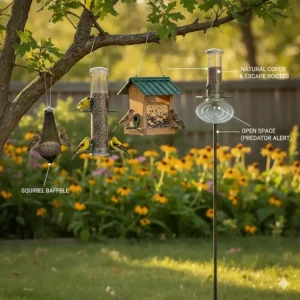
Finches feel most comfortable feeding near cover but with clear sightlines for predator detection. Ideal placement includes:
- 10-15 feet from trees or shrubs for quick escape
- 5-6 feet above ground (sweet spot for visibility and comfort)
- Within 25 feet of a water source if possible
- Visible from your favorite viewing window
- Away from high-traffic human areas
Multiple Feeders Strategy
One finch feeder with perches might attract 4-6 birds. Add a second feeder 15 feet away and you could double that traffic. Finches are social but hierarchical—subordinate birds wait their turn rather than challenging dominant feeders. Multiple stations eliminate this bottleneck, letting more birds feed simultaneously.
The 18-Inch Rule
If using squirrel-proof feeders, maintain at least 18 inches of clearance in all directions. Squirrels are remarkable jumpers—they can leap 8-10 feet horizontally and drop from surprising heights. That clearance forces them to land directly on the feeder, triggering weight-activated mechanisms.
Seasonal Considerations
Spring/Summer: Goldfinches are nesting and feeding young. Expect peak traffic June-August as they fuel up for breeding season.
Fall: Natural food abundance means feeders see less action. Don’t assume they’ve abandoned you—they’re just enjoying wild seeds.
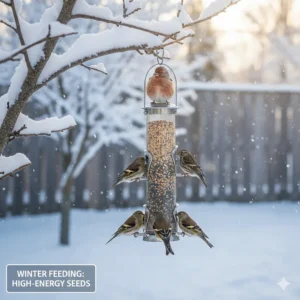
Winter: Prime feeding time! Natural food becomes scarce, and your feeder becomes a crucial energy source. Keep it stocked and clean.
Price vs. Value: Finding Your Sweet Spot
| Budget Tier | Investment | Expected Lifespan | Annual Cost | Best Value Pick |
|---|---|---|---|---|
| Budget | $20-$35 | 2-5 years | $4-18/year | Stokes Topsy Turvy |
| Mid-Range | $40-$60 | 5-10 years | $4-12/year | Aspects Quick-Clean |
| Premium | $65-$90 | 10-20+ years | $3-9/year | Droll Yankees Onyx |
Calculations based on feeder cost divided by expected lifespan. Premium feeders offer best long-term value.
Maintaining Your Finch Feeder: Essential Care Tips
Cleaning Schedule
Every 2-3 weeks: Disassemble completely, wash with warm soapy water, rinse thoroughly, and dry before refilling.
Monthly: Deep clean with 1 part white vinegar to 9 parts water solution. This kills bacteria and removes stubborn seed residue without harsh chemicals harmful to birds.
After heavy rain: Check for wet seed and dump any clumps. Wet Nyjer can mold within days, sickening or killing birds.
Seed Rotation Protocol
Never top off partially full feeders—you’ll bury old seed under fresh, creating a spoilage layer birds can’t reach. Instead, dump remaining seed into a bucket, add fresh seed on top, and refill. If the old seed smells fresh and looks shiny, mix it back in. If it’s dull, dry, or clumped, compost it.
Preventing Disease Transmission
Finches can carry conjunctivitis (House Finch eye disease) that spreads at feeders. Warning signs include swollen, crusty eyes or lethargic behavior. If you spot sick birds:
- Remove feeders immediately
- Clean thoroughly with 10% bleach solution
- Wait 2-3 weeks before rehinging
- Report sightings to your local Audubon chapter
Keep ground areas under feeders raked clean—accumulated shells harbor disease and attract rodents.
Weather Protection
Summer: Position feeders with morning sun exposure but afternoon shade to prevent seed from overheating.
Winter: Remove feeders during ice storms—desperate birds can freeze to wet metal. Bring inside overnight during extreme cold.
Year-round: Add weather domes above feeders to shed rain and snow. These $10-15 accessories dramatically extend seed freshness.
🌟 Transform Your Backyard Today!
🐦 Ready to create a finch paradise? The products featured in this guide represent years of innovation in bird feeder design. Choose your favorite from our Top 7 Expert Picks above and start enjoying daily visits from these beautiful songbirds. Check availability and seasonal discounts now!
Common Finch Feeder Problems (And Solutions)
“No Finches Are Coming!”
Possible Causes:
- Stale or spoiled Nyjer seed (replace immediately)
- Feeder too exposed (move closer to cover)
- Competition from natural food sources (wait for winter)
- New feeder needs discovery time (allow 2-8 weeks)
Solutions: Try spreading Nyjer on a platform feeder initially to help finches discover the new tube feeder. Once they’re comfortable, they’ll transition to the tube. Ensure your seed is fresh—buy from specialty bird stores with high turnover rather than big-box retailers where seed may sit for months.
House Sparrows Dominating
These aggressive birds can monopolize feeders, driving finches away. Combat strategies:
- Switch to upside-down feeders finches love but sparrows hate
- Remove perches entirely (finches cling well; sparrows don’t)
- Use finch-specific feeders with tiny ports sparrows can’t access
- Never offer mixed seed that attracts sparrows
Squirrel Invasion
If squirrels are raiding your current feeder:
- Add baffles above and below the feeder
- Switch to Brome Squirrel Buster or similar weight-activated model
- Apply petroleum jelly to poles (temporary deterrent)
- Install dedicated squirrel feeders elsewhere (distraction technique)
- Accept squirrels as part of the ecosystem and budget accordingly
Seed Spilling and Waste
Excessive spillage usually indicates:
- Wrong seed for your feeder type
- Ports damaged or oversized
- Birds “bill-sweeping” to search for preferred seeds in mixed blends
- Feeder overfilled past recommended capacity
Stick to pure Nyjer in finch feeders—never mixed blends. Ensure ports are intact and properly sized.
Feeder Hanging Crooked
Unbalanced feeders frustrate birds and accelerate wear. Causes include:
- Inferior hanging hardware
- Uneven seed distribution inside
- Wind damage to hanging loop
- Feeder design imbalance
Upgrade to reinforced metal hanging loops and stainless steel cables. Hang from swivel hooks that allow feeders to spin freely, reducing stress on attachment points.
Frequently Asked Questions
❓ How often should I refill bird feeders for finches?
❓ Can I use regular thistle seed instead of Nyjer seed?
❓ What other birds eat from finch feeders besides goldfinches?
❓ Do finch feeders need to be yellow?
❓ How do I keep finch feeders clean during winter?
Conclusion: Creating Your Perfect Finch Feeding Experience
Selecting the right bird feeders for finches transforms your backyard from ordinary to extraordinary. Whether you choose the budget-friendly Perky-Pet mesh design, the high-capacity Droll Yankees Flocker, or invest in the squirrel-proof Brome Squirrel Buster, you’re making an investment in daily joy and connection with nature.
Remember, the most expensive finch bird feeder isn’t necessarily the best—the optimal choice depends on your specific needs, local bird populations, and squirrel situations. Start with one quality finch feeder with perches, maintain it properly with fresh Nyjer seed, and give your local goldfinch population 2-8 weeks to discover this new resource.
The magic happens when you’re sipping morning coffee and suddenly notice a flash of sunshine-yellow perched outside your window, delicately extracting seeds with acrobatic precision. That moment—multiplied across hundreds of peaceful mornings—makes every penny spent on tube style finch feeders worthwhile. The nyjer seed feeders for finches you choose today could bring decades of entertainment, teaching moments for children, and stress relief you didn’t know you needed.
My own journey started with a basic sock feeder seven years ago. Today, I run four different feeders supporting a reliable flock of 20+ goldfinches year-round, plus seasonal visitors like pine siskins and purple finches. The initial investment felt significant, but calculated per day of enjoyment? Pennies. The return on investment—in mental health, education, and pure beauty—defies measurement.
Choose your best finch feeder wisely, maintain it religiously, and prepare for the delightful chaos of a busy finch feeding station. Your backyard birds are waiting!
Recommended for You
- 7 Best Suet Balls for Wild Birds 2026 (No-Melt & Mealworms)
- 7 Best Bird Feeder for Peanuts 2026
- 7 Best Peanuts for Birds 2026: Attract More Species Today
Disclaimer: This article contains affiliate links. If you purchase products through these links, we may earn a small commission at no additional cost to you.
✨ Found this helpful? Share it with your friends! 💬🤗
