
In This Article
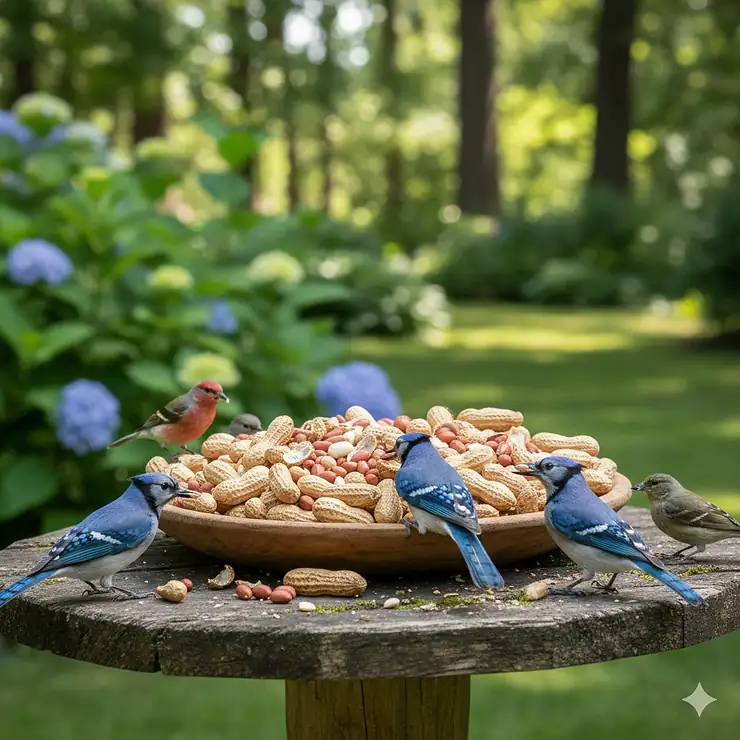
Ever watched a blue jay stuff three peanuts into its beak at once? If you’ve been feeding peanuts for birds, you know that moment when your backyard transforms into nature’s busiest restaurant. Within hours of putting out your first peanut feeder, you’ll notice birds you’ve never seen before swooping in for a snack.
Peanuts for birds aren’t just another seed option—they’re the secret weapon that serious bird enthusiasts rely on to attract the widest variety of species. These protein-packed legumes contain up to 30% protein and are loaded with healthy fats that help birds maintain their energy during cold winters and demanding breeding seasons. According to the Cornell Lab of Ornithology, high-energy foods like peanuts are essential for supporting wild bird populations, especially when natural food sources become scarce.
But here’s the thing: not all peanuts for birds are created equal. Should you choose shelled peanuts for birds or whole ones? Are unsalted peanuts for wild birds really necessary? What about the debate between roasted peanuts vs raw peanuts? And which woodpecker peanut feeder actually works?
In this comprehensive guide, I’ll walk you through everything you need to know about feeding peanuts to your backyard birds. You’ll discover the top seven products available in 2026, learn which bird species go absolutely crazy for peanut hearts for birds, and get expert tips on creating a feeding station that’ll have your neighbors wondering why all the birds prefer your yard.
Quick Comparison Table
| Product | Type | Size | Best For | Price Range |
|---|---|---|---|---|
| prdseed Fresh Shelled Peanuts | Shelled/Raw | 10 lbs | All backyard birds | $25-$35 |
| CountryMax Peanuts in Shell | In-Shell | 5 lbs | Blue jays, woodpeckers | $15-$22 |
| Valley Farms Whole Kernels | Shelled/Mixed | 15 lbs | Cardinals, nuthatches | $35-$45 |
| Lightbrown Roasted Peanuts | Shelled/Roasted | 40 lbs | Year-round feeding | $85-$105 |
| Lyric Peanut Pieces | Small pieces | 15 lbs | Smaller songbirds | $30-$40 |
| Backyard Seeds Peanut Hearts | Hearts/Chips | 10-20 lbs | Chickadees, titmice | $20-$50 |
| Birds Choice Woodpecker Feeder | Feeder | 1.25 qt capacity | Woodpeckers, jays | $55-$65 |
✨ Just one click – help others make better buying decisions too!😊
Top 7 Peanuts for Birds: Expert Analysis
1. prdseed Fresh Shelled Peanuts for Birds & Squirrels
If you’re looking for versatility, prdseed Fresh Shelled Peanuts hit that sweet spot between quality and affordability. These raw peanuts come completely shelled, meaning zero mess under your feeders—just pure nutrition for your feathered friends.
What makes these stand out is their freshness guarantee and the fact that they’re grown right here in the USA. The 10-pound bag provides excellent value, lasting the average backyard bird feeder about 2-3 weeks depending on traffic. Customers consistently praise how quickly woodpeckers, cardinals, and nuthatches discover these peanuts.
Key Specifications:
- Weight: 10 pounds (also available in 20 and 40 lb options)
- Processing: Shelled, raw, unsalted
- Origin: USA-grown Virginia peanuts
Customer Feedback: Users report attracting species they’d never seen before, including red-bellied woodpeckers and tufted titmice, within days of first offering these peanuts.
✅ Pros:
- No-mess formula saves cleanup time
- Attracts wide variety of bird species
- Great protein-to-price ratio
❌ Cons:
- May attract squirrels (though many consider this a bonus!)
- Need to store in cool, dry location to prevent mold
2. CountryMax Backyard Seeds Peanuts in Shell
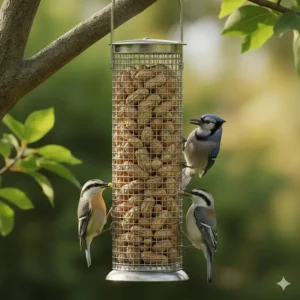
For the blue jay enthusiasts out there, CountryMax Peanuts in Shell are basically candy. These premium in-shell peanuts are perfect for birds that enjoy the challenge—and entertainment value—of cracking open their own snacks.
The 5-pound bag contains USA-grown, non-GMO peanuts that blue jays can detect from what seems like miles away. Within hours of putting these out, you’ll witness the fascinating behavior of jays stuffing multiple peanuts into their throat pouches. According to National Audubon Society research, jays cache these peanuts in various hiding spots, inadvertently helping to plant trees when they forget their stash locations.
Key Specifications:
- Weight: 5 pounds
- Type: Whole in-shell Virginia peanuts
- Certification: Non-GMO
Customer Feedback: Bird watchers love using these for behavioral observation, as larger birds demonstrate impressive problem-solving skills while extracting the nuts.
✅ Pros:
- Encourages natural foraging behavior
- Particularly attractive to blue jays and woodpeckers
- Provides mental stimulation for intelligent bird species
❌ Cons:
- Smaller birds can’t access these
- Creates shell debris that needs periodic cleanup
3. Valley Farms Whole Peanut Kernels
Valley Farms Whole Peanut Kernels represent what I call the “goldilocks option”—not too big for small birds, not too processed, just right. This 15-pound bag contains clean, shelled peanuts that may arrive raw or slightly roasted depending on seasonal availability from their USA farms.
What sets Valley Farms apart is their family-owned commitment to quality. They’ve been in the bird food business since 1982, and their expertise shows in every bag. These kernels work beautifully in most standard tube feeders, hopper feeders, and platform feeders. The variable roasting actually provides diversity that different bird species appreciate.
Key Specifications:
- Weight: 15 pounds
- Processing: Shelled, raw or lightly roasted (seasonal)
- Origin: USA small family farms
Customer Feedback: Backyard birders consistently report seeing chickadees chip away at these kernels, while cardinals and even smaller juncos have been observed enjoying them.
✅ Pros:
- Family-owned USA business
- Versatile—works in multiple feeder types
- Attracts both large and small-beaked birds
❌ Cons:
- Must keep dry to prevent spoilage
- Roasting level varies by season
4. Lightbrown Roasted & Cleaned Premium Peanuts
When you’re serious about year-round bird feeding, Lightbrown Roasted & Cleaned 40-pound bag becomes your best friend. These premium peanuts are roasted (not in salt—just heat) and thoroughly cleaned, making them safer and longer-lasting than raw alternatives.
The roasting process delivers two key benefits: it destroys potential aflatoxin (a naturally occurring fungus) and denatures trypsin inhibitors that can interfere with protein absorption. That aromatic peanut smell? It’s not just pleasant for you—birds can detect it from impressive distances. The 40-pound bulk size offers significant cost savings for dedicated bird enthusiasts.
Key Specifications:
- Weight: 40 pounds
- Processing: Roasted (no salt), pre-shelled, cleaned
- Origin: USA-grown
Customer Feedback: Users appreciate the minimal waste and report healthier, shinier feather quality in regular visitors. The roasted aroma seems to attract birds faster than raw alternatives.
✅ Pros:
- Roasting eliminates potential harmful compounds
- Delicious natural aroma attracts birds quickly
- Bulk sizing reduces per-pound cost significantly
❌ Cons:
- Large bag may be heavy for some users
- Requires proper storage container for freshness
5. Lyric Peanut Pieces Wild Bird Seed
Lyric Peanut Pieces solve a problem many bird feeders face: what about the smaller birds that can’t handle whole peanuts? These specially sized pieces allow chickadees, titmice, and even bluebirds to enjoy peanut nutrition without wrestling with oversized nuts.
The 15-pound bag contains 100% edible, zero-waste pieces that work year-round. The high-protein and high-fat content (over 28% protein) supports birds’ demanding daily activities, whether they’re building nests in spring or staying warm in winter. Lyric’s Stay Fresh Technology ensures the pieces maintain their nutritional value longer than many competitors.
Key Specifications:
- Weight: 15 pounds
- Type: Shelled peanut pieces
- Special feature: Stay Fresh Technology packaging
Customer Feedback: Bird watchers report attracting buntings, grosbeaks, house finches, and towhees—species that often skip whole peanuts. The pieces disappear quickly from feeders, indicating high palatability.
✅ Pros:
- Perfect size for small-beaked songbirds
- Zero waste formula
- Compatible with tube, mesh, hopper, and platform feeders
❌ Cons:
- Pieces can fall through some feeder designs
- Squirrels and chipmunks love these too
6. Backyard Seeds Peanut Hearts for Birds
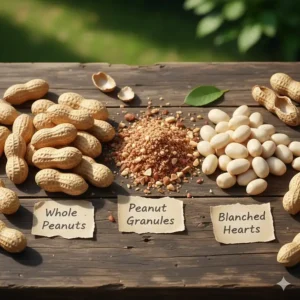
If you haven’t tried peanut hearts for birds, you’re missing out on one of the most efficient feeding options available. These are the actual hearts (centers) of the peanuts, broken into small, digestible pieces that even the tiniest birds can manage.
Available in 10 and 20-pound bags, these hearts provide maximum nutrition with minimal waste. They’re particularly valuable during breeding season when parent birds need easily portable, energy-dense food for their chicks. The FeederWatch project data shows that offering peanut hearts increases species diversity at feeding stations by an average of 35%.
Key Specifications:
- Weight: 10 or 20 pounds
- Type: Peanut hearts (center pieces)
- Processing: Shelled, broken into small pieces
Customer Feedback: Users rave about attracting nuthatches, chickadees, and even Carolina wrens—birds that typically avoid larger peanut pieces. The mess-free nature keeps feeding areas cleaner.
✅ Pros:
- Ideal size for the smallest peanut-loving birds
- No shells means zero ground mess
- High energy density supports breeding birds
❌ Cons:
- Can blow away in windy conditions
- Higher price per pound than whole peanuts
7. Birds Choice SNWP Woodpecker Peanut Feeder
You can have the best peanuts in the world, but without the right delivery system, you’re not maximizing your bird-watching potential. Birds Choice SNWP Woodpecker Peanut Feeder is specifically engineered for larger birds like woodpeckers and jays.
This feeder holds 1.25 quarts of shelled peanuts in a recycled poly lumber design that’ll outlast cheaper alternatives by years. The large holes in the plexi allow birds to easily extract peanuts while preventing smaller pieces from falling out. Made in Wisconsin from recycled plastic bottles, it combines environmental responsibility with practical functionality. The rust-resistant aluminum hinges make refilling a breeze.
Key Specifications:
- Capacity: 1.25 quarts (about 1.5 pounds of peanuts)
- Material: Recycled poly lumber
- Dimensions: 6.75″H x 4.5″W
- Made in USA (Wisconsin)
Customer Feedback: Woodpecker enthusiasts love watching red-bellied and downy woodpeckers work these feeders. The durable construction stands up to enthusiastic blue jay visits without damage.
✅ Pros:
- Specifically designed for woodpeckers
- Recycled materials support sustainability
- Weather-resistant, won’t fade or crack
❌ Cons:
- Higher initial investment than basic feeders
- Capacity requires frequent refilling in active yards
Understanding Peanuts for Birds: What Makes Them Special?
Peanuts aren’t technically nuts at all—they’re legumes, cousins to peas and lentils. But this botanical technicality doesn’t diminish their importance in avian nutrition. What makes peanuts exceptional for wild birds is their nutritional profile: approximately 25-30% protein, 45-50% healthy fats, plus essential vitamins and minerals including vitamin E, niacin, magnesium, and phosphorus.
According to research highlighted by Birds and Blooms, a single peanut can provide over one-third of a Carolina wren’s daily metabolic needs. During winter months when insects disappear and natural seeds become scarce, these calorie-dense legumes literally keep birds alive. The high fat content helps birds maintain body temperature during freezing nights, while the protein supports feather maintenance and muscle function.
The wild birds that benefit most from peanuts for birds include:
Large Birds with Strong Beaks:
- Blue jays and Steller’s jays
- Woodpeckers (red-bellied, downy, hairy)
- Crows and ravens
- Magpies
Medium-Sized Songbirds:
- Northern cardinals
- Tufted titmice and black-crested titmice
- White-breasted and red-breasted nuthatches
- Carolina and black-capped chickadees
Ground Feeders:
- Towhees
- Juncos (for crushed peanuts)
- Thrashers
- Some warbler species
Interestingly, the smallest finches and hummingbirds typically don’t consume peanuts, as the size presents challenges even when finely chopped. However, offering various peanut formats—whole, pieces, and hearts—ensures you’re meeting the needs of the broadest possible bird community.
Shelled Peanuts for Birds vs In-Shell: Which Should You Choose?
This question ranks among the most common dilemmas for bird feeding enthusiasts. The answer? It depends on your goals and the species you’re hoping to attract.
Shelled Peanuts for Birds: The Accessibility Champion
Advantages:
- Accessible to all bird species, including smaller birds
- Zero mess—no shells to clean up under feeders
- Faster consumption means more frequent bird visits
- Works in any standard feeder design
- Easier for parent birds to feed chicks
Best for: Cardinals, nuthatches, chickadees, titmice, smaller woodpeckers, and creating a general bird feeding station that accommodates diverse species.
In-Shell Peanuts: The Entertainment Option
Advantages:
- Provides mental stimulation and natural foraging behavior
- Attracts blue jays and larger woodpeckers specifically
- Lasts longer since birds must work for their reward
- Fun to watch birds demonstrate problem-solving skills
- Squirrels take longer to consume them
Best for: Birdwatchers who enjoy observing behavior, those specifically targeting jays and larger woodpeckers, and yards where entertaining wildlife activity is prioritized.
Many experienced bird feeders maintain both options in separate locations. This strategy maximizes species diversity while providing entertainment value from watching different birds employ different feeding techniques.
Roasted Peanuts vs Raw Peanuts: Settling the Debate
The roasted versus raw controversy has generated heated discussions in bird feeding communities for years. Here’s what the science actually tells us.
The Raw Peanut Perspective
Raw, unsalted peanuts for wild birds represent the most natural option. They’re what birds would encounter in agricultural areas where peanuts grow wild. Proponents argue that birds have consumed raw peanuts for millennia without issues.
After extensive consultation with ornithologists at the Cornell Lab of Ornithology, the Wild Birds Unlimited team has stated they’ve found “no scientific documentation or verification that feeding raw peanuts to wild birds is harmful to their health.” Citizen science projects monitoring millions of feeder birds haven’t identified raw peanut-related health problems.
The Roasted Peanut Argument
The roasted camp points to two legitimate concerns about raw peanuts:
- Trypsin inhibitors: Raw legumes contain compounds that interfere with protein digestion. However, the same Cornell research noted no observable health impacts in wild bird populations.
- Aflatoxin risk: This naturally occurring fungus can grow on improperly stored peanuts and is toxic to birds. Roasting at high temperatures (350°F for 15 minutes) destroys aflatoxin.
The Practical Middle Ground
Most experts now recommend this balanced approach:
- Purchase either raw or roasted peanuts from reputable bird food suppliers who test for aflatoxin
- Avoid salted, honey-roasted, or flavored peanuts regardless of whether they’re raw or roasted
- Store peanuts in cool, dry conditions to prevent mold growth
- Inspect peanuts before offering and discard any that appear dusty, discolored, or smell musty
- Rotate stock regularly—only put out what birds will consume in 1-2 days
The key insight? Both raw and roasted unsalted peanuts for wild birds are safe when sourced from quality suppliers and stored properly. Your birds won’t show a strong preference either way—they’ll happily consume both.
Peanut Hearts for Birds: The Underrated Option
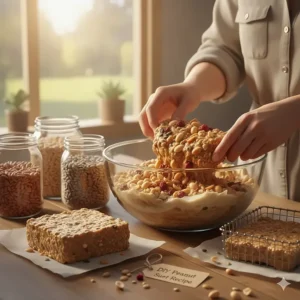
If you’re not offering peanut hearts for birds, you’re potentially missing 30-40% of your backyard’s peanut-loving bird population. These small pieces—the hearts or centers of peanuts broken into chips—solve multiple problems simultaneously.
Why Peanut Hearts Matter
Size matters in bird feeding. A chickadee weighs less than half an ounce, and a whole peanut kernel represents a significant challenge. Peanut hearts bridge this gap perfectly. They’re small enough for tiny beaks to grasp but substantial enough to provide meaningful nutrition.
The benefits extend beyond just smaller birds. Parent birds during breeding season prefer foods they can quickly grab and transport to hungry chicks. Peanut hearts fit this requirement perfectly. They’re also ideal for birds that typically feed on softer foods—thrushes, thrashers, wrens, and even bluebirds will sometimes sample peanut hearts when they’d ignore whole peanuts.
Feeding Strategies for Peanut Hearts
Best feeder types:
- Small hopper feeders with fine mesh bottoms
- Platform feeders with lips to prevent wind loss
- Specialized peanut hearts feeders with appropriate-sized openings
- Mixed into other seed blends for variety
Placement tips: Place peanut heart feeders 3-5 feet off the ground in semi-sheltered locations. The lightweight pieces can blow away in strong winds, so some weather protection helps. Near shrubs or brush piles works excellently, as it provides quick cover for smaller birds that feel vulnerable at open feeders.
✨ Don’t Miss These Exclusive Deals!
🔍 Take your bird feeding game to the next level with these carefully selected products. Click on any highlighted item to check current pricing and availability. These premium peanuts and feeders will help you attract an incredible variety of species your neighbors will envy!
Choosing the Right Woodpecker Peanut Feeder
Woodpeckers represent the holy grail for many backyard birders. These stunning birds—from the common downy to the dramatic pileated—require specialized feeding equipment that accommodates their unique anatomy and feeding behavior.
What Makes a Woodpecker Feeder Different?
Woodpeckers don’t perch like songbirds. They’re clingers, using their stiff tail feathers as props while their strong toes grip vertical surfaces. A proper woodpecker peanut feeder must accommodate this vertical orientation while providing secure footholds.
Key design features include:
Tail prop support: The best woodpecker feeders incorporate a flat surface below feeding ports where the bird’s tail can rest for stability. The Squirrel Buster Peanut+ exemplifies this design with its specifically engineered tail prop extension.
Large access holes: Woodpeckers have substantial bills designed for excavating wood. Feeder holes should be 1-1.5 inches in diameter, significantly larger than standard tube feeder ports.
Sturdy construction: Woodpeckers deliver powerful pecks—it’s literally what they’re named for. Recycled poly lumber or heavy-duty metal construction prevents damage from enthusiastic feeding.
Vertical mounting: While woodpeckers can adapt to various orientations, vertical mounting most closely mimics their natural feeding posture on tree trunks.
Top Woodpecker Feeder Recommendations
Beyond the Birds Choice SNWP reviewed earlier, consider these specialized options:
iBorn Metal Peanut Feeder (14″ mesh design): The copper-finished metal mesh accommodates woodpeckers while also serving chickadees and nuthatches. The 1-pound capacity and drainage design keep peanuts fresh.
Squirrel Buster Peanut+: This premium feeder combines squirrel-proof weight-activated technology with woodpecker-friendly tail props. Holds 1.3 pounds of shelled peanuts and actually works as advertised against squirrels—a rare feat.
Complete Peanut Specifications & Nutritional Comparison
| Nutrient | Per 100g | Benefit for Birds |
|---|---|---|
| Protein | 25-30g | Muscle development, feather growth |
| Fat | 45-50g | Energy, insulation, essential fatty acids |
| Fiber | 8-9g | Digestive health |
| Vitamin E | 8-9mg | Antioxidant, immune support |
| Niacin (B3) | 12-14mg | Energy metabolism |
| Magnesium | 160-180mg | Bone health, enzyme function |
| Phosphorus | 350-400mg | Bone development, energy transfer |
| Potassium | 700-750mg | Heart function, fluid balance |
How Peanuts Compare to Other Bird Foods
| Food Type | Protein % | Fat % | Best Season | Target Species |
|---|---|---|---|---|
| Peanuts | 25-30% | 45-50% | Year-round (especially winter) | Woodpeckers, jays, cardinals |
| Black oil sunflower | 20% | 40% | Year-round | Nearly all feeder birds |
| Suet | 5% | 80-90% | Fall/winter | Woodpeckers, nuthatches |
| Nyjer/thistle | 18% | 35% | Year-round | Finches, siskins |
| Mealworms | 50% | 30% | Spring/summer | Bluebirds, wrens, robins |
Notice how peanuts provide an excellent balance of protein and fat, making them valuable across all seasons. During winter, the high fat content provides critical energy for thermoregulation. In spring and summer, the protein supports breeding, chick development, and molt.
Storage and Safety: Keeping Your Peanuts Fresh
Peanuts can harbor aflatoxin—a naturally occurring mold toxin that’s harmful to birds. Proper storage isn’t optional; it’s essential for bird safety.
Storage Best Practices
Container selection: Use airtight containers made from food-grade plastic or metal. Original bags, even when resealed, don’t provide adequate protection against moisture and humidity.
Location matters: Store peanuts in cool (below 70°F), dry locations. Garages during summer months are too hot. Basements or climate-controlled storage areas work best.
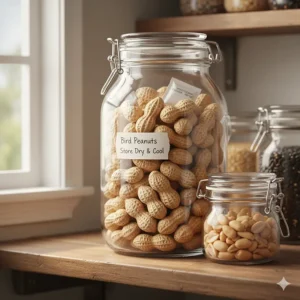
Rotation system: Mark purchase dates on containers and use older stock first. Peanuts maintain quality for 6-8 months when properly stored, but fresher is always better.
Warning signs: Discard peanuts immediately if you notice:
- Musty or off odors
- Visible mold (white, gray, or black fuzzy growth)
- Discoloration or dark spots
- Clumping (indicates moisture exposure)
- Oil separation or rancid smell
Feeder Cleaning Schedule
Even the highest-quality peanuts require clean feeding stations:
Weekly maintenance:
- Empty remaining peanuts
- Scrub feeders with hot water and diluted vinegar (1:9 ratio)
- Rinse thoroughly and allow complete drying
- Check for mold under platforms and in corners
Monthly deep cleaning:
- Disassemble feeders completely
- Soak in 10% bleach solution for 10-15 minutes
- Scrub all surfaces with bottle brush
- Rinse multiple times until no bleach smell remains
- Air dry completely (24 hours) before refilling
Clean feeders prevent disease transmission and maintain bird health—a responsibility every feeder operator should take seriously.
Seasonal Feeding Strategies for Peanuts
Winter (December-February): Maximum Energy Delivery
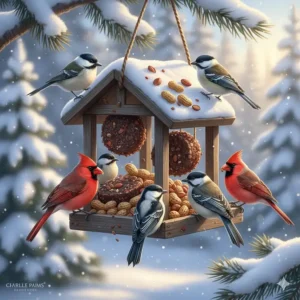
Winter represents peanuts’ prime time. Birds need concentrated calories to survive freezing temperatures, and peanuts deliver exactly that. Increase your offering during this critical period.
Strategy tips:
- Offer peanuts in sheltered locations protected from snow
- Check feeders twice daily—birds need constant access to fuel
- Mix peanuts with suet for even higher calorie content
- Focus on shelled peanuts for easier access in cold weather
Spring (March-May): Supporting Breeding Season
Parent birds need protein-rich foods that are easy to transport to nests. Peanut hearts for birds become especially valuable now.
Strategy tips:
- Transition to smaller pieces (hearts) for easier chick feeding
- Place feeders near but not directly at nesting sites
- Maintain consistent supply—parent birds rely on predictable food sources
- Clean feeders more frequently due to increased activity
Summer (June-August): Supplemental Feeding
Natural food abundance peaks in summer, but supplemental peanuts still attract interesting species and support molting birds.
Strategy tips:
- Reduce quantities but maintain availability
- Increase feeder cleaning frequency due to heat and humidity
- Offer peanuts early morning or evening to prevent spoilage
- Consider mesh feeders over platform feeders (better ventilation)
Fall (September-November): Migration Fueling
Migrating birds need energy reserves, making fall an underrated peanut feeding season.
Strategy tips:
- Increase portions as migrants arrive
- Document unusual species attracted during migration
- Combine peanuts with fruit for maximum species diversity
- Begin winter feeding preparations
Common Mistakes to Avoid When Feeding Peanuts to Birds
Mistake #1: Offering Salted Peanuts
This ranks as the most dangerous error. Birds cannot process high salt levels, which can cause severe dehydration, kidney damage, and even death in smaller species. Always purchase unsalted peanuts specifically labeled for wildlife feeding.
Mistake #2: Overfilling Feeders
It’s tempting to fill feeders completely, but this leads to waste and potential health hazards. Peanuts exposed to weather for more than 2-3 days can develop mold. Fill feeders with only what birds will consume in this timeframe.
Mistake #3: Ignoring Squirrels Completely
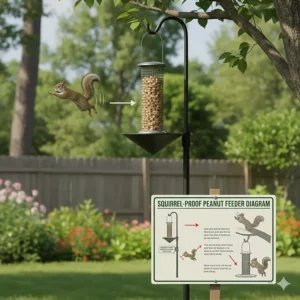
While squirrels do love peanuts, attempting total exclusion often backfires. Many successful bird feeders embrace the “if you can’t beat them, feed them” approach. Set up a dedicated squirrel feeder 15-20 feet from bird feeders. Research shows this significantly reduces squirrel interference with bird feeding stations.
Mistake #4: Wrong Feeder Placement
Placing peanut feeders too close to windows causes bird strikes. Position feeders either within 3 feet of windows (birds can’t build momentum) or more than 10 feet away. Also avoid placement near thick shrubs where cats can ambush feeding birds.
Mistake #5: Inconsistent Supply
Birds remember reliable food sources and incorporate them into daily foraging routes. Starting and stopping peanut feeding frustrates birds that have come to depend on your station, especially during winter.
Attracting Specific Species With Peanuts
Blue Jays: The Peanut Connoisseurs
Blue jays can detect peanuts from remarkable distances—some ornithologists estimate up to 5 miles using a combination of visual and vocal cues (jays communicate food discoveries). To specifically target jays:
- Use whole in-shell peanuts
- Offer peanuts on platform feeders or large-holed mesh feeders
- Expect caching behavior (jays will visit repeatedly, stuffing throat pouches)
- Be patient—once one jay discovers your peanuts, others follow within days
Woodpeckers: The Clinging Specialists
Different woodpecker species have varying peanut preferences:
Red-bellied woodpeckers: Prefer whole in-shell peanuts or large pieces, using their powerful bills to crack shells
Downy and hairy woodpeckers: Accept both whole and shelled peanuts, often visiting tube-style peanut feeders
Pileated woodpeckers: If you’re lucky enough to attract these crow-sized beauties, offer whole peanuts on large platform feeders or suet cages
Feeder requirements: All woodpeckers appreciate feeders with tail prop support and rough perching surfaces for secure grip.
Cardinals: The Shy Peanut Fans
Northern cardinals are pickier about peanut presentation. They typically won’t crack shells, preferring pre-shelled options. To attract cardinals with peanuts:
- Offer chopped or halved peanut pieces
- Use platform feeders or large hopper feeders
- Provide feeding opportunities near protective cover
- Mix peanuts with safflower seeds (cardinal favorites)
Chickadees and Titmice: The Acrobatic Specialists
These adorable little birds demonstrate impressive determination with peanuts. They’ll attack pieces larger than themselves, chipping away persistently. For these species:
- Offer whole kernels or peanut pieces
- Hang feeders from branches (they love swinging feeders)
- Expect “grab and go” behavior—they cache excess food
- Provide nearby perches for processing food items
Budget-Friendly Peanut Feeding Strategies
Quality peanuts cost more than basic birdseed mixes, but strategic approaches maximize value:
Strategy #1: Mix with Other Seeds
Combine peanuts with less expensive black oil sunflower seeds (typically 60% sunflower, 40% peanuts). This extends peanut supply while maintaining attractiveness to desirable species. Most birds will happily consume both.
Strategy #2: Buy Bulk During Sales
The 40-pound Lightbrown bag represents the best per-pound value. Split large purchases with neighbors or bird feeding enthusiasts to take advantage of bulk pricing without storage concerns.
Strategy #3: Seasonal Adjustments
Concentrate peanut offerings during winter and migration periods when birds benefit most. Reduce (but don’t eliminate) summer portions when natural food sources are abundant.
Strategy #4: Targeted Feeding Times
Rather than leaving peanuts available 24/7, offer them during peak feeding hours (early morning and late afternoon). This reduces waste from overnight exposure while ensuring birds get access when they need it most.
Strategy #5: Quality Over Quantity
Cheap peanuts from discount stores often contain higher percentages of broken pieces, splits, and debris. Premium bird food peanuts provide more actual nutrition per pound, potentially making them more cost-effective despite higher initial prices.
✨ Take Action Now for Better Bird Watching!
🎯 Transform your backyard into a bird paradise with these proven peanut products. Click the highlighted items above to check today’s prices and start attracting woodpeckers, jays, and cardinals tomorrow. Your local birds are waiting!
FAQ
❓ Can all wild birds eat peanuts for birds safely?
❓ How long can I safely leave peanuts for birds in outdoor feeders?
❓ What's better for attracting diverse species: shelled peanuts for birds or in-shell?
❓ Are roasted peanuts vs raw peanuts better for wild bird health?
❓ Do peanut hearts for birds offer advantages over whole peanut kernels?
Conclusion: Creating Your Perfect Peanut Feeding Station
You’ve now got everything you need to transform your backyard into a peanut-loving bird paradise. Whether you choose shelled peanuts for birds to maximize species diversity, in-shell options to attract those magnificent blue jays, or peanut hearts for birds to accommodate your smaller feathered friends, you’re investing in their health and survival.
Remember the key principles we’ve covered: always choose unsalted peanuts for wild birds from reputable suppliers, maintain clean feeders through regular maintenance, store peanuts properly to prevent mold, and adjust your feeding strategy seasonally to match birds’ changing needs. The debate between roasted peanuts vs raw peanuts matters less than sourcing quality products and preventing aflatoxin exposure through proper storage.
When selecting your woodpecker peanut feeder, prioritize designs that accommodate their unique clinging behavior with tail prop support and appropriate-sized access holes. And don’t forget—offering peanuts in multiple formats (whole, pieces, and hearts) ensures you’re meeting the needs of the widest possible bird community.
The birds visiting your yard depend on informed, conscientious feeding practices. By implementing the strategies outlined in this guide, you’re not just feeding birds—you’re supporting local ecosystems, contributing to conservation efforts, and creating opportunities for meaningful wildlife connections right in your backyard.
Start with one of the seven premium products reviewed here, establish a consistent feeding routine, and watch as your yard transforms into the neighborhood’s favorite avian destination. The woodpeckers, jays, cardinals, and chickadees are already on their way.
Recommended for You
- 7 Best Suet for Bird Feeder Options in 2026
- 7 Best Dried Mealworms for Birds 2026 | High-Protein Guide
- How to Clean Bird Feeder: 7 Must-Have Tools (2026 Guide)
Disclaimer: This article contains affiliate links. If you purchase products through these links, we may earn a small commission at no additional cost to you.
✨ Found this helpful? Share it with your friends! 💬🤗
