
In This Article
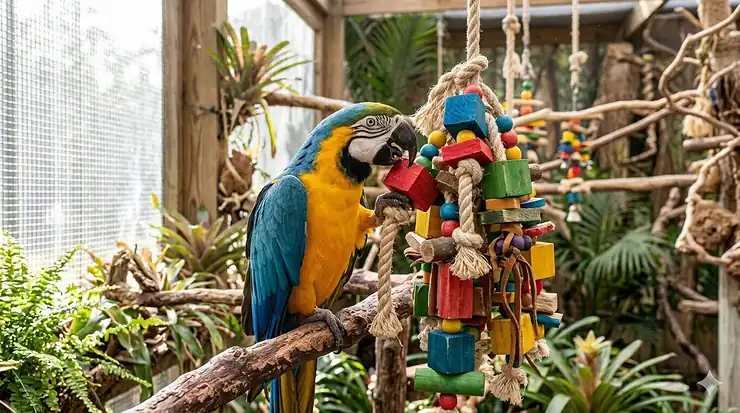
I’ll never forget watching my friend’s Blue and Gold Macaw, Rio, systematically demolish a “heavy-duty” toy in under an hour. The manufacturer promised it would last weeks. That’s when I realized most bird toy recommendations simply don’t account for the sheer destructive power of a macaw’s beak, which can exert over 500 PSI of pressure—enough to crack a Brazil nut like it’s a peanut.
Here’s the uncomfortable truth: if your macaw toys aren’t being destroyed, they’re probably not being used. Macaws are designed to demolish things. In the wild, these magnificent birds spend 60-80% of their day foraging, climbing, and chewing through tough palm nuts and tree bark. Without proper outlets for this natural behavior, you’re looking at screaming, feather plucking, or worse—that heartbreaking apathy where your bird just sits motionless on a perch.
The challenge isn’t finding toys. Walk into any pet store and you’ll see colorful options marketed for “large birds.” The real challenge is finding macaw toys that can withstand those powerful beaks while providing genuine mental stimulation. After testing dozens of options with actual macaw owners and consulting avian behaviorists, I’ve identified the seven toys that truly deliver on durability, enrichment, and value.
Whether you’re dealing with a Hyacinth Macaw who treats wooden blocks like toothpicks or a Green-winged Macaw who’s bored with everything, this guide will help you find cockatoo toys and extra large bird toys that actually stand up to destructive chewers while keeping those brilliant minds engaged.
Quick Comparison Table
| Product | Best For | Durability | Price Range | Key Feature |
|---|---|---|---|---|
| Bonka Bird Toys 1762 Duo Clacker | Heavy chewers | ⭐⭐⭐⭐⭐ | $25-$35 | Stainless steel construction |
| Super Bird Creations SB478 XL | Active climbers | ⭐⭐⭐⭐ | $30-$40 | 24″ multi-level play |
| GATMAHE Natural Wooden Blocks | Budget buyers | ⭐⭐⭐⭐ | $15-$20 | 18″ natural wood variety |
| PINVNBY Wire Link Toy | Power chewers | ⭐⭐⭐⭐⭐ | $18-$25 | Metal chain reinforced |
| BIRD KABOB Especial | Shredders | ⭐⭐⭐ | $8-$12 | Natural yucca wood |
| Bonka Bird Toys 2459 Spinner | Puzzle lovers | ⭐⭐⭐⭐⭐ | $12-$18 | Interactive foot toy |
| Deloky Large Chewing Toy | Value seekers | ⭐⭐⭐⭐ | $16-$22 | 15.7″ multicolored blocks |
💬 Just one click – help others make better buying decisions too! 😊
Top 7 Macaw Toys: Expert Analysis
1. Bonka Bird Toys 1762 Duo Clacker – The Indestructible Champion
When you need toys for big parrots that can withstand nuclear-level destruction, the 1762 Duo Clacker is your answer. This isn’t your average colorful cage decoration—it’s an engineering marvel designed specifically for destructive chewers.
What Makes It Special: This heavyweight contender features stainless steel pots strung through two sturdy 4-way plastic joints on heavy-duty link chains. The pots create satisfying clanging sounds when your macaw manipulates them, providing auditory feedback that keeps birds engaged for hours. The entire structure hangs from a quick-link attachment that makes installation effortless.
Technical Specifications:
- Material: Stainless steel pots, heavy-duty plastic joints
- Weight: 2+ pounds (substantial heft)
- Suitable for: Large Macaws, Cockatoos, African Greys
- Average lifespan: 2-4 months with aggressive chewers
Customer Insights: One verified buyer reported: “This took our energetic male macaw about two months to tear up real well, and he had a lot of fun doing it.” Another noted: “Virtually indestructible—the chain is heavy duty and this toy will last forever compared to wooden alternatives.”
✅ Pros:
- Heavy-duty stainless steel withstands powerful beak toys requirements
- Creates engaging sounds during play
- Easy installation with quick-link system
❌ Cons:
- Higher price point ($25-35)
- Can be noisy during active play sessions
The Bonka Bird Toys 1762 Duo Clacker represents what indestructible bird toys should be. Yes, it costs more upfront, but when you calculate the replacement rate of cheaper toys, this actually saves money over time.
2. Super Bird Creations SB478 XL 4 Way Play – The Activity Center
This isn’t just a toy; it’s a complete avian entertainment complex. Measuring an impressive 24″ x 7″ x 7″, the SB478 XL transforms a boring cage corner into an adventure playground that satisfies multiple behavioral needs simultaneously.
What Makes It Special: Super Bird Creations has been manufacturing bird-safe toys since 1992, and it shows in the thoughtful design. This toy combines colorful pine blocks and hardwood beads in a kaleidoscope arrangement that appeals to macaws’ love of visual stimulation. The multi-level construction encourages climbing, swinging, and chewing—three activities macaws naturally perform in the wild.
Technical Specifications:
- Dimensions: 24″ height x 7″ width
- Materials: Natural pine blocks, hardwood beads, cotton rope
- Bird-safe quick link connector included
- Recommended for: Extra large birds (Amazons, Cockatoos, Macaws)
Customer Insights: Avian veterinarians actually purchase these toys for their own birds, which speaks volumes about safety and quality. One macaw owner shared: “My bird was initially skeptical, but once she started playing, she spent 30+ minutes just exploring the different levels and textures.”
✅ Pros:
- Massive 24″ size provides extended play value
- Multiple textures and colors prevent boredom
- Veterinarian-approved design and materials
❌ Cons:
- Requires substantial cage space
- Moderate destruction rate with aggressive chewers
For birds who love to climb and explore, the Super Bird Creations SB478 XL 4 Way Play delivers incredible value. This is what extra large bird toys should look like—substantial, engaging, and built with genuine understanding of parrot psychology.
3. GATMAHE Macaw Toys Extra Large Natural Wooden Block – Budget Champion
Don’t let the affordable price fool you—this 18-inch natural wood wonder punches well above its weight class. It’s proof that effective cockatoo toys don’t require premium pricing.
What Makes It Special: The GATMAHE toy features multiple textures and shapes across its 18-inch frame, using natural wood blocks that maintain environmental authenticity. The unique design allows macaws to gnaw, climb, hang, and explore simultaneously. Natural wood coloring appeals to birds’ instincts without artificial dyes.
Technical Specifications:
- Size: 18″ length (substantial for the price)
- Materials: 100% natural wood blocks, braided rope
- Weight: 1.54 pounds
- Suitable for: Macaws, Eclectus, African Greys, Cockatoos
Customer Insights: Buyers consistently praise the size-to-price ratio. One African Grey owner noted: “Wonderful bird toy—my Grey loves this toy. She chews it, climbs all over it.” However, several macaw owners mentioned: “Great toy for a Macaw but only lasts 3 days” with aggressive chewers.
✅ Pros:
- Outstanding value for size ($15-20)
- Natural materials appeal to bird instincts
- Multiple layers encourage exploration
❌ Cons:
- Shorter lifespan with heavy chewers (3-7 days)
- Some customers report chemical smell upon arrival
The GATMAHE Natural Wooden Block toy is perfect for budget-conscious owners who understand toys are consumable items. Buy several at this price point and rotate them—your bird gets variety without breaking your budget.
4. PINVNBY Wood Parrot Toys Wire Link Durable – The Heavy-Duty Hybrid
This is what happens when someone actually listens to macaw owners’ complaints about toy durability. The PINVNBY toy combines natural chewing materials with metal reinforcement—addressing both enrichment and longevity in one clever package.
What Makes It Special: The metal chain design greatly enhances playability and durability. Even large parrots struggle to break the wire links while climbing, creating extended interactive playtime. Natural wooden blocks provide the chewing satisfaction macaws crave, while the metal infrastructure keeps the toy intact longer.
Technical Specifications:
- Dimensions: 11.02″ x 6.3″ (compact but robust)
- Materials: Natural Sichuan pepperwood blocks, stainless steel wire links
- Weight: 1.01 pounds
- Metal quick-link hook for secure hanging
Customer Insights: The combination of durability and natural materials receives consistent praise. Buyers note that while the wooden elements get destroyed (as intended), the metal framework maintains structural integrity, allowing the toy to remain cage-mounted even after heavy use.
✅ Pros:
- Wire link construction dramatically increases lifespan
- Natural wood satisfies chewing instincts
- Perfect size for toys for big parrots without overwhelming smaller cages
❌ Cons:
- More expensive than all-wood alternatives
- Wooden components still require eventual replacement
The PINVNBY Wire Link Toy represents smart engineering for powerful beak toys. It acknowledges that destruction is inevitable while maximizing the time between replacements—exactly what experienced macaw owners want.
5. BIRD KABOB Especial – The Shreddable Favorite
Sometimes the best toys are the simplest. BIRD KABOB has been described as “catnip for birds” for over 30 years, and watching a macaw attack one explains why immediately.
What Makes It Special: Made from soft, pithy Agave-Yucca wood, this toy satisfies birds’ instinctual need to chew and shred in ways that harder toys cannot. The loop-shaped colored discs are arranged in a way that encourages progressive destruction—birds systematically work through layers, providing sustained engagement.
Technical Specifications:
- Material: 100% natural Agave-Yucca wood
- Size: Especial size (8-10 inches)
- Biodegradable and earth-friendly
- Heat-treated for safety
Customer Insights: Veterinarians recommend BIRD KABOB for birds with feather-picking problems because it provides such satisfying outlets for destructive energy. The soft texture allows even birds with beak injuries to chew safely. Multiple buyers call it “legendary among bird lovers worldwide.”
✅ Pros:
- Exceptionally affordable ($8-12)
- Veterinarian-recommended for behavioral issues
- Completely biodegradable and sustainable
❌ Cons:
- Shortest lifespan (1-3 days with active chewers)
- Requires frequent replacement
- Provides shredding but limited climbing/manipulation
The BIRD KABOB Especial isn’t meant to last—it’s meant to be destroyed, and that’s precisely its value. Keep several on hand for rotation, and you’ll have the perfect outlet for those destructive urges at a price that makes sense.
6. Bonka Bird Toys 2459 Swivel Ball Spinner – The Mental Workout
Not all enrichment comes from destruction. The 2459 Mini Ball Spinner proves that puzzles and manipulation can be just as engaging as chewing—especially for those brilliant macaw minds that solve problems faster than you can present them.
What Makes It Special: This colorful spinner features durable, rigid plastic construction that withstands enthusiastic beaks and claws. The swivel mechanism creates unpredictable movement patterns that keep birds engaged through variable reinforcement. At 4″ high by 5″ wide, it’s sized perfectly as a foot toy or cage attachment.
Technical Specifications:
- Dimensions: 4″ height x 5″ width
- Material: Tough, rigid, bird-safe plastic
- Suitable for: Medium to large birds (African Greys, Amazons, Macaws)
- Interactive spinning and pecking features
Customer Insights: Owners appreciate how this toy addresses mental stimulation rather than just physical activity. One buyer noted: “My macaw spends 10-15 minutes just trying to figure out how to make it spin the way he wants—that’s priceless mental exercise.”
✅ Pros:
- Provides crucial mental stimulation
- Durable plastic stands up to beaks
- Bright colors captivate visual interest
❌ Cons:
- Less suitable for birds who only enjoy chewing
- May not appeal to all personality types
The Bonka Bird Toys 2459 Swivel Ball Spinner fills a critical niche in your toy rotation. Pair it with destructible toys to create a balanced enrichment program that exercises both body and mind.
7. Deloky Large Bird Parrot Chewing Toy – The Value Package
Closing our list is a toy that proves “value” doesn’t mean “cheap.” The Deloky Large Chewing Toy delivers impressive size, variety, and durability at a mid-range price that makes it accessible to more bird owners.
What Makes It Special: At 15.7″ x 9.8″, this multicolored natural wooden block toy provides substantial chewing territory without the premium price tag. The variety of wood types and shapes keeps birds engaged as they discover different textures and densities. Natural wood coloring and edible pigments ensure safety during extended chewing sessions.
Technical Specifications:
- Dimensions: 15.7″ x 9.8″ (impressive size)
- Materials: Natural wooden blocks, colored with edible pigments
- Weight: Approximately 1.5 pounds
- Quick-link attachment for easy installation
Customer Insights: With over 1,460 customer reviews, this toy has proven itself across countless households. Buyers consistently mention the “great value for size” and appreciate that their macaws, cockatoos, and African Greys remain engaged for extended periods. Several noted it holds up better than similarly priced alternatives.
✅ Pros:
- Excellent size-to-price ratio ($16-22)
- Variety of wood types prevents boredom
- Edible pigments ensure safe chewing
❌ Cons:
- Moderate durability (7-14 days with aggressive chewers)
- Some variation in quality between batches
The Deloky Large Bird Parrot Chewing Toy represents the sweet spot between budget and quality. It’s substantial enough to satisfy destructive chewers while remaining affordable enough to replace regularly—exactly what practical macaw ownership requires.
✨ Don’t Miss These Exclusive Deals!
🔍 Take your macaw enrichment to the next level with these carefully selected products. Click on any highlighted item to check current pricing and availability. These toys will help you create authentic mental stimulation your feathered friend will love!
Understanding Your Macaw’s Destructive Nature
Before we dive deeper into selection criteria, let’s address the elephant—or rather, the macaw—in the room. That expensive toy you bought last week that’s now scattered across the cage floor? That’s not a failure. That’s success.
Macaws evolved over millions of years to be nature’s demolition experts. Their curved, powerful beaks can exert crushing force that would make a hydraulic press jealous. In their native rainforest habitats across Central and South America, macaws spend their days cracking open the toughest nuts on earth—Brazil nuts, palm nuts, and seeds encased in shells that would require a hammer for humans to open.
Research in avian behavior demonstrates that birds spend 60-80% of their waking hours foraging and problem-solving in the wild. Without this mental and physical stimulation, captive parrots often develop stress-related issues including feather plucking, excessive screaming, and self-harming behaviors.
Think of toys as consumable items, not permanent cage furniture. A destroyed toy represents hours of appropriate behavioral outlet. A pristine toy collecting dust? That’s the real waste of money.
The Hidden Costs of Cheap Toys (And Why They’re Actually More Expensive)
I’ve seen countless macaw owners fall into this trap. They buy three $5 toys thinking they’re being budget-conscious, only to watch their bird demolish all three in a single afternoon. Then they’re back at the pet store, frustrated and $15 poorer, wondering why “heavy-duty” toys crumble like tissue paper.
Here’s the uncomfortable math: A $8 toy that lasts two days costs $4 per day. A $25 toy that lasts two weeks? That’s $1.78 per day. The “expensive” toy is actually 55% cheaper when you calculate cost per entertainment hour.
But price isn’t the only consideration. Cheap toys often contain hidden dangers:
Materials Matter: Low-quality toys may use toxic dyes, unsafe plastics, or wood treatments that pose serious health risks. Macaws don’t just chew toys—they ingest wood particles. Those colorful wooden blocks? Your bird is essentially eating whatever dye was used. Reputable manufacturers like Bonka Bird Toys and Super Bird Creations use only bird-safe, edible coloring and natural materials.
Construction Quality: Poorly constructed toys can trap feet, beaks, or heads in gaps that seem safe but aren’t. Metal parts should be stainless steel, not zinc-coated hardware that causes heavy metal poisoning. Rope ends should be finished properly to prevent string ingestion, which can cause deadly crop impaction.
Appropriate Sizing: A toy marked “for large birds” might be sized for an Amazon Parrot, not a Hyacinth Macaw. That 8-inch toy becomes a choking hazard when your bird breaks off a chunk and tries to swallow it whole. Always choose extra large bird toys specifically tested for macaw-sized beaks.
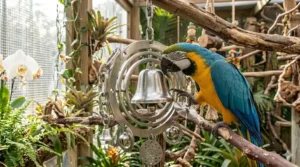
How to Choose Macaw Toys: 7 Science-Backed Selection Criteria
After consulting with avian behaviorists and reviewing hundreds of customer experiences, I’ve identified seven critical factors that separate genuine indestructible bird toys from marketing hype:
1. Material Durability Score
Not all “natural wood” is created equal. Soft balsa wood serves a purpose—quick destruction for satisfying shredding—but shouldn’t be your only toy type. Look for hardwood alternatives:
- Hardwoods (maple, oak, ash): 7-14 day lifespan with aggressive chewers
- Medium woods (pine, birch): 3-7 day lifespan
- Soft woods (balsa, yucca): 1-3 day lifespan (by design)
- Stainless steel/acrylic: Months to years, depending on design
The best toy collections include variety. A bird who only gets balsa learns nothing about working through challenging materials. A bird who only gets steel misses the satisfying destruction their beak craves.
2. Complexity and Enrichment Value
Simple toys bore intelligent minds. Research shows that captive birds require cognitive enrichment toys to maintain neuroplasticity and emotional well-being. The best macaw toys incorporate multiple engagement types:
- Physical manipulation (spinning parts, moveable components)
- Foraging opportunities (hidden treats, puzzle elements)
- Destruction outlets (chewable components)
- Climbing features (ropes, chains, multiple levels)
A toy that only offers one type of engagement provides only partial enrichment. Look for designs that challenge your bird in multiple ways simultaneously.
3. Size Appropriateness
This seems obvious, but it’s commonly misunderstood. “Large bird toy” is marketing language, not a reliable size indicator. For macaws specifically:
- Minimum hanging length: 12 inches
- Recommended length: 15-24 inches
- Component size: Large enough that your bird cannot swallow whole pieces
- Weight capacity: Toys should support your bird’s full weight if they hang/climb on it
Toys for big parrots should feel substantial. If you can easily hold the entire toy in one hand, it’s probably too small for a macaw.
4. Safety Engineering
Veterinary experts emphasize that safety must always come first in bird toy selection. Even well-intentioned owners overlook critical safety factors:
Quick-release connections: Panic-snap hooks and quick-links allow rapid removal if your bird becomes entangled. Never use closed rings or non-removable attachments.
Rope specifications: Natural fibers (cotton, sisal) only. Synthetic ropes can cause crop impaction when ingested. Check ropes weekly for fraying, and replace when ends become stringy.
Metal specifications: Only stainless steel, nickel-plated, or powder-coated metals. Avoid zinc, lead, and brass, which cause heavy metal toxicity. When in doubt, invest in a metal testing kit ($15) from a parrot supply store.
Gap measurements: Any opening should be either too small for your bird’s head to enter (less than 1 inch) or large enough that head, neck, and body pass through easily (over 4 inches for macaws). The 1-4 inch range is the danger zone.
5. Engagement Lifespan vs. Physical Lifespan
Here’s a distinction many toy guides miss: A toy’s physical survival isn’t the only measure of value. Some toys lose interest value long before physical destruction. Parrot enrichment research confirms that environmental variety and novelty are crucial for maintaining engagement, even with durable toys.
A stainless steel toy might last six months physically but bore your bird after two weeks. That’s a failed toy, regardless of durability. Conversely, a shreddable toy destroyed in three days but played with intensely every day? That’s a success.
Look for sustained engagement indicators:
- Multiple textures and materials
- Variable difficulty levels (some parts easy to destroy, some challenging)
- Changeable configurations (toys you can rebuild or add to)
- Novelty potential (can you hide treats inside, wrap in paper, etc.)
6. Price-to-Value Ratio
Calculate entertainment value using this formula:
Daily cost = (Purchase price) ÷ (Days of active engagement)
A $30 toy used enthusiastically for 20 days costs $1.50 per day. A $12 toy ignored after day 2 costs $6 per day. Budget-friendly doesn’t mean cheapest price—it means best value.
Additionally, consider versatility. Toys that can be refreshed with foraging paper, restrung with treats, or modified with additional components extend value beyond initial purchase.
7. Brand Reputation and Customer Feedback
Established manufacturers like Bonka Bird Toys, Super Bird Creations, and BIRD KABOB have decades of experience and accountability. They understand macaw needs, employ avian consultants, and maintain consistent quality standards.
When evaluating customer reviews, look for:
- Specific details about bird species and personality
- Timeframes (how long did it last?)
- Safety incidents reported (or notably absent)
- Repeat purchase patterns (do buyers come back for more?)
Be skeptical of generic “great toy” reviews without context. The most valuable reviews come from experienced macaw owners who compare new toys to previous purchases.
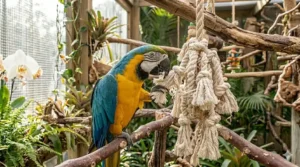
Toy Rotation: The Secret Weapon Against Boredom
Even the best indestructible bird toys lose appeal through familiarity. Rotating toys every one to two weeks maintains a fresh environment and engagement, mimicking the ever-changing conditions birds experience in the wild.
Here’s the rotation strategy that consistently works:
The Core Collection Method: Maintain 12-15 toys in your total collection. Keep 4-5 in the cage at any time, rotating out 2-3 toys weekly. Store removed toys out of sight for 3-4 weeks before reintroducing them. To your bird, that toy becomes “new” again.
Strategic Timing: Introduce new or rotated toys when your bird is most active—typically morning and late afternoon. Never introduce toys during sleep or low-energy periods when birds may react fearfully.
Placement Variety: Don’t always hang toys in the same locations. Moving familiar toys to new cage positions creates novelty and encourages exploration of underused cage areas.
The 60-20-20 Rule:
- 60% of toys should be age-appropriate and bird-tested favorites
- 20% should be new purchases or challenging toys
- 20% should be DIY or supplemental items (cardboard, safe branches, paper)
Beyond Toys: Creating a Comprehensive Enrichment Environment
While this guide focuses on purchased cockatoo toys and macaw toys, complete enrichment extends beyond commercial products. The most satisfied macaws enjoy environments that stimulate all their senses:
Auditory Enrichment: Play nature sounds, bird calls, or music during the day. Many macaws enjoy singing along to familiar songs, strengthening the human-bird bond while providing vocal exercise.
Visual Stimulation: Position cages near windows (but not in direct sun) where birds can observe outdoor activity. Hang colorful, safe objects that move gently in air currents. Consider rotating natural branches with leaves and bark intact.
Foraging Opportunities: Wild parrots spend 50-70% of their day foraging for food, involving searching, choosing, and manipulating food with feet and beaks. According to the RSPCA’s bird enrichment guidelines, helping birds experience similar foraging patterns in captivity significantly improves their wellbeing. Hide treats inside paper bags, wrap nuts in newspaper, or place food bowls in different locations daily.
Social Interaction: You are your bird’s most important toy. No purchased product can replace daily interaction, training sessions, and out-of-cage time. Even 15 minutes of dedicated attention makes more difference than expensive toys alone.
Physical Exercise: Encourage flight in safe, supervised spaces. Install climbing opportunities outside the cage. Create foraging challenges that require physical problem-solving.
Red Flags: Toys to Avoid for Macaw Safety
Not everything marketed for “large birds” is safe for powerful beak toys requirements. Watch for these warning signs:
❌ Brittle Plastics: Cheap acrylic or thin plastic pieces shatter under macaw pressure, creating sharp edges and swallowable fragments. Only purchase thick, impact-resistant, bird-grade plastics.
❌ Small Components: Bells smaller than 2 inches, beads under 1 inch diameter, or any component that could fit entirely in your macaw’s beak pose choking hazards.
❌ Cotton Rope Toys Without Maintenance: While natural cotton rope is safe when new, frayed rope becomes dangerous. Inspect weekly and replace when ends fray beyond 1 inch.
❌ Toys With Closed Rings: Split rings, jump rings, or welded rings can trap toes, beaks, or tongues. Only purchase toys with quick-links or panic snaps that open under pressure.
❌ Unknown Wood Sources: Some imported toys use tropical hardwoods treated with pesticides or preservatives. Stick with manufacturers who specify wood source and treatment (or lack thereof).
❌ Leather Treated with Tanning Chemicals: Natural vegetable-tanned leather is safe. Chrome-tanned or chemically treated leather can be toxic. When in doubt, skip leather components entirely.
DIY vs. Commercial: Finding the Right Balance
Commercial toys provide quality assurance, safety testing, and engineered durability. DIY toys offer customization, cost savings, and the satisfaction of creating personalized enrichment. The smart approach combines both.
Excellent DIY Supplements:
- Clean, pesticide-free branches from safe trees (apple, willow, elm)
- Cardboard boxes stuffed with shredded paper
- Paper bags with treats hidden inside
- Pine cones baked to sterilize (200°F for 20 minutes)
- Clean, empty paper towel rolls
What Not to DIY:
- Anything requiring metal fasteners (risk of toxic metals)
- Complex hanging toys (engineering failures can cause injury)
- Items with small parts that could detach
- Anything involving glue, paint, or chemicals
The best enrichment programs use commercial toys as the foundation, supplemented with rotating DIY items that provide variety and novelty.
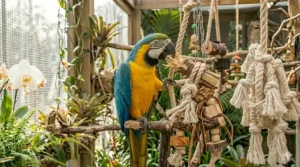
Frequently Asked Questions
❓ How many macaw toys should be in the cage at once?
❓ What is the best material for toys for big parrots with powerful beaks?
❓ How long should indestructible bird toys actually last?
❓ Are cockatoo toys suitable for macaws too?
❓ What toys help destructive chewers the most?
Conclusion: Investing in Your Macaw’s Mental Health
Choosing the right macaw toys isn’t about finding products that last forever—it’s about providing appropriate, engaging, and safe outlets for your bird’s natural behaviors. The seven toys featured in this guide represent the best options currently available in 2026, each addressing specific needs for different macaw personalities and owner budgets.
Remember that toys are consumable items, not permanent cage furniture. Budget for regular toy replacement just as you budget for food and veterinary care. A well-enriched macaw is a healthier, happier bird with fewer behavioral problems and a stronger bond with their human family.
Whether you choose the virtually indestructible Bonka Bird Toys 1762 Duo Clacker, the budget-friendly GATMAHE Natural Wooden Blocks, or the classic BIRD KABOB Especial, the key is providing variety, rotation, and consistent engagement opportunities.
Your macaw’s powerful beak and brilliant mind deserve enrichment that matches their capabilities. The investment in quality toys pays dividends in reduced veterinary costs, prevented behavior problems, and most importantly, a companion who thrives rather than merely survives in captivity.
Start with 2-3 toys from this list that match your bird’s personality, establish a rotation schedule, and supplement with DIY enrichment. Within weeks, you’ll see the difference in your macaw’s energy, engagement, and overall demeanor.
Recommended for You
- 7 Best African Grey Toys in 2026: Intelligence-Tested Picks
- 7 Best Medium Bird Toys That Keep Parrots Happy in 2026
- 7 Best Small Bird Toys in 2026: Keep Your Finch Happy
Disclaimer: This article contains affiliate links. If you purchase products through these links, we may earn a small commission at no additional cost to you.
✨ Found this helpful? Share it with your friends! 💬🤗
