
In This Article
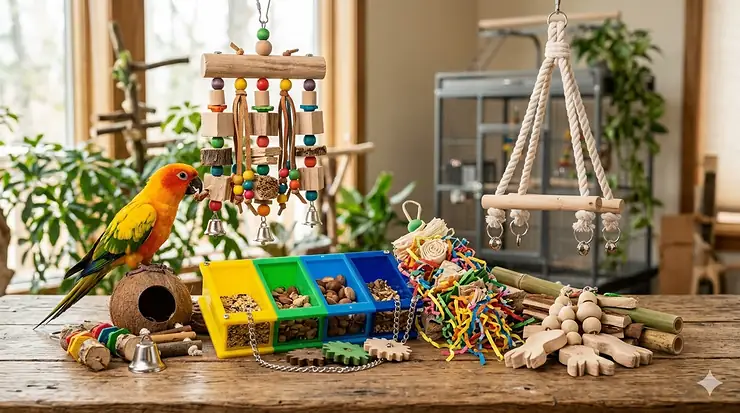
I’ve watched countless medium-sized parrots transform from listless cage-sitters into vibrant, engaged companions once their owners discovered the right toys. The truth is, medium bird toys aren’t just colorful distractions hanging in a cage—they’re essential tools for preventing destructive behaviors, maintaining mental health, and mimicking the natural foraging activities these intelligent creatures crave.
Medium parrots like quakers, conures, caiques, and sun conures spend up to 80% of their waking hours in the wild foraging, problem-solving, and exploring their environment. Without proper enrichment, these brainy birds develop serious behavioral issues including feather plucking, excessive screaming, and even self-harm. The right medium bird toys bridge this gap between captivity and natural behavior, offering the cognitive challenges these parrots desperately need.
What makes a toy “medium-sized” anyway? We’re talking about toys designed for parrots weighing between 100-300 grams with beak strength that can demolish balsa wood in minutes but aren’t quite ready for the heavy-duty hardware meant for macaws. These toys need that sweet spot of durability without being impossibly tough, providing satisfying resistance while still being shreddable enough to feel rewarding.
Quick Comparison Table
| Product Name | Best For | Price Range | Durability | Key Feature |
|---|---|---|---|---|
| ZBIAOJNU Natural Wood Toy | All medium parrots | $15-20 | High | Multi-colored wood blocks |
| Napiass Cotton Rope Toy | Active climbers | $12-18 | Medium | Colorful rope with bells |
| Rwigeboo Metal Bike Toy | Intelligence training | $8-12 | Very High | Interactive metal design |
| Jevnd 20-Piece Foraging Set | Mental stimulation | $18-25 | Medium | Natural materials variety |
| GiggleGrip Pine Wood Blocks | Heavy chewers | $14-19 | High | 10-pack natural pine |
| BShasrlim Foraging Box | Puzzle lovers | $10-16 | Medium | Rattan shredding box |
| DBNESS Wood & Pine Cone | Beak grinding | $11-15 | Medium | Natural textures |
💬 Just one click – help others make better buying decisions too! 😊
Top 7 Medium Bird Toys: Expert Analysis
1. ZBIAOJNU Natural Wood Bird Toy
This multicolored chewing paradise has become my go-to recommendation for medium parrot owners who want one toy that does it all. The 16.9-inch hanging design features natural wood blocks in vibrant, food-safe colors that instantly catch a parrot’s attention.
Key Specifications:
- Dimensions: 3.9 x 3.9 x 16.9 inches
- Weight: 1.07 pounds
- Released: February 2026
What sets this toy apart is the variety of wood densities mixed throughout. Softer balsa chunks provide quick gratification while harder pine blocks offer longer-term engagement. Owners report their sun conures and caiques stay engaged with this toy for weeks, not days like cheaper alternatives.
Customer Feedback: Users consistently praise how well this holds up against aggressive chewers. One quaker parrot owner mentioned their bird finally stopped screaming after installing this toy, spending hours dismantling the colorful blocks instead.
✅ Pros:
- Multiple wood types keep birds interested
- Food-grade dye is completely safe
- Suitable for aggressive chewers
❌ Cons:
- Larger pieces may intimidate smaller conures initially
- Color fading occurs with water exposure
Price: $15-20 | Best for: African Greys, Conures, Eclectus parrots
2. Napiass Cotton Rope Chew Toy
Rope toys get a bad reputation because of fraying hazards, but this 16-inch design addresses those concerns beautifully. The tightly-woven cotton strands provide hundreds of individual fibers for preening while the integrated wooden blocks and bells create a multi-sensory experience.
Key Specifications:
- Length: 16 inches
- Material: Natural cotton rope with wood blocks
- Released: January 2026
This toy excels at encouraging natural climbing and hanging behaviors. Caiques especially love flipping upside-down while working on the rope segments. The stainless steel quick-connect makes rotation effortless—swap it out weekly to maintain novelty.
Customer Feedback: Parents of energetic parrots report this toy survives surprisingly long. One caique owner said it lasted three weeks before needing replacement, impressive considering their bird destroys most toys within days.
✅ Pros:
- Encourages climbing and acrobatic play
- Multiple textures in one toy
- Secure stainless steel hardware
❌ Cons:
- Requires regular inspection for fraying
- Not ideal for extreme chewers who ingest rope
Price: $12-18 | Best for: Cockatiels, Conures, Caiques, Senegals
3. Rwigeboo Metal Bike Parrot Toy
Don’t let the novelty fool you—this metal bicycle toy is a legitimate intelligence training tool disguised as entertainment. The 5.91 x 4.72-inch bike can be pushed, pulled, and manipulated, teaching coordination while building problem-solving skills.
Key Specifications:
- Dimensions: 5.91 x 4.72 x 3.94 inches
- Material: Bird-safe metal
- Released: January 2026
I’ve seen reluctant players transform into trick-performing showbirds after mastering this toy. The metal construction withstands even the most aggressive beaks while the moving parts maintain interest far longer than static toys. Perfect for birds who get bored easily or need cognitive challenges beyond simple chewing.
Customer Feedback: Training-focused owners love this for teaching new behaviors. Multiple reviews mention successfully teaching their quakers and conures to push the bike on command, strengthening the human-bird bond through shared activities.
✅ Pros:
- Indestructible metal construction
- Teaches tricks and coordination
- Suitable for all medium parrot sizes
❌ Cons:
- No chewing satisfaction for destructive birds
- Smaller than it appears in photos
Price: $8-12 | Best for: Quakers, Caiques, training-focused owners
4. Jevnd 20-Piece Bird Foraging Toy Set
This comprehensive foraging collection arrived at my doorstep and immediately solved the “what toy should I buy next?” dilemma. With 20 natural chew items plus a hanging basket, chains, and rattan accessories, you’re essentially getting a starter pack of enrichment.
Key Specifications:
- Includes: 1 basket, 3 chains, 16 natural items
- Materials: Loofah slices, pinecones, sola balls
- Released: January 2026
The beauty lies in the variety—different textures meet different needs. Loofah provides soft shredding, pinecones offer crunchy satisfaction, and sola balls give that perfect lightweight destruction experience. Fill the basket with pellets or treats and watch your parrot problem-solve for hours.
Customer Feedback: Budget-conscious owners appreciate getting multiple toy options in one purchase. Reviewers consistently mention rotating items keeps their birds interested for months, making this an exceptional value compared to buying individual toys.
✅ Pros:
- Massive variety in one package
- Natural, undyed materials
- Great value for rotating enrichment
❌ Cons:
- Some pieces too small for larger conures
- Basket handle may not survive aggressive chewers
Price: $18-25 | Best for: Cockatiels, budgies, small conures, parakeets
5. GiggleGrip 10-Pack Pine Wood Blocks
Sometimes simplicity wins, and these natural pine blocks prove it. While other manufacturers use soft balsa that disintegrates immediately, GiggleGrip chose harder pine that provides genuine beak conditioning while lasting significantly longer.
Key Specifications:
- Quantity: 10 blocks
- Material: 100% natural untreated pine
- Released: January 2026
These blocks solve the eternal problem of birds who need to chew but burn through expensive toys in hours. The pine’s moderate hardness creates satisfying resistance without frustrating smaller beaks. Use them as foot toys, thread them onto existing toys, or hang them individually—the versatility is remarkable.
Customer Feedback: Practical owners who hate waste love these. One review mentioned their sun conure works on a single block for a full week, making the 10-pack last over two months. The consistent quality across all blocks means no duds in the package.
✅ Pros:
- Exceptional durability-to-price ratio
- Pure natural wood, no treatments
- Versatile use as foot or hanging toys
❌ Cons:
- No color variety may bore some birds
- Harder wood challenges smaller beaks
Price: $14-19 | Best for: Budget-conscious owners, heavy chewers, DIY toy makers
6. BShasrlim Natural Rattan Foraging Box
This woven rattan box transforms feeding time into an engaging puzzle that taps into your parrot’s foraging instincts. The medium size hits the perfect balance for quakers and conures—not so large it’s intimidating, not so small it’s solved instantly.
Key Specifications:
- Size: Medium (suitable for 1-2 birds)
- Material: Natural rattan weave
- Released: January 2026
I appreciate how this toy teaches persistence. Birds must work through the woven exterior to access treats hidden inside, mimicking the effort required to extract seeds from tough seed pods in nature. The rattan texture also provides excellent beak conditioning as birds pull apart the fibers.
Customer Feedback: Foraging enthusiasts report their birds spend 30-45 minutes investigating this box during first exposure. One owner noted their previously screaming caique became noticeably calmer after adding foraging boxes like this to the daily routine.
✅ Pros:
- Encourages natural foraging behavior
- Natural materials safe for ingestion
- Reusable by restuffing with new materials
❌ Cons:
- Determined chewers destroy it quickly
- May need guidance for foraging-inexperienced birds
Price: $10-16 | Best for: Parakeets, cockatiels, conures, lovebirds
7. DBNESS Wood Blocks & Pine Cone Toy
Combining colorful wooden blocks with natural pine cones creates a texture party that medium parrots find irresistible. The 2-piece set provides variety without overwhelming cage space, perfect for owners managing smaller enclosures.
Key Specifications:
- Quantity: 2 hanging toys
- Materials: Wood blocks and natural pine cones
- Released: Early 2026
The pine cone element deserves special mention—these natural treasures provide unmatched shredding satisfaction while being completely safe if ingested. Combined with the harder wood blocks, you get quick-destruction options alongside longer-lasting elements, keeping birds engaged at different activity levels.
Customer Feedback: Owners of multiple birds appreciate getting two toys in one purchase. Reviews mention how different birds in the same cage gravitate toward different elements, reducing competition while maximizing engagement.
✅ Pros:
- Natural textures birds instinctively recognize
- Two toys provide rotation options
- Great for beak grinding and conditioning
❌ Cons:
- Pine cones may shed debris
- Wood blocks smaller than some competitors
Price: $11-15 | Best for: Budgies, cockatiels, caiques, conures
Understanding Medium Parrot Enrichment Needs
Medium parrots occupy a fascinating cognitive space in the avian world. Research in avian cognition shows these birds possess problem-solving abilities comparable to young primates, yet their enrichment needs often get overlooked compared to their larger macaw cousins or tiny budgie friends.
The term medium parrot enrichment encompasses more than just physical toys. It includes cognitive challenges, social interaction opportunities, and foraging experiences that engage both body and mind. Studies demonstrate that parrots in enriched environments develop fewer behavioral problems like feather plucking, with enrichment reducing such behaviors by up to 60% compared to birds in bare cages.
What makes enrichment particularly crucial for medium parrots is their energy level. Caiques, for instance, are notorious for their high-octane personalities—these “clowns of the parrot world” need constant stimulation or they’ll create their own (usually destructive) entertainment. Quakers, meanwhile, combine intelligence with obsessive tendencies, requiring toys that satisfy their need to manipulate objects while preventing fixation on single items.
The science backs this up. A landmark study on Orange-winged Amazons found that parrots with access to foraging toys and cognitive challenges maintained healthier plumage and exhibited more species-appropriate behaviors than control groups with minimal enrichment. The enriched birds spent significantly more time engaged in natural behaviors and less time in stereotypic pacing or vocalizing.
Creating an enriched environment doesn’t mean cramming 50 toys into a cage. Overcrowding causes stress and limits movement space. Instead, aim for 4-6 well-chosen toys rotated regularly. Think of it like a parrot toy library—check out new items weekly while returning others to storage, creating novelty without requiring a massive toy collection.
Choosing Safe Materials for Medium Bird Toys
Safety trumps entertainment value every single time. I’ve seen emergency vet visits from seemingly innocent toys containing hidden hazards, and it’s heartbreaking. Understanding safe materials protects your feathered friend while maximizing play value.
Safe Natural Materials
Natural wood remains the gold standard for chew toys. Pine, fir, aspen, apple, willow, and birch are all excellent choices when sourced from untreated trees. These woods provide varying densities—softer woods like balsa offer quick destruction satisfaction while harder woods like apple or birch provide longer-term engagement and superior beak conditioning.
Important note: Avoid wood from cedars, redwoods, and any tree treated with pesticides or chemicals. When in doubt, source from reputable bird toy manufacturers who specifically prepare and test their materials for avian safety.
Rope toys using natural fibers like cotton, sisal, or hemp are safe when properly maintained. The key word is “maintained”—inspect rope toys before each play session, removing any with excessive fraying that could cause toe entrapment or intestinal blockages if ingested.
Metals and Hardware
Stainless steel quick-links and chains are your friends. They’re indestructible, easy to clean, and won’t rust or corrode. Avoid cheap zinc-coated hardware that can cause heavy metal poisoning—parrots who ingest zinc develop serious neurological problems.
According to guidelines from Arizona Exotics Avian Veterinary services, any metal parts should be either stainless steel or nickel-plated, never galvanized. If a toy uses bells, ensure they’re sealed bells without slits where tongues could get caught.
Plastics and Acrylics
Bird-safe plastics and acrylics work beautifully for puzzle toys and foraging devices. Look for products specifically marketed as bird-safe, which means they’re made from non-toxic polymers that won’t leach harmful chemicals. Acrylic toys last practically forever against even the strongest beaks, making them economical long-term investments.
The Royal Society for the Prevention of Cruelty to Animals (RSPCA) recommends avoiding any plastic toy pieces small enough to swallow whole. Medium parrots have surprisingly strong beaks capable of breaking off chunks from cheap plastic toys, creating choking hazards.
Dyes and Treatments
Food-grade vegetable dyes are safe, though expect fading with water exposure or enthusiastic play. Avoid toys with strong chemical odors or bright colors that rub off easily on fingers—these indicate potentially toxic dyes. Reputable manufacturers explicitly state their dyes are food-safe, so look for this language in product descriptions.
Quaker Parrot Toys: Meeting Specific Needs
Quaker parrots (also called Monk parakeets) are unique personalities who require toys matching their specific behavioral quirks. These 3-4 ounce dynamos combine intelligence, curiosity, and obsessive tendencies into one feathered package that needs constant mental stimulation.
Quakers are nest-builders by nature—the only parrot species that constructs elaborate communal stick nests in the wild. This instinct translates to captivity as an obsession with manipulating objects, taking things apart, and hoarding favorite items. The best quaker parrot toys tap into these behaviors.
Shredding toys are essential. Quakers need to demolish things, and providing appropriate outlets prevents them from targeting your furniture or wallpaper. Paper-based toys, palm leaf shredders, and balsa wood chunks satisfy this urge safely. Rotate these frequently since quakers bore easily once they’ve conquered a toy.
Foot toys deserve special mention for quakers. These birds love carrying objects around, examining them from every angle, and tucking treasures into cage corners. Small plastic charms, wooden beads, and lightweight foot toys keep their feet and minds busy. One quaker owner compared it to giving a toddler a busy board—the constant manipulation occupies both beak and brain.
Puzzle toys challenge their problem-solving skills while preventing boredom-related behaviors like excessive noise. Foraging boxes where quakers must figure out how to access hidden treats provide the cognitive workout these intelligent birds crave. Start simple and gradually increase difficulty as your bird masters each level.
Avoid toys with small parts that could be swallowed or chains with links sized to trap toes. Quakers’ obsessive nature means they’ll work at problem areas relentlessly, potentially causing injury with poorly designed toys. For more insights on providing proper enrichment, Barbara Heidenreich’s research on parrot enrichment offers valuable guidance on creating stimulating environments beyond just toys.
Caique Toys: Built for the Acrobats
If parrots were circus performers, caiques would be the acrobats tumbling through the air between acts. These high-energy, clownish birds need toys that match their athletic abilities and playful personalities—anything less leaves them frustrated and destructive.
Caiques play harder and longer than almost any other medium parrot. They’re notorious for their back-flipping, wing-surfing antics, requiring toys that withstand rough treatment. According to experienced caique owners at Shady Pines Aviary, caique toys need construction designed for birds one size category larger because these powerhouses destroy standard medium toys too quickly.
Foot toys are caique essentials. Unlike many parrots who manipulate objects primarily with their beaks, caiques love wrestling with toys while lying on their backs. Lightweight plastic toys, small wooden blocks, and acrylic shapes become wrestling partners for these little athletes. Providing a basket of foot toys ensures they always have something to tumble with.
Swinging and hanging toys take advantage of caiques’ natural acrobatic tendencies. These birds love nothing more than hanging upside-down from rope perches while batting at dangling toys. Secure hanging toys near swings or perches, ensuring the hardware can support a bird repeatedly launching themselves at it.
Chewing toys must be durable but shreddable. Caiques need the satisfaction of destroying toys, but they burn through soft balsa in minutes. Pine wood, harder nut woods, and dense vine balls provide better longevity while still offering destruction satisfaction. The investment in more durable materials pays off through reduced replacement frequency.
Safety considerations for caiques are more stringent than other medium parrots. Their aggressive play style increases entanglement risks with rope toys. Ensure any rope has either no exposed length or is short enough (thumb-length or less) to prevent hanging hazards. Check chain link sizes—either impossibly small or large enough for the whole body to pass through—to prevent toe or beak entrapment.
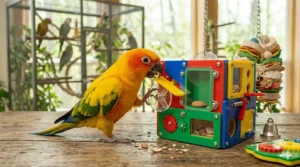
Toys for Sun Conures: Color and Sound Matters
Sun conures are the extroverts of the parrot world—loud, colorful, and always ready for the next adventure. Their toy preferences reflect these flashy personalities, gravitating toward bright colors and noise-making elements that match their vibrant plumage and vocal tendencies.
Visual stimulation drives sun conure interest. These birds notice colorful toys first, so manufacturers specifically design conure toys with bright reds, yellows, oranges, and greens. While there’s debate about how well parrots perceive color, years of observation confirm sun conures preferentially interact with brightly colored toys over natural wood tones.
Noise-making elements keep sun conures engaged. Bells, wooden blocks that clack together, and toys with moving parts that rattle satisfy their desire for auditory stimulation. One sun conure owner noted their bird specifically targets toys that make noise, ignoring quieter alternatives even when they’re new additions.
Chewing remains important for sun conures, though they’re less destructive than caiques. Medium-density woods like pine provide satisfying chewing without the aggressive demolition some species require. Leather strips, palm fronds, and paper-based toys offer variety in textures while being safe if ingested.
Sun conures benefit enormously from foraging toys. These intelligent birds in the wild spend hours extracting seeds from tough pods and investigating potential food sources. Puzzle feeders, foraging boxes filled with shredded paper and hidden treats, and toys requiring manipulation to access rewards keep their minds engaged while slowing down eating—beneficial for birds prone to obesity.
Social birds like sun conures often enjoy shared toys. If housing multiple conures, provide larger toys that accommodate multiple birds simultaneously. This prevents competition while encouraging species-appropriate social play.
DIY Medium Bird Toys: Budget-Friendly Enrichment
Creating homemade toys isn’t just economical—it’s an enrichment activity for you and your parrot. Watching you construct toys piques their curiosity, and the end product feels more novel than store-bought alternatives. Plus, you’ll save hundreds of dollars annually while providing fresher, more varied enrichment.
Essential DIY Materials
Start by gathering bird-safe materials from around your house. Untreated wood craft sticks become instant foot toys or can be strung together into larger hanging toys. Cardboard tubes from paper towels or toilet paper transform into foraging puzzles when stuffed with shredded paper and treats. Clean plastic bottle caps, wooden clothespins (the old kind without metal springs), and vegetable-dyed craft paper all make excellent toy components.
Natural materials from your yard provide free enrichment. Pine cones collected during walks become premium shredding toys after proper preparation. Clean them by soaking in a vinegar-water solution (1 cup vinegar per gallon of water) for 15 minutes, then bake at 225°F for 20 minutes to kill bacteria. Let them cool completely before offering to your bird.
Simple Projects for Beginners
The foraging basket is perhaps the easiest DIY project. Purchase an untreated wicker basket from a craft store, fill it with shredded paper, and hide treats throughout. Your parrot will spend considerable time investigating the basket, removing paper, and finding treasures. Baskets cost just a few dollars and provide days of entertainment before being destroyed.
Paper bag surprise toys work wonderfully for quick enrichment. Take a lunch-size paper bag, stuff it with crinkled paper and a few treats or small toys, fold the top closed, and hang it in the cage. Birds love tearing into the bag to discover what’s inside. This takes literally two minutes to prepare but provides 15-30 minutes of engaged destruction.
Hanging vegetable kabobs combine nutrition with play. Thread chunks of vegetables—carrots, peppers, broccoli, leafy greens—onto clean stainless steel skewers or vegetable-tanned leather strips. Hang vertically in the cage, forcing your bird to work for each bite while getting healthy food.
Safety Considerations for DIY Toys
Never use treated wood, painted items (unless specifically bird-safe paint), or anything with a strong chemical odor. Avoid materials with small parts that could be swallowed or sharp edges that could injure beaks or feet. When using string or rope, keep exposed lengths short enough that they can’t wrap around necks or feet—thumb-length maximum.
Test your DIY creation before leaving it unattended. Observe how your bird interacts with the new toy, watching for any concerning behaviors like attempting to swallow large pieces or getting tangled in attachments. What works safely for one bird might be hazardous for another based on play style.
Toy Rotation Strategies for Maximum Engagement
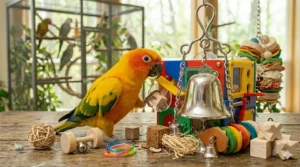
Even the world’s best toy becomes boring furniture after a few weeks in continuous rotation. Smart toy rotation maintains novelty, maximizes your investment, and keeps your parrot mentally stimulated without requiring 50 toys simultaneously.
The basic rotation schedule involves keeping 4-6 toys in the cage at once, then swapping out 2-3 toys weekly. Store removed toys out of sight—parrots have surprisingly good memories, so toys disappear from mental rotation when they’re not visible. After 2-3 weeks in storage, these “old” toys feel new again when reintroduced.
Create themed rotation groups matching your bird’s current needs. Group A might focus on chewing toys and shredding, Group B emphasizes foraging puzzles, and Group C provides climbing and swinging opportunities. Rotate between groups, ensuring your bird experiences different activity types each week rather than the same toy categories endlessly.
Document your rotation using smartphone notes or a simple calendar. Note which toys generate the most interest, which get ignored, and which are destroyed quickly. This data helps refine future toy purchases, avoiding styles your bird dislikes while focusing on their proven preferences.
Location matters as much as the toy itself. Moving a toy from the cage side to the top changes how birds interact with it. A toy ignored in one spot might become fascinating when relocated, essentially creating a “new” toy through placement alone.
Recognizing Toy Fatigue and Behavioral Problems
Birds communicate dissatisfaction through behavior changes that often go unnoticed until problems escalate. Learning to recognize toy fatigue versus actual behavioral issues helps you respond appropriately before minor boredom becomes serious plucking or aggression.
Signs of Insufficient Enrichment
Feather plucking or over-preening indicates stress from boredom or lack of stimulation. While medical causes must be ruled out first, environmental enrichment often resolves stress-related plucking. Birds who pluck from boredom typically start with easily-reached areas like chest feathers, gradually expanding to other accessible regions.
Excessive screaming beyond normal vocalization patterns signals unmet needs. Parrots vocalize naturally at dawn and dusk, but constant screaming throughout the day often means the bird needs more mental stimulation. Adding foraging opportunities and puzzle toys frequently reduces problematic noise levels.
Pacing or repetitive movements like swinging between the same two perches constantly suggests a lack of interesting alternatives. Enriched birds move purposefully between activities rather than engaging in stereotypic behaviors.
Aggression toward people or cage mates can result from frustration and pent-up energy. Birds who attack when you approach the cage or bite aggressively during handling may simply need more opportunities to direct their energy toward appropriate outlets.
When to Intervene
Immediate intervention is necessary if your bird is actively harming themselves through feather plucking or self-mutilation. Veterinary evaluation rules out medical causes while you simultaneously upgrade their enrichment program. Don’t wait to see if enrichment alone fixes severe plucking—professional guidance is essential.
Gradual decline in activity level warrants attention even without obvious problems. Birds who used to play enthusiastically but now sit passively may be developing depression or learned helplessness from inadequate stimulation.
FAQ
❓ How often should I replace medium bird toys?
❓ Can medium bird toys be too big for my parrot?
❓ What's the difference between foraging toys and regular toys?
❓ Are bell toys safe for medium parrots?
❓ How do I introduce toys to a toy-phobic parrot?
Conclusion: Investing in Your Parrot’s Mental Health
The right medium bird toys transform your parrot’s daily existence from mere survival to genuine thriving. These aren’t frivolous purchases—they’re investments in mental health, behavioral stability, and the long-term quality of life for creatures capable of living 20-30+ years in your care.
I’ve watched the difference proper enrichment makes in real time. Birds who arrive at rescues exhibiting severe behavioral problems often show remarkable improvement within weeks of receiving appropriate toys and foraging opportunities. It’s honestly transformative, proving that many behavioral issues stem from environmental inadequacy rather than inherent problems with the bird.
Your medium parrot’s happiness depends on multiple factors—diet, social interaction, veterinary care—but enrichment through quality toys sits at the foundation of behavioral health. The toys reviewed here represent proven options that real parrot owners trust, combining safety, durability, and genuine engagement value.
Remember that toy preferences vary between individuals as much as between species. A quaker’s favorite might leave your caique completely disinterested. Observe your bird’s play patterns, note what captures their attention, and adjust your toy rotation accordingly. You’re learning your specific bird’s personality, which matters more than any general species guide.
Budget wisely but don’t sacrifice safety for savings. One emergency vet visit from a poorly-made toy costs more than years of quality toys combined. Buy from reputable manufacturers, inspect regularly, and replace anything showing concerning wear. Your parrot depends on you to make these safety judgment calls.
The enrichment journey never truly ends. As your bird matures, their toy preferences will shift. Seasonal changes affect activity levels. New experiences might unlock previously ignored toy categories. Stay flexible, remain observant, and keep trying new things. Your parrot’s enthusiasm for novel toys and activities will guide you toward optimal enrichment.
Recommended for You
- 7 Best Small Bird Toys in 2026: Keep Your Finch Happy
- 7 Best Lovebird Toys 2026: Ultimate Guide for Happy Birds
- 7 Best Bird Mirror Toys for Happy Parakeets in 2026
Disclaimer: This article contains affiliate links. If you purchase products through these links, we may earn a small commission at no additional cost to you.
✨ Found this helpful? Share it with your friends! 💬🤗
