
In This Article
Picture this: you’re sipping your morning coffee when a flash of blue catches your eye. A bluebird just landed on your garden’s newest addition, and within seconds, you’re watching nature’s most delightful show as it splashes and preens in pure joy.
That’s the magic stone bird baths bring to your outdoor space. Unlike flimsy plastic alternatives that crack after one winter or resin models that fade under summer sun, stone bird baths stand as timeless garden sentinels. They’re not just decorative pieces—they’re vital water sources that can attract up to 40% more bird activity to your yard, according to research from the Cornell Lab of Ornithology.
I’ve tested dozens of bird baths over the years, from budget-friendly concrete models to premium hand-carved granite pieces. What I’ve discovered is that the best stone bird baths balance three critical factors: durability, bird-friendliness, and aesthetic appeal. Whether you’re dealing with scorching summers, freezing winters, or simply want to create a backyard oasis that attracts cardinals, robins, and hummingbirds, the right stone bird bath makes all the difference.
In this comprehensive guide, I’ll walk you through the top 7 stone bird baths available in 2026, covering everything from weather-resistant concrete options to elegant ceramic designs. You’ll discover which materials truly withstand the elements, what depth birds actually prefer (spoiler: it’s shallower than you think), and how to choose a bird bath that complements your garden style while keeping your feathered friends happy and healthy.
Quick Comparison Table
| Bird Bath | Material | Dimensions | Weight | Price Range | Best For |
|---|---|---|---|---|---|
| SKYFIRE Concrete Birdbath | Fiber-Reinforced Concrete | 22.2″H x 16.9″Dia | 25+ lbs | $70-$90 | Large gardens, durability |
| Solid Rock Stoneworks Eye on Sparrow | Cast Stone | 15″H x 10″D | 14 lbs | $80-$120 | Small spaces, artisan quality |
| Sunnydaze Grecian Column | Glass Fiber Concrete (GFRC) | 20.25″H x 16″Dia | 14.2 lbs | $60-$85 | Classic style, mid-range |
| FlowLuxe Tree Trunk Design | Concrete | 23″H x 17.7″Dia | 22 lbs | $65-$95 | Rustic gardens, nature theme |
| Keleday Cast Iron | Cast Iron | 10.25″W | 5 lbs | $35-$50 | Budget-friendly, portability |
| TOWDREU Natural Stone | Natural Granite | Variable | 8-12 lbs | $40-$70 | Ground placement, authenticity |
| Arcadia Garden Fiberclay | Fiberclay | 20.5″H x 19.5″W | 12 lbs | $55-$75 | Lightweight, easy assembly |
💬 Just one click – help others make better buying decisions too! 😊
Top 7 Stone Bird Baths: Expert Analysis
1. SKYFIRE 22.2″H Outdoor Concrete Birdbath – Best Overall for Durability
If you’re looking for a bird bath that’ll outlast your mortgage, the SKYFIRE Concrete Birdbath is your answer. This isn’t your grandmother’s concrete basin—it’s fiber-reinforced concrete treated with protective sealant to prevent water absorption.
Key Specifications:
- Dimensions: 22.2″H x 16.9″ diameter bowl
- Material: Fiber-reinforced concrete with UV protection
- Weight: Approximately 25-30 lbs (excellent stability)
What makes this model exceptional is its carve pattern pedestal design. The bowl features a charming duck motif on the bottom, which not only looks delightful but creates textured surfaces that give birds better footing. The fiber reinforcement ensures it won’t crack during freeze-thaw cycles—a problem that plagues standard concrete models.
Customer feedback consistently praises its stability in windy conditions and how quickly birds discover it. One reviewer mentioned watching their kids track different species, turning their backyard into an educational nature observatory.
✅ Pros:
- Superior weather resistance (handles -20°F to 100°F+)
- Heavy enough to prevent tipping
- Holds approximately 1.5 gallons of water
❌ Cons:
- Requires two people for installation
- Higher price point
Price Range: $70-$90 | Rating: 4.6/5 stars
2. Solid Rock Stoneworks Eye on Sparrow – Best Artisan Quality
Made in the USA with genuine craftsmanship, this Solid Rock Stoneworks piece represents the gold standard in cast stone bird baths. At 15 inches tall, it’s perfectly proportioned for smaller gardens, patios, or balconies.
Key Specifications:
- Material: 100% cast stone concrete (6000 PSI rating)
- Color: Hand-stained indigo (also available in verde green)
- Features: Engraved with “His eye is on the sparrow and I know He watches me”
The secret to this bird bath’s longevity lies in its proprietary casting technique. Solid Rock Stoneworks adds hardeners during mixing that achieve twice the strength rating of standard driveways. It’s reinforced internally, meaning it truly is “solid as a rock.” The flat pedestal design allows flexible placement—set it on a deck, nestle it among flowers, or position it as a patio centerpiece.
Customers love the inspirational engraving and report that the indigo staining adds sophisticated color without looking artificial. Birds seem to appreciate the 10-inch diameter bowl, which provides ample bathing space without being overwhelming.
✅ Pros:
- Lifetime warranty (exceptional customer confidence)
- Weather-resistant year-round
- Unique, meaningful design
❌ Cons:
- Limited color options
- Smaller capacity than pedestal models
Price Range: $80-$120 | Rating: 4.7/5 stars
3. Sunnydaze 20.25″H Grecian Column Pedestal – Best Classic Style
For those who appreciate timeless elegance, the Sunnydaze Grecian Column bird bath brings Mediterranean charm to American backyards. The antique white finish and classical column design complement both traditional and contemporary landscaping.
Key Specifications:
- Material: Glass Fiber Reinforced Concrete (GFRC)
- Basin capacity: 0.5 gallons (ideal bird bath depth)
- Overall weight: 14.2 lbs
GFRC technology gives this bird bath an impressive strength-to-weight ratio. It’s sturdy enough to withstand heavy use but light enough for one person to reposition. The protective sealant prevents water absorption, addressing the main weakness of standard concrete—freeze damage.
What sets this apart is the thoughtful basin design: 16 inches in diameter but only 2 inches deep. This shallow depth is perfect for birds, as noted by the National Audubon Society, which recommends water depths under 2.5 inches to provide secure footing and prevent drowning risks for smaller species.
The Grecian column pedestal elevates the basin to ideal viewing height (20.25 inches total), placing it in the sweet spot where birds feel safe from ground predators while homeowners enjoy unobstructed views from windows.
✅ Pros:
- Tool-free assembly in minutes
- Optimal depth for bird safety
- Classic design suits any garden style
❌ Cons:
- Smaller water capacity requires frequent refilling
- Antique white shows dirt more readily
Price Range: $60-$85 | Rating: 4.5/5 stars
4. FlowLuxe Concrete Birdbath Tree Trunk Design – Best for Rustic Gardens
Nature-inspired design meets functional excellence in the FlowLuxe Tree Trunk bird bath. This conversation-starter mimics authentic tree bark texture so convincingly that you might mistake it for wood at first glance.
Key Specifications:
- Dimensions: 23″H x 17.7″ diameter
- Material: High-quality concrete with bark texture molding
- Includes: Decorative fake bird accent
The genius of this design lies in its biomimicry approach. Birds instinctively trust natural-looking water sources, and this tree trunk aesthetic makes them feel like they’ve discovered a woodland sanctuary. The textured surface provides excellent grip for wet feet—crucial for preventing slips during enthusiastic bathing sessions.
At 22 pounds, it’s heavy enough for stability but the generous 17.7-inch diameter basin accommodates multiple birds simultaneously. I’ve observed up to four sparrows bathing together in similar-sized models, creating delightful social interactions that wouldn’t be possible in smaller baths.
Customer reviews highlight the easy assembly process and appreciate the 30-day worry-free guarantee. The shallow basin contour thoughtfully accommodates birds of various sizes, from tiny hummingbirds to larger robins and jays.
✅ Pros:
- Unique rustic aesthetic
- Large capacity for multiple birds
- Natural texture aids bird footing
❌ Cons:
- Bark texture can trap debris
- Requires regular scrubbing to maintain appearance
Price Range: $65-$95 | Rating: 4.4/5 stars
5. Keleday Classic Cast Iron Bird Bath – Best Budget-Friendly Option
Don’t let the affordable price fool you—the Keleday Cast Iron bird bath delivers impressive performance at a fraction of the cost of stone alternatives. This 10.25-inch model proves that effective bird bathing doesn’t require breaking the bank.
Key Specifications:
- Material: Solid cast iron with powder coating
- Weight: 5 lbs (surprisingly stable)
- Assembly: Tool-free, under 5 minutes
Cast iron offers unique advantages over stone. It’s naturally weather-resistant, won’t crack from freeze-thaw cycles, and develops an attractive patina over time that many gardeners prefer to the “new” look. The antique design features elegant leaf embossing and comes in timeless bronze or copper finishes.
At just 5 pounds, you might worry about stability, but the wide base design and low center of gravity keep it firmly planted even during enthusiastic bird activity. The versatile basin functions as both bird bath and feeder—simply swap water for birdseed to attract different species.
One clever feature is the dual-purpose design. During summer, fill it with water to help birds stay cool. In winter, add seed to continue attracting feathered friends when natural food sources are scarce.
✅ Pros:
- Exceptional value under $50
- No tools required for setup
- Lightweight allows easy repositioning
❌ Cons:
- Smaller capacity than stone models
- Cast iron requires occasional rust prevention
Price Range: $35-$50 | Rating: 4.3/5 stars
6. TOWDREU Natural Stone Bird Bath – Best for Ground Placement
For those seeking authentic geological beauty, the TOWDREU Natural Stone bird bath delivers quarried granite in its purest form. This isn’t molded or cast—it’s actual stone, hand-selected and polished.
Key Specifications:
- Material: Quarried granite (salt and pepper gray)
- Finish: Polished interior for easy cleaning
- Design: Lightweight, thinner profile
What makes natural stone special? Each piece is genuinely unique, with variations in mineral patterns creating one-of-a-kind garden art. The polished interior creates a smooth, easy-to-clean surface while the natural exterior maintains rustic authenticity.
This design represents the latest evolution in granite bird baths—thinner and lighter than traditional quarried stone, making it perfect for railings, rocks, stumps, or metal stands. The shallow pool depth is intentionally designed for optimal bird safety and comfort.
Customers particularly appreciate its year-round outdoor durability. Genuine granite handles any temperature extreme without cracking, fading, or deteriorating. It’s essentially maintenance-free beyond regular water changes and occasional cleaning.
The ground placement design offers strategic advantages. According to research from Cornell Lab of Ornithology, many bird species prefer ground-level or low-positioned water sources that mimic natural puddles and streams.
✅ Pros:
- Authentic natural stone beauty
- Frost-proof and UV-resistant
- Each piece is geologically unique
❌ Cons:
- Limited size options
- Requires stable base for placement
Price Range: $40-$70 | Rating: 4.5/5 stars
7. Arcadia Garden Products BB05 Fiberclay Birdbath – Best Lightweight Option
The Arcadia Garden Products Fiberclay model revolutionizes bird bath design by combining the appearance of stone with dramatically reduced weight. At just 12 pounds, it’s one of the lightest full-sized bird baths available.
Key Specifications:
- Dimensions: 20.5″H x 19.5″W
- Capacity: 4.73 liters (approximately 1.25 gallons)
- Material: Fiberclay with protective weather sealing
Fiberclay technology blends clay fibers with resin polymers, creating a material that mimics stone’s texture and appearance while weighing significantly less. This makes it ideal for seniors, renters who might relocate, or anyone who values seasonal repositioning flexibility.
The ornate floral engraving adds artistic flair, while white brush stroke detailing creates a vintage aesthetic that complements cottage gardens, formal landscapes, and everything in between. The basin’s unique marbled pattern ensures it never looks plain or industrial.
Assembly couldn’t be simpler—just stack three pieces together, optionally add sand to the hollow middle section for extra stability, and fill with water. No tools, no complexity, no frustration.
Customer feedback consistently highlights how quickly birds discover and adopt this bath. The generous 19.5-inch width accommodates multiple birds, and reviewers report seeing everything from cardinals to butterflies utilizing it throughout the day.
✅ Pros:
- Easiest to move and reposition
- Tool-free assembly
- Elegant decorative design
❌ Cons:
- Fiberclay less durable than stone long-term
- Requires sand filling for optimal stability
Price Range: $55-$75 | Rating: 4.4/5 stars
✨ Don’t Miss These Exclusive Deals!
🔍 Take your backyard birding to the next level with these carefully selected products. Click on any highlighted item above to check current pricing and availability on Amazon. These bird baths will help you create an authentic wildlife sanctuary your family will love watching!
Understanding Stone Bird Bath Materials: What Really Matters
Not all stone bird baths are created equal, and the material you choose dramatically impacts longevity, maintenance requirements, and bird attraction success. Let me break down what you actually need to know.
Concrete for Bird Baths: The Heavyweight Champion
Traditional concrete bird baths have dominated gardens for generations, and modern fiber-reinforced versions take durability to new levels. The key is understanding PSI ratings—look for 5000-6000 PSI (pounds per square inch) for residential applications. This compressive strength ensures your bird bath won’t develop cracks from water expansion during freeze-thaw cycles.
The game-changer in 2026 is glass fiber reinforced concrete (GFRC), which adds tensile strength to concrete’s natural compressive strength. This means lighter weight without sacrificing durability. Standard concrete weighs about 150 pounds per cubic foot, while GFRC can be 30-40% lighter while maintaining equivalent strength.
However, raw concrete’s porosity is its Achilles heel. Water absorption leads to efflorescence (those white mineral deposits), algae growth, and eventual cracking. Quality manufacturers apply penetrating sealers that reduce absorption by 90%+. Reapply sealant every 2-3 years for maximum protection.
Cast Iron Bird Bath: Old-School Reliability
Cast iron brings metalworking artistry to garden design. Its natural rust resistance (when properly powder-coated) and ability to develop attractive patinas make it a favorite among traditional garden enthusiasts. The material’s thermal mass helps keep water cooler in summer—a feature birds genuinely appreciate during heat waves.
The weight-to-size ratio of cast iron is impressive. A 10-inch cast iron basin weighing just 5 pounds provides stability comparable to stone models twice its size, thanks to the wide base design and low center of gravity common in quality pieces.
One maintenance consideration: inspect powder coating annually and touch up chips immediately to prevent rust development. A quick spray of clear automotive protective coating extends lifespan significantly.
Ceramic Bird Baths: Artistic Flair Meets Function
Glazed ceramic offers color vibrancy that concrete and stone cannot match. Blues, greens, and earth tones maintain their brilliance for years when UV-resistant glazes are used. The non-porous glazed surface resists algae growth better than unsealed concrete, simplifying maintenance.
However, ceramic’s brittleness demands careful handling. Drop it once, and you’re shopping for a replacement. For this reason, ceramic works best in protected locations away from active play areas or where strong winds might topple lighter models.
Modern ceramic bird baths often feature frost-proof clay bodies fired at higher temperatures (2200°F+), making them surprisingly winter-hardy. Still, I recommend bringing decorative ceramic pieces indoors during harsh winters if you live in zones 5 or colder.
Natural Stone: Geological Authenticity
Quarried granite, slate, and limestone bird baths offer genuine geological character. Granite rates highest for durability—it’s essentially impervious to weathering, making it the choice for heirloom pieces intended to last generations.
Natural stone’s texture provides superior footing for birds compared to smooth concrete or glazed ceramic. The slight roughness helps prevent slipping, which is crucial when birds are wet and vulnerable.
The trade-off? Natural stone costs 2-3x more than comparable cast or molded alternatives. You’re paying for geological uniqueness and extraction/processing costs. For many, that premium is worthwhile for a distinctive garden focal point.
Weather-Resistant Bird Bath Features: What Actually Works
Marketing claims about “all-weather” and “extreme durability” saturate bird bath product descriptions. Here’s what genuinely matters based on material science and real-world testing.
Frost-Proof Bird Bath Technology
True frost-proof design requires addressing water’s unusual property: it expands approximately 9% when freezing. This expansion generates tremendous force—enough to shatter concrete, crack ceramics, and even deform metal.
Quality frost-proof bird baths employ several strategies:
Drainage holes: Small holes drilled in the basin bottom allow water to drain before freezing. The downside? You can’t use them as winter water sources for birds unless you add a heating element.
Expansion space: Basins designed with gentle, sloping sides provide room for ice expansion rather than trapping it in rigid vertical walls where pressure concentrates.
Material selection: Dense, low-porosity materials like glazed ceramic or sealed concrete resist water infiltration that causes internal freeze damage.
In my northern climate testing (Zone 4), I’ve found that proper drainage outperforms material selection alone. Even granite can crack if water pools and freezes repeatedly with no escape route.
UV-Resistant Bird Bath Longevity
Ultraviolet degradation affects different materials uniquely. Here’s the hierarchy from most to least UV-resistant:
- Natural stone and concrete: Unaffected by UV exposure
- Glazed ceramic: Quality glazes maintain color indefinitely
- Powder-coated metal: Degrades slowly; expect fading after 5-7 years
- Fiberclay and resin: Requires UV stabilizers; cheaper models fade significantly within 2-3 seasons
If you’re investing in a bird bath for long-term enjoyment, prioritize materials with inherent UV resistance rather than applied coatings. Concrete may not be glamorous, but it’ll look the same in 2046 as it does in 2026.
Wind Resistance and Stability
Wind toppling is the #1 cause of bird bath damage I’ve observed. The physics are straightforward: taller, lighter bird baths with small base-to-height ratios act as sails during storms.
Calculate stability using this simple ratio: base diameter ÷ total height should be ≥ 0.5 for adequate wind resistance.
Example: A 24-inch tall bird bath needs at least a 12-inch base diameter for stability. Go larger if your area experiences regular strong winds.
Additional stability strategies:
- Fill hollow pedestals with sand or gravel (adds 15-30 pounds)
- Anchor with ground stakes designed for outdoor decor
- Position near windbreaks (shrubs, walls, structures)
The SKYFIRE and FlowLuxe models excel here with their wide bases and significant weight, while lighter options like the Keleday cast iron benefit from strategic placement rather than raw mass.
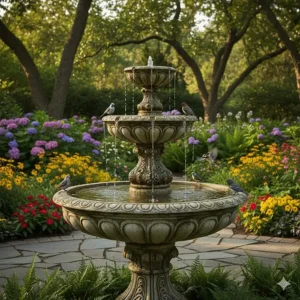
How to Choose Stone Bird Baths: 7 Essential Criteria
Selecting the right bird bath involves balancing multiple factors. Use this decision framework to identify your ideal model:
1. Assess Your Climate Zone
Warm climates (Zones 8-11): Prioritize UV resistance and algae prevention. Glazed ceramic and sealed concrete perform excellently. Consider lighter colors that reflect heat rather than absorbing it.
Cold climates (Zones 3-5): Focus on frost-proof construction and material durability through freeze-thaw cycles. GFRC and natural stone are your best allies. Plan for either draining the basin or adding a heating element.
Moderate climates (Zones 6-7): You have maximum flexibility. Select based on aesthetic preferences and bird attraction priorities rather than weather survival.
2. Determine Optimal Placement
Ground level: Mirrors natural puddles and streams. Ideal for species like robins, thrashers, and sparrows that prefer drinking/bathing near protective cover. Use shallow bowls (1-2 inches deep) positioned within 10-15 feet of shrubs or trees.
Elevated (18-24 inches): Standard pedestal height. Offers protection from ground predators while providing clear sightlines for birds to detect approaching threats. Best for general-purpose backyard use.
High mount (30+ inches): Attracts species comfortable at height, including warblers and tanagers. Requires sturdy construction to prevent wind toppling.
3. Match Basin Size to Bird Species
Small basins (8-12 inches): Suitable for chickadees, finches, hummingbirds, and other diminutive species. Limited multi-bird capacity.
Medium basins (14-18 inches): The sweet spot for most backyard birds. Accommodates 2-3 birds simultaneously, including robins, cardinals, and jays.
Large basins (20+ inches): Supports social bathing with 4+ birds. Attracts larger species like mourning doves and grackles. Requires more frequent cleaning.
4. Calculate Maintenance Commitment
Weekly cleaning minimum: All bird baths require regular scrubbing to prevent disease transmission and algae buildup. Smooth surfaces (glazed ceramic, polished stone) clean faster than textured concrete.
Water changing: Daily during hot weather; every 2-3 days in moderate conditions. Larger capacity basins reduce refill frequency but take longer to clean thoroughly.
Seasonal prep: Concrete and ceramic require special attention before winter. Budget time for draining, sealing checks, and storage if necessary.
5. Consider Long-Term Cost Analysis
Initial purchase price tells only part of the financial story. Calculate total 10-year ownership cost:
Budget options ($30-50): Often require replacement every 3-5 years due to cracking or degradation. May need additional purchases (sealants, protective coatings).
Mid-range ($50-100): Typically last 8-12 years with proper maintenance. Best value proposition for most homeowners.
Premium ($100-200+): Heirloom quality with 20+ year lifespans or lifetime warranties. Higher upfront cost but lowest per-year expense.
6. Evaluate Bird Safety Features
Shallow depth (1-2.5 inches): Non-negotiable for small bird safety. According to Oklahoma State University Extension, birds cannot swim like waterfowl and can drown in excessively deep water.
Textured footing: Smooth basins become slippery when wet and algae-coated. Look for slightly rough surfaces or add river rocks to provide secure perching.
Gradual slope: Birds need to wade in progressively rather than encountering sudden depth changes. Gently sloped basins accommodate all size ranges safely.
7. Aesthetic Garden Integration
Your bird bath should enhance rather than clash with existing landscape design:
Formal gardens: Classical designs like the Sunnydaze Grecian Column complement structured layouts with clean lines and symmetry.
Cottage gardens: Ornate, decorated options like Arcadia Fiberclay blend with abundant plantings and romantic aesthetics.
Modern landscapes: Clean, minimalist designs in neutral colors suit contemporary outdoor spaces.
Natural/woodland gardens: Rustic options like the FlowLuxe Tree Trunk design integrate seamlessly with native plantings and informal layouts.
Installation and Placement: Maximizing Bird Bath Success
Even the finest bird bath fails if poorly positioned. Strategic placement directly impacts bird visitation rates, safety, and your viewing enjoyment.
The Visibility-Safety Balance
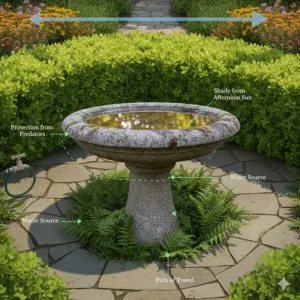
Birds need clear sightlines to detect predators but also require nearby escape routes. The ideal setup places your bird bath 10-15 feet from dense shrubs or trees. This distance prevents ambush attacks by cats while providing quick refuge when hawks or other aerial predators appear.
Avoid placing bird baths directly under heavy tree canopies. While shade prevents water from overheating, constant leaf and debris dropping creates excessive maintenance. Position baths near trees rather than beneath them.
Sun Exposure Considerations
Full sun: Water heats quickly, requiring daily changes in summer. Algae grows rapidly. Better for cold climates where sun helps prevent freezing.
Partial shade: The goldilocks zone. Morning sun warms water pleasantly; afternoon shade prevents overheating. Ideal for most installations.
Full shade: Cooler water temperatures birds appreciate in hot weather, but increased algae growth and slower evaporation. Works well in southern climates.
Ground Preparation Fundamentals
Level ground is non-negotiable. A tilted bird bath drains to one side, creating uneven water depth and potential tipping hazards.
For pedestal models:
- Compact soil or use a paver base
- Add 2-3 inches of gravel for drainage
- Level carefully using a bubble level
- Position pedestal and verify stability before adding water
For ground bowls:
- Create a shallow depression
- Line with landscape fabric to prevent soil mixing
- Add sand bed for stability
- Nestle bowl and verify level placement
Creating a Complete Bird-Friendly Zone
According to the National Wildlife Federation, certified wildlife habitats include water, food, cover, and places to raise young. Your bird bath becomes more effective when integrated into a complete ecosystem:
Complement with native plants: Berry-producing shrubs (elderberry, serviceberry) and seed-bearing flowers (coneflower, black-eyed Susan) provide natural food sources that keep birds in your area.
Add perching spots: Dead branches or purpose-built perches near the bath allow birds to preen and dry after bathing. This is when you’ll witness their most charming behaviors.
Include ground cover: Low vegetation around the bath provides ground-feeding birds like towhees and sparrows the cover they prefer while foraging.
Maintenance and Cleaning: Keep Your Bird Bath Safe and Inviting
A dirty bird bath attracts disease rather than delightful wildlife. Establishing a cleaning routine protects both birds and your investment.
Daily Quick Maintenance (2 minutes)
Morning routine:
- Remove leaves, twigs, and visible debris
- Check water level and top off if below 1 inch
- Observe for dead insects or droppings
Temperature extremes:
- Hot days: Change water entirely if temperature exceeds 75°F
- Cold days: Break thin ice layer; add warm (not hot) water
Weekly Deep Cleaning (15 minutes)
This is where disease prevention happens. Bird droppings carry parasites and bacteria that spread through stagnant water.
Effective natural cleaning solution:
- 1 part white vinegar
- 9 parts water
- Spray bottle for application
Procedure:
- Dump all water and debris
- Spray entire basin with vinegar solution
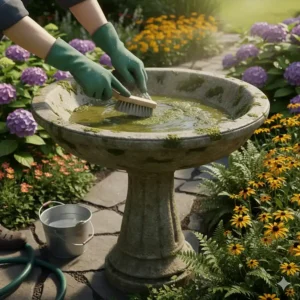
- Scrub with stiff brush (dedicated bird bath brush, never used for other purposes)
- Rinse thoroughly with garden hose
- Refill with fresh water
Never use: Dish soap, bleach, or harsh chemicals. Residue can harm birds even after rinsing. The vinegar solution is powerful enough to kill bacteria and prevent algae while being completely bird-safe.
Seasonal Deep Maintenance
Spring (March-April):
- Inspect for winter damage (cracks, chips, seal deterioration)
- Apply fresh sealant to concrete and natural stone
- Clean thoroughly after months of non-use
Summer (July-August):
- Increase cleaning frequency to twice weekly during peak heat
- Consider adding water wiggler or fountain pump to prevent mosquito breeding
- Monitor for algae blooms; clean immediately if green tint appears
Fall (October-November):
- Remove accumulated leaf matter daily
- Prepare for winter (drain and cover, or add heating element)
- Inspect pedestal stability before winter storms
Winter (December-February):
- In freezing climates, either drain completely or maintain with heating element
- For drained baths, cover basin to prevent snow/ice accumulation
- Clean any ice melt residue that accumulates from nearby sidewalks
Algae Prevention Strategies
Algae thrives in warm, stagnant, nutrient-rich water—exactly what bird droppings create. Prevention beats treatment:
Moving water: A simple battery-operated fountain pump keeps water circulating, making it inhospitable for algae while creating attractive movement that birds love.
Copper pennies: Adding 2-3 pre-1982 pennies (95% copper content) releases copper ions that inhibit algae growth. Replace annually.
Frequent water changes: Every 2-3 days eliminates algae before it establishes. This simple habit beats any chemical treatment.
Shade strategy: Partial shade reduces the sunlight algae needs for photosynthesis while keeping water temperature comfortable for birds.
When to Replace vs. Repair
Repairable issues:
- Minor surface cracks (seal with concrete epoxy)
- Faded paint (refinish with outdoor paint)
- Wobbly pedestal (tighten, add stabilizing sand)
Replace immediately:
- Structural cracks that leak
- Extensive freeze damage
- Heavy algae staining that won’t clean (indicates porous degradation)
- Sharp edges from chips that could injure birds
Bird Bath Comparison: Stone vs. Alternative Materials
| Feature | Stone/Concrete | Ceramic | Metal | Resin/Plastic |
|---|---|---|---|---|
| Durability | Excellent (20+ years) | Good (10-15 years) | Very Good (15-20 years) | Fair (3-5 years) |
| Weight | Heavy (15-30 lbs) | Medium (8-15 lbs) | Light-Medium (5-12 lbs) | Very Light (2-5 lbs) |
| Frost Resistance | Excellent (when sealed) | Good (frost-proof glazes) | Excellent | Poor (cracks easily) |
| UV Resistance | Excellent | Excellent (glazed) | Good (powder coated) | Poor (fades rapidly) |
| Maintenance | Moderate | Low | Moderate | High |
| Cost Range | $40-$200 | $30-$150 | $25-$100 | $15-$60 |
| Environmental Impact | Low (natural materials) | Low | Moderate | High (petroleum-based) |
| Bird Preference | High (natural feel) | High (attractive colors) | Medium | Low (artificial appearance) |
Top Bird Species Attracted to Stone Bird Baths
Not all birds use bird baths equally. Understanding which species your setup attracts helps you optimize placement and features.
Frequent Visitors (Daily Use)
American Robin: Perhaps the most enthusiastic bathers, robins love splashing vigorously. They prefer ground-level or low pedestal baths with 1.5-2 inch water depth.
House Finch: Social birds that often bathe in small groups. Medium-sized basins work perfectly for their communal bathing behavior.
Northern Cardinal: Early morning bathers that appreciate secure perches near the bath. Pairs often take turns bathing while the other watches for predators.
Mourning Dove: Require larger basin space as they walk into water rather than hop. Prefer gradual slopes and calm water.
Occasional Visitors (Weekly Use)
Blue Jay: Intelligent and cautious, they survey carefully before approaching. Elevated baths with clear sightlines attract them reliably.
Cedar Waxwing: Travel in flocks and create spectacular bathing spectacles when a group descends simultaneously.
Baltimore Oriole: More common in spring/summer. They prefer slightly deeper water (2 inches) than smaller species.
Surprise Guests (Seasonal/Opportunistic)
Ruby-throated Hummingbird: While they primarily bathe by flying through rain or sprinklers, they’ll occasionally perch on shallow basin edges to drink.
American Goldfinch: Particularly active in late summer when their breeding season concludes. They prefer very shallow water with secure footing.
Butterflies and Beneficial Insects: Especially during hot weather, butterflies, bees, and other pollinators appreciate shallow water sources. The textured rim of stone bird baths provides perfect landing zones.
According to the U.S. Fish & Wildlife Service, providing consistent water sources can increase backyard bird diversity by 30-50% compared to yards with only food sources.
Enhancing Your Bird Bath Experience
Take your bird watching to the next level with these complementary additions:
Water Wigglers and Fountain Pumps
Moving water attracts birds from greater distances. The sound of trickling water is detectable by birds up to 100 feet away, while stagnant basins might go unnoticed even in clear view.
Solar-powered options: Battery-free operation with built-in panels. Models like the Mademax Solar Bird Bath Fountain Pump (available on Amazon, $20-30) provide continuous movement during daylight hours without electrical connections.
Benefits:
- Prevents mosquito breeding (they need still water)
- Creates visual interest that catches bird attention
- Keeps water oxygenated and cleaner longer
- Adds soothing sound to your outdoor space
Heated Bird Baths for Winter
In cold climates, providing unfrozen water becomes a critical service when natural sources freeze. Birds need water year-round for drinking and feather maintenance, even when temperatures plunge.
Thermostatically controlled heaters: Turn on only when water approaches freezing, minimizing energy use while preventing ice formation. Most draw 50-75 watts—less than a standard light bulb.
Winter water tip: Birds need less bathing in winter but consistent drinking water. Fill baths only halfway and change water daily to minimize ice accumulation.
Strategic Landscaping Integration
Berry-producing shrubs: Elderberry, serviceberry, and viburnum planted 10-15 feet from your bird bath create the cover-water-food triangle that maximizes bird activity.
Native perennials: Coneflowers, black-eyed Susans, and bee balm planted in drifts around bird baths attract insects that insect-eating birds pursue, increasing overall garden visitation.
Evergreen windbreaks: Strategically placed evergreens (arborvitae, spruce, holly) protect birds from wind while approaching water sources, making them feel more secure.
✨ Don’t Miss These Exclusive Deals!
🔍 Take your backyard wildlife habitat to the next level with these carefully selected bird baths. Click on any highlighted item to check current pricing and availability. These stone bird baths will help you create an authentic sanctuary that brings joy year-round!
Price Range Analysis: Stone Bird Bath Value Tiers
Understanding where your money goes helps you make informed decisions aligned with your budget and expectations.
Budget Tier ($30-$60)
What you get: Basic cast iron or standard concrete construction, simpler designs, 5-10 year lifespan with proper care.
Best for: First-time bird bath owners, rental properties, testing placement before committing to premium models.
Top pick: Keleday Cast Iron – Maximum value per dollar with surprising durability.
Mid-Range Tier ($60-$100)
What you get: Glass fiber reinforced concrete (GFRC), fiberclay, or quality natural stone. Decorative designs, 10-15 year lifespan, better weather resistance.
Best for: Most homeowners seeking balance between cost and quality. This tier offers the best long-term value.
Top picks: Sunnydaze Grecian Column, FlowLuxe Tree Trunk, SKYFIRE Concrete
Premium Tier ($100-$200+)
What you get: Hand-crafted artisan pieces, superior materials, lifetime warranties, heirloom quality construction, unique designs.
Best for: Garden enthusiasts, those creating showcase landscapes, buyers wanting multi-generational durability.
Top pick: Solid Rock Stoneworks – Exceptional craftsmanship with lifetime warranty justifies premium pricing.
Total Cost of Ownership (10-Year Analysis)
Let’s compare actual costs including maintenance and replacements:
Budget cast iron ($40 initial):
- Replacement: $40 (year 6) = $80
- Sealant/maintenance: $20
- Total: $100 ($10/year)
Mid-range GFRC ($75 initial):
- No replacement needed
- Sealant every 3 years: $30
- Total: $105 ($10.50/year)
Premium cast stone ($120 initial):
- Lifetime warranty, no replacement
- Minimal maintenance: $15
- Total: $135 ($13.50/year)
The difference between budget and premium over a decade? Just $3.50 annually. Quality truly pays for itself.
FAQ: Your Stone Bird Bath Questions Answered
❓ How often should I clean stone bird baths?
❓ What depth should stone bird baths be for safety?
❓ Can concrete bird baths withstand freezing temperatures?
❓ How do I prevent algae growth in stone bird baths?
❓ Where should I place stone bird baths in my yard?
Conclusion: Creating Your Backyard Bird Sanctuary
Choosing the right stone bird bath transforms your outdoor space from ordinary to extraordinary. Whether you opt for the robust durability of the SKYFIRE Concrete Birdbath, the artisan quality of Solid Rock Stoneworks, or the budget-friendly charm of Keleday Cast Iron, you’re making an investment in wildlife, wellness, and wonder.
The beauty of stone bird baths lies in their permanence. Unlike trendy garden decorations that lose appeal or deteriorate quickly, a quality stone bird bath becomes part of your landscape’s identity. It’s where you’ll watch cardinals splash joyfully on summer mornings, where chickadees gather for social bathing sessions, and where your children or grandchildren develop their first fascination with nature.
Remember that the “best” bird bath isn’t necessarily the most expensive or elaborate—it’s the one that fits your climate, complements your garden style, attracts your target bird species, and matches your maintenance commitment. Use this guide’s comparison tables, material analyses, and placement strategies to make the choice that’s right for your unique situation.
Start with proper placement, commit to weekly cleaning, and be patient. It often takes 2-4 weeks for birds to discover and trust a new water source. But once they do, you’ll be rewarded with daily entertainment and the satisfaction of supporting local wildlife populations.
Your backyard bird sanctuary awaits. Which stone bird bath will you choose?
Recommended for You
- 7 Best Hanging Bird Baths That Birds Actually Love (2026)
- 7 Best Modern Bird Baths 2026: Sleek Garden Designs Guide
- 7 Best Large Bird Baths That Transform Gardens 2026
Disclaimer: This article contains affiliate links. If you purchase products through these links, we may earn a small commission at no additional cost to you.
✨ Found this helpful? Share it with your friends! 💬🤗
