
In This Article
Ever watched a squirrel perform Olympic-level gymnastics just to steal your bird seed? You’re not alone. According to the University of Nebraska Extension, gray squirrels can jump sideways eight feet, straight up four feet, and down 15 feet while hanging on where they land. These acrobatic bandits turn your carefully stocked bird feeders into all-you-can-eat buffets, leaving your feathered friends with empty stomachs and you with an empty wallet.
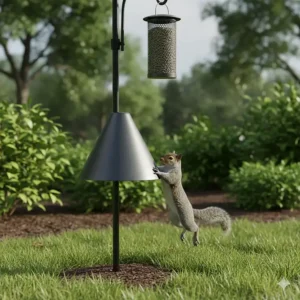
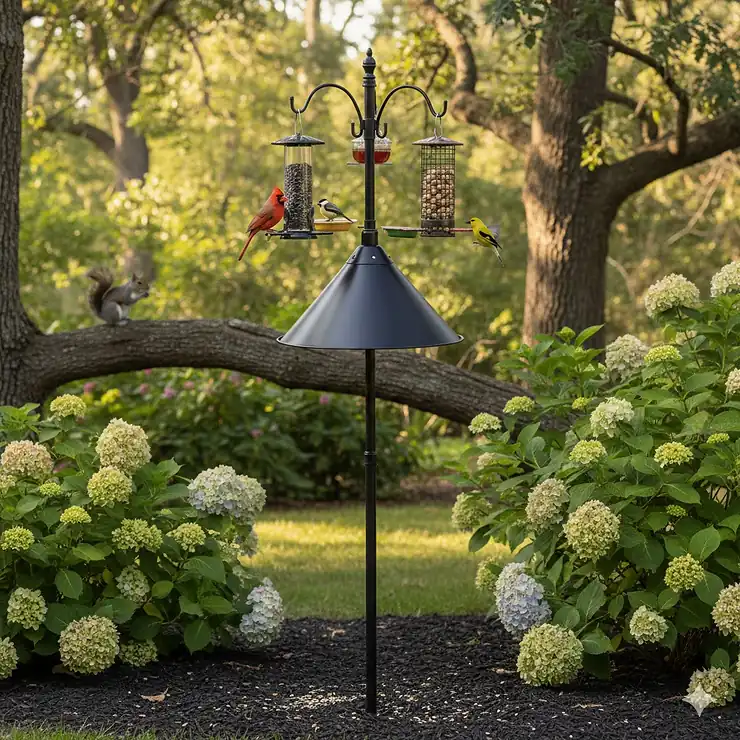
But here’s the thing—you don’t have to surrender. The right squirrel proof bird feeder pole transforms your backyard from a squirrel playground into an actual bird sanctuary. I’ve spent months researching, comparing customer feedback, and analyzing the engineering behind these systems. The good news? Several poles genuinely work when installed correctly.
In this comprehensive guide, we’ll explore the top 7 squirrel proof bird feeder poles available in 2025, from budget-friendly options under $30 to premium systems that stop even the craftiest critters. Whether you’re battling persistent gray squirrels or trying to protect expensive seed blends, this guide reveals which poles deliver on their promises and which ones waste your money.
Quick Comparison Table
| Product | Height | Baffle Type | Price Range | Best For |
|---|---|---|---|---|
| Squirrel Stopper Deluxe | 96″ | Spring-loaded cylinder | $120-$140 | Premium protection |
| eWonLife 92″ with 9-Prong | 92″ | 16.5″ dome | $40-$50 | Best value |
| Squirrel Stopper Sequoia | 84″ | Universal spring baffle | $90-$110 | Mid-range quality |
| Gtongoko 107″ | 107″ | 19″ dome | $55-$65 | Smart feeders |
| Birds Choice Classic | 68″ | Steel cone | $75-$85 | Tube feeders |
| 93″ Heavy Duty Station | 93″ | 18″ dome | $35-$45 | Multiple feeders |
| Boostool 108″ | 108″ | Adjustable dome | $50-$60 | Extra height |
💬 Just one click – help others make better buying decisions too! 😊
Top 7 Squirrel Proof Bird Feeder Poles: Expert Analysis
1. Squirrel Stopper Deluxe Bird Feeder Pole
When it comes to stopping squirrels cold, the Squirrel Stopper Deluxe remains the gold standard in 2025. This isn’t just marketing hype—the patented spring-loaded baffle technology actually works.
Key Specifications:
- Total height: 96 inches (8 feet when installed)
- 2-inch diameter galvanized steel pole
- Patented moving baffle with spring technology
- Holds up to 8 feeders on horizontal arms
- Includes auger for tool-free installation
The genius lies in the cylindrical baffle that moves up, down, and side-to-side when squirrels attempt to climb. Unlike static baffles, this dynamic movement prevents squirrels from gaining purchase. Real customers consistently report 100% effectiveness when installed according to the “10-foot rule” (keeping it 10 feet from any launching point).
Pros:
✅ Patented spring baffle truly works
✅ Heavy-duty construction lasts years
✅ Holds multiple heavy feeders safely
Cons:
❌Premium price point ($120-$140)
❌ May develop rust without maintenance
Customer Feedback: One verified buyer noted: “After 20 years of feeding birds, this is the first pole that completely stopped our squirrels. Worth every penny.”
Price Range: $120-$140 on Amazon
2. eWonLife 92 Inch Squirrel Proof Bird Feeder Pole with 9 Prongs Base
The eWonLife 92″ delivers remarkable value without sacrificing effectiveness. Its standout feature? An upgraded 9-prong base that provides rock-solid stability even in storms.
Key Specifications:
- Adjustable height: 47-92 inches
- 16.5-inch textured squirrel baffle
- 9 reinforced steel prongs (vs. standard 5-7)
- 4 sliding shepherd hooks
- Includes birdbath and mesh tray
The textured powder coating on the baffle resists chewing and weathering, while the angled slope causes squirrels to slide off. At under $50, this pole punches well above its weight class. The 6-section design allows height customization, making it versatile for different yard layouts.
Pros:
✅ Exceptional stability with 9-prong base
✅ Outstanding value under $50
✅ Bonus birdbath and feeding tray included
Cons:
❌ Baffle smaller than premium models
❌ Assembly takes 20-30 minutes
Customer Feedback: Reviews highlight sturdiness: “This was super easy to put together and feels very sturdy. Keeps the squirrels out of the bird food which is all that matters.”
Price Range: $40-$50 on Amazon
3. Squirrel Stopper Sequoia Pole System
The Squirrel Stopper Sequoia offers a more compact alternative to the Deluxe model while maintaining the same effective baffle technology. With 4 hanging stations instead of 8, it’s ideal for smaller yards or those with fewer feeders.
Key Specifications:
- 1.25-inch diameter steel pole
- Universal spring-loaded baffle
- 4 hanging station arms
- Feeders hang 7-6 feet off ground
- Threaded joints for secure connections
This mid-range option uses identical baffle technology to the Deluxe, meaning squirrels face the same impenetrable moving barrier. The narrower pole diameter makes it slightly less imposing visually while maintaining strength for moderate weight loads.
Pros:
✅ Same proven baffle as Deluxe model
✅ More compact for smaller spaces
✅ Secure threaded connections
Cons:
❌ Holds fewer feeders (4 vs. 8)
❌ Not suitable for heavy hopper feeders
Customer Feedback: Users appreciate the space-saving design while maintaining squirrel-stopping power.
Price Range: $90-$110 on Amazon
4. Gtongoko Squirrel Proof Smart Bird Feeder Pole 107 Inch
Designed specifically for modern smart bird feeders with cameras, the Gtongoko 107″ addresses the unique needs of tech-savvy bird watchers. The extra height and dual mounting platforms accommodate solar panels and camera equipment.
Key Specifications:
- Maximum height: 107 inches
- 19-inch PP squirrel baffle
- 2 mounting platforms with 4 options
- 8 shepherd hooks for multiple feeders
- 1-inch diameter pole
The standout feature is versatility—you can mount smart feeders like Bird Buddy or Netvue while still hanging traditional feeders from the hooks. The oversized 19-inch baffle creates an insurmountable barrier for squirrels attempting ground attacks.
Pros:
✅ Purpose-built for smart bird feeders
✅ Accommodates solar panels
✅ Extra height for better camera angles
Cons:
❌ Complex assembly with many components
❌ May be overkill for basic feeders
Customer Feedback: Tech enthusiasts love the smart feeder compatibility and thoughtful design.
Price Range: $55-$65 on Amazon
5. Birds Choice Classic Squirrel Proof Bird Feeder with Pole Mount
The Birds Choice Classic takes an all-in-one approach, bundling a quality tube feeder with a squirrel-proof pole system. For over 30 years, Birds Choice has refined this design based on real-world feedback.
Key Specifications:
- Total assembled height: 68 inches (5’8″)
- UV-resistant polycarbonate tube (6″W x 12″L)
- Steel cone baffle (23″ high)
- 3 steel pole sections
- 4 aluminum perches
The steel baffle and pole top create a complete barrier system. The powder-coated components resist rust, while the UV-resistant tube won’t degrade in sunlight. The metering ring controls seed flow, reducing waste—a feature often overlooked in budget options.
Pros:
✅ Complete system ready to use
✅ Proven 30+ year track record
✅ Controlled seed flow reduces waste
Cons:
❌ Shorter than multi-feeder poles
❌ Limited to single tube feeder
Customer Feedback: Long-term users report excellent durability and consistent squirrel deterrence over multiple years.
Price Range: $75-$85 on Amazon
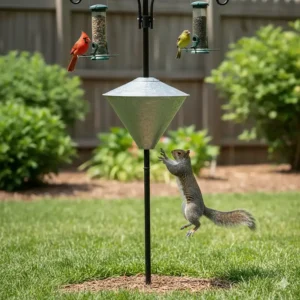
6. 93 Inch Heavy Duty Bird Feeding Station with Squirrel Proof Baffle
This 93″ Heavy Duty Station maximizes functionality at a budget-friendly price. With 4 shepherd hooks, 2 mounting platforms, a birdbath, and mesh tray, it’s a complete backyard bird sanctuary.
Key Specifications:
- Height: 93 inches
- High-quality metal construction with 1-inch diameter pole
- 5-prong base with black anti-rust coating
- Includes squirrel baffle, water bowl, and mesh tray
- Threaded connections for height adjustment
The multi-function design attracts diverse bird species by offering feeding, drinking, and bathing opportunities. The detachable tray and bowl simplify cleaning—crucial for preventing disease transmission according to Cornell Lab of Ornithology guidelines.
Pros:
✅ Complete feeding station under $45
✅ Multiple mounting options
✅ Easy-clean detachable accessories
Cons:
❌ Lower-grade materials than premium options
❌ Base stability adequate but not exceptional
Customer Feedback: Buyers appreciate the value proposition: “Great to attract birds, this heavy duty bird feeder pole is the perfect solution.”
Price Range: $35-$45 on Amazon
7. Boostool 108 Inch Bird Feeder Stand Station
The Boostool 108″ claims the title of tallest pole in our roundup, offering maximum visibility for both birds and watchers. The extra height positions feeders well above most jumping squirrels’ reach.
Key Specifications:
- Maximum height: 108 inches (9 feet)
- Adjustable squirrel baffle
- Heavy-duty metal construction
- Multiple shepherd hooks
- Black powder-coated finish
At 9 feet, this pole creates a commanding presence while making it virtually impossible for squirrels to reach feeders through jumping. The adjustable baffle accommodates different pole heights, maintaining protection as you customize the setup.
Pros:
✅ Tallest option for maximum squirrel clearance
✅ Impressive visual statement piece
✅ Adjustable baffle for customization
Cons:
❌ Height may be excessive for some yards
❌ More visible to neighbors
Customer Feedback: Customers note the commanding presence and effectiveness at keeping squirrels grounded.
Price Range: $50-$60 on Amazon
✨ Don’t Miss These Exclusive Deals!
🔍 Take your bird watching to the next level with these carefully selected products. Click on any highlighted item to check current pricing and availability. These tools will help you create authentic bird-friendly habitats your feathered friends will love!
Understanding Squirrel Behavior: Know Your Enemy
Before investing in any squirrel proof bird feeder pole, understanding what you’re up against makes all the difference. Squirrels aren’t just cute—they’re engineering marvels with abilities that would impress Olympic athletes.
The Athletic Prowess of Squirrels
Research from the University of Nebraska Extension reveals impressive statistics about squirrel capabilities. Gray squirrels, the most common feeder raiders, can:
- Jump horizontally 8 feet
- Leap vertically 4 feet from standing position
- Drop from heights of 15 feet and land safely
- Climb any surface that isn’t perfectly smooth metal
Fox squirrels demonstrate similar athletic abilities. These acrobatic skills evolved over millions of years, allowing squirrels to navigate complex forest canopies. Your backyard represents a simplified version of their natural habitat—making your feeders easy targets without proper defenses.
Why Squirrels Are Obsessed With Bird Feeders
According to NC Wildlife, squirrels are primarily nut-eaters, but they’re opportunistic omnivores. A well-stocked bird feeder offers:
High-Energy Rewards: Black-oil sunflower seeds contain 40-50% fat content—exactly what squirrels need to survive winter. One feeder can provide thousands of calories with minimal effort compared to foraging.
Predictable Food Source: Wild food availability fluctuates with seasons. Your feeder represents a reliable buffet that squirrels quickly incorporate into their daily routes.
Low-Risk Foraging: Unlike forest foraging where squirrels face predators from above (hawks, owls), your backyard offers relative safety while they feed.
The 5-7-9 Rule for Squirrel-Proof Placement
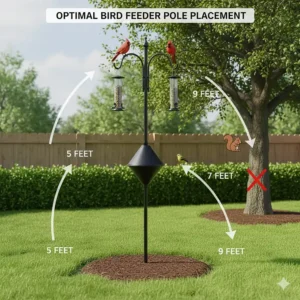
The National Audubon Society and multiple .edu sources agree on critical placement guidelines. Your bird feeder pole with squirrel baffle should be:
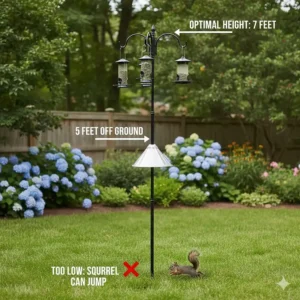
- At least 5 feet off the ground (prevents jumping onto the baffle)
- Minimum 8-10 feet from anything solid (trees, fences, buildings, shrubs)
- In open areas where squirrels can’t leap from nearby structures
Violate these rules, and even the best pole becomes useless. A squirrel launching from a nearby fence will simply bypass your expensive baffle system entirely.
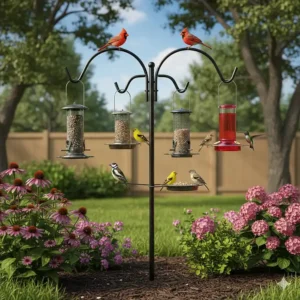
Types of Squirrel Baffles: Which Technology Works?
Not all squirrel baffles deliver equal protection. Understanding the engineering behind different baffle types helps you choose the right pole for your situation.
Cone/Dome Baffles
The most common type features an inverted cone or dome shape, typically 16-19 inches in diameter. Made from smooth plastic (PP or PET materials), these create a slippery surface that squirrels can’t grip.
How They Work: When a squirrel climbs the pole and reaches the baffle, the smooth surface and downward angle provide no purchase points. The squirrel slides off and returns to ground level.
Effectiveness Rating: ⭐⭐⭐⭐ (4/5) – Works well but determined squirrels occasionally find workarounds if not positioned correctly.
Best For: Budget-conscious buyers and standard residential yards.
Spring-Loaded Cylindrical Baffles
Patented by Squirrel Stopper, these baffles move dynamically when squirrels attempt to climb. Internal springs allow the baffle to shift up, down, and side-to-side.
How They Work: The squirrel reaches the baffle and tries to grip the surface. Instead of a static barrier, the baffle moves unpredictably, causing the squirrel to lose balance and fall. After dozens of failures, even persistent squirrels give up.
Effectiveness Rating: ⭐⭐⭐⭐⭐ (5/5) – Nearly 100% effective when properly installed.
Best For: High-squirrel-density areas and premium protection.
Wrap-Around Pole Baffles
These baffles encircle the pole at a specific height, typically made from metal or thick plastic with smooth surfaces.
How They Work: Similar to dome baffles but cylindrical. Squirrels climbing from below encounter the smooth barrier and can’t proceed upward.
Effectiveness Rating: ⭐⭐⭐ (3/5) – Works for casual squirrels but experienced ones may find climbing angles.
Best For: Retrofitting existing poles rather than complete systems.
Installation Best Practices: Getting It Right
Even the best squirrel proof poles for bird feeders fail without proper installation. Follow these expert-validated steps for maximum effectiveness.
Step 1: Select the Perfect Location
Walk your yard looking for open areas away from structures. Use a measuring tape to ensure 10-foot clearance from all jump points. Consider these factors:
- Sun exposure: Birds prefer partial shade for comfort
- Window views: Position where you’ll enjoy watching from indoors
- Ground conditions: Soft soil makes auger installation easier
- Safety zones: Keep away from high-traffic areas where poles might trip people
Step 2: Proper Ground Installation
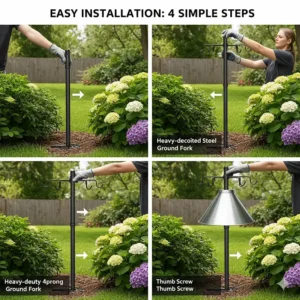
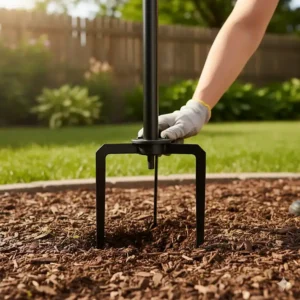
Most quality poles include an auger (spiral ground stake). Here’s the correct installation process:
- Mark your spot – Ensure it meets all clearance requirements
- Check underground – Call 811 before digging to locate utilities
- Start the auger – Hand-turn the auger clockwise until it bites
- Use the twist rod – Insert the provided rod and turn steadily
- Sink it deep – The auger should go 18-24 inches underground
- Test stability – Push hard from multiple angles before proceeding
Pro tip from experienced birders: In rocky soil, dig a pilot hole first. In sandy conditions, consider concrete reinforcement for poles holding heavy feeders.
Step 3: Baffle Positioning
Baffle height determines success or failure. According to the U.S. Fish & Wildlife Service guidelines:
- Ideal height: 4-5 feet above ground level
- Too low: Squirrels jump on top, using it as a launch pad
- Too high: Squirrels leap past it directly to feeders
Measure carefully and adjust during initial installation. Watch squirrel behavior the first few days and make corrections if needed.
Step 4: Load Testing
Before hanging expensive feeders:
- Apply pressure to test pole stability
- Hang weight equivalent to your planned feeders
- Check that arms and hooks remain level
- Verify baffle doesn’t slip under load
- Make final adjustments to positioning
Bird Feeder Types That Work Best With Squirrel Proof Poles
Matching the right feeder type to your pole maximizes bird variety and feeding success. Different bird species have distinct feeding preferences according to Audubon research.
Tube Feeders
Best Bird Species: Chickadees, finches, nuthatches, titmice, small woodpeckers
Tube feeders with multiple perches allow several birds to feed simultaneously without crowding. The clear tubes let you monitor seed levels easily. Look for metal components around feeding ports—squirrels chew through plastic perch areas.
Weight Consideration: When filled, large tube feeders can weigh 5-8 pounds. Ensure your pole’s arms support this weight.
Platform/Tray Feeders
Best Bird Species: Cardinals, jays, grosbeaks, juncos, doves
Platform feeders attract larger birds that prefer open feeding spaces. The downside? They expose seed to rain and require frequent cleaning to prevent mold. Choose models with drainage holes and consider adding a rain cover.
Weight Consideration: Covered platform feeders range from 3-10 pounds depending on size. Place heavier models on central pole mounts rather than hanging arms.
Suet Feeders
Best Bird Species: Woodpeckers, nuthatches, wrens, chickadees, titmice
Essential during winter months when insects are scarce. Suet cages should hang at least 5 feet high. According to bird feeding experts, remove suet during summer in hot climates—melting fat can damage bird feathers.
Weight Consideration: Suet cages are lightweight (1-2 pounds) and work well on side hooks.
Hopper Feeders
Best Bird Species: Cardinals, jays, finches, sparrows, chickadees
Hopper feeders hold large seed quantities (5-15 pounds when full) and protect seed from weather. The enclosed design reduces waste. However, the weight makes them unsuitable for most pole arms—mount directly on pole tops.
Weight Consideration: Large filled hopper feeders can exceed 20 pounds. Use only on poles rated for such weight, like the Squirrel Stopper Deluxe.
Maintenance and Seasonal Care
Your squirrel resistant bird feeder pole needs regular maintenance for long-term effectiveness and bird health. The Cornell Lab of Ornithology provides science-based cleaning guidelines.
Monthly Maintenance Checklist
Feeder Cleaning (Every 2 Weeks):
- Empty all seed residue
- Scrub with 9:1 water-to-bleach solution
- Rinse thoroughly and air dry completely
- Check for mold or bacterial growth
Dirty feeders spread avian diseases like salmonella and conjunctivitis. Studies show disease transmission increases at poorly maintained feeding stations where birds cluster.
Baffle Inspection:
- Check for cracks or damage
- Clean off dirt and debris
- Verify attachment remains secure
- Test smooth surface hasn’t degraded
Pole Structure:
- Inspect for rust spots
- Tighten any loose connections
- Check ground stability after storms
- Touch up powder coating if needed
Seasonal Adjustments
Spring (March-May):
- Deep clean all components
- Repair any winter damage
- Adjust feeder height for nesting season
- Offer high-protein foods (suet, mealworms)
Summer (June-August):
- Remove suet in areas with 85°F+ temps
- Clean feeders more frequently (weekly)
- Provide fresh water daily
- Watch for bears in active areas
Fall (September-November):
- Stock up on seed for migrating birds
- Check pole stability before winter storms
- Offer high-fat foods for migration prep
- Clear ground debris around pole base
Winter (December-February):
- Most critical feeding period
- Keep feeders filled consistently
- Clear snow from feeding areas
- Monitor for ice buildup on baffles
Common Problems and Solutions
Even with quality equipment, issues arise. Here’s how to troubleshoot common challenges with your squirrel proof feeder pole.
Problem: Squirrels Still Reaching Feeders
Diagnosis: If squirrels succeed despite your baffle, they’re exploiting a weakness in your setup.
Solutions:
- Measure clearances again – Squirrels may be jumping from something you overlooked
- Lower the baffle – If it’s too high, squirrels leap past it
- Raise the baffle – If too low, they’re using it as a platform
- Trim nearby branches – Growth changes clearances over time
- Add a second baffle – Mount one above feeders for double protection
Problem: Pole Leans or Tips Over
Diagnosis: Insufficient ground penetration or unstable soil.
Solutions:
- Reinstall deeper – Auger should penetrate 20-24 inches minimum
- Use concrete – Mix quick-set concrete around the base
- Upgrade to more prongs – 9-prong bases offer superior stability
- Redistribute feeder weight – Balance heavy feeders evenly
Problem: Feeders Sway Excessively in Wind
Diagnosis: Arms too long or feeders too heavy for pole capacity.
Solutions:
- Use shorter hanging chains – Reduce pendulum effect
- Add stabilizer plates – Some poles include wind guards
- Reduce feeder weight – Use smaller capacity models
- Upgrade pole diameter – 2-inch poles handle wind better than 1-inch
Problem: Birds Aren’t Visiting
Diagnosis: Poor location, wrong food, or patience needed.
Solutions:
- Wait 1-2 weeks – Birds need time to discover new feeders
- Offer variety – Different foods attract different species
- Check safety – Birds avoid areas without nearby perches
- Add water source – Birdbaths increase attractiveness
- Reduce window proximity – Birds avoid collision-prone areas
Maximizing Bird Diversity at Your Feeding Station
A squirrel proof bird feeder pole creates the foundation, but thoughtful feeder selection brings diverse species to your yard. Research from the National Wildlife Federation identifies key strategies.
The Multi-Level Feeding Approach
Different bird species have distinct height preferences:
Ground Feeders (0-2 feet): Mourning doves, juncos, sparrows, towhees
- Use platform feeders near pole base
- Scatter cracked corn and millet
- Keep area clear for easy escape
Mid-Level Feeders (4-6 feet): Cardinals, finches, jays, grosbeaks
- Hang from pole arms at varied heights
- Offer mixed seed and sunflower
- Include perches for larger birds
High Feeders (7+ feet): Chickadees, titmice, nuthatches, small woodpeckers
- Mount on pole tops
- Provide nyjer and suet
- Ensure sturdy mounting for acrobatic feeding
Seed Selection Science
According to bird feeding research, seed choice dramatically affects visitor diversity:
Black-Oil Sunflower Seeds (Most versatile)
- Attracts: Cardinals, chickadees, finches, nuthatches, jays, woodpeckers
- Fat content: 40-50%
- Shell: Thin enough for small birds to crack
Nyjer/Thistle Seeds (Finch favorites)
- Attracts: Goldfinches, siskins, house finches, purple finches
- Requires: Special finch feeders with tiny ports
- Waste: Minimal as finches consume thoroughly
Safflower Seeds (Squirrel deterrent)
- Attracts: Cardinals, grosbeaks, chickadees, titmice
- Benefit: Squirrels dislike the bitter taste
- Cost: More expensive than sunflower
White Proso Millet (Ground bird favorite)
- Attracts: Juncos, doves, sparrows, towhees
- Best use: Ground feeding or platform feeders
- Value: Economical option
Budget Considerations: Finding Your Sweet Spot
Squirrel proof poles range from $30 to $150. Understanding what drives cost helps you invest wisely.
Budget Tier ($30-$50)
What You Get:
- Basic dome baffle (16-18 inches)
- 5-prong base stability
- Standard metal pole
- 1-2 year typical lifespan
- Adequate for light squirrel pressure
Best Options: eWonLife 92″, 93″ Heavy Duty Station
Trade-offs: Lower-grade materials, simpler baffle technology, may rust faster
Mid-Range Tier ($50-$90)
What You Get:
- Larger dome baffles (19+ inches)
- 7-9 prong enhanced stability
- Better coating/rust resistance
- 3-5 year typical lifespan
- Good for moderate squirrel activity
Best Options: Gtongoko 107″, Boostool 108″, Birds Choice Classic
Trade-offs: Not quite premium materials but solid construction
Premium Tier ($90-$150)
What You Get:
- Spring-loaded dynamic baffles
- Heavy-duty galvanized steel
- Superior rust resistance
- 10+ year lifespan potential
- Defeats even persistent squirrels
Best Options: Squirrel Stopper Deluxe, Squirrel Stopper Sequoia
Trade-offs: Higher upfront cost, but best long-term value
Cost-Per-Year Analysis
Consider total ownership costs over time:
Budget Pole: $40 ÷ 2 years = $20/year Premium Pole: $130 ÷ 10 years = $13/year
Premium poles actually cost less annually while providing superior protection. Factor in seed waste prevented by effective squirrel deterrence, and premium options often save money within 2-3 years.
Environmental and Ethical Considerations
Bird feeding impacts local ecosystems. The California Department of Fish and Wildlife‘s “Keep Me Wild” program emphasizes responsible feeding practices.
The Disease Transmission Concern
Concentrated bird populations at feeders increase disease risk. Common avian diseases spread at feeding stations include:
- Salmonellosis: Bacterial infection causing lethargy and death
- Aspergillosis: Fungal infection from moldy seed
- Avian pox: Virus creating warty growths
- Conjunctivitis: Eye infection affecting house finches
Prevention strategies:
- Clean feeders every 2 weeks minimum
- Remove wet or moldy seed immediately
- Space multiple feeders 10+ feet apart
- Discard seed on the ground weekly
The Natural Behavior Question
Experts debate whether feeding wild birds helps or harms populations. U.S. Fish & Wildlife Service research indicates mixed effects:
Potential Benefits:
- Supports birds during harsh weather
- Aids survival during migration
- Supplements declining natural food sources
- Enables education and appreciation
Potential Concerns:
- May alter migration patterns
- Creates dependence on artificial food
- Attracts predators to concentrated prey
- Spreads disease in crowded conditions
Balanced Approach: Feed seasonally (fall through spring), maintain clean stations, and supplement rather than replace natural food sources through native plantings.
The Squirrel Perspective
While this guide focuses on excluding squirrels, remember these animals play important ecological roles according to the Humane Society. Squirrels:
- Disperse tree seeds, planting future forests
- Provide food for hawks, owls, and foxes
- Aerate soil through digging
- Indicate healthy ecosystem
Humane squirrel management:
- Never use harmful deterrents (grease, glue, poison)
- Consider offering corn at separate squirrel feeders
- Accept some seed loss as wildlife interaction
- Avoid trapping and relocating (usually fatal)
FAQ: Your Squirrel Proof Pole Questions Answered
❓ How high should a bird feeder pole be to keep squirrels away?
❓ Do spring-loaded baffles work better than dome baffles?
❓ Can I install a squirrel proof bird feeder pole in rocky soil?
❓ How often should I clean the squirrel baffle?
❓ What's the best squirrel proof pole for heavy hopper feeders?
Conclusion: Reclaim Your Bird Feeders Today
Squirrels are remarkable creatures, but they don’t belong monopolizing your bird feeders. The right squirrel proof bird feeder pole transforms frustrating seed theft into genuine backyard birdwatching pleasure.
For most homeowners, the eWonLife 92″ with 9-Prong Base delivers unbeatable value at under $50. Its stability, included accessories, and effective baffle check all the boxes without breaking the budget. If you face persistent squirrel pressure or want premium protection, the Squirrel Stopper Deluxe justifies its higher cost through superior engineering and decade-long durability.
Remember the golden rules: Install 5 feet high, maintain 10 feet clearance, clean regularly, and choose appropriate feeders for your target bird species. Follow these principles, and you’ll enjoy diverse bird visits while squirrels remain safely grounded.
Your feathered friends are waiting. Which pole will you choose to reclaim your backyard sanctuary?
Recommended for You
- 7 Best Bird Feeder Baffles 2025 – Stop Squirrels Fast
- 7 Best Squirrel Proof Bird Feeders 2025 – Top Rated Reviews
- 7 Best Bird Feeders on a Post for 2025 | Expert Reviews
Disclaimer: This article contains affiliate links. If you purchase products through these links, we may earn a small commission at no additional cost to you.
✨ Found this helpful? Share it with your friends! 💬🤗
