
In This Article
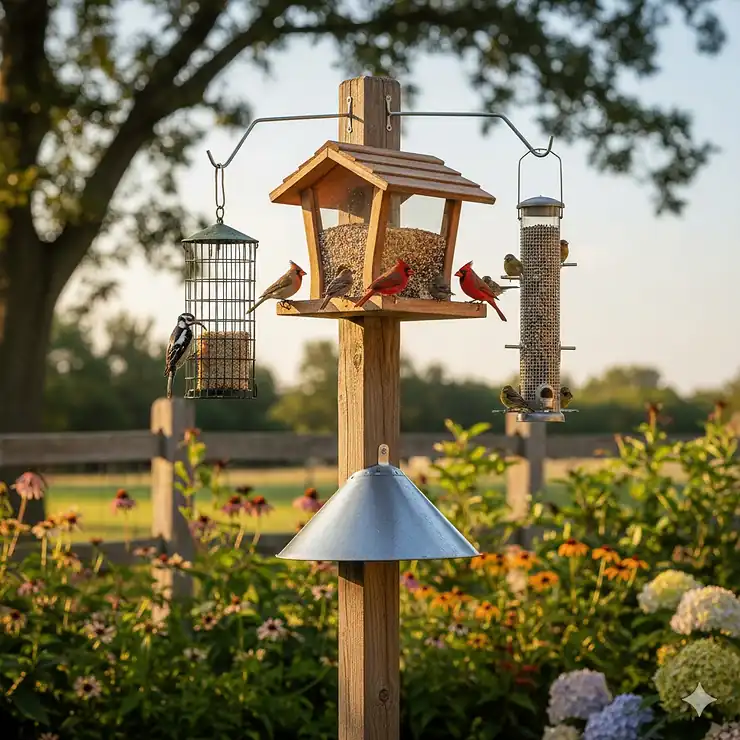
Picture this: you’re sipping coffee on your deck when a flash of red catches your eye—a cardinal landing gracefully on your newly installed feeder, its brilliant plumage glowing in the morning sun. This is the magic that bird feeders on a post bring to everyday life.
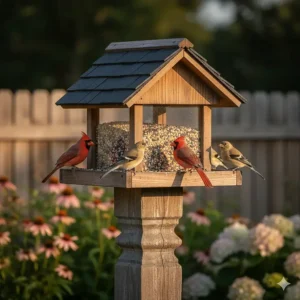
Unlike hanging feeders that sway in the wind or window-mounted options with limited capacity, bird feeders on a post offer stability, visibility, and versatility that serious bird enthusiasts appreciate. These ground-mounted feeding stations create a focal point in your yard while providing birds with a secure, accessible dining experience. Whether you’re mounting a feeder directly onto a 4×4 wooden post or using a dedicated pole system with squirrel baffles, post-mounted feeders give you complete control over placement and height.
According to the Cornell Lab of Ornithology, over 57 million Americans participate in bird feeding activities annually, contributing to both wildlife conservation and personal wellbeing. The right feeder placement can increase local bird populations by up to 23% in suburban areas, making your choice of feeder style and location more important than you might think.
In this comprehensive guide, I’ll walk you through everything you need to know about bird feeders on a post—from budget-friendly options under $25 to premium handcrafted models that serve as stunning garden centerpieces. You’ll discover which features truly matter, how to outsmart determined squirrels, and why post-mounted systems might just be the upgrade your backyard has been waiting for.
Quick Comparison Table
| Feeder Model | Type | Capacity | Squirrel Proof | Price Range | Best For |
|---|---|---|---|---|---|
| Perky-Pet 101-5 | Wall/Post Mount | 1.1 lbs | No | $15-$20 | Budget buyers |
| Woodlink PRO4 | Cedar Hopper | 13.2 lbs | No | $50-$70 | Large capacity |
| Perky-Pet Squirrel-Be-Gone II | Metal Hopper | 8 lbs | Yes | $60-$75 | Squirrel problems |
| Droll Yankees Whipper | Tube | 5 lbs | Yes | $100-$110 | Cardinals & songbirds |
| Woodlink Absolute II | Metal Hopper | 12 lbs | Yes | $84 | Heavy-duty use |
| DutchCrafters Poly Mount | Recycled Plastic | 10+ lbs | No | $70-$90 | Eco-conscious |
| Saving Shepherd Copper Top | Gazebo Platform | 6 lbs | No | $120-$150 | Aesthetic appeal |
💬 Just one click – help others make better buying decisions too! 😊
Top 7 Bird Feeders on a Post: Expert Analysis
1. Perky-Pet 101-5 Wall and Post Mount Feeder – Best Budget Option
Starting your bird feeding journey doesn’t require breaking the bank. The Perky-Pet 101-5 proves that affordability and functionality can coexist beautifully in one compact package.
Key Specifications:
- Seed capacity: 1.1 pounds
- Hammered copper finish with clear reservoir
- Both perch ring and tray design
- Mounting options: hang, wall, or post mount
This versatile little feeder punches well above its weight class. The clear plastic reservoir lets you monitor seed levels at a glance, while the dual feeding design—featuring both a perch ring and tray—accommodates birds with different feeding preferences. Chickadees and finches love the perch, while sparrows often prefer the tray.
Customer feedback consistently highlights the easy cleaning process. One reviewer mentioned washing it out with a hose, letting it dry, and refilling “in a jiffy.” The compact size makes it perfect for apartments, condos, or small yards where space is at a premium.
✅ Pros:
- Extremely affordable entry point ($15-$20)
- Easy to clean and refill
- Versatile mounting options
❌ Cons:
- Small capacity requires frequent refilling
- Not squirrel-resistant
Best for: First-time bird feeders, renters, or those testing the waters before investing in premium options.
2. Woodlink PRO4 Premier Cedar Feeder – Best Large Capacity
When you’re tired of daily refills and want a feeder that can handle serious bird traffic, the Woodlink PRO4 delivers with impressive 13.2-pound capacity and dual-sided access.
Key Specifications:
- Capacity: 13.2 pounds of mixed seed
- Construction: Kiln-dried inland red cedar
- Feeding stations on all four sides
- Dimensions: 11.25″L x 17.25″W x 11.125″H
This feeder is built like a tank. Constructed from 7/8″ kiln-dried cedar with zinc chromate screws and anodized hinges, it’s designed to withstand harsh winters without cracking or warping. The powder-coated perforated metal tray promotes drainage, keeping seed dry even during rainy periods.
One customer going through 40-50 pounds of seed monthly called it “sturdy, practical, easy to fill” and noted significantly less seed waste compared to previous feeders. The four-sided access means multiple birds can feed simultaneously without competition—cardinals on one side, jays on another, and finches picking at the third.
✅ Pros:
- Massive capacity reduces refill frequency
- Durable cedar construction (Made in USA)
- Four-sided feeding accommodates multiple birds
❌ Cons:
- Heavier when full
- Not squirrel-proof
Best for: High-traffic feeding stations, rural properties, serious bird enthusiasts who go through large quantities of seed.
3. Perky-Pet Squirrel-Be-Gone II Country House – Best Squirrel Defense
If squirrels are ransacking your feeders faster than birds can visit, the Perky-Pet Squirrel-Be-Gone II will restore order to your backyard.
Key Specifications:
- Capacity: 8 pounds
- Weight-activated perch system
- All-metal construction with powder-coated finish
- Four adjustable spring positions
- Can hang or pole mount
The genius here is the weight-activated perch bar. When a squirrel (or large nuisance bird) lands on the feeder, their weight triggers the mechanism to close off the feeding ports. Birds get full access while squirrels get politely denied. You can even adjust the spring tension across four positions to fine-tune which birds can access the seed—perfect if you want to exclude grackles or starlings while welcoming smaller songbirds.
The all-metal construction resists chewing, and the powder-coated finish prevents rust even in coastal or humid climates. The removable roof reveals a large opening for easy filling and cleaning—no more struggling with tiny caps or difficult access points.
✅ Pros:
- Effective weight-activated squirrel protection
- Adjustable sensitivity for different bird sizes
- Durable chew-resistant construction
❌ Cons:
- Higher price point ($60-$75)
- Requires pole for post mounting (sold separately)
Best for: Anyone dealing with persistent squirrel problems or locations with aggressive large birds.
4. Droll Yankees Yankee Whipper – Best for Cardinals
Cardinals are among America’s most beloved backyard birds, but their feeding habits require specific feeder designs. The Droll Yankees Yankee Whipper was engineered with cardinals in mind.
Key Specifications:
- Capacity: 5 pounds
- Four curved, weight-sensitive perches
- Evening blue powder-coated metal cap and base
- Clear UV-resistant polycarbonate tube
- Made in USA (Plainfield, Connecticut)
What makes this feeder special? Those curved perches. Cardinals prefer to face their food while eating (unlike finches who can twist and turn), and the Whipper’s curved perch positioning encourages this natural behavior. Each perch is individually sprung and calibrated for birds up to cardinal weight—heavier squirrels cause the perch to collapse, denying them access.
The built-in seed flow director keeps seed fresh at all four ports by preventing stale seed from accumulating in corners. One enthusiast noted: “The whipper is the first feeder I haven’t had to have hanging for a few days before my birds found it. I have had to fill it twice since just putting it up.”
✅ Pros:
- Specifically designed for cardinal feeding behavior
- Weight-sensitive perches defeat squirrels
- High-quality American manufacturing
❌ Cons:
- Premium pricing ($100-$110)
- Smaller capacity than hopper models
Best for: Cardinal lovers, quality-focused buyers, those wanting proven squirrel-proof technology.
5. Woodlink Absolute II Squirrel Resistant Feeder (Model 23803) – Best Heavy-Duty Option
For serious bird feeders who need maximum capacity with squirrel protection, the Woodlink Absolute II delivers professional-grade performance.
Key Specifications:
- Capacity: 15 pounds
- All-metal construction (green powder-coated steel)
- Counter-balanced perch with 3 adjustable positions
- Includes 5-foot sectional pole kit with ground socket
- Locking top prevents squirrel access
This feeder takes squirrel resistance seriously. When a squirrel steps onto the perch, a metal shield immediately covers the seed tray, cutting off access. The adjustable counter-balanced perch can be calibrated for light, medium, or heavy birds, giving you precise control over which species can feed.
The no-waste seed saver baffle stops birds from “bill-sweeping”—that annoying habit where birds shovel seed onto the ground searching for favorites. Combined with the massive 15-pound capacity, you’ll spend less time refilling and cleaning up ground mess.
Fully assembled and ready to mount, this feeder includes everything you need: steel hanging rod for hanging setups OR a complete 5-foot pole kit with metal mounting bracket and ground socket for post installation.
✅ Pros:
- Massive 15-pound capacity
- Dual-purpose: hang or pole mount
- Effective mechanical squirrel deterrent
❌ Cons:
- Heavy when filled ($84.48)
- Large footprint may not suit small yards
Best for: Rural properties, areas with aggressive squirrel populations, bird enthusiasts who prefer filling once weekly.
6. DutchCrafters Poly Post Mount Hopper Feeder – Best Eco-Friendly Choice
Sustainability meets functionality with the DutchCrafters Poly Post Mount Hopper, handcrafted by Amish woodworkers from recycled materials.
Key Specifications:
- Construction: Recycled poly lumber (from plastic bottles and jugs)
- Includes two suet cake holders
- Hopper-style dispenser with aluminum mesh tray
- Weatherproof design with removable plexiglass sides
- Made in USA (Amish crafted)
This feeder embodies the principle that environmental responsibility and superior craftsmanship aren’t mutually exclusive. The recycled poly lumber won’t crack, split, fade, rot, or harbor bacteria—issues that plague traditional wooden feeders. It’s genuinely maintenance-free while handling all outdoor weather conditions.
The dual suet cage holders add versatility, attracting woodpeckers, nuthatches, and other insect-eating birds that might otherwise skip your station. The hopper-style seed dispenser funnels food into the aluminum mesh tray, promoting drainage and keeping seed dry.
For post mounting, an extra strip of poly on the bottom makes adding mounting hardware easy—just attach screws through the floor before adding seed. (Note: mounting hardware not included.)
✅ Pros:
- Made from 100% recycled materials
- Lifetime durability (won’t rot or crack)
- Handcrafted quality from Amish woodworkers
❌ Cons:
- Mounting hardware not included
- Higher price point for recycled materials ($70-$90)
Best for: Eco-conscious buyers, those wanting American-made products, anyone seeking truly weatherproof construction.
7. Saving Shepherd 24″ Copper Top Gazebo Feeder – Best Decorative Option
Some feeders transcend function to become genuine garden art. The Saving Shepherd Copper Top is that rare piece that feeds birds beautifully while serving as a stunning focal point.
Key Specifications:
- Capacity: Approximately 6 pounds
- Handcrafted in Lancaster County, Pennsylvania
- Real copper top and trim (develops patina over time)
- White-painted wood with ZAR Rain Stain finish
- Dimensions: 24″ diameter, 16″ round design
- Mounts on standard 4×4 post
This isn’t mass-produced; each feeder is meticulously handcrafted by Amish artisans using traditional techniques. The classic copper top isn’t just beautiful—it’s functional, developing a gorgeous patina over time that actually protects the metal while adding character. The white wood is finished with ZAR Rain Stain, providing UV resistance, mildew protection, and weather durability that synthetic paints can’t match.
The 24″ diameter provides ample feeding space for multiple birds, while the removable lathe-turned finial makes refilling surprisingly easy despite the impressive capacity. Customers consistently mention how this feeder becomes “an instant focal point” in their yard.
✅ Pros:
- Museum-quality handcrafted construction
- Beautiful copper develops character with age
- Becomes garden centerpiece, not just functional feeder
❌ Cons:
- Premium pricing ($120-$150)
- Requires purchasing separate 4×4 post
Best for: Homeowners prioritizing aesthetics, those wanting heirloom-quality pieces, gardens where the feeder is visible from main living spaces.
Understanding Bird Feeders on a Post: Why They’re Different
What Defines a Post-Mounted Bird Feeder?
Bird feeders on a post represent a distinct category in backyard bird feeding. Unlike hanging feeders that dangle from chains or suction-cup window models, these feeders either mount directly onto vertical posts (typically 4×4 wooden posts) or attach to dedicated pole systems designed specifically for bird feeding stations.
The key advantage? Stability. While hanging feeders swing wildly during windstorms, spilling seed and frustrating birds, post-mounted options stay rock-solid. This stability isn’t just convenient for humans—birds strongly prefer stable feeding platforms where they can land confidently without the feeder lurching beneath them.
Post mounting also gives you unprecedented control over placement. You can position feeders at precise heights, distances from cover, and angles to windows. This level of customization simply isn’t possible with tree-hung or building-mounted alternatives.
The Psychology of Post-Mounted Feeding Stations
According to research from the Cornell Lab of Ornithology, feeder placement significantly impacts which bird species visit and how comfortable they feel while feeding. Birds need to balance two competing instincts: the drive to eat and the need for safety from predators.
Post-mounted feeders excel at this balance. Elevated 5-6 feet above ground, they’re high enough to discourage ground predators while low enough for easy cleaning and refilling. The vertical post provides a clear sightline in all directions—birds can spot approaching threats while feeding.
Interestingly, platform and hopper feeders mounted on posts attract different species than tube feeders. Cardinals, jays, and grosbeaks—larger birds that struggle with narrow perches—thrive at post-mounted hoppers where they can land comfortably. Meanwhile, post-mounted tube feeders serve finches and chickadees perfectly.
Pole vs. 4×4 Post: Choosing Your Mounting System
Metal Pole Systems: Modern Versatility
Modern bird feeding pole systems typically feature:
- 1-inch diameter hollow metal tubing (usually powder-coated steel)
- Threaded sections for adjustable height (ranging from 60″ to 95″)
- Auger bases or multi-prong ground stakes
- Built-in shepherd’s hooks or mounting platforms
- Optional squirrel baffle integration
Advantages: Easy to move and adjust, no carpentry skills required, often include squirrel baffles, clean modern aesthetic.
Disadvantages: Can bend in extreme weather, may require guy wires in windy areas, less substantial appearance than wood posts.
Price range: $25-$75 for complete pole kits.
Traditional 4×4 Wooden Posts: Classic Stability
Wooden post installations involve:
- Pressure-treated 4×4 lumber (typically 8-10 feet, with 2-3 feet buried)
- Concrete footer for stability
- Post-cap protection from water damage
- Mounting flanges or direct-attach hardware
Advantages: Maximum stability, substantial appearance, can support multiple heavy feeders, permanent installation, integrates beautifully with garden landscaping.
Disadvantages: Requires digging and concrete work, permanent location, eventual wood rot (10-20 years depending on treatment), more labor-intensive installation.
Price range: $30-$60 for materials (post, concrete, mounting hardware).
Which Should You Choose?
Choose metal pole systems if you:
- Rent your property
- Want flexibility to relocate feeders seasonally
- Prefer quick, no-dig installation
- Need integrated squirrel baffle systems
- Have unstable soil conditions
Choose 4×4 wooden posts if you:
- Own your property long-term
- Want maximum stability for large, heavy feeders
- Prefer traditional aesthetics
- Plan multiple feeders on one post
- Have the skills and tools for proper installation
Many serious bird enthusiasts actually use both—metal poles for experimental placements and seasonal adjustments, with permanent 4×4 posts for their main feeding stations.
Squirrel-Proofing Your Post-Mounted Feeders
The Squirrel Problem: Understanding the Challenge
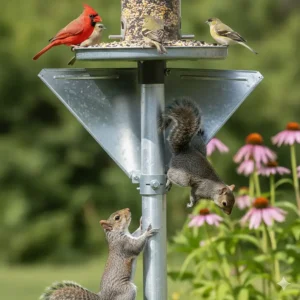
Let’s be honest: squirrels are clever, persistent, and surprisingly athletic. They can leap 8-10 feet horizontally and 4-5 feet vertically. They can climb virtually any textured surface. And they’re motivated by one of nature’s strongest drives—food acquisition before winter.
But here’s what most people don’t realize: squirrels aren’t the villains in this story. They’re just wildlife doing what wildlife does. The solution isn’t to wage war against squirrels but to create systems where birds and squirrels can coexist without the latter monopolizing feeders.
Mechanical Solutions: Weight-Activated Feeders
The most reliable squirrel-proofing technology uses physics. Products like the Droll Yankees Yankee Flipper and Perky-Pet Squirrel-Be-Gone II employ weight-activated mechanisms. When something heavy (like a squirrel) lands on the feeding perch, the mechanism triggers:
- Motorized spinning perches (Yankee Flipper): The perch literally spins, gently tossing the squirrel off. Battery-powered and highly entertaining to watch.
- Port-closing shutters (Squirrel-Be-Gone models): Metal shields slide down to cover feeding ports when excessive weight is detected.
- Collapsing perches (Yankee Whipper): Perches designed for bird weight collapse under heavier squirrels, denying them purchase.
These systems work reliably because they’re passive—no human intervention required once set up properly.
Barrier Solutions: Baffles and Placement
For non-mechanical feeders, physical barriers provide excellent protection:
Squirrel Baffles are dome or cylinder-shaped guards placed below feeders on poles. The smooth, slippery surface prevents squirrels from climbing past. Key specifications:
- Mount baffles at least 4 feet above ground
- Ensure the baffle is wider than the feeder above it
- Use wrap-around designs for 4×4 posts (no removal required)
- Metal or hard plastic materials resist chewing
Strategic Placement matters enormously:
- Position feeders 10+ feet from trees, fences, or structures (squirrels can’t leap that far)
- Maintain 8-10 feet from tree branches above (they can’t drop that far accurately)
- Use metal poles instead of wood posts when possible (harder to climb)
Behavioral Solutions: Dedicated Squirrel Feeders
Here’s a counterintuitive strategy that works surprisingly well: give squirrels their own feeding station.
Place a large platform feeder filled with inexpensive corn 15-20 feet away from your bird feeders. Squirrels will often take the path of least resistance, visiting the easily accessible corn buffet instead of working hard to reach bird seed. It’s cheaper to feed squirrels corn than to replace destroyed feeders or waste expensive bird seed.
Choosing the Right Seed for Post-Mounted Feeders
Black Oil Sunflower: The Universal Favorite
If you could stock only one seed type, make it black oil sunflower. Here’s why:
- High fat content (40%+) provides energy birds need
- Thin shells easy for most birds to crack
- Attracts the widest variety of species: cardinals, chickadees, nuthatches, finches, jays, woodpeckers
- Good value—typically $0.75-$1.25 per pound in bulk
The high oil content means birds get maximum nutrition per seed, critical during cold weather when calorie demands spike. The thin shells also mean less mess beneath your feeder compared to striped sunflower.
Mixed Seed Blends: Customizing Your Mix
Pre-mixed seed blends offer variety but often contain fillers birds don’t eat. Look for premium mixes featuring:
- Black oil sunflower seeds (30-40%)
- Safflower seeds (20-30%) – cardinals and grosbeaks love these; squirrels generally avoid them
- Sunflower hearts/chips (15-20%) – no mess, pure nutrition
- Peanut pieces (10-15%) – attract jays, woodpeckers, chickadees
- Minimal or no milo, wheat, or oats (ground-feeding birds only)
Budget mixes heavy on milo and millet end up wasted—birds kick these aside searching for preferred seeds. You’re essentially paying to make a mess.
Specialty Seeds for Targeted Species
Nyjer (Thistle): Goldfinches, pine siskins, and redpolls adore nyjer, but it requires specialized tube feeders with tiny ports. Not ideal for post-mounted hopper feeders.
Safflower: Cardinals, grosbeaks, and chickadees readily eat safflower while squirrels generally avoid it. More expensive than sunflower but reduces squirrel pressure.
Peanuts (in-shell or pieces): Jays, woodpeckers, and titmice go crazy for peanuts. High protein and fat content make these nutritional powerhouses, especially during nesting season.
Suet: The Cold-Weather Champion
While not technically “seed,” suet cakes deserve mention for post-mounted feeding stations. High-fat suet attracts:
- Woodpeckers (all species)
- Nuthatches
- Chickadees
- Wrens
- Even occasional warblers during migration
Many post-mounted hoppers (like the DutchCrafters model) include integrated suet cage holders, making them combination feeding stations. In winter, suet provides critical fat calories when insects are scarce.
Pro tip: Use “no-melt” suet formulations during summer months to prevent oily messes in hot weather.
Installation and Maintenance Best Practices
Setting Up Your Post-Mounted Feeder System
For Metal Pole Systems:
Step 1: Choose your location carefully. Remember the 10-foot rule—at least 10 feet from trees, fences, or structures that squirrels could use as launching pads.
Step 2: Assemble pole sections according to manufacturer instructions. Most systems use threaded connections that twist together—no tools required.
Step 3: Install the base:
- Auger bases: Twist into ground using leverage holes until 18-24 inches deep. Works best in softer soil.
- Multi-prong stakes: Hammer or step down into ground. Faster but less stable in loose soil.
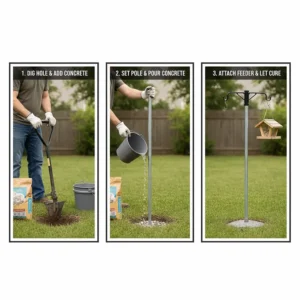
- Concrete bases: Dig 12″ deep, place pole, fill with quick-set concrete. Most stable but permanent.
Step 4: Add squirrel baffle before attaching feeders. Position at least 4-5 feet above ground.
Step 5: Attach feeder using manufacturer’s mounting system (usually threaded adapters or hook systems).
For 4×4 Wooden Posts:
Step 1: Use pressure-treated lumber rated for ground contact. Standard 8-10 foot posts work well (you’ll bury 2-3 feet).
Step 2: Dig post hole 10-12 inches in diameter, 30-36 inches deep. Use post-hole diggers or auger for easier digging.
Step 3: Place 4-6 inches of gravel in hole bottom for drainage.
Step 4: Set post vertically (use level on two adjacent sides). Fill hole with quick-set concrete, sloping concrete slightly away from post at top for water runoff.
Step 5: Let concrete cure 24-48 hours before mounting feeders.
Step 6: Attach feeder using mounting flanges (screwed into post and feeder bottom) or direct-mount hardware.
Step 7: Add post cap to prevent water from entering end grain and causing rot.
Weekly Maintenance Routine
Bird feeders require regular attention to keep birds healthy and feeders functioning properly:
Every 3-4 days:
- Check seed levels and refill as needed
- Rake or sweep ground beneath feeder to prevent rodent attraction
- Quick visual inspection for damage or needed repairs
Weekly (or bi-weekly in dry weather):
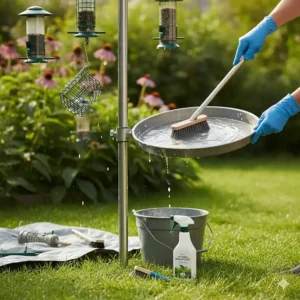
- Empty feeder completely
- Scrub with mild soap and water solution
- Rinse with 1:9 bleach:water solution for sanitization
- Rinse thoroughly with clean water
- Allow to dry completely before refilling
This cleaning schedule prevents mold growth and disease transmission between birds. The Cornell Lab of Ornithology recommends cleaning feeders at least every two weeks, more frequently in wet conditions.
Monthly:
- Inspect mounting hardware for rust or loosening
- Check pole/post stability (especially after storms)
- Evaluate feeder placement—are birds using it? Adjust if needed
- Clean up any spilled seed that’s sprouted beneath feeder
Seasonal Adjustments
Spring: Increase seed offerings as migrating birds pass through and residents begin nesting. Clean feeders more frequently as temperatures rise.
Summer: Continue feeding! Many people mistakenly stop summer feeding, but birds still benefit, especially during hot, dry periods. Use no-melt suet formulations. Clean weekly due to faster spoilage in heat.
Fall: Resume heavy feeding to help migrants fuel up for long journeys and help residents prepare for winter.
Winter: This is actually the easiest season for feeders—seed stays fresh longer in cold temperatures. However, birds need feeders most during harsh weather when natural food is buried or depleted.
Common Problems and Solutions
Problem: Seed Gets Wet and Moldy
Cause: Poor drainage, weather exposure, or stale seed sitting too long.
Solutions:
- Choose feeders with roof overhang to shed rain
- Ensure tray or platform has drainage holes or mesh bottom
- Don’t overfill—add only what birds will eat in 3-5 days
- Position feeder under tree canopy for some rain protection
- Switch to seed with shells (black oil sunflower) which resist moisture better than hulled seeds
Problem: Seed Disappearing Too Quickly
Cause: Squirrels, large birds (jays, grackles), or simply high bird traffic.
Solutions:
- Add squirrel baffle if not already present
- Switch to weight-activated squirrel-proof feeder
- Try safflower seed—squirrels generally avoid it
- Use selective feeders with adjustable perch weight (excludes heavy birds/squirrels)
- Accept high consumption as sign of successful feeding station!
Problem: Birds Aren’t Visiting
Cause: Poor location, competition from nearby feeders, wrong seed type, or simply need patience with new feeder.
Solutions:
- Move feeder closer to cover (shrubs/trees) but maintain 10-foot squirrel barrier
- Remove other feeders temporarily to direct traffic to new feeder
- Try black oil sunflower—universally attractive to most species
- Give it time—birds can take days or weeks to discover new feeders
- Add fresh water source nearby (birdbath)—increases attraction significantly
Problem: Ground Mess Beneath Feeder
Cause: Birds “bill-sweeping” (kicking seed aside searching for favorites), overfilling, or poor feeder design.
Solutions:
- Switch to seed tray catching spilled seed (allows ground-feeding birds access)
- Use feeders with seed-saver baffles (Woodlink Absolute models)
- Try no-mess seed blends (hulled sunflower, shelled peanuts)
- Place platform feeder beneath main feeder to catch spillage
- Rake regularly to prevent sprouting weeds
Problem: Aggressive Birds Dominating
Cause: Jays, grackles, or starlings monopolizing feeder.
Solutions:
- Use caged feeders that exclude large birds while allowing small songbirds access
- Offer separate platform feeder for large birds away from main station
- Switch to safflower seed—grackles and starlings typically avoid it
- Use weight-adjustable feeders to exclude heavy birds
- Provide multiple feeders to reduce competition
Attracting Specific Bird Species
Cardinals: The Backyard Royalty
Northern Cardinals are non-migratory, meaning once established in your area, they’ll visit year-round. Requirements:
- Feeder type: Platform or hopper feeders where they can face their food
- Preferred seeds: Black oil sunflower, safflower, sunflower hearts
- Placement: Near dense shrubs for quick cover
- Perch style: Sturdy, wide perches (curved perches on Droll Yankees Whipper ideal)
Pro tip: Cardinals feed later in the evening than most birds. Keep feeders stocked through dusk for best cardinal visits.
Woodpeckers: The Insect Specialists
Downy, Hairy, and Red-bellied Woodpeckers readily visit feeders, but their needs differ from seed-eaters:
- Food type: Suet cakes, peanuts (whole or pieces), sunflower seeds
- Feeder style: Suet cage holders, hopper feeders with tail-prop perches
- Placement: Attach to tree trunk or post for natural clinging position
Pro tip: Add suet cage holders to your post-mounted hopper for combination feeding station attracting both seed-eaters and insect-specialists.
Goldfinches: The Sunny Nomads
American Goldfinches travel in flocks and can disappear for weeks then suddenly return in force:
- Food type: Nyjer (thistle) primarily, also fine sunflower chips
- Feeder type: Tube feeders with small ports
- Best season: Late summer through fall when they’re most active at feeders
While goldfinches can visit post-mounted tube feeders, they’re one species that actually prefers hanging feeders they can access from all angles.
Blue Jays: The Bold and Beautiful
Jays are intelligent, social, and often dominate feeders when present:
- Food type: Peanuts (their favorite), sunflower seeds, corn
- Feeder type: Large hoppers or platform feeders with substantial perches
- Behavior: Tend to visit in morning, grab multiple seeds, store them
Management tip: If jays are monopolizing, offer peanuts at separate feeder to draw them away from main seed station.
Cost Analysis: What to Expect
Initial Investment Breakdown
Budget Setup ($40-$60):
- Perky-Pet 101-5 feeder: $15-$20
- Basic metal pole kit: $25-$35
- 10 lbs black oil sunflower seed: $8-$12 Total: $48-$67
Mid-Range Setup ($120-$180):
- Woodlink PRO4 cedar feeder: $50-$70
- Quality pole with squirrel baffle: $45-$65
- 25 lbs premium seed mix: $25-$45 Total: $120-$180
Premium Setup ($250-$350):
- Droll Yankees Whipper: $100-$110
- Professional pole system with accessories: $70-$90
- Saving Shepherd copper-top second feeder: $120-$150
- 40 lbs seed variety: $30-$50 Total: $320-$400
Ongoing Costs
Seed consumption varies wildly based on bird traffic, feeder size, and season. Typical households report:
- Light use (1-2 feeders, suburban): 20-30 lbs seed/month = $15-$25/month
- Moderate use (2-3 feeders, good bird traffic): 40-60 lbs seed/month = $30-$50/month
- Heavy use (multiple feeders, rural, winter): 80-120 lbs seed/month = $60-$90/month
Money-saving strategies:
- Buy seed in 40-50 lb bags (better per-pound pricing)
- Shop farm supply stores rather than pet stores (often 30-40% cheaper)
- Join bird feeding co-ops for bulk purchasing
- Use safflower seed to reduce squirrel consumption
- Maintain feeders properly to minimize waste
Other costs:
- Replacement parts: $5-$20 annually
- Cleaning supplies: $10-$15 annually
- Occasional suet cakes: $1.50-$3 each
- New feeder every 3-5 years: $30-$100
Return on Investment: The Intangible Benefits
While it’s easy to calculate costs, bird feeding provides returns that transcend dollars:
- Stress reduction and mental health benefits
- Educational opportunities for children
- Contribution to citizen science (Project FeederWatch)
- Support for declining songbird populations
- Connection to nature and seasonal rhythms
- Entertainment value (especially squirrel-proof feeders in action!)
Most active bird feeders report the hobby quickly becomes “priceless”—a small investment that dramatically improves quality of life and connection to the natural world.
FAQ
❓ How high should bird feeders on a post be mounted?
❓ Can you put bird feeders on a 4x4 post without a pole?
❓ How do you keep squirrels from climbing post mounted bird feeders?
❓ What is the best seed for post mounted bird feeders?
❓ How often should you clean post mounted bird feeders?
Conclusion: Your Journey with Bird Feeders on a Post
Choosing the right bird feeders on a post transforms your backyard from mere property into a thriving wildlife sanctuary. Whether you’ve selected the budget-friendly Perky-Pet 101-5 to test the waters or invested in the heirloom-quality Saving Shepherd Copper Top as a garden centerpiece, you’ve made a decision that benefits both wildlife and your own wellbeing.
The feeders we’ve explored represent proven solutions for every situation—from apartment balconies to sprawling rural properties, from squirrel-free suburbs to wildlife-dense areas where every feeder needs military-grade protection. What matters most isn’t which feeder you choose, but that you’re actively participating in supporting bird populations during a time when habitat loss threatens many species.
Remember that bird feeding is a journey, not a destination. Your first feeder won’t be perfect, and that’s okay. You’ll learn which species visit your area, what seeds they prefer, and where to position feeders for maximum activity. You’ll discover the joy of recognizing individual birds that return daily, the excitement of spotting new species during migration, and the satisfaction of supporting wildlife through harsh winters.
Start simple. Choose one quality feeder that fits your budget and space. Position it thoughtfully with birds’ safety in mind. Stock it with black oil sunflower seeds. Clean it regularly. Then simply watch, learn, and enjoy.
The birds are waiting.
Recommended for You
- 7 Best Bird Hanging Feeders 2025 – Expert Reviews & Top Picks
- 7 Best Bird Feeder Hooks for 2025: Expert Picks & Reviews
- 7 Best Bird House Pole Options for Your Backyard in 2025
Disclaimer: This article contains affiliate links. If you purchase products through these links, we may earn a small commission at no additional cost to you.
✨ Found this helpful? Share it with your friends! 💬🤗
