

In This Article
A quarantine cage for new bird parasite isolation is a separate, easy-to-disinfect enclosure kept in a different room from your resident birds, where a newcomer lives for several weeks while you watch for mites, lice, gut parasites, and other hidden illnesses before any contact with the flock.
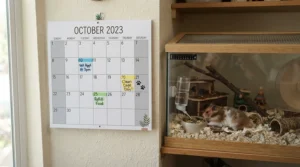
That’s the textbook version. Here’s the real-life version: you bring home a gorgeous, bright-eyed bird, and every instinct screams “introduce everyone immediately!” Resist. Birds are prey animals, and they hide illness the way a poker pro hides a flush. A bird that looks perfect on day one can still carry something that wipes out a flock by day twenty.
California’s Avian Health Program lists new additions as a potential source of infection. It recommends a separate room and at least three weeks of observation, and it tells owners to check with an avian vet about disinfectants that are safe around birds. Notice what’s missing from that advice: a magic spray. Quarantine works through distance, routine, and cleaning, not chemistry alone.
So what does the shopping list look like? A cage that’s easy to inspect and sanitize. A droppings cleaner. A bird-safe disinfectant. And, only if a vet says so, a parasite treatment. This guide covers seven real products, from the cage itself to the contested world of mite protectors. It also covers quarantine period length, the logistics of isolating new birds, and the real avian parasite transmission risk, so you can build a setup that actually protects your flock.
Quick Comparison Table: Top Picks at a Glance
| Product | Role in Quarantine | Best For | Price Range |
|---|---|---|---|
| Prevue Hendryx Clean Life Play Top Bird Cage (PP-851) | Main quarantine cage | Parakeets, cockatiels, and other small-to-medium birds on a 6-week stay | Roughly $140–$180 |
| Prevue Steel Travel Bird Carrier (1307) | Vet visits and backup cage | Transport, vet trips, emergencies | Budget-to-mid; check current price |
| Poop-Off Bird Poop Remover | Daily droppings cleaner | Spot-cleaning perches, grilles, floors | Around $15–$25 |
| A&E Cage Company Poop-D-Solver | Budget droppings cleaner | Multi-bird households cleaning often | Under $20; check current price |
| F10SC Veterinary Disinfectant | True disinfectant | Weekly sanitizing and end-of-quarantine reset | Roughly $20–$40 |
| Scatt (Vetafarm) | Vet-directed mite treatment | Confirmed scaly face or air sac mites | Under $25 |
| 8 in 1 Bird Protector | Hang-on mite protector | Owners who’ve discussed it with a vet | Under $15 |
Prices reflect the time of research and may vary, so check current price and availability before buying. Read the table as a system, not a menu. The cage and the disinfectant do most of the heavy lifting, the cleaner makes daily life bearable, and the treatment and protector are situational. Notice that only one product on this list is a “preventive”. That’s deliberate, and we’ll unpack why later.
💬 Just one click — help others make better buying decisions too!😊
Top 7 Quarantine Cage and Parasite-Control Products: Expert Analysis
1. Prevue Hendryx Clean Life Play Top Bird Cage (PP-851) — easiest cage to keep spotless
Quarantine succeeds or fails on cleaning speed, and this cage is built around the idea that mess should be easy to find and easier to remove.
The body measures 18 x 18 x 27 inches on a 22 x 22 inch base. The molded plastic base has a built-in seed guard, plus a pull-out bottom grille that most plastic-based cages don’t offer. It ships with two cups and three perches. In practice, you can slide the grille out and wipe or disinfect the base without taking the cage apart. That matters when your whole job is inspecting droppings daily and sanitizing weekly.
Based on the spec comparison, this is aimed at parakeets, cockatiels, and similar small-to-medium birds. An 18-inch footprint gives a newcomer real room to hop and flap during a six-week stay, which the cramped travel carriers below can’t. Larger parrots will need a bigger, sturdier cage.
I could not verify enough review data to summarize owner sentiment for this specific model, so check recent buyer feedback before ordering.
Pros:
- ✅ Pull-out grille simplifies daily droppings inspection
- ✅ Seed guard keeps debris contained
- ✅ Spacious enough for a multi-week stay
Cons:
- ❌ Pricey for a temporary-use cage
- ❌ Plastic base can trap grime if deeply scratched
Expect roughly $140–$180. It’s good value if you’ll reuse it for future arrivals, and harder to justify for a one-off.

2. Prevue Steel Travel Bird Carrier (1307) — the vet-visit workhorse
Think of this as the quarantine cage’s trusty sidekick: the thing you’ll grab the moment a vet appointment appears on your calendar.
It’s powder-coated steel with ½-inch wire spacing, measuring about 18¾ x 14⅞ x 18 inches. It comes with a shapeable rope perch, a wooden play-top perch on the handle, solid cup doors, a locking tray, and seat-belt brackets for the car. The bird-proof door lock deserves a mention, because a stressed new bird in a car is an escape artist waiting to happen.
Here’s the honest analysis: those dimensions are fine for a night, but they’re tight for weeks of isolation. Treat this as your transport, vet-visit, and emergency cage, with a roomier cage as the main quarantine home. Buyers on retailer pages describe it as sturdy and use it for vet appointments, sleeping, and emergencies. One mentions it’s on the heavy side.
Don’t confuse it with the tiny Prevue Pet Products Travel Cage for Birds and Small Animals, which measures roughly 9 x 5.6 x 6 inches. One reviewer who bought a similar small cage as a quarantine cage for a budgie called it far too small.
Pros:
- ✅ Sturdy steel build with secure door lock
- ✅ Seat-belt brackets make car trips safer
- ✅ Removable tray eases cleaning
Cons:
- ❌ Tight for a multi-week quarantine
- ❌ Heavier than plastic carriers
Check current price; it sits in the budget-to-mid tier. It’s strong value as a dual-purpose backup.
3. Poop-Off Bird Poop Remover — the daily droppings dissolver
Daily spot-cleaning is the unglamorous heart of any quarantine, and this enzyme-based spray makes it tolerable.
The 32-ounce spray bottle uses filtered water, active enzymes, surfactant, and an avian-safe fragrance. The maker says it’s free of solvents, alcohol, and bleach, and safe to use with the bird in the cage. In practice, you spray, wait, and wipe, and dried droppings that would otherwise require a chisel soften up.
Here’s the catch that matters for our topic: the manufacturer’s own distributor materials state that Poop-Off is not a disinfectant or bactericide. It’s a cage cleaner for mite prevention only in the indirect sense that clean surfaces leave fewer places for pests to hide. It doesn’t kill pathogens. Pair it with a real disinfectant.
Reviewers consistently praise how fast it breaks down droppings on cages, perches, and even carpet. Listing data I found showed ratings around 4.4 out of 5 across several thousand reviews, though ratings shift over time. A common complaint is that every cleaner has a noticeable smell.
Pros:
- ✅ Dissolves dried droppings quickly
- ✅ Usable with the bird in the cage
- ✅ Works on cages, fabric, and floors
Cons:
- ❌ Not a disinfectant or bactericide
- ❌ Fragrance bothers some owners
Expect around $15–$25 for the spray. Good value as your daily driver, as long as you don’t mistake it for a germ killer.
4. A&E Cage Company Poop-D-Solver — the budget-friendly cleaner
If you’re running a multi-bird household and burning through cleaner weekly, Poop-D-Solver is the penny-pincher’s alternative.
The 32-ounce Lime Coconut formula lists water, surfactant, natural active enzymes, and an avian-safe fragrance, which is very close to the ingredient logic of Poop-Off. The method is identical: spray, give it a minute or two, then wipe. The lime-coconut scent is a small bonus if you find unscented cleaners smell sterile.
My analysis here is simple. Enzyme cleaners do the same job, which is breaking down organic mess so it wipes off easily, and none of them replaces disinfecting. The real question is price per bottle versus how often you clean. During quarantine you’ll clean daily, so cost adds up.
On retailer pages, buyers describe it as effective on cages and even car-dropping messes. One long-time Poop-Off user said it works well at roughly half the price. With only a couple dozen reviews on the listing I found, treat that as an early signal, not a verdict. Another buyer noted droppings clumping in corners, which is more a cage-design quirk than a product flaw.
Pros:
- ✅ Enzyme formula tackles dried droppings
- ✅ Scented option for scent-sensitive noses
- ✅ Lower cost than the market leader
Cons:
- ❌ Smaller review pool than competitors
- ❌ Still no disinfecting power
Check current price; it generally runs under $20. It’s an excellent value pick for frequent cleaners.
5. F10SC Veterinary Disinfectant — vet-favored germ killer
When avian forums argue about disinfectants, F10SC is the name that keeps winning.
It’s a concentrate you dilute with water. Retailer materials describe it as bactericidal, virucidal, fungicidal, and sporicidal, with non-corrosive, non-irritating properties and shorter contact times than many alternatives. One UK distributor recommends an in-use dilution of 1:100 (10 ml per liter) for non-professionals, though lab-level dilutions can be far weaker. Follow the label for your product, because versions with added detergent exist, and some require rinsing.
Here’s what the spec sheet won’t tell you, but its category explains: F10SC is a disinfectant for microbes, not a miticide. So as a disinfectant for bird cage parasite control, its job is to wipe out the disease agents that travel alongside parasites, while mites themselves need cleaning, heat-drying, and a vet’s guidance. Distributors also advise keeping birds out of the cage until it has dried.
Bird owners in avian communities consistently describe it as economical because the concentrate stretches far, and many call it the safest strong disinfectant they’ve used.
Pros:
- ✅ Broad-spectrum germ coverage
- ✅ Highly economical when diluted
- ✅ Non-corrosive on cage metal
Cons:
- ❌ Must dry before the bird returns
- ❌ Doesn’t directly kill mites
Expect roughly $20–$40 for a starter concentrate. Value is excellent for the cost per liter of working solution.
6. Scatt (Vetafarm) — targeted scaly face and air sac mite treatment
Scatt is not a casual-purchase product, and that’s precisely why it belongs on this list.
It’s a spot-on liquid containing moxidectin, marketed for scaly face mites (Knemidokoptes pilae) and air sac mites (Sternostoma tracheacolum). The retailer’s directions describe applying one to two drops, based on weight, to the bare skin between the shoulders. They add that you should reassess after 21 days and that visible improvement can take up to six weeks. Marketing copy lists canaries, finches, budgies, hookbills, and pigeons as suitable.
Why it matters during quarantine: scaly face tends to show up as crusty beak or leg lesions, and it can appear in budgies shortly after purchase, according to retailer veterinary guides. If your quarantine inspection spots crusty growths or wheezing, you’ll want a vet’s diagnosis before touching any product. Lafeber’s veterinary team stresses that any mite problem should be diagnosed and treated by an avian vet.
I couldn’t verify a substantial pool of independent owner reviews for Scatt, so rely on your vet’s judgment over star ratings.
Pros:
- ✅ Spot-on application avoids spraying
- ✅ Targets two specific mite types
- ✅ Covers many small cage-bird species
Cons:
- ❌ Needs proper diagnosis first
- ❌ Slow, visible results take weeks
Under $25 is typical. Value is strong when it’s the right fix, and wasted when it isn’t.
7. 8 in 1 Bird Protector — the controversial hang-on mite blocker
This one earns its spot because “mite protectors” are what many shoppers search for, and they deserve a straight-talking analysis.
The registered label on file with the EPA lists paradichlorobenzene as the active ingredient. The directions call for hanging it on the outside of the cage with the perforations facing in, covering the cage at night, and replacing it when the odor fades. The label warns the contents are harmful if swallowed. A similar category product is the Wildharvest Premium Bird Protector.
Honest analysis: opinions split sharply. Buyers on eBay rate the product highly (about 4.8 from a few dozen ratings), with some praising its mite-repelling deodorizing effect. Others call the smell overpowering. Meanwhile, avian forum members warn that these protectors contain poison and urge owners to see an avian vet if mites are suspected. Lafeber’s veterinary team adds that preventive chemicals can make birds sick and that parasites are extremely rare in indoor birds.
Given that, treat this as a “ask your vet first” product, not a default quarantine accessory.
Pros:
- ✅ Hangs outside the cage
- ✅ Low upfront cost
- ✅ Long-standing label history
Cons:
- ❌ Strong odor deters many owners
- ❌ Vet sources discourage preventive chemicals
Typically under $15. Value is questionable unless a vet signs off.
Practical Usage Guide: Setting Up Your Quarantine Station in One Afternoon
Gather everything before the bird arrives. Nothing is more stressful than hunting for a spray bottle while a new bird eyes you from a carrier.
Start with location. Choose a room with a door you can actually close, as far from your resident birds as your home allows, because airborne dust and dander carry disease. A garage or detached outbuilding works in mild weather, though a spare bedroom is more realistic.
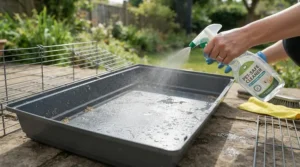
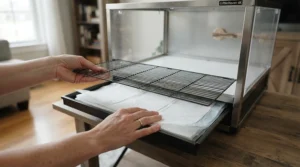
Next, prep the cage. Wash it with soap and hot water, disinfect with F10SC per label directions, and let everything dry fully. Line the base with plain white paper, because it makes droppings color and consistency easy to read. Stock the same food your new bird ate at the seller’s, then transition gradually later.
Build a routine:
- Feed and clean resident birds first, quarantine bird last.
- Wash hands, and change your shirt, before returning to the flock.
- Spot-clean daily with Poop-Off or Poop-D-Solver.
- Keep a written daily log of appetite, droppings, and behavior.
- Book the avian vet visit early in the stay.
Common first-month mistakes: sharing toys or perches between cages, letting birds touch through the bars, and skipping the log because “everything looks fine.” Looks are deceiving. That log is how patterns, like a slow weight drop, become visible.

Real-World Scenario: Three Households, Three Quarantine Setups
The studio-apartment parakeet buyer. One new budgie, one tiny rented space, a tight budget. A spare bathroom with a door, the Prevue Hendryx Clean Life Play Top Bird Cage (PP-851), and Poop-D-Solver keep costs sensible. Add F10SC concentrate for sanitizing. Skip the 8 in 1 Bird Protector unless a vet suggests it.
The cockatiel rescuer with four residents. Higher stakes, because a single oversight can expose a whole flock. Use a separate room, a roomy cage, Poop-Off for fast daily cleaning, and F10SC weekly. Keep the Prevue Steel Travel Bird Carrier (1307) ready for an early vet exam. Five-plus birds means disciplined care order every day.
The finch and canary hobbyist. Small birds can develop air sac mites, so a quarantine inspection should include listening for wheezing or labored breathing. If a vet confirms mites, Scatt is the kind of targeted treatment they may prescribe or recommend. Budget and environment matter less than diagnosis here.
The pattern across all three: spend on the cage and disinfectant first, treat only on diagnosis, and never skip the room separation.
Problem → Solution Guide: When Quarantine Doesn’t Go to Plan
Problem: You only have one room. Keep the quarantine cage as far from other birds as possible, with no shared air, accessories, or contact through bars. Some veterinary guidance suggests discussing preventative parasite plans for resident birds if separation is partial. Ask your vet.
Problem: The bird is scratching or picking. Don’t guess. Scratching can mean mites, but it can also mean dry skin, stress, or boredom. A vet exam can identify the culprit, so reach for Scatt or any other treatment only on their say-so.
Problem: Droppings dry into concrete. That’s what enzyme cleaners like Poop-Off are for. Spray, wait a minute, scrub, and consider a cage with an accessible base like the Prevue Hendryx Clean Life Play Top Bird Cage (PP-851).
Problem: Quarantine is nearly over, but the bird has a sniffle. Extend it. Reset the clock rather than rationalize. A longer quarantine is irritating; a flock outbreak is heartbreaking.
Problem: A second new bird arrives mid-quarantine. The clock resets to day one for everyone, per standard veterinary guidance.
✨ Don’t Miss These Top Picks!
🔍 Take your quarantine setup to the next level with these carefully selected products. Click on any highlighted item to check current pricing and availability. These tools will help you create a healthy, parasite-free flock your whole household will love!
How to Choose a Quarantine Cage for New Bird Parasite Isolation
Picking the right enclosure is easier with a checklist. Here’s the thinking behind each step:
- Match the cage to the species. A cockatiel needs width to flap; a finch needs flight length. A cage that’s too small turns quarantine into a stress test.
- Prioritize cleanability. Look for removable bases, pull-out grilles, and smooth surfaces. Anything you can’t reach, you can’t disinfect.
- Check bar spacing. Oversized gaps let small birds squeeze out, while tight gaps on large cages limit airflow.
- Inspect the materials. Powder-coated or stainless metal tolerates disinfectants far better than painted, flaking, or rusting surfaces.
- Keep it self-contained. Avoid cages with hard-to-reach crevices where pests can hide.
- Plan for observation. You want to see droppings, appetite, and posture daily without handling the bird.
- Budget for reuse. If you’ll quarantine again, durability beats the cheapest option.
Quarantine Period Length: How Long Is Long Enough?
The word “quarantine” traces back to the old Latin idea of 40 days, but modern guidance is less tidy. Here’s how it stacks up:
- 21 days: California’s Avian Health Program suggests a minimum of three weeks of observation in a separate room.
- 30 days: Often cited as the bare minimum, especially for casual owners.
- 45–60 days: Frequently recommended by avian vets, since most treatable problems surface within about six weeks.
- Longer: Some experts suggest up to two months if you have other birds, and an extra 45 days if the quarantined bird falls ill.
My analysis: the quarantine period length you choose should scale with risk. A single bird joining a single pet bird from a trusted source can sit on the shorter end. A bird from an auction, pet store with mixed stock, or rescue with unknown history belongs at the longer end. Ask your avian vet about timing during the first exam, because they’ll tailor it to your bird’s species and history.
Whatever number you pick, don’t cut it short just because the bird “seems fine.” That’s exactly how problems slip through.
Isolating New Birds: Room, Routine, and Order of Care
Isolating new birds is half geography, half habit. Geography means a separate room with a closed door, ideally far from your resident birds. Habit means the daily routine that stops you from becoming the delivery truck for germs.
Follow a consistent order. Care for resident birds first, then the newcomer. Wash hands between birds. If the new bird climbs on your shoulder, change clothes before handling your flock. Rescue organizations stress these steps because sick birds can hide symptoms behind a calm face.
Don’t allow contact through cage bars, and never share toys, perches, or dishes between cages. Even the plastic carrier you used on pickup day should be disinfected before it touches your other birds’ gear.
Think about airflow, too. Respiratory illnesses can travel on dust, feathers, and breath, so a “separate cage in the same room” doesn’t qualify as true isolation.
Finally, give the newcomer calm. A bird adjusting to a new home is already stressed, and stress impairs immunity. Visit often, speak softly, keep lights and noise predictable, and let your bird settle into a rhythm.
Avian Parasite Transmission Risk: What Actually Spreads
The avian parasite transmission risk varies enormously by parasite, so lumping everything into “bugs” leads to bad decisions.
Take scaly face and scaly leg mites. According to a veterinary overview, Knemidocoptes mites spend their entire roughly three-week life cycle on the bird, and they spread mostly through prolonged close contact. Indirect routes like perch-rubbing or contaminated seed are possible but less common. That tells you why cage-bar contact between birds is a bigger risk than random surfaces.
Red mites behave differently. Veterinary nursing references note some mites hide in cage cracks and feed at night, which is why environmental cleaning matters for those. Lice are more typical in outdoor-housed birds, as wild birds are a main source, while caged birds are less prone.
The takeaway: parasites in indoor pet birds are uncommon, but they’re not impossible, and a new arrival is the likeliest doorway. Quarantine, careful inspection, and a vet’s diagnosis beat panic-spraying every surface. Remember that internal parasites, like worms and protozoa, require fecal testing instead of cage products. Seeing droppings regularly gives you a front-row seat for early warning signs.

Cage Cleaner for Mite Prevention vs. Disinfectant for Bird Cage Parasite Control
These two product types get confused constantly, so let’s separate them.
A cage cleaner for mite prevention, like Poop-Off or Poop-D-Solver, removes organic mess. By removing droppings and food residue, you reduce hiding spots and breeding material. It doesn’t sterilize anything.
A disinfectant for bird cage parasite control, like F10SC, kills germs on cleaned surfaces. Disinfectants work best after cleaning, because dirt shields microbes. And remember the nuance: F10SC targets bacteria, viruses, fungi, and spores rather than mites directly.
| Layer | What It Does | What It Doesn’t Do | Best For |
|---|---|---|---|
| Dedicated quarantine cage (Prevue Hendryx Clean Life Play Top Bird Cage (PP-851)) | Physically separates and simplifies cleaning | Treat illness | Every new arrival |
| Cleaner (Poop-Off, Poop-D-Solver) | Dissolves droppings | Disinfect | Daily spot-cleaning |
| Disinfectant (F10SC) | Kills germs on clean surfaces | Cure mites | Weekly and end-of-quarantine resets |
| Treatment (Scatt) | Targets diagnosed mites | Prevent unknown problems | Vet-directed cases |
| Protector (8 in 1 Bird Protector) | Claims mite repelling | Replace cleaning or diagnosis | Only with vet approval |
Read the table top to bottom as a hierarchy. The first three layers are foundational and nearly universal, while the last two are conditional. If budget is tight, fund the cage, a cleaner, and a disinfectant first, and leave treatments to your vet’s recommendation.
Top Mite Protector Pads for Bird Cages: What the Evidence Says
Shoppers searching for top mite protector pads for bird cages usually mean hang-on protector discs or blocks like the 8 in 1 Bird Protector or Wildharvest Premium Bird Protector. Those products promise protection from lice and mites while deodorizing the cage. Some people also lump in mats such as the Resilia Under Pet Cage Mat, which protects floors from spills and scratches. It doesn’t protect birds from mites.
So do protector pads work? The honest answer is “it depends, and be careful.” Owner anecdotes exist on both sides. Some say they never saw mite issues, and others call the smell unbearable. Avian forum members repeatedly warn against them, and Lafeber’s veterinary team says to skip preventive chemicals for indoor birds because they can make birds sick and parasites are rare indoors, apart from scaly face and air sac mites.
My analysis: if you’re worried about mites, a vet exam and clean cage beat any hanging disc. If you still want a protector, ask your vet first, hang it outside the cage per label, and watch for odor-related stress.
Bird Parasite Treatment Reviews: What Owners and Vets Actually Say
When reading bird parasite treatment reviews, filter hard. Most listings come from retailers, and many reviews are short.
Here’s what’s verifiable. Scatt is described by retailers as a moxidectin spot-on for scaly face and air sac mites, with a re-check at 21 days and slow-to-appear results. Avian Insect Liquidator is a spray sold by Vetafarm in several markets, with a retailer’s pages claiming up to six weeks of protection. Availability and formulations vary by region, so confirm with your vet and the label. Ivermectin-based products also exist, and Lafeber’s team notes ivermectin works well against scaly mites but carries a small risk of sudden death in a minority of birds, which makes many vets cautious.
The pattern in reviews: owners love treatments when diagnosis was right, and complain when results are slow or when they treated without confirming. Product reviews alone can’t tell you which mite your bird has. Only an exam, and sometimes microscopy, can.
So use reviews to compare convenience and usability, and let your avian vet decide the drug, dose, and timing.
Common Mistakes When Buying and Using Quarantine Supplies
Buying a cage that’s too small. Reviewers note that tiny travel cages feel cramped for even one budgie. Quarantine lasts weeks, so give the bird room.
Treating “natural” or “bird-safe” as “disinfecting.” Poop-Off and Poop-D-Solver are cleaners, and the former’s own distributor says it isn’t a disinfectant.
Spraying preventives without a diagnosis. Parasites are uncommon in indoor birds, and unnecessary chemicals carry risks.
Skipping the vet. A rescue organization shared a cautionary story: a family ignored their vet’s advice to complete a six-week quarantine despite normal initial tests, then exposed their whole flock to a serious illness. The lesson is that normal results on day three don’t override the calendar.
Using bleach recklessly. Owners debate it, but strong fumes are hazardous to birds’ sensitive respiratory systems. Ask your vet which disinfectants they trust.
Forgetting the carrier. Disinfect transport gear too, not just the cage.
Ending quarantine early because the bird “looks great.” Birds mask illness, so trust the timeline.
Long-Term Cost and Maintenance: Price Range and Value Analysis
| Product | Typical Range | Use Pattern | Best For |
|---|---|---|---|
| Prevue Hendryx Clean Life Play Top Bird Cage (PP-851) | Roughly $140–$180 | Multi-year, reusable | Repeat quarantines |
| Prevue Steel Travel Bird Carrier (1307) | Budget-to-mid | Occasional trips | Vet visits |
| Poop-Off Bird Poop Remover | Around $15–$25 | Daily | Quarantine routine |
| A&E Cage Company Poop-D-Solver | Under $20 | Daily | Budget cleaning |
| F10SC Veterinary Disinfectant | Roughly $20–$40 | Weekly; concentrate stretches far | Sanitizing |
| Scatt (Vetafarm) | Under $25 | As prescribed | Diagnosed mites |
| 8 in 1 Bird Protector | Under $15 | Replaced as odor fades | Vet-approved use |
Prices are approximate and may vary, so check current price. Looking at the table, the cage is your biggest one-time cost, but it amortizes across every future arrival. Cleaners and disinfectant are the recurring costs, and F10SC‘s dilution makes it the cheapest per liter of working solution. Skip paying for treatments or protectors upfront, since those costs should follow a diagnosis, not precede one.
Frequently Asked Questions
❓ How big should a quarantine cage be for a new bird?
❓ Can I use diluted bleach to disinfect a quarantine cage?
❓ Do new birds need parasite medication during quarantine?
❓ Is a separate cage in the same room enough for quarantine?
❓ What signs of mites should I watch for in a new bird?
Conclusion
Setting up a quarantine cage for new bird parasite isolation isn’t glamorous, but it’s the cheapest insurance policy in bird keeping. The recipe is simple: a roomy, cleanable cage like the Prevue Hendryx Clean Life Play Top Bird Cage (PP-851), a separate room, a daily cleaning routine with Poop-Off or Poop-D-Solver, and a proper disinfectant like F10SC. Add the Prevue Steel Travel Bird Carrier (1307) for vet trips, and keep treatments like Scatt for confirmed diagnoses. Treat the 8 in 1 Bird Protector as a conversation with your vet, not an impulse buy.
Above all, respect the calendar. Whether you pick 30 days, 45, or 60, honor it, and extend it if anything looks off. Your flock can’t read the label on a hang-on protector, but they’ll thank you with years of healthy chirping.
✨ Ready to build your setup?
🔍 Click any highlighted product above to check current pricing and availability, and give your newest feathered family member the safest possible start! 🐦
Recommended for You
- Foraging Toys Fo Prevent Feather Plucking: 7 Proven Picks 2026
- E-Collar For Bird Feather Plucking: 7 Proven Picks (2026)
- Feather Conditioning Spray Reviews For Birds: 7 Best Picks (2026)
Disclaimer: This article contains affiliate links. As an Amazon Associate, I earn from qualifying purchases. If you purchase products through these links, we may earn a small commission at no additional cost to you.
✨ Found this helpful? Share it with your friends! 💬🤗
