
In This Article
Open any bird forum and you’ll find the same scene on repeat. A parakeet with a ragged tail, a conure with papery wings, and an owner staring at a wall of bottles wondering which one does anything. This guide to feather conditioning spray reviews for birds is built for that moment. We compared seven real products on ingredients, label directions, value, and the genuine review patterns we could verify. There is no invented testing and no made-up quotes, just honest analysis.

Here’s what most product pages skip. Preening is how a bird keeps its plumage tidy, clean and water-resistant. A spray can support that habit, but it can’t replace what’s happening inside the bird. A glossy coat is part diet, part humidity, part stress and part genetics. So a good preening spray for dry feathers is a helper, not a miracle.
Here’s what’s ahead:
- A quick-glance table
- Seven product breakdowns
- A daily misting routine and a problem-solving guide
- Plain-English sections on preening-spray ingredients, dry-feather causes and bird vitamins for feather growth
- A budget plan for an affordable feather health spray for parakeets
Prices appear as ranges because they shift constantly, so check the current price on each listing before you buy.
One honest note. I haven’t tested these sprays on any bird, and I won’t pretend otherwise. I read labels, compared formulas, and aggregated what real buyers report. If your bird is plucking, bleeding or losing feathers fast, skip the shopping and call an avian vet.
Quick Comparison: 7 Feather Sprays at a Glance
| Product | Formula Type | Price Range (check current price) | Best For |
|---|---|---|---|
| Professional Pet Products Feather Fancy Bird Spray | Scented fatty-acid conditioner | Under $10 | Trying conditioning on a tight budget |
| Wild Harvest Molt Relief Spray | Purcellin, lanolin, aloe | Around $10–$13 | Molt season and regular bath routines |
| NatraPet Bird Bath Spray | Aloe, purcellin, vitamins A/D/E, wheat germ oil | Budget to mid-range | Dry, flaky skin and scales |
| Miracle Care Feather Glo Bird Bath Spray | Fatty-acid cleansing rinse | Roughly $10–$25 by seller | Daily rinse-style spritzing |
| UnRuffledRx Aloe Vera Bird Spray | Aloe-based, colorless, odorless | Mid-to-high $20s | Itchy skin, scent-sensitive homes |
| Avitech Bird Feather-In Parrot Spray | Cosmetic-grade moisturizing mix, 16 oz | Verify on listing | Multi-bird households (with caution) |
| Nature’s Tropical Mist Sprayer | Empty, refillable fine mister | Budget accessory | Plain-water misting routines |
The cheapest conditioning options, Feather Fancy and Wild Harvest Molt Relief, sit under or near $10 for 8 ounces. UnRuffledRx costs roughly double or triple that, and what you’re paying for is the scent-free, aloe-only approach. Meanwhile Nature’s Tropical Mist isn’t a conditioner at all. It’s the tool that makes any daily routine easier.
💬 Just one click — help others make better buying decisions too!😊
Top 7 Picks: Feather Conditioning Spray Reviews for Birds, Analyzed
1. Professional Pet Products Feather Fancy Bird Spray — cheapest way to try conditioning
This one earns attention through sheer accessibility. It’s an 8-ounce bottle priced at the bargain end of the category.
The maker pitches a tropical-rainforest-style mist with essential fatty acids, aimed at feather texture, color and sheen. The retailer’s directions suggest spraying the tail area so the bird distributes it while preening. That’s a clever delivery trick: your bird does the spreading, which means less soaking and less chill risk for small species.
Based on the label claims, it suits owners who want a light, scented top-up rather than a medicated-feeling product. What most buyers overlook is the fragrance. Some households love it and others can’t stand it, and bird airways are sensitive. Start with a single spritz in a ventilated room.
Reviewers on Chewy give it roughly 4.4 out of 5 across about 80 ratings. They repeatedly mention a pleasant smell and birds that stand still or begin preening. A minority find the scent too heavy, and one long-term sun conure owner was only lukewarm.
Pros:
- ✅ Lowest entry cost in this roundup
- ✅ Tail-area application lets birds self-distribute
- ✅ Solid rating across a decent review pool
Cons:
- ❌ Scent bothers some owners and birds
- ❌ Full ingredient list wasn’t clear in my research
Price: under $10 for 8 oz at the time of research, which makes it a strong-value trial bottle.

2. Wild Harvest Molt Relief Spray — preen-oil analog built for molt season
The standout here is a formula designed around molting comfort rather than just shine.
Spectrum Brands built it around purcellin (a preen-gland-oil analog), lanolin and aloe vera, in an 8-ounce bottle made in the USA. The label says to remove food from the cage first, hold the bottle 12 to 18 inches away, and spray until feathers are thoroughly wet. It also says to keep your bird out of cold drafts afterward. That distance matters in practice: a longer throw gives a softer, wider mist, which is kinder to skittish birds.
My analytical take is that the claim of preventing “excessive molting” deserves skepticism. Molting is a natural cycle, so the realistic benefit is comfort and softer plumage while pin feathers come in. One retailer tags it for cockatiels and parakeets, so it fits small-bird households well.
Retailer ratings I found sit in the low 4s, but the visible review pool was small. Treat the sentiment as encouraging, not conclusive.
Pros:
- ✅ Combines preen-oil analog, lanolin and aloe
- ✅ Clear spray-distance and chill directions
- ✅ Easy to find from a major brand
Cons:
- ❌ Molt-prevention claim oversells what a spray can do
- ❌ Limited verifiable review depth
Price: around $10–$13 for 8 oz. Good value for molt season.
3. NatraPet Bird Bath Spray — vitamin-fortified care for flaky skin
If your bird’s skin looks scaly rather than just dull, this formula is the most skin-focused of the group.
The label lists purified water, PPG-33, Buteth-45, cetearyl octanoate (sold as purcellin oil), isopropyl myristate, benzalkonium chloride, PEG-75 lanolin, fragrance, vitamins A, D and E, wheat germ oil, and aloe. In plain terms, you get a layered emollient blend. The “preen oil” is a cosmetic-style ester marketed as a preen-oil analog, not oil taken from a bird. Isopropyl myristate is an emollient ester, not rubbing alcohol, and benzalkonium chloride is a preservative.
One caution from my analysis: topical vitamins A, D and E aren’t a documented substitute for dietary intake. Treat them as a bonus, not a nutrition plan. Some sellers suggest spraying near the preen gland area to encourage natural preening.
I couldn’t verify a trustworthy aggregate rating across the listings I reviewed, so I won’t invent one. Sizes from 8 to 32 ounces appear at various retailers.
Pros:
- ✅ Broad emollient and vitamin-containing formula
- ✅ Multiple bottle sizes available
- ✅ Directed at dry skin and scales
Cons:
- ❌ Contains fragrance and a preservative some owners avoid
- ❌ Review data hard to verify
Price: budget-to-mid range depending on size; check current price. Reasonable value for dry-skin birds.
4. Miracle Care Feather Glo Bird Bath Spray — daily rinse-style bath in a bottle
This is less a leave-on moisturizer than a bath spray, and that distinction shapes who should buy it.
The label lists water, ethoxylated alcohol, polyethylene glycol, lauric acid, potassium hydroxide, FD&C Blue No. 1 and isopropyl alcohol. Directions call for daily use, spraying from 6 to 8 inches while avoiding eyes and beak. They also say not to let the bird chill, and to consult a vet before using it on a sick bird. On paper, that ingredient mix reads like a gentle cleansing wash. That’s my inference, not a manufacturer claim.
Listings describe it as fatty-acid-based and meant to help keep oil glands open. One retailer FAQ suggests 2 to 3 times weekly while the label says daily. That conflict is worth noting. Follow the product label and ask your avian vet.
On a small resale listing, five ratings were all top marks. Reviewers praised a soft scent, visible shine, and rinsing away “bird dust.” That is thin data.
Pros:
- ✅ Rinse-style action may suit dusty cockatiels
- ✅ Clear daily directions on the label
- ✅ Offered in 8 and 32 oz sizes
Cons:
- ❌ Contains isopropyl alcohol and surfactants
- ❌ Very small review sample
Price: roughly $10–$25 depending on the seller. Fair value, but compare sellers.
5. UnRuffledRx Aloe Vera Bird Spray — scent-free aloe for itchy skin
For households sensitive to fragrance, this is the most distinctive product in the lineup.
The brand positions it as a simple aloe-based spray to soothe dry or irritated skin and help maintain feather and skin hydration, especially during molt. A reviewer notes it is colorless and odorless and mixes well. The “vet endorsed” claim is the brand’s own marketing, so treat it as such.
My analysis is that aloe targets skin comfort more than shine. Birds swallow some of what they preen, so ask your avian vet whether aloe suits your species. And if the itch persists, no spray fixes the underlying cause.
The brand’s own store shows about 4.19 out of 5 across 191 reviews, which is a substantial pool, though brand-hosted. Buyers like the lack of scent and how easily it mixes. A recurring complaint is a sprayer that doesn’t always spray.
Pros:
- ✅ Colorless and odorless formula
- ✅ Simple ingredient concept
- ✅ Large review pool for this category
Cons:
- ❌ Highest price per bottle here
- ❌ Sprayer reliability complaints
Price: mid-to-high $20s on the brand’s site at the time of research. Worth it mainly for scent-sensitive homes.

6. Avitech Bird Feather-In Parrot Spray — cosmetic-grade 16 oz for bigger flocks
The standout is bottle size: 16 ounces, double most competitors.
The Amazon listing calls it a “human cosmetic grade” conditioning mix meant to provide moisture for dry skin that can lead to feather picking. It has been listed since July 2015. “Cosmetic grade” is a marketing phrase, not a bird-safety guarantee, and I couldn’t confirm a published ingredient list in what I saw.
That makes it a bigger gamble than the others. Multi-bird households save per ounce, but you’re buying a large bottle of a formula you can’t fully evaluate. I’d want the ingredient list in hand first.
Review sentiment is thin and mixed. The listing showed an average of 3.4 out of 5 across just 7 ratings. One reviewer felt their bird improved despite disliking the spray, one was undecided mid-molt, and one called it a waste of money.
Pros:
- ✅ Large 16 oz bottle
- ✅ Reviewers mention easy application
- ✅ Long-standing listing
Cons:
- ❌ Few and mixed reviews
- ❌ Ingredient transparency unclear
Price: I couldn’t verify a current price, so check the listing. Value depends on the ingredient list.
7. Nature’s Tropical Mist Sprayer — refillable fine mister for plain-water routines
This is the sleeper pick, and it’s honestly not a conditioner.
The seller describes a 10-ounce bottle that produces a delicate, aerosol-like mist without propellants, with little dripping. It’s sold empty, so you add water. A fine mist is typically less startling to birds than a jet stream, and you control exactly what goes inside.
My analytical take is that regular plain-water misting is a foundation of any daily misting routine. The Merck Veterinary Manual notes that bathing encourages normal preening and discourages plucking. Pair this with a conditioner once or twice a week if you like.
I couldn’t find a reliable review set, so I can’t characterize buyer sentiment.
Pros:
- ✅ Fine mist, no propellant
- ✅ Reusable and fully controllable contents
- ✅ Low-cost way to build the habit
Cons:
- ❌ Contains no conditioning ingredients
- ❌ No verifiable review data found
Price: a budget accessory; check current price. Excellent value for building the habit.
Spec Snapshot: How the Seven Compare
| Product | Key Ingredients or Feature | Label Directions Highlight | Rating Signal | Best For |
|---|---|---|---|---|
| Feather Fancy | Fatty acids, scented | Spray tail area | ~4.4/5, ~80 ratings (Chewy) | Budget buyers |
| Wild Harvest Molt Relief | Purcellin, lanolin, aloe | 12–18 inches, wet thoroughly | Low 4s, small pool | Molt season |
| NatraPet | Purcellin, vitamins A/D/E, aloe | Near preen gland (seller advice) | Not verified | Flaky skin |
| Feather Glo | Fatty-acid cleansing blend | 6–8 inches, daily | 5/5 on 5 ratings | Dust rinse |
| UnRuffledRx | Aloe, odorless | Daily-use positioning | ~4.19/5, 191 reviews (brand site) | Scent-sensitive homes |
| Avitech | Cosmetic-grade mix | Not verified | 3.4/5, 7 ratings | Multi-bird homes |
| Nature’s Tropical Mist | Empty fine mister | Add water | None found | Plain misting |
Looking at the table, Feather Fancy and UnRuffledRx have the deepest review evidence, while NatraPet and Nature’s Tropical Mist have the least. For a parakeet owner on a budget, Feather Fancy or Wild Harvest Molt Relief is the logical start. If fragrance is the concern, UnRuffledRx is the only scent-free option I found.
Daily Misting Routine: A Step-by-Step Setup
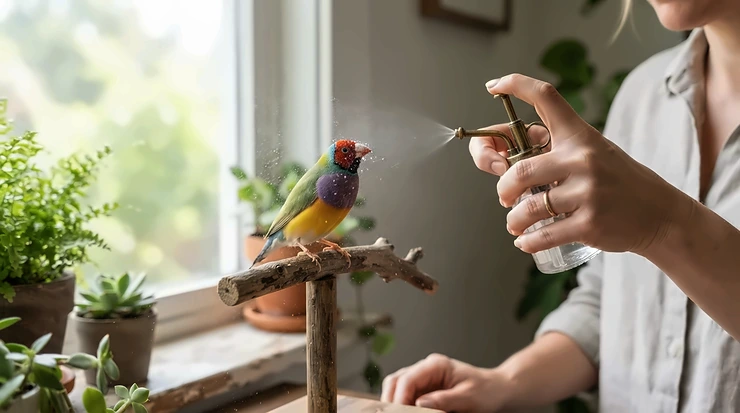
A daily misting routine works best when it’s boring, predictable and gentle. The Merck Veterinary Manual’s bird owner guide on skin and feather disorders notes that bathing encourages normal preening, so it’s worth asking your vet how often suits your bird. Here’s a practical template:
- Pick a warm hour. Mornings work well, so feathers can dry before evening. Avoid drafty spots.
- Fill your mister with lukewarm water. Test it on your wrist. Fresh water each day, please.
- Mind the distance. Follow each product’s label. Wild Harvest Molt Relief says 12 to 18 inches, while Feather Glo says 6 to 8 inches.
- Mist the body and wings, not the face. Keep eyes and beak out of the spray.
- Watch for shivering. Move your bird to a warm, draft-free place until dry.
- Condition on a schedule. Use plain water as your daily baseline. Use a conditioner as its label directs, or as your vet advises.
Common first-30-day mistakes include soaking a nervous bird, spraying right before bedtime, and mixing several products at once. If you change several things at once, you’ll never know which one helped.
For the plain-water days, Nature’s Tropical Mist is a practical tool.
Problem → Solution Guide: Dry, Itchy, Dull or Spray-Shy
Problem: Your bird hates the mist. Start with an empty bottle nearby, then mist the air near the cage, then spritz from farther away. Feather Fancy‘s tail-area approach is a gentler first step than a full soaking.
Problem: Fragrance seems to bother your bird or household. Switch to UnRuffledRx or plain water through a fine mister. Scent-free is the safer experiment.
Problem: Feathers look dull but skin seems fine. Look at diet before buying another bottle. Poor nutrition is a common culprit, which the vitamin section below covers.
Problem: The sprayer clogs or fails. Reviewers report this with some aloe-based sprays. Rinse the nozzle regularly, and consider transferring the liquid to a quality mister like Nature’s Tropical Mist if your vet or the brand allows it.
Problem: Plucking continues despite sprays. Stop shopping and book an avian vet appointment. Feather destructive behavior can come from medical and psychological causes, and a spray treats neither.
Scenario: If you’re a college student with one budgie and a $15 budget, start with Feather Fancy or Wild Harvest Molt Relief plus a plain-water mister. That small spend covers both conditioning and a routine.
What Is a Feather Conditioning Spray? (And Is It Better Than Water?)
A feather conditioning spray is a bird-safe liquid mist, usually water-based with moisturizing agents such as aloe, lanolin or fatty acids, applied to plumage and skin to soften feathers, reduce dryness and encourage preening. It supports routine care but doesn’t treat disease, malnutrition or behavioral plucking.
The honest question is whether it beats plain water. For many healthy birds, plain water covers the basics. A conditioner earns its place when skin looks dry, feathers feel rough, or molt makes your bird itchy.
| Option | Strength | Limitation | Best For |
|---|---|---|---|
| Conditioning spray (e.g., NatraPet) | Adds emollients to skin and feathers | Costs more, ingredients vary | Dry skin, molt discomfort |
| Plain-water misting (e.g., Nature’s Tropical Mist) | Cheap, simple, no additives | Doesn’t moisturize beyond water | Daily baseline routine |
| Shallow bath dish | Birds control the experience | Some refuse; needs cleaning | Confident bathers |
The table shows these aren’t rivals so much as layers. Water builds the habit, and a conditioner adds targeted help when you’ve spotted a reason. If your bird refuses the spray, a bath dish may still deliver the benefit.
How to Choose a Preening Spray for Dry Feathers
Reviewing feather conditioning spray reviews for birds is easier when you apply a checklist. Here are six steps:
- Match the species and size. A parakeet-sized spritz differs from a macaw soak. Check that the label lists your type of bird.
- Read the whole ingredient list. Look for fragrance, alcohol, and preservatives. Fewer ingredients isn’t automatically safer, but it’s easier to evaluate.
- Match the formula to the problem. Dry skin points to aloe or emollients, rough feathers to fatty-acid conditioners, and dusty plumage to a rinse-style product.
- Check the sprayer. A clogging nozzle ruins a routine. Reviewers flag this on some products.
- Do the cost-per-ounce math. A 16-ounce bottle only saves money if it fits your bird count and you trust the formula.
- Ask your avian vet when in doubt. Especially for birds with skin lesions, respiratory trouble, or plucking.
Preening-Spray Ingredients Decoded
Understanding preening-spray ingredients turns marketing into something you can evaluate. Here’s what common label terms generally mean, as an analytical guide rather than veterinary advice:
- Aloe vera: a moisturizing and soothing plant extract. It’s popular for skin comfort. Birds swallow what they preen, so check species suitability with your vet.
- Lanolin / PEG-75 lanolin: a wool-derived emollient that softens and holds moisture.
- Purcellin oil (cetearyl octanoate): an emollient ester sold as a preen-oil analog. It mimics the oily feel of preen secretions but isn’t oil from a bird.
- Isopropyl myristate: an emollient ester that helps other ingredients spread. It isn’t rubbing alcohol.
- Fatty acids: moisturizing components, cited in Feather Fancy and Feather Glo marketing.
- Wheat germ oil and vitamins A, D, E: nourishing-sounding extras, found in NatraPet. They don’t replace dietary vitamins.
- Fragrance: pleasant to people, possibly irritating to small airways. Fewer scents is a reasonable preference.
- Isopropyl alcohol and surfactants: found in Feather Glo. Alcohol can dry skin, so ask your vet about suitability.
- Benzalkonium chloride: a preservative in NatraPet‘s list.
The practical rule: shorter lists are easier to vet, and anything you can’t pronounce is worth a vet’s glance.

Dry-Feather Causes: What a Spray Can and Can’t Fix
Dry-feather causes range from easy fixes to genuine medical issues. The Merck Veterinary Manual lists medical conditions, malnutrition, toxin reactions and psychological problems like stress and boredom as contributors to feather destructive behavior. It adds that poor diets lacking vitamin A and protein can cause feather abnormalities, and that missing sunlight, inappropriate humidity and disrupted day-night cycles may also play a role.
Here is how those causes sort by what a spray might address:
- Diet shortfalls: a spray won’t fix these. Better food will.
- Dry household air: a daily misting routine can help comfort, alongside humidity adjustments.
- Skin inflammation or itch: this is a major one. According to Wikipedia’s feather-plucking overview, roughly half of parrots with feather damaging behavior were diagnosed with inflammatory skin disease in biopsy studies. Sprays may soothe, but the cause needs diagnosis.
- Parasites: Merck says parasites rarely cause feather loss, though mites and lice occasionally damage feathers.
- Stress and boredom: a spray can’t enrich a bird’s life.
So when you read feather conditioning spray reviews for birds, remember that sprays treat symptoms, not root causes.
Bird Vitamins for Feather Growth: What Actually Helps
Bird vitamins for feather growth are a popular search, but the evidence points mostly to diet. Merck links poor diets lacking vitamin A and protein with feather abnormalities. An avian veterinary overview of vitamin A deficiency describes dry, flaky skin, itchiness, frayed tail feathers, and overgrown beaks as warning signs, and recommends a varied diet of pellets, healthy seeds, fruits, vegetables and grains.
My honest analysis:
- Start with food, not bottles. Seed-heavy diets are often low in key nutrients. Colorful vegetables like carrots, sweet potato, peppers and leafy greens are commonly recommended vitamin A sources.
- Supplements exist, but dose matters. For example, Wild Harvest Molt Relief‘s sibling product, Wild Harvest Molting Supplement, is a seed-based dietary supplement meant to add vitamins and minerals to a regular diet, not replace it.
- More isn’t better. Excess vitamin A can cause problems too, so don’t stack supplements without a vet’s guidance.
- Patience required. Feathers only renew through molt, so improvements show up gradually.
In short, bird vitamins for feather growth work through the diet and the digestive system. A spray handles skin and surface comfort. They’re complementary, not interchangeable.
Affordable Feather Health Spray for Parakeets: A Budget Plan
Parakeets are tiny, so an affordable feather health spray for parakeets doesn’t need to be a big-ticket item. Their small bodies need little product per session, and chill risk is higher, so gentle application matters more than formula fanciness.
Here’s a three-tier plan, based on label information and price ranges:
- Starter (under $10): Feather Fancy for scent-tolerant households. At about a dollar per fluid ounce on one retailer, it’s the cheapest conditioning option I found. One reviewer says only two squirts are needed.
- Molt-focused (around $10–$13): Wild Harvest Molt Relief Spray is tagged for parakeets on one retailer, and it appears in a parakeet-oriented starter kit.
- Routine builder (budget accessory): Nature’s Tropical Mist plus plain water, so the habit costs almost nothing.
If you only buy one thing, pair a small conditioner with a fine mister. Compared with a pricey bottle you use once and abandon, an affordable feather health spray for parakeets used consistently is better value.

FAQ
❓ How often can I use a feather conditioning spray on my parakeet?
❓ Is a preening spray safe if my bird swallows some?
❓ Does a feather spray actually stop molting?
❓ Can vitamins replace a conditioning spray?
❓ What's the best budget option for a first-time owner?
Conclusion
After sorting through feather conditioning spray reviews for birds, the pattern is clear. The best product is the one that matches your bird’s actual problem and fits a routine you’ll maintain. Feather Fancy is the budget entry point, Wild Harvest Molt Relief is the molt-season workhorse, and NatraPet targets dry, scaly skin. Feather Glo acts more like a cleansing rinse, UnRuffledRx is the scent-free choice for sensitive households, and Avitech is a cautious big-bottle gamble. Nature’s Tropical Mist is the humble tool that makes everything easier.
Most importantly, remember what sprays can’t do. Diet, humidity, stress and medical causes drive many feather problems, which is why feather-plucking research points to multiple causes. A conditioner is a supportive layer, never a cure.
Start small, change one thing at a time, and watch your bird’s behavior. If feathers keep deteriorating, your best next purchase is an avian vet appointment.
✨ Ready to give your feathered friend a softer, happier routine?
🪶 Click any highlighted product above to check current pricing and availability, and start your daily misting routine today!
Recommended for You
- Feather Supplement For Macaws: 7 Best Picks For 2026
- Bird Grit for Digestion: 7 Best Picks & Honest Truths (2026)
- Syringe Feeder For Sick Bird: 7 Best Picks & Safe Tips (2026)
Disclaimer: This article contains affiliate links. As an Amazon Associate, I earn from qualifying purchases. If you purchase products through these links, we may earn a small commission at no additional cost to you.
✨ Found this helpful? Share it with your friends! 💬🤗
