
In This Article
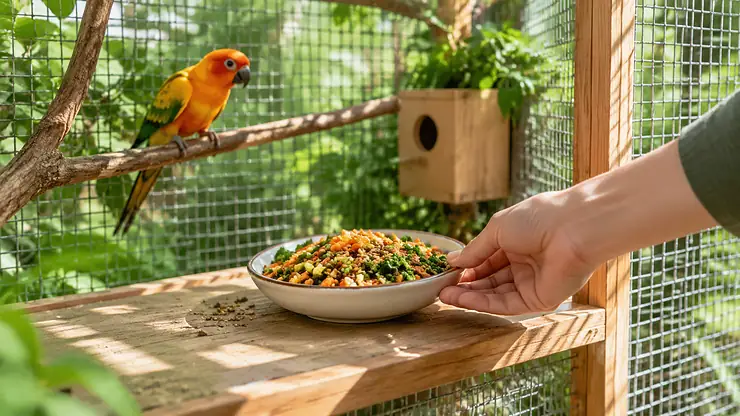
Pellets for birds with fatty liver are nutritionally complete formulated foods with a modest fat level. They are meant to replace fatty, seed-heavy diets and give the liver room to recover. They are the backbone of veterinary treatment for hepatic lipidosis, paired with fresh vegetables, portion control, and exercise.

Here’s the unsettling part: a bird with a fatty liver often looks fine. Birds are expert at hiding illness, and clinical references note that many affected birds aren’t visibly sick until the disease is well along. Meanwhile, sunflower seeds, the beloved staple of many cages, run roughly 47 to 50% fat on a dry-matter basis. Feed that to a sedentary parrot for years and the liver quietly pays the bill.
The MSD Veterinary Manual links the high incidence of fatty liver, atherosclerosis, and right-sided heart failure in captive birds to sedentary lives and seed-heavy diets. The good news is that caught early, the condition is often reversible, and the food bowl is the first lever you can pull.
This guide compares seven real pellet options using manufacturer data, retailer listings, and the veterinary literature. Nobody here claims hands-on testing. What follows is spec comparison, honest review-sentiment summaries, and plain reasoning. Your avian vet makes the diagnosis and sets the plan. Think of this as the homework you do before that conversation.
Quick Comparison: Pellets for Birds With Fatty Liver at a Glance
| Product | Fat (per label or spec sheet) | Protein | Best For |
|---|---|---|---|
| Roudybush Low Fat Daily Maintenance | 2% min (one retailer says 3%) | 12% min | Strictest fat cap under vet guidance |
| ZuPreem Natural Parrots & Conures | 4% min | 14% min | Easy-to-find daily base for mid-size parrots |
| Lafeber Premium Daily Diet Parrot Pellets | 4.6% min (5% on some Lafeber pages) | 13.1% min | Converting stubborn seed lovers |
| Mazuri Parrot Maintenance Diet | 5% min | 15% min | Large parrots, multi-size pellets |
| Vetafarm Maintenance Diet | 5% min | 17% min | Owners wanting body-weight-based feeding rules |
| Harrison’s Adult Lifetime | about 7.8% as fed (Coarse) | about 16.5% as fed | Maintenance once your vet agrees |
| Roudybush Daily Maintenance | 7% min (retailer listing) | 11% min | Budget-friendly step-down food |
Looking at the table, the gap between the leanest and the richest option is more than threefold. That spread matters far more than brand loyalty. Roudybush Low Fat Daily Maintenance is the outlier for strict restriction, while Harrison’s Adult Lifetime and Roudybush Daily Maintenance sit at the higher end and make more sense for maintenance than for active treatment. The middle tier, ZuPreem Natural, Lafeber Premium Daily Diet, Mazuri Parrot Maintenance, and Vetafarm Maintenance, clusters between 4 and 5% and covers most needs.
💬 Just one click — help others make better buying decisions too!😊
Top 7 Pellets for Birds With Fatty Liver: Expert Analysis
1. Roudybush Low Fat Daily Maintenance — strictest fat ceiling on this list
If fat percentage is your only scoreboard, Roudybush Low Fat Daily Maintenance wins before the game starts. Retailer listings put the guaranteed minimum crude fat at 2% (one store says 3%), with about 12% protein and a 2% fiber ceiling. That is well under half the fat in most maintenance pellets, which makes it the nearest thing to a therapeutic-style food you can buy without a prescription.
Roudybush positions it for adult birds that aren’t laying or feeding chicks and tend toward overweight. For chronic egg-layers or birds prone to low calcium, such as African Greys, the brand suggests blending two parts of it with one part of its breeder formula. It also says not to add extra vitamin or mineral supplements, which matters for the milk thistle conversation later.
Based on the spec comparison, this fits a plump Amazon or cockatiel whose vet wants a firm cap. It is a poor fit for a thin bird or a large macaw, whose species-level fat needs run higher. With calories this low, the practical risk shifts from overeating to undereating, so weekly weigh-ins matter.
At the retailer listing I checked, no customer reviews were posted, so there is no genuine review pattern to summarize.
Pros:
- ✅ Lowest listed fat percentage of the seven
- ✅ No animal by-products or artificial colors
- ✅ Designed for birds prone to being overweight
Cons:
- ❌ Wrong choice for thin or underweight birds
- ❌ No verifiable review base found
Mini 44 oz bags sat in the mid-$20s range at one retailer; check current price. For birds your vet wants lean, the value is strong.
2. ZuPreem Natural Parrots & Conures — the easiest everyday base to find
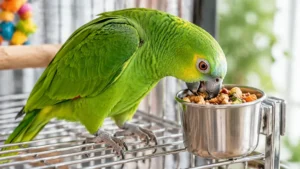
ZuPreem Natural Parrots & Conures wins on availability and predictability. Labels list 14% protein and 4% fat as minimums, with fiber capped at 4 to 5% depending on the listing. The Natural line’s ingredient story leans on vegetables, berries, and ground flaxseed, and every pellet shares one color and shape, which discourages birds from sorting out favorites and leaving the rest.
The feeding guide suggests about half a cup daily for African Greys, Senegals, Amazons, Eclectus, and small cockatoos. ZuPreem also says its pellets should make up at least 60% of the diet. In practice, that means the pellet is the foundation rather than a garnish, which suits a liver-recovery plan.
One caution: skip ZuPreem FruitBlend for this purpose. Its ingredient panel includes sugar and added dyes (Blue 1 and Red 3), and the rainbow look is marketing rather than medicine. ZuPreem Natural is the cleaner pick.
The review pools I could verify were small and the scores scattered across retailers. Treat star ratings as noise and lean on the label instead.
Pros:
- ✅ Single pellet color and shape limits cherry-picking
- ✅ 4% minimum fat sits in the low-moderate band
- ✅ Stocked widely and sold in several sizes
Cons:
- ❌ Fat is double that of the leanest option
- ❌ Fiber figures vary between listings
A 3 lb bag ran around $20 at several retailers; prices vary. It’s a dependable mid-range value.
3. Lafeber Premium Daily Diet Parrot Pellets — built to win over seed junkies
Dr. T.J. Lafeber developed the first bird pellets in 1975, and Lafeber Premium Daily Diet Parrot Pellets descends from that work. The parrot formula’s product page lists 13.1% protein, 4.6% fat, and 3.5% fiber as guarantees, plus minimum omega-3 and omega-6 levels of 0.24% and 1.79%. Lafeber’s veterinary page prints a 5% minimum fat figure for the same size, so check your actual bag.
The pellets are flavored with molasses to coax seed lovers into trying them. For a hepatic lipidosis patient that is a reasonable trade, since acceptance beats a perfect label on a food your bird won’t touch. Lafeber also pairs the pellets with foraging products like Lafeber Nutri-Berries, which are shaped to encourage natural behavior, and sells a prescription-channel option, Lafeber Nutri-An Cakes, through vets for weight maintenance. Ask your vet whether those apply.
Reviews on Lafeber’s own site, which skew toward happy long-term customers, describe decades of feeding and an Amazon parrot converted from a peanut-heavy diet. Self-selected praise is still not proof, but it suggests palatability is a strength.
Pros:
- ✅ Molasses flavor helps conversion from seeds
- ✅ Omega fatty acid minimums are published
- ✅ Dated “Best Before” stamp on the lid
Cons:
- ❌ Fat guarantee varies from 4.6% to 5% between Lafeber pages
- ❌ Molasses adds sweetness some vets may question
Prices vary by size, so check current price. The value hinges on whether it gets your bird eating.
4. Mazuri Parrot Maintenance Diet — multi-size extruded pellets for bigger beaks
Mazuri Parrot Maintenance Diet is aimed at large psittacines that aren’t breeding. The spec sheet guarantees at least 15% protein and 5% fat, with fiber capped at 6%, moisture at 12%, and ash at 7%. It’s extruded in multiple particle sizes, so a macaw and a conure in the same house can share one bag.
Mazuri’s changeover advice runs ten days in 10% steps, starting from 90% seed. It also gives a useful monitoring trick: dark green, reduced droppings suggest the bird isn’t eating the new food, while brownish-green droppings suggest it is. Take that conversion schedule as a template, not gospel, for a bird with active liver disease. Any diet change in a sick bird should be gradual and vet-guided.
Retail reviewers mention birds accepting different pellet sizes and transitioning easily. One recounts using it as weaning food years earlier. The reviews are friendly but anecdotal.
Here is an honest limitation: macaws and other large parrots sometimes need more dietary fat, so a 5% food may be perfectly adequate for them without being aggressively low. That’s a vet call.
Pros:
- ✅ Multiple pellet sizes in one formula
- ✅ Clear droppings-based conversion guidance
- ✅ Sold through farm-supply and big-box chains
Cons:
- ❌ 25 lb sacks go stale before small flocks finish them
- ❌ Fat is 5%, not the lowest available
Expect roughly $60 to $70 for a 25 lb sack at some retailers; check current price. It’s good value if you have several birds.
5. Vetafarm Maintenance Diet — body-weight-based feeding rules
Vetafarm Maintenance Diet stands out for feeding guidance that actually does math. The listing shows 17% protein, 5% fat, 3.5% fiber, salt at 0.5% maximum, and about 3,150 kcal/kg. Vetafarm suggests pellets make up about 80% of daily intake and recommends a minimum of 10% of body weight in pellets per day. Their example: a 150 g sun conure gets at least 15 g.
That arithmetic is valuable because portion creep is a classic route to obesity even on a good diet. Veterinary references warn that a bowl refilled by eye, plus nut rewards, can add surplus calories without any single culprit. Weighing food ends the guesswork.
Energy density is also worth noticing. At 3,150 kcal/kg, it’s lighter than Roudybush Daily Maintenance (3,477 kcal/kg) at a lower fat level.
Reviewers describe mixed acceptance, with some birds happy and others unimpressed, and one mentions an unusual savory smell. Plan for a trial run before buying large.
Pros:
- ✅ Specific feeding rules by body weight
- ✅ 5% fat with a published calorie figure
- ✅ Veterinary-minded brand with a clear maintenance role
Cons:
- ❌ Mixed acceptance in reviews
- ❌ Small bags mean frequent reordering
Prices vary by retailer, so check current price. It’s best bought small first.
6. Harrison’s Adult Lifetime — the most transparent nutrition data
Harrison’s Adult Lifetime deserves credit for showing its work. Its technical data lists both as-fed and dry-matter values. For the Coarse formula, that’s 3,346 kcal/kg, 16.52% protein (18.06% dry matter), and 7.80% fat (8.52% dry matter), with moisture at 8.5%. The Fine/Superfine formula lists 3,333 kcal/kg and 15.37% protein as fed. Harrison’s veterinary reference also says moving to a nutritionally complete formulated diet is the primary dietary step when fatty liver is suspected, and it notes birds can still gain too much on pellets if calories aren’t controlled.
The catch is plain: at roughly 7.8% fat, this is the richest option in the study alongside Roudybush Daily Maintenance. That doesn’t make it bad. It makes it a better fit for maintenance, for a bird whose vet is comfortable with that level, or for a bird that is underweight and can’t afford to drop more.
I couldn’t verify a meaningful review sample during research, so no sentiment summary is offered here.
Pros:
- ✅ Publishes as-fed and dry-matter nutrient data
- ✅ Multiple textures, including Fine, Coarse, and Mash
- ✅ Vet-facing material supports formulated diets
Cons:
- ❌ Highest fat among the seven for active treatment
- ❌ Premium pricing tier
Expect a premium-tier price; check current price. It’s worth it if your vet specifically recommends it.
7. Roudybush Daily Maintenance — the low-cost step-down food
Roudybush Daily Maintenance is the humble workhorse. Retailer listings show 11% protein, 7% fat, 3.5% fiber, 12% moisture, and 3,477 kcal/kg, with no animal by-products or artificial colors. The brand pitches it as the diet for transitioning birds off seed. A 6%-fat California Blend adds dried fruit and vegetables for seed-loving birds, though that variation brings added sugars worth discussing with your vet.
Its role in a hepatic lipidosis plan is limited, but useful. Once the liver values improve and your vet says a maintenance level is fine, this is an affordable place to land. Veterinary literature on liver disease in birds notes that after fatty liver treatment, some birds can return to a normal maintenance diet. It’s an observation, not a promise.
Reviews weren’t verifiable in my research. Judge it by the label and your bird’s weight trend.
Pros:
- ✅ Low cost per bag at the retailers checked
- ✅ No artificial colors or animal by-products
- ✅ Useful for birds cleared for maintenance
Cons:
- ❌ 7% fat is too rich for early treatment
- ❌ Highest calorie density of the seven
A 44 oz crumble bag was in the low-teens range at one store; check current price. It’s strong value for a recovered bird.
How to Choose Pellets for Birds With Fatty Liver
- Start with your vet’s target. A bird with elevated bile acids needs a different plan than a plump bird with normal bloodwork. Let the diagnosis set the fat ceiling.
- Read fat and calories together. Fat delivers more than twice the energy per gram of protein or carbs, so percentage and kcal/kg tell one story.
- Match pellet size to species. A conure can’t eat macaw pellets, and a macaw won’t bother with crumbles.
- Check the color story. Skip dyes and sugary fruit flavors when a plain formula exists.
- Look for a date. Fresh pellets keep their vitamins, and a “Best Before” stamp tells you what you’re buying.
- Pick for acceptance, too. The perfect pellet that is refused is worse than a good pellet that is eaten.
- Plan the complement. Pellets are the base, with fresh vegetables and measured portions around them.
✨ Ready to Shop Smarter?
🔍 Take your bird’s recovery plan to the next level with these carefully compared options. Click on any highlighted product to check current pricing and availability. A better bowl is the first step toward a healthier liver and a more active bird!

Fat Content Percentage: What the Numbers Really Mean
A fat content percentage on a bag looks simple, but three details change its meaning.
First, “crude fat (min)” is a floor. The real number can sit higher. Second, as-fed and dry-matter figures differ. Harrison’s Adult Lifetime shows 7.80% fat as fed and 8.52% on a dry basis because moisture is 8.5%. To convert, divide the as-fed value by one minus the moisture fraction. Third, a bird’s actual intake depends on how much it eats, not what the bag says.
| Fat Tier | Products | Typical Situation | Best For |
|---|---|---|---|
| About 2–3% | Roudybush Low Fat Daily Maintenance | Vet wants a firm cap | Overweight, non-breeding adults |
| About 4–5% | ZuPreem Natural, Lafeber Premium Daily Diet, Mazuri Parrot Maintenance, Vetafarm Maintenance | Moderate low-fat daily base | Most birds in a recovery plan |
| About 7–8% | Harrison’s Adult Lifetime, Roudybush Daily Maintenance | Maintenance after recovery | Birds cleared by their vet |
The tiers show why “low fat” is a range rather than a single number. A 4% pellet is low next to sunflower seed but not next to Roudybush Low Fat. Your vet decides how far down your bird needs to go, and thin or large-bodied birds may need less restriction than the label suggests.
Understanding Hepatic Lipidosis in Parrots
Hepatic lipidosis means excess fat accumulates inside liver cells. According to dvm360, it is more frequently seen in budgerigars, cockatiels, Amazon parrots, and cockatoos, and the usual causes are inactivity, toxic insult, and malnutrition. Deficiencies in methionine, biotin, and choline can interfere with fat mobilization, which is one reason balanced formulated diets matter beyond just trimming fat.
Diagnosis uses an exam, bloodwork, and imaging. Bile acids are considered the most sensitive blood marker, and a definitive diagnosis requires a biopsy. Treatment typically pairs a low-fat pelleted diet with small amounts of fresh fruits and vegetables. Some birds also need fluids or tube feeding if they stop eating.
The reassuring part: the liver can regenerate when intervention comes early. The less reassuring part: hepatic lipidosis can develop even on pellets if total calories aren’t controlled. That means the answer is never just a brand switch. It’s a whole-diet and lifestyle shift.
Features That Actually Matter in Low Fat Pellets for Parrots With Liver Disease
When shopping for low fat pellets for parrots with liver disease, ignore the bag art and read the back panel.
What matters:
- A stated fat guarantee and calorie density
- Consistent pellet shape and color
- No artificial dyes or added sugars where avoidable
- Pellet size matched to your species
- A manufacturer that publishes real nutrient data
What doesn’t:
- Fruit-shaped pieces and cartoon pictures
- “Gourmet” labeling
- Front-of-bag buzzwords like “natural” with no numbers behind them
Veterinary guidance also warns that half-seed, half-pellet diets, when not portion-controlled, still run short on vitamin A. So “mixed” is not a compromise to celebrate. If a pellet’s job is to be the nutritional anchor, let it do the job.
Building a Liver Support Diet for Pet Birds Beyond the Pellet Bowl
A liver support diet for pet birds is a system, not a single food. Pellets form the base, and brands suggest anywhere from 60% to 80% of daily intake. Around them sit low-sugar produce such as raspberries, blueberries, bell peppers, and broccoli, which are the kinds of vegetables and fruits owner-education sources suggest. Orange and green vegetables also supply beta-carotene.
Portion discipline matters more than most owners expect. Don’t leave unlimited food in the cage, weigh your bird weekly, and keep nuts and seeds as rare, deliberate rewards rather than casual handouts. Exercise matters too, since affected birds can be lethargic and need encouragement to move. Finally, think air quality: gases, scented candles, and aerosol sprays are toxin sources that can make liver trouble worse.
Milk Thistle Supplement: Helpful, Harmless, or Hype?
A milk thistle supplement is the most common add-on owners ask about, and the honest answer is “maybe, as a helper.” Milk thistle’s active compound, silymarin, has been studied in birds with mixed results. A pigeon study in the Journal of Avian Medicine and Surgery found no protective effect on liver tissue after an aflatoxin challenge, though one dose group showed lower levels of some enzymes. Other avian reports describe liver protection in pigeons and chickens. LafeberVet’s Q&A sums it up as variable evidence, so you can find studies on both sides.
A World Parrot Trust article frames it as an adjunct to supportive care rather than a standalone fix, and says dosing depends on product purity. A recent psittacine review likewise lists silymarin among supportive measures alongside vitamins, L-carnitine, and a restrictive low-fat diet. Nobody lists it as a replacement for diet change.
So: ask your vet before buying any milk thistle supplement. This matters especially with Roudybush Low Fat Daily Maintenance, whose maker advises against additional vitamin or mineral supplements. And never swap one in place of the pellet switch.
Pellets vs Seed Diets for a Bird With Fatty Liver
| Diet Type | Fat Level | Completeness | Best For |
|---|---|---|---|
| Seed-based mixes | Very high (sunflower about 47–50% dry matter) | Often deficient in vitamin A and calcium | Nobody with liver trouble |
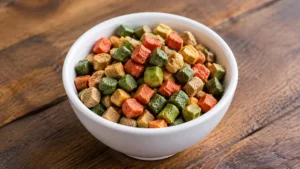
| Formulated pellets such as ZuPreem Natural or Mazuri Parrot Maintenance | Roughly 2–8% in this guide | Balanced by design | Base diet for recovery |
| Fresh vegetables and low-sugar fruit | Low | Not complete alone | Complement to pellets |
The comparison is lopsided on purpose. Seeds are calorie-dense and unbalanced, and pellets are the opposite on both counts. Fresh produce is a lovely complement but can’t carry the whole diet. Birds prefer seed because it tastes like candy to them, which is exactly why conversion takes patience rather than willpower.
How to Switch Your Bird to Pellets Safely: A Practical Guide
Transformation starts with pacing. Avian references suggest several gentle strategies: offer the new food as a hand-fed treat, moisten pellets with fruit juice, and feed the old diet for about 30 minutes morning and evening, with pellets in between.
Your first-month checklist:
- Week 1: Weigh your bird and note the number. Offer pellets alongside the usual food.
- Week 2: Shrink the old food’s window while keeping pellets available.
- Weeks 3–4: Move toward pellets as the main diet at the pace your vet approves.
- Daily: Check droppings. Mazuri notes dark green, reduced droppings can signal that the bird isn’t eating the new food.
- Weekly: Weigh on the same scale at the same time.
The ten-day schedules on bag labels suit healthy birds. A bird with liver disease needs a slower, vet-guided path. If a bird stops eating, that’s a call to your vet rather than a wait-and-see.
Real-World Scenarios: Matching Pellets to Real Bird Profiles
Scenario 1: The sedentary Amazon. An Amazon parrot with a seed habit and a vet-confirmed weight problem needs a firm cap. Roudybush Low Fat Daily Maintenance fits, with fresh vegetables and daily out-of-cage time.
Scenario 2: The African Grey with calcium worries. African Greys can develop low calcium. Roudybush’s own guidance suggests blending low-fat food with its breeder formula for such birds, so Roudybush Low Fat Daily Maintenance works only as part of a vet-approved mix.
Scenario 3: The large macaw. Large macaws may need more dietary fat than other parrots, which makes a 5% pellet like Mazuri Parrot Maintenance a sensible, less restrictive option. Your vet sets the final target.
Notice the pattern: species, body condition, and bloodwork shape the pick, so shop the profile, not the trend.
Common Mistakes When Buying Pellets for Birds With Fatty Liver
- Buying by color and flavor. ZuPreem FruitBlend looks cheerful but contains sugar and dyes that ZuPreem Natural avoids.
- Ignoring portions. A refilled bowl and casual nut rewards add calories on any pellet.
- Switching cold turkey. A sick bird needs gradual change and monitoring.
- Assuming lowest fat always wins. Thin birds and some large parrots can be hurt by too much restriction.
- Adding supplements without asking. Even helpful-sounding extras can conflict with a brand’s guidance.
- Skipping rechecks. Bloodwork shows whether the plan is working. Appetite alone can’t.
Problem → Solution Guide for Pellet Conversions
Problem: The bird picks out favorite pieces. Use a single-color formula like ZuPreem Natural, and offer measured portions rather than a full bowl.
Problem: The bird ignores pellets. Try moistening them or offering by hand as a treat, as avian nutrition references suggest.
Problem: Weight isn’t dropping. Count treats and nuts first, then ask your vet whether a lower-fat tier makes sense. Don’t self-adjust drastically.
Problem: A multi-bird house. Choose a multi-size option like Mazuri Parrot Maintenance, but remember each bird’s needs differ.
For deeper background, LafeberVet’s avian nutrition overview covers protein, fat, and carbohydrate basics in plain language.

FAQ: Pellets for Birds With Fatty Liver
❓ What is the best pellet brand for a parrot with fatty liver?
❓ Can I mix seeds with pellets if my bird has hepatic lipidosis?
❓ Are fruit-flavored pellets okay for a bird with a fatty liver?
❓ How much pellet food should my bird eat each day?
❓ Do I need a prescription for a low-fat bird diet?
Conclusion: Pellets for Birds With Fatty Liver Are One Piece of the Plan
A fatty liver is a slow-motion problem with a surprisingly practical fix. The seven options here span a real range. Roudybush Low Fat Daily Maintenance sets the floor at about 2% fat. ZuPreem Natural, Lafeber Premium Daily Diet, Mazuri Parrot Maintenance, and Vetafarm Maintenance cluster between 4 and 5%. Harrison’s Adult Lifetime and Roudybush Daily Maintenance sit near 7 to 8% and fit maintenance better than treatment.
The bigger lesson is that no pellet works alone. The winning formula is a vet-set target, a measured pellet base, low-sugar vegetables, regular weigh-ins, and a bird that actually moves. If you add a milk thistle supplement, treat it as a vet-approved helper rather than a hero. Prices and formulas change, so verify the label on the bag you buy.
Start with a conversation at your avian vet’s office, bring this comparison, and pick the tier that fits your bird’s body, not the one with the prettiest bag. Early action gives the liver its best chance to bounce back.
Recommended for You
- Low Iron Pellets For Toucans And Mynahs: 7 Safest Picks (2026)
- Affordable Hanging Bath Tub For Finches: 7 Best Picks (2026)
- Deep Bird Bath For Larger Parrots: 7 Proven Picks For 2026
Disclaimer: This article contains affiliate links. As an Amazon Associate, I earn from qualifying purchases. If you purchase products through these links, we may earn a small commission at no additional cost to you.
✨ Found this helpful? Share it with your friends! 💬🤗
