
In This Article
Parrot pellets for picky eaters are formulated bird foods designed to win over birds that sort, toss, or ignore ordinary pellets. They combine balanced nutrition with a texture, flavor, shape, or processing style that makes a reluctant parrot more willing to eat the whole portion instead of picking out favorites.
Picture the scene. You pour a fresh scoop, your parrot leans over the dish like a food critic at a bad buffet, flicks one pellet onto the floor, and gives you a look that says “never again.” Familiar? You’re in good company, and the stakes are higher than a messy floor. Veterinary references consider seed-only diets suboptimal because seeds fall short on vitamin A, key amino acids like lysine and methionine, and calcium, as the Merck Veterinary Manual explains. That same reference adds a useful caution: pelleted diets vary in quality, so each one deserves individual evaluation.
So the goal isn’t “any pellet.” It’s the right pellet, matched to why your bird is refusing. Some birds are texture rebels. Some chase sweetness. Some sort by color, and some are simply handed a pellet too big for their beak. This guide sorts seven real products by those problems, then digs into soft texture pellets for fussy parrots, flavored pellets for finicky parrots, pellet palatability, extruded vs baked pellets, and pellet size for parrots.
A transparency note: nothing here is lab testing or hands-on feeding. It’s built from ingredient panels, manufacturer and veterinary documentation, and patterns in retail reviews. Check with an avian veterinarian before changing any diet, and treat every price range below as a snapshot, because prices move.
Quick Comparison: Parrot Pellets for Picky Eaters at a Glance
| Product | Processing | Texture & Flavor Hook | Size Fit | Price Range | Best For |
|---|---|---|---|---|---|
| ZuPreem FruitBlend | Extruded | Crunchy, fruit-shaped, fruit flavor | Medium-Large (conures to small cockatoos) | About $15-$30 (smaller bags) | Seed lovers needing a flavor bridge |
| Kaytee NutriSoft | Soft, moist formula | Chewy, fruity aroma | Parrot & Conure size | Around $20 (3 lb) | Birds that reject hard pellets |
| Harrison’s High Potency Coarse | Extruded, certified organic | Coarse, grainy bite | Medium to large parrots | About $55-$70 (5 lb) | Owners following a vet-guided plan |
| Lafeber Premium Daily Diet | True pelleted | Uniform, molasses-flavored | Parrot size (greys, Amazons) | About $30-$55 (5 lb) | Birds that sort and pick |
| Caitec Oven Fresh Bites | Baked | Semi-crunchy, visible fruit, veg, nuts | Extra small to large | About $25-$35 (42 oz) | Birds that find extruded chalky |
| TOP’s Parrot Pellets | Cold-pressed, USDA organic | Plain, undyed, about 1/4″ | Several sizes | About $13-$20 (1 lb) | Dye-free households that feed chop |
| Roudybush Daily Maintenance | Formulated pellet | Plain, uniform color | Widest size ladder | Mid-range (check listing) | Size-sensitive, color-sorting birds |
Looking at the comparison above, ZuPreem FruitBlend is the cheapest low-risk experiment for a flavor-driven bird, while Caitec Oven Fresh Bites and TOP’s Parrot Pellets suit owners who care more about processing than novelty. Kaytee NutriSoft is the only entry built around soft texture pellets for fussy parrots, and Roudybush Daily Maintenance wins on size options. Prices vary a lot per pound, so start with the smallest bag.
💬 Just one click — help others make better buying decisions too!😊
Top 7 Parrot Pellets for Picky Eaters: Expert Analysis
Each pick below pairs the specs with what they mean in a real bowl. Review sentiment is aggregated from retail listings and roundups at the time of research, and where I couldn’t verify it, I say so.
1. ZuPreem FruitBlend — fruit-flavored gateway pellet for seed lovers
The pitch is simple: pellets shaped and colored like five fruits, with natural fruit flavor, so a bird that treats pellets like gravel gets a reason to investigate.
The Medium-Large size covers conures, caiques, African greys, Senegals, Amazons, Eclectus, and small cockatoos, which is most households with a fussy parrot. The ingredient panel leads with ground corn, soybean meal, and wheat, then lists sugar, fruit, and added color, so the sweetness that hooks a reluctant bird is real. It’s also an extruded pellet, and extruded diets are generally more palatable than true pellets.
My read: treat it as a bridge, not a forever food. Birds raised on sunflower seeds often respond to sweetness and color, and the mix of shapes shows you which pieces your bird grabs first, which is useful data for your next bag.
Reviewers on a major retail listing report a 4.6 average across more than 11,000 ratings. A recurring theme is that it’s the one pellet a stubborn bird accepts, including a cockatoo that skips only the purple pieces. A minority say their parrot refused it outright.
Pros:
- ✅ Fruit colors and shapes spark curiosity in reluctant birds
- ✅ Many bag sizes make a low-risk trial easy
- ✅ Widely stocked and priced below premium organic lines
Cons:
- ❌ Ingredient panel includes sugar and added color
- ❌ Birds may color-sort and leave pieces behind
Expect roughly $15-$30 for the smaller bags (check current price); as a trial buy, the risk per dollar is hard to beat.
2. Kaytee NutriSoft — soft, chewy pellets for hard-pellet haters
NutriSoft’s whole identity is texture: chewy, breakable pieces meant to feel closer to fresh produce than gravel.
The recipe starts with rice flour, ground wheat, vegetable glycerin, corn gluten meal, and dehulled soybean meal, plus water. Glycerin and water keep the pieces pliable, but they also mean soft food goes stale faster than dry nuggets, so the maker suggests refrigerating for extended storage. In practice, buy the 3-lb bag only if you’ll finish it within a few weeks.
This is the pick for birds that mouth a regular pellet and drop it. A bird that hates hard bites may find squishy pieces more interesting, and the texture blends well into chop, which lets you tuck nutrition into a bowl your parrot already likes. If you’re shopping specifically for soft texture pellets for fussy parrots, start here.
Reviewers are split. Owners report a picky green cheek conure eating every bit mixed into veggies, and a Jardine’s parrot that dislikes hard pellets accepting it. Others say pieces turn “rock hard” within hours, weren’t as soft as advertised, or got picked out and tossed. The retail rating sits around 4.2 across more than 1,200 reviews.
Pros:
- ✅ Soft, chewy texture suits birds that reject hard pellets
- ✅ Fruity aroma attracts reluctant eaters
- ✅ Mixes smoothly into chop and veggies
Cons:
- ❌ Pieces can harden within hours in the dish
- ❌ Wheat and corn gluten meal put some owners off
Around $20 for the 3-lb bag; decent value if your bird eats it, a poor deal if it ends up on the floor.
3. Harrison’s High Potency Coarse — organic nuggets for a vet-guided plan
Harrison’s is the benchmark other “premium” foods get measured against, and High Potency is its richest everyday formula.
The guaranteed analysis lists crude protein at 18% minimum, crude fat at 13.5% minimum, and moisture at 10% maximum. That’s a denser, fattier profile than a standard maintenance diet. It suits molting, breeding, or underweight birds but may be more than a sedentary pet needs. The ingredients are certified organic and non-GMO: sunflower kernels, hull-less barley, soybeans, peas, peanut kernels, lentils, brown rice, and alfalfa. Harrison’s describes its core line as extruded nuggets, so this is a strong example of extruded vs baked pellets on the extruded side, and it recommends starting most birds on Adult Lifetime before moving up.
The coarse nugget has a toasty, grainy bite some picky birds like. A veterinary-written conversion guide also notes that Harrison’s pepper varieties can raise interest, and its mash-sized pellets help bridge textures.
Review snippets are thin but consistent: birds that accept it do well, and the main complaint is cost, with one reviewer calling it good but spendy. Rating data wasn’t verifiable.
Pros:
- ✅ Certified organic, non-GMO ingredient list
- ✅ Nutrient-dense for molting or recovering birds (with vet guidance)
- ✅ No preservatives, artificial colors, or sweeteners
Cons:
- ❌ Premium pricing multiplies quickly with larger birds
- ❌ No sweetness hook for sugar-trained birds
Roughly $55-$70 for 5 lb; worth it if your vet recommends it, expensive as an experiment.
4. Lafeber Premium Daily Diet — true pellets that end the sorting game
Lafeber describes its pellets as the only truly pelleted food in most pet stores, with most competitors being extruded.
According to Lafeber’s veterinary reference, true pelleting heats ingredients to roughly 70-80°C and pushes them through a die without cooking, while extrusion runs about 90-180°C under pressure. The parrot recipe uses non-GMO ground corn, soybean meal, oat groats, and whole egg, flavored with molasses. Lafeber claims pelleting loses about 10% of nutrients versus 20-30% for extrusion, but that’s a manufacturer’s claim, so read it as marketing rather than settled science.
Because every pellet is identical, a bird can’t excavate favorites. That’s a genuine advantage for sorters. The trade-off is that the same veterinary reference calls true pellets generally less palatable than extruded ones, so this suits birds fussy about picking, not birds suspicious of pellets altogether.
Independent review data was thin at research time. Roundup sites rank it a top overall pick and long-term owners praise it as a base diet, but brand-site reviews deserve caution.
Pros:
- ✅ Uniform pellets discourage picking favorites
- ✅ Molasses flavor without artificial colors or dyes
- ✅ Omega-3 and 6 balanced recipe from a long-established maker
Cons:
- ❌ Contains corn and soy, which some owners avoid
- ❌ Less palatable than extruded for suspicious birds
Roughly $30-$55 for a 5-lb tub depending on seller; fair value if sorting is your bird’s main sin.
5. Caitec Oven Fresh Bites — baked bites for birds that reject extruded
These are slow-baked rather than extruded, built to look and feel closer to something baked at home, with visible fruit, vegetable, and nut pieces.
Ingredients include oatmeal, white millet flour, and sunflower meal, and the maker says corn and wheat aren’t the primary energy sources. The large-parrot size lists 15% protein minimum, 6% fat minimum, 3.5% fiber maximum, and 10% moisture maximum. That fat level is gentler than Harrison’s High Potency Coarse, which makes it a more sensible everyday choice for less active birds. Sizes run from extra small to large.
Baked foods have a semi-crunchy bite and a bakery smell, and that mouthfeel appeals to birds that find extruded nuggets chalky. With no added sugar, the hook here is aroma and texture, not sweetness, which makes it the clearest extruded vs baked pellets test on this list.
Owners describe most medium and large parrots in a flock accepting it, which they call notable because birds not raised on pellets usually refuse them. Complaints include insects found in a bag, a quality drop on one order, and periodic backorders at higher prices.
Pros:
- ✅ Baked texture suits birds that reject extruded nuggets
- ✅ No added sugar or artificial colors
- ✅ Visible fruit, vegetable, and nut bits add interest
Cons:
- ❌ Stock gaps and price swings are recurring complaints
- ❌ Store sealed; one reviewer reported bugs
Roughly $25-$35 for 42 oz; check availability before planning around it.
6. TOP’s Parrot Pellets — cold-pressed organic pellets for dye-free households
TOP’s Parrot Pellets go the opposite direction from ZuPreem FruitBlend: no colors, no sugar, no theatrics, just USDA-certified organic ingredients cold-pressed into plain pellets.
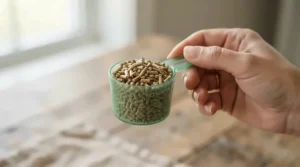
The signature pellet measures about 1/4 inch across, and the formula is cold-pressed rather than extruded or baked and preserved with botanical extracts. Retail listings for the small-hookbill version describe it as free of soy, corn, and peanuts. Because there’s no sweetener or dye, pellet palatability rests on grain aroma alone.
Reviewers often use it as a dinner-time pellet or a chop ingredient rather than a sole diet, a smart role for a plain pellet. One caution from small-bird owners: “mini” pellets can run longer than the name suggests, which matters for cockatiels and budgies (see the size section below).
On Chewy it averages about 4.4 across 217 ratings. One owner says a Quaker and a Timneh grey both love it; others report parrots that wouldn’t touch it, and one switched brands over price and availability.
Pros:
- ✅ USDA organic with no artificial colors, flavors, or sugar
- ✅ Cold-pressed process aimed at nutrient retention
- ✅ Works well mixed into chop
Cons:
- ❌ Plain pellet offers little appeal to sugar-trained birds
- ❌ Premium cost, and mini pellets run long for tiny beaks
Roughly $13-$20 for a 1-lb bag, cheaper per pound in larger bags; good for owners who read labels first.
7. Roudybush Daily Maintenance — the size-flexible pellet with no sugar or dyes
Roudybush’s real trick is range: from Nibles and Crumble for finches and budgies up to Medium for macaws, it’s one of the easiest brands for matching pellet size for parrots.
The retailer size guide suggests Mini for birds about 3 inches or taller (cockatiels, conures, lovebirds, Quakers, ringnecks), Small for birds 6 inches and up (African greys, Eclectus, Pionus, cockatoos), and Medium for 8 inches and up (Amazons, cockatoos, macaws). Roundups describe the formula as free of added colors, sugars, and byproducts and high in vitamins. The uniform color means there’s nothing to color-sort.
That plain approach cuts both ways: no sweetness hook, but a bird that stalks and sorts finds nothing to sort. If your bird rejects one size, you can try the next without switching formulas. It’s a sturdy base for birds fussy about size rather than flavor.
One reviewer feeds it to an African grey and says it looks too big for parakeets, which matches the size chart. Hepper names it best for the money. Rating counts weren’t verified.
Pros:
- ✅ Widest size ladder from tiny birds to macaws
- ✅ No added sugar or artificial colors
- ✅ Modest cost for this standard of pellet
Cons:
- ❌ No flavor or texture hook for sugar-trained birds
- ❌ Size labels need careful matching to your bird
Typically mid-range, below most organic lines (check current price); the best-value pick when size is the problem.
How to Convert a Picky Parrot to Pellets: A Practical 14-Day Plan
Starting with a vet check is the unglamorous but smartest first move. Ask your avian veterinarian for a baseline weight and a go-ahead, then buy a gram scale, because daily weighing is the safety net for everything below.
Days 1-4: Sprinkle pellets over the usual food. One published schedule for lovebirds moves from 90% seed and 10% pellets on day one to no seed by day ten, and it advises pausing the ratio instead of pushing ahead if the bird refuses.
Days 5-9: Offer pellets first thing in the morning, when appetite peaks. Hide them in foraging toys, or grind pellets with warm water and millet to make a mash. Remove mash after a few hours to prevent spoilage.
Days 10-14: Shrink the old food only if weight and droppings stay steady. Let your bird watch a flock mate or family member “eat” pellets too, because parrots often try what others enjoy.
Manufacturer and veterinary guides agree on one hard line: if your bird loses more than 10% of its starting weight, or seems weak or lethargic, stop and call your avian vet. Older, long-term seed eaters may need weeks, not days, so don’t treat the calendar as a deadline.
✨ Ready to Start the Taste Test?
🔍 Pick two or three pellets from the list above, click any highlighted item to check current pricing and availability, and let your parrot vote with its beak!
Real-World Scenarios: Matching Parrot Pellets for Picky Eaters to Real Birds
These are illustrative profiles, not case studies, but they show how the reasoning plays out.
Scenario 1: The seed-only green cheek conure on a tight budget. If you’re spending under about $25 a month and your bird has eaten mostly seeds, try ZuPreem FruitBlend in a small bag first. Once it’s accepted, fold in Kaytee NutriSoft with chop to add soft texture pellets for fussy parrots into the routine. Daily use, small portions, fresh dish each morning.
Scenario 2: The sorting African grey in a multi-bird home. Your grey eats the yellow bits and flicks the rest. Colored mixes will only feed that habit. Choose Lafeber Premium Daily Diet or Roudybush Daily Maintenance in the Small size so nothing is worth excavating, and feed it as the main morning meal.
Scenario 3: The organic-minded owner with two cockatiels. You already prepare chop three times a week and want undyed pellets. TOP’s Parrot Pellets works as a chop ingredient or dinner pellet, but check the length of the mini version against your birds’ beaks. As a backup, Caitec Oven Fresh Bites in the small size adds baked texture without added sugar.
Problem → Solution: When a Fussy Parrot Rejects Pellets
Problem 1: Your bird picks out colored pieces. Colored mixes invite sorting. Switch to a uniform-color pellet like Roudybush Daily Maintenance or TOP’s Parrot Pellets, or use ZuPreem FruitBlend only as a short-term bridge.
Problem 2: Soft pellets harden before the bird eats them. This is the main complaint about Kaytee NutriSoft. Serve smaller portions and replace them several times a day rather than leaving a full dish.
Problem 3: Weight is dropping during conversion. Stop, bring back the old food, and call your avian vet. Fast switching is never worth a thin bird.
Problem 4: Pellets keep landing on the floor. Size mismatch is a common culprit. Move one size up or down within the same brand to isolate the variable.
Problem 5: Your bird eats pellets but won’t try new ones. Run a three-pellet taste test: offer up to three types in separate piles, note which one your bird investigates, then fill a cup with that favorite for all-day grazing.
Pellet Palatability: What Actually Makes a Parrot Say Yes
Pellet palatability is how readily a bird accepts a food, and it’s rarely about one thing. Five factors do most of the work: sweetness and flavor, aroma, texture, shape and color, and familiarity. Parrots are creatures of habit, and a bird that’s eaten seed for years has a strong head start over any pellet.
Here’s the catch: the most palatable pellet isn’t always the best long-term food. Sweetened, colorful options win the first week, while plain pellets win on ingredient simplicity. One longtime parrot educator notes she hasn’t found extruded pellets any easier to convert than other types, which is a fair reminder that pellet palatability is individual.
Because you can’t judge pellet palatability from a bag, let your bird tell you. ZuPreem’s step-by-step conversion plan suggests offering up to three pellet types in different colors and shapes, then following your bird’s choice. That’s cheaper than guessing, and it turns a staring contest into data.
Aim for the least sugary pellet your bird will still eat reliably. Think of the sweetest pellet as the on-ramp and the plain one as the highway.
Soft Texture Pellets for Fussy Parrots: When Softer Wins
Some birds aren’t rejecting nutrition. They’re rejecting effort. A hard, dry nugget demands more work per bite, and a fussy parrot can decide it isn’t worth it. Soft texture pellets for fussy parrots lower that effort, and they’re especially useful for birds used to cooked grains, hand-feeding formula, or soft fresh foods.
Kaytee NutriSoft is the dedicated option here, but you can also create softness yourself. Grind Harrison’s High Potency Coarse or another pellet, add warm water, and mix in millet to create a mash. Your bird must forage through the mash to find the millet, which turns eating into a game.
The trade-off is spoilage. Moist food is a bacteria’s playground, so remove mash and soft pellets after a few hours and wash the dish daily. Reviewers of soft products also report pieces drying into hard chips, so portion small.
Use soft texture pellets for fussy parrots as a stepping stone: start soft, then gradually fold in a crunchier pellet until your bird accepts both. The finish line isn’t a bird that eats only soft food. It’s a bird that eats pellets without a fight.
Flavored Pellets for Finicky Parrots: Hook or Sugar Trap?
Flavored pellets for finicky parrots work because they appeal to a sweet tooth. They’re also controversial. Some retailers and parrot educators note that flavored and colored pellets can speed conversion but contain sugars, dyes, and preservatives, and that those aren’t ideal long-term.
The honest answer is that flavor exists on a spectrum. ZuPreem FruitBlend uses fruit flavor with added sugar and color. Lafeber Premium Daily Diet relies on molasses. Caitec Oven Fresh Bites gets its appeal from visible fruit and nut pieces with no added sugar. TOP’s Parrot Pellets and Roudybush Daily Maintenance skip flavor hooks altogether.
My practical rule: use flavored pellets for finicky parrots as a bridge, not a destination. Once your bird eats the sweet option reliably, shift gradually toward a plainer pellet. One caveat: Harrison’s advises against combining its food with other formulated diets, so follow each label and ask your vet before blending brands.
Ultimately, a pellet your bird actually eats beats a perfect-looking one it ignores. Just don’t let the bridge become the whole road without discussing it with your avian veterinarian.
Extruded vs Baked Pellets: What Changes in the Bowl
Extruded vs baked pellets is the processing debate behind most label claims. Per Lafeber’s veterinary reference on formulated diets, extruded diets are forced through a die at roughly 90-180°C under pressure, which ruptures plant cells and tends to make them more palatable. True pellets are only warmed and pressed, staying uncooked with longer fiber chains but generally less palatable.
Baking and cold pressing add two more options. Caitec says baking allows larger grain particles and cites research suggesting better nutrient retention, which is a manufacturer’s claim. TOP’s cold-presses to avoid heat altogether.
| Process | What Happens | Texture & Palatability | Trade-Off | Best For |
|---|---|---|---|---|
| Extruded (ZuPreem FruitBlend, Harrison’s High Potency Coarse) | High heat and pressure | Crunchy; generally most palatable | Heat processing; some contain sugar | Suspicious birds needing an easy win |
| Baked (Caitec Oven Fresh Bites) | Slow oven baking | Semi-crunchy, bakery aroma | Pricey; stock gaps | Birds rejecting extruded nuggets |
| Cold-pressed (TOP’s Parrot Pellets) | Pressed without added heat | Plain, dense | Less flavor appeal | Organic-minded owners feeding chop |
| True pelleted (Lafeber Premium Daily Diet) | Warmed, pressed, uncooked | Uniform; less palatable | Harder to convert | Sorters and pickers |
The table shows that no single process wins every scenario. Extruded foods are usually the easiest sell to a skeptical beak, while baked, cold-pressed, and true pellets answer specific complaints. No head-to-head study here settles extruded vs baked pellets for every bird, and Merck is clear that quality varies product to product.
Pellet Size for Parrots: Match the Beak, Not Just the Bag
Pellet size for parrots matters more than most owners expect, because a pellet that’s too big feels like a chore and one that’s too small can feel like dust. One avian trainer even argues you shouldn’t follow package recommendations blindly, and should size relative to your actual bird.
Brands label sizes differently. Roudybush’s retailer guide suggests Mini for birds about 3 inches or taller, Small for 6 inches and up, and Medium for 8 inches and up. Tropican lists its cockatiel granule at 2 mm and its parrot granule at 4 mm, and TOP’s signature pellet is about 1/4 inch.
Physical form is studied, too. Researchers have run a crossover feeding trial on eight African grey parrots looking at how particle size in extruded pellets affects digestibility and droppings. That concerns ingredient grind rather than pellet diameter, but it shows texture details aren’t trivia.
| Bird Size | Examples | Starting Point | Best For |
|---|---|---|---|
| Tiny | Budgies, parrotlets | Crumble or Nibles-type sizes | Roudybush Daily Maintenance |
| Small | Cockatiels, lovebirds | Mini; check “mini” length | Roudybush Daily Maintenance, TOP’s Parrot Pellets |
| Medium | Conures, Quakers, Senegals | Small or Medium-Large | ZuPreem FruitBlend, Kaytee NutriSoft |
| Large | African greys, Amazons | Small to Medium; coarse | Harrison’s High Potency Coarse, Lafeber Premium Daily Diet |
| Extra large | Macaws, big cockatoos | Large or Medium sizes | Caitec Oven Fresh Bites, Roudybush Daily Maintenance |
Use the chart as a starting point, not a rule: conures can land in two size categories. If pellets pile up on the floor, change pellet size for parrots before you change brands.
How to Choose Parrot Pellets for Picky Eaters
The best parrot pellets for picky eaters depend on why your bird refuses. Work through these steps in order:
- Get a vet check and baseline weight. A bird that’s ill may refuse food for reasons no pellet will fix.
- Diagnose the pickiness. Color-sorter, texture-rejecter, sweet-seeker, or size-mismatched? Each points to a different product.
- Choose the processing. Extruded for easy acceptance, baked or cold-pressed for texture or ingredient reasons, true pellets for sorters.
- Read the ingredient panel. Check for sugar, added color, corn, soy, and organic certification, and decide which matter to you.
- Match the pellet size. Use species guides, then adjust based on what your bird tolerates.
- Run a small trial. Buy the smallest bag, and test up to three types side by side.
- Check storage and shelf life. Soft foods and organic pellets often have shorter windows once opened.
Common Mistakes When Buying Parrot Pellets for Picky Eaters
Buying the biggest bag first. A 10-lb bag of a rejected pellet is the most expensive mistake on this list. Always start small.
Switching cold turkey. Abrupt changes risk weight loss. Gradual ratios and daily weigh-ins are the safer route.
Trusting “picky eater” on the label. It’s marketing. Retail reviews of Kaytee NutriSoft, for example, include both converts and birds that picked everything out.
Ignoring size. A mismatch looks exactly like pickiness. Check pellet size for parrots before you give up on a formula.
Leaving soft food out all day. Moist pieces spoil or harden. Replace them regularly.
Mixing formulated diets blindly. Some makers, like Harrison’s, advise against combining their food with others. Ask your vet first.
Long-Term Cost & Maintenance
Price per pound isn’t the true cost. A pellet your bird tosses is the most expensive one in the cupboard, so what matters is cost per pound actually eaten. Roudybush Daily Maintenance and ZuPreem FruitBlend tend to sit at the lower end, while Harrison’s High Potency Coarse, organic lines, and specialty baked foods cost more per bag.
Portions are modest. ZuPreem’s guidance suggests about 1/4 to 1/2 cup daily for conures and caiques and about 1/2 cup for African greys, Amazons, and similar birds, while Lafeber’s directions suggest 2-4 tablespoons for most medium parrots. Always adjust to body condition with your vet.
Maintenance is where cheap bags get expensive. Harrison’s suggests using food within 4-6 weeks of opening, and refrigeration after opening may help. TOP’s Parrot Pellets shouldn’t be refrigerated according to retailer guidance, though freezing can extend shelf life. A reviewer of Caitec Oven Fresh Bites reported bugs, so use sealed containers. Wash dishes daily, and keep a lid on pellet palatability experiments by discarding anything stale.
Frequently Asked Questions About Parrot Pellets for Picky Eaters
❓ What are the best parrot pellets for picky eaters on a budget?
❓ Are flavored pellets for finicky parrots safe to feed every day?
❓ How long does it take a picky parrot to accept pellets?
❓ Is it worth buying a small bag before committing to a large one?
❓ Which pellet size for parrots works best for an African grey versus a conure?
Conclusion
There’s no magic pellet, only a better match. If your bird chases sweetness, ZuPreem FruitBlend is the easiest low-cost bridge. If texture is the obstacle, Kaytee NutriSoft brings soft texture pellets for fussy parrots into reach, while Caitec Oven Fresh Bites offers a baked alternative. Sorters tend to do better with the uniform pellets of Lafeber Premium Daily Diet or Roudybush Daily Maintenance, and organic-first households have TOP’s Parrot Pellets and Harrison’s High Potency Coarse to consider.
Remember the pattern behind every pick: diagnose the refusal, choose the processing, match the size, test small, and convert gradually with your avian vet in your corner. Flavored pellets for finicky parrots are a bridge, extruded vs baked pellets is a question of texture and values, and pellet palatability is something your bird will tell you about in about five minutes at the dish.
Prices and availability change, so check each listing’s current price before you buy. Then let your parrot cast the deciding vote.
✨ Don’t Miss These Carefully Selected Picks!
🔍 Take your parrot’s mealtimes to the next level with these carefully selected pellets. Click on any highlighted item to check current pricing and availability. These foods will help you build a balanced, confident-eating routine your whole family will love!
Recommended for You
- Pellets For Birds With Fatty Liver: 7 Best Picks (2026)
- Low Iron Pellets For Toucans And Mynahs: 7 Safest Picks (2026)
- Affordable Hanging Bath Tub For Finches: 7 Best Picks (2026)
Disclaimer: This article contains affiliate links. As an Amazon Associate, I earn from qualifying purchases. If you purchase products through these links, we may earn a small commission at no additional cost to you.
✨ Found this helpful? Share it with your friends! 💬🤗
