
In This Article
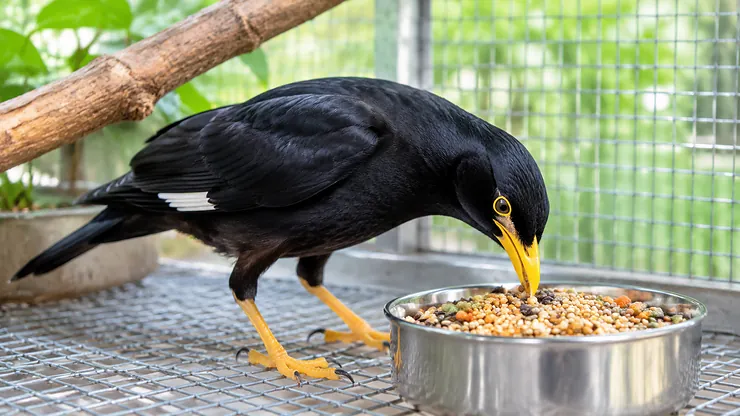
Low iron pellets for toucans and mynahs are formulated, extruded diets that keep dietary iron low, ideally under 100 parts per million. They exist because these softbills are prone to iron storage disease, where iron quietly piles up in the liver. They are a nutritional foundation, not a cure, and they work best beside carefully chosen fresh foods.
Here’s the uncomfortable part. A toucan with a failing liver can look perfectly fine right up until it doesn’t. Veterinary references such as WikiVet’s entry on iron storage disease in birds note that toucans and mynahs are particularly susceptible, and that sudden death is often the only presenting sign. No dramatic warning. No slow decline you can catch on a Tuesday.
That’s why the bag you pour into the bowl matters more than the fancy perch or the Instagram-worthy fruit platter. Shop in a regular pet aisle and you’ll find parrot pellets that are perfectly fine for a cockatiel and genuinely risky for a toco toucan. Shop online and you’ll find labels that say “low iron” without telling you how low.
So this guide does the sorting for you. We compared seven real products using published iron data, manufacturer specs, and the genuine aggregated sentiment from owner reviews. We also wrote down the honest caveats, because a few products have better marketing than evidence. One note before we start: none of this replaces your avian vet, who knows your individual bird.
Quick Comparison: 7 Low Iron Options at a Glance
Before the deep dive, here’s the bird’s-eye view. The iron column reflects what manufacturers and independent sources published at the time of research. Where I couldn’t find a number, the table says so rather than guessing.
| Product | Form | Iron information found | Best For |
|---|---|---|---|
| Mazuri Softbill Diet (2 lb) | Extruded pellet | Labeled max 125 ppm; recent posted lots roughly 58–107 ppm | Trying a proven formula first |
| Pretty Bird Species Specific Softbill | Small nugget | Label: under 60 ppm | Mynahs and smaller softbills on a budget |
| Mazuri Softbill Diet (15 lb) | Extruded pellet | Same formula as the 2 lb bag | Multi-bird homes and aviaries |
| Mazuri Softbill Gel Diet | Gel powder | Labeled max 125 ppm; posted lots roughly 59–104 ppm | Fruit-texture feeding and fussy eaters |
| Vetafarm Paradise Pellets | Pellet | Marketed as low iron; ppm not found | Frugivore variety, with verification |
| NutriBird Beo Komplet | Soft food | Manufacturer cap of 85 ppm | Mynahs and insect-and-fruit eaters |
| Orlux Beo Patee Mynah Food | Paté/powder | Marketed as low iron; ppm not found | Mynah owners willing to verify first |
Look at the pattern. Only a few products pair a published number with a lot-testing habit, and those are the ones you can reasonably trust as a base diet. The Pretty Bird Species Specific Softbill has the lowest labeled figure, while Mazuri Softbill Diet (2 lb) has the most transparent batch data. The last two rows deserve homework before they earn a spot in your bird’s bowl.
💬 Just one click — help others make better buying decisions too!😊
Top 7 Low Iron Pellets and Diets for Toucans and Mynahs: Expert Analysis
1. Mazuri Softbill Diet (2 lb) — lot-tested iron data you can actually read
This is the formula most keepers name first, and the 2 lb bag is the sensible way to audition it. The manufacturer says it is designed for adult iron-sensitive birds, including toucans, aracaris, turacos, starlings, birds of paradise and mynahs.
On paper, the guaranteed analysis shows 20% protein, 8% fat, and iron capped at 125 ppm. The 2022 data sheet lists a typical analysis near 49 ppm, with ascorbic acid at 0 ppm. That last number matters: no added vitamin C means nothing in the pellet is nudging iron absorption upward. The manufacturer also publishes iron results by lot, and recent lots sat roughly between 58 and 107 ppm. Read the lot table yourself, because batch numbers drift.
Based on the spec comparison, this is the safest default for most households. It’s a “start here” product because the evidence is transparent, not because it’s flashy.
Reviewers consistently describe long-term use with toucans and mynahs. Some say a mynah “survived” because of it. Common complaints are the price and pellet hardness, and one owner grinds the nuggets for a small bird.
Pros:
- ✅ Iron analyzed and published for each lot
- ✅ Zero added ascorbic acid in the listed profile
- ✅ Detailed feeding guide by bird weight
Cons:
- ❌ Roughly half-inch pellets are tough for tiny beaks
- ❌ Highest cost per pound of the pellets here
Price range: low-to-mid $20s at the time of research; check current price. Verdict: strong value for a proven formula, even at a premium.
2. Pretty Bird Species Specific Softbill — lowest labeled iron on a budget
Pretty Bird says its iron sits under 60 ppm, “well below the safe maximum levels.” Its smaller nuggets suit mynahs, and it includes fructose, a naturally occurring fruit sugar, to make it appealing to fruit lovers.
The label lists 18% protein and 8% fat, a touch leaner on protein than the Mazuri formula. An older, widely read Watchbird article reported independent testing of an earlier version of this diet at 68 ppm in one lab and 90 ppm in another. Formulas change, but the discrepancy is a good argument for asking the company for current lab data.
What the spec sheet won’t tell you, but reviewers note, is palatability. One marketplace listing for the 3 lb bag showed about 4.5 stars across a couple hundred ratings, and mynah owners often say their birds prefer it over other pellets. The same older Watchbird article flagged food-coloring waste, so inspect the bag you receive.
Pros:
- ✅ Label claims iron below 60 ppm
- ✅ Small nuggets suit mynah-sized beaks
- ✅ Typically the cheapest per pound here
Cons:
- ❌ No published lot-by-lot iron table
- ❌ Fructose adds sugar for already-sweet-loving birds
Price range: mid-to-high teens for 3 lb; check current price. Verdict: excellent value for mynahs, with a “verify” step.
3. Mazuri Softbill Diet (15 lb) — best economics for multi-bird households
Same formula, bigger bag. The 15 lb bag exists for people who feed several softbills, or one big toucan every single day.
The practical math is where this wins. The guide lists a 100 g mynah at roughly 1½–2½ tablespoons daily and a 700 g toco toucan at about ½–⅔ cup. One toco empties a small bag quickly, so the bulk size cuts both reorder anxiety and cost per pound. The catch is freshness: the label says to use it within a year of manufacture, so buy bulk only if you’ll finish it.
My read is simple. If your bird has already accepted the pellet, buy this size. If it hasn’t, buy the 2 lb bag first.
Reviewers on one retailer’s page were mixed in tone. A wild-bird feeder loved it, one buyer wanted clearer feeding instructions, and another simply reported on-time delivery.
Pros:
- ✅ Lowest cost per pound among Mazuri options
- ✅ Same lot-tested formula as the small bag
- ✅ Fewer reorders for toucans or multiple birds
Cons:
- ❌ Large bag risks staleness if you feed one small bird
- ❌ Cost up front is substantial
Price range: roughly $50–$60 for 15 lb; check current price. Verdict: best long-term value once your bird has proven it will eat it.
4. Mazuri Softbill Gel Diet — mimics ripe fruit texture
Not a pellet, but it solves a problem pellets can’t. Mixed with water, it sets into a soft gel the manufacturer says resembles ripe fruit, flavored with apples and prunes and natural pineapple.
The label caps iron at 125 ppm, and posted lots ran roughly 59 to 104 ppm. The feeding guidance is unusual: gel should supply at least 75% of dry matter intake, around 80% of the total diet. That’s a whole-diet commitment, so talk to your vet before swapping.
Where it shines is the picky eater who snubs anything hard. A gel you can cut into fruit-like cubes is a gentler transition than forcing a pellet.
I couldn’t verify independent reviews for this product, so I’m not going to invent sentiment. Judge it on the published specs, and start with your vet’s blessing.
Pros:
- ✅ Texture suits fussy or recovering birds
- ✅ Published iron results for each lot
- ✅ Powder form keeps up to a year dry
Cons:
- ❌ Needs mixing and cleanup every feeding
- ❌ Not intended as a sole diet for growing birds
Price range: check current price. Verdict: a smart specialty tool rather than a daily default.
5. Vetafarm Paradise Pellets — fruit-forward recipe from avian vets
Formulated by avian veterinarians as a low-iron diet for eclectus parrots and other frugivores like fruit pigeons, birds of paradise, and mynahs, per the manufacturer. The base combines low-iron Australian grains with fruit.
The suggested ratio is 50% pellets, 45% fresh fruit and vegetables, and 5% treats. For non-eclectus frugivores, it suggests roughly 8 g of pellets per 100 g of bodyweight. Useful, concrete guidance, and a refreshing change from “feed as desired.”
The caveat is big, though. I found no published ppm figure, and the product is not marketed specifically for toucans. Reviews I found came from eclectus owners, mostly praising weight management, which says little about toucan or mynah outcomes. US availability varies, so confirm shipping before you plan around it.
Pros:
- ✅ Designed by avian veterinarians
- ✅ Clear pellet-to-fresh-food ratio
- ✅ 2 kg and 10 kg sizes available
Cons:
- ❌ No iron ppm number found
- ❌ Not toucan-specific; US supply may be patchy
Price range: around AU$30 for the smaller size in Australia; US pricing varies. Verdict: promising, but only after you’ve seen a lab number.

6. NutriBird Beo Komplet — manufacturer-stated 85 ppm cap
Versele-Laga describes this as a maintenance food for mynahs and large fruit- and insect-eating birds, with iron at a maximum of 85 ppm. That’s a rare thing: a specific number straight from the manufacturer.
There’s a wrinkle. The manufacturer’s page says Beo Komplet will soon be replaced by NutriBird T16, so stock may be in transition. I couldn’t verify the T16 iron spec, so check the label on whatever arrives rather than assuming the old number carries over.
It’s a soft-food style product rather than a hard pellet, which can be a feature for mynahs that dislike crunch. Treat it as a base or a mix-in alongside pellets, not a standalone swap.
I found no verified owner reviews for this product, so I’ll leave sentiment blank rather than fabricate it.
Pros:
- ✅ Manufacturer-stated iron cap of 85 ppm
- ✅ Soft texture suits pellet-averse mynahs
- ✅ Targeted at mynah-sized softbills
Cons:
- ❌ Being phased out for a newer formula
- ❌ Soft food spoils faster than dry pellets
Price range: check current price. Verdict: a good mynah option if you can confirm the current formula.
7. Orlux Beo Patee Mynah Food — fruity paté with homework required
The listing calls it a nutrient-rich mynah food with a fruit mix of apricots, pineapple, apple, raisins and exotic fruits, and claims a low iron percentage prevents liver degeneration.
Here’s where analysis earns its keep. I found no ppm figure, and one lorikeet nutrition guide from a veterinary hospital lists apricots among iron-rich foods to avoid. One reviewer said they were surprised to see raisins in a product touted as low iron. That doesn’t make it unsafe. It does mean “marketed as low iron” and “verified low iron” are not the same thing.
Review sentiment is mixed. One marketplace listing showed about 4.2 stars across roughly 40 ratings. Some mynahs adore it, while one buyer reported a bird that refuses to touch it.
Pros:
- ✅ Mynahs often find the fruity flavor appealing
- ✅ Sold in a manageable 1 kg size
- ✅ Powder format is easy to portion
Cons:
- ❌ No published iron number found
- ❌ Fruit mix includes ingredients keepers often limit
Price range: check current price. Verdict: ask the manufacturer for a lab analysis before making this a staple.
Spec Snapshot: Price Ranges and Ratings
| Product | Approx. price range | Review signal found | Best For |
|---|---|---|---|
| Mazuri Softbill Diet (2 lb) | Low-to-mid $20s | Positive long-term owner reports | First-time trial |
| Pretty Bird Species Specific Softbill | Mid-to-high teens (3 lb) | About 4.5 stars, ~170 ratings on one listing | Mynahs on a budget |
| Mazuri Softbill Diet (15 lb) | Roughly $50–$60 | Mixed-to-positive on one retailer | Aviaries |
| Mazuri Softbill Gel Diet | Check current price | None verified | Fussy eaters |
| Vetafarm Paradise Pellets | Check current price | Eclectus-owner reviews only | Frugivore variety |
| NutriBird Beo Komplet | Check current price | None verified | Soft-food mynahs |
| Orlux Beo Patee Mynah Food | Check current price | About 4.2 stars, ~40 ratings | Mynahs, after verification |
The pattern holds: the best-documented products are also the easiest to defend to a skeptical vet. Mazuri Softbill Diet (2 lb) and Pretty Bird Species Specific Softbill give you a real starting point, while Mazuri Softbill Diet (15 lb) rewards you once the bird has accepted the pellet. Treat Vetafarm Paradise Pellets and Orlux Beo Patee Mynah Food as “verify first” candidates, because their price or popularity says nothing about iron.
How to Switch Your Bird to Low Iron Pellets: A Practical Playbook
Birds are suspicious. A new bowl can look like a threat, even when it’s the best thing you’ve ever bought them. Here’s a conservative plan built on the manufacturer’s own transition guidance.
- Start with 10% new, 90% old. Mazuri’s switch guidance for Mazuri Softbill Diet (2 lb) raises the new food by 10% each day while lowering the old one.
- Hold steady if the bird stalls. If intake drops, stay at the current ratio for a few days. Don’t race the calendar.
- Weigh daily with a gram scale. A toucan or mynah that quietly loses weight is telling you something your eyes can’t. Log it.
- Keep fresh food to roughly 30% of the diet. The manufacturer says fresh fruit, vegetables, and enrichment items should make up no more than 30%.
- Make small beaks easier. One reviewer grinds pellets for a small bird, then mixes them into mash. That’s a reviewer technique, not a manufacturer instruction, so run it past your vet.
- Write down the lot number. When you open a bag, record the lot and check the published iron table.
- Store it properly. Use within a year of manufacture and keep the bag sealed, dry, and cool.
Common mistakes in the first 30 days: abandoning the transition after one refused meal, letting the old high-iron diet creep back “just as a treat,” and forgetting that supplements may contain vitamin C. Which brings us to the next problem.
Real-World Scenarios: Which Pellet Fits Which Household?
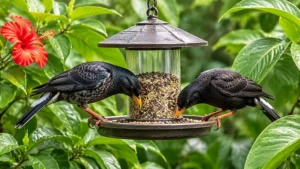
Scenario 1: The apartment mynah. You own one mynah, feed it daily, and spend under a modest budget. The Pretty Bird Species Specific Softbill‘s small nuggets and lower price make sense as a base, and you could audition a small bag of Mazuri Softbill Diet (2 lb) as the lot-documented backup. Rotate fruit that’s low in iron and watch the scale.
Scenario 2: The pet toucan household. A keel-billed toucan around 400 g eats about ⅓–½ cup daily per the feeding guide, and a toco around 700 g eats ½–⅔ cup. At that rate you’ll go through pellets quickly, so after a successful trial, Mazuri Softbill Diet (15 lb) is the economical choice. Plan reordering before the bag runs out so your bird never lands back on a high-iron fallback.
Scenario 3: The mixed softbill collection. You keep toucans, a mynah, and a bird of paradise. Here the Mazuri Softbill Gel Diet helps when one bird refuses pellets, and NutriBird Beo Komplet may suit the mynah’s soft-food habits. Keep a spreadsheet for each bird’s weight, food, and lot.
All three profiles share a rule: budget, environment, and frequency of use decide the product, but your vet’s input decides the plan.
✨ Ready to Build a Safer Bowl?
🔍 Click any bolded product above to check current pricing and availability. A little label-reading now beats a lot of worrying later!
Problem → Solution: Fixing Common Low Iron Feeding Headaches
Problem 1: “My bird won’t eat the pellets.” Mix the new food with the old at 10% increments, per the transition plan. If pellets are too hard, consider the Mazuri Softbill Gel Diet or a soft food like NutriBird Beo Komplet.
Problem 2: “The fruit is undoing my effort.” Fruit isn’t automatically safe. Citrus and some leafy plants are rich in vitamin C, which can raise iron absorption. We’ll unpack that in a moment.
Problem 3: “My tap or well water might carry iron.” A veterinary lorikeet guide notes municipal water is generally very low in iron, while well water can run far higher, and even some bottled waters are too high. Test it if you’re on a well.
Problem 4: “Which products are confusing me?” Compare labeled maximums with lot data. A product claiming “low iron” without a number should earn a polite email asking for a lab report.
Problem 5: “My bird lost weight during the switch.” Slow down and call your avian vet. Weight loss isn’t a normal price of transition.
How to Choose Low Iron Pellets for Toucans and Mynahs
Here are the seven criteria that matter, in order of importance.
- Find the real iron number. Aim for products that publish ppm. Vets commonly recommend under 100 ppm, though a minimum around 67 ppm (the chicken requirement) has been suggested so you don’t swing too low.
- Check batch-level data. Labeled maximums are ceilings, not guarantees. A published lot table, as Mazuri Softbill Diet (2 lb) offers, is far more reassuring.
- Scan for added vitamin C. A review of iron storage disease in birds by Sheppard and Dierenfeld recommends analyzing iron and vitamin C, minimizing animal proteins in frugivore diets, and keeping ascorbic acid below 100 mg/kg or feeding vitamin C foods separately.
- Match the pellet to the beak. Half-inch nuggets suit toucans but may frustrate small mynahs.
- Confirm life stage. The manufacturer says Mazuri Softbill Diet (2 lb) is for adult birds after their first molt, not growing chicks.
- Weigh palatability against waste. A cheap pellet that ends up on the floor isn’t cheap.
- Do the cost-per-pound math. Bulk bags save money only if your bird finishes them within the freshness window.
Iron Storage Disease: What Toucan and Mynah Owners Should Know
Iron storage disease, also called hemochromatosis, happens when too much iron builds up in the liver and other organs. Research describes it across captive frugivores, particularly birds of paradise, toucans, and starlings and their relatives, per Sheppard and Dierenfeld’s review.
Cause is murky. A genetic predisposition for altered iron uptake appears important in sensitive species, while diet influences how bad things get. Other research on the topic describes a physiologic basis in which these birds absorb iron whether they need it or not, so tissue stores can overshoot.
Signs are painfully quiet. Sudden death is commonly the only presenting sign. If a bird does show symptoms, they relate to liver dysfunction, and definitive diagnosis is often post mortem. Radiographs may show an enlarged liver, and a veterinarian may use biopsy.
Management combines diet, phlebotomy, and sometimes iron-binding drugs. That’s why your vet must be in the loop. A pellet is prevention, not therapy.
Ascorbic Acid Levels: The Hidden Variable in Your Bird’s Bowl
Vitamin C is the plot twist of low iron feeding. A letter from a veterinary toxicologist in AFA’s Watchbird notes that ascorbic acid enhances the bioavailability of iron in avians, and that citrus and leafy plants can contain large amounts, potentially raising iron uptake.
A case report on iron storage disease in a captive toco toucan reached a similar practical conclusion: fruits and vegetables high in vitamin C shouldn’t be given at the same time as high-iron foods. Note the careful wording. The advice concerns timing and combination, not eliminating fruit.
So what should you do with ascorbic acid levels?
- Read ingredient labels for added vitamin C in supplements and treats.
- Offer vitamin C-rich foods separately from the iron-containing meals, per the Sheppard recommendation.
- Avoid citrus as a daily staple.
- Remember that most birds make their own vitamin C, so restricting dietary sources generally isn’t like scurvy-prone species, but confirm this with your vet for your species.
The Mazuri Softbill Diet (2 lb) profile lists ascorbic acid at 0 ppm, which fits this logic perfectly.
Softbill Nutrition: Building the Whole Plate Around Low Iron Pellets
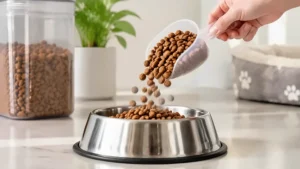
Good softbill nutrition isn’t a bowl of pellets and a prayer. Pellets are the stable base. Fresh food provides variety and behavioral enrichment.
Follow the manufacturer’s guide for Mazuri Softbill Diet (2 lb): fresh fruit, vegetables, and enrichment foods should make up no more than 30% of the diet. It also advises avoiding bananas because they’re high in calories and dry matter.
Avoid adding high-iron items. The product page specifically warns against foods like meat and dog food for toucans and mynahs. A lorikeet nutrition guide from a veterinary hospital adds apricots, baby foods, and canned or processed fruits to the avoid list. Lorikeets aren’t toucans, but the iron logic travels, so treat it as a conversation starter with your vet.
Think of softbill nutrition like a seating chart. Pellets get the head table. Low-iron produce gets the rest. High-iron foods aren’t invited.
Low Iron Diet for Hemochromatosis-Prone Birds: Beyond the Pellet
A low iron diet for hemochromatosis-prone birds includes everything the bird consumes, not just the pellet. That’s the part new owners miss.
An older AFA Watchbird overview captures the uncertainty well. For years the consensus was a diet under 100 ppm. Yet a study of a mynah flock fed under 80 ppm reportedly still developed disease at about the same rate as birds on a 200+ ppm diet, suggesting genetics may dominate in some mynahs. Current veterinary nutritionists, the article notes, believe a low iron diet can’t hurt and could help.
My honest takeaway: diet is the lever you control, not the whole machine. A low iron diet for hemochromatosis-prone birds should include:
- A documented low-iron base pellet.
- Water that’s been tested if it’s from a well.
- Fresh foods vetted for iron and vitamin C.
- Regular vet checks, since no simple screening test exists.
Iron Restricted Pellets for Softbill Birds vs. Other Feeding Formats
Iron restricted pellets for softbill birds aren’t the only route. Gels, soft foods, and fresh-only plans each have a role.
| Format | Strength | Weakness | Best For |
|---|---|---|---|
| Pellets like Mazuri Softbill Diet (2 lb) | Stable, measurable, easy to store | Hard texture may deter some birds | Daily base diet |
| Gel like Mazuri Softbill Gel Diet | Fruit-like texture, palatable | Messy, whole-diet commitment | Fussy eaters |
| Soft food like NutriBird Beo Komplet | Soft texture, mynah-oriented | Spoils faster | Pellet-resistant mynahs |
| Fresh fruit only | Enrichment, variety | Nutritionally incomplete, hard to control iron | Supplement only |
Pellets win on consistency. A gel wins on acceptance. Fresh fruit wins on enrichment but loses on completeness, and it’s easy to accidentally load with vitamin C. Iron restricted pellets for softbill birds are the best foundation when your bird accepts them. Otherwise, a gel or soft food can be the bridge, with your vet’s approval.
Long-Term Cost and Maintenance: What Low Iron Feeding Really Costs
Sticker shock is real. Let’s do the arithmetic from the ranges we found, treating all figures as rough estimates.
| Product | Size | Approx. price range | Rough cost per pound | Value note |
|---|---|---|---|---|
| Mazuri Softbill Diet (2 lb) | 2 lb | Low-to-mid $20s | About $11–$13 | Premium for trial size |
| Pretty Bird Species Specific Softbill | 3 lb | Mid-to-high teens | About $5–$6 | Cheapest entry |
| Mazuri Softbill Diet (15 lb) | 15 lb | Roughly $50–$60 | About $3.30–$4 | Best per-pound value |
The pattern is obvious. Mazuri Softbill Diet (15 lb) costs the least per pound once you commit, while the 2 lb bag costs several times more per pound. Smart owners trial small, then scale.
Maintenance matters too. Buy only what you’ll finish within the freshness window, keep a lot log, and recheck the manufacturer’s iron table whenever you open a new bag. Compared with vet bills for liver disease, a careful feeding routine is the cheaper hobby.
Frequently Asked Questions
❓ Can toucans eat regular parrot pellets?
❓ How do I know a bag's iron level is current?
❓ Should I give my mynah fruit every day?
❓ Are low iron pellets safe for baby toucans?
❓ Is a lower iron number always better?
Conclusion
Choosing low iron pellets for toucans and mynahs comes down to evidence over adjectives. The best-documented picks are Mazuri Softbill Diet (2 lb), with its lot-by-lot iron table, and Pretty Bird Species Specific Softbill, with its under-60-ppm label. Once your bird proves it will eat the former, Mazuri Softbill Diet (15 lb) is the economical upgrade. The Mazuri Softbill Gel Diet and NutriBird Beo Komplet are useful bridges for birds that resist hard pellets. Vetafarm Paradise Pellets and Orlux Beo Patee Mynah Food are interesting but need lab numbers before they earn staple status.
Remember what the science does and doesn’t say. Genetics may play a big role in some mynahs, and diet alone can’t guarantee a bird never develops iron storage disease. What a good low iron diet for hemochromatosis-prone birds can do is remove the risk you control: excess iron, hidden vitamin C, and mystery ingredients.
Weigh your bird, log your lots, keep fresh foods under control, and let your avian vet be your co-pilot. This article is general information, not veterinary advice.
Recommended for You
- Affordable Hanging Bath Tub For Finches: 7 Best Picks (2026)
- Deep Bird Bath For Larger Parrots: 7 Proven Picks For 2026
- Bird Misting Bottle: 7 Best Picks For Healthy Feathers (2026)
Disclaimer: This article contains affiliate links. As an Amazon Associate, I earn from qualifying purchases. If you purchase products through these links, we may earn a small commission at no additional cost to you.
✨ Found this helpful? Share it with your friends! 💬🤗
