
In This Article
You know that feeling when you watch your parrot sitting motionless on the same perch for hours? It’s heartbreaking, isn’t it? In the wild, parrots spend up to 70% of their waking hours climbing, foraging, and exploring their environment. But in captivity, without proper bird climbing toys, our feathered companions can become lethargic, bored, and even develop behavioral problems like feather plucking.
Here’s the thing most bird owners don’t realize – climbing isn’t just fun for birds; it’s absolutely essential for their physical and mental wellbeing. According to Texas A&M University’s College of Veterinary Medicine, birds require varied forms of enrichment to stay mentally sharp and physically fit. Climbing structures simulate the natural behaviors parrots would engage in throughout their day in the rainforest canopy.
I’ve spent years working with various parrot species, and I can tell you firsthand that the right bird climbing toys transform a bird’s quality of life. From energetic cockatiels to majestic macaws, every parrot deserves climbing opportunities that challenge their coordination, strengthen their muscles, and keep their clever minds engaged. In this comprehensive guide, we’ll explore the 7 best bird climbing toys available in 2026, helping you choose the perfect option for your feathered family member.
Quick Comparison Table
| Product | Best For | Size | Price Range | Rating |
|---|---|---|---|---|
| Bonka Bird Toys Climbing Net | Large parrots | 36″x36″ | $45-$65 | ⭐⭐⭐⭐⭐ |
| KINTOR Climbing Net Rope | Small-medium birds | 9″x18″ / 17.7″x31″ | $12-$25 | ⭐⭐⭐⭐ |
| Jusney Climbing Rope Bungee | All sizes | 63″ long | $15-$22 | ⭐⭐⭐⭐½ |
| Hamiledyi Parrot Playground | Cockatiels, small parrots | 34x24x33.5 cm | $35-$50 | ⭐⭐⭐⭐ |
| Aigou Spiral Rope Perch | Medium-large parrots | 65″ / 94.4″ | $14-$28 | ⭐⭐⭐⭐⭐ |
| SunGrow Wooden Ladder Bridge | Small-medium birds | 19.6″ | $8-$15 | ⭐⭐⭐⭐½ |
| Penn Plax Activity Center | Parakeets, cockatiels | 9″-19″ sizes | $18-$35 | ⭐⭐⭐⭐ |
💬 Just one click – help others make better buying decisions too!😊
✨ Don’t Miss These Exclusive Deals!
🔍 Take your bird’s entertainment to the next level with these carefully selected products. Click on any highlighted item to check current pricing and availability. These tools will help you create authentic cage enrichment ideas your feathered family will love!
Top 7 Bird Climbing Toys: Expert Analysis
1. Bonka Bird Toys 51203 Medium Parrot Climbing Net
If you’re looking for the ultimate physical exercise birds need, the Bonka Bird Toys 51203 Medium Parrot Climbing Net is an absolute game-changer. This 36-inch by 36-inch climbing paradise is crafted from untreated abaca (manila hemp), which is prized for its exceptional strength and resistance to water damage.
Key Specifications:
- Dimensions: 36″ x 36″ with 3/4-inch rope diameter
- Material: 100% natural manila hemp (abaca)
- Grid spacing: 5″ x 5″ holes
- Four welded rings for easy installation
What makes this climbing net stand out is its versatility. You can hang it inside the cage, mount it outside as an adventure zone, or even use it outdoors during supervised playtime. The natural abaca material is completely bird-safe and provides excellent grip for talons of all sizes, from African Greys to Macaws.
Customer feedback has been overwhelmingly positive, with owners reporting that their birds spend hours exploring every inch of the net. One macaw owner mentioned that their bird literally sleeps on it at night, which speaks volumes about how comfortable and secure parrots feel on this structure.
Pros:
✅ Extremely durable natural material
✅ Large climbing surface for active play
✅ Water-resistant for easy cleaning
Cons:
❌ Higher price point ($45-$65)
❌ Requires ample cage or room space
2. KINTOR Bird Climbing Net Rope
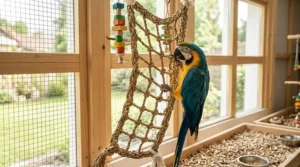
For budget-conscious bird owners who still want quality, the KINTOR Bird Climbing Net Rope delivers exceptional value. Available in two sizes (Small: 9″x18″ and Large: 17.7″x31″), this colorful climbing toy attracts birds instantly with its vibrant rope and natural wood chunks.
Key Specifications:
- Two size options for different bird species
- 100% natural wood chunks attached
- Colorful sturdy rope construction
- Includes quick-link fasteners
The genius of this design lies in its dual-purpose functionality. Not only does it provide a fantastic climbing surface, but the wooden chunks attached throughout the net serve as excellent chewing enrichment. Budgies, cockatiels, and conures absolutely love pecking at the wood while navigating the rope ladder.
Installation is incredibly straightforward – the included quick-links let you secure it inside or outside the cage in seconds. However, some customers have reported receiving units with moisture issues, so inspect yours immediately upon arrival.
Pros:
✅ Affordable pricing ($12-$25)
✅ Dual climbing and chewing function
✅ Easy installation system
Cons:
❌ Quality control inconsistencies
❌ Wood pieces may need replacing over time
3. Jusney Bird Perch 63 Inch Climbing Rope Bungee
The Jusney Bird Perch is the Swiss Army knife of bird climbing toys – incredibly versatile and suitable for nearly every parrot species. This 63-inch cotton rope spiral provides a soft, comfortable surface that’s gentle on bird feet while offering excellent climbing and swinging opportunities.
Key Specifications:
- Length: 63 inches (160 cm)
- Material: 100% cotton rope with internal steel wire
- Bendable and reshapable design
- Includes bell for auditory stimulation
What bird owners love most about this rope perch is its flexibility. You can shape it into spirals, curves, or straight lines, creating different climbing challenges as your bird’s skills develop. The internal steel wire maintains whatever shape you create while remaining gentle enough not to injure curious beaks.
Customer reviews highlight how African Greys, Amazons, and even larger cockatoos enjoy bouncing and swinging on this perch. The cotton material provides a secure grip, and the bell at the end adds an element of auditory enrichment that keeps birds engaged.
Pros:
✅ Highly versatile and reshapable
✅ Gentle on bird feet and talons
✅ Works as both perch and climbing toy
Cons:
❌ Cotton threads may fray with heavy chewers
❌ Requires regular inspection for safety
4. Hamiledyi Parrot Playground Bird Play Stand
Transform any corner of your home into a bird paradise with the Hamiledyi Parrot Playground. This wooden play stand features multiple levels, ladders, perches, and feeding cups, creating a complete multi-level bird ladder system that promotes physical exercise birds naturally crave.
Key Specifications:
- Dimensions: 34cm L x 24cm W x 33.5cm H
- Natural wood construction (unpainted)
- Includes 2 feeding cups and ladder
- Assembly required (screws included)
The handmade natural wood construction means no two stands are exactly alike, and more importantly, there are zero toxic paints or chemicals. Birds can safely chew on every component. The design encourages exploration with varied perching heights and a climbing ladder that satisfies their innate desire to scale vertical surfaces.
Assembly takes about 15-20 minutes, and while some owners wish it came pre-assembled, the screw construction makes it incredibly sturdy compared to glued alternatives. This stand works exceptionally well for cockatiels, lovebirds, and small conures.
Pros:
✅ Complete playground system
✅ 100% natural, non-toxic materials
✅ Includes feeding stations
Cons:
❌ Requires assembly
❌ Best suited for smaller bird species
5. Aigou Bird Spiral Rope Perch
Available in three sizes (Small 52″, Medium 65″, and Large 94.4″), the Aigou Bird Spiral Rope Perch has become a favorite among parrot owners seeking active bird entertainment. The colorful cotton rope wraps around an internal wire core, creating a bouncy, springy perch that birds absolutely love.
Key Specifications:
- Three size options (52″, 65″, 94.4″)
- 100% cotton rope exterior
- Bendable internal wire for custom shapes
- Includes bell attachment
This climbing rope promotes coordination and balance as birds navigate the spiral design. The bungee-like quality adds an element of challenge that keeps even the most intelligent parrots engaged. Customers report their birds using it both as a sleeping perch at night and a climbing structure during the day.
The cotton material is notably softer than some competitors, making it ideal for birds with sensitive feet. However, this also means heavy chewers might work through it faster than rope made from tougher materials. The ability to reshape it regularly keeps the environment novel and interesting for your bird.
Pros:
✅ Multiple sizes for different birds
✅ Soft, comfortable material
✅ Encourages balance and coordination
Cons:
❌ May wear faster with aggressive chewers
❌ Bell hardware can detach (monitor regularly)
6. SunGrow Wooden Bird Ladder Bridge
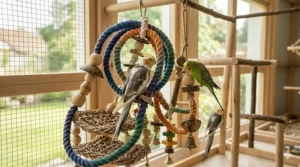
Sometimes simplicity wins, and the SunGrow Wooden Bird Ladder Bridge proves this beautifully. This 19.6-inch ladder features natural wood rungs connected by steel wire, dyed with edible colors that attract birds while remaining completely safe.
Key Specifications:
- Length: 19.6 inches (50 cm)
- Natural wood construction
- Edible dye coloring
- Durable steel wire connections
The raw wood provides an authentic perching experience that plastic simply cannot match. Birds love the natural texture under their feet, and the varied rung sizes help maintain foot health by exercising different toe positions. The flexible steel wire allows you to create different configurations – hang it straight, curve it into an arc, or create a custom bridge between perches.
For the price point ($8-$15), this ladder offers incredible value. It’s perfect for small to medium birds like parakeets, cockatiels, and small conures. The bright colors make it visually appealing while the sturdy construction ensures it lasts through countless climbing sessions.
Pros:
✅ Budget-friendly option
✅ Natural wood promotes foot health
✅ Flexible configuration options
Cons:
❌ May be too small for larger parrots
❌ Wood will eventually need replacing
7. Penn Plax Bird Activity Center
The Penn Plax Bird Activity Center bundles everything your bird needs into one comprehensive package. Available in three sizes (Medium for parakeets, Large for cockatiels, and X-Large for small parrots), this all-in-one playground includes climbing ladders, swings, a tightrope, and various toys.
Key Specifications:
- Three size options (9″x11″x10″ to 19″x15″x12″)
- Natural wood construction
- Includes ladder, swing, and toy accessories
- Lightweight and portable
What makes this activity center special is its holistic approach to cage enrichment ideas. Rather than buying individual components, you get a complete bird gym toys package that addresses multiple enrichment needs simultaneously. The varied dowel sizes promote foot health, and the soft wood satisfies chewing instincts.
Portability is a huge advantage – owners love moving it between rooms so their bird can spend time wherever the family is. However, some customers note that the pieces could be more secure without glue, though most find the friction-fit system adequate.
Pros:
✅ Complete all-in-one solution
✅ Multiple size options
✅ Portable and lightweight
Cons:
❌ Assembly can be time-consuming
❌ May require glue for maximum stability
Understanding Bird Climbing Toys: What Makes Them Essential?
Bird climbing toys serve a much deeper purpose than simple entertainment. In the wild, parrots navigate complex forest canopies, scaling tree trunks, hanging from branches, and traversing intricate networks of vines and foliage. This constant movement keeps their muscles strong, joints flexible, and minds sharp.
According to research from the Smithsonian’s National Zoo, climbing structures are fundamental to environmental enrichment, providing animals with creative outlets for physical activity and mental exercise. For captive birds, this means replicating these natural behaviors through thoughtfully designed parrot climbing structures.
Physical Benefits of Climbing
When birds climb, they engage virtually every muscle group in their body. Their powerful leg muscles propel them upward, their wings assist with balance, and their beak serves as a third “hand” for gripping and pulling. This full-body workout helps prevent obesity, a growing concern among captive birds fed high-calorie diets with insufficient exercise opportunities.
Dr. Debra Turner, a senior research associate at Texas A&M’s College of Veterinary Medicine, emphasizes that different birds appreciate different climbing challenges. Cockatoos, being mechanically inclined, enjoy manipulating metal fasteners and screws, while macaws prefer shredding wood and paper during their climbing adventures.
Mental Stimulation Through Problem-Solving
Climbing isn’t just physical – it’s an incredible cognitive exercise. Birds must constantly assess the stability of surfaces, plan their route, and adjust their grip and balance. Each new climbing toy presents novel challenges that keep their minds engaged and prevent the boredom that leads to destructive behaviors.
The Veterinary Information Network notes that more than 20 million pet birds live in the United States, and environmental enrichment through climbing opportunities is crucial for preventing stress-related behaviors like feather picking, excessive vocalization, and aggression.
Social and Emotional Wellbeing
For many birds, climbing toys become preferred roosting spots where they feel safe and secure. The elevated position satisfies their instinctual need to perch high for safety while scanning their environment. Some birds even claim their favorite climbing rope or net as “theirs,” defending it as territory – a perfectly natural behavior that indicates engagement and comfort.
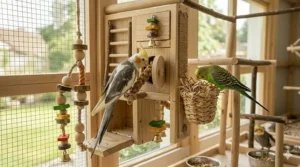
How to Choose the Perfect Bird Climbing Toys
Selecting the right climbing equipment for your bird involves more than just picking something colorful. Here’s what you need to consider:
Size and Species Compatibility
The first rule of bird climbing toys: size matters. A ladder perfect for a budgie will be comically inadequate for a macaw, and vice versa. Small birds need thinner rope diameters (around 1/4 to 1/2 inch) that their tiny feet can grip, while larger parrots require 3/4 inch to 1-inch thickness for comfortable climbing.
Consider your bird’s wingspan too. A cramped climbing net frustrates birds and discourages use. Generally, choose climbing toys at least 1.5 times your bird’s wingspan to allow comfortable movement and wing spreading.
Material Safety Considerations
Natural materials reign supreme in the bird toy world. Cotton rope, sisal, manila hemp, and untreated wood provide safe surfaces for climbing, chewing, and gripping. Avoid toys with:
- Toxic metals (lead, zinc, nickel)
- Chemical-treated wood or rope
- Small parts that could be swallowed
- Sharp edges or points
- String or fiber that could cause entanglement
The Association of Avian Veterinarians recommends polyethylene rope over string-based materials to prevent tangles and toe injuries.
Durability vs. Destructibility
Here’s a counterintuitive truth: the best bird toys are destructible. Yes, you read that correctly. Parrots have an innate need to chew and shred, which helps keep their beaks properly trimmed and satisfies foraging instincts. However, you want controlled destructibility – toys that gradually wear down rather than catastrophically fail.
Look for climbing toys with replaceable components. Rope perches can have sections re-wrapped, wooden ladders can have individual rungs replaced, and climbing nets can be patched. This approach is more economical and environmentally friendly than constantly buying entirely new toys.
Installation and Placement
Consider how and where you’ll mount the climbing toy. Vertical nets challenge birds differently than horizontal rope bridges. Diagonal placement mimics the natural angles birds encounter climbing trees. Experiment with various orientations to keep the environment fresh and stimulating.
Ensure your chosen toy’s mounting system is secure. Quick-link fasteners, screw attachments, and welded rings all work well. Avoid anything that could slip, pinch, or trap curious beaks and toes.
Setting Up Bird Playground Equipment for Maximum Enrichment
Creating an engaging climbing environment goes beyond simply hanging a rope in the cage. Strategic setup maximizes enrichment value and encourages natural behaviors.
Creating Climbing Circuits
Think of your bird’s cage as an adventure playground rather than a waiting room. Connect different climbing toys to create circuits that encourage extended exploration. A rope ladder leading to a climbing net, transitioning to a spiral perch, and finally reaching a favorite perch creates a “climbing route” birds genuinely enjoy.
This approach mirrors how wild parrots navigate their territory, moving through interconnected branches and vines. The variety keeps things interesting while providing comprehensive exercise.
Height Variation and Vertical Space
Birds instinctively prefer elevated positions. Incorporating climbing toys at various heights satisfies this preference while encouraging movement throughout the cage’s vertical space. Place favorite treats or toys at the top of climbing structures to motivate upward movement.
According to research on environmental enrichment, birds should have perches of varying shapes, textures, materials, and diameters to replicate natural perches and ensure foot health. Climbing toys contribute significantly to this variation.
Rotation and Novelty
Even the most exciting climbing toy loses its appeal if it never changes. Implement a rotation system where you swap out climbing toys every 7-10 days. This doesn’t mean you need dozens of toys – just 6-8 quality options that you rotate keep the environment perpetually “new.”
Store unused toys in a clean, dry location, and thoroughly clean them before reintroducing them to the cage. The familiar-yet-forgotten toy phenomenon works wonders for maintaining bird interest.
Combining Climbing with Foraging
Level up your enrichment game by hiding treats throughout climbing toys. Stuff small pieces of fruit into rope knots, wedge seeds between net strands, or hang millet spray from climbing ladder rungs. This combines physical exercise with mental stimulation and natural foraging behaviors.
The University of Washington’s Office of Animal Welfare emphasizes that foraging opportunities are crucial for captive birds, and integrating them with climbing structures creates a more holistic enrichment experience.
Safety Guidelines for Bird Climbing Toys
While climbing toys offer tremendous benefits, safety must always be the top priority. Here’s how to keep playtime safe:
Regular Inspections
Inspect climbing toys weekly for wear and damage. Check for:
- Frayed rope that could entangle toes
- Loose hardware that could be swallowed
- Cracked wood that could splinter
- Rust or corrosion on metal components
- Overall structural integrity
Replace or repair damaged components immediately. What seems like minor wear can quickly become a serious hazard.
Proper Sizing and Spacing
Grid spacing on climbing nets should prevent birds from getting heads, wings, or bodies stuck. Generally, 5-inch spacing works well for larger parrots, while 2-3 inches suits smaller birds. If your bird can fit their entire head through a gap, it’s too large.
Rope diameter matters too. Birds should comfortably grip the climbing surface without their toes wrapping completely around (too thin) or struggling to grasp (too thick).
Supervised Introduction
Never assume a bird will immediately understand a new climbing toy. Introduce new equipment gradually, allowing birds to approach at their own pace. Some birds dive right in, while others need days or weeks to build confidence.
Stay present during initial interactions to ensure the bird uses the toy safely and doesn’t become trapped or frightened. Positive reinforcement (treats and praise) when they successfully navigate the toy builds confidence and encourages future use.
Non-Toxic Materials Only
This cannot be overstated: only use toys made from bird-safe materials. Stainless steel, powder-coated steel, natural cotton, untreated wood, and vegetable-dyed materials are all safe options. Avoid galvanized metal (zinc poisoning risk), treated lumber (chemical toxicity), and synthetic materials that could cause digestive blockages if ingested.
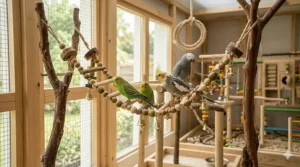
Benefits of Regular Physical Exercise for Birds
The advantages of providing adequate climbing opportunities extend far beyond simple entertainment. Regular physical activity dramatically impacts bird health and behavior.
Cardiovascular Health
Like humans, birds need cardiovascular exercise to maintain heart health and circulation. Climbing provides excellent low-impact aerobic activity that strengthens the heart without the stress of prolonged flight in confined spaces. Birds that regularly climb show better endurance, healthier respiratory function, and more efficient oxygen utilization.
Muscle Tone and Bone Density
Climbing engages core muscles, leg muscles, and even flight muscles as birds use their wings for balance. This constant engagement helps maintain muscle tone and prevents the atrophy common in sedentary captive birds. The weight-bearing nature of climbing also promotes healthy bone density, reducing the risk of fractures from falls or accidents.
Weight Management
Obesity in captive birds has reached epidemic proportions, primarily due to high-calorie diets combined with insufficient exercise. The Mount Pleasant Veterinary Group reports that obesity can lead to fatty liver disease, organ failure, and significantly shortened lifespans.
Regular climbing burns calories, regulates metabolism, and helps maintain healthy body weight. Even 30 minutes of active climbing daily makes a substantial difference in weight management.
Behavioral Health
Perhaps the most dramatic benefits appear in bird behavior. Birds with adequate climbing opportunities show:
- Reduced aggression and territorial behavior
- Decreased screaming and excessive vocalization
- Less feather plucking and self-mutilation
- Improved sleep patterns
- Better socialization with humans and other birds
- Increased confidence and curiosity
The correlation between physical exercise and mental health in birds is well-documented. Active birds are simply happier birds.
Creative DIY Bird Climbing Toys Ideas
While commercial climbing toys offer excellent quality and convenience, creative DIY options can supplement your bird’s enrichment arsenal affordably:
Natural Branch Networks
Collect pesticide-free branches from safe trees (avoid toxic species like cherry, oak with acorns, and yew). Wash thoroughly and bake at 200°F for 30 minutes to eliminate pests. Create custom climbing structures by:
- Securing branches horizontally across the cage
- Tying multiple branches together with sisal rope
- Drilling holes and inserting dowels to create custom perches
- Suspending branches at various angles
The irregular shapes and natural texture provide superior grip and mental stimulation compared to uniform manufactured perches.
Rope and Wood Combinations
Purchase bird-safe rope (cotton, sisal, or manila) and untreated wood blocks from craft stores. Create custom climbing toys by:
- Threading wood blocks onto rope with knots between each piece
- Braiding multiple rope strands for varied thickness
- Attaching wood slices to create climbing steps
- Combining different rope textures for tactile variety
The beauty of DIY climbing toys lies in customization – create exactly what your bird needs at a fraction of commercial costs.
Cardboard Tube Ladders
Toilet paper and paper towel tubes make excellent disposable climbing toys. Cut them into rings, flatten them into planks, or leave them whole. Connect tubes with:
- Jute twine or sisal rope
- Popsicle sticks
- Bamboo skewers (with sharp ends removed)
- Paper clips (straightened and twisted)
These ultra-cheap toys can be destroyed guilt-free, satisfying that natural urge to shred and chew.
Safety Note for DIY Projects
Always research materials before use. Many common household items contain toxic substances dangerous to birds. When in doubt, consult an avian veterinarian or stick to commercial bird-safe products.
Integrating Climbing Toys with Other Cage Enrichment Ideas
Creating a holistic enrichment environment means combining climbing toys with other stimulating elements for maximum benefit.
Combining Climbing with Foraging Activities
The most successful cage enrichment ideas integrate multiple behaviors simultaneously. Hide treats within rope knots of climbing toys, attach food puzzles at the top of ladders, or wrap leafy greens around climbing net sections. This forces birds to climb to access food, mimicking wild foraging patterns where parrots climb trees to reach fruit and seeds.
Musical and Auditory Elements
Many climbing toys include bells, but you can enhance auditory enrichment further. Attach small windchimes to rope perches, hang different-sized bells at various climbing points, or position climbing toys near music sources. Research shows birds respond positively to music, often bobbing and vocalizing along – combining this with physical climbing creates multi-sensory engagement.
Visual Stimulation Through Placement
Strategic toy placement maximizes visual interest. Position climbing nets near windows (but not in direct sunlight) so birds can watch outdoor activity while exercising. Rotate toy colors weekly to maintain visual novelty. Some birds prefer climbing toys in quieter cage areas, while others enjoy being near household action – observe and adjust.
Social Climbing Opportunities
For birds housed in pairs or groups, climbing toys become social hubs. Multiple birds navigate structures together, establishing hierarchies, playing chase games, and engaging in mutual preening at rest points. Ensure climbing toys are large enough for simultaneous use without conflict. The Bonka Bird Toys Climbing Net, for instance, provides ample space for multiple medium-sized birds.
Understanding Different Bird Species and Their Climbing Needs
Different parrot species have evolved unique climbing styles and preferences based on their natural habitats.
Small Birds (Budgies, Lovebirds, Parrotlets)
Small species typically prefer intricate, maze-like climbing structures with numerous small branches and tight spaces. The SunGrow Wooden Ladder Bridge or smaller versions of rope nets work perfectly. These birds are incredibly agile and enjoy darting through complex networks. Focus on variety over size – multiple small climbing toys create more interest than one large structure.
Medium Birds (Cockatiels, Conures, Ringnecks)
Medium parrots benefit from moderate-complexity climbing toys that challenge without overwhelming. The Hamiledyi Parrot Playground offers ideal complexity for this size range. These birds enjoy both vertical climbing and horizontal exploration, so provide diverse options. Rope perches work beautifully as they can reshape them for different climbing angles.
Large Birds (African Greys, Amazons, Large Cockatoos)
Large parrots need robust, challenging climbing structures that withstand powerful beaks and substantial body weight. The Bonka Bird Toys 51203 Medium Parrot Climbing Net or the longest Aigou Spiral Rope Perch provide appropriate challenges. These intelligent birds quickly master simple climbing toys and need progressive difficulty to stay engaged.
Extra-Large Birds (Macaws, Large Cockatoos)
The giants of the parrot world require industrial-strength climbing equipment. Look for climbing toys with rope diameters of 1 inch or more, reinforced attachment points, and premium materials. These birds can destroy inadequate toys in minutes, so invest in quality from the start. Custom-built structures often work best for this size category.
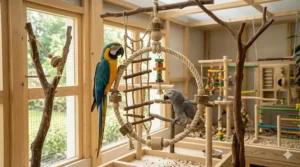
Seasonal Considerations for Bird Climbing Toys
Your bird’s climbing needs and toy preferences may shift with changing seasons and environmental factors.
Summer Enrichment Adjustments
Warmer months offer opportunities for outdoor climbing experiences. Some climbing toys, like the manila hemp nets, are water-resistant and can be used in supervised outdoor aviaries or on screened porches. Ensure shade protection and never leave birds unattended outdoors. Summer is also excellent for introducing water-based climbing enrichment – wet rope toys or climbing structures near misting areas.
Winter Indoor Focus
Cold months mean more indoor time, making diverse climbing options crucial for preventing cabin fever. Rotate toys more frequently during winter to combat seasonal boredom. Position climbing structures near (but not too close to) heat sources for comfortable climbing conditions. Winter is ideal for introducing new climbing challenges since birds have more cage time to master them.
Molting Period Considerations
During molting, some birds become more irritable and less active. Gentler climbing options with softer materials provide comfort without encouraging inactivity. The Aigou Spiral Rope Perch with its soft cotton construction is perfect for molting birds who still need exercise but prefer cushioned surfaces.
Breeding Season Modifications
Birds in breeding condition may become territorial about climbing toys. Monitor interactions carefully and provide duplicate favorite climbing structures to reduce conflict. Some birds incorporate climbing toys into nest-building behaviors – allow this if safe, as it represents natural instinct expression.
Training Your Bird to Use Climbing Toys Effectively
Not all birds instinctively understand how to use climbing toys. Proper introduction and training maximize enrichment value.
Target Training for Climbing
Target training uses a stick or pointer to guide birds toward desired behaviors. Hold a target near the climbing toy, reward when your bird touches it, then gradually move the target onto the climbing structure. This positive reinforcement builds confidence and teaches birds that climbing toys are safe, fun spaces.
Step-by-Step Introduction Process
Day 1-3: Place the new climbing toy near (not in) the cage where your bird can see it. Allow familiarization without pressure.
Day 4-7: Move the toy inside the cage but don’t force interaction. Place favorite treats nearby to create positive associations.
Day 8-14: Reward any contact with the toy – touching with beak, stepping on it, or simply perching nearby. Use high-value treats like sunflower seeds or small nut pieces.
Week 3+: Gradually raise criteria, rewarding only actual climbing behaviors. Be patient – some birds take months to fully embrace new climbing structures.
Building Climbing Confidence
Start with easier climbing toys before progressing to complex structures. A simple wooden ladder builds confidence before introducing challenging rope nets. Success breeds confidence, and confident birds are adventurous birds willing to tackle new climbing challenges.
Troubleshooting Fearful Responses
If your bird shows fear (backing away, aggressive posturing, or excessive vocalization), slow down the introduction process. Never force interaction. Some birds benefit from seeing another bird use the toy first – if you have multiple birds, let the braver one demonstrate.
Common Mistakes to Avoid with Bird Climbing Toys
Even experienced bird owners sometimes make these enrichment errors:
Overcrowding the Cage
More toys don’t always mean better enrichment. An overcrowded cage restricts movement, creates stress, and actually reduces toy usage. Birds need open flight paths and clear spaces to move comfortably. Aim for 3-5 quality climbing toys rather than cramming in a dozen mediocre options.
Neglecting Toy Maintenance
Dirty, worn climbing toys pose health risks and lose their appeal. Establish a cleaning schedule – weekly for heavily used toys, monthly for others. Use bird-safe disinfectants or simple soap and water, rinse thoroughly, and dry completely before returning toys to the cage.
Ignoring Individual Preferences
Not every bird loves every toy. Some parrots adore rope perches, while others prefer wooden ladders. Some climb enthusiastically, while others are more reserved. Pay attention to which toys your bird actually uses and adjust your selection accordingly. Forcing a toy on an uninterested bird wastes money and creates frustration.
Insufficient Variety
While individual birds have preferences, they also need variety to stay engaged. Offering only rope toys or only wooden ladders limits enrichment potential. Mix materials, textures, shapes, and configurations to create a rich sensory environment.
Forgetting About Size Progression
As birds age and their abilities change, their climbing toy needs evolve too. Young, energetic birds might tackle challenging rope nets, while senior birds prefer gentler ladder options. Adjust toy difficulty to match current capabilities rather than maintaining the same setup year after year.
Frequently Asked Questions
❓ How often should I replace bird climbing toys?
❓ Can bird climbing toys help with feather plucking behavior?
❓ What's the difference between bird climbing toys for small vs large parrots?
❓ Are natural wood climbing toys better than plastic or metal ones?
❓ How do I encourage a reluctant bird to use climbing toys?
Conclusion: Transform Your Bird’s Life with Proper Climbing Enrichment
Investing in quality bird climbing toys isn’t just about buying accessories – it’s about fundamentally improving your parrot’s quality of life. From the robust Bonka Bird Toys Climbing Net perfect for large parrots to the budget-friendly SunGrow Wooden Ladder Bridge ideal for smaller birds, the right climbing equipment transforms cages from holding spaces into adventure zones.
Remember, wild parrots spend most of their day actively moving, exploring, and problem-solving. Our responsibility as caretakers is to replicate these natural behaviors as closely as possible. Climbing toys provide the physical exercise birds need to maintain healthy weight, strong muscles, and cardiovascular fitness. Equally important, they deliver the mental stimulation that prevents boredom-related behavioral issues.
The seven climbing toys reviewed in this guide represent the best options available in 2026, each excelling in different areas – durability, affordability, versatility, or comprehensive enrichment. Whether you choose commercial products, DIY creations, or a combination of both, the key is providing varied, safe, and engaging climbing opportunities.
Start today by assessing your bird’s current environment. Does it offer adequate vertical space, challenging surfaces, and interesting textures? If not, select one or two climbing toys from this guide that match your bird’s size, species, and personality. Watch as your feathered companion rediscovers their natural climbing instincts, building strength, confidence, and happiness with every adventure upward.
Your parrot deserves more than a life spent sitting on a single perch. Give them the gift of movement, challenge, and exploration. Their brighter eyes, stronger body, and joyful demeanor will thank you every single day.
Recommended for You
- 7 Best Bird Rope Ladders 2026: Expert Picks for Parrot Exercise
- 7 Best Paper Shredding Toys for Birds in 2026
- 7 Best Shredding Toys for Parrots 2026
Disclaimer: This article contains affiliate links. If you purchase products through these links, we may earn a small commission at no additional cost to you.
✨ Found this helpful? Share it with your friends! 💬🤗
