
In This Article
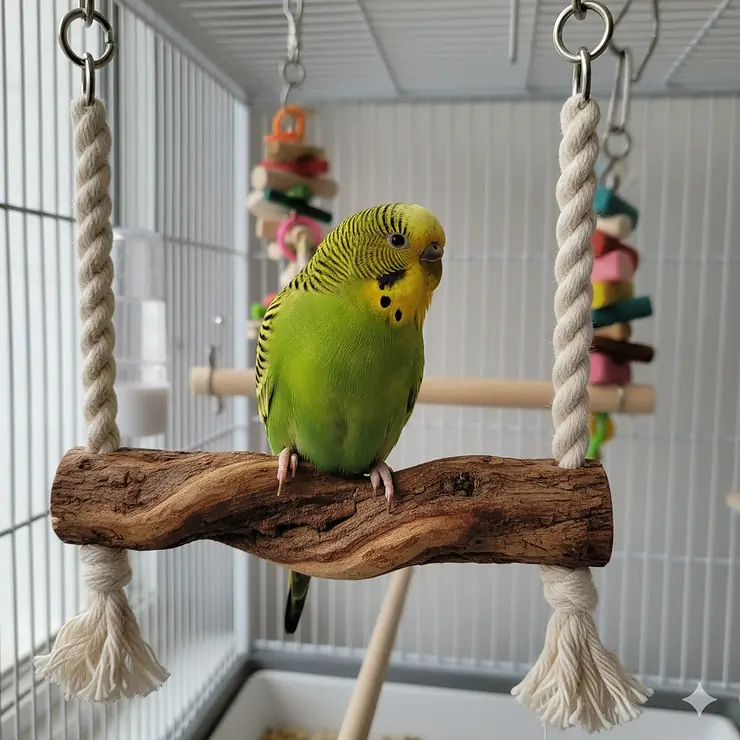
Have you ever watched your feathered companion hop around their cage, looking for that perfect spot to rest? I remember when my cockatiel, Charlie, would spend hours trying to get comfortable on his basic dowel perch. His feet looked cramped, and I could tell something wasn’t quite right. That’s when I discovered the game-changing world of bird swing perch options.
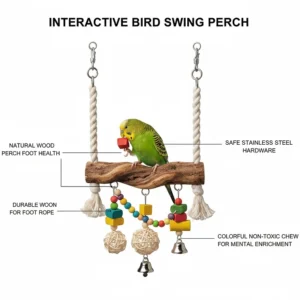
A quality bird swing perch isn’t just a decorative cage accessory—it’s essential for your bird’s physical and mental wellbeing. According to the University of Florida College of Veterinary Medicine, extended out-of-cage activities and proper perching equipment are important for keeping pet birds happy and healthy. Birds spend most of their lives on their feet, and providing varied perch options helps prevent foot problems, arthritis, and boredom.
In this comprehensive guide, you’ll discover the top 7 bird swing perch products available in 2026, along with expert tips on choosing the perfect option for your parrot, parakeet, cockatiel, or canary. Whether you’re looking for wooden bird swing options, rope bird swing designs, or specialized comfort perch swings, we’ve got you covered with real product reviews and honest comparisons.
Quick Comparison Table
| Product | Best For | Material | Size Range | Price Range | Rating |
|---|---|---|---|---|---|
| JW Pet Swing-N-Perch | All birds | Cotton rope | 10″-16″ | $8-$15 | ⭐⭐⭐⭐⭐ |
| Prevue Pet BPV206 | Medium birds | Natural birch | 9″ | $7-$12 | ⭐⭐⭐⭐½ |
| Aigou Spiral Rope Perch | Large parrots | Cotton with bell | 94.4″ | $15-$25 | ⭐⭐⭐⭐ |
| Large Pepper Wood Swing | Large birds | Natural wood | 18×10″ | $20-$35 | ⭐⭐⭐⭐⭐ |
| JW Sand Perch Swing | Small-medium birds | Sand texture | Variable | $10-$18 | ⭐⭐⭐⭐ |
| Pop’s Birding Hummingbird | Hummingbirds/small birds | Metal/wood | Compact | $12-$20 | ⭐⭐⭐⭐½ |
| Ripeng Hummingbird Swing | Small wild birds | Metal frame | 5.31×6.69″ | $10-$16 | ⭐⭐⭐⭐ |
💬 Just one click – help others make better buying decisions too!😊
✨ Don’t Miss These Exclusive Deals!
🔍 Take your bird care to the next level with these carefully selected products. Click on any highlighted item to check current pricing and availability. These tools will help you create authentic comfort your feathered family will love!
Top 7 Bird Swing Perch Products: Expert Analysis
1. JW Pet Swing-N-Perch – Best Overall Cotton Rope Swing
The JW Pet Swing-N-Perch consistently tops the charts as the most versatile bird swing perch option for 2026. This simple yet effective design features tightly woven, multi-colored cotton rope that creates a comfortable resting spot without exposing dangerous wires or stiffeners.
Key Specifications:
- Available in three sizes: Small (10″ diameter), Medium (12.5″), and Large (16″)
- Made from soft, tightly woven cotton
- Machine washable for easy maintenance
Price Range: $8-$15 depending on size
Customer Feedback: Bird owners consistently report that their parakeets, cockatiels, and even African Greys love this swing. One reviewer mentioned their parakeets have had the same swing for 8 months without destroying it—a testament to its durability.
✅ Pros:
- Extremely durable and long-lasting
- Soft on bird talons
- Machine washable convenience
❌ Cons:
- May fray over time with aggressive chewers
- Some units arrive with minor defects
This parrot swing toy works beautifully for birds of all sizes and is particularly loved by cockatiels and budgies who enjoy the gentle swinging motion.
2. Prevue Pet Products BPV206 Birch Bird U-Type Swing – Best Natural Wood Option
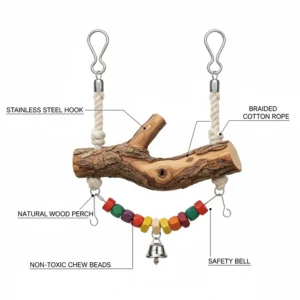
For bird owners seeking authentic, natural materials, the Prevue Pet BPV206 offers an unvarnished hardwood perch that mimics branches found in the wild. This wooden bird swing provides the natural texture and varying diameter that avian veterinarians recommend for optimal foot health.
Key Specifications:
- Made from natural birch wood
- Measures 9.25″ long by 10″ high
- Perch diameter: 1 inch
Price Range: $7-$12
Customer Feedback: Owners appreciate the natural appearance and sturdy construction. The unvarnished wood allows birds to safely chew and peel the bark, satisfying their natural instincts.
✅ Pros:
- Natural wood texture promotes foot health
- Safe for chewing and peeling
- Budget-friendly option
❌ Cons:
- Limited size options
- Wood may splinter over extended use
This bird cage swing is perfect for cockatiels, conures, and similar medium-sized birds who enjoy the authentic feel of natural wood perches.
3. Aigou Bird Spiral Rope Perch – Best for Large Parrots
The Aigou Spiral Rope Perch is a showstopper at an impressive 94.4 inches long. This bendable cotton rope perch with an integrated bell creates an adventure playground for larger parrots who need substantial exercise equipment.
Key Specifications:
- Extended 94.4-inch length
- 100% cotton construction
- Includes melodic bell for enrichment
Price Range: $15-$25
Customer Feedback: Amazon parrot and Macaw owners report this rope bird swing keeps their birds entertained for hours. The bendable design allows creative configurations throughout the cage.
✅ Pros:
- Extra-long design for large cages
- Bendable for custom configurations
- Engaging bell attachment
❌ Cons:
- May be too large for smaller cages
- Requires regular inspection for fraying
This comfort perch swing is ideal for African Greys, Amazons, and Macaws who need substantial climbing and perching surfaces for soothing bird activities.
4. Large Bird Perch Swing Toy (Natural Pepper Wood) – Premium Choice for Large Birds
The Large Bird Perch Swing made from natural pepper wood represents the premium tier of bird swing perch products. At 18×10 inches, this oversized swing provides an authentic forest experience right inside your bird’s cage.
Key Specifications:
- Assembled size: 18.18×9.84×16.53 inches
- Natural pepperwood construction (wear and bite-resistant)
- Stainless steel chain and hooks included
Price Range: $20-$35
Customer Feedback: Owners of larger parrots praise the sturdy construction and natural materials. Birds can swing freely while exercising balance and strengthening muscles.
✅ Pros:
- Oversized design for large birds
- Natural, bite-resistant materials
- Easy installation with no tools needed
❌ Cons:
- Higher price point
- Takes up significant cage space
Perfect for parakeets, cockatiels, parrots, African Greys, and other large to medium birds seeking relaxation toys birds can truly enjoy.
5. JW Pet Insight Sand Perch Swing – Best for Nail Maintenance
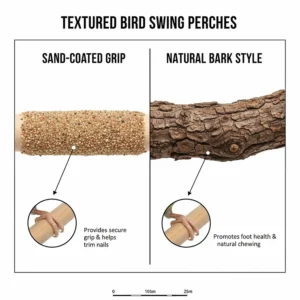
The JW Pet Insight Sand Perch Swing combines the fun of swinging with the practical benefit of natural nail maintenance. The specially textured surface helps keep nails trimmed through normal use, eliminating many grooming sessions.
Key Specifications:
- Natural sand texture for nail filing
- Varying diameter (thicker at ends, slender in middle)
- Available in Small (parakeets) and Regular (cockatiels) sizes
Price Range: $10-$18
Customer Feedback: Bird owners appreciate the dual-purpose design. According to the Merck Veterinary Manual, proper nail care is essential for bird health, making this an intelligent choice.
✅ Pros:
- Natural nail maintenance
- Varying grip sizes exercise feet
- Dual-purpose functionality
❌ Cons:
- Sand texture may be too rough for some birds
- Limited aesthetic appeal
This innovative design makes it a smart addition to any collection of parrot swing toys focused on bird wellness.
6. Pop’s Birding Hummingbird Swing – Best for Small Wild Birds
The Pop’s Birding Hummingbird Swing is a USA-made original designed specifically for outdoor use with hummingbirds and other small wild birds. This charming swing features the patent-pending Polyperch that mimics natural resting spots.
Key Specifications:
- 100% made in USA
- Durable coated wire frame
- Patent-pending Polyperch design
Price Range: $12-$20
Customer Feedback: Backyard birders report delighted observations of hummingbirds actually using these swings as territorial perches near feeders. The unique design has captivated bird enthusiasts nationwide.
✅ Pros:
- USA-made quality
- Weather-resistant for outdoor use
- Limited lifetime warranty
❌ Cons:
- Designed primarily for outdoor use
- May be too small for caged pet birds
While not a traditional bird cage swing, this innovative product brings joy to wild bird enthusiasts and creates magical viewing opportunities.
7. Ripeng 2 Pack Hummingbird Swing – Best Value Bundle
The Ripeng Hummingbird Swing 2-pack offers exceptional value for bird lovers wanting multiple perching options. The simple metal frame with wooden dowel design works beautifully for small birds both indoors and outdoors.
Key Specifications:
- Dimensions: 5.31 × 6.69 inches per swing
- Metal frame with natural wooden dowel
- Includes black S-shaped hooks
Price Range: $10-$16 for 2-pack
Customer Feedback: Buyers love getting two swings for the price of one. The rust-resistant construction holds up well in various conditions, making these versatile additions to any bird setup.
✅ Pros:
- Excellent value (2-pack)
- Rust-resistant materials
- Simple, elegant design
❌ Cons:
- May be too delicate for larger, aggressive birds
- Basic aesthetic
This affordable option provides multiple placement opportunities throughout your aviary or outdoor space for comprehensive soothing bird activities.
Understanding Bird Swing Perch Benefits
Physical Health Advantages
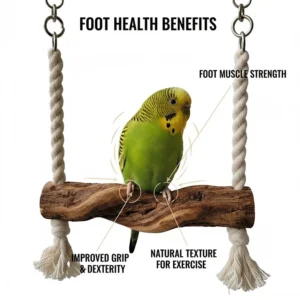
Bird swing perch accessories provide more than just entertainment. Research from avian health experts shows that varied perching surfaces are crucial for preventing bumblefoot and arthritis in birds. When your feathered friend grips different diameter perches throughout the day, they exercise the muscles and joints in their feet—similar to how humans benefit from wearing different shoe types.
The swinging motion itself offers gentle exercise that strengthens core muscles and improves balance. I’ve noticed that birds who regularly use swings tend to have better coordination and are more confident during flight. This low-impact movement is especially beneficial for senior birds or those recovering from injuries.
Mental Stimulation and Enrichment
Beyond physical benefits, bird swing perch toys address the critical need for mental enrichment. In the wild, birds spend their days navigating complex forest environments, making split-second decisions about which branches to land on. A well-designed swing recreates this dynamic environment within the cage, challenging your bird’s problem-solving abilities.
The gentle swaying motion provides sensory stimulation that many birds find deeply satisfying. It’s like a meditation session combined with a fun activity—truly one of the most effective relaxation toys birds can enjoy. I’ve observed countless birds who visibly relax when settling onto their favorite swing, their feathers fluffing out in contentment.
Social and Behavioral Benefits
Interestingly, bird cage swings also serve social functions. Birds often use their favorite perch as a “home base” during interactions with cage mates or their human families. The elevated vantage point from a swing gives them a sense of security while remaining engaged with their environment.
For birds who struggle with anxiety or feather plucking, introducing comfortable perch swings can provide the soothing distraction they need. The rhythmic motion has a calming effect similar to a rocking chair for humans.
Choosing the Right Material for Your Bird
Natural Wood Perches
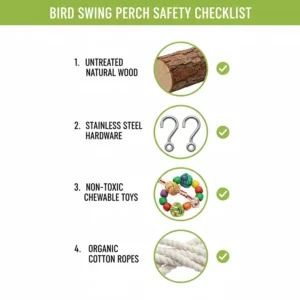
Wooden bird swing options remain the gold standard recommended by avian veterinarians. Natural wood varieties like birch, manzanita, and pepperwood offer irregular surfaces with varying diameters—exactly what bird feet need for exercise and comfort.
The authentic texture allows birds to grip securely while the natural materials satisfy their chewing instincts. When selecting wood perches, ensure they come from safe, non-toxic trees. Avoid chemically treated wood or varieties known to be harmful to birds.
Rope and Cotton Designs
Rope bird swing products offer unique benefits, particularly for birds with existing foot problems. The soft, flexible fibers provide cushioning that reduces pressure on joints—a blessing for senior birds or those with arthritis. According to veterinary research on bird perch materials, rope perches can help young birds develop proper foot strength before graduating to harder surfaces.
However, rope perches require diligent maintenance. Inspect them regularly for fraying, and trim any loose threads immediately to prevent entanglement. Replace rope perches when they show significant wear to maintain safety.
Metal and Specialty Materials
Metal-framed swings, like those designed for hummingbirds, excel in durability and weather resistance. These work wonderfully for outdoor aviaries where wood might deteriorate quickly. The key is ensuring any metal surfaces your bird contacts are smooth and non-toxic.
Sand-textured perches represent a specialized category offering the functional benefit of natural nail filing. While not every bird appreciates the rougher texture, many owners find these invaluable for reducing grooming requirements.
Size Matters: Matching Swing to Bird
Small Birds (Finches, Canaries, Parakeets)
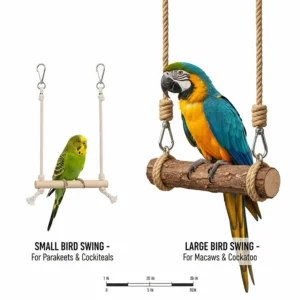
For tiny feathered friends, look for compact swings with perch diameters around 0.5 to 0.75 inches. The JW Pet Swing-N-Perch in small size or the Ripeng Hummingbird Swing work perfectly for these diminutive species. Small birds need swings that won’t overwhelm their cage space while still providing adequate movement and exercise.
Medium Birds (Cockatiels, Conures, Small Parrots)
Medium-sized birds require sturdier construction with perch diameters of 0.75 to 1.25 inches. The Prevue Pet BPV206 and JW Sand Perch Swing both cater beautifully to this size category. These birds have more powerful beaks, so durability becomes increasingly important in material selection.
Large Birds (African Greys, Amazons, Macaws)
Large parrots need robust parrot swing toys built to withstand their considerable strength. Look for options with 1.25 to 2-inch diameter perches, like the Large Pepper Wood Swing or the Aigou Spiral Rope Perch. These birds also require more substantial hanging hardware to support their weight during enthusiastic swinging sessions.
The “75% Perch Rule” recommended by avian veterinarians states that birds should be able to wrap their feet about three-quarters of the way around their sleeping perch. While swings don’t need to follow this rule exactly, keeping it in mind helps ensure comfortable gripping.
Installation and Placement Tips
Strategic Cage Positioning
Where you hang your bird swing perch dramatically affects how much your bird will use it. Position swings away from food and water dishes to prevent contamination from droppings. The ideal placement allows your bird to swing freely without bumping cage walls or other accessories.
Many birds prefer swings positioned at mid to upper cage levels, giving them good sightlines of their surroundings. This elevated position taps into their instinct to roost high for safety. However, don’t hesitate to experiment with different heights to discover your bird’s preference.
Creating a Perch Highway
Think of your cage setup as a small ecosystem with multiple resting and activity zones. Arrange swings and stationary perches to create a “highway” that encourages movement throughout the cage. This setup promotes exercise and prevents your bird from spending all day in one spot.
The University of Florida College of Veterinary Medicine recommends placing perches at various heights to support climbing and exercise behaviors natural to birds.
Safety Considerations
Always inspect hanging hardware before installation. Look for secure clasps, strong chains, and reliable attachment points. Test the swing’s weight capacity by gently pulling on it before introducing your bird. Remove any small parts that could be swallowed or sharp edges that might cause injury.
Maintain adequate spacing between the swing and cage walls—at least 2-3 inches on all sides for small birds, more for larger species. This prevents trapped feet or wings during enthusiastic swinging sessions.
Maintenance and Cleaning Best Practices
Daily Inspections
A quick daily visual check takes just seconds but prevents serious safety issues. Look for fraying ropes, loose hardware, accumulated droppings, or any damage from chewing. Many bird owners incorporate this inspection into their morning routine while refreshing food and water.
Weekly Deep Cleaning
Most bird swing perch accessories benefit from weekly cleaning to prevent bacterial buildup. Cotton rope swings like the JW Pet Swing-N-Perch are often machine washable—simply remove them from the cage, run through a gentle cycle, and air dry completely before reinstalling.
For wooden bird swing options, use a stiff brush with warm water and bird-safe cleaner. Avoid harsh chemicals that could poison your bird. Allow wood perches to dry thoroughly in sunlight when possible, as UV light provides natural sanitization.
Replacement Schedule
Even high-quality perches don’t last forever. Cotton rope perches typically need replacement every 6-12 months depending on use intensity and bird species. Wooden perches last longer but should be replaced when they show significant wear, splintering, or cannot be adequately cleaned.
Keep replacement swings on hand so you can immediately swap out worn items without leaving your bird without their favorite perch.
Common Mistakes to Avoid
Overcrowding the Cage
Enthusiasm for bird accessories sometimes leads to cage overcrowding. While variety is beneficial, too many perches and swings create a cluttered environment that restricts flight and movement. Follow the minimalist principle: provide enough variety for enrichment without sacrificing open space.
Ignoring Material Safety
Not all perches marketed for birds meet safety standards. Avoid swings with:
- Sandpaper or concrete covering (too abrasive for daily use)
- Painted wood with unknown coatings
- Toxic wood species like oak or cherry
- Small parts that could be swallowed
Research any unfamiliar materials before introducing them to your bird’s environment.
One-Size-Fits-All Thinking
Different bird species have vastly different needs. A swing perfect for your parakeet might be dangerously flimsy for your cockatoo. Similarly, what works for a playful young bird might not suit a senior bird with arthritis. Customize your selections based on your specific bird’s size, age, activity level, and health status.
Budget-Friendly Alternatives and DIY Options
Creating Natural Branch Swings
For the crafty bird owner, creating custom swings from safe tree branches offers both cost savings and customization. Harvest branches from bird-safe trees like apple, pear, or willow. Clean thoroughly, bake at 200°F for 30 minutes to eliminate pests, and allow to cool completely.
Drill small holes at each end, thread with natural sisal rope, and hang securely. This DIY approach provides authentic, varied-diameter perching surfaces at minimal cost. However, ensure you positively identify tree species before use—some common trees are toxic to birds.
Repurposing Household Items
Creative bird owners have fashioned swings from:
- Wooden spoons (handles removed)
- Untreated bamboo from kitchen stores
- Natural fiber ropes from hardware stores
- Stainless steel chains for hanging
Always prioritize safety over creativity. If you’re unsure whether a material is bird-safe, consult an avian veterinarian before introducing it to your bird’s cage.
When to Invest in Commercial Products
While DIY options have merit, commercial products undergo safety testing and often include warranties. For birds with special health needs, aggressive chewers, or expensive exotic species, the peace of mind from tested products may justify the higher cost. Combine DIY and commercial options for a balanced, budget-conscious approach.
Species-Specific Recommendations
Parakeets and Budgies
These small, energetic birds love lightweight rope bird swing options that move easily with their active play. The JW Pet Swing-N-Perch in small size perfectly matches their needs. Include multiple swings at varying heights to encourage exercise throughout the cage.
Cockatiels
Medium-sized and playful, cockatiels appreciate both wooden bird swing designs and rope varieties. The Prevue Pet BPV206 offers the natural wood texture cockatiels love for chewing, while a rope swing provides softer perching for sleep.
Conures and Small Parrots
Active and intelligent, these birds benefit from diverse comfort perch swings that challenge their problem-solving abilities. The Aigou Spiral Rope Perch can be configured into different shapes, keeping curious conures mentally stimulated.
African Greys and Large Parrots
These powerful birds require extremely durable parrot swing toys. The Large Pepper Wood Swing provides the robust construction necessary to withstand their strength, while natural materials satisfy their need to manipulate their environment.
Canaries and Finches
Delicate finches prefer swings that don’t move too dramatically. Smaller wooden swings or lightweight rope options work best. Position multiple swings throughout their flight cage to encourage natural movement patterns.
Seasonal Considerations
Summer Care
Warm weather affects bird swing perch materials differently. Wood can dry out and crack in low humidity, so monitor carefully during summer months. Rope materials may develop mildew in humid climates—inspect frequently and clean more often during muggy seasons.
Consider moving outdoor swings to shadier locations during peak heat hours. Direct sunlight can make metal components uncomfortably hot for delicate bird feet.
Winter Adjustments
Cold weather brings unique challenges. If your birds have access to outdoor aviaries, bring perches inside during extreme cold to prevent material damage. For indoor birds, ensure swings aren’t positioned directly under heating vents where rapid temperature changes could occur.
Some bird owners invest in heated perches during winter, though these are specialized products requiring careful temperature monitoring to prevent burns.
Traveling with Your Bird
Portable Perch Solutions
When transporting birds to veterinary appointments or on trips, portable perches provide comfort and security. Small, lightweight swings can fit inside travel carriers, giving your bird a familiar resting spot during stressful journeys.
Look for compact designs with secure attachment methods that won’t shift during transport. The familiarity of their favorite perch can significantly reduce travel anxiety for nervous birds.
Vacation Setups
If you’re leaving your bird with a sitter, bring along their favorite swing. This familiar item provides continuity and comfort in an unfamiliar environment. Include care instructions specific to perch maintenance so sitters know how to keep equipment clean and safe.
FAQ: Your Bird Swing Perch Questions Answered
❓ How many bird swing perch options should I have in one cage?
❓ Can baby birds use bird cage swings safely?
❓ How often should I replace parrot swing toys?
❓ Do wooden bird swing designs work for all bird species?
❓ Are comfort perch swings necessary for bird health?
Conclusion: Creating the Perfect Perch Environment
After exploring the top bird swing perch options for 2026, one truth becomes clear: the right perch dramatically improves your bird’s quality of life. Whether you choose the versatile JW Pet Swing-N-Perch, the natural Prevue Pet BPV206, or the specialized Large Pepper Wood Swing, you’re investing in your bird’s health and happiness.
Remember that variety is key—combine different materials, textures, and designs to create a stimulating environment. Pay attention to your bird’s preferences and adjust accordingly. Some birds immediately claim a new swing as their favorite spot, while others need time to warm up to changes.
The parrot swing toys and bird cage swings we’ve reviewed represent the best options currently available, each excelling in different areas. For most bird owners, starting with a quality rope swing like the JW Pet option, supplemented with a natural wooden bird swing, creates an excellent foundation.
As you shop for the perfect bird swing perch, prioritize safety, quality, and appropriateness for your specific bird species. The small investment in proper perching equipment pays enormous dividends in preventing health problems and enhancing your bird’s daily life. Your feathered friend deserves the comfort and stimulation that quality swings provide—and you deserve the joy of watching them thrive in a well-equipped environment.
Recommended for You
- 7 Best Bird Climbing Toys for Active Parrots 2026
- 7 Best Bird Rope Ladders 2026: Expert Picks for Parrot Exercise
- 7 Best Paper Shredding Toys for Birds in 2026
Disclaimer: This article contains affiliate links. If you purchase products through these links, we may earn a small commission at no additional cost to you.
✨ Found this helpful? Share it with your friends! 💬🤗
