
In This Article
I’ll never forget the afternoon I came home to find my African Grey, Mango, had completely demolished my grandmother’s antique wicker chair. The satisfaction on his face was unmistakable – but my wallet (and heart) weren’t quite as thrilled. That expensive lesson taught me something crucial: parrots don’t destroy things because they’re naughty. They do it because they need to.
Here’s the truth most bird owners learn the hard way: shredding toys for parrots aren’t optional luxuries—they’re essential tools that channel your feathered friend’s natural instincts in the right direction. According to research from the Avian Enrichment organization, chewing and shredding are instinctual behaviors directly linked to foraging and nest building in the wild. Without proper outlets, your parrot won’t just sit quietly – they’ll find their own “toys” (hello, furniture, curtains, and electrical cords).
What exactly are shredding toys for parrots? Think of them as edible entertainment centers made from natural materials like balsa wood bird toys, palm leaves, paper, and corn cobs that your parrot can tear apart to their heart’s content. These destructible bird toys satisfy your parrot’s biological urge to chew while keeping their beak trim and their mind sharp. Plus, they’re way cheaper than replacing your dining room chairs every few months.
In this guide, I’m sharing seven tested-and-true chewable wood blocks for parrots and natural wood bird toys that actually work. Whether you have a gentle budgie or a power-chewing macaw, you’ll find options that transform destructive behavior into healthy play.
Quick Comparison Table
| Product | Best For | Material | Price Range | Rating |
|---|---|---|---|---|
| HOSUKU Natural Bird Foraging Box | Medium birds | Pine cones, coconut shells, sola | $12-15 | ⭐⭐⭐⭐⭐ |
| LifeIdeas 5PCS Corn Cob Shredders | Small-medium parrots | Corn cob, wood, crinkly paper | $10-13 | ⭐⭐⭐⭐½ |
| Super Bird Creations Balsa Candy Cane | Small birds | Balsa wood, acrylic beads | $6-8 | ⭐⭐⭐⭐ |
| Bird Toys 5 Pack Variety Set | Parakeets, cockatiels | Rattan balls, bamboo, wood | $14-18 | ⭐⭐⭐⭐ |
| Foraging Shredded Paper Toys | Conures, budgies | Loofah, rattan, crinkly paper | $11-14 | ⭐⭐⭐⭐½ |
| Super Bird Creations Balsa Blocks (12pc) | DIY enthusiasts | Pure balsa wood | $13-16 | ⭐⭐⭐⭐⭐ |
| Planet Pleasures Bird Tire | Medium-large parrots | Palm leaf, abaca fiber | $12-15 | ⭐⭐⭐⭐½ |
💬 Just one click – help others make better buying decisions too! 😊
Top 7 Shredding Toys for Parrots: Expert Analysis
1. HOSUKU Natural Bird Foraging & Parrot Shredding Toys Box
If you’re looking for an all-in-one solution that keeps multiple birds entertained for weeks, the HOSUKU Natural Bird Foraging Box deserves serious consideration. I’ve watched countless parrots tackle this treasure chest, and the engagement level is impressive.
Key Specifications:
- Dimensions: Approximately 7″ x 5″ x 3″
- Materials: Responsibly sourced pine cones, coconut shells, sola wood, apple wood
- Suitable for: Cockatiels, conures, small cockatoos, African greys
This isn’t your typical throw-it-in-the-cage toy. The box itself becomes part of the enrichment experience as birds work to extract the natural materials packed inside. One customer mentioned their sun conure spent three hours straight exploring every corner, which translates to three hours of not screaming or destroying baseboards.
Customer Feedback Summary: Owners report excellent durability compared to synthetic alternatives, with the natural textures providing authentic satisfying destructive behavior opportunities. Some noted the box lasts 2-3 weeks with aggressive chewers before needing replacement.
✅ Pros:
- 100% natural, bird-safe materials
- Encourages natural foraging instincts
- Easy to use – no installation required
❌ Cons:
- Can be messy (expect shavings everywhere)
- May be destroyed quickly by large macaws
Price: $12-15 | Perfect for owners wanting maximum engagement with minimal setup.
2. LifeIdeas Bird Shredding Toys – 5PCS Corn Cob Set
The LifeIdeas 5PCS set offers incredible variety at a budget-friendly price point. What caught my attention was how strategically they designed each piece to target different chewing preferences – from soft corn cob to crunchy wood.
Key Specifications:
- Set includes: 5 different style toys
- Materials: Natural corn cob, bamboo, wood, edible crinkly paper
- Size: Each toy measures 6-10 inches
- Weight: Approximately 9.6 ounces total
Here’s what makes this set brilliant: parrots are notoriously picky, and having five distinct textures means you’re almost guaranteed to hit at least two or three winners. The corn cob components provide that perfect “crunch” sound that many parrots find irresistible for beak exercise toys.
Customer Feedback Summary: Buyers consistently praise the value proposition, with several noting their birds immediately gravitated toward the scarecrow-style design. A few cockatie l owners mentioned the toys lasted only a week with enthusiastic chewers, which honestly means they’re working exactly as intended.
✅ Pros:
- Excellent variety in one package
- Bright colors attract bird attention
- All pieces include easy-attach hooks
❌ Cons:
- Some pieces may be too small for large parrots
- Quality can be inconsistent between batches
Price: $10-13 | Ideal for first-time buyers experimenting with preferences.
3. Super Bird Creations SB188 Balsa Candy Cane
Don’t let the whimsical design fool you – this deceptively simple toy packs serious entertainment value. Super Bird Creations has been crafting quality bird toys since 1992, and their Balsa Candy Cane showcases exactly why they’ve maintained that reputation.
Key Specifications:
- Dimensions: 8″ x 4″
- Primary material: Soft balsa wood bird toys
- Additional features: Two bells, colorful acrylic beads
- Target species: Parrotlets, parakeets, cockatiels, lovebirds
Balsa wood deserves special mention here. It’s among the softest natural woods available, making it perfect for smaller beaks or birds new to wooden toys. The texture shreds rather than splinters, providing safe destruction that helps maintain healthy beak growth. According to research on parrot behavior, wood chewing offers mental stimulation while naturally trimming continuously growing beaks.
Customer Feedback Summary: Multiple reviewers noted their cockatiels demolished this in 4-6 hours, which generated mixed feelings – impressive engagement but requires frequent replacement. One clever owner suggested refilling with craft store balsa strips to extend value.
✅ Pros:
- Perfect for introducing birds to wood toys
- Bells add auditory enrichment
- Made in USA with quality control
❌ Cons:
- Destroyed quickly by enthusiastic chewers
- Higher price per entertainment hour
Price: $6-8 | Best for small birds or as an occasional special treat.
4. Bird Toys Parakeet Toy – 5 Pack Variety Set
This comprehensive set addresses something many owners overlook: birds need different types of enrichment throughout the day, not just one favorite toy on repeat. The 5 Pack Variety Set delivers rope perches alongside multiple chewable wood blocks for parrots.
Key Specifications:
- Package contents: 5 distinct toys plus rope perch
- Materials: Natural rattan balls, bamboo, wooden blocks, shredded paper
- Total weight: Varies by package
- Hanging hardware: All pieces include quick-attach hooks
What separates this from cheaper alternatives is the inclusion of a rope perch. Your parrot gets a comfortable resting platform that doubles as another texture to explore with their feet and beak. The rattan balls stuffed with crinkly paper trigger natural foraging behaviors – birds instinctively want to investigate what’s making that sound.
Customer Feedback Summary: Owners frequently mention the toys keep birds “active” and “busy,” with one user noting their parrots “spend lots of time playing” with every piece. Some reported durability concerns, though this seems product-specific rather than a universal issue.
✅ Pros:
- Rope perch provides exercise opportunities
- Handmade basket includes hiding spots for treats
- Suitable for multiple bird sizes
❌ Cons:
- Mixed reviews on construction quality
- Rope may fray (requires monitoring)
Price: $14-18 | Great for multi-bird households wanting variety.
5. Foraging Toys Parakeet Chewing Hanging Toy
Sometimes the simplest concepts work best, and these shredded paper toys prove that point beautifully. If your parrot has plucking issues or needs serious stress relief, pay close attention to this option.
Key Specifications:
- Primary materials: Natural loofah, rattan balls, wood
- Stuffing: Brightly colored, bird-safe crinkly papers
- Design: Multiple hanging styles available
- Size compatibility: Small to medium birds
The genius here lies in the stuffing. Parrots naturally love pulling, tearing, and rearranging nesting materials. These toys tap directly into that instinct, keeping beaks and feet busy for extended periods. One owner mentioned their parakeet “pulls out strips of paper” continuously, which translates to hours of focused activity preventing boredom-related behaviors.
Customer Feedback Summary: Multiple reviewers with feather-plucking birds reported noticeable improvement after introducing these toys. The consensus suggests they’re particularly effective for birds who need gentler destructible bird toys rather than hard wood options.
✅ Pros:
- Excellent for redirecting plucking behavior
- Vibrant colors provide visual stimulation
- Easy cage installation
❌ Cons:
- Creates significant mess (paper everywhere)
- Needs frequent refilling/replacement
Price: $11-14 | Perfect for parrots with plucking tendencies.
6. Super Bird Creations SB50019 Balsa Wood Blocks (12 Pieces)
For the DIY enthusiast or owner of multiple birds, these pure balsa wood blocks offer unmatched versatility. Think of them as Lego blocks for creating custom natural wood bird toys.
Key Specifications:
- Quantity: 12 blocks per package
- Dimensions: Each block measures 1″ x 1″ x 4″
- Material: Unfinished balsa wood from Ecuador
- Sustainability: Responsibly harvested
Here’s where things get interesting. You can use these blocks as standalone foot toys, string them onto existing toys for refurbishment, or create entirely custom designs based on your bird’s preferences. Several customers mentioned drilling small holes to hide treats inside, transforming simple blocks into foraging puzzles.
The softness factor matters tremendously. Birds with beak deformities, elderly parrots with reduced strength, or young birds just learning to chew all benefit from balsa’s gentle texture. According to Wikipedia’s parrot information, beaks continuously grow throughout a bird’s life, making appropriate chewing materials essential for proper beak conditioning.
Customer Feedback Summary: Reviews split between “perfect softness” and “too hard to be balsa.” This inconsistency suggests variable wood batches. Most sun conure and small parrot owners reported satisfaction, though some requested softer alternatives.
✅ Pros:
- Multi-use application (toys, foraging, treats)
- Sustainable sourcing practices
- Cost-effective for multiple birds
❌ Cons:
- Quality consistency issues reported
- Requires creative assembly for best results
Price: $13-16 | Ideal for creative owners wanting customization.
7. Planet Pleasures Bird Tire Toy – Medium Size
Last but certainly not least, Planet Pleasures delivers eco-conscious excellence with their signature Bird Tire. This company employs indigenous artisans to handcraft their toys, meaning every purchase supports sustainable livelihoods.
Key Specifications:
- Dimensions: Medium size (approximately 9″ diameter)
- Materials: Natural palm leaf, abaca fiber
- Design features: Braided tire structure, decorative stars, fiber tail
- Recommended for: Conures, caiques, pionus, small cockatoos, greys
The braided tire construction creates perfect hiding spots for nuts, seeds, or pellets. Your parrot has to work through multiple layers of palm leaf to reach rewards, mimicking the effort wild birds expend during natural foraging. This mental engagement reduces cage boredom dramatically – and bored parrots are destructive parrots.
Customer Feedback Summary: Owners consistently mention the toy “brightens any cage” while providing “rewarding foraging opportunities.” Several reported their birds return to this toy repeatedly throughout the day, suggesting strong sustained interest.
✅ Pros:
- Supports fair-trade practices
- Natural colors (no dyes)
- Multiple enrichment opportunities
❌ Cons:
- May be demolished quickly by powerful chewers
- Higher price point than synthetic alternatives
Price: $12-15 | Best for environmentally conscious owners.
✨ Don’t Miss These Exclusive Deals!
🔍 Take your parrot’s enrichment to the next level with these carefully selected products. Click on any highlighted item to check current pricing and availability. These tools will help you create authentic entertainment your feathered friend will love!
Understanding Your Parrot’s Natural Destructive Behavior
Let’s talk about something most parrot owners don’t fully grasp: that “destructive” behavior you’re desperately trying to stop? It’s actually a sign of a healthy, well-adjusted bird. I know that sounds counterintuitive when you’re staring at shredded curtains, but stay with me.
Wild parrots spend 60-70% of their waking hours foraging, which involves extensive chewing, tearing, and manipulating objects. Their beaks are remarkably powerful tools – capable of cracking Brazil nuts that require 300 pounds of pressure to open. When we bring these magnificent creatures into our homes and expect them to sit quietly on a perch all day, we’re essentially asking them to suppress every natural instinct evolution spent millions of years perfecting.
Here’s what happens inside your parrot’s brain when they shred: dopamine releases. Serotonin stabilizes. Stress hormones decrease. It’s not vandalism – it’s self-medication through natural behavior. Research shows parrots deprived of appropriate chewing outlets often develop serious behavioral problems including feather plucking, excessive screaming, and even self-mutilation.
The solution isn’t stopping the behavior (impossible and cruel). The solution is redirecting it toward appropriate targets like shredding toys for parrots. Think of these toys as pressure release valves for all that pent-up energy and instinct.
Why Chewing Matters for Beak Health
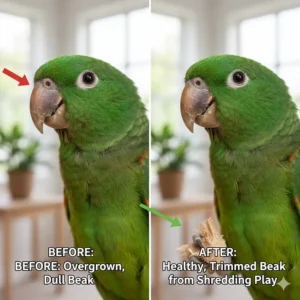
Here’s a fascinating fact that surprises most new parrot owners: beaks grow continuously throughout a bird’s life, similar to human fingernails. Without proper wear, beaks can become overgrown, misaligned, and dysfunctional – interfering with eating, preening, and even breathing.
Chewable wood blocks for parrots provide precisely the right amount of resistance to naturally file down the beak’s outer layers. The keratin sheath wears away gradually, maintaining the perfect length and sharpness for seed cracking and grooming. It’s literally nature’s nail file, except your parrot actually enjoys using it.
Different materials offer varying resistance levels. Soft balsa wood bird toys work well for maintenance chewing and smaller species. Harder woods like manzanita challenge larger beaks while providing longer-lasting entertainment. The key is offering variety so your parrot can self-select based on their current needs.
The Complete Guide to Balsa Wood Bird Toys
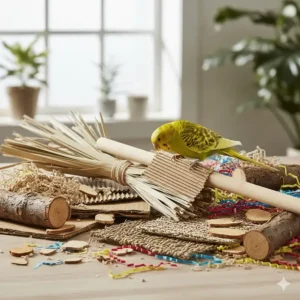
If you’re new to wooden parrot toys, balsa deserves your attention first. This remarkably soft wood comes from the balsa tree (Ochroma pyramidale), which grows primarily in Central and South America. What makes it special for our feathered friends?
Balsa’s unique cellular structure creates wood that’s lighter than cork but strong enough to support a parrot’s climbing weight. When chewed, it shreds into fine fibers rather than splintering into dangerous shards. This safety factor makes balsa wood bird toys perfect for introducing nervous or inexperienced birds to wooden enrichment.
Benefits of Balsa Wood for Different Parrot Species
Small birds (budgies, cockatiels, lovebirds): Balsa provides just enough resistance to engage their beaks without requiring excessive jaw strength. Perfect for daily chewing sessions that maintain beak health without exhaustion.
Medium parrots (conures, caiques, small cockatoos): These power chewers can demolish balsa quickly, making it ideal for satisfying destructive behavior bursts. Use balsa alongside harder woods for balanced enrichment.
Large parrots (macaws, large cockatoos, African greys): While they’ll destroy balsa rapidly, it serves as an excellent “appetizer” toy or foraging puzzle component. Hide treats inside soft balsa blocks for rewarding mental challenges.
Special needs birds: Elderly parrots with arthritis, birds recovering from beak injuries, or those with developmental issues benefit enormously from balsa’s gentle texture.
How to Use Balsa Wood Safely
Despite balsa’s safety reputation, smart usage matters. Always source unfinished, untreated balsa specifically marketed for birds. Craft store balsa often contains adhesives or chemical treatments unsafe for consumption.
Inspect balsa toys regularly for mold, especially in humid environments. Natural wood can develop fungal growth when exposed to moisture and bird droppings. Discard any pieces showing discoloration or musty odors.
Size pieces appropriately for your parrot species. Tiny splinters pose choking hazards for small birds, while chunks too large frustrate gentle chewers. Most manufacturers label their products with recommended species, but use common sense as the final judge.
Choosing the Right Destructible Bird Toys for Your Parrot
Walking into a pet store’s bird aisle can feel overwhelming. Hundreds of colorful toys promise to keep your parrot entertained, but how do you know which ones actually deliver? I’ve developed a simple evaluation framework that’s never steered me wrong.
The Three-Texture Test
Quality destructible bird toys should offer at least three distinct textures within one toy. Why? Parrots explore their environment through their beaks, which contain thousands of sensitive nerve endings. Variety keeps those nerves engaged and prevents boredom.
Look for combinations like:
- Soft (balsa wood, palm leaf, paper)
- Medium (bamboo, vine materials, corn cob)
- Hard (hardwood blocks, coconut shell, leather)
The HOSUKU Natural Bird Foraging Box exemplifies this principle perfectly, mixing sola wood, pine cones, and coconut shells in one enrichment center.
Size Matters More Than You Think
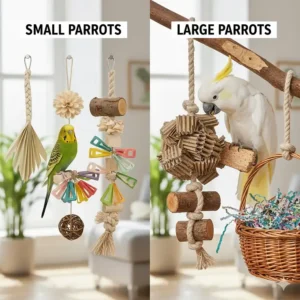
A common rookie mistake: buying toys scaled for your bird’s size rather than their beak strength. I’ve seen budgie owners purchase tiny toys their bird destroys in minutes, while macaw owners select massive toys their bird ignores because they’re too intimidating.
Better approach: Choose toys slightly larger than your bird’s comfort zone. You want mild challenge, not frustration. For reference:
- Small birds: Toys 4-8 inches total length
- Medium parrots: Toys 8-14 inches with multiple components
- Large parrots: Toys 14+ inches with substantial bulk
Natural vs. Dyed Materials: What Really Matters
You’ll notice some natural wood bird toys feature bright colors while others maintain their natural appearance. Both can be safe – the question is quality.
Reputable manufacturers use bird-safe, food-grade vegetable dyes. These pose no toxicity risk even when consumed. However, some birds prefer natural tones, possibly because they more closely resemble wild foraging materials.
My recommendation? Offer both and let your parrot choose. I’ve noticed my African Grey gravitates toward natural browns and tans, while my sun conure demolishes anything bright orange first.
Satisfying Destructive Behavior: Strategies That Actually Work
Here’s the uncomfortable truth many parrot owners eventually learn: you cannot eliminate your bird’s destructive tendencies. You can only redirect them. Once I accepted this reality, my relationship with my parrots improved dramatically.
Creating a “Destruction Zone”
Designate one area of your home as the official destruction zone where your parrot can shred to their heart’s content. This might be a play gym, a specific perch, or even a corner of their cage. Stock this zone exclusively with shredding toys for parrots and refresh materials daily.
The psychological shift this creates is remarkable. Your parrot learns: “This is where I can destroy things freely.” Over time, they’ll naturally gravitate toward this area when the urge to shred strikes, protecting your furniture elsewhere.
I keep a “shred basket” filled with acceptable destruction materials:
- Newspaper (remove glossy sections)
- Plain cardboard boxes
- Paper towel tubes
- Clean popsicle sticks
- Natural palm fronds
Cost? Nearly zero. Entertainment value? Priceless.
The Rotation Strategy
Here’s something that surprised me: parrots show more interest in familiar toys that have been temporarily removed than in brand new purchases. This “novelty through absence” principle saves money while maximizing engagement.
I keep three distinct toy sets and rotate them weekly. Week one, my birds play with Set A. Week two, I swap to Set B while storing Set A. By the time Set A reappears in week four, my parrots act like I’ve brought home exciting new toys.
This approach also extends toy lifespan. Instead of having one battered, partially-destroyed toy, you maintain three moderately-used options.
Foraging Integration
The absolute best use of destructible bird toys? Hide food inside them. This transforms simple chewing into complex problem-solving that engages your parrot’s considerable intelligence.
Try stuffing chewable wood blocks for parrots with:
- Favorite seeds or nuts
- Pellets
- Dried fruits
- Small training treats
Wrap treats in paper, then stuff inside a larger toy. Your parrot has to shred through multiple layers to reach the reward. This closely mimics wild foraging, where food rarely sits exposed on surfaces.
Beak Exercise Toys: Building Strength and Coordination
Think of beak exercise toys as the gym equipment for your parrot’s most important tool. Just like humans need varied exercises for complete fitness, parrots benefit from toys that challenge different jaw muscles and beak capabilities.
Resistance Training for Beaks
Different materials provide varying resistance levels, targeting specific muscle groups. Soft balsa wood bird toys offer light resistance perfect for warming up or daily maintenance. Medium-density materials like bamboo or hardwood dowels provide moderate resistance for strength building.
Super-hard materials (think: whole walnuts in shell, leather strips, or dense hardwoods) challenge your parrot’s maximum bite force. These should be offered less frequently – maybe 2-3 times weekly – to prevent jaw fatigue.
The Super Bird Creations Balsa Wood Blocks work beautifully for progressive resistance training. Start your parrot on single blocks, then graduate to stringing multiple blocks together for increased challenge.
Coordination and Dexterity Development
Beyond raw strength, parrots need fine motor control. Toys requiring precise beak movements improve coordination over time, which translates to better preening, eating efficiency, and even speaking ability in vocal species.
Look for toys with small components that must be manipulated: beads to slide, knots to untie, or layered materials requiring strategic dismantling. The LifeIdeas Corn Cob Set includes several pieces demanding careful beak work rather than brute force destruction.
Age-Appropriate Exercise
Baby parrots need gentle introduction to chewing. Their beaks are still developing, and overly hard materials can cause discomfort or even injury. Stick with soft papers, thin balsa, and flexible materials.
Senior parrots often develop arthritis affecting their jaw muscles. They benefit from maintaining activity but may struggle with their former favorite toys. Rotate back to softer options if you notice decreased interest or difficulty.
DIY vs. Store-Bought: Making Smart Choices
I love a good DIY project, but let’s be realistic about when homemade makes sense versus when store-bought shredding toys for parrots deliver better value.
When DIY Wins
Creating simple shredding toys from household materials works great for:
- Paper-based toys (newspaper, cardboard, paper bags)
- Produce-based chewables (corn husks, vegetable tops)
- Natural branches (after proper cleaning and pesticide-free verification)
- Basic foraging challenges (treats wrapped in paper)
Total time investment: 5-10 minutes Cost: Nearly free Entertainment duration: Usually 1-3 hours
When Store-Bought Wins
Commercial products excel for:
- Complex construction requiring specialized materials
- Toys needing consistent quality/safety standards
- Long-lasting hardwood or specialized components
- Time-poor owners needing grab-and-go solutions
The Planet Pleasures Bird Tire represents something I’d never attempt DIY. The braided palm leaf construction requires artisan skill developed over years. Could I make something similar? Maybe. Would it be as safe or durable? Probably not.
The Hybrid Approach
My sweet spot involves buying high-quality base toys, then customizing them with DIY additions. Purchase a sturdy hanging toy, then add:
- Paper cupcake liners for shredding
- Strips of cardboard
- Natural pine cones
- Crinkly paper stuffing
This maximizes both safety (commercial toys meet safety standards) and personalization (your bird’s specific preferences incorporated).
Common Mistakes (And How to Avoid Them)
After years of parrot ownership and conversations with hundreds of fellow owners, I’ve identified recurring mistakes that undermine enrichment efforts. Let’s address them directly.
Mistake #1: Buying Too Many Toys at Once
New parrot parents often go wild at the pet store, loading up with every colorful toy available. The cage becomes so cluttered the bird can barely move. Ironically, this overwhelming abundance often leads to less engagement, not more.
Solution: Follow the “rule of three” – maintain three different toy types in the cage simultaneously: one for chewing/shredding, one for foraging/puzzle-solving, and one for climbing/physical activity. Rotate weekly.
Mistake #2: Choosing Toys Based on Human Aesthetics
That adorable toy shaped like a tiny parrot playing guitar? Your actual parrot doesn’t care. They can’t appreciate the craftsmanship. They want functional destruction opportunities.
Solution: Prioritize bird-safe materials and appropriate challenge levels over cute factor. The most “boring” looking natural wood bird toys often generate the most enthusiasm.
Mistake #3: Removing Toys Too Soon
Parrots sometimes ignore new toys initially, showing fear or indifference. Many owners interpret this as dislike and remove the toy. In reality, birds often need time acclimating to novel objects.
Solution: Leave new toys near (not in) the cage for 2-3 days before installation. This “preview period” reduces fear. Once installed, give the toy at least two weeks before judging interest.
Mistake #4: Forgetting to Wash Reusable Components
Natural materials accumulate bacteria, mold, and dried droppings quickly. I’ve seen owners proudly display toys their birds used months ago without any cleaning.
Solution: Establish a cleaning routine. Inspect toys daily for excessive soiling. Deep clean reusable toys weekly using bird-safe disinfectants or hot water. Replace anything showing mold or deterioration.
Mistake #5: Ignoring Individual Preferences
Not every parrot loves every material. Some won’t touch balsa, while others demolish it instantly. Some adore crinkly paper, while others find it terrifying.
Solution: Maintain a “preference journal” noting which materials and toy styles your bird favors. Use this data to make smarter purchases. The LifeIdeas 5-pack set helps identify preferences through variety.
Environmental Enrichment Beyond Toys
Shredding toys for parrots form a crucial enrichment component, but they’re most effective within a broader environmental strategy. Let’s explore complementary enrichment approaches.
Foraging as a Lifestyle
Rather than presenting food in simple bowls, make your parrot work for every meal. This doesn’t mean torture – it means engagement. Wild parrots expend enormous energy locating and accessing food. Captive birds need similar challenges.
Scatter pellets throughout the cage bottom (on clean paper). Hide seeds inside destructible bird toys. Wrap vegetables in palm leaves. Thread treats onto skewers requiring manipulation. These simple changes transform passive eating into active problem-solving.
Social Interaction
No toy, regardless of quality, replaces interaction with flock members. Parrots are intensely social creatures who suffer psychologically from isolation. If you work long hours, seriously consider adopting a companion bird.
That said, more birds mean more enrichment needs. Each individual requires personal attention, separate toy collections, and monitoring for compatibility. Don’t add birds thinking they’ll “entertain each other” without significant effort on your part.
Sensory Variety
Beyond beak engagement, consider stimulating other senses. Parrots enjoy:
- Auditory enrichment: Music, nature sounds, or recordings of wild parrot flocks
- Visual stimulation: Mirrors (use cautiously), bird-safe videos, window views of outdoor activity
- Olfactory interest: Fresh herbs, bird-safe flowers, aromatic woods
- Tactile exploration: Different perch textures, substrate variations, temperature gradients
The most enriched environments layer multiple sensory experiences simultaneously.
Flight Opportunities
Clipped or not, parrots benefit enormously from flight exercise. If safe flight spaces exist, allow regular practice. If clipping is necessary (debatable and controversial), provide alternative exercise through climbing structures and horizontal movement opportunities.
Think vertically. Wild parrots navigate complex three-dimensional rainforest canopies. A single-level cage, no matter how large, fails to replicate this natural environment. Add vertical climbing opportunities, varied perch heights, and reason to travel from top to bottom.
Safety Considerations: What to Watch For
While natural wood bird toys are generally safe, vigilance prevents accidents. I’ve learned these lessons through experience (thankfully without serious consequences).
Toxic Woods to Avoid Completely
Never offer these wood types, regardless of source:
- Cherry (contains cyanide compounds)
- Oak (tannins can cause toxicity)
- Cedar (aromatic oils are toxic)
- Pressure-treated lumber (chemical preservatives)
- Any wood treated with pesticides or varnishes
Safe options include: applewood, birch, poplar, willow, balsa, pine (kiln-dried), and manzanita. When in doubt, stick with commercial toys from reputable manufacturers.
Hardware Hazards
Metal components require scrutiny. Zinc and lead toxicity kills parrots. Only accept stainless steel hardware, nickel-plated steel, or aluminum. Avoid brass (may contain lead) unless specifically labeled bird-safe.
Check all bells, chains, clips, and fasteners. If rust appears, replace immediately. Corroded metal often indicates problematic alloy composition.
Size-Related Dangers
Too-small components create choking hazards. Too-large toys intimidate birds or dominate cage space. Gaps between toy parts should be either too small for your parrot’s head/feet to enter, or large enough they can easily extract themselves if they do explore.
A good rule: if you can’t immediately see how your parrot would safely interact with a toy, don’t buy it.
Rope and Fiber Risks
Natural fiber ropes and cotton strings pose impaction and entanglement dangers. Frayed ends especially concern me – birds can catch toes, leading to circulation loss and potential digit amputation.
Inspect rope toys weekly. Trim any loose threads. Replace entirely once significant fraying occurs. Consider sisal or seagrass alternatives to cotton for more durable, less stringy options.
The 5 Pack Variety Set includes rope perches requiring regular monitoring for these exact issues.
FAQ: Your Top Questions Answered
❓ How often should I replace shredding toys for parrots?
❓ Can shredding toys prevent feather plucking behavior?
❓ What size shredding toys work best for African Grey parrots?
❓ Are colored dyes on bird toys safe for consumption?
❓ How do I introduce a nervous parrot to new shredding toys?
Conclusion: Building a Happier, Healthier Parrot Life
Here’s what I’ve learned after years of parrot companionship: the best shredding toys for parrots aren’t the fanciest or most expensive options. They’re the ones your specific bird actually uses, day after day, satisfying those deep instinctual needs evolution hardwired into their behavior.
We’ve covered seven excellent options ranging from the versatile HOSUKU Natural Foraging Box to the budget-friendly LifeIdeas 5-pack set. Each serves specific needs and bird types. Your job isn’t finding “the perfect toy” (which doesn’t exist). Your job is building a rotation of varied materials and challenges that keep life interesting.
Remember these key points:
- Natural materials trump synthetic alternatives for satisfying destructive behavior
- Rotation prevents boredom more effectively than constantly buying new items
- Safety requires ongoing vigilance, not one-time inspection
- Individual preferences matter more than general recommendations
The investment in quality chewable wood blocks for parrots and natural wood bird toys pays dividends in reduced veterinary bills, saved furniture, and most importantly, a mentally healthy bird exhibiting natural behaviors. That’s worth every penny.
Start with one or two options from this guide. Observe your parrot’s reactions. Adjust based on their preferences. You’ll quickly develop expertise in what works for your unique feathered companion. And maybe, just maybe, your antique furniture will survive another year.
Recommended for You
- Bird Chew Toys: 7 Best Picks for Happy, Healthy Beaks in 2026
- 7 Best Bird Puzzle Toys That Boost Parrot Intelligence (2026 Guide)
- 7 Best Bird Foraging Boxes 2026
Disclaimer: This article contains affiliate links. If you purchase products through these links, we may earn a small commission at no additional cost to you.
✨ Found this helpful? Share it with your friends! 💬🤗
