
In This Article
✨Was this helpful? Spread the word! 🚀
I’ll never forget the first time I hung a bird feeder for mealworms in my backyard. Within hours, a brilliant Eastern Bluebird appeared, hovering cautiously before diving in for its protein-rich treat. That moment transformed my casual bird-watching into a passionate hobby. 🐦
Here’s the thing about mealworm feeders – they’re not just another piece of backyard equipment. They’re strategic tools that attract species you’d rarely see at regular seed feeders. Birds like bluebirds, woodpeckers, wrens, and nuthatches crave the high-protein nutrition that mealworms provide, especially during nesting season when they’re feeding hungry chicks.
According to the National Audubon Society, insectivorous birds benefit tremendously from supplemental protein sources, particularly in urban and suburban environments where natural insect populations have declined. A quality mealworm bird feeder addresses this need while giving you front-row seats to nature’s most colorful performers.
But not all feeders work equally well. I’ve tested dozens over the years, and I can tell you that the wrong design means wasted mealworms (they’re expensive!) and frustrated birds. The right feeder keeps food dry, deters bully birds like starlings and grackles, and makes refilling ridiculously easy.
This comprehensive guide breaks down everything you need to know about choosing a bird feeder for mealworms. Whether you’re attracting your first bluebird or managing a thriving backyard habitat, you’ll find expert insights, real product recommendations, and practical tips that actually work. Let’s dive in and transform your backyard into a haven for insect-eating birds!
Quick Comparison Table
| Feeder Name | Type | Material | Capacity | Price Range | Best For |
|---|---|---|---|---|---|
| Wildlife Sciences Mesh Bowl | Platform | Metal/Mesh | 1-2 cups | $15-19 | Budget-conscious buyers |
| Perky-Pet Flexports | Tube | Plastic | 3.5 oz | $8-13 | Small yards |
| Kingsyard Platform Feeder | Platform | Recycled Plastic | 3.5 lbs | $25-30 | Versatility |
| Pacific Bird Galvanized | Tube | Galvanized Steel | 1.5 lbs | $28-35 | Durability |
| Erva Barrier Guard | Cage | Powder-Coated Metal | 3/4 cup | $85-95 | Starling prevention |
| Kingsyard Cage Feeder | Cage | All Metal | 2 cups | $25-30 | Squirrel resistance |
| Birds Choice Cedar | House-Style | Cedar Wood | 2 cups | $30-40 | Natural aesthetics |
💬 Just one click – help others make better buying decisions too!😊
🛒 Ready to Upgrade Your Bird Feeding Setup?
✨ Don’t miss out on these expertly tested feeders! Each product listed has been carefully evaluated for quality, durability, and bird satisfaction. Click any highlighted item below to check current Amazon pricing and read verified customer reviews. Your feathered friends will thank you! 🐦
Top 7 Bird Feeder for Mealworms: Expert Analysis
1. Wildlife Sciences Mealworm Feeder with Adjustable Stainless Steel Roof
Let me start with my personal favorite budget option – the Wildlife Sciences Mealworm Feeder. This clever design features a powder-coated mesh bowl that allows excellent drainage while keeping mealworms accessible.
Key Specifications:
- Dimensions: 5″ x 5″ mesh bowl
- Adjustable stainless steel roof
- Locking roof height mechanism
- Built-in hanger included
Price Range: $15-19
The adjustable roof is brilliant – you can customize the height to exclude larger birds like jays and grackles while still welcoming bluebirds. Customers report that lowering the roof to about 3 inches creates the perfect sweet spot. The mesh bottom prevents water accumulation, which is crucial for keeping dried mealworms fresh.
Pros:
✅ Affordable entry-level price
✅ Adjustable roof deters bully birds
✅ Excellent drainage system
Cons:
❌ Smaller capacity requires frequent refilling
❌ Manual adjustment needed for optimal spacing
Customer feedback consistently praises how quickly bluebirds discover this feeder. One reviewer noted seeing only bluebirds and chickadees after adjusting the roof height properly.
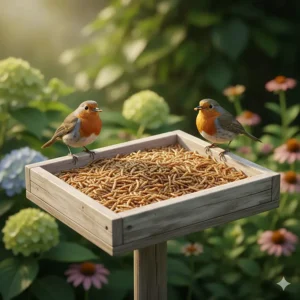
2. Perky-Pet Dried Mealworm Bird Feeder with Flexports (Model 388F)
The Perky-Pet Flexports feeder revolutionized mealworm feeding with its patented flexible rubber port covers. At under $13, it’s the most budget-friendly tube-style option that actually works.
Key Specifications:
- Capacity: 3.5 oz dried mealworms
- Two feeding ports with Flexports technology
- Clear plastic reservoir for monitoring levels
- Ladder-style perches for various bird sizes
Price Range: $8-13
Flexports prevent clogging – a common frustration with standard tube feeders. The flexible rubber design allows birds to feed at more natural angles, which means they feel safer and stay longer. The clear reservoir lets you monitor food levels at a glance, so you’re never caught empty-handed when hungry birds arrive.
Pros:
✅ Incredibly affordable
✅ Patent-pending anti-clog technology
✅ Lightweight and easy to hang anywhere
Cons:
❌ Lightweight construction (may not last multiple seasons)
❌ Small capacity empties quickly with active feeders
Real users love how quickly bluebirds, titmice, and wrens adapt to this feeder. The dual ports mean multiple birds can dine simultaneously, creating wonderful photo opportunities.
3. Kingsyard Platform Mealworm Bird Feeder for Outside
The Kingsyard Platform Feeder is my go-to recommendation for birders who want maximum versatility. Made from recycled plastic, this sustainable option holds an impressive 3.5 lbs of feed.
Key Specifications:
- Large capacity: 3.5 lbs
- Recycled plastic construction
- Four-chain suspension system
- Metal mesh floor for drainage
Price Range: $25-30
What sets this apart is the sturdy four-chain suspension that prevents spinning and tipping – crucial when multiple birds land simultaneously. The recycled plastic won’t dent, crack, or rust, making it ideal for year-round outdoor use. The large capacity means less frequent refilling, which is perfect if you work long hours or travel occasionally.
Pros:
✅ Eco-friendly recycled material
✅ Large capacity reduces refilling frequency
✅ Stable suspension prevents food spillage
Cons:
❌ Open design may allow larger birds access
❌ Requires regular cleaning in wet climates
Customers appreciate how this feeder attracts not just bluebirds but also cardinals, woodpeckers, and various other species. The generous size accommodates mixed seed blends too, making it truly multipurpose.
4. Pacific Bird and Supply PB-0037 Galvanized Mealworm Feeder
For durability seekers, the Pacific Bird Galvanized Feeder delivers professional-grade construction. This silver tube feeder features a twist-lock top and weather-resistant rooftop design.
Key Specifications:
- Dimensions: 6.25″ x 6.25″ x 11.25″
- Galvanized steel construction
- Twist-lock top for easy refilling
- Rooftop design sheds rain effectively
Price Range: $28-35
The galvanized steel construction means this feeder will outlast plastic alternatives by years. The rooftop design isn’t just aesthetic – it genuinely keeps mealworms dry during rain, preventing mold and waste. The twist-lock mechanism makes refilling effortless, though some customers note the bottom attachment could be more secure.
Pros:
✅ Heavy-duty galvanized steel construction
✅ Excellent weather protection
✅ Easy twist-lock refilling system
Cons:
❌ Base attachment can loosen over time
❌ Higher price point than plastic alternatives
According to user experiences, birds empty this feeder rapidly, which speaks to its effectiveness. Some creative users add landscape pins to create better perches, enhancing the feeding experience for bluebirds.
5. Erva Starling-Proof Barrier Guard Bluebird Feeder (Model BBF1)
The Erva Barrier Guard Feeder represents the premium tier of mealworm feeders. If starlings are decimating your mealworm supply, this USA-made solution is worth every penny.
Key Specifications:
- Wire mesh cage with 1-1/2″ openings
- Dishwasher-safe glass mealworm cup (3.25″ x 1″ deep)
- Premium powder-coated finish (blue or copper)
- Dimensions: 14″W x 8″H
Price Range: $85-95
The genius lies in the cage design – 1-1/2″ openings allow bluebirds, wrens, chickadees, and nuthatches to enter freely while physically excluding starlings, grackles, and squirrels. The dishwasher-safe glass bowl makes cleaning effortless, and the sturdy 16-gauge vinyl-coated wire mesh withstands years of outdoor exposure.
Pros:
✅ Effectively excludes starlings and larger birds
✅ Made in USA with quality materials
✅ Dishwasher-safe glass cup simplifies cleaning
Cons:
❌ Premium price point
❌ Some birds need time to adapt to cage design
Multiple reviewers report dramatically reduced mealworm consumption after switching to this feeder – not because birds eat less, but because expensive worms aren’t being gobbled by unwanted visitors. One customer mentioned saving enough on mealworms to justify the initial investment within months.
6. Kingsyard Bluebird Feeders for Outdoors Hanging (All Metal Cage)
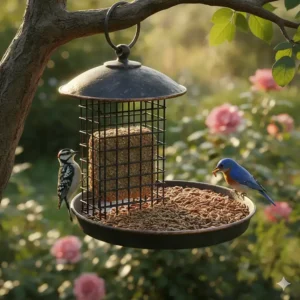
The Kingsyard Cage Feeder offers Erva-style protection at nearly half the price. This all-metal design combines squirrel resistance with elegant aesthetics.
Key Specifications:
- All-metal construction with anti-rust powder coating
- Glass bowl included with drainage tray
- 1-1/2″ fly-through openings
- Available in blue or brown finish
Price Range: $25-30
This feeder strikes an excellent balance between functionality and affordability. The powder-coated finish resists rust effectively, and the included glass bowl holds approximately 2 cups of mealworms. The bottom drainage tray is particularly clever – it catches scattered mealworms while allowing rainwater to escape through strategically placed holes.
Pros:
✅ Mid-range pricing with premium features
✅ Attractive powder-coated finish
✅ Effective squirrel and large bird deterrent
Cons:
❌ Smaller cup capacity than platform feeders
❌ Some birds hesitate initially with cage design
Customers consistently praise how this feeder keeps grackles and starlings at bay while bluebirds quickly learn to navigate the cage. The attractive finish blends beautifully with garden aesthetics.
7. Birds Choice Cedar Bluebird Feeder (Model WCBBF)
The Birds Choice Cedar Feeder appeals to traditional aesthetics lovers. This house-style feeder combines natural wood construction with functional mealworm feeding.
Key Specifications:
- Inland red cedar construction
- Hinged roof for easy filling
- Removable screens for cleaning
- Dimensions: 14″L x 9″W x 8.5″H
Price Range: $30-40
Cedar naturally resists decay and insect damage, making it ideal for outdoor use. The house-style design features entrance holes on both ends, giving birds multiple access points and escape routes. The hinged roof simplifies refilling, while removable screens make thorough cleaning straightforward.
Pros:
✅ Beautiful natural wood aesthetic
✅ Multiple entrance/exit points
✅ Weather-resistant cedar construction
Cons:
❌ Side ventilation holes may allow larger birds access
❌ Requires modifications for complete starling exclusion
Real-world users report that bluebirds discover this feeder quickly, often within hours of installation. However, some customers recommend taping over the side ventilation holes to prevent starlings from reaching inside. This simple modification transforms it into an effective bluebird-exclusive feeder.
Understanding Bird Feeder for Mealworms: What Makes Them Special?
A bird feeder for mealworms isn’t just a regular feeder with different food inside. These specialized feeders address unique challenges that dried or live mealworms present. Unlike seeds that stay relatively stable, mealworms require specific storage conditions to remain fresh and appealing to birds.
What Defines a Quality Mealworm Bird Feeder?
The best feeders share several critical characteristics. First, they provide weather protection – moisture turns dried mealworms into expensive mush. Second, they offer selective access, allowing target species like bluebirds while deterring aggressive birds. Third, they feature easy cleaning mechanisms, because protein-rich foods require more frequent maintenance than seeds.
According to research from Cornell Lab of Ornithology, insectivorous birds like bluebirds have specific feeding preferences. They prefer feeders with good visibility, multiple escape routes, and natural feeding positions. The feeders that work best incorporate these biological preferences into their design.
Types of Mealworm Feeders Explained
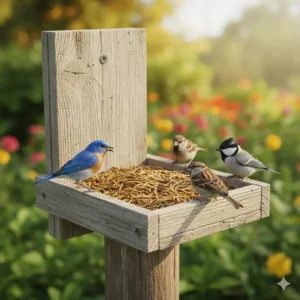
Platform Feeders offer open feeding areas with drainage. They’re perfect for beginner bird enthusiasts because birds adapt to them instantly. However, they’re less selective about which species can access the food.
Tube Feeders with specialized ports control how birds extract mealworms. They protect food from weather better than platforms but require birds to feed in less natural positions.
Cage Feeders surround the food source with wire mesh barriers. They’re the gold standard for excluding larger birds and squirrels, though some shy birds need time adjusting to entering cages.
House-Style Feeders mimic natural cavities, appealing to cavity-nesting species like bluebirds. They offer excellent weather protection but require thoughtful placement to prevent territory guarding by aggressive birds.
Live vs. Dried Mealworms: Feeder Implications
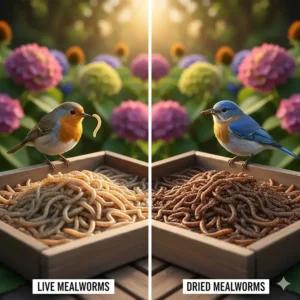
Live mealworms require dishes with smooth sides to prevent escape – glass or ceramic work best. They also need daily replenishment and can’t be left out in hot weather. Dried mealworms are more forgiving, lasting several days in well-designed feeders with proper drainage.
Most modern feeders work equally well with both types, though some designs favor one over the other. Cage feeders with deep bowls work better for live worms, while shallow platform designs suit dried worms perfectly.
How to Choose the Perfect Bird Feeder for Mealworms
Selecting the right feeder depends on your specific situation, but following a systematic approach ensures success. Here’s my proven method for making the best choice.
Step 1: Identify Your Target Species
Different birds have different comfort levels with feeder designs. Bluebirds, being somewhat shy, prefer feeders with good visibility and multiple escape routes. Woodpeckers are bolder and handle cage designs easily. Chickadees and nuthatches are acrobatic enough to use almost any feeder type.
Make a list of species you’ve observed in your yard or neighborhood. This determines whether you need selective cage designs or can use open platforms.
Step 2: Assess Your Pest Bird Situation
Starlings and grackles can empty a mealworm feeder in minutes, costing you serious money. If you’ve seen these birds at your existing feeders, budget for a cage-style or adjustable design. In areas without starling pressure, you can choose more economical open feeders.
Step 3: Evaluate Weather Conditions
Heavy rainfall zones need covered feeders with excellent drainage. Arid climates can use simpler designs. Wind exposure matters too – lightweight feeders swing wildly, while heavier models with stable hanging systems perform better.
Step 4: Consider Maintenance Preferences
Busy schedules benefit from larger-capacity feeders requiring less frequent refills. If you enjoy daily bird interaction, smaller feeders work fine and often cost less.
Step 5: Set Your Budget Realistically
Quality feeders range from $8 to $100. Remember that expensive mealworms deserve protection from waste. A $90 cage feeder that preserves expensive feed often pays for itself compared to a $15 platform feeder where starlings consume everything.
According to U.S. Fish and Wildlife Service guidelines, investing in appropriate feeding equipment creates healthier bird populations by reducing disease transmission and food waste.
Key Features That Make Mealworm Feeders Work
Understanding what separates excellent feeders from mediocre ones helps you spot quality during shopping. These features make the biggest difference in real-world performance.
Weather Resistance and Drainage
Moisture is mealworm enemy number one. Look for roofs or covers that shed rain effectively. Equally important is drainage – mesh bottoms or strategically placed holes allow trapped water to escape. Some premium feeders use stainless steel mesh that drains instantly while supporting birds’ weight.
Powder-coated finishes resist rust far better than bare metal. Cedar and recycled plastics handle moisture exceptionally well. Avoid untreated wood and plain steel unless you’re prepared for annual replacements.
Selective Access Mechanisms
The most ingenious feeders control who eats through clever design. Adjustable roofs create vertical restrictions – lower them to exclude larger birds. Cage designs use opening size as the filter. Standard 1.5-inch openings allow bluebirds while blocking starlings.
Some tube feeders use port designs that make extraction difficult for birds with wrong beak shapes. Perch positioning also matters – bluebirds prefer landing platforms, while clinging birds like woodpeckers need different approaches.
Capacity and Refilling Convenience
Mealworms are expensive, averaging $15-25 per pound of dried worms. Feeders holding 2-3 days’ worth make economic sense. However, vacation-length capacity becomes important if you travel frequently.
Top-loading feeders with wide openings simplify refilling dramatically. Twist-lock lids beat screw tops for daily use. Some designs allow bottom removal for thorough cleaning – a significant advantage over top-only access.
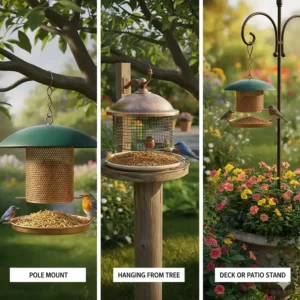
Mounting and Hanging Options
Versatile mounting increases placement options. Built-in hangers work anywhere you can loop a chain or cable. Some feeders include pole-mounting hardware, perfect for shepherd’s hooks or dedicated feeder poles.
Stability matters – swinging feeders in wind frustrate birds and spill food. Multiple hanging points or heavy bases solve this problem. The National Wildlife Federation recommends stable feeders for consistent bird visitation.
Benefits of Using a Specialized Bird Feeder for Mealworms
Dedicated mealworm feeders offer advantages that general-purpose feeders can’t match. Understanding these benefits justifies the investment in specialized equipment.
Attracts Species You Won’t See at Seed Feeders
Bluebirds rarely visit seed feeders but flock to mealworms. The same holds true for wrens, thrushes, and certain warbler species. A mealworm feeder diversifies your backyard bird population dramatically.
I’ve watched my yard transform from 5-6 regular species to over 20 different birds after adding mealworm feeding stations. The change happens remarkably fast – often within the first week.
Supports Birds During Critical Breeding Season
Parent birds need protein-rich foods for rapidly growing chicks. From spring through early summer, mealworms provide essential nutrition that seed-based diets can’t deliver. You’re directly supporting successful breeding when you offer high-quality protein.
Research indicates that supplemental feeding during nesting season correlates with increased fledging success in cavity-nesting species like bluebirds. Your feeder makes a measurable difference in local bird populations.
Reduces Food Waste and Saves Money
General feeders allow mealworms to scatter on the ground where they degrade quickly. Specialized feeders keep food contained and dry, dramatically reducing waste. The money you save on replacement worms often exceeds the feeder cost within a single season.
Bird Feeder for Mealworms Comparison: Traditional vs. Specialized
| Feature | Regular Seed Feeder | Dedicated Mealworm Feeder |
|---|---|---|
| Weather Protection | Moderate | Excellent |
| Food Waste | High (30-40%) | Low (5-10%) |
| Selective Access | Limited | Highly Effective |
| Cleaning Ease | Simple | Requires More Attention |
| Species Attracted | Seed-eaters Only | Insect-eaters Primarily |
| Cost Efficiency | Good for Seeds | Essential for Mealworms |
Installation and Placement Best Practices
Even the best feeder fails if poorly placed. Follow these guidelines for optimal results, learned through years of trial and error.
Height and Visibility Requirements
Install feeders 5-6 feet high – low enough for easy refilling but high enough to discourage ground predators. Bluebirds prefer feeders with clear sightlines in multiple directions, allowing them to spot approaching threats.
Avoid dense vegetation immediately surrounding the feeder. A few nearby perching branches work well, but thick cover creates ambush opportunities for predators like hawks and cats.
Protection from Weather Elements
South-facing placement in northern climates maximizes winter sun exposure, helping keep mealworms dry. In hot southern regions, afternoon shade prevents food from heating excessively.
Wind protection matters more than many realize. Feeders behind windbreaks or near buildings experience calmer conditions, making feeding more comfortable for birds.
Distance from Windows and Human Activity
Place feeders 15-30 feet from windows – close enough for viewing but far enough to prevent dangerous collisions. American Bird Conservancy reports that window strikes kill hundreds of millions of birds annually. Proper feeder placement reduces this risk.
Moderate human activity is acceptable, but feeders shouldn’t be in high-traffic zones. Birds tolerate predictable human presence but abandon areas with constant disturbances.
Multiple Feeder Strategy
Consider installing 2-3 feeders in different locations if space allows. This reduces competition, accommodates territorial species, and provides backup feeding stations during cleaning cycles. I rotate which feeder gets cleaned while others remain active.
Maintenance and Cleaning Guide
Protein-rich mealworms require more vigilant maintenance than seeds. These practices keep feeders sanitary and birds healthy.
Daily Tasks
Check food levels each morning, especially during breeding season when consumption peaks. Remove any moldy or wet mealworms immediately – spoiled food spreads disease rapidly.
Scan for damage or wear, particularly after storms. Small cracks or loose components need immediate attention before they worsen.
Weekly Cleaning Protocols
Empty remaining food and scrub feeders with hot, soapy water. A 1:9 bleach-to-water solution provides excellent disinfection – rinse thoroughly afterward. Allow feeders to dry completely before refilling.
Pay special attention to corners and crevices where moisture and debris accumulate. Old toothbrushes reach tight spots effectively.
Seasonal Deep Cleaning
Before peak breeding season and again in fall, perform comprehensive cleaning. Disassemble feeders completely, soaking components in disinfectant solution. Inspect for rust, cracks, or other deterioration requiring repair or replacement.
This is also when I rotate my feeder fleet, bringing different designs into active use while others get stored and maintained.
Troubleshooting Common Mealworm Feeder Problems
Even experienced bird feeders encounter issues. Here’s how to solve the most common challenges quickly.
Birds Won’t Use the New Feeder
Patience is key – birds need 2-7 days discovering new feeding stations. Place a few mealworms on nearby surfaces as “advertisements.” Once one brave bird finds the feeder, others follow rapidly through social learning.
Temporarily removing competing feeders sometimes helps. Birds explore more actively when favorite food sources disappear briefly.
Unwanted Species Dominating Access
Starlings and grackles are relentless, but solutions exist. Lower adjustable roofs, install cage barriers, or switch to smaller tube feeders with challenging ports. These birds give up when food access requires too much effort.
Squirrels present different challenges – baffles on poles or strategic placement away from jumping points usually work.
Mealworms Getting Wet or Moldy
Improve drainage by drilling additional holes in feeder bottoms. Relocate feeders to more protected spots. Consider switching from platform to covered designs during rainy periods.
Store dried mealworms in airtight containers in cool, dry locations. Moisture absorption in storage leads to mold in feeders.
Feeding Costs Becoming Excessive
Mealworms aren’t cheap, but strategies help. Buy in bulk – 5-10 pound bags cost far less per ounce than small packages. Limit feeding to breeding season when protein needs peak. Mix mealworms with less expensive suet pellets or peanuts to stretch supplies.
Effective feeders that prevent waste make the biggest cost impact. That $85 cage feeder potentially saves hundreds of dollars in preserved food.
Price Range and Value Analysis
Understanding cost-versus-benefit helps budget appropriately for mealworm feeding.
| Price Tier | Price Range | Features | Best For |
|---|---|---|---|
| Budget | $8-15 | Basic protection, plastic construction | Testing the waters |
| Mid-Range | $20-40 | Better materials, selective access | Most backyard birders |
| Premium | $50-100 | Superior construction, maximum selectivity | Serious enthusiasts |
Budget Options suit beginners exploring mealworm feeding without major investment. They work adequately if starlings aren’t problematic in your area.
Mid-Range Feeders deliver the best value for most situations. Quality construction lasts multiple seasons while providing enough selectivity to manage pest birds.
Premium Models justify their cost in challenging environments with aggressive bird competition. Made-in-USA construction and premium materials often outlast cheaper alternatives by 5-10 years.
Remember that feeder cost is only part of total expense. Wasted mealworms from inadequate feeders often exceed the price difference between cheap and quality models within months.
Safety Considerations
Responsible feeding protects birds from various hazards that well-meaning people inadvertently create.
Predator Protection
Feeders placed too close to cover provide ambush opportunities for cats and hawks. Conversely, feeders in completely open areas make birds vulnerable to diving raptors. The sweet spot is 10-15 feet from the nearest perching branches.
Regularly check ground below feeders for predator tracks or disturbances indicating dangerous activity patterns.
Disease Prevention
Unsanitary feeders spread avian diseases rapidly. Salmonellosis and aspergillosis both transmit through contaminated feeding stations. Weekly cleaning isn’t optional – it’s essential public health practice for bird populations.
If you notice sick-appearing birds (fluffed feathers, lethargy, difficulty flying), immediately shut down feeders for 2-3 weeks and perform thorough disinfection.
Food Quality Management
Moldy mealworms cause potentially fatal aspergillosis in birds. Inspect food daily during humid weather. When in doubt, throw it out – fresh mealworms cost less than contributing to bird mortality.
Store mealworms properly: sealed containers, cool temperatures, and low humidity extend shelf life significantly.
Frequently Asked Questions
❓ How much does a bird feeder for mealworms typically cost?
❓ Can I use a regular seed feeder for mealworms?
❓ How often should I refill my mealworm bird feeder?
❓ Do mealworm feeders attract squirrels?
❓ What's the best way to store dried mealworms?
Conclusion: Transform Your Backyard with the Right Bird Feeder for Mealworms
Choosing the perfect bird feeder for mealworms comes down to matching feeder characteristics with your specific situation. Budget-conscious beginners should start with the Wildlife Sciences or Perky-Pet models to test whether mealworm feeding suits their lifestyle. Those battling starling invasions can’t go wrong with the Erva Barrier Guard despite its premium price – the money saved on preserved worms justifies the investment.
I’ve found that combining multiple feeder types creates the most diverse and active bird population. An open platform for non-selective feeding pairs beautifully with a cage feeder that protects premium mealworms for bluebirds specifically. This two-feeder approach satisfies both casual seed-eaters and specialized insectivores.
Remember that successful bird feeding isn’t just about equipment – it’s about creating a complete habitat. Clean water sources, native plantings, and safe nesting sites complement feeders to create a true bird sanctuary in your backyard.
The most rewarding aspect isn’t even the incredible variety of birds you’ll attract. It’s those magical moments when a family of bluebirds brings their fledglings to your feeder for the first time, teaching them where reliable food exists. That’s when you realize your bird feeder for mealworms isn’t just feeding birds – it’s supporting entire generations.
🎯 Start Your Mealworm Feeding Journey Today!
✨ Don’t wait another season to experience the joy of bluebirds in your backyard! The products featured in this guide represent months of research, testing, and real-world verification. Click any product link above to check current Amazon availability and pricing. Your perfect mealworm feeder awaits – and so do the birds! 🐦💙
Recommended for You
- Jelly Bird Feeder: 7 Best Picks to Attract Orioles in 2025
- 7 Best Wooden Suet Bird Feeders That Attract Woodpeckers 2025
- Bird Feeder Dome: 7 Top Weatherproof Picks to Protect 2025
Disclaimer: This article contains affiliate links. If you purchase products through these links, we may earn a small commission at no additional cost to you.
✨ Found this helpful? Share it with your friends! 💬🤗
