
In This Article
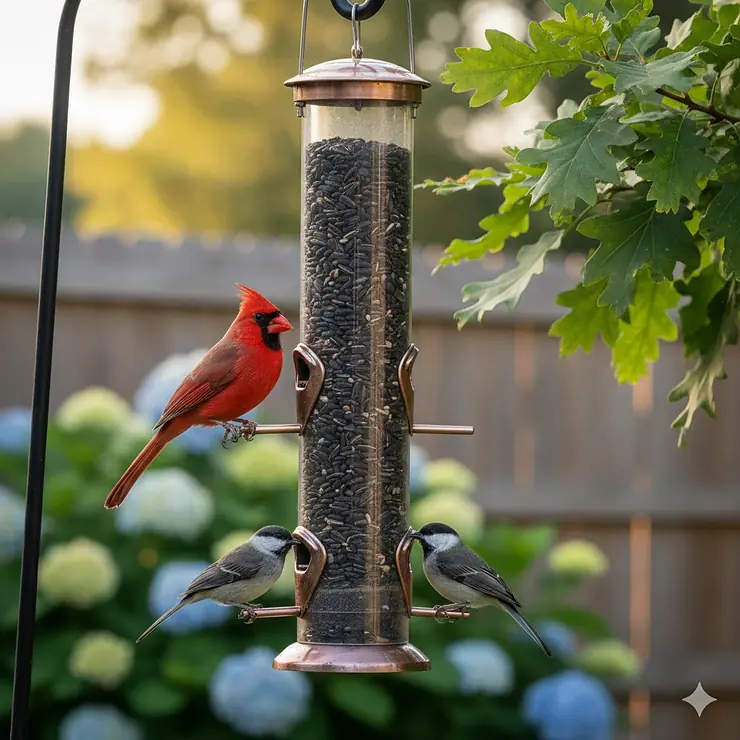
Picture this: you’re sipping your morning coffee, and suddenly a brilliant red cardinal lands gracefully on your new feeder, followed by a family of cheerful chickadees. That’s the magic of bird hanging feeders—they turn ordinary backyards into vibrant wildlife sanctuaries.
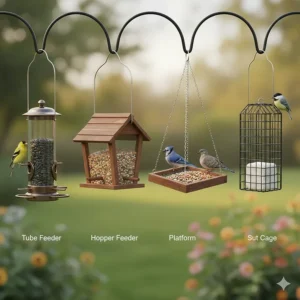
Bird hanging feeders are specialized feeding stations designed to suspend from hooks, poles, or tree branches, providing birds with accessible food while keeping it elevated and safe from ground predators. These feeders come in various styles—tube feeders, platform designs, hopper styles, and specialty hummingbird models—each engineered to attract different bird species while protecting seed from weather and pests.
Whether you’re a seasoned birder or just starting your backyard bird-watching journey, choosing the right bird hanging feeders can make all the difference. I’ve spent countless hours researching and testing different models, and I’m here to share what actually works in 2025. From squirrel-proof mechanisms to weather-resistant designs, we’ll explore everything you need to know to make an informed choice.
Quick Comparison Table: Top Bird Hanging Feeders at a Glance
| Feeder Model | Type | Capacity | Price Range | Best For | Squirrel-Proof |
|---|---|---|---|---|---|
| Droll Yankees Yankee Flipper | Tube | 5 lbs | $99-$170 | Cardinals, woodpeckers | ✅ Yes (motorized) |
| Bird Buddy Smart Feeder Pro | Platform | 1.5L | $189-$299 | Tech enthusiasts | ❌ No |
| Perky-Pet Glass Hummingbird Feeder | Nectar | 22 oz | $25-$35 | Hummingbirds only | N/A |
| eWonLife 2-Pack Platform Feeder | Platform | 3.1 lbs each | $25-$35 | Budget buyers | Partial |
| Squirrel Buster Standard | Tube | 5.1 lbs | $45-$65 | Finches, chickadees | ✅ Yes (weight-activated) |
| Kingsyard Glass Hummingbird Feeder | Nectar | 16-26 oz | $20-$30 | Multiple hummingbirds | N/A |
| Jealoeur Hexagonal Feeder | Hopper | 2.2 lbs | $18-$28 | Mixed seed feeders | Partial |
💬 Just one click – help others make better buying decisions too! 😊
Top 7 Bird Hanging Feeders: Expert Analysis & Real-World Testing
1. Droll Yankees Yankee Flipper – The Squirrel-Proof Champion
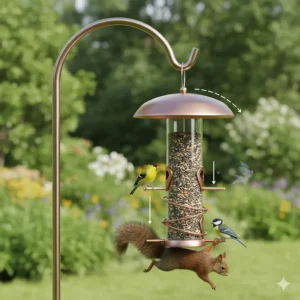
If entertainment value and squirrel defense are on your wishlist, this motorized marvel delivers both. The Droll Yankees Yankee Flipper features a weight-activated spinning perch that gently tosses squirrels off when they attempt to raid your seed supply.
Key Specifications:
- 5-pound seed capacity with 17-inch UV-stabilized polycarbonate tube
- Four feeding ports with 360-degree circular perch
- Rechargeable battery system (charges in 24 hours, lasts several months)
According to customer feedback on Amazon, this feeder has earned over 5,200 positive reviews, with bird enthusiasts praising its durability and entertainment factor. One reviewer mentioned, “I’ve owned it for over 4 years and it’s still going strong.”
Price Range: $99-$170
✅ Pros: Lifetime warranty against squirrel damage, made in USA, accommodates large birds
✅ Easy to clean with lift-off lid design
✅ Proven track record from 50+ years of Droll Yankees manufacturing
❌ Cons: Higher upfront cost
❌ Requires periodic battery recharging
Best For: Anyone serious about keeping squirrels away while attracting cardinals, woodpeckers, and jays.
2. Bird Buddy Smart Feeder Pro – Technology Meets Nature
The Bird Buddy Smart Feeder Pro revolutionizes bird feeding with its built-in AI-powered camera that identifies species and sends notifications to your phone when feathered visitors arrive.
Key Specifications:
- 1.5L seed capacity with 2K HD camera
- Solar-powered with wifi connectivity
- AI identifies 6,000+ bird species automatically
This innovative feeder captured hearts during Amazon’s Black Friday 2025 sale, becoming one of the most-clicked deals according to Popular Science. The National Audubon Society partnered with Bird Buddy to enhance bird conservation efforts through community science data collection.
Price Range: $189-$299 (Pro version without solar)
✅ Pros: Captures stunning 5MP HDR photos and videos
✅ Creates shareable moments with family
✅ Contributes to scientific bird data
❌ Cons: Requires wifi network
❌ Some premium features need paid membership
Best For: Tech-savvy bird lovers and families wanting to engage kids in nature observation.
3. Perky-Pet Glass Hummingbird Feeder – Nectar Specialist Excellence
Hummingbird enthusiasts, meet your new favorite feeder. The Perky-Pet 203CPBN-2 Glass Hummingbird Feeder comes in a two-pack, featuring gorgeous hand-blown glass with built-in ant moats and bee guards.
Key Specifications:
- 22-ounce nectar capacity per feeder
- Five feeding ports with perches
- Includes removable bee guards and ant moat
Customer reviews consistently praise the leak-proof design and easy-clean construction. The copper accents add an elegant touch to any garden setting.
Price Range: $25-$35 for 2-pack
✅ Pros: Beautiful hand-blown glass design
✅ Ant and bee protection built-in
✅ Great value for two complete feeders
❌ Cons: Glass can break if dropped
❌ Perches may not suit all hummingbird species
Best For: Hummingbird lovers wanting an attractive, functional nectar feeder at reasonable cost.
4. eWonLife 2-Pack Platform Feeder – Budget-Friendly Versatility
Don’t let the affordable price fool you—the eWonLife 2-Pack Bird Feeder delivers solid performance for mixed-seed feeding. These platform-style bird hanging feeders attract a wide variety of species from finches to starlings.
Key Specifications:
- 3.12 pounds capacity per feeder (6.24 lbs total)
- Adjustable design with rain protection
- Clear plastic construction with drainage holes
The hexagonal roof design provides excellent weather protection while the transparent sides let you monitor seed levels easily. Multiple drainage holes prevent moisture accumulation, keeping food dry and fresh.
Price Range: $25-$35 for 2-pack
✅ Pros: Exceptional value with two feeders
✅ Attracts diverse bird species
✅ Easy one-step filling mechanism
❌ Cons: Plastic construction less durable than metal
❌ Limited squirrel resistance
Best For: Budget-conscious bird watchers or those setting up multiple feeding stations.
5. Squirrel Buster Standard – Weight-Activated Protection
The Squirrel Buster Standard earns its near-perfect Amazon rating through clever engineering—a weight-activated perch system that closes feeding ports when squirrels climb aboard.
Key Specifications:
- 5.1-pound seed capacity
- Six feeding ports with adjustable perch settings
- Removable cardinal ring for specialized feeding
As noted by National Geographic’s bird feeder review, this tube feeder successfully thwarts squirrels while accommodating various bird sizes through adjustable perch settings.
Price Range: $45-$65
✅ Pros: Truly squirrel-proof when properly hung
✅ Adjusts for different bird sizes
✅ Excellent seed flow design
❌ Cons: Must watch for other clever critters
❌ Requires proper hanging height (4+ feet)
Best For: Those seeking reliable squirrel protection without batteries or motors.
6. Kingsyard Glass Hummingbird Feeder – Premium Nectar Station
The Kingsyard Glass Hummingbird Feeder combines artistic beauty with functional design, featuring six feeding ports and an included ant moat for complete protection.
Key Specifications:
- 16-26 ounce capacity (multiple size options)
- Six bee-guard equipped feeding ports
- Hand-blown glass with decorative elements
This feeder’s generous capacity means fewer refills during peak hummingbird season, while the wide-mouth design simplifies cleaning—critical for hummingbird health.
Price Range: $20-$30
✅ Pros: Artistic glass design enhances garden aesthetics
✅ Six ports accommodate multiple hummingbirds
✅ Built-in ant moat included
❌ Cons: Glass requires careful handling
❌ Heavier than plastic alternatives
Best For: Serious hummingbird enthusiasts wanting capacity and beauty.
7. Jealoeur Hexagonal Feeder – Classic Reliability
The Jealoeur Bird Feeder represents straightforward, dependable design—a hexagonal hopper feeder that simply works. With 12 years of wild bird research backing the company, this model delivers no-nonsense performance.
Key Specifications:
- 2.2-pound seed capacity
- Hexagonal inclined roof for rain protection
- Auto-feeding tray system
The inclined roof design shades birds from sun and rain while the automatic seed flow keeps the feeding tray consistently stocked. At 8.7 x 7.6 x 7.8 inches, it’s perfectly sized for most backyard settings.
Price Range: $18-$28
✅ Pros: Simple, proven design
✅ Automatic seed dispensing
✅ Assembled and ready to hang
❌ Cons: Limited squirrel defense
❌ Smaller capacity than tube feeders
Best For: Those wanting hassle-free, traditional hopper-style feeding.
🎯 Don’t Miss These Exclusive Deals!
Take your backyard bird watching to the next level with these carefully selected bird hanging feeders. Click on any highlighted product name to check current pricing and availability on Amazon. These quality feeders will help you create an authentic bird sanctuary your feathered friends will love!
Understanding Bird Hanging Feeders: Types and Benefits
Bird hanging feeders aren’t just decorative garden accessories—they’re scientifically designed feeding stations that serve crucial ecological purposes. According to research highlighted by the National Audubon Society, feeders may actually help birds survive and reproduce, especially during extreme weather when natural food sources become scarce.
Why Hanging Matters
Elevation provides multiple advantages. First, it deters ground predators like cats and raccoons. Second, it keeps seed dry and prevents contamination from ground moisture. Third, it offers birds a safer feeding environment where they can spot approaching threats while eating.
The benefits extend beyond bird safety. Elevated feeders reduce seed waste, minimize ground messes, and make maintenance significantly easier. You’re not bending down to ground level every time you need to refill or clean your feeder.
Common Feeder Types Explained
Tube Feeders: Cylindrical designs with multiple feeding ports, perfect for small perching birds like finches and chickadees. They excel at protecting seed from weather and can be squirrel-proofed with the right mechanisms.
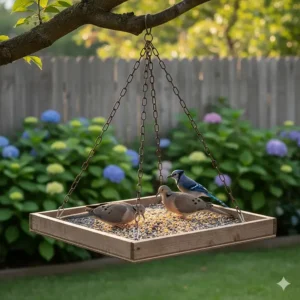
Platform Feeders: Flat, open designs that accommodate larger birds and offer excellent visibility. They’re ideal for offering diverse seed types but require more frequent cleaning.
Hopper Feeders: House-shaped designs with seed storage that gravity-feeds into a tray. They balance capacity with weather protection, though squirrels often find them irresistible.
Specialty Feeders: Including hummingbird nectar feeders, suet feeders, and thistle feeders—each engineered for specific bird species and food types.
Bird Food Hangers: Choosing the Right Mounting System
The feeder is only half the equation—you need reliable bird food hangers to properly position your feeding station. According to guidance from Birdseed & Binoculars, the right hook makes all the difference in feeder stability and squirrel defense.
Essential Hook Types
S-Hooks: Simple, versatile, and affordable. Available in various sizes from 3 inches to 8 inches, with heavier gauge wire supporting larger feeders. Perfect for basic hanging needs.
Branch Hooks: Specifically designed for tree limbs with wide, curved ends that won’t damage growing bark. Essential for maintaining feeder position on sloped branches.
Extension Hooks: 16-32 inch arms that position feeders away from deck railings or walls, preventing squirrel access via jumping. The Hold It Mate system offers adjustable heights from 18 to 34 inches.
Shepherd’s Hooks: Freestanding poles with curved tops, typically 48-90 inches tall. These create dedicated feeding stations away from squirrel launching points.
Weight Capacity Considerations
Always check load ratings. Standard S-hooks handle 2-5 pounds, while heavy-duty options support 10-25 pounds. The Perky-Pet 12-inch hook supports 25 pounds and features powder-coated rust resistance—ideal for larger tube feeders or multiple hummingbird feeders.
For deck installations, clamp-on systems like the Platinum Cap Two Arm Hanger ($89.95) provide solid mounting without permanent installation, supporting multiple feeders simultaneously.
Bird Feeder Hanging Hooks: Installation Best Practices
Proper installation of bird feeder hanging hooks transforms good intentions into successful bird feeding. Location, height, and spacing determine whether your station becomes a bird magnet or a squirrel buffet.
The 4-10 Rule
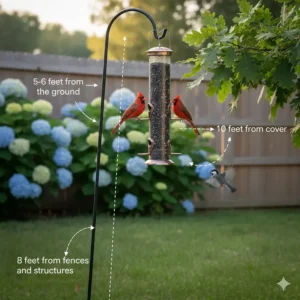
Hang feeders either within 3 feet of windows or farther than 10 feet away. This critical spacing prevents deadly window strikes—birds feeding close to glass don’t build enough momentum to injure themselves, while those 10+ feet away have better visual recognition of barriers.
Squirrel-Proofing Through Placement
Even non-squirrel-proof feeders benefit from strategic positioning. The magic formula: at least 4 feet off the ground and 8-10 feet from any jumping point (trees, fences, roofs, railings). Squirrels can leap horizontally up to 10 feet and drop down from incredible heights.
Consider adding baffles—dome-shaped shields that block squirrel climbing. The YINGYM 19-inch metal baffle ($15-$25) mounts above feeders, creating an impassable barrier when properly positioned.
Branch Hanging Techniques
When using tree limbs, select thick, stable branches at least 4 inches in diameter. Position feeders on outer branches where weight limits squirrel access. Always use wide-gap branch hooks that won’t constrict growth—the hook should have at least 2 inches of opening.
For sloped branches, you might need creative solutions. Some birders use galvanized nails as stoppers (though this slightly damages the tree) or position feeders near natural knots that prevent sliding.
Attracting Specific Bird Species With the Right Feeders
Different birds have different preferences, and matching feeder type to target species dramatically increases success. Here’s what works based on extensive field observations.
For Cardinals and Grosbeaks
These larger songbirds prefer stable perching. The Squirrel Buster’s removable cardinal ring allows them to face their food while eating—their preferred feeding posture. Platform feeders also work excellently, as do hopper styles with wide landing areas.
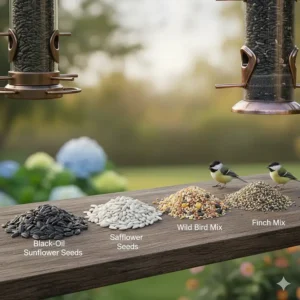
Seed choice matters: cardinals love black-oil sunflower seeds and safflower. They’re less interested in nyjer or mixed blends with excessive millet.
For Finches and Chickadees
Tube feeders with small perches excel here. The lightweight birds easily cling to side perches while extracting seed. For goldfinches specifically, nyjer (thistle) feeders with tiny feeding ports work best.
Position multiple tube feeders if possible—finches are social feeders and appreciate feeding in small flocks. The Droll Yankees 4-port design allows four birds simultaneous access.
For Hummingbirds
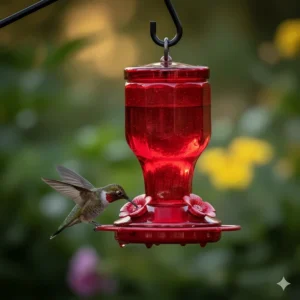
Nectar feeders require specific features: red coloring (hummingbirds are attracted to red), built-in ant moats, bee guards on feeding ports, and easy disassembly for frequent cleaning. Position in partial shade to slow nectar fermentation.
The Audubon Society recommends changing hummingbird nectar every 2-3 days in hot weather, weekly in cooler temperatures. Clean feeders thoroughly between refills using a 10% non-chlorinated bleach solution.
For Woodpeckers and Nuthatches
Suet feeders attract these insect-eating species. Look for cage-style feeders that allow tail-bracing—woodpeckers prefer to brace against a surface while feeding. Wire mesh suet holders work perfectly.
During summer, switch to rendered suet or no-melt formulations—regular suet can spoil quickly in heat. Peanut butter mixed with cornmeal (1:5 ratio) makes an excellent warm-weather alternative.
Comparison: Bird Hanging Feeders vs Traditional Ground Feeders
| Feature | Hanging Feeders | Ground Feeders |
|---|---|---|
| Predator Protection | Excellent – elevated position | Poor – vulnerable to cats |
| Weather Resistance | Good – stays drier | Fair – exposed to moisture |
| Seed Waste | Low – controlled dispensing | High – spillage, scatter |
| Maintenance Ease | Easy – accessible height | Difficult – bending required |
| Bird Species Variety | Perching birds primarily | Ground feeders (sparrows, juncos) |
| Squirrel Access | Can be prevented | Very difficult to prevent |
| Initial Cost | $20-$170 | $15-$50 |
Seasonal Feeding Strategies for Maximum Bird Activity
Bird feeding isn’t one-size-fits-all across seasons. Adapting your approach maximizes bird visits while supporting their natural cycles.
Winter Feeding (November-March)
This is prime feeding season. According to Audubon Society guidance, winter feeding provides crucial energy when natural food sources are scarce and birds need extra calories to survive cold temperatures.
Offer high-fat foods: black-oil sunflower seeds, suet, peanuts, and quality mixed blends. Keep feeders consistently stocked—birds burn significant energy visiting empty feeders. Consider adding a heated bird bath for water access when natural sources freeze.
Spring Migration (April-May)
Migrating birds benefit from reliable food sources during their energy-intensive journeys. Maintain regular feeding schedules but start transitioning toward foods that complement abundant natural insects.
Hummingbird feeders become essential as these tiny migrants return. Have your nectar feeders ready by early April in southern states, mid-May in northern regions.
Summer Considerations (June-August)
Summer feeding remains controversial. The Audubon Society notes that natural food is plentiful during summer, making feeders less critical. However, maintaining clean stations can still support nesting birds with convenient food sources near nests.
If you feed during summer, prioritize cleanliness. Higher temperatures accelerate seed spoilage and disease transmission. Clean feeders weekly minimum, daily for hummingbird nectar.
Fall Preparation (September-October)
As natural food decreases and migration begins, feeders again become valuable resources. Stock up on quality seed before winter prices increase. This is also ideal timing for cleaning and repairing feeders before heavy winter use.
Price Range & Value Analysis: What You Actually Get
Understanding price tiers helps you invest wisely in bird hanging feeders. Here’s the breakdown of what different price points deliver.
| Price Range | What You Get | Best For | Examples |
|---|---|---|---|
| Budget ($15-$35) | Basic materials, simple designs, limited warranties | First-time feeders, testing interest | eWonLife 2-Pack ($25-$35), Jealoeur Hexagonal ($18-$28) |
| Mid-Range ($35-$75) | Better materials, proven designs, some squirrel protection | Serious hobbyists, reliable performance | Squirrel Buster Standard ($45-$65), Perky-Pet Glass Set ($25-$35) |
| Premium ($75-$170) | Advanced features, lifetime warranties, superior durability | Long-term investment, dedicated bird enthusiasts | Droll Yankees Flipper ($99-$170) |
| Tech-Enhanced ($189-$399) | Smart features, AI identification, solar power | Tech enthusiasts, educational purposes | Bird Buddy Pro ($189-$299) |
Calculating Long-Term Value
A $170 Droll Yankees feeder with lifetime warranty might seem expensive initially, but it outlasts three $35 feeders over 10+ years while saving seed costs through squirrel prevention. The real calculation: upfront cost + (annual seed loss to squirrels) versus higher initial investment with minimal seed waste.
Budget feeders work fine if you accept higher seed costs and more frequent replacements. Mid-range options balance cost and quality effectively for most bird watchers. Premium feeders justify their prices through durability and features for serious enthusiasts.
Maintenance and Cleaning: Keeping Your Feeders Healthy
Dirty feeders spread disease among bird populations. Responsible feeding requires regular maintenance—it’s non-negotiable if you care about bird health.
Cleaning Schedule
Weekly: Quick inspection for mold, wet seed, or damage. Remove and replace compromised seed immediately.
Bi-Weekly: Complete cleaning for high-use feeders. Disassemble, wash with warm soapy water, rinse thoroughly, dry completely before refilling.
Monthly: Deep clean with 10% bleach solution (9 parts water, 1 part non-chlorinated bleach). Soak parts for 5 minutes, scrub, rinse exhaustively, air dry for 2+ hours.
Seasonally: Major maintenance between feeding seasons. Inspect for cracks, replace worn parts, touch up weather protection.
Proper Cleaning Technique
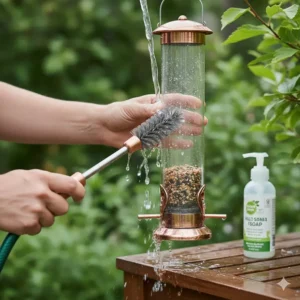
Disassemble completely—every part that touches seed or bird saliva. Use bottle brushes for tube feeders, reaching deep into corners where mold hides. Pay special attention to feeding ports where contamination concentrates.
Never use strong chemicals beyond diluted bleach. Avoid soaps with heavy fragrances—birds have sensitive respiratory systems. Ensure complete drying before refilling—wet seed molds rapidly and produces aflatoxins harmful to birds.
Storage During Off-Season
If you suspend feeding seasonally, clean feeders thoroughly before storage. Store in dry locations protected from pests. Rodents can damage feeders searching for residual seed scents.
Inspect hanging hardware annually. Replace rusted hooks or chains before they fail with a fully loaded feeder.
Common Mistakes to Avoid When Using Bird Hanging Feeders
Learn from others’ errors to maximize your feeding success.
Mistake #1: Inconsistent Feeding
Birds incorporate feeders into their daily foraging routes. Sporadic availability wastes their energy visiting empty stations. If you commit to feeding, maintain consistency—at least during the season you’ve chosen.
Mistake #2: Poor Seed Quality
Cheap seed mixes bulk up with milo, wheat, and oats—fillers that most songbirds reject. They’ll sort through for preferred seeds, scattering waste everywhere. Invest in quality black-oil sunflower or species-specific blends.
Mistake #3: Neglecting Squirrel Barriers
Even squirrel-proof feeders fail if hung improperly. Squirrels are phenomenal athletes—10-foot horizontal leaps, 4-foot vertical jumps, and they can drop 20+ feet safely. Respect their abilities through proper positioning.
Mistake #4: Ignoring Water Sources
Birds need water year-round for drinking and bathing. A simple bird bath complements feeders perfectly, significantly increasing bird activity. In winter, heated bird baths prevent freezing.
Mistake #5: Window Strike Hazards
Feeders near windows create collision risks unless properly positioned. Follow the 3-foot-or-10-foot rule religiously. Consider window treatments that make glass visible to birds.
FAQ: Your Bird Hanging Feeder Questions Answered
❓ How often should I refill my bird hanging feeders?
❓ What is the best height to hang bird hanging feeders?
❓ Can bird feeder hanging hooks support multiple feeders?
❓ How do I stop squirrels from climbing my bird food hangers?
❓ Are glass or plastic bird hanging feeders better?
Conclusion: Creating Your Perfect Backyard Bird Sanctuary
Choosing the right bird hanging feeders transforms your outdoor space into a thriving wildlife habitat. Whether you opt for the entertaining squirrel-spinning action of the Droll Yankees Yankee Flipper ($99-$170), the budget-friendly versatility of the eWonLife 2-Pack ($25-$35), or the tech-savvy identification features of the Bird Buddy Smart Feeder ($189-$299), you’re making an investment in nature connection.
The key takeaways? Match feeder type to your target bird species. Invest in quality bird feeder hanging hooks that position feeders safely and securely. Commit to consistent maintenance and cleaning schedules. And most importantly, be patient—building a vibrant bird feeding station takes time as local bird populations discover your offerings.
Start with one quality feeder, learn what works in your specific location, then expand your setup gradually. The birds will reward your efforts with daily entertainment, natural pest control, and the simple joy of connecting with nature right in your backyard.
Remember, according to the National Audubon Society, backyard feeders are good for birds when maintained responsibly. You’re not just feeding birds—you’re contributing to conservation, supporting bird populations through challenging seasons, and potentially providing valuable data for scientific research.
Your perfect bird sanctuary awaits. Choose your feeder, install your bird food hangers properly, stock quality seed, and enjoy the show!
🎯 Ready to Transform Your Backyard?
Shop these expertly reviewed bird hanging feeders today! Click on any highlighted product to check current prices and customer reviews. Your feathered friends are waiting to discover their new favorite feeding station!
Recommended for You
- 7 Best Bird Feeder Hooks for 2025: Expert Picks & Reviews
- 7 Best Bird House Pole Options for Your Backyard in 2025
- 7 Best Heavy Duty Bird Feeder Pole Systems 2025 – Expert Reviews
Disclaimer: This article contains affiliate links. If you purchase products through these links, we may earn a small commission at no additional cost to you.
✨ Found this helpful? Share it with your friends! 💬🤗
