
In This Article
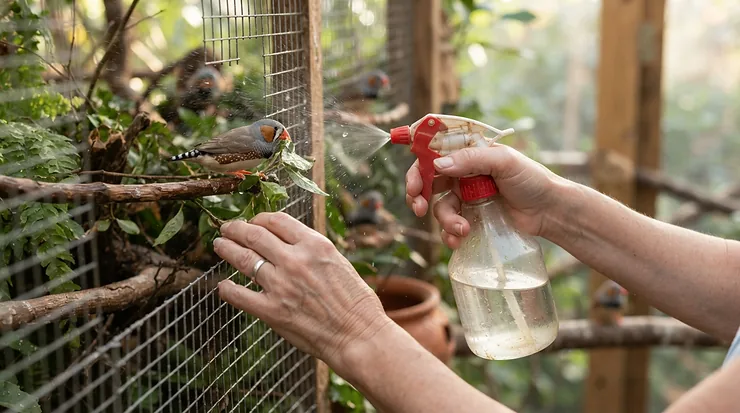
What is a bird misting bottle? It’s a clean, water-only spray bottle that produces a fine, rain-like mist so your parrot, cockatiel, or conure can bathe, preen, and rehydrate its skin without needing a dish or a shower. Think of it as a tiny, portable rainstorm you control with one hand.
Here’s the thing. Most pet birds were never taught how to bathe. They’re hand-raised, they live in air that central heating has baked dry, and nobody’s demonstrated the joys of a downpour. A good bird misting bottle fills that gap. Veterinary guidance from VCA Animal Hospitals describes bathing as essential for feather maintenance and skin hydration, and recommends spraying birds that won’t bathe on their own a couple of times a week.
Not every bottle is up to the job, though. A cheap bottle that fires a jet of water into your bird’s face is a terrible introduction to bath time. A bottle that fatigues your hand after ten squeezes means you’ll quietly stop misting by February. And a bottle that once held glass cleaner? That one shouldn’t go anywhere near a creature that eats whatever ends up on its feathers.
This guide sorts it out. I’ve compared seven real options across budget, mid-range, and premium tiers, based on their published specs and the review themes I could verify, then added the practical know-how that product pages skip: nozzle choice, misting frequency, technique, and cleaning. Whether you’re shopping for a mister spray bottle for parrot bathing or an affordable bird misting spray bottle for a single budgie, you’ll leave knowing exactly what to buy and how to use it.
Bird Misting Bottle Quick Comparison Table
| Product | Style | Capacity | Best For |
|---|---|---|---|
| HARI Feather Mister | Continuous-mist trigger, pre-compression | 500 mL (16.9 fl oz) | Daily misting with minimal hand fatigue |
| ExtremeMist Bird Mister | Continuous pressurized mist | 20 oz or 32 oz (also sold as a kit) | Owners who want a bird-specific bottle |
| Chapin 1002 Handheld Pump Sprayer | Pump-up, twist nozzle (mist to stream) | 48 oz | Multi-bird homes and aviaries |
| Yardenfun Pet Bird Bath Mister | Handheld, one-hand operation | 1.5 L | Parakeets and conures on a budget |
| DRESSOOS Bird Shower Misting Bottle | Handheld, adjustable nozzle | 1.5 L | Small birds and cockatiels |
| VIGOR PATH Continuous Mist Spray Bottle | Continuous mist, pre-compression | 200 mL (6.8 oz) | Cheapest entry point and travel |
| Abaodam Handheld Parrot Bath Mist Sprayer | Handheld, large reservoir | 2 L | Big households that refill rarely |
Looking at the table, the HARI Feather Mister and ExtremeMist Bird Mister are the two designed around birds first, which matters if you want a bottle built for daily use. The Chapin 1002 Handheld Pump Sprayer wins on sheer capacity and its twist-nozzle flexibility, while the VIGOR PATH Continuous Mist Spray Bottle is the lowest-risk way to test whether your bird likes misting at all. Large-reservoir picks like the Abaodam Handheld Parrot Bath Mist Sprayer save refills but cost you in arm fatigue.
💬 Just one click — help others make better buying decisions too!😊
Top 7 Bird Misting Bottle Picks: Expert Analysis
A quick note on method. I’m working from published specifications and the review themes I could verify, not from hands-on testing. Where a product’s review pool was too thin to summarize honestly, I say so instead of papering over it.
1. HARI Feather Mister — ultra-fine mist, less trigger fatigue
HARI is a long-established avian brand, and this 500 mL bottle is built around one idea: sore fingers shouldn’t end bath time early. The listing describes a super-fine, continuous mist from pre-compression technology, where repeated trigger pulls build pressure for a steady, drip-free spray.
In practice, a continuous mist is what lets droplets drift down like real rain rather than hit your bird like a spritz of cold water. The ergonomic grip and BPA-free PP and PET plastics are sensible touches for a bottle that’ll live near food and water bowls. Based on the spec comparison, this is the best fit for owners who mist daily and want one reliable bottle, especially if you’ve got a cockatiel or conure who startles easily.
Reviewer sentiment: I couldn’t verify a large pool of independent buyer reviews, so I’m not summarizing any. What the listing promises is a continuous, ultra-fine mist, and that’s the thing to confirm in the first week.
Pros:
- ✅ Ultra-fine continuous mist mimics gentle rainfall
- ✅ Ergonomic design reduces finger fatigue
- ✅ Bird-focused brand with BPA-free plastics
Cons:
- ❌ 500 mL runs out fast for multi-bird homes
- ❌ Independent review volume was hard to verify
Price range: in the “under $15” range at the time of research, so check current price. For a bottle designed around bird care, that’s strong value.

2. ExtremeMist Bird Mister — made for birds, two sizes
Most “bird misters” are repurposed plant bottles with a parrot on the label. ExtremeMist positions its line specifically as ultra-fine avian bath sprayers, in 20 oz and 32 oz sizes, with a starter kit pairing both.
Why two sizes? It’s smarter than it sounds. The 20 oz is the one you’ll reach for during daily misting, since it’s light enough to hold overhead without wrist strain. The 32 oz suits cage cleaning, cooling birds in summer, or refilling less often in a two-bird household. The continuous pressurized mist is meant to deliver steady output with less squeezing.
Here’s what the spec sheet can’t tell you: whether the mist is fine enough for your particular bird. Reviewers of continuous-mist bottles in general tend to praise the fine droplets and criticize leaks and clogging over time, so test it with plain water before the first bird session.
Pros:
- ✅ Marketed specifically for bird bathing and aviary care
- ✅ Two sizes cover daily misting and larger jobs
- ✅ Continuous pressurized spray cuts hand fatigue
Cons:
- ❌ Kit pricing sits above single generic bottles
- ❌ Limited independent review data to verify long-term durability
Price range: check current price, as the single bottles sit above the budget picks while the kit costs more. Worth it if you value a bird-first design.
3. Chapin 1002 Handheld Pump Sprayer — pump-and-lock for big flocks
This one’s a left-field choice, and I’ll be upfront: the Chapin 1002 is a garden sprayer, not a bird product. But its 48 oz tank, adjustable cone nozzle (fine mist to coarse stream with a twist), and thumb lock for continuous spray make it genuinely useful for owners with several birds.
Pump it up once and it holds pressure, so you aren’t squeezing a trigger through a ten-minute session. Retail reviewers commonly praise how long the mist setting holds pressure. One reviewer reported the upper pump cracking after a light fall, so durability isn’t bulletproof.
The critical caveat: this sprayer is rated for fertilizers and pesticides. Buy it new, never let it touch anything but water, and label it “BIRDS ONLY.” If there’s any doubt about its history, don’t use it on your bird.
Pros:
- ✅ Large 48 oz tank handles multiple birds
- ✅ Pump-and-lock means no trigger squeezing
- ✅ Twist nozzle covers mist and stream jobs
Cons:
- ❌ Bulky and heavy when full for overhead misting
- ❌ Garden-sprayer design requires strict water-only discipline
Price range: roughly $15-$25 at hardware retailers, so check current price. Good value for aviaries, overkill for one budgie.
4. Yardenfun Pet Bird Bath Mister — roomy 1.5L one-hand design
The Yardenfun listing pitches a 1.5 L handheld mister for parakeets and conures, with ergonomic single-hand operation. That capacity means you can fill it once and mist a whole flock without a refill trip to the sink.
What’s the trade-off? A full 1.5 L bottle is hefty. Holding it eighteen inches above a bird for several minutes tests the forearm of anyone with weak wrists. If a pump-style mechanism is involved, as with many bottles in this category, expect a quick pumping routine before each session.
The category-wide issue with larger no-name bottles is nozzle consistency: some produce a genuinely soft mist, others a sharper spray. I couldn’t verify a deep review pool for this listing, so plan to test the spray against your palm first. If it stings or beads heavily, it’s too aggressive.
Pros:
- ✅ Big 1.5 L reservoir means fewer refills
- ✅ One-hand operation frees the other for your bird
- ✅ Designed with small parrots and conures in mind
Cons:
- ❌ Heavy when full during overhead misting
- ❌ Spray fineness varies, so test before use
Price range: budget-to-mid, so check current price. A fair deal for flock owners who prioritize capacity.
5. DRESSOOS Bird Shower Misting Bottle — adjustable nozzle for small beaks
The DRESSOOS 1.5 L bottle focuses on gentle, adjustable misting for cockatiels, conures, and parakeets, and its listing highlights water efficiency, meaning thorough coverage without drenching plumage.
That matters for smaller birds, which chill faster than large parrots. An adjustable nozzle lets you dial toward the softest setting, and the same twist can switch to a stream for cage cleaning. If you’re shopping for bathing spray for cockatiel feathers (meaning a bottle, not a solution), this is a sensible match.
One practical note: “adjustable” can mean a wide range or a nearly useless one. Aim the bottle at a wall first and look for hundreds of tiny droplets, not a few big ones. Independent review depth was limited when I checked, so treat the first few sessions as a trial.
Pros:
- ✅ Adjustable nozzle suits delicate small birds
- ✅ Water-efficient coverage avoids over-wetting
- ✅ Single-hand handheld design
Cons:
- ❌ Same heft as other 1.5 L bottles when full
- ❌ Limited review volume to confirm longevity
Price range: budget-to-mid, so check current price. Solid value for cockatiel and budgie households.
6. VIGOR PATH Continuous Mist Spray Bottle — cheapest way in
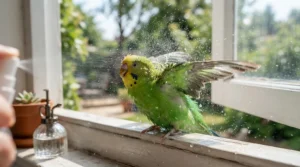
Here’s the budget gateway. The VIGOR PATH is a 200 mL (6.8 oz) continuous-mist bottle sold for hair, plants, cleaning, and pets, with pre-compression technology and a leak-proof, ergonomic build.
It isn’t a bird product, which is exactly why it’s useful as a low-risk experiment. Is your lovebird terrified of spray? Spend a small amount, try it, and learn before investing in something bigger. The ultra-fine continuous mist is closer to what birds like than a basic trigger bottle’s blast.
The limits are obvious. 200 mL empties fast, and a bottle that small won’t handle a macaw. Also, buy a dedicated one: don’t reuse a hair-product bottle. Residues from styling products can end up on feathers, and birds ingest what they preen.
Pros:
- ✅ Very low cost of entry
- ✅ Continuous fine mist at a small size
- ✅ Travel-friendly and easy to dedicate to birds
Cons:
- ❌ Tiny capacity needs frequent refills
- ❌ Not designed for birds, so quality varies
Price range: under $15, and often sold in multi-packs, so check current price. Best budget value for a first misting trial.
7. Abaodam Handheld Parrot Bath Mist Sprayer — 2L for multi-bird homes
The Abaodam is the biggest of the bunch at 2 L, with a listing promising fine-mist coverage for parrot baths and doubling as a houseplant sprayer. If you refill a lot and hate it, this is the antidote.
Bear in mind that capacity has a cost. A 2 L bottle weighs over four pounds when full, which is a lot to hold above a conure for five minutes. My practical advice: fill it halfway for hand-held sessions, and keep the full load for cage-cleaning or aviary-style misting.
Dual-use listings like this are also where cross-contamination creeps in. If the same bottle waters your ferns with plant food, retire it from bird duty. Verified review depth was thin, so treat it as a capable but unproven option.
Pros:
- ✅ Largest capacity here for flock-wide sessions
- ✅ Fine-mist coverage for baths and cage use
- ✅ Handheld portability for moving between rooms
Cons:
- ❌ Heavy and unwieldy when completely full
- ❌ Dual-use marketing invites chemical-residue risks
Price range: budget-to-mid, so check current price. Reasonable value when capacity is your priority.
How to Choose a Bird Misting Bottle
Not sure which of the seven fits? Work through these steps in order.
- Start with the mist, not the capacity. Droplet size is everything. Veterinary and avian-care sources consistently recommend a bottle that mimics gentle rain, so choose one with a genuinely fine setting and test it against your palm first.
- Match capacity to your flock. One budgie needs 200-500 mL. Three conures or a large parrot with a daily routine benefits from 1-1.5 L or more.
- Pick a trigger style you can sustain. Continuous-mist or pump-and-lock bottles beat standard triggers for sessions over a few minutes.
- Insist on a bottle that has only ever held water. Buy new and dedicate it. Residues from cleaners or styling products are the single most avoidable risk.
- Check your own hands. Arthritis, small hands, or a bad wrist favor continuous-spray designs.
- Consider the nozzle’s range. An adjustable nozzle covers misting plus cage cleaning, but only if the mist end is truly fine.
- Plan for cleaning. Wide-mouth or easily dismantled bottles are far easier to keep bacteria-free.

Fine-Mist vs Stream Nozzle: What Your Bird Actually Feels
The debate over fine-mist vs stream nozzle settings sounds trivial until you picture being the bird. A fine mist lands as thousands of tiny, weightless droplets. A stream arrives as a pressured blob of water that hits one spot, often the face.
| Setting | What the bird feels | Best For | Risk |
|---|---|---|---|
| Fine mist | Light, rain-like droplets | Daily bathing, nervous birds, small species | Over-wetting if you linger |
| Coarse spray | Larger droplets, more force | Bold, large birds who like a soaking | Startling or chilling sensitive birds |
| Stream | Direct jet | Cage cleaning only | Fear, discomfort, possible eye or ear contact |
A direct stream is a cleaning setting, not a bathing setting. Veterinary sources note that even pressure from a showerhead can frighten or hurt a bird, and a stream from a bottle is worse. Fine mist, ideally aimed up and over your bird so it falls gently, is the safe default. Once your bird is a confident bather, a coarser spray might become a favorite, but let your bird tell you.
Misting Frequency: How Often Is Enough?
Honest answer: there’s no single rule, and sources disagree. VCA hospitals suggest offering a bath daily, noting that some birds take every offer while others bathe occasionally, and recommend starting at once or twice weekly if your bird is new to misting. Bird-rescue and care sources commonly cite one or two times per week as a minimum, with daily or every-other-day being ideal for many birds. An older veterinary article suggests three to four baths per week in dry, centrally heated homes.
So what should you do? Treat misting frequency as a conversation, not a schedule. Start with two or three sessions a week and watch the signals. A bird that spreads its wings, fans its tail, and leans into the mist wants more. A bird that tenses and retreats wants less. Moulting birds often appreciate extra sessions, and dry winter air usually calls for more, as long as you can keep them warm afterward.
Timing helps too. Mid-morning to early afternoon gives feathers hours to dry before the temperature drops, and misting right before bed risks a chilly night.
Feather Health From Regular Misting
Why does feather health from regular misting get so much attention? Because feathers aren’t dead decoration. They’re precision flight gear, insulation, and display all in one, and they need upkeep.
Misting softens the waxy sheath on new pin feathers so they emerge and unfurl more easily, cuts feather dust and dander, and encourages the preening that spreads protective oils. Moisture also helps skin stay supple, and avian-care sources note that humidity can support nasal and sinus comfort.
There’s a caution, though. Misting is not a cure for feather plucking. UC Davis veterinary guidance on feather-picking stresses ruling out medical causes through an avian vet before assuming a behavioral one. Treat regular misting as healthy maintenance and a possible supportive habit, not a diagnosis or treatment.
Also, bathe in moderation. Over-bathing can dry skin, according to avian rescue guidance, so if you notice flaking or irritation, scale back and talk to your vet.
Mister Spray Bottle for Parrot Bathing: Species Notes
Choosing a mister spray bottle for parrot bathing isn’t one-size-fits-all, because parrots range from palm-sized lovebirds to macaws with a four-foot wingspan.
Small parrots (lovebirds, parrotlets, small conures): a 200-500 mL bottle on its softest setting is ideal. Heavy droplets feel enormous to a tiny body. Think HARI Feather Mister or VIGOR PATH Continuous Mist Spray Bottle.
Medium parrots (Quakers, Senegals, large conures): capacity starts to matter. A 1-1.5 L option like the Yardenfun Pet Bird Bath Mister keeps sessions going without a mid-spray refill.
Large parrots (African greys, Amazons, cockatoos, macaws): these birds often love a thorough soaking, so a big pump-style sprayer such as the Chapin 1002 Handheld Pump Sprayer earns its keep.
Species matters less than personality, though. Bird-care sources emphasize that some parrots prefer misting, others a shallow dish, and some a shower perch. Watch yours, and never force it.
Bathing Spray for Cockatiel Feathers: What Works (and What Doesn’t)
Cockatiels are the dusty ones. Their powder down is part of their charm and part of the mess, and bathing helps reduce that feather dust around the cage.
When people search for bathing spray for cockatiel feathers, they usually mean one of two things: a bottle, or a bottled “feather conditioner.” Start with the bottle. Fill it with lukewarm water, mist from above, and avoid the face. Many cockatiels enjoy this, and some like seeing themselves in a mirror during their first sessions.
As for commercial sprays, be cautious. Veterinary guidance advises against chemical, soap-containing, or commercial bathing solutions in misting water, since birds ingest whatever lands on their feathers while preening. Avian sources also note that some products aren’t labeled for dusty species like cockatiels and cockatoos. If your cockatiel’s feathers look unhealthy, skip home remedies and see an avian vet.
For gear, the DRESSOOS Bird Shower Misting Bottle and HARI Feather Mister both suit this small, easily chilled species.
Affordable Bird Misting Spray Bottle: Price and Value Analysis
Let’s talk money. An affordable bird misting spray bottle doesn’t have to be flimsy, but “cheap” and “good” diverge quickly at the nozzle.
| Product | Price Range | Value Verdict | Best For |
|---|---|---|---|
| VIGOR PATH Continuous Mist Spray Bottle | Under $15 | Excellent for trials | First-time misting |
| HARI Feather Mister | Under $15 | Best bird-first value | Daily single-bird use |
| Chapin 1002 Handheld Pump Sprayer | Roughly $15-$25 | Strong per-ounce value | Multi-bird homes |
| Yardenfun Pet Bird Bath Mister | Budget-to-mid; check current price | Fair for capacity | Conures and parakeets |
| DRESSOOS Bird Shower Misting Bottle | Budget-to-mid; check current price | Fair for small-bird features | Cockatiels |
| Abaodam Handheld Parrot Bath Mist Sprayer | Budget-to-mid; check current price | Fair if capacity matters | Large households |
| ExtremeMist Bird Mister | Mid-range; check current price | Premium bird-first design | Dedicated bird care |
The numbers say something plain: the best value isn’t the lowest price. A bird misting bottle at the very bottom is worth it only if it makes a fine mist. Otherwise it’s a dust collector you replace in a month.
Over a year, though, bottle price is rounding error next to what matters, which is whether your bird enjoys it. A slightly pricier fine-mist bottle that gets used daily beats a bargain that terrifies your bird. On cost per use, even the mid-range picks pay for themselves quickly.
✨ Ready to Upgrade Bath Time?
🔍 Take your bird’s feather care to the next level with these carefully selected bottles. Click on any highlighted product to check current pricing and availability. These picks will help you create calm, rain-like bath sessions your feathered family member will love!

Practical Usage Guide: Setting Up the Fine-Mist Sprayer for Bird Feather Bathing
Buying the bottle is step one. A fine-mist sprayer for bird feather bathing only works if you use it well, so here’s a setup routine.
Before the first session
- Rinse the new bottle thoroughly with plain water and test the spray against your palm.
- Run the bottle a few feet from the cage for several days, since bird-care sources note that birds often fear the sound before the water.
- Fill with lukewarm water. Avian sources point to about 90-100°F as comfortable. If your municipal water is heavily chlorinated, vet guidance suggests bottled water.
During the session
- Hold the bottle about eighteen inches away and spray up, letting the mist fall like rain.
- Skip the face, eyes, and ears.
- Offer a stable perch. Stop the moment your bird looks tense.
- Praise calmly, and let your bird set the length.
Afterward
- Keep the room draft-free and warm. A basking or heat lamp helps, and avian care guides suggest around 100 watts is typically sufficient.
- Let feathers air-dry. Avoid blow dryers.
- Empty and dry the bottle completely to discourage bacteria.
Common first-30-day mistakes: misting too close, using cold water, soaking right before bedtime, and giving up after one bad reaction. Patience converts most reluctant birds.
Real-World Scenarios: Matching Bottle to Bird
Let me walk through three profiles, with the reasoning.
Scenario 1: A college student with one cockatiel in a small apartment. The budget is tight, the space is small, and misting happens two or three times a week. The VIGOR PATH Continuous Mist Spray Bottle or HARI Feather Mister keeps cost down and weight low. Choose HARI if you want something designed around birds and expect to mist daily.
Scenario 2: A family with two conures and a Quaker, misting most mornings. Three birds means more water and more time. The Yardenfun Pet Bird Bath Mister or DRESSOOS Bird Shower Misting Bottle gives roomy capacity without bulk. A parent with wrist pain should favor a continuous-mist option instead.
Scenario 3: A breeder or small aviary with a dozen finches and parakeets. Speed and capacity rule. The Chapin 1002 Handheld Pump Sprayer or Abaodam Handheld Parrot Bath Mist Sprayer handles volume, while ExtremeMist Bird Mister‘s 20 oz and 32 oz bottles suit daily rounds and cooling in hot weather.
Same goal, three different winners. That’s the whole point of matching the tool to the flock.
Problem-Solution Guide: When Misting Goes Sideways
Problem: my bird panics at the bottle. Introduce the sound first, away from your bird. Then try misting a nearby surface, then the air above the bird. Never punish fear. Never use the bottle for discipline either, as owners in parrot forums have learned the hard way.
Problem: the spray leaks or clogs. This is common with cheap bottles. Rinse with plain water, make sure nothing blocks the nozzle, and replace the bottle if it persists. A leaky bottle isn’t worth the hassle.
Problem: the mist is too coarse. Adjust the nozzle, or switch to a continuous-mist design like the HARI Feather Mister. If a Chapin 1002 Handheld Pump Sprayer sprays too forcefully, back off the nozzle to its finest setting.
Problem: my bird is plucking or over-preening. Don’t assume misting fixes it. The Royal Veterinary College’s feather-plucking factsheet notes the majority of feather-destructive birds have an underlying health problem, and it lists gentle warm-water misting as one supportive step among many. See an avian vet first.
Problem: bottle smells or looks cloudy. Bacteria grew. Empty it, wash it, and let it dry between sessions.
Common Mistakes When Buying a Bird Misting Bottle
Buyers repeat the same errors, so here’s what to dodge.
- Reusing a bottle that held anything else. This is the number-one mistake. Residues from chemicals and cleaning products can harm birds.
- Chasing capacity over comfort. A 2 L bottle looks like a bargain until you hold it overhead.
- Assuming “fine mist” on the label equals fine mist in practice. Test every bottle on your palm.
- Buying a scented or “treated” liquid. Commercial bathing products often contain ingredients that aren’t safe when ingested. Plain water is the vet-approved default.
- Skipping the return policy. If the nozzle is too harsh, you want an exit.
- Ignoring wrist health. If squeezing hurts, you’ll stop misting, and your bird loses out.
A smart buyer reads for mist quality and sizing, then verifies. That’s how you avoid ending up with a drawer full of rejected sprayers.
Long-Term Cost and Maintenance of Your Bird Misting Bottle
A bottle that costs little upfront can still become expensive if you replace it every few months. So think in total cost of ownership.
The biggest running cost is time and hygiene, not money. Avian care guides recommend not leaving the same water sitting in a bottle for days, since bacteria can build up inside. Practically, that means filling fresh before each session, emptying afterward, and air-drying. Once a week, wash the bottle with plain, hot water and let it dry fully with the nozzle open.
Then there’s wear. Pump-style models like the Chapin 1002 Handheld Pump Sprayer and Abaodam Handheld Parrot Bath Mist Sprayer have seals that eventually fatigue, and nozzles on any bottle can clog with mineral deposits from hard water. Distilled or bottled water prolongs life, though only use it if your vet or the bird’s situation calls for it. Budget on replacing a cheap bottle once a year, or a sturdier one every two to three.
Over three years, a VIGOR PATH Continuous Mist Spray Bottle replaced yearly and a well-built bird-first bottle land surprisingly close in cost. Choose on mist quality, then on durability.

Frequently Asked Questions
❓ Is a bird misting bottle better than a shallow bath dish?
❓ Can I put aloe or a conditioner in my bird's misting bottle?
❓ What size bird misting bottle should I buy for one parrot?
❓ How do I know if my bird enjoys being misted?
❓ Should the misting water be warm or cold?
Conclusion: Choosing the Right Bird Misting Bottle
Here’s the short version. A bird misting bottle is one of the cheapest, simplest upgrades you can make to your bird’s daily care, and the difference between a great one and a mediocre one comes down to a single thing: how gently it makes rain.
If you want a bird-first, low-fatigue daily bottle, the HARI Feather Mister and ExtremeMist Bird Mister are the safest bets. If you want to test the waters inexpensively, the VIGOR PATH Continuous Mist Spray Bottle is a low-risk trial. For bigger households, the Chapin 1002 Handheld Pump Sprayer, Yardenfun Pet Bird Bath Mister, DRESSOOS Bird Shower Misting Bottle, and Abaodam Handheld Parrot Bath Mist Sprayer each trade weight for capacity in different ways.
Whatever you choose, keep it water-only, keep it clean, aim the mist up and let it fall, and let your bird set the pace. Misting frequency, nozzle choice, and gentle patience matter more than any brand name.
✨ Your bird’s best bath day starts with the right bottle!
🪶 Check current pricing on your favorite pick above, and give your feathered friend the gentle, rain-like mist they deserve. Happy misting! 🐦
Recommended for You
- Suction Cup Shower Perch For Birds: 7 Top Picks For 2026
- Beak File For Overgrown Parakeet Beak: 7 Safe Picks (2026)
- Calcium Block For Macaw Beak Health: 7 Best Picks For 2026
Disclaimer: This article contains affiliate links. As an Amazon Associate, I earn from qualifying purchases. If you purchase products through these links, we may earn a small commission at no additional cost to you.
✨ Found this helpful? Share it with your friends! 💬🤗
