
In This Article
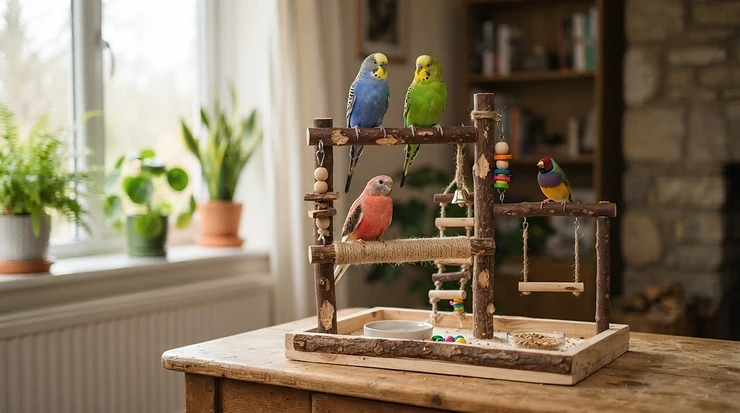
If your parrot spends most of the day staring at the same three bars of the same cage, you already know the problem. Boredom in birds isn’t just sad to watch — it’s the root of feather plucking, screaming fits, and that particular kind of cage-rattling frustration that makes the whole living room feel tense. That’s where bird play gyms earn their keep. A good gym gives your bird a reason to climb instead of chew the windowsill, to forage instead of pace the same three inches of perch, and to burn off the kind of restless energy that would otherwise end up directed at your favorite houseplant. Reviewers and avian behaviorists alike keep circling back to the same idea: parrots are wired for constant problem-solving, and a stand full of ladders, swings, and foraging spots gives that wiring somewhere useful to go.

This guide walks through seven real, currently available bird play gyms spanning tabletop starter units to sprawling floor stands built for macaws and African greys. You’ll get honest, spec-based commentary on each one — not marketing copy — along with comparison tables, a step-by-step buying framework, and answers to the questions bird owners actually type into Google at 11 p.m. while their conure screams in the next room. Whether you’re outfitting a single budgie’s first perch or building a whole enrichment station for a cockatoo, there’s a practical match ahead.
Quick Comparison Table
| Play Gym | Best For | Material | Price Range |
|---|---|---|---|
| Ibnotuiy Pet Parrot Playstand | First-time owners, small/medium birds | Natural pine wood | around $35-$50 |
| Hamiledyi 4-Layer Large Bird Playground | Budget-conscious multi-bird households | Natural wood | around $40-$60 |
| PawHut Rolling Bird Play Table | Owners who move the gym between rooms | Steel + wood | around $60-$90 |
| Yaheetech Wrought Iron Rolling Play Stand | Heavy chewers, active climbers | Wrought iron | around $90-$130 |
| A&E Cage Co. Wrought Iron Multi-Level Play Stand | Bonding time with medium-to-large parrots | Wrought iron | around $130-$180 |
| Prevue Pet Products Coffeawood Java Tree | Owners who want a natural-branch feel | Coffeawood/java wood | around $150-$220 (varies by size) |
| Featherland Paradise 20″ Pyramid Playland | Small footprint, travel or tabletop use | Hardwood + stainless steel | around $70-$110 |
Looking at the spread above, the split really comes down to floor space and bird size before anything else. Budget wood stands like the Ibnotuiy Pet Parrot Playstand and Hamiledyi 4-Layer Large Bird Playground suit small-to-medium birds in apartments, while the wrought iron floor stands from Yaheetech and A&E Cage Co. are built to take a macaw’s beak without flinching. The Prevue Pet Products Coffeawood Java Tree sits in its own category entirely — it’s the only pick here where no two units look alike, since it’s cut from a real branch rather than milled lumber.
💬 Just one click — help other bird owners find the right gym too!😊
Top 7 Bird Play Gyms: Expert Analysis
1. Ibnotuiy Pet Parrot Playstand — best entry-level pick for small parrots
Right out of the box, this is the stand most owners land on for their bird’s very first play area outside the cage. The four-layer wood structure measures roughly 18.6″L x 12.7″W x 37.8″H, which is compact enough for an apartment corner but tall enough to give small-to-medium birds — think cockatiels, conures, and quakers — several distinct perching zones instead of one flat platform. Built from natural pine and assembled with screws rather than glue, it avoids the off-gassing concerns that come with pressed-wood furniture, which matters more than people expect given how sensitive birds’ respiratory systems are.
Based on the spec comparison, this stand’s real advantage is layout, not size: four tiers means a bird can retreat upward when nervous or descend to forage-level trays when it wants food-focused enrichment, which single-platform stands simply don’t offer. Reviewers consistently report that assembly is straightforward and that the ladder and included feeder cups get used immediately, though a few note the pine surface shows beak marks faster than harder woods — an expected tradeoff for the price point, not a defect.
Pros:
- ✅ Compact four-layer footprint fits small rooms easily
- ✅ Natural pine avoids synthetic coating concerns
- ✅ Straightforward screw assembly, no glue involved
Cons:
- ❌ Softer wood shows chew marks faster than hardwood
- ❌ Height maxes out around 38 inches for smaller birds
At around $35-$50, this is the clearest budget value pick here — a smart first gym, though larger or heavier-beaked birds will outgrow it fast.

2. Hamiledyi 4-Layer Large Bird Playground — best value for multi-bird households
The 32-inch-tall version of this playground has become one of the more reviewed budget stands in its category, and the aggregated rating data backs that up: it holds roughly an 8.6-out-of-10 average across nearly 800 individual ratings, which is a meaningfully large sample for a mid-tier accessory. It’s built from natural wood with screw-only construction (no glue), and the four-tier layout spreads perches, ladders, and swing toys across enough vertical space that two smaller birds can use different levels without crowding each other.
What most buyers overlook about this model is that its lower shelves double as forage-friendly platforms — the polished perch surfaces resist splintering, so it’s genuinely usable for daily rotation of chew toys rather than being a one-trick display piece. Reviewers frequently mention that assembly takes a bit of patience since all parts arrive disassembled, but that the finished structure feels sturdier than the price suggests once it’s together.
Pros:
- ✅ Strong aggregate rating across hundreds of verified buyers
- ✅ Four tiers work well for two birds at once
- ✅ Smooth, splinter-resistant perch surfaces
Cons:
- ❌ Full disassembly on arrival means a longer setup
- ❌ Base isn’t wheeled, so repositioning means lifting it
Priced around $40-$60, it edges out similarly priced competitors mainly on that verified review volume — a rare case where the crowd-sourced data is genuinely useful.
3. PawHut Rolling Bird Play Table — best for owners who relocate the gym often
This is the pick for anyone whose bird’s play session needs to follow the sun around the apartment, or who wants the gym in the living room during the day and tucked into a corner at night. Constructed from a steel frame with wood accents, it ships with two stainless steel bowls, a perch, a ladder, and a boom arm for hanging toys, all sitting above a wide round tray designed to catch dropped seed and droppings before they hit the floor.
Here’s what the spec sheet won’t tell you, but real owner feedback fills in: the caster wheels roll smoothly across hardwood and tile, but a couple of buyers specifically wanted a taller model to keep the stand out of reach of household dogs — worth checking the height spec against your own floor plan before buying. One reviewer also noted the tray arrived slightly bent but was fixable with basic pliers, which suggests quality control is decent but not flawless on every unit.
Pros:
- ✅ Smooth-rolling casters make repositioning effortless
- ✅ Wide catch tray reduces daily cleanup significantly
- ✅ Steel-and-wood build feels sturdy for daily use
Cons:
- ❌ Standard height may sit within reach of dogs/cats
- ❌ Occasional minor shipping damage to the tray reported
At around $60-$90, this is the practical mid-tier choice for households where the play gym needs to earn its keep in more than one room.
4. Yaheetech Wrought Iron Rolling Play Stand — most durable frame for persistent chewers
Wrought iron construction changes the entire calculus for owners of birds with serious beak power. Where wood stands eventually show gouges and dents from a determined African grey or Amazon parrot, this frame simply doesn’t give — the metal construction and rolling stand base are the same design language Yaheetech uses across its larger bird cage line, which has a long track record in the wider market. Reviewers describe the frame as “sturdy” and note it holds up to daily use without the wobble that cheaper metal stands develop over time.
Based on the spec comparison, the tradeoff for that durability is weight and assembly time: metal stands like this one take longer to bolt together and are harder to move solo once assembled, even with casters. What most buyers overlook, though, is that the slide-out tray design (borrowed from Yaheetech’s cage line) makes daily cleaning noticeably faster than lifting a wood base to sweep underneath it — a small detail that adds up over months of ownership.
Pros:
- ✅ Metal frame resists beak damage indefinitely
- ✅ Slide-out tray speeds up daily cleaning
- ✅ Rolling base handles repositioning without wobble
Cons:
- ❌ Heavier and slower to assemble than wood stands
- ❌ Cold metal perches may need fabric wraps in winter
In the $90-$130 range, this is the pick for anyone who has already replaced a wood stand once and doesn’t want to do it again.
5. A&E Cage Co. Wrought Iron Multi-Level Play Stand — best for bonding sessions with medium-to-large parrots
At 32″L x 21″W x 64″H, this is one of the taller floor stands in this lineup, and that height is the point — it’s designed to give African greys, Amazons, and ring-necked parrots a genuine multi-level climbing structure rather than a single perch with toys bolted on. It ships with ladders and perches spread across the frame, casters for movement, and a removable tray underneath.
Real owner feedback on this exact model is refreshingly specific: one buyer called it “huge” and noted they were surprised by the scale once it was assembled, adding that it was the best option they found either on Amazon or in local pet stores for keeping a bird “active and moving around.” The same reviewer flagged two honest downsides — the seed guard doesn’t attach as securely as they’d like, and assembly took roughly an hour and a half. That’s useful, unembellished detail: not a five-star rave, not a pan, just a real account of tradeoffs.
Pros:
- ✅ Genuine multi-level height for larger parrot species
- ✅ Iron construction stands up to daily hard use
- ✅ Casters allow repositioning despite the larger footprint
Cons:
- ❌ Seed guard attachment is reportedly loose-fitting
- ❌ Assembly commonly takes over an hour
Around $130-$180, it’s aimed squarely at owners of medium-to-large parrots who want one serious stand rather than multiple small ones.
6. Prevue Pet Products Coffeawood Java Tree — most natural branch structure available
This is the outlier on this list, and deliberately so. Instead of milled lumber or metal tubing, Prevue builds this stand from sustainably harvested coffeawood/java tree branches — meaning every single unit is genuinely one-of-a-kind, with gnarled, irregular branch shapes that mimic what a bird would actually encounter climbing through a forest canopy. The large floor model has branch diameters ranging roughly 1 1/8″-1 3/4″, sized for African greys, Amazons, eclectus, and smaller macaws, while smaller and medium versions scale the branch diameter down for cockatiels and conures.
On paper this means variable branch texture and thickness across a single stand, which is exactly what wild parrots experience and what uniform dowel perches don’t provide — varied grip surfaces are one of the more consistently cited enrichment benefits for foot health in captive birds. What most buyers overlook is that “natural and unique” cuts both ways: it also means natural imperfections like minor cracks or wood folds are normal, not defects, and buyers expecting furniture-grade uniformity should look elsewhere.
Pros:
- ✅ Genuinely varied branch texture supports foot health
- ✅ Sustainably harvested from repurposed coffee trees
- ✅ Rolling casters pre-mounted on the base
Cons:
- ❌ No two units look alike — can’t preview exact shape
- ❌ Minor cracks/wood folds are normal, not returnable flaws
Priced around $150-$220 depending on size, it’s the pick for owners who specifically want their bird’s environment to look and feel less like a manufactured product.
7. Featherland Paradise 20″ Pyramid Playland — best compact premium pick
Formerly sold as the Acrobird line and now under the Featherland Paradise name via manufacturer Caitec, this 20-inch pyramid design packs four diagonal ladders, a climbing chain, a swing with stainless steel links, six stepping perches, and two feeder cups onto a single laminated base built to contain mess. It’s aimed at small-to-medium parrots and is built from durable hardwood, BPA-free plastic, and stainless steel — a materials mix that reads as more premium than its footprint suggests.
Here’s what the spec sheet won’t tell you, but the construction details do: parts are wedge-assembled rather than glued, and screws are deeply countersunk, both details aimed at long-term safety rather than just initial assembly ease. Reviewers on this stand and its sibling models are mixed but instructive — some call it “very nice” with a genuinely happy bird, while others flag wobble on certain configurations, suggesting quality can vary somewhat by unit or by how tightly it’s assembled.
Pros:
- ✅ Compact 20″ footprint suits desks or small rooms
- ✅ Countersunk screws and wedge assembly favor safety
- ✅ Laminated base keeps mess genuinely contained
Cons:
- ❌ Some units reported wobble depending on assembly
- ❌ Smaller footprint limits use to small/medium birds only
At around $70-$110, it’s the premium pick for owners short on floor space who still want a serious multi-feature gym.
What Is a Bird Play Gym?
A bird play gym is a freestanding or tabletop structure — built from wood, metal, or PVC — that gives a pet bird a dedicated space outside its cage to climb, perch, chew, and forage. Unlike a single perch, a proper gym combines multiple levels, ladders, swings, and toy-hanging points to encourage the kind of varied physical and mental activity birds get in the wild. Research on captive parrots has repeatedly linked object- and foraging-based enrichment to measurable drops in stress-related and feather-damaging behaviors, which is the core reason avian behaviorists recommend a dedicated gym rather than relying on cage-top perches alone.

How to Choose a Bird Play Gym
- Match the size to your bird’s species. A stand rated for cockatiels won’t survive an Amazon parrot’s beak, and oversized branches can be hard for small feet to grip.
- Check the material against your bird’s chewing habits. Heavy chewers wear through soft pine fast; wrought iron or coffeawood holds up longer.
- Confirm the footprint fits your space before assembly. Floor stands over 60 inches tall need real clearance, not just floor space.
- Look for a removable tray. Daily cleanup is far easier with a slide-out or lift-off catch tray than a fixed base you have to sweep around.
- Prioritize varied perch diameters. Uniform dowels are easier to manufacture but worse for foot health than mixed-diameter natural branches.
- Weigh assembly complexity honestly. Multi-level metal stands can take over an hour to build — factor that into which weekend you tackle it.
- Read aggregated reviews for the exact model, not just the brand. A brand’s flagship stand and its budget cousin can differ wildly in build quality.
Practical Usage Guide: Setup, Training & the First 30 Days
Getting a new gym home is only step one — how you introduce it in the first month determines whether your bird actually uses it. Start by placing the stand somewhere your bird can see it from the cage for a day or two before any direct interaction; sudden new objects can trigger neophobia, a documented wariness response in parrots toward unfamiliar items. Once your bird seems curious rather than avoidant, move a few familiar toys from the cage onto the new gym so the scent and shape overlap feel less foreign.
For the first week, keep sessions short — ten to fifteen minutes, supervised — rather than leaving the bird alone on an unfamiliar structure. Wipe down wood perches weekly with a bird-safe disinfectant and inspect screw connections monthly, since wood naturally expands and contracts with humidity and can loosen hardware over time. A common mistake in the first 30 days is over-toy-ing the stand immediately; introducing one or two new items per week, rather than hanging everything at once, keeps novelty high without overwhelming a bird that’s still adjusting to the structure itself.
Real-World Scenarios: Which Bird Play Gym Fits Your Household
If you’re a first-time cockatiel owner in a studio apartment, the Ibnotuiy Pet Parrot Playstand or Hamiledyi 4-Layer Large Bird Playground cover the footprint and budget without asking you to rearrange furniture. If you’re managing two conures who currently squabble over one perch, either budget four-tier stand solves the territory problem simply by giving each bird its own level.
If you own a African grey that’s already dented a wood perch or two, skip straight to the Yaheetech Wrought Iron Rolling Play Stand or the A&E Cage Co. Wrought Iron Multi-Level Play Stand — the extra upfront cost is cheaper than replacing a wood stand every year. And if you’re working with a single small bird in a shared apartment where floor space is at a premium but you still want a genuinely engaging structure, the Featherland Paradise 20″ Pyramid Playland fits a desk corner while still offering real multi-perch variety.
Common Mistakes When Buying a Bird Play Gym
The single biggest mistake is buying by bird species label alone without checking actual branch or perch diameter — a stand marketed for “small to medium birds” can still have perches too thick for a budgie’s feet to grip properly. The second is ignoring assembly time entirely; buyers frequently report multi-level metal stands taking well over an hour, and starting that project without a free afternoon leads to half-finished stands left in boxes for weeks. The third is skipping the tray-removal question — a fixed base that can’t slide out for cleaning turns a five-minute daily task into a genuine chore within a month, which is exactly the kind of friction that leads a $150 stand to get used less and less over time.
Parrot Activity Center vs Traditional Cage-Top Perch
A dedicated parrot activity center and a simple cage-top perch solve fundamentally different problems, even though both technically give a bird somewhere to sit outside the bars. A cage-top perch offers a single elevated spot, usually with one or two toy hooks, and works fine as a brief supervised perch during cage cleaning. A full activity center, by contrast, is built around multiple levels, varied perch diameters, and dedicated foraging or feeding stations — the kind of layout that actually changes how a bird spends its out-of-cage time rather than just where it sits.
| Feature | Cage-Top Perch | Full Activity Center |
|---|---|---|
| Levels/Perches | Usually 1 | 3-4+ |
| Foraging Opportunities | Minimal | Multiple stations |
| Best For | Brief supervised time | Extended daily enrichment |
| Typical Price | around $15-$30 | around $40-$220 |
The comparison makes the actual tradeoff clear: a cage-top perch is a convenience add-on, while an activity center is closer to a piece of furniture your bird actually lives on for meaningful stretches of the day. For birds showing any signs of feather-damaging behavior or repetitive pacing, the jump to a full activity center isn’t a luxury upgrade — enrichment research on captive parrots consistently links this kind of expanded environment to measurable behavioral improvement.
Bird Enrichment Gym: What to Expect — Real-World Performance
On paper, a spec sheet full of ladders and swings sounds straightforward, but the actual day-to-day experience of an enrichment gym is less about the toy count and more about rotation. Reviewers across nearly every model in this guide mention the same pattern: birds engage intensely with a new gym for the first few days, then interest tapers unless owners actively rotate toys and change perch positions every week or two. That’s not a flaw in any specific stand — it’s simply how novelty-driven enrichment works for a genuinely intelligent species.
What most buyers don’t expect going in is how much noise and mess shifts location once a gym is in regular use. Feathers, seed hulls, and toy fragments migrate toward wherever the bird spends the most active time, which is exactly why the removable-tray designs on stands like the Yaheetech Wrought Iron Rolling Play Stand and PawHut Rolling Bird Play Table tend to earn more praise in long-term reviews than fixed-base designs, regardless of how good those fixed stands look initially.
Top Rated Parrot Playgrounds: Features That Actually Matter (And Those That Don’t)
Marketing copy loves to highlight toy count and color variety, but neither actually predicts how much a bird will use a stand long-term. What genuinely matters: perch diameter variation (for foot health), tray removability (for owner sanity), and frame rigidity (for safety with larger, stronger birds). A stand that wobbles under an active Amazon parrot isn’t just annoying — it’s a fall risk.
What matters far less than marketing suggests: the number of pre-installed toys, since most experienced owners swap these out within the first month anyway, and cosmetic finish color, which has zero bearing on durability or bird engagement. If you’re comparing two similarly priced playgrounds and one advertises “12 toys included” while the other advertises a removable tray and mixed-diameter perches, the second one is almost always the better long-term investment, whatever the marketing copy implies.
Bird Play Gym Reviews: What Real Owners Report
Across the aggregated review data for these seven models, a few patterns repeat often enough to be genuinely useful rather than anecdotal. Assembly time is the most frequently mentioned friction point across metal and multi-level stands, with owners of the A&E Cage Co. and Yaheetech models both independently reporting sessions well over an hour. Sturdiness, by contrast, draws consistent praise once assembly is done — reviewers describe these frames as staying stable through months of active use, which matters more than initial setup convenience for most households.
On the wood side, the Hamiledyi 4-Layer Large Bird Playground stands out for the sheer size of its review base — nearly 800 individual ratings averaging around 8.6 out of 10 is a large enough sample to trust more than a handful of five-star reviews on a newer listing. Reviewers consistently note it “just works” for the price, with the main recurring critique being the disassembled shipping condition rather than any structural issue.
Parrot Play Structure Safety & Regulations Guide
Safety around a play structure isn’t limited to the stand itself — where you place it matters just as much as what it’s built from. Non-stick cookware coatings (PTFE, commonly known by the brand name Teflon) release fumes when overheated that are acutely toxic to birds’ sensitive respiratory systems, so any play gym should be positioned well away from kitchens, and definitely away from any room with a functioning non-stick appliance in use. This isn’t a rare or theoretical risk — diagnostic case reports document birds found in acute respiratory distress after exposure to overheated PTFE coatings, and symptoms can appear within minutes.
Beyond fume exposure, check that any metal stand uses non-toxic, zinc-free coatings, since birds frequently mouth or chew painted or coated surfaces during play. Wood stands should be inspected periodically for mold growth if kept in humid rooms, and any stand with a catch tray should have that tray cleaned at least every few days to prevent bacterial buildup from droppings and food debris.
Bird Activity Stand Long-Term Cost & Maintenance
The sticker price on a bird activity stand is only part of the real cost. Wood stands typically need periodic perch or ladder replacement as birds chew through softer components — budget for occasional replacement toys and perches every few months on heavily used wood stands, versus a much longer replacement cycle on wrought iron frames that simply don’t wear down the same way. Over a two-to-three-year ownership window, a cheaper wood stand replaced once or twice can end up costing close to what a metal stand would have cost upfront, while the metal stand needs little beyond tray cleaning and occasional hardware tightening.
Maintenance time also differs meaningfully by design. Stands with slide-out trays, like the Yaheetech Wrought Iron Rolling Play Stand, cut daily cleanup to a couple of minutes, while fixed-base stands like the Prevue Pet Products Coffeawood Java Tree require sweeping or vacuuming around the base directly. Neither approach is wrong, but it’s worth weighing against how much daily time you actually want to spend on upkeep before committing to a natural-branch stand purely for its aesthetic appeal.
Problem → Solution Guide
Problem: My bird ignores the new gym entirely. Move a familiar toy or two from the cage to the gym so the scent and shape overlap feels less foreign, and place the gym within sight of the cage for a few days before expecting direct interaction.
Problem: The stand wobbles during active play. Recheck all hardware connections after the first week, since wood and metal joints can loosen slightly as a stand settles under regular use; the A&E Cage Co. Wrought Iron Multi-Level Play Stand and similar heavier frames are less prone to this than lighter wood stands.
Problem: Cleaning the tray has become a daily chore I dread. Switch to a model with a genuine slide-out tray, like the Yaheetech Wrought Iron Rolling Play Stand or PawHut Rolling Bird Play Table, both of which cut cleanup time significantly compared to fixed-base designs.
Problem: My bird chewed through a wood perch within weeks. This is normal for heavy chewers on soft pine; either rotate in harder replacement perches or upgrade directly to a wrought iron frame that won’t degrade the same way.
Problem: Two birds compete for the same level. Choose a genuinely multi-tier design, such as the Hamiledyi 4-Layer Large Bird Playground, so each bird has its own space rather than fighting over one platform.
Buyer’s Decision Framework
If your bird is small-to-medium and this is a first gym, choose an entry-level wood stand like the Ibnotuiy Pet Parrot Playstand, because the lower cost and compact footprint minimize risk while you learn your bird’s preferences. If your bird has already destroyed a wood perch, choose a wrought iron frame like the Yaheetech Wrought Iron Rolling Play Stand, because the material simply removes the chewing-damage problem going forward. If floor space is tight but budget allows for a premium pick, choose the Featherland Paradise 20″ Pyramid Playland, because its compact base delivers multi-perch variety without the footprint of a full floor stand. If you specifically value natural, varied-texture branches over manufactured uniformity, choose the Prevue Pet Products Coffeawood Java Tree, accepting that no two units will look identical.

Frequently Asked Questions
❓ How big should a bird play gym be for a cockatiel?
❓ Are wood or metal bird play gyms better?
❓ How often should I rotate toys on a play gym?
❓ Can two birds share one play gym?
❓ Where should I place a bird play gym safely?
Conclusion
Choosing among these seven bird play gyms really comes down to two honest questions: how big and strong is your bird, and how much floor space and cleanup time do you actually have? Budget wood stands like the Ibnotuiy Pet Parrot Playstand and Hamiledyi 4-Layer Large Bird Playground cover most small-to-medium households well, while wrought iron frames from Yaheetech and A&E Cage Co. earn their higher price tags through genuine durability against determined beaks. The Prevue Pet Products Coffeawood Java Tree and Featherland Paradise 20″ Pyramid Playland round things out for owners chasing either natural authenticity or a compact premium footprint.
Whichever one you land on, the actual enrichment payoff depends less on the specific model and more on how consistently you rotate toys, supervise early sessions, and keep the stand clean and structurally sound over time. A well-chosen gym, maintained properly, is one of the more reliably effective upgrades you can make to a companion bird’s daily life.
✨ Ready to give your bird a space that actually earns its attention? Check current pricing on any of these picks above and see which one fits your flock best! 🦜
Recommended for You
- 7 Best Tabletop Java Tree Stands for Small Birds in 2026
- Java Tree vs Manzanita Stand: 7 Best Perches Ranked (2026)
- Java Tree Stand for Macaw: 7 Best Picks Tested for 2026
Disclaimer: This article contains affiliate links. As an Amazon Associate, I earn from qualifying purchases. If you purchase products through these links, we may earn a small commission at no additional cost to you.
✨ Found this helpful? Share it with a fellow bird owner! 💬🦜
