
In This Article
You’ve probably noticed your parrot destroying that expensive toy you bought last week within hours. What most bird owners overlook is that destruction isn’t bad behavior—it’s exactly what healthy birds are supposed to do. The question isn’t whether your bird will shred toys, but whether those toys are worth shredding.
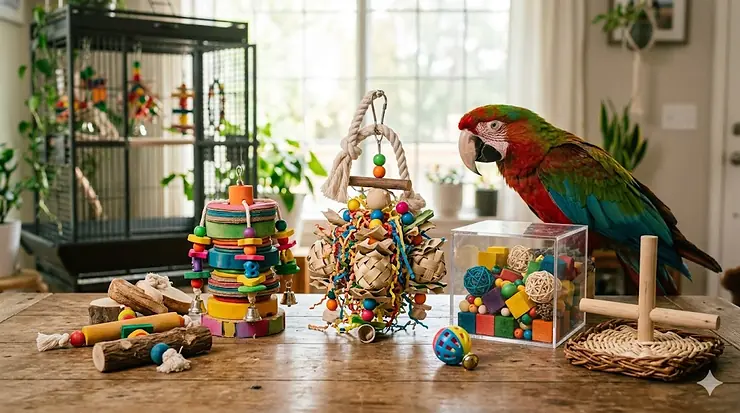
Bonka bird toys have carved out a unique position in the pet bird industry by focusing on what actually matters: durability that lasts long enough to be satisfying, materials that birds genuinely want to interact with, and designs that tap into natural foraging instincts rather than just looking cute on a shelf. Based in Fort Lauderdale, Florida, this family-owned business has spent over 30 years listening to actual bird owners at trade shows and exhibitions, refining their designs based on real-world feedback rather than marketing assumptions.
What sets bonka bird toys apart from competitors isn’t fancy packaging or celebrity endorsements. It’s the practical understanding that a parakeet needs different stimulation than a macaw, that rope texture matters as much as rope length, and that the best foraging toy is one your bird can’t solve in five minutes but won’t abandon in frustration. According to research from environmental enrichment specialists, birds need varied sensory stimulation and foraging opportunities to maintain psychological well-being. In this comprehensive review, we’ll examine seven standout products from Bonka’s 2026 lineup, breaking down which birds they’re actually designed for and what you can realistically expect from each one.
Whether you’re dealing with a feather-plucking cockatiel who needs more mental stimulation, a budgie who ignores half the toys in their cage, or an African Grey who’s too smart for their own good, understanding the specific engineering behind these toys will help you make smarter purchasing decisions. Studies on parrot cognition and enrichment show that without proper cognitive stimulation, birds can develop serious stress-related behaviors including feather plucking, excessive screaming, and self-harm. We’ll also cover the red flags to watch for, the hidden costs of cheap alternatives, and the practical maintenance reality that most product descriptions conveniently skip.
Quick Comparison: Top 7 Bonka Bird Toys at a Glance
| Product | Best For | Key Feature | Price Range | Durability |
|---|---|---|---|---|
| Mini Sneakers (Pk6) | All sizes, foot toy enrichment | Stuffable foraging design | $12-$18 | Medium (3-6 weeks) |
| 1730 Foraging Heart | Medium birds (Conures, Cockatiels) | Multi-texture shredding | $15-$22 | High (6-10 weeks) |
| 1047 Rope Charm Perch | Medium-Large birds | Dual-purpose perch/toy | $18-$28 | Very High (3-6 months) |
| 1654 Crinkle Shred Paper | Refill material, all sizes | DIY foraging filler | $8-$14 | N/A (consumable) |
| 2198 Pinata Hat | Small-Medium birds | Layered paper destruction | $14-$20 | Low (1-3 weeks) |
| 1099 Cow Bells (Pk4) | DIY toy parts, all sizes | Sound enrichment | $10-$16 | Very High (permanent) |
| 1886 Disk Sneaker | Medium birds | Puzzle manipulation | $16-$24 | High (8-12 weeks) |
Looking at this comparison, the 1047 Rope Charm Perch delivers the best long-term value for medium to large birds because it serves dual purposes—your bird gets both a comfortable perching surface and an interactive toy, meaning you’re not replacing it every few weeks like you would with pure shredding toys. Budget-conscious buyers should note that the 1654 Crinkle Shred Paper extends the life of existing foraging toys significantly, making it a smart secondary purchase that reduces overall toy costs. For birds that destroy everything in sight, the 2198 Pinata Hat is actually the economical choice despite its shorter lifespan—it’s designed to be destroyed, so you’re paying for appropriate enrichment rather than fighting against your bird’s natural behavior.
💬 Just one click — help others make better buying decisions too! 😊
Top 7 Bonka Bird Toys: Expert Analysis & Real-World Performance
1. Bonka Bird Toys Mini Sneakers (Pack of 6)
The Bonka Bird Toys Mini Sneakers might look like a novelty item at first glance, but these 3″ x 1.5″ x 1.25″ cotton and rubber foot toys have become one of the brand’s most versatile products. Each miniature sneaker features authentic details—real shoelaces that thread through pre-punched holes, a pullable tongue, and flexible rubber soles that birds can actually grip and manipulate.
What makes these particularly clever from an enrichment standpoint is the hollow interior design. Unlike solid foot toys that birds lose interest in after initial inspection, these sneakers can be stuffed with crinkle paper, small treats, or shreddy material, transforming them from simple manipulatives into active foraging challenges. The cotton laces are soft enough for even small beaks to unknot, which means parakeets and lovebirds can experience the satisfaction of “solving” the toy by untying and retying the laces—an activity that can occupy them for 20-30 minutes at a stretch.
From a practical standpoint, the pre-punched holes serve double duty. You can link multiple sneakers together using the laces themselves, creating a chain of foraging opportunities that hangs vertically in the cage. Alternatively, thread a quick-link through the holes to attach them individually to cage bars at different heights, encouraging climbing and exploration. Customer feedback consistently mentions that birds who normally ignore foot toys will carry these sneakers around like prized possessions, likely because the combination of textures—soft cotton, chewy rubber, and whatever filling you’ve added—provides more sensory variety than typical plastic beads or wooden blocks.
The realistic shoe design also taps into social enrichment for birds who like mimicking human activities. Several owners report their birds “trying on” the sneakers by stepping into them or attempting to manipulate them onto perches, which suggests these toys engage the same cognitive circuits that make birds want to steal your keys or play with your jewelry.
Pros:
✅ Suitable for birds from parrotlets to macaws (different pack sizes available)
✅ Multi-use design: foot toy, foraging container, cage decoration, or DIY project component
✅ Soft materials won’t damage beaks or feet during aggressive play
Cons:
❌ Rubber soles can be chewed off and swallowed if not monitored
❌ Cotton laces fray after 2-3 weeks of heavy use
Who this is for: Birds that enjoy manipulating objects with their feet, owners who want versatile toys that can be reconfigured weekly, and anyone looking for safe enrichment that doesn’t require tools or complicated assembly. These work particularly well for birds transitioning from one toy to another—stuff a sneaker with familiar material from an old favorite toy to help your bird accept the new texture.
Price range: Around $12-$18 for a pack of 6, depending on current availability. That breaks down to roughly $2-$3 per sneaker, which is competitive given the multi-use potential.
2. Bonka Bird Toys 1730 Foraging Heart
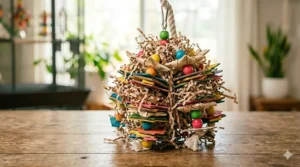
The Bonka Bird Toys 1730 Foraging Heart is a 9″ high by 6″ wide medium-sized toy that exemplifies what proper foraging design should look like. At its center sits a woven vine heart structure filled with colorful shreddy paper, surrounded by eight bamboo foraging tubes that can be rotated and repositioned by the bird. The entire assembly hangs from a quick-link connector, with a large bundle of crinkle paper attached at the bottom.
What separates this from generic vine toys is the thoughtful layering of destruction opportunities. Birds can attack this toy from multiple angles: shredding the external paper bundle for immediate gratification, manipulating the bamboo tubes (which requires both beak and foot coordination), or working their way into the vine heart to extract the stuffed paper inside. This graduated difficulty structure means the toy remains engaging for 6-10 weeks rather than being demolished in a weekend.
The bamboo tubes deserve special mention because they introduce a texture many cage birds don’t encounter enough: natural, hollow wood that makes satisfying crunching sounds when bitten. Unlike solid wood blocks that require serious beak strength to damage, bamboo splits and splinters in ways that feel rewarding even for medium-sized beaks. The tubes are also large enough (approximately 2″ long) that birds can grip them with their feet while chewing, which activates the full-body engagement that prevents boredom-related behaviors.
Real-world performance data from customer reviews shows this toy typically lasts 45-70 days for single conures or cockatiels, versus 15-20 days for cheaper vine toys that lack the bamboo components. The durability comes from the strategic placement of materials—the softest shredding items are positioned where birds naturally start (the bottom bundle), while the more challenging components require the bird to work through easier layers first.
Pros:
✅ Multiple textures (vine, bamboo, cardboard, paper) prevent monotony
✅ Appropriate sizing for conures, cockatiels, parakeets, and similar species
✅ Natural materials align with avian health recommendations
Cons:
❌ Single birds may not fully destroy the vine heart before losing interest
❌ Not suitable for large parrots (African Greys, Amazons) who need heavier-duty materials
Who this is for: Medium bird owners who are tired of replacing toys every week, birds that exhibit early signs of feather plucking or over-preening (the shredding activity provides an outlet), and anyone transitioning their bird to more natural foraging behaviors. This is particularly effective for cockatiels who’ve become cage-bound—the dangling paper bundle naturally draws them to the top of the cage where they should be spending more time.
Price range: In the $15-$22 range currently, which positions it as a mid-tier investment that pays off through extended engagement time.
3. Bonka Bird Toys 1047 Medium Rope Charm Perch
The Bonka Bird Toys 1047 Medium Rope Charm Perch solves a problem most bird owners don’t realize they have: their bird’s perches are boring. This soft cotton rope perch features colorful plastic beads and dice charms tied at intervals along its length, transforming a basic resting spot into an interactive climbing and chewing opportunity.
From a biomechanical perspective, rope perches benefit bird foot health in ways that rigid dowels can’t match. The textured cotton surface encourages constant micro-adjustments in grip, which exercises the small muscles in birds’ feet and helps prevent pressure sores that develop when birds stand on identical-diameter perches all day. What makes this particular rope perch superior to generic alternatives is the strategic placement of the plastic charms—they’re positioned to encourage birds to pause at different points along the perch, creating natural stopping points that break up what would otherwise be a straight path.
The charms themselves serve multiple functions. Visually, the bright colors attract birds to explore different sections of their cage. Physically, the beads and dice can be rotated, moved slightly, or chewed, providing tactile stimulation while the bird rests. Behaviorally, these interruptions prevent the pacing or rocking behaviors that develop when birds have nothing to do while perched.
Installation flexibility is another practical advantage. The rope can be bent into curves, spirals, or angular configurations that create visual interest and encourage climbing rather than just hopping. For birds who’ve developed obesity from sedentary cage life, positioning this perch so it requires some effort to reach—slightly higher than their favorite spot, or across from their food bowl—naturally increases daily movement without forcing dramatic behavioral changes.
Customer feedback highlights unexpected durability. While most rope perches need replacement every 3-4 months due to fraying, the cotton composition of the 1047 seems to hold up for 5-6 months even with moderate chewing. The integrated charms don’t fall off like glued decorations, because they’re actually tied onto the rope rather than attached with weak adhesives.
Pros:
✅ Dual-purpose functionality reduces need for separate perch and toy purchases
✅ Soft cotton prevents foot injuries while still being durable
✅ Bendable design adapts to any cage configuration
Cons:
❌ Requires regular inspection for fraying near chewed sections
❌ Not recommended for heavy chewers (macaws, cockatoos) who will destroy it too quickly
Who this is for: Medium to large birds (conures, quakers, small Amazons) who need more varied perching options, birds recovering from bumblefoot or foot injuries, and owners who want to maximize cage real estate by combining perch and enrichment functions. This is particularly valuable in smaller cages where every inch counts.
Price range: Around $18-$28 depending on exact length and color availability, which is reasonable given that you’re getting both a perch and a toy in one product.
4. Bonka Bird Toys 1654 Crinkle Shred Paper
The Bonka Bird Toys 1654 Crinkle Shred Paper isn’t a standalone toy—it’s the secret weapon that makes other toys more effective. This 85-cubic-inch bag of multicolored, crinkled paper strips transforms basic toys into active foraging challenges and extends the useful life of existing cage accessories.
What makes this particular shred paper superior to alternatives you might find at craft stores is the texture treatment. Each strip has been mechanically crinkled to create a springy, bouncy quality that reacts dramatically when birds grab it. This responsiveness triggers the same predatory satisfaction birds get from catching insects—the paper “tries to escape” when pulled, which activates chase and capture instincts even in a stationary toy. Regular craft paper just tears, which doesn’t provide the same level of behavioral feedback.
The strips are cut to approximately 1/8″ wide and 6-8″ long, which is the sweet spot for most bird sizes. Too narrow and the paper lacks substance for satisfying shredding; too wide and small beaks can’t manipulate it effectively. The multicolor mix (typically including blue, green, yellow, pink, and orange) provides visual variety that keeps birds investigating even after they’ve extracted several pieces—they want to find out what color comes next.
Practical applications extend beyond just stuffing foraging toys. Owners use this paper to create bird-safe nesting areas (though not for breeding), layer it in the bottom of stainless steel cups for treasure hunts, or simply scatter it across the cage floor for ground-foraging species like caiques. The soft texture makes it safe for birds to manipulate with their tongues, unlike some harder materials that can cause oral abrasions.
From a cost-effectiveness standpoint, a single bag typically lasts 2-3 months for a medium bird owner who’s actively using it to refresh toys weekly. That’s significantly more economical than replacing entire toys every time they become less interesting. The paper is also 100% bird-safe, meaning no toxic dyes or chemical treatments that could cause problems if ingested.
Pros:
✅ Versatile refill material extends life of multiple toy types
✅ Soft texture safe for beaks, feet, and tongues
✅ Economical way to add variety without buying new toys
Cons:
❌ Creates significant cage mess that requires daily cleanup
❌ Not suitable as a primary enrichment item—needs to be paired with toys
Who this is for: DIY bird toy builders, owners who want to refresh existing toys without replacing them entirely, and anyone with birds that love shredding paper but shouldn’t have access to newspaper or office paper (which may contain harmful inks). This is particularly useful for budgie and cockatiel owners on a budget—a $10 bag of crinkle paper can make five boring toys interesting again.
Price range: Typically around $8-$14 per bag, which is higher than generic craft supplies but justified by the bird-safe certification and ideal strip dimensions.
5. Bonka Bird Toys 2198 Pinata Hat
The Bonka Bird Toys 2198 Pinata Hat is a 10″ x 6″ shreddable enrichment toy designed with a simple philosophy: some toys are meant to be destroyed quickly, and that’s okay. This pinata-style toy features layered paper fibers arranged in a hat-shaped structure, with wood beads, straw, and cardboard elements integrated throughout.
What separates this from random cardboard boxes you might offer your bird is the engineered progression of destruction. The outer layers of paper are loosely attached and easily torn away, providing immediate success and encouraging the bird to continue. As they work deeper into the hat structure, they encounter denser cardboard sections that require more effort, keeping the challenge level appropriate as they build confidence. The wood beads and straw pieces serve as “rewards”—new textures that appear as the bird successfully shreds through paper layers.
From a behavioral enrichment perspective, this toy addresses the specific needs of birds who are natural shredders (cockatiels, lovebirds, conures) but don’t have appropriate outlets in standard cage setups. When these birds don’t have sufficient shreddable material, they often redirect that energy toward destructive behaviors like chewing cage bars, destroying perches, or plucking their own feathers. Avian behavioral experts emphasize that birds need regular access to destructible materials to satisfy natural instincts. The Pinata Hat provides 1-3 weeks of intensive shredding activity, which is exactly its design intention—it’s not supposed to last months like a rope perch.
The hat shape isn’t just aesthetic; it’s functional. The broad brim at the bottom creates a natural landing platform where birds can perch while working on the upper sections, and the hollow interior means birds can actually climb inside as they destroy it from the inside out. Multiple customers report their birds treating this like a fort or cave, which adds spatial enrichment to the pure destruction aspect.
Installation is straightforward via the integrated hanging loop, which should be positioned high enough that the bird has to stretch or climb slightly to reach it—this increases the energy expenditure and makes the activity more rewarding. For maximum effectiveness, introduce this toy when you notice your bird becoming restless or overly vocal, as those are often signs they need a new destruction outlet.
Pros:
✅ Appropriate destruction target prevents cage/feather damage
✅ Layered design maintains interest through progressive difficulty
✅ Lightweight and safe for all bird sizes to manipulate
Cons:
❌ Short lifespan (1-3 weeks) means regular replacement costs
❌ Creates substantial cage mess requiring daily cleanup
Who this is for: Birds with diagnosed feather plucking issues who need alternative shredding outlets, owners of inherently destructive species (lovebirds, caiques, small conures), and anyone looking for temporary enrichment during stressful periods (moving, household changes, new pets). This is particularly valuable for birds who ignore rope or wood toys but obsessively shred paper.
Price range: Around $14-$20, which initially seems expensive for a consumable toy but makes sense when you calculate it as $5-$7 per week of targeted behavioral intervention.
6. Bonka Bird Toys 1099 Large Silver Cow Bells (Pack of 4)
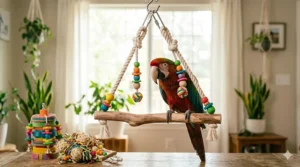
The Bonka Bird Toys 1099 Large Silver Cow Bells aren’t a complete toy—they’re the building blocks for creating personalized enrichment that actually matches your bird’s specific preferences. Each bell measures 2″ high by 1.75″ wide by 1.25″ deep, constructed from solid metal that can withstand serious beak pressure from African Greys, Amazons, Cockatoos, and Macaws.
What makes these particular bells superior to cheap alternatives is the clapper design. Rather than a simple ball inside a thin shell (which produces tinny, irritating sounds and breaks quickly), these feature a weighted metal striker inside a thick-walled bell body. The result is a deeper, more melodic ring that birds find intriguing rather than startling. Research indicates that foraging and interactive toys provide essential mental stimulation that prevents behavioral problems in captive birds. The sound production actually encourages birds to ring the bells repeatedly because they’re getting auditory feedback that feels rewarding—unlike harsh, shrill bells that birds quickly learn to avoid.
From a DIY perspective, these bells integrate seamlessly with other Bonka products or homemade toys. The top loop is large enough to accommodate standard quick-links, chain connections, or rope threading. Advanced bird toy builders use these bells as anchors at the bottom of hanging toys (the weight helps the toy hang straighter and swing more dramatically when birds interact with it), as noisemakers within foraging boxes (alerting you when your bird has successfully accessed the treat), or as components in training setups where ringing a bell signals “I want attention” or “I’m ready for my next task.”
The solid metal construction means these are essentially permanent components—they won’t rust, break, or degrade over time. Several customers report using the same bells for 2-3 years, simply moving them from retired toys to new configurations. This makes them one of the most cost-effective purchases in the Bonka lineup when you calculate cost-per-use.
Safety note: while the metal is bird-safe and won’t corrode, the bells are heavy enough to cause minor injury if a bird drops one on a foot or toe. This is generally only a concern with smaller species who try to manipulate bells designed for larger birds. Match the bell size to your bird’s carrying capacity.
Pros:
✅ Permanent, reusable components with essentially unlimited lifespan
✅ High-quality sound production encourages interaction
✅ Compatible with most DIY toy-building approaches
Cons:
❌ Requires some DIY skill or additional parts to use effectively
❌ May be too heavy for very small birds (finches, canaries, small parakeets)
Who this is for: DIY bird toy enthusiasts who want to customize their bird’s enrichment, owners of large parrots who destroy standard bells within days, and anyone training their bird to use sound signals for communication (bells can mark successful behaviors or request attention). These are particularly valuable for owners with multiple birds of different sizes—buy one pack and distribute bells across several different toy configurations.
Price range: Around $10-$16 for a pack of 4, which works out to $2.50-$4 per bell—significantly cheaper than pre-assembled bell toys that often use lower-quality components.
7. Bonka Bird Toys 1886 Disk Sneaker
The Bonka Bird Toys 1886 Disk Sneaker is a 10″ x 4″ medium-sized puzzle toy that combines visual appeal with cognitive challenge. A large colored plastic disk serves as the centerpiece, adorned with acrylic rings, beads, and dice that can be manipulated and rearranged. Below the disk hang four colorful foraging sneakers (similar to the Mini Sneakers reviewed earlier) suspended with additional rings.
What makes this toy particularly clever from a design standpoint is the multi-level interaction opportunity. Birds can work from the top down (investigating the chain, moving the beads and dice, exploring the disk) or bottom up (starting with the familiar sneaker elements and working upward). This flexibility accommodates different bird personalities—cautious birds who prefer to investigate known elements before trying new things can start with the sneakers, while confident explorers can dive straight into the disk puzzle.
The plastic disk rotates freely on its mounting, which adds an unexpected dynamic element. Birds quickly learn that pulling on the sneakers makes the entire assembly spin, creating cause-and-effect learning opportunities that strengthen problem-solving skills. The acrylic components produce satisfying clicking sounds when birds manipulate them, providing immediate auditory feedback that reinforces engagement.
From a practical maintenance perspective, the all-plastic construction means this toy can be thoroughly cleaned and sanitized—unlike rope or paper toys that absorb moisture and harbor bacteria. Simply remove it from the cage, soak in bird-safe disinfectant, rinse thoroughly, and reinstall. This makes it particularly suitable for birds with compromised immune systems or owners who need to maintain strict hygiene protocols.
Customer feedback suggests this toy has an optimal lifespan of 8-12 weeks before birds lose interest, which is longer than pure shredding toys but shorter than permanent fixtures like perches. The sneakers will likely be destroyed first (1-2 weeks for aggressive chewers), but they can be replaced individually without discarding the entire toy. Simply purchase additional Mini Sneakers and thread them onto the existing assembly.
Pros:
✅ Cognitive puzzle element engages problem-solving skills
✅ Easy to clean and sanitize completely
✅ Replaceable components extend useful life
Cons:
❌ Not suitable for very small birds (parakeets, lovebirds) due to sizing
❌ Plastic may not satisfy birds with strong shredding/chewing needs
Who this is for: Medium bird owners (conures, ringnecks, quakers) who want puzzle toys that don’t require constant supervision, birds who’ve mastered simpler toys and need increased cognitive challenge, and anyone looking for low-maintenance options that can be thoroughly sanitized between uses. This is particularly good for birds in multi-bird households where hygiene is crucial.
Price range: Around $16-$24, which is mid-range for puzzle toys but justified by the replaceable component design that extends usability.
How to Choose the Right Bonka Bird Toys for Your Feathered Friend
Matching toys to your bird’s actual needs requires understanding three critical factors: species-specific behaviors, individual personality traits, and current developmental stage. Too many owners buy based on appearance rather than function, which is why half the toys in most cages go completely ignored.
Start with species behavior patterns. Cockatiels are natural shredders who need destructible materials daily—they’ll thrive with the 1730 Foraging Heart or 2198 Pinata Hat. African Greys are puzzle-solvers who get bored with simple toys; they need cognitive challenges like the 1886 Disk Sneaker combined with DIY configurations using the 1099 Cow Bells. Budgies are social manipulators who enjoy moving objects around; Mini Sneakers work perfectly because budgies can carry them, reorganize them, and even line them up like hoarded treasures.
Next, assess individual personality. Even within species, some birds are aggressive chewers while others are gentle investigators. If your conure has destroyed five wooden perches in two months, avoid delicate paper toys that won’t provide enough resistance—go straight to rope perches and heavier-duty options. Conversely, timid birds who panic at sudden movements need lighter toys that respond to gentle interaction, like the crinkle paper stuffed into calm, stable containers rather than dangling, swinging assemblies.
Consider developmental stages as well. Young birds exploring their environment for the first time need simpler, safer toys with fewer small parts—Mini Sneakers work well because there’s nothing to break off and swallow. Adolescent birds going through their destructive phase need appropriate destruction outlets to prevent redirected aggression toward owners or cage bars—this is prime time for consumable toys like the Pinata Hat. Elderly birds with reduced mobility benefit from perch-integrated toys like the 1047 Rope Charm Perch that they can interact with while resting.
Rotation strategy matters. Don’t leave all seven toys in the cage simultaneously. Birds habituate to constant stimuli and start ignoring familiar objects. Instead, introduce 2-3 toys at a time, rotating them weekly so each toy feels “new” when it reappears. Keep removed toys in a separate room to eliminate scent memory, and consider pairing familiar toys with one new option to reduce neophobia (fear of new things).
Safety assessment is non-negotiable. Inspect every toy before installation: check for sharp edges on metal components, ensure rope isn’t fraying to expose hazardous fibers, verify that dyes are bird-safe and won’t transfer color onto wet beaks, and confirm that all parts are appropriately sized for your bird (nothing small enough to swallow whole, nothing large enough to trap a head or foot). If you’re buying used or hand-me-down toys, disinfect thoroughly before introducing them to your bird.
Finally, monitor engagement levels honestly. If your bird hasn’t touched a toy in three days despite it being positioned prominently, that toy isn’t working for your specific bird regardless of what online reviews promised. Some birds simply don’t like bells, or rope, or certain colors. Pay attention to which toys your bird returns to repeatedly versus which ones they avoid, and adjust future purchases accordingly. The best toy is the one your bird actually uses, not the one that looks impressive in the cage.
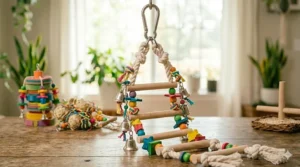
Setting Up a Complete Bonka Bird Toy Rotation System
Creating an effective toy rotation system transforms random purchases into a strategic enrichment program that maintains your bird’s interest year-round. Here’s a practical weekly structure that works for most medium-sized birds (adjust quantities for larger or smaller species):
Week 1-2: Destruction Focus
- Install 2198 Pinata Hat or similar shreddable toy
- Position near favorite perching spot to encourage investigation
- Supplement with 1654 Crinkle Shred Paper scattered in a foraging tray
- Expected outcome: significant cage mess, but satisfied shredding drive
Week 3-4: Puzzle Solving
- Swap in 1886 Disk Sneaker
- Remove shredded remnants from previous toys
- Add fresh Mini Sneakers with hidden treats
- Expected outcome: increased problem-solving attempts, less mess
Week 5-6: Climbing and Exercise
- Reintroduce or reposition 1047 Rope Charm Perch
- Adjust height to encourage stretching or climbing
- Pair with bells (1099) at different cage levels to create auditory exploration path
- Expected outcome: increased movement, calmer behavior
Week 7-8: Foraging Intensive
- Bring back 1730 Foraging Heart (or similar previously used toy)
- Refresh old toys by adding new crinkle paper inside
- Hide favorite treats in multiple locations
- Expected outcome: extended quiet engagement periods
The key is tracking what works. Maintain a simple log noting which toys were installed when, how long your bird engaged with each one, and any behavioral changes you noticed. After 8 weeks, you’ll have clear data showing which toy types your specific bird prefers, allowing you to weight future rotations toward those categories.
Storage matters. Keep unused toys in sealed containers in a different room to prevent scent memory from reducing novelty when you reintroduce them. Wash removable components between rotations to eliminate bacteria buildup and refresh scents. For toys that have been partially destroyed but still have useful components, salvage the intact pieces—those bamboo tubes from the Foraging Heart can be reused in DIY configurations, and undamaged sneakers can be paired with new assemblies.
Budget management tip: Instead of buying all seven toys simultaneously, start with 3-4 across different categories (one shreddable, one puzzle, one permanent piece like bells or rope perch). Use the first rotation cycle to determine what your bird actually engages with, then invest more heavily in those specific toy types for your subsequent purchases. This prevents the common mistake of accumulating fifteen toys that all serve the same function.
Common Mistakes When Buying Bonka Bird Toys (And How to Avoid Them)
Mistake 1: Prioritizing Appearance Over Function
What happens: You buy the toy that looks cutest in the product photo, not the one that matches your bird’s behavioral needs. Your parrot ignores it completely because the colors that appeal to human eyes don’t necessarily interest birds, or the toy type doesn’t align with their natural foraging style.
Solution: Before clicking purchase, ask yourself: “What behavior am I trying to encourage?” If the answer is “shredding,” choose paper-based toys regardless of how pretty wooden alternatives look. If it’s “problem-solving,” invest in puzzle configurations even if simple bells would photograph better in your cage. Function first, aesthetics second.
Mistake 2: Buying Based on Bird Size Alone
What happens: You own a conure (medium bird), so you exclusively buy medium-sized toys, missing opportunities in the small and large categories that might better match your specific bird’s personality and chewing strength.
Solution: Consider personality and beak strength alongside size. A gentle conure might do better with some small bird toys designed for cockatiels, while an aggressive conure might need large bird options built for small Amazons. The size categories are guidelines, not absolute rules.
Mistake 3: Installing Every Toy at Once
What happens: You buy five new toys, install them all simultaneously, and your bird becomes overwhelmed by the sudden cage transformation. They retreat to their safe corner and refuse to investigate any of the new additions, effectively wasting your investment.
Solution: Introduce toys one at a time over several days. Let your bird fully investigate and accept each new addition before adding another. Some birds need weeks to accept novel objects—this is normal neophobia, not a reflection on toy quality.
Mistake 4: Never Cleaning or Rotating Toys
What happens: Toys accumulate months of bacteria, dried food, and fecal matter, creating health hazards. Or toys remain in the same position so long that your bird stops seeing them entirely—they become part of the cage background rather than active enrichment.
Solution: Establish a weekly cleaning routine for washable toys and a monthly rotation schedule. Even if you only own four toys total, switching their positions and pairings makes them feel new again. Remove obviously contaminated items immediately.
Mistake 5: Expecting Permanent Toys to Last Forever
What happens: You’re shocked when your bird destroys a “durable” rope perch after four months, feeling like the manufacturer misled you about longevity.
Solution: Reframe expectations. “Durable” means it lasts longer than cheaper alternatives, not that it’s indestructible. Rope perches lasting 4-6 months is actually excellent longevity compared to paper toys that last 1-2 weeks. Calculate cost-per-week rather than judging solely on absolute lifespan.
Mistake 6: Choosing Toys Based on Other Species’ Reviews
What happens: You read glowing reviews from macaw owners about a particular toy’s durability, buy it for your budgie, and discover it’s so oversized your bird can’t even manipulate it effectively.
Solution: Filter reviews by species when possible. If you own a cockatiel, prioritize feedback from other cockatiel owners over reviews from Amazon parrot owners, even if those reviews are more positive. Cross-species recommendations rarely transfer effectively.
Mistake 7: Dismissing Partially Destroyed Toys
What happens: Your bird has shredded 60% of a toy, so you throw the entire thing away, including the still-intact metal chain, undamaged wood beads, and functional bells that could be salvaged.
Solution: Reclaim usable components from destroyed toys. Those metal bells, intact bamboo sections, or undamaged acrylic pieces can be reconfigured into new toys using additional rope, chain, or quick-links. This dramatically reduces your long-term toy budget.
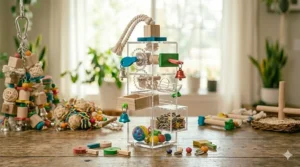
Bonka Bird Toys vs. Traditional Alternatives: Real-World Performance
| Factor | Bonka Bird Toys | Big Box Pet Store Brands | Generic Craft Materials |
|---|---|---|---|
| Material Safety | Bird-safe dyes, non-toxic materials verified | Usually safe, but inconsistent quality control | Unknown/untested for avian safety |
| Design Focus | Natural foraging behaviors, species-specific sizing | General appeal, one-size-fits-most approach | Not designed for birds at all |
| Durability | Medium-high; designed for appropriate destruction | Low-medium; often too fragile or too hard | Varies wildly; no standardization |
| Cost Efficiency | Higher upfront, but better engagement per dollar | Lower initial cost, but frequent replacement needed | Cheapest upfront, but safety risks |
| Customer Support | Direct from small business, responsive to concerns | Corporate channels, slow response | None available |
Looking at this comparison, Bonka occupies a sweet spot for owners who’ve outgrown pet store toys but aren’t ready to invest in ultra-premium custom toy makers. The primary advantage isn’t raw durability—it’s the designed-for-purpose engineering that makes toys last the right amount of time. A toy that’s too durable becomes boring before it breaks; one that’s too fragile never provides satisfaction.
The safety difference matters more than most owners realize. Craft store materials might use dyes that are safe for human skin contact but toxic if ingested, or adhesives that off-gas harmful compounds in enclosed cage environments. Bonka’s 30+ years in the industry means they’ve already navigated these issues—you’re benefiting from decades of trial, error, and veterinary consultation built into each product.
From a behavioral standpoint, the species-specific sizing approach yields better results than generic “bird toy” options. A toy sized for a macaw won’t engage a parakeet effectively; one designed for finches won’t challenge a conure’s problem-solving abilities. Bonka’s category system (X-Small, Small, Medium, Large, X-Large) aligns with actual beak strength and body size better than vague pet store labels.
The cost analysis is more complex than pure price comparison. A $20 Bonka foraging toy that provides 8 weeks of daily engagement costs $2.50 per week. A $12 pet store toy that your bird ignores after two days costs effectively infinite dollars per week of useful enrichment. Value is measured in behavioral outcomes, not receipt totals.
Long-Term Cost Analysis: Bonka Bird Toys Investment
Understanding the true cost of bird toy enrichment requires calculating monthly expenses across different ownership approaches:
Budget Approach (DIY-Heavy):
- 2x Mini Sneakers: ~$6/month
- 1x Crinkle Shred Paper: ~$10 every 3 months = $3.33/month
- Salvaged components from destroyed toys
- Monthly total: ~$9-$12
- Annual total: $110-$145
Balanced Approach (Mixed New + Rotation):
- 1x new destruction toy monthly: ~$16/month
- 1x new puzzle toy quarterly: ~$20/4 months = $5/month
- 1x permanent fixture annually (rope perch, bells): ~$25/12 months = $2/month
- Supplementary crinkle paper: ~$3/month
- Monthly total: ~$26
- Annual total: $312
Premium Approach (Frequent Replacement + Variety):
- 2x new toys monthly: ~$35/month
- Quarterly specialty items: ~$50/4 months = $12.50/month
- Regular bell/component upgrades: ~$5/month
- Multiple crinkle paper refills: ~$8/month
- Monthly total: ~$60
- Annual total: $720
Most medium bird owners (conures, cockatiels, quakers) find the Balanced Approach optimal—enough variety to prevent boredom without breaking the budget. The key is strategic purchasing: invest in permanent components (bells, quality rope perches) that last years, budget for monthly consumables (shreddable toys, foraging paper), and supplement with quarterly special purchases for birthdays or behavior modification needs.
Hidden cost savings emerge when you factor in avoided veterinary expenses. Birds with inadequate enrichment frequently develop feather plucking disorders, aggressive behaviors, or stress-related health issues that require expensive veterinary intervention. A $300 annual toy budget is negligible compared to a single $800 vet visit for feather plucking treatment that may or may not succeed.
For budget-conscious owners, the Bonka 1099 Cow Bells represent exceptional value—$12 for components you’ll use for years across dozens of DIY configurations. Similarly, the 1654 Crinkle Shred Paper stretches further than most owners expect when used strategically to refresh existing toys rather than consumed all at once.
Seasonal and Life Stage Considerations
Bird enrichment needs shift throughout the year and across their lifespan. Tailoring your Bonka toy selections to these patterns improves outcomes significantly.
Spring/Breeding Season (Even for Non-Breeding Birds): Hormonal changes make birds more aggressive and territorial. Increase destruction outlets like the 2198 Pinata Hat to redirect nesting behaviors away from furniture destruction. Add more paper-based materials to satisfy shredding urges that would otherwise target your curtains or books. Avoid introducing entirely new toy types during this period—stick with familiar categories presented in novel configurations.
Summer/High Activity Period: Longer daylight hours mean birds are awake and active longer. Emphasize cognitive challenge toys like the 1886 Disk Sneaker that require sustained problem-solving, preventing boredom during extended wake periods. Increase rotation frequency to weekly rather than bi-weekly to match higher engagement rates. This is also optimal timing for training new behaviors using bell signals from the 1099 set.
Fall/Molting Season: Birds experiencing feather regrowth often feel uncomfortable and irritable. Provide softer toys and perches like the 1047 Rope Charm Perch that won’t irritate sensitive skin. Reduce noisy toys temporarily—bells and rattling components may be more annoying than entertaining during this stressful period. Focus on gentle foraging activities with crinkle paper rather than demanding puzzle toys.
Winter/Lower Activity Period: Shorter days mean less active time but potentially more boredom during confined indoor periods. Rotate toys more frequently (every 4-5 days instead of weekly) to compensate for reduced novelty from shorter exposure times. This is excellent timing to introduce new toy types gradually—your bird has more patience for the slow acceptance process when they’re not hormonally driven or molting.
Chick to Juvenile (0-1 Year): Young birds exploring their environment need safe, simple toys without small parts that can be swallowed. Mini Sneakers work perfectly—large enough to prevent ingestion, soft enough to prevent injury. Avoid bells and chains initially; introduce them only after the bird demonstrates controlled beak use.
Young Adult (1-3 Years): Peak curiosity and energy levels demand maximum variety and challenge. This is the perfect stage for the full Bonka rotation system with weekly changes and diverse toy types. Birds this age learn fastest, so invest in puzzle toys and training components that teach problem-solving skills they’ll retain lifelong.
Mature Adult (3-10+ Years): Established preferences emerge. By now you know whether your bird prefers shredding, climbing, or puzzles—weight your purchases toward their demonstrated favorites while maintaining some variety. Quality matters more than quantity; a single excellent toy your bird loves outperforms five mediocre options they ignore.
Senior Birds (10+ Years): Reduced mobility and energy levels require accessible enrichment that doesn’t demand excessive climbing or manipulation. Focus on perch-integrated toys like the Rope Charm Perch, or position foraging toys at comfortable heights rather than requiring acrobatics. Increase familiar comfort items while reducing introduction of entirely new categories—senior birds have less tolerance for neophobia.
❓ Frequently Asked Questions
❓ How often should I replace bonka bird toys?
❓ Are bonka bird toys safe for cockatiels and budgies?
❓ Can I wash and reuse bonka bird rope toys?
❓ What's the best bonka bird toy for feather plucking?
❓ Do bonka bird foraging toys really work for picky eaters?
Conclusion: Making Smart Bonka Bird Toy Choices in 2026
After examining seven core products from Bonka’s lineup and analyzing them through the lens of actual bird behavior rather than marketing promises, several clear patterns emerge. The best bonka bird toys aren’t necessarily the most expensive or the most complex—they’re the ones that accurately match your specific bird’s developmental stage, personality traits, and species-specific needs.
For owners just starting their enrichment journey, begin with three foundational purchases: a pack of Mini Sneakers for versatile foot toy exploration, the 1730 Foraging Heart (or size-appropriate equivalent) for natural shredding behaviors, and a bag of 1654 Crinkle Shred Paper to extend the functionality of both. This $35-45 foundation provides destruction, foraging, and manipulation opportunities covering most birds’ core behavioral needs.
Budget-conscious owners should prioritize the 1099 Cow Bells and build around them—these permanent components offer unlimited reconfiguration potential without ongoing replacement costs. Pair them with the economical Crinkle Shred Paper for refilling homemade foraging containers, and you’ve created a sustainable enrichment system at minimal ongoing expense.
Birds with diagnosed behavioral issues (feather plucking, excessive screaming, cage aggression) need therapeutic enrichment focusing on appropriate destruction outlets. Invest more heavily in consumable shreddable toys like the 2198 Pinata Hat, accepting their short lifespan as a necessary cost of providing adequate behavioral intervention. These aren’t luxuries—they’re essential management tools that often prevent expensive veterinary treatment.
Experienced owners ready to optimize their systems should focus on strategic rotation rather than accumulating more toys. Seven well-chosen toys rotated through a structured 8-week cycle outperform fifteen random purchases left permanently installed. Use the rotation schedule outlined earlier, track your bird’s engagement patterns, and refine your approach based on actual observed behavior rather than assumption.
The most critical insight from this analysis is that price and value rarely align in bird toys. A $12 bag of shred paper your bird ignores has zero value regardless of its low cost. A $24 puzzle toy that occupies your bird for two hours daily over three months delivers exceptional value despite its higher price. Measure success in behavioral outcomes—reduced aggression, decreased screaming, healthier beak condition, increased cage exploration—not receipt totals.
Remember that toys are tools, not decorations. Their purpose is activating natural behaviors, providing mental stimulation, and preventing the psychological deterioration that occurs when intelligent birds lack appropriate enrichment. Every dollar invested in quality toys potentially saves hundreds in future veterinary expenses and thousands in property damage from under-stimulated birds redirecting their energy toward your furniture, walls, or themselves.
Choose deliberately, rotate consistently, monitor honestly, and adjust strategically. Your bird’s quality of life depends not on how many toys they have, but on how well those toys match what they actually need.
Recommended for You
- 7 Best Planet Pleasures Bird Toys Your Parrot Will Love 2026
- 7 Best Super Bird Creations Toys Every Parrot Owner Needs 2026
- 7 Best Bird Grooming Perches That Actually Work – 2026
Disclaimer: This article contains affiliate links. As an Amazon Associate, I earn from qualifying purchases. If you purchase products through these links, we may earn a small commission at no additional cost to you.
✨ Found this helpful? Share it with your friends! 💬🤗
