
In This Article
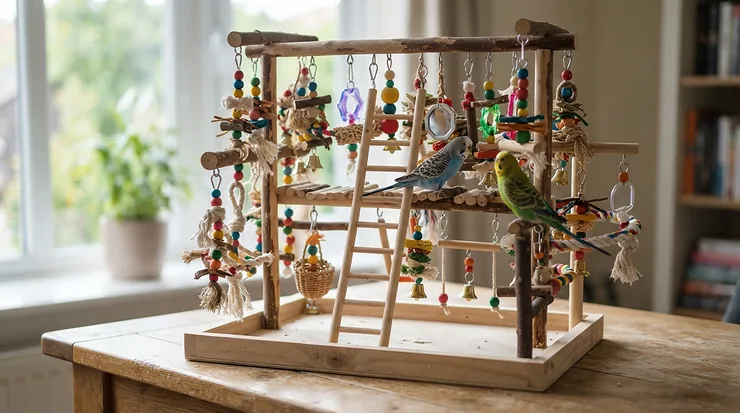
Foraging toys to prevent feather plucking are puzzle, hide-and-seek, and shreddable toys that make a captive bird work for food or treats. They redirect the beak-and-brain energy that can otherwise turn on the bird’s own plumage, giving natural instincts a safe, satisfying outlet.
Now the uncomfortable part. A bird that plucks isn’t just “being dramatic.” Feather-damaging behavior covers a whole ladder of habits, from chewing the feather edges to snapping shafts to pulling feathers out whole, and the RSPCA’s avian knowledge base is blunt that calling it “just boredom” without a vet check is simplistic. Royal Veterinary College guidance goes further: many plucking birds have an underlying medical or dietary problem. So the first move is always an avian vet. Toys come second.
But second matters enormously. Once the medical box is ticked, boredom-driven plucking is one of the few drivers you can influence from your living room, with your wallet and a little cardboard. In the wild, parrots spend a big chunk of the day hunting food. In your house, dinner arrives in a bowl in four seconds. That leftover time and energy has to go somewhere.
This guide ranks seven real products, explains what the specs mean for an actual beak, and covers enrichment toys for plucking parrots, calming toys for feather-plucking cockatiels, shredding toys to stop feather destruction, an honest look at sprays, and a toy rotation schedule you can start tonight.
Quick Comparison: Foraging Toys to Prevent Feather Plucking at a Glance
| Toy | Format | Best For | Budget Tier |
|---|---|---|---|
| Planet Pleasures Pineapple Foraging Bird Toy | Shreddable, spiky treat-hider | Cockatiels to Amazons | Budget |
| Planet Pleasures Octopus Piñata Bird Toy | Piñata-style shredder | Value-focused owners | Budget |
| Super Bird Creations Bagel Cascade | Refillable peel-and-chew core | Greys, small cockatoos, Amazons | Budget to mid |
| Super Bird Creations PVC Forager | Lid-and-tube puzzle | Foraging beginners | Budget |
| Super Bird Creations Activity Wall | Cage-side climbing and foraging mat | Conures, Quakers, cockatiels | Mid |
| Wesco Pet Chiquito Bird Kabob | Chewable skewer | Pure shredding sessions | Budget |
| SunGrow Bird Chew Toy | Foraging blocks | Medium and large parrots | Budget to mid |
Looking at the grid, the PVC Forager is the gentlest on-ramp for a bird that has never worked for food, while the Bagel Cascade and Bird Kabob are shredding-first choices. If your bird plucks mostly from frustration, mixing one puzzle (PVC Forager) with one destroyer (Bird Kabob) covers both needs for less than a single fancy gadget.
💬 Just one click — help others make better buying decisions too!😊
Top 7 Foraging Toys to Prevent Feather Plucking: Expert Analysis
Everything below comes from spec sheets, retailer listings, and aggregated buyer comments. I haven’t handled these toys, and I won’t pretend otherwise. Think of this as a research brief from someone who read far too many parrot-toy reviews so you don’t have to.
1. Planet Pleasures Pineapple Foraging Bird Toy — spiky hiding spots for treats
The spikes aren’t decoration. They create pockets where a treat disappears from view, which turns snack time into a small treasure hunt.
It comes in four sizes: small at roughly 5 inches tall, up to extra-large at about 11. That range matters because a toy that’s too big gets ignored and one that’s too small gets demolished in an afternoon. The maker lists it as suitable from finches and budgies through cockatiels and Amazons, which is generous, so I’d size up for anything with a serious beak.
On paper, this is a strong fit for birds whose plucking tracks with nervous energy. Shreddable fibrous material gives the beak something to dismantle, and the hidden treats add the “work for it” step that vets recommend. The manufacturer also claims shredding eases stress in anxious birds. Treat that as marketing until your own bird proves it.
I couldn’t verify a deep pool of independent reviews for this exact toy, so I’m not going to invent a verdict. Related Planet Pleasures piñata-style toys appear repeatedly in Chewy’s best-of roundups, which at least signals steady demand.
Pros:
- ✅ Hiding spots between spikes encourage real searching
- ✅ Four sizes fit finches through large parrots
- ✅ Shreddable fibers give beaks a productive target
Cons:
- ❌ Independent review data is thin
- ❌ Heavy chewers will finish it fast
Expect a budget-tier price, generally under $25 depending on size; check current price. Verdict: excellent value for small and medium birds.
2. Planet Pleasures Octopus Piñata Bird Toy — best value per shred session
This is the “no fuss” option. Hepper’s roundup crowned it the best-value pick, and Chewy files it under exercise, chew toys, and foraging.
It’s offered in three sizes, which is the spec that matters most. Matching size to beak keeps the toy in the sweet spot where it’s destructible but not instantly disposable. As the name suggests, the octopus design should give several dangling bits to grab, though I’d confirm material details on the current listing before buying for a bird that swallows what it shreds.
Here’s the analytical angle: a plucking bird often has a beak that’s “on” and nothing to point it at. A piñata-style toy is a decoy target. It’s not a puzzle in the strictest sense, so pair it with a treat-hiding toy like the PVC Forager if your bird needs a thinking task too.
Reviewer sentiment is the part I can only partly confirm. The toy appears widely in editorial best-of lists, but I couldn’t pull a clean set of verified customer comments. Judge it by your bird’s reaction in week one.
Pros:
- ✅ Three sizes make matching beak strength easier
- ✅ Frequently listed as a value pick
- ✅ Simple design needs no learning curve
Cons:
- ❌ More shredder than puzzle
- ❌ Disposable by design, so budget for replacements
Price range: under $20 for smaller sizes in most listings; check current price. Verdict: the best “first purchase” for a bird that mostly needs something to destroy.
3. Super Bird Creations Bagel Cascade — refillable shredding for big beaks
Most shred toys are one-and-done. This one has a refillable core, which changes the long-term math.
The Bagel Cascade measures about 12 by 4.5 by 4.5 inches. Four strands of plastic links dangle from a PVC core filled with 24 peel-and-chew compressed-cardboard “bagels.” Because you can restock the bagels, you’re replacing the cheap part rather than the whole toy. The maker pegs it for African greys, Amazons, Eclectus, small cockatoos, and mini macaws.
Why that matters for plucking: greys and cockatoos sit near the top of the species most often seen with feather-destructive behavior. A toy that rewards sustained peeling gives a high-risk bird a long task.
Reviewer themes are genuinely mixed, which I trust more than uniform praise. Owners of greys and cockatoos report their birds loved it, and the refill option gets cheers. Others say the cardboard didn’t last, one bird destroyed it quickly, one ignored it entirely, and one buyer worried the plastic chain is chewable.
Pros:
- ✅ Refillable core extends the toy’s life
- ✅ Big-bird sizing suits greys and small cockatoos
- ✅ Peel-and-chew action absorbs serious beak energy
Cons:
- ❌ Plastic links can be chewed through
- ❌ Some birds ignore it entirely
Price: roughly the $15-$35 range depending on seller and whether bagels are bundled; check current price. Verdict: good value if your bird takes to it, and the refill trick makes it better over time.
4. Super Bird Creations PVC Forager — the gentlest foraging starter
Lift the lid, tip the tube, collect the treat. It’s the “foraging 101” toy.
The PVC Forager pairs colorful plastic beads with a drinking-water-grade PVC elbow pipe, and treats are sold separately. The hardware chain is nickel plated, and one retailer describes the parts as dishwasher-safe, which makes cleanup painless. A buyer notes there’s room for larger treats like Nutriberries, which matters because tiny compartments frustrate birds more than they challenge them.
That’s the key insight for plucking birds: frustration is already part of the problem. A toy that’s solvable in minutes, then slightly harder next week, builds confidence instead of adding stress. Hepper’s testers suggest it suits smaller parrots, since large species can chew through it quickly.
The reviewer warning is clear. One macaw owner reported the plastic covers destroyed in about ten minutes. If your bird is a demolition expert, skip this and pick the Bagel Cascade.
Pros:
- ✅ Easy puzzle ideal for foraging beginners
- ✅ Room for larger treats avoids frustration
- ✅ Parts are simple to clean
Cons:
- ❌ Large birds can wreck the plastic covers
- ❌ Treats must be bought separately
Price: under $30 in most listings; check current price. Verdict: a smart, cheap confidence builder for small to medium birds.
5. Super Bird Creations Activity Wall — climb, chew, and forage on one mat
Think of it as a playground you clip to the cage. Everything’s within reach, and nothing is “just décor.”
The medium Activity Wall measures roughly 12 by 14 inches and attaches via plastic baby links. It’s decorated with natural vine rings, colorful wooden slats, “birdie bagels,” and assorted links. The listing recommends it for conures, Quakers, cockatiels, greys, and Amazons, though size-wise I’d call it a small-to-medium bird toy.
Here’s the real-world reading. A wall hangs vertically, so a bird has to climb, stretch, and explore it, and that adds physical activity to the mental kind. For plucking birds who spend hours perched and fidgeting, that’s a meaningful shift in how the day is spent.
Reviewers are upbeat but realistic. Conure owners say their birds love climbing it and go through several per year, and one reviewer called it a problem solved. “Several per year” is the honest cost of any toy that gets used.
Pros:
- ✅ Combines climbing, chewing, and exploring
- ✅ Clips on without taking floor space
- ✅ Natural vine and wood textures keep it interesting
Cons:
- ❌ Wears out in months for active chewers
- ❌ Medium size is too small for macaws
Price: typically in the budget-to-mid range, under $40; check current price. Verdict: strong value for conures, Quakers, and cockatiels.
6. Wesco Pet Chiquito Bird Kabob — the pure-shredding workhorse
When the goal is “give the beak something to destroy,” simple wins.
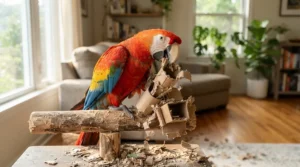
Chewy classes the Bird Kabob as a chew toy suited to cockatiels, conures, Amazons, and hookbills. A cockatiel-focused roundup recommends it specifically as the “destruction toy” in a balanced rotation, paired with a box or mat where the bird digs for seeds. That’s smart advice, and it’s exactly how I’d use it.
The skewer-style design should hand a bird multiple pieces to pull apart, though I couldn’t verify the exact materials, so check the current listing for bird-safe components before you buy. Shredding matters because many plucking birds have a strong urge to peel, strip, and tear. Give that urge a target and the feathers lose competition.
Review data here is limited. I’ll say that plainly rather than invent glowing quotes. Where the toy gets named, it’s as a dependable shredding option.
Pros:
- ✅ Cheap enough to replace weekly
- ✅ Works for cockatiels through Amazons
- ✅ Great partner for a puzzle toy
Cons:
- ❌ No treat-hiding element
- ❌ Limited verified review detail
Price: budget tier, generally under $20; check current price. Verdict: buy two so you always have a fresh one ready to swap in.
7. SunGrow Bird Chew Toy — top-ranked foraging blocks for bigger parrots
This one earns its slot by popularity. Both Chewy’s roundup and Hepper’s guide put it first.
The SunGrow Bird Chew Toy is listed as medium-and-large parrot foraging blocks for the cage. Hepper named it best overall for parrots. I couldn’t confirm every material detail from listings, so I’ll steer you to the current product page for specifics, but the block format suits parrots that need something sturdy to gnaw and search.
What it means in practice: medium and large parrots wear through light toys quickly, and plucking in big parrots tends to be intense. A heftier block-style toy can deliver longer sessions, which is the point. Vets emphasize that toys taking longer to destroy or solve give more benefit than ones finished in five minutes.
Because I can’t verify detailed customer comments, I’ll limit the review claim to this: editorial testers repeatedly rate it highly. That’s useful, but it’s not a substitute for watching your own bird’s face.
Pros:
- ✅ Sized for medium and large parrots
- ✅ Foraging-block format encourages searching
- ✅ Consistently ranked top-tier in roundups
Cons:
- ❌ Too large for small birds
- ❌ Material details need checking on the listing
Price: budget-to-mid tier; check current price. Verdict: a sensible anchor toy for bigger beaks.
Full Spec Comparison
| Toy | Size (listing) | Format | Best For | Price Tier | Review Pattern |
|---|---|---|---|---|---|
| Planet Pleasures Pineapple Foraging Bird Toy | S 5″ to XL 11″ | Spiky shredder | Small to medium birds | Budget | Thin data |
| Planet Pleasures Octopus Piñata Bird Toy | Three sizes | Piñata shredder | Value seekers | Budget | Editorial favorite |
| Super Bird Creations Bagel Cascade | 12″ x 4.5″ | Refillable core | Greys, cockatoos | Budget to mid | Mixed to positive |
| Super Bird Creations PVC Forager | Medium/Large | Lid puzzle | Beginners | Budget | Fun but breakable |
| Super Bird Creations Activity Wall | 12″ x 14″ | Cage-side mat | Conures, cockatiels | Mid | Upbeat |
| Wesco Pet Chiquito Bird Kabob | Varies | Chew skewer | Shredding | Budget | Limited |
| SunGrow Bird Chew Toy | Medium/Large | Foraging blocks | Bigger parrots | Budget to mid | Editorial top pick |
The table shows a pattern: the cheapest toys are the most destructible, and the longest-lasting are the mid-priced ones. If you can afford only one purchase, the Bagel Cascade gives the best cost-per-hour for a big bird, while the PVC Forager is the better pick for small birds learning the ropes. The Bird Kabob quietly offers the lowest cost per shred.
Boredom-Driven Plucking: What Vets Actually Say
Let’s be precise, because “my bird is bored” is the most common and most oversimplified diagnosis in parrot ownership.
UC Davis’s behavior service lists behavioral triggers including lack of stimulation, sleep deprivation, and sexual frustration. Medical causes include poor diet, toxins, infections, parasites, and other diseases. Royal Veterinary College points to seed-heavy diets and inadequate UV exposure as common contributors. So boredom-driven plucking is real, but it often arrives with company.
A useful clue from Texas A&M’s veterinary team: a bird can’t pluck its own head, so a plucker typically has a full head of feathers and bare patches elsewhere. If you see that pattern, book the vet visit.
Two more traps. First, loose feathers make poor toys, since playing with them may start a plucking habit. Second, sudden dramatic changes in a bird’s surroundings can trigger anxiety behaviors. Both points shape how you introduce toys: gradually, and without feathers.
The sobering note from UC Davis is that follicle damage can be permanent, and “success” often means reduced severity or frequency rather than a miracle. That’s not defeatist. It’s why early, steady enrichment beats a panicked toy shopping spree.

Foraging Enrichment Benefits: What the Research Shows
The evidence for foraging enrichment benefits is some of the most encouraging in avian behavior. Research by Lumeij and Hommers, summarized by Veterinary Practice, found that extending foraging time improved plumage in African grey parrots with chronic plucking, with condition improving with every extra hour spent foraging. Wild parrots can spend up to six hours a day searching for food.
Lafeber’s veterinary summary adds that enriching young orange-winged Amazons with foraging substrates and more physical complexity prevented or reduced psychogenic feather picking, and that birds given enrichment performed less stereotypic behavior overall. Some researchers even suggest feather picking may be a redirected foraging behavior, though species differences mean we can’t draw tidy conclusions.
Translate that to your living room:
- More time on task. A toy that takes 40 minutes to dismantle beats one that takes four.
- Physical movement. Climbing and reaching burn energy that otherwise becomes fidgeting.
- Confidence. Solving a puzzle gives a bird a win, which matters for nervous types.
None of this is a guarantee. It’s a strong, evidence-backed lever, which is why foraging toys to prevent feather plucking belong in every plan alongside a vet check and diet fixes.
How to Choose Foraging Toys to Prevent Feather Plucking
Here’s the framework, in order of importance:
- Get the vet green light first. Rule out medical and dietary causes so you’re not treating the wrong problem.
- Match size to beak. A toy a bird demolishes in minutes gives little benefit, and an oversized one gets ignored.
- Start easy. Lafeber suggests toys that require some action to get food, building toward knots, latches, and chewable untreated wood. Begin with visible, simple rewards.
- Favor longevity. Toys that take a long time to solve or destroy give more cognitive value.
- Verify bird-safe materials. Skip anything with uncertain metals, dyes, or glues.
- Add variety of type. Combine a puzzle, a shredder, and a climbing element.
- Supervise the first sessions. Watch for swallowed chunks or frayed rope.
Do that, and the buying decision gets easy.
Enrichment Toys for Plucking Parrots: Matching Toy to Species
Not all parrots plucked equal. Enrichment toys for plucking parrots should reflect what each species does with its beak and brain.
Greys and cockatoos sit among the species more prone to feather-destructive behavior, per University of Liverpool veterinary guidance. They tend to be intense, intelligent, and fast at dismantling things. The Bagel Cascade and SunGrow Bird Chew Toy give that intensity a long job.
Amazons and Eclectus usually appreciate chewing plus a puzzle element. A shredder like the Octopus Piñata paired with a hide-and-seek element hits both.
Conures and Quakers love climbing. The Activity Wall suits that perfectly and keeps them moving.
Whatever the species, add a foraging “tree” if you can. Lafeber describes it as a separate structure with multiple climbing areas where you hang toys and foraging devices. It’s the difference between a toy and an environment.
One more principle: enrichment toys for plucking parrots only work if the bird actually engages. If a toy is ignored for three days, don’t keep re-offering it. Swap and retry later.
Calming Toys for Feather-Plucking Cockatiels
Let’s be honest: no toy sedates a bird. “Calming” here means redirecting nervous energy into something satisfying. Calming toys for feather-plucking cockatiels succeed by occupying the beak and feet.
Cockatiels are natural ground feeders, which is why foraging boxes work beautifully. Fill a small box with shreddable paper, safe chewables, and a few treats, and let the digging begin. A cockatiel-focused guide from Psittacology also recommends preening toys with small loose pieces the bird can pull out, which satisfies the urge to tug at things that aren’t feathers.
Good choices include the Pineapple Foraging Bird Toy in small size, the Activity Wall for climbing, and a Bird Kabob for shredding sessions. If your cockatiel chews rope toys, remove them, since swallowed fibers are a hazard.
And a bonus note: avoid feather-based toys entirely. Texas A&M’s guidance warns that playing with loose feathers can spawn a plucking habit. Choose paper, wood, or fiber instead.
Shredding Toys to Stop Feather Destruction: Why Destruction Is the Point
Parents hate this part. You buy a toy, and the goal is for your bird to demolish it. Shredding toys to stop feather destruction work because they give a pulling, tearing, peeling urge a legal outlet.
Think about what a bird is doing when it plucks: gripping, tugging, shearing. Those motions are the same ones you want to see on a cardboard bagel or a paper-wrapped skewer. A satisfied shredder has less need to improvise on its own body.
Practical tips:
- Choose materials that come apart in pieces the bird can safely discard.
- Offer a fresh shredder daily when you’re first redirecting the habit.
- Keep a spare. A cabinet stash of Bird Kabob toys beats a bare cage.
- Watch for swallowing. Shred, don’t eat.
The Bagel Cascade is the standout here because refilling is cheaper than rebuying. For a smaller bird, the Octopus Piñata gives a similarly satisfying demolition project.
Affordable Anti-Plucking Spray for Birds: What to Know Before You Buy
Search results are crowded with promises, so here’s the sober version. Affordable anti-plucking spray for birds generally falls into two buckets: bitter-tasting deterrents and “natural” or homeopathic remedies.
Aristopet Stop Pick Spray, sold in Australia, is described as an extremely bitter spray meant to discourage feather picking. Pluck No More, from King’s Cages, is a homeopathic remedy added to drinking water or sprayed on the plucked area. The maker says it needs two or more bottles depending on severity, and also states it isn’t a substitute for avian veterinary care.
Here’s my analysis. The “affordable” label hides the real cost: if a course needs multiple bottles, the price multiplies. The success stories are testimonials from sellers and forums, not controlled studies, and some keepers argue sprays solve nothing because plucking is usually behavioral. Forum users also report birds learning to fear the spray bottle.
My advice:
- Ask your avian vet before using any product on skin or in water.
- Never spray the face or eyes.
- Prefer pump bottles over aerosols, since bird respiratory systems are famously fragile.
- Treat sprays as a support, with foraging toys as the main strategy.
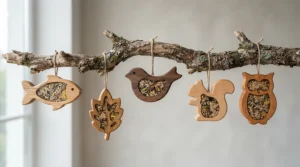
Toy Rotation Schedule: A Simple 4-Week Plan
A toy rotation schedule keeps novelty high without the chaos that can stress a bird. Remember, sudden dramatic change can trigger anxiety, so rotate gradually.
Week 1: Learn the bird. Offer one easy puzzle (PVC Forager) and one shredder (Bird Kabob). Note what gets attention.
Week 2: Swap one, keep one. Replace the less-loved toy with a new type, such as the Pineapple Foraging Bird Toy. Keep the favorite as an anchor.
Week 3: Add movement. Clip on the Activity Wall or a climbing element.
Week 4: Reintroduce the first-week toys. Birds often treat a returning toy as brand new.
A daily rhythm helps too. One avian clinic suggests treating enrichment like an exercise plan: active foraging earlier in the day and calmer shreddable toys in the evening. Keep two or three toys in the cage and store the rest.
Real-World Scenarios: Matching Toys to Real Households
Scenario 1: The apartment cockatiel owner on a tight budget. A cockatiel, a small cage, and about a $30 budget. Start with a PVC Forager and a Bird Kabob, then add a homemade foraging box using paper and a few treats. Rotate weekly.
Scenario 2: The grey parrot owner working from home. A busy bird, lots of daytime hours, intense chewing. Anchor the cage with a Bagel Cascade and a SunGrow Bird Chew Toy, stock refills, and use the Activity Wall at lower levels. Because greys are high-risk plucking candidates, keep the vet in the loop.
Scenario 3: The conure household. Active, climbing-focused birds. The Activity Wall is the headline, with an Octopus Piñata for evening shredding. Expect to replace items several times a year.
In all three, the principle is identical: mix a puzzle, a shredder, and a movement element.
Problem → Solution: When Foraging Toys Don’t Seem to Work
Problem: The bird ignores the toy. Solution: Make it easier. Leave treats visible, use a favorite food, and place the toy near where the bird already sits.
Problem: It’s destroyed in minutes. Solution: Go bigger or tougher. A SunGrow Bird Chew Toy or Bagel Cascade gives more material.
Problem: The bird gets frustrated. Solution: Drop the difficulty a notch. Frustration is the last thing a plucker needs.
Problem: Plucking continues. Solution: Return to the vet. Persistent plucking often has a medical component, and relapses are common.
Common Mistakes When Buying Foraging Toys to Prevent Feather Plucking
- Skipping the vet. Toys can’t fix an infection or a deficiency.
- Buying one expensive toy. Variety beats a single showpiece.
- Ignoring size. Too small gets swallowed, too large gets ignored.
- Using feathers as toys. They can encourage the habit.
- Overhauling the cage overnight. Sudden big changes can raise anxiety.
- Expecting instant results. Even when behavior improves, regrowth takes time, and follicle damage can be permanent.
Avoid these, and your spend goes much further.
Foraging Toys vs Anti-Plucking Collars and Sprays
| Approach | What It Does | Strength | Limitation | Best For |
|---|---|---|---|---|
| Foraging toys (Bagel Cascade, PVC Forager) | Redirects energy, adds mental work | Addresses root boredom | Needs consistency | Long-term prevention |
| Sprays (Pluck No More, Aristopet Stop Pick Spray) | Deters or soothes | Easy to apply | Evidence mostly anecdotal | Short-term support with vet approval |
| Vet-prescribed collars | Physically blocks access | Protects skin | Can cause stress and rubbing | Severe, skin-damaging cases |
UC Davis notes that collars are typically reserved for extremely destructive cases at risk of skin damage, and that medication must be paired with environmental and behavioral change. The takeaway: UC Davis’s veterinary behavior guidance positions environment as the foundation, not an optional extra. Use foraging toys to build that foundation, and layer other tools only when your vet recommends them.
✨ Ready to Put Those Beaks to Work?
🔍 Give your bird the challenge it’s been missing. Click any highlighted product above to check current pricing and availability, then start with one puzzle and one shredder. A busy beak is a happier bird, and your feathers will thank you! 🦜
Long-Term Cost and Maintenance
Cost-per-hour is the metric that matters. A cheap shredder that lasts a day and a pricier refillable toy that lasts weeks may cost the same over a month. The Bagel Cascade wins on refillability, while Bird Kabob toys win on sheer cheapness.
Maintenance is minimal but real:
- Inspect toys weekly for frayed rope, loose metal, or splinters.
- Wash reusable parts. The PVC Forager has parts one retailer lists as dishwasher-safe.
- Replace worn Activity Wall mats before they unravel.
- Budget for several replacements a year with active chewers.
A realistic annual plan for one bird is a handful of shredders, a puzzle or two, and one climbing element. Spread out, that’s modest compared with the cost of repeated vet visits for a chronic plucker.
FAQ
❓ Do foraging toys really stop feather plucking?
❓ How many toys should a cockatiel have in the cage at once?
❓ Is anti-plucking spray safe for birds?
❓ How often should I follow a toy rotation schedule?
❓ What's the cheapest way to start enrichment for a plucking bird?
Conclusion
Feather plucking is exhausting to watch, and the guilt can be crushing. But here’s the hopeful reality: you hold more cards than you think. After a vet visit and a diet check, foraging toys to prevent feather plucking give your bird what captivity so often takes away, which is something meaningful to do with its beak and brain.
The research backs the approach. More foraging time has been tied to better plumage in grey parrots, and enrichment has reduced picking in young Amazons. Pair that with sensible product choices (a PVC Forager to build confidence, a Bagel Cascade or SunGrow Bird Chew Toy for big beaks, a Bird Kabob for daily shredding, and an Activity Wall for movement) and you’ve built a real plan.
Use a toy rotation schedule, introduce changes gradually, and be patient. Even in good cases, regrowth takes time and relapses happen. Progress means fewer plucking episodes, calmer evenings, and new feathers coming in.
✨ Your bird can’t ask for a better day, so build one. Pick a toy, check current pricing, and give that busy beak a job today. 🦜
Recommended for You
- E-Collar For Bird Feather Plucking: 7 Proven Picks (2026)
- Feather Conditioning Spray Reviews For Birds: 7 Best Picks (2026)
- Feather Supplement For Macaws: 7 Best Picks For 2026
Disclaimer: This article contains affiliate links. As an Amazon Associate, I earn from qualifying purchases. If you purchase products through these links, we may earn a small commission at no additional cost to you.
✨ Found this helpful? Share it with your friends! 💬🤗
