
In This Article
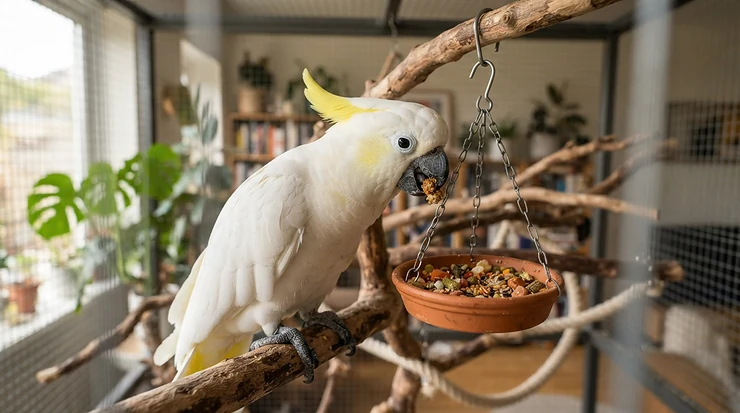
Pellets for cockatiels with sensitive stomachs are complete, uniformly formulated bird foods built from digestible ingredients, moderate fat, and sensible fiber. Every piece carries the same nutrition, so your bird can’t cherry-pick the richest seeds, which is often where digestive trouble starts. For many owners, that consistency is the whole point.
Here’s a little biology humor to start. Strictly speaking, a cockatiel doesn’t have a “stomach” the way you do. It has a crop, a proventriculus, and a gizzard, a three-stage processing line that does not forgive abrupt menu changes. When droppings turn loose, regurgitation appears, or appetite swings wildly, the diet is the first place to look. The MSD Veterinary Manual notes that poor diets remain a major problem in pet birds, historically because of high-fat, seed- and nut-based feeding that lacks many essential vitamins and minerals.
So which formulas make sense when your bird’s digestion is touchy? I compared seven real, widely sold options on fiber content, ingredient simplicity, probiotic content, pellet size, and the genuine review themes that show up across retailer listings. You’ll find gentle digestion pellets for cockatiels, a few easy to digest pellets for small parrots, and a realistic look at what “limited ingredient formula” and “gut flora support” claims can and can’t deliver.
One honest caveat: no pellet is a treatment. If symptoms persist, an avian vet should examine your bird before any bag of food gets the credit or the blame. Think of this guide as your shopping brain, not a diagnosis.
Quick Comparison: 7 Pellets for Cockatiels with Sensitive Stomachs at a Glance
Before the deep dive, here’s the cheat sheet. Fiber figures come from published guaranteed analyses, and where a label wasn’t verifiable during research, the table says so rather than guessing.
| Product | Best For | Crude Fiber (Max) | Standout Feature |
|---|---|---|---|
| Harrison’s Adult Lifetime Fine | Organic-minded owners | About 4.5-5% | Whole organic grains, no seed hulls |
| Roudybush Daily Maintenance Mini | Plain, additive-free feeding | Check label | No added sugars, colors, or flavors |
| Lafeber Premium Daily Diet for Cockatiels | Picky eaters on a moderate budget | Check label | Whole egg, no artificial colors |
| ZuPreem Smart Selects Medium Bird | Probiotic-curious owners | 9% | Bacillus probiotics in a blend |
| Kaytee Exact Rainbow Cockatiel | Seed-to-pellet converts | Check label | Prebiotics and probiotics, extruded |
| TOPs Organic Mini Pellets | Corn- and soy-free feeding | 8% (listings vary) | Cold-pressed organic recipe |
| Hari Tropican Lifetime Formula Granules for Cockatiels | Lowest-fiber approach | 3.5% | Dense 2 mm granules |
Looking at the comparison above, Hari Tropican Lifetime Formula Granules for Cockatiels is the clear low-fiber option, while ZuPreem Smart Selects Medium Bird sits at the opposite end with a 9% ceiling and added probiotics. Harrison’s Adult Lifetime Fine lands in the sensible middle with the cleanest organic story, and TOPs Organic Mini Pellets is the pick if dodging corn and soy matters most. Several labels deserve a quick check on your actual bag, because manufacturers revise formulas and retailers copy numbers imperfectly.
💬 Just one click — help others make better buying decisions too!😊
Top 7 Pellets for Cockatiels with Sensitive Stomachs: Expert Analysis
Each pick below follows the same logic: what the specs mean in practice, who it suits, what reviewers consistently say, and where it falls short. Nothing here is based on personal testing; it’s spec analysis plus aggregated review sentiment.
1. Harrison’s Adult Lifetime Fine — organic, hull-free everyday gentleness
Harrison’s Adult Lifetime Fine is built from certified organic whole grains and legumes rather than refined flours or by-products, which is the kind of recipe a touchy digestive tract often handles well. The pieces are small, irregular nuggets with no seed hulls to sort through.
The guaranteed analysis lists crude protein at 14% minimum, crude fat at 6% minimum, and crude fiber at roughly 4.5-5% maximum depending on the label version. In plain English, that’s a moderate-fat, moderate-fiber profile that won’t flood a small gut with rich calories. The maker suggests about 1½ to 3 teaspoons daily for a cockatiel, which makes portion control refreshingly easy.
Based on the spec comparison, this is the one to shortlist first for an otherwise healthy bird whose trouble seems tied to rich seed mixes. The catch is that it isn’t a true limited ingredient formula: corn, soy, peas, lentils, and peanut kernels all appear, so a bird reacting to a specific ingredient needs a closer label read.
Reviewers on retail listings consistently describe picky cockatiels accepting it and long-lived birds eating it for years. A recurring complaint is nugget size varying between bags, which the brand attributes to using real, intact ingredients.
Pros:
- ✅ Certified organic whole grains and legumes
- ✅ No seed hulls, less sorting and mess
- ✅ Moderate fat and fiber for daily feeding
Cons:
- ❌ Not a truly limited ingredient list
- ❌ Nugget size can vary between bags
Expect small bags in the mid-teens range and 5-lb bags in roughly the $35-$60 range depending on retailer. It’s premium pricing, justified if organic matters to you. Check current price.

2. Roudybush Daily Maintenance Mini — plain, additive-free simplicity
Roudybush Daily Maintenance Mini wins attention for what it leaves out. The maker describes it as formulated for healthy adult birds, made without added sugars, colors, flavors, or animal by-products, and sized for birds from about three inches tall, including cockatiels.
For a sensitive bird, “boring” is a feature. A recipe without sugar or dye removes two common variables when you’re trying to work out what upsets a gut. The brand also publishes a clear gradual-switch protocol and recommends not adding vitamin or mineral supplements on top, which prevents the accidental over-supplementation that Merck warns about for vitamin A. A related Roudybush formula, Low Fat Maintenance, lists a crude fiber maximum of 2% and ingredients like ground corn, ground wheat, soybean meal, and alfalfa, which shows the house style of simple ground grains. I couldn’t verify the Mini’s current fiber figure, so check the label.
I couldn’t find verifiable customer review text for this specific product during research, so I won’t characterize reviewer sentiment. What the specs suggest is a food that may look unexciting to a seed-loving bird, so patience during conversion is realistic.
Pros:
- ✅ No added sugars, colors, or flavors
- ✅ Clear, gradual conversion instructions from the maker
- ✅ Sized for cockatiels and similar small parrots
Cons:
- ❌ Contains soy and wheat for sensitive birds
- ❌ Plain appearance may slow picky-eater acceptance
Pricing varies widely by bag size and seller, so check current price before comparing it with the others.
3. Lafeber Premium Daily Diet for Cockatiels — whole egg and a long track record
Lafeber Premium Daily Diet for Cockatiels descends from the first bird pellets developed by Dr. Lafeber in the 1970s, and its ingredient logic still reads as digestion-friendly: ground non-GMO corn, soybean meal, oat groats, and whole egg, which the maker describes as a highly digestible form of protein.
Molasses makes up less than 3% of the diet, and the company states no sucrose is added beyond that. The energy level is quoted at about 3,267 kcal/kg for the cockatiel formula, so a measured daily serving does the job. What that means in practice: oat groats are a gentle, familiar grain, and a modest molasses coating boosts acceptance without turning the bowl into candy.
On paper, it’s a strong middle path for owners who want additive-light food without organic pricing. I couldn’t verify a current fiber figure, so confirm it on the label if fiber is your priority.
Reviewers on retail listings describe very picky cockatiels devouring it, and several describe feeding it to the same birds for well over a decade. Many pair it with foraging foods like Nutri-Berries, which suggests it’s usually one piece of a varied plan.
Pros:
- ✅ Whole egg adds highly digestible protein
- ✅ No artificial colors reported by reviewers
- ✅ Strong long-term loyalty in reviews
Cons:
- ❌ Contains corn and soy
- ❌ Molasses coating may not suit every bird
A 5-lb tub typically falls in the roughly $22-$35 range, a good value per ounce. Check current price.
4. ZuPreem Smart Selects Medium Bird — probiotics in a pellet-seed-fruit blend
ZuPreem Smart Selects Medium Bird isn’t a pure pellet. It’s a blend of pellets, seeds, vegetables, and fruit, with no sunflower seeds and added Bacillus licheniformis and Bacillus subtilis fermentation products marketed for digestive support.
The guaranteed analysis shows protein at 12% minimum, fat between 8% and 11.5%, and crude fiber at 9% maximum, the highest ceiling in this lineup. That extra fiber could suit a bird that does well on bulk, but it’s a poor match for owners who want a low-fiber, ultra-gentle start. The maker positions pellets as at least 60% of the daily diet, with cockatiel portions of about 1/8 to 1/4 cup.
Here’s the honest trade-off: the colorful pieces and listed added colors make this less of an “elimination diet” food. It’s best for owners who want gut flora support and variety, not those hunting a minimal ingredient list.
Retail listings show strongly positive ratings, but I couldn’t verify detailed review themes beyond general acceptance, so treat the praise as a signal rather than proof.
Pros:
- ✅ Bacillus probiotics included
- ✅ No sunflower seeds in the blend
- ✅ Easy fit for seed-to-pellet transitions
Cons:
- ❌ Added colors and fruit pieces
- ❌ Highest fiber ceiling may not suit every bird
Expect roughly the mid-teens to about $20 range for a 2.5-lb bag. A fair value if probiotics matter to you. Check current price.
5. Kaytee Exact Rainbow Cockatiel — extruded nuggets with prebiotics and probiotics
Kaytee Exact Rainbow Cockatiel is an extruded, 100% consumable food with no shells or seed hulls, and the maker highlights omega-3s plus prebiotics and probiotics for digestive health. Retailer data lists total Bacillus species at a minimum of 100,000 CFU per gram.
The guaranteed analysis lists protein at 14% minimum and fat at 5% minimum. I couldn’t verify the Rainbow fiber figure, though the related Exact Natural cockatiel formula lists a 5% maximum. The feeding guide is about 1/4 cup (roughly 20 g) daily, a handy benchmark for any cockatiel pellet.
For a bird with a sensitive digestion, the 5% fat level is moderate, and the uniform nuggets prevent the selective eating that undermines seed mixes. The downside is color: a Chewy Q&A states the ingredients include artificial colors, while other sellers describe the formula differently, so read your bag.
Reviewers describe devoted cockatiels that refuse everything else, including a 23-year-old bird. Others report a picky bird rejecting it at first, which is typical for any new food.
Pros:
- ✅ Prebiotics and probiotics in the formula
- ✅ 100% consumable, no hulls or shells
- ✅ Moderate fat for daily feeding
Cons:
- ❌ Color additives reported on some listings
- ❌ Fiber figure unclear for the Rainbow formula
Typically in the roughly $10-$20 range for a 3-lb bag, making it a budget-friendly option. Check current price.
6. TOPs Organic Mini Pellets — corn- and soy-free cold-pressed option
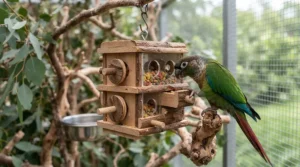
TOPs Organic Mini Pellets take a different approach: USDA Organic, cold-pressed rather than extruded, with no corn, soy, or peanuts. The mini size is about 3/32 inch in diameter and recommended for budgies, cockatiels, lovebirds, and parrotlets.
The published analysis lists protein at 13.6% minimum, fat at 5% minimum, and fiber at 8% maximum, although a few seller listings show different figures for the mini size, so verify on your bag. The ingredient list is long and plant-heavy (alfalfa, millet, barley, rice, quinoa, spinach, kelp, rose hips, and more), so it’s the opposite of limited ingredient, but it’s useful if you suspect corn or soy.
TOPs also states no added vitamins or minerals, which some owners love and some avian vets may question for a bird’s sole diet. Ask your vet whether it suits your bird as a main food or a complement.
I couldn’t verify detailed independent review themes for this exact product, so I’ll leave sentiment out rather than guess.
Pros:
- ✅ USDA Organic and cold-pressed
- ✅ No corn, soy, or peanuts
- ✅ Mini size suits cockatiel beaks
Cons:
- ❌ Long ingredient list, not limited
- ❌ No added vitamins or minerals
Typically around the roughly $18-$30 range for 4-lb bags depending on seller, a premium niche choice. Check current price.
7. Hari Tropican Lifetime Formula Granules for Cockatiels — lowest-fiber, dense 2 mm granules
Hari Tropican Lifetime Formula Granules for Cockatiels are extruded 2 mm granules sized for cockatiels, lovebirds, rosellas, and parrotlets, designed to reduce waste and avoid crumbling into dust.
The listed analysis shows protein at 13% minimum, fat at 7% minimum, crude fiber at only 3.5% maximum, plus calcium at 0.8% minimum. That’s the lowest fiber ceiling of the seven, which suits owners wanting a low-fiber staple. Because it’s a “lifetime” maintenance formula with lower protein and calcium, it targets non-molting, unstressed birds rather than breeders.
The recipe includes corn, soybean meal, wheat, dehulled peanuts, sunflower, and brown rice, so it’s not limited ingredient. One retailer listing even shows sugar, while another describes natural fruit flavors, so check the label on your bag.
Reviewers frequently mention a fruity smell that wins over picky birds, minimal dust, and success converting seed-eaters. One conure owner noted larger pellets were wasteful and the small size worked better, a useful reminder that size matters.
Pros:
- ✅ Lowest fiber ceiling in this group
- ✅ Dense granules, little dust or waste
- ✅ Fruity aroma helps picky birds convert
Cons:
- ❌ Contains peanuts, sunflower, corn, and soy
- ❌ Ingredient lists vary between sellers
Usually around the roughly $20-$25 range for a 4-lb bag, a solid value. Check current price.
How to Choose Pellets for Cockatiels with Sensitive Stomachs
Choosing pellets for cockatiels with sensitive stomachs is less about brand loyalty and more about matching a few measurable traits to your bird’s pattern. Work through these steps in order:
- Start with your avian vet. Persistent loose droppings, vomiting, or weight loss can signal disease that no pellet will fix, and the vet can say which diet suits your bird.
- Match pellet size to the beak. Mini and fine formulas, like 2 mm granules or small nuggets, reduce waste and are easier for small parrots to handle.
- Read the fiber line. A low ceiling like 3.5% suits a gentle start, while 8-9% adds bulk that some birds handle fine and others don’t.
- Scan for added colors, sugar, and flavors. Fewer variables make troubleshooting easier.
- Decide whether you want probiotics. They’re a marketing-friendly feature, so weigh them against actual evidence (more on that below).
- Prefer uniform pellets over blends. A single consistent piece prevents cherry-picking, the original sin of seed mixes.
- Buy a small bag first. Birds are individuals, and a three-month commitment to a rejected 25-lb box is nobody’s idea of fun.
Fiber Content: How Much Is Right for a Sensitive Digestive Tract?
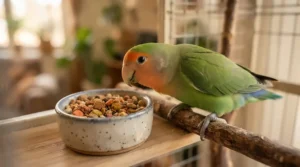
Fiber content is the number most owners skip, and it’s one of the most informative on the label. Too little can leave a bird’s droppings and gut motility out of balance, while too much can feel like dietary sandpaper to a delicate system. The sweet spot depends on the individual bird.
Veterinary nutrition guidance offers a useful reference point: LafeberVet’s nutritional management of gastrointestinal disease in birds notes that birds with GI disease initially need a high-energy, low-fiber diet with easily digestible protein. That’s for sick patients under veterinary care, not a recipe for healthy cockatiels, but it explains why low-fiber options are popular first stops for owners of touchy birds.
| Product | Protein (Min) | Fat (Min) | Fiber (Max) | Form |
|---|---|---|---|---|
| Harrison’s Adult Lifetime Fine | 14% | 6% | 4.5-5% | Small organic nuggets |
| Roudybush Daily Maintenance Mini | Check label | Check label | Check label | Mini pellets |
| Lafeber Premium Daily Diet for Cockatiels | Check label | Check label | Check label | Pellets |
| ZuPreem Smart Selects Medium Bird | 12% | 8% (11.5% max) | 9% | Pellet-seed-fruit blend |
| Kaytee Exact Rainbow Cockatiel | 14% | 5% | Check label | Extruded nuggets |
| TOPs Organic Mini Pellets | 13.6% | 5% | 8% (listings vary) | Cold-pressed mini |
| Hari Tropican Lifetime Formula Granules for Cockatiels | 13% | 7% | 3.5% | Extruded 2 mm granules |
Reading the table, Hari Tropican and Harrison’s offer the lowest verified fiber ceilings, so they’re logical starting points for a cautious trial. ZuPreem Smart Selects and TOPs carry more bulk, which may suit birds that do better with higher fiber but warrants slower introduction. Whatever you choose, compare the label on your bag, because fiber is the figure retailers most often get wrong.
Gut Flora Support: Do Probiotics in Pellets Actually Help?
Gut flora support sounds like a no-brainer, and the marketing leans hard on it. ZuPreem Smart Selects Medium Bird and Kaytee Exact Rainbow Cockatiel both list Bacillus probiotics, and Kaytee’s retailer data puts the minimum at 100,000 CFU per gram.
The science is more nuanced. A published review of avian probiotics reports that probiotics are common in the pet bird industry, and recommends periodic use to replenish normal flora, use after antibiotic therapy, and use during stress. Related research on baby parrots found that beneficial Lactobacillus strains needed to be of avian origin to adhere to the crop lining, so “any probiotic” isn’t a safe assumption. Bacillus spores, the type in these pellets, are a different category, and I found no cockatiel-specific evidence proving digestive benefits.
What does that mean for you? Treat pellet probiotics as a possible bonus, not a reason to buy. If your bird just finished antibiotics, ask your vet which gut-support product they’d choose, since a vet can match strain and timing in a way a pellet label can’t. A food with simple ingredients and a gentle transition often does more for droppings than a CFU count on the bag.
Limited Ingredient Formula: When Simpler Is Better (and When It’s Just Marketing)
“Limited ingredient formula” is a popular phrase in dog food, but in bird food it isn’t a regulated term. That means you have to do the detective work yourself.
Among the seven, Roudybush Daily Maintenance Mini comes closest to the spirit of a limited ingredient approach, thanks to its simple ground-grain style, absence of sugar and colors, and animal by-product-free recipe. Lafeber Premium Daily Diet for Cockatiels keeps its core list short, built around corn, soybean meal, oat groats, and whole egg. On the other end, TOPs Organic Mini Pellets carries a long ingredient list of leaves, seeds, and spices, though it deliberately avoids corn and soy.
Here’s the practical takeaway. If you suspect one ingredient is the culprit, “limited” matters less than “different.” Switch to a pellet that omits the suspect ingredient and keep everything else stable for several weeks. Changing three things at once, such as brand, bird treat, and fresh produce, makes it impossible to tell what helped. And because ingredient lists differ between sellers, as with Hari Tropican, always trust the bag in your hand over a product page.
Easy to Digest Pellets for Small Parrots: Size, Texture, and Processing
Easy to digest pellets for small parrots depend on three things: how finely the food is sized, how it’s processed, and how digestible the ingredients are. Size gets the most attention, but digestibility gets the results.
Processing comes in flavors. Hari Tropican and Kaytee Exact Rainbow are extruded, which produces dense, uniform pieces with less dust. TOPs is cold-pressed, which the maker says preserves natural nutrients, and Roudybush is formulated in small crumble-style pieces for easier handling. Harrison’s nuggets are irregular on purpose, a side effect of using whole organic ingredients.
On ingredient digestibility, Lafeber highlights whole egg as a highly digestible protein source, and oat groats are a gentle grain base. Size still matters though: 2 mm granules like Tropican’s reduce waste, while overly large pieces get dropped, flicked, or ignored. Experience from reviewers backs this up, since one owner found the wrong pellet size wasteful until switching to the small version.
A final note on texture: some birds tolerate firm pellets easily, while others, especially older birds, may chew less efficiently. If your bird struggles, ask your vet whether lightly moistening the pellets is appropriate rather than improvising.
Gentle Digestion Pellets for Cockatiels vs Seed Mixes
Gentle digestion pellets for cockatiels solve a structural problem that seed mixes can’t: selective eating. The MSD Veterinary Manual notes that many parrots prefer sunflower seeds, which are low in calcium and protein and high in fat, and that seed-based diets are low in calcium and vitamin D and high in phosphorus.
| Factor | Gentle Pellets | Seed Mixes | Pellet-Seed Blends |
|---|---|---|---|
| Nutritional consistency | Same in every bite | Varies by what’s eaten | Partly consistent |
| Selective eating | Minimal | Common | Possible |
| Digestive predictability | Higher | Lower | Moderate |
| Mess | Low (few hulls) | High | Moderate |
| Best For | Harrison’s Adult Lifetime Fine, Hari Tropican | Training treats only | ZuPreem Smart Selects Medium Bird transitions |
The table shows why pellets win on predictability: when every bite is identical, droppings become a cleaner diagnostic signal. Blends such as ZuPreem Smart Selects can bridge the gap for seed-loving birds, but Merck’s guidance warns that even half-seed, half-pellet diets can leave vitamin A deficient if portions aren’t controlled. Seeds still have a role as small training rewards, just not as the main course.

Practical Usage Guide: How to Switch Without Upsetting Your Cockatiel’s Gut
The switch itself is where many “sensitive stomach” problems are created. Follow this schedule.
Weeks 1-2: Offer about 3/4 of the old food with 1/4 new pellets. This mirrors the gradual-switch approach published for Roudybush.
Weeks 3-4: Move to roughly 1/3 new food, then continue shifting toward 3/4 or more pellets as your bird accepts them.
Track the evidence. Line the cage with plain paper, not litter, so you can evaluate droppings. Weigh your bird daily on a gram scale; Lafeber’s switching guidance advises returning to the previous diet and restarting if weight falls more than 10%.
Use the “I’m eating this too” trick. The Roudybush guidance notes that many birds try foods they see their owners eating, so nibbling a safe treat in front of your bird can help.
Skip supplements. Merck notes that powdered supplements shouldn’t be sprinkled on seeds because most birds remove the hulls. Fortified pellets like Roudybush and Kaytee Exact Rainbow advise against extra vitamins entirely.
Offer fresh food every day. Harrison’s recommends serving fresh food daily rather than topping off old food, and keeping a measured portion keeps you honest.
✨ Ready to Find the Right Match?
🔍 Take your search for pellets for cockatiels with sensitive stomachs to the next level with these carefully selected options. Click on any highlighted item to check current pricing and availability. A calmer gut and happier droppings are well within reach! 🐦
Real-World Scenarios: Matching the Right Pellet to Your Bird
These are hypothetical profiles, designed to show how the analysis plays out.
Scenario 1: The senior seed fan. A 15-year-old cockatiel has eaten mostly seed for years, and the owner wants a lower-risk conversion on a moderate budget. A plain, additive-free recipe like Roudybush Daily Maintenance Mini, paired with the slow ratio schedule above, fits the cautious approach. If acceptance stalls, the fruity-smelling Hari Tropican is a reasonable second option.
Scenario 2: The budget-minded two-bird household. Two cockatiels, one with loose droppings after rich seed mixes, and a modest monthly food budget. Kaytee Exact Rainbow Cockatiel or Lafeber Premium Daily Diet for Cockatiels keeps costs reasonable, and the uniform nuggets stop the picky one from sorting. Weigh both birds weekly.
Scenario 3: The suspected corn-or-soy troubleshooter. An owner has noticed recurring regurgitation and wants to rule out common grains. After checking with an avian vet, they trial TOPs Organic Mini Pellets for several weeks while holding every other food constant. If droppings improve, they’ve learned something; if not, they’ve ruled one variable out.
In every scenario, the winning move is the same: change one thing at a time and write down what you see.
Problem → Solution Guide: Common Pellet Troubles and Fixes
Problem 1: Loose droppings during the switch. Slow down. Drop back to the previous ratio for a week, and if it persists, call your vet. A lower-fiber pellet like Hari Tropican can be a reasonable next trial.
Problem 2: Your bird flicks pellets out of the bowl. Size or texture may be wrong. Try a smaller formula, such as the 2 mm granules of Hari Tropican or the mini pieces in TOPs Organic Mini Pellets.
Problem 3: Total pellet refusal. Offer pellets in a separate bowl away from seeds, and let your bird watch you “eat” a few. A fruit-scented option like Hari Tropican or a more colorful food like Kaytee Exact Rainbow Cockatiel may win over a stubborn bird, though plain recipes like Roudybush can work given time.
Problem 4: Weight loss during conversion. Treat it seriously. Return to the old diet and consult your vet, as in the 10% rule above.
Problem 5: Inconsistent pellet size. With Harrison’s Adult Lifetime Fine, size variation is a known quirk of whole-ingredient manufacturing. Contact the maker if a bag looks dramatically different, since one buyer reported a bag with pellets about three times larger than usual.
Common Mistakes When Buying Pellets for Cockatiels with Sensitive Stomachs
Mistakes cost money and, worse, set progress back. Watch for these.
- Switching cold turkey. Gradual beats abrupt every time.
- Judging by color. Bright pieces look appealing to humans, but the label tells you more than the rainbow does. Check for added colors on blends like ZuPreem Smart Selects.
- Stacking supplements on fortified food. Merck also warns that too much vitamin A can cause problems, with pellet diets ideally containing 5,000-8,000 IU/kg of vitamin A.
- Buying giant bags first. Test a small bag before committing.
- Assuming grit helps. VCA notes that cockatiels do not need grit because they remove the outer hull before eating the kernel, so skip it.
- Changing five things at once. One variable at a time, always.
Long-Term Cost and Value: What Gentle Pellets Really Cost per Month
A cockatiel eats roughly 20 g of pellets daily by the Kaytee Exact Rainbow serving guide, about 600 g a month. These are rough estimates built from typical bag-size price ranges, and real prices vary.
| Product | Typical Bag Price Range | Estimated Monthly Cost | Value Verdict |
|---|---|---|---|
| Harrison’s Adult Lifetime Fine | $35-$60 (5 lb) | About $9-$16 | Premium, organic |
| Roudybush Daily Maintenance Mini | Varies, check current price | Varies | Verify locally |
| Lafeber Premium Daily Diet for Cockatiels | $22-$35 (5 lb) | About $6-$9 | Strong mid-range |
| ZuPreem Smart Selects Medium Bird | $15-$20 (2.5 lb) | About $8-$11 | Fair, adds probiotics |
| Kaytee Exact Rainbow Cockatiel | $10-$20 (3 lb) | About $4-$9 | Budget-friendly |
| TOPs Organic Mini Pellets | $18-$30 (4 lb) | About $6-$10 | Niche premium |
| Hari Tropican Lifetime Formula Granules for Cockatiels | $20-$25 (4 lb) | About $6-$8 | Solid value |
For most households, Kaytee Exact Rainbow and Lafeber deliver the lowest cost per month, while Harrison’s costs a few dollars more for organic certification. Cost matters less than consistency though: a pricey food your bird refuses costs more than a cheaper one it eats. Prices may vary by retailer and bag size, so check current price before buying.
FAQ
❓ How much pellet food does a cockatiel eat each day?
❓ Is organic pellet food better for cockatiels with sensitive stomachs?
❓ Should I buy a small bag before committing to a pellet brand?
❓ Can I mix two different pellet brands for my cockatiel?
❓ Do pellets replace a vet visit for digestive problems?
Conclusion
The best pellets for cockatiels with sensitive stomachs aren’t the fanciest or the cheapest; they’re the ones your bird eats consistently, in measured portions, with droppings that stay predictable. On the evidence, Harrison’s Adult Lifetime Fine is the safest premium pick, Hari Tropican Lifetime Formula Granules for Cockatiels offers the lowest fiber ceiling, and Roudybush Daily Maintenance Mini comes closest to a plain, additive-free approach. Lafeber Premium Daily Diet for Cockatiels and Kaytee Exact Rainbow Cockatiel are the friendliest on the wallet. ZuPreem Smart Selects Medium Bird suits owners who want probiotics and variety, while TOPs Organic Mini Pellets is the specialist choice for avoiding corn and soy.
Whichever you choose, treat the switch like a slow dance, not a sprint. Move gradually, change one thing at a time, weigh your bird, and keep notes. If symptoms persist, let an avian vet take the lead.
Recommended for You
- Pellets For Older Parrots With Kidney Issues: 7 Smart Picks (2026)
- Parrot Pellets For Picky Eaters: 7 Best Picks (Honest 2026 Guide)
- Pellets For Birds With Fatty Liver: 7 Best Picks (2026)
Disclaimer: This article contains affiliate links. As an Amazon Associate, I earn from qualifying purchases. If you purchase products through these links, we may earn a small commission at no additional cost to you.
✨ Found this helpful? Share it with your friends! 💬🤗
