
In This Article
A bird that stops eating doesn’t announce it with drama. It fluffs up, goes quiet, and slowly loses the one thing small bodies can’t spare: weight. That’s when many owners start hunting for a syringe feeder for sick bird care, scrolling past a dozen near-identical kits and formula labels that all promise the same miracle.
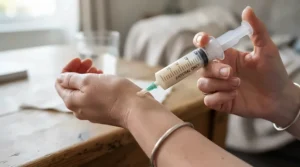
Here’s the honest version. A syringe feeder for sick bird support is a bridge, not a cure. It buys time while an avian vet works out why your bird stopped eating (a crop infection, yeast, a sluggish digestive tract, a virus), and it keeps calories flowing meanwhile. A crop distended with fluid and showing no motility needs immediate veterinary attention. Home feeding is the supporting act, never the whole show.
This guide is not a rewritten product listing. It walks through seven real products (three syringe kits, two hand-feeding formulas, two probiotic powders) and explains what each spec means in practice. You’ll also get a step-by-step crop feeding technique, honest numbers on hand-feeding formula temperature, a clear-eyed look at syringe feeder safety, and a frank take on probiotic powder vs liquid for pet birds. Where verified customer reviews exist, we summarize them as aggregated sentiment. Where they don’t, we say so rather than guess.
All prices are ranges only and change often, so check current price before buying. And if your bird is sitting on the cage floor, breathing with its tail bobbing, or vomiting, stop reading and call an avian vet now.
Quick Comparison: Best Syringe Feeder for Sick Bird Picks at a Glance
| Product | Type | Best For | Price Range |
|---|---|---|---|
| Pawfly 6-Piece Baby Bird Feeding Syringe Set | Syringe kit, 50 mL | Cockatiels, budgies, batch mixing | Budget, likely under $20 |
| Pitertul 10-Piece Hand Feeding Syringe Set | Multi-size syringe kit | Small birds needing precise doses | Budget, likely under $20 |
| Stainless Steel Ball-Tip Feeding Needle and Syringe Kit | Gavage-style kit | Vet-trained keepers only | Budget, likely under $25 |
| Harrison’s Organic Recovery Formula | Recovery formula | Anorexic or slow-digesting birds | Roughly $10-$20 (trial size) |
| Kaytee Exact Hand Feeding Formula | Hand-feeding formula | Weanlings, vet-approved support | Roughly $15-$25 |
| Vital Planet Flora Bird Probiotic Powder | Probiotic powder | Post-antibiotic gut support | Roughly $20-$35 |
| Equa Holistics HealthyGut Avian Probiotics | Probiotic powder | Multi-bird households | Roughly $15-$30 |
Looking at the table, the kits are cheap enough that the real decision is tip style and syringe size, not budget. The formulas are where quality differences show up, because Harrison’s Recovery Formula is built for ill birds while Kaytee Exact is designed for chicks. The probiotics sit at the end of the chain: useful support, but never the first purchase.
💬 Just one click, help others make better buying decisions too!😊
What Is a Syringe Feeder for Sick Bird Care?
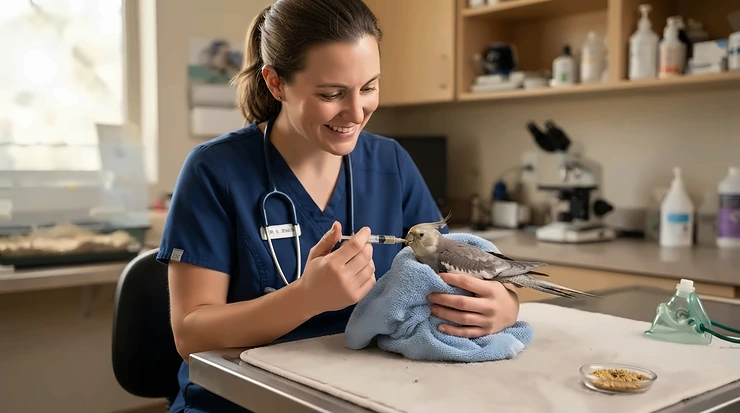
A syringe feeder for sick bird care is a needleless oral syringe, often fitted with a soft silicone or plastic tip, that delivers warmed liquid formula, water, or medication into a bird’s mouth in measured amounts. It gives you control over volume and speed, but it should support, not replace, an avian vet’s diagnosis.
Why does this matter? Birds hide illness, and a bird that refuses food can decline fast. Crop trouble is a common culprit. “Sour crop” is a catch-all term for crop infection, where the crop’s digestive waves slow or stop and the contents turn sour. You can read more in VCA Animal Hospitals’ guide to crop infections in birds. The takeaway is that the syringe is a delivery tool. What goes in it, how warm it is, and how you deliver it matter far more than the plastic itself.
Top 7 Syringe Feeder for Sick Bird Products: Expert Analysis
1. Pawfly 6-Piece Baby Bird Feeding Syringe Set — big-barrel kit with tubes and spoon
The standout is flexibility. The set pairs a 50 mL syringe with feeding tubes and a spoon, and is marketed for cockatiels, parakeets, and budgies. A spoon backup matters because some sick birds simply refuse a syringe tip.
That 50 mL barrel is far more than a budgie needs per feeding, and big barrels are clumsy for tiny doses. In practice, treat the capacity as mixing headroom, not a target volume. Draw only what one feeding requires. Interchangeable tubes let you switch tip size as your bird’s comfort changes.
Based on the spec sheet, this suits keepers of medium birds, or anyone who mixes a batch in the barrel and portions it out. Owners of finches or small parakeets should add a smaller barrel for precision.
On reviews: I couldn’t verify enough genuine customer feedback to summarize honestly, so treat this as an unproven-but-simple tool and inspect the tips on arrival.
Pros:
- ✅ Tubes and spoon included in one box
- ✅ 50 mL barrel handles batch mixing
- ✅ Suits cockatiel-sized birds well
Cons:
- ❌ Large barrel is imprecise for tiny doses
- ❌ Independent review data is thin
Expect budget pricing, likely under $20; check current price. Verdict: a solid backup kit rather than a precision instrument.

2. Pitertul 10-Piece Hand Feeding Syringe Set — multiple sizes for precise dosing
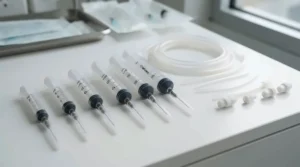
The standout is the size ladder. The set contains four 5 mL syringes, four 10 mL syringes, two 60 mL syringes, and ten extension catheters, with a transparent barrel and measuring scale.
That mix is smarter than it looks. Dedicating one syringe to formula, one to medication, and one to water prevents cross-contamination and the guesswork of a half-rinsed barrel. The clear scale lets you log exact milliliters, which is how you spot a bird eating less than yesterday. The listing describes the syringes as non-sterile plastic, so wash and dry them before first use.
For a finch, canary, or budgie, the 5 mL barrels are the useful ones. The 60 mL syringes are best reserved for mixing or rinsing. Among the top bird crop feeding syringe kits in this price tier, this is the one built around measuring rather than bundling gadgets.
On reviews: I couldn’t verify enough customer feedback to summarize fairly. The listing’s claims are about design, not proven durability.
Pros:
- ✅ Small 5 mL barrels for tiny doses
- ✅ Clear scale for logging volumes
- ✅ Enough syringes to rotate and wash
Cons:
- ❌ Non-sterile, so pre-wash required
- ❌ No spoon or soft-tip variety
Budget pricing, likely under $20; check current price. Verdict: best value for precision and record-keeping.
3. Stainless Steel Ball-Tip Feeding Needle and Syringe Kit — gavage-style kit for trained hands
The standout is that this is a professional-style gavage tool. The generic listing bundles curved ball-tip stainless steel needles with a 20 mL syringe, aimed at birds from finches to macaws. Ball tips deliver food straight to the crop, bypassing the mouth.
That directness is the risk. Hagen’s guidance warns that metal feeding tubes can pierce the crop and esophagus, letting food leak out. One retailer’s formula directions add that people inexperienced with tube feeding should defer to a professional.
Here’s what to weigh: gavage can be lifesaving for a bird too weak to swallow, but that judgment and the technique belong to your vet. If a vet has trained you, a metal ball tip is durable and easy to sterilize. If not, choose a soft-tip syringe instead.
On reviews: none verified, so no sentiment is claimed.
Pros:
- ✅ Durable stainless steel sterilizes easily
- ✅ Multiple curved needle sizes
- ✅ Efficient for vet-trained keepers
Cons:
- ❌ Rigid metal risks crop or esophagus injury
- ❌ Not suitable for untrained owners
Budget pricing, likely under $25; check current price. Verdict: skip it unless your avian vet has shown you how.
4. Harrison’s Organic Recovery Formula — vet-developed formula for stalled appetites
The standout is purpose. The listing positions it for birds with anorexia and slowed gastrointestinal emptying time, and notes it can be mixed into mash or syringe fed under vet guidance.
The label’s specs translate well. Analysis lists minimum 35% crude protein, 19% fat, and maximum 1% fibre. In plain terms, it’s calorie-dense and gentle, with little bulk to slow a tired gut. The maker’s directions call for 1 part powder to 1-3 parts drinking water heated to roughly 103°F, no microwave. Thin it for a syringe, thicken it for a spoon.
For sick adults, the formula suits owners whose vet has already OK’d hand-feeding. It also fits the delicate insectivorous species the maker highlights. Note that the ingredient list includes sugar, which is worth mentioning to your vet if your bird has yeast problems.
Aggregated review sentiment: buyers on Chewy describe using it as a stabilizing food when a vet wasn’t immediately available, and one describes weeks of hand-feeding a recovering bird.
Pros:
- ✅ Formulated for ill, injured, or recovering birds
- ✅ Adjustable thickness for syringe feeding
- ✅ Small trial sizes available
Cons:
- ❌ Costs more per ounce than chick formulas
- ❌ Contains sugar, so ask your vet
Roughly $10-$20 for a trial size, more for large bags; check current price. Verdict: the strongest formula here for true recovery feeding.
5. Kaytee Exact Hand Feeding Formula — everyday chick formula with clear directions
The standout is accessibility. Kaytee Exact is widely used among aviculturists for parrots. That familiarity means plenty of community know-how, though it’s built for growing chicks, not sick adults.
The manufacturer’s guide is useful for consistency. It advises cooling the mix to about 105°F (range 102-110°F), allowing the crop to empty before the next feeding, and notes that mixing too thin or diluting with other ingredients can leave a bird underfed. It also flags that dark green droppings may signal a temporary crop-emptying shutdown. That is a genuinely useful early-warning tip.
My analysis: this fits weanlings, or adult birds your vet approves for supplemental feeding. It isn’t a critical-care diet, so for a truly debilitated bird, your vet may steer you to something like a veterinary-only intensive care product. Reviews aren’t verified here, so I’m not summarizing them.
Pros:
- ✅ Widely available and familiar to keepers
- ✅ Clear manufacturer temperature and crop guidance
- ✅ Sensible price for routine hand-feeding
Cons:
- ❌ Designed for chicks, not ill adults
- ❌ Not a critical-care formulation
Roughly $15-$25 for mid-size bags; check current price. Verdict: a dependable budget choice when your vet approves it.
6. Vital Planet Flora Bird Probiotic Powder — multi-strain support for recovering guts
The standout is potency and dosing flexibility. Each serving contains 10 billion live cultures from seven strains plus organic prebiotics, in a tasteless powder that mixes into food or water.
The serving math is practical. The tub yields 640 servings for small birds, 160 for medium birds, and 80 for large birds. One tub stretches a long way for a budgie, but not for a macaw. “Clinically studied strains” is a manufacturer claim, so treat it as a plus rather than proof.
Sentiment from a third-party review site: Bird Venue’s roundup singled it out for its high-potency, multi-strain formula aimed at birds under stress or with digestive issues. That is one reviewer’s opinion, not a controlled trial.
Here’s the practical angle: pair it with your formula routine once your vet agrees, especially after antibiotics.
Pros:
- ✅ Seven strains plus a prebiotic
- ✅ Tasteless, blends into food or water
- ✅ Serving counts scale by bird size
Cons:
- ❌ Strain claims are not bird-trial proof
- ❌ Premium price per tub
Roughly $20-$35; check current price. Verdict: a strong pick for owners who want a high-CFU option.
7. Equa Holistics HealthyGut Avian Probiotics — scoop-included daily powder
The standout is convenience. It’s a daily probiotic and prebiotic powder with a scoop included, and the maker uses corn maltodextrin as a low-moisture carrier to help keep cultures viable.
The listing offers 120 servings, which suits a household with a few small birds. Some marketing claims are broad, such as helping “defend against feather picking.” Weigh those against the more modest, sensible purpose: support after stress or antibiotics.
The manufacturer also claims birds “need billions, not millions” of probiotics because of their fast digestive systems. That’s the company’s argument, not settled science, so use it as a label-comparison rule of thumb only.
I couldn’t verify enough customer reviews to summarize, so this remains a manufacturer-described product.
Pros:
- ✅ Scoop included for easy dosing
- ✅ 120 servings suit multi-bird homes
- ✅ Low-moisture carrier aids stability
Cons:
- ❌ Some claims are broad marketing language
- ❌ Independent review data is limited
Roughly $15-$30; check current price. Verdict: a sensible mid-priced alternative to the premium option.
How to Choose a Syringe Feeder for Sick Bird Recovery
- Match barrel size to bird size. Small birds need small barrels (about 1-5 mL), because big barrels make tiny doses guesswork. The Pitertul set covers this best.
- Prefer soft tips over metal. Soft silicone or plastic reduces injury risk, which is why the ball-tip needle kit is a vet-led choice only.
- Look for a clear scale. Logging milliliters is how you notice a bird eating less.
- Buy multiples. Separate syringes for formula, water, and medication prevent mix-ups and make washing easier.
- Pick the formula for the patient. Chick formula and recovery formula are not interchangeable, so ask your vet which fits.
- Confirm you can control temperature. A digital thermometer matters more than an extra tube.
- Treat probiotics as add-ons. Buy them after the feeding tools and formula are sorted.

Crop Feeding Technique: A Step-by-Step Guide
Good crop feeding technique is more valuable than any accessory. Follow these steps only under your avian vet’s direction for a sick bird.
Before you start
- Gently feel the crop. The maker of Harrison’s directs keepers to confirm the crop is almost empty before feeding.
- Mix fresh formula every time, and verify temperature with a thermometer (see below).
During the feed
- Wait for the feeding response. When the bird pumps its head, start feeding and aim toward the back right side of the mouth.
- Deliver slowly so the bird can swallow between pushes. That pause is your aspiration protection.
- Fill the crop without excess stretching.
After the feed
- Wipe the beak and feathers clean, since damp formula can irritate skin.
- Let the crop empty completely before the next meal.
Why the fuss? Crop stasis is common in hand-fed chicks, and formula that is too cold or too thick can cause it. The Merck Veterinary Manual’s overview of pediatric diseases in pet birds explains that treatment can involve emptying the crop and giving smaller, more dilute, more frequent feedings, which is a vet-directed step.
Hand-Feeding Formula Temperature: Getting It Right
Hand-feeding formula temperature is where good intentions turn dangerous. Sources disagree slightly, but they overlap. Hagen’s guidance puts the target slightly above body temperature, about 100°F, and no higher than 105°F. Kaytee suggests roughly 105°F, within a 102-110°F window. Harrison’s specifies about 103°F and says never to microwave.
The overlapping sweet spot is roughly 102-105°F. Aim for the lower half of that range, because the risks aren’t symmetrical. Crop burns come from overheated formula. Too cool causes trouble too: stasis and reluctance to eat.
Microwaves are the classic trap. Microwaving can leave hot pockets, so stir carefully and check temperature before and after. Better still, use warm water to mix and verify with a digital thermometer every time. Keep a cup of warm water nearby to hold the formula’s temperature during the feeding. Those are chick-formula guidelines, so for a sick adult, confirm targets with your vet.
Hand-Feeding Formula for Digestive Issues: What to Look For
Choosing hand-feeding formula for digestive issues means matching the formula to the problem, not to the brand you already own. Three features matter.
Digestibility. A low-fibre, easy-to-absorb formula asks less of a sluggish gut. That’s the logic behind Harrison’s Recovery Formula‘s 1% maximum fibre figure.
Calorie density. Sick birds can’t eat much at once, so dense formula delivers more energy per small feeding.
Consistency control. Formula that’s too thin lacks nutrition, and formula that’s too thick can form a hard ball in the crop. A formula that thins and thickens predictably is easier to manage.
There’s also a professional tier. Lafeber’s Emeraid Intensive Care formulas are for veterinary or professional use. Avian specialist Susan Orosz has said her team uses Emeraid Omnivore in birds that aren’t emptying the crop well or are very ill. If your bird is that unwell, ask your vet about Emeraid Intensive Care Omnivore rather than substituting a chick formula.
Probiotic Powder vs Liquid for Pet Birds
Probiotic powder vs liquid for pet birds is a genuinely unsettled debate, so here’s the reasoning rather than a verdict.
Powders are typically freeze-dried and shelf-stable, and products like Vital Planet Flora Bird and HealthyGut let you scale doses by scoop. Liquids are convenient in a water dish but depend on freshness. One avian-focused blog notes that liquid bacterial sources vary in value with manufacture date, and older stock has fewer live bacteria. That is anecdotal, but it fits a broader caution: a poorly made avian probiotic may have a shelf life of 100 days or less unless refrigerated.
Evidence for birds is modest. Recommended uses include periodic use, use after antibiotic therapy, and use during stress. Timing matters too. Birds on broad-spectrum antimicrobials are at higher risk of candidiasis, so gut support and vet monitoring go together. The Merck Veterinary Manual’s guide to digestive disorders of pet birds covers yeast and other causes.
My practical rule: choose powder for stability, check expiry dates, and add it to lukewarm food rather than hot liquid, since live cultures are heat-sensitive. Check the label for specifics.
Bird Digestive Supplement Reviews: What’s Actually Verifiable
Bird digestive supplement reviews are a minefield. Most retail listings carry a blend of genuine buyers, gifted reviews, and manufacturer copy. Here’s how to read them.
What is verifiable: ingredient panels, strain counts, and serving sizes. What isn’t: claims like “boosts immunity” or “prevents feather picking,” which rarely have published bird-specific trials behind them. Probiotic benefits in birds are described as “purported,” which tells you how cautious to be.
Third-party roundups help but aren’t proof. Bird Venue’s tested-style roundup favored Vital Planet Flora Bird for its potency and multi-strain design. That’s one opinion among many.
A quick review-reading checklist:
- Look for reviewers describing a specific species and problem, not generic praise.
- Discount five-star reviews that repeat label language.
- Treat any “cured my bird” story as anecdote, since illness has many causes.
- Confirm the same supplement isn’t already in your bird’s formula or water.
If a supplement has no verifiable reviews at all, say so and lean on your vet’s opinion instead of guessing.

Syringe Feeding vs Spoon Feeding vs Tube Feeding
| Method | Control | Aspiration Risk | Best For |
|---|---|---|---|
| Syringe with soft tip (Pitertul set, Pawfly set) | High | Moderate with slow technique | Most owner-led feeding |
| Spoon feeding | Lower | Lower | Birds that accept a spoon, chicks |
| Gavage/tube (ball-tip needle kit) | Very high | Injury risk if untrained | Vet-guided critical care |
Syringes hit the sweet spot for most keepers. They dose precisely and are easy to clean. Hagen notes that feeding with a syringe is sound if you understand the proper technique. Spoons are slower and gentler, and one hand-feeding guide argues that spoon feeding lets chicks feed more naturally, reducing aspiration and crop burns. Tube feeding is powerful but demands training.
Looking at the comparison, the practical move for most owners is a soft-tip syringe with a spoon as a backup. Reserve the tube for what your vet demonstrates in person. If your bird resists syringes, that’s a reason to ask your vet for options, not to escalate to metal tools alone.
Syringe Feeder Safety: Aspiration, Burns, and Red Flags
Syringe feeder safety comes down to three risks: aspiration, burns, and hygiene.
Aspiration happens when formula enters the airway. Harrison’s warns that incorrect technique can cause inhalation of formula, leading to pneumonia and death. Go slowly, aim to the side of the mouth, and stop if the bird coughs, clicks, or shakes its head.
Burns are the second danger. Crop burns typically follow overheated formula. A published case report describes that crop burns are seen in juvenile birds after feeding improperly warmed formula and can create a fistula from crop to skin. You can read the details in this crop burn case report on PubMed Central.
Hygiene is the quiet one. Wash and disinfect syringes after every feeding, since leftover formula grows bacteria fast. Always make fresh formula per feeding.
Call your vet immediately if you see:
- ⚠️ Formula bubbling from the nostrils
- ⚠️ Labored or clicking breathing after feeding
- ⚠️ A red, dark, or scabbed patch over the crop
- ⚠️ A crop that stays full for many hours
Real-World Scenarios: Matching Kit and Formula to Your Bird
Scenario 1: The recovering budgie. A budgie owner has a vet plan for supplemental feeding after a crop infection. Best match: the Pitertul set‘s 5 mL syringes for precise doses, plus Harrison’s Recovery Formula if the vet approves. Track milliliters per feeding in a notebook.
Scenario 2: The cockatiel on antibiotics. The vet has prescribed antibiotics and wants gut support afterward. Best match: the Pawfly set for batch mixing and Flora Bird added once the vet agrees, given the yeast risk that follows antibiotic courses.
Scenario 3: The multi-bird household on a budget. Three small birds, tight budget, one wobbling. Best match: Kaytee Exact if the vet approves, plus HealthyGut‘s 120 servings spread across birds. Keep separate syringes per bird to reduce cross-contamination.
Scenario 4: The bird too weak to swallow. No home kit is the answer here. This is the moment for emergency vet care, where tube feeding is performed by professionals, and the ball-tip needle kit remains off your shopping list.
Problem → Solution Guide for Sick-Bird Hand Feeding
Problem: The bird clamps its beak shut. Solution: Don’t force it. Try a spoon from the Pawfly set, offer formula at the correct temperature, and call your vet if refusal continues.
Problem: The crop is still full at the next feeding. Solution: Skip the meal and call your vet. Food sitting in the crop for more than three to four hours can signal crop stasis. Don’t stack fresh formula on top.
Problem: Formula clumps and clogs the tip. Solution: Mix thoroughly, let it rest briefly, and adjust the water ratio. Harrison’s allows 1-3 parts water, so thinner mixes flow through syringes more easily.
Problem: Droppings turn dark green. Solution: Kaytee notes this may indicate a temporary shutdown of crop emptying or a lack of food in the digestive system. Report it to your vet promptly.
Problem: You’re unsure whether it’s working. Solution: Weigh your bird daily on a gram scale, at the same time each day, and log volumes. Weight trends tell you more than appetite hunches.
Long-Term Cost & Maintenance: What a Feeding Kit Really Costs
| Item | Upfront Range | Value Note |
|---|---|---|
| Syringe kit (Pitertul set) | Budget | Lasts weeks with washing |
| Formula (Harrison’s Recovery Formula trial size) | Low-to-mid $10s | Cost per feeding is small for tiny birds |
| Probiotic (Flora Bird) | Mid-$20s to $30s | Stretches longest with small birds |
The math favors small birds. A tub of probiotic that serves hundreds of small-bird scoops costs pennies per dose, while the same tub empties quickly for a macaw. Kits are cheap, but replacing worn syringes is a smart habit, because cracked plungers and stiff tips are a hygiene and safety hazard.
Overall, spending more on the formula and a reliable thermometer, and less on gadgets, is where the money works hardest. Your total cost of ownership is dominated by vet visits, not plastic.

FAQ
❓ Can I use a syringe feeder for sick bird care without seeing a vet?
❓ What syringe size works best for a small sick bird?
❓ How often should I clean a bird feeding syringe?
❓ Can I mix probiotic powder into hand-feeding formula?
❓ What are the signs of crop burn or aspiration after feeding?
Conclusion
The best syringe feeder for sick bird care is the one that gives you control without adding risk. For most keepers, that means a soft-tip syringe kit such as the Pitertul 10-Piece Hand Feeding Syringe Set for precision, with the Pawfly 6-Piece Baby Bird Feeding Syringe Set as a spoon-equipped backup. Skip the Stainless Steel Ball-Tip Feeding Needle and Syringe Kit unless your vet has trained you.
On the formula side, Harrison’s Organic Recovery Formula is the most purpose-built option for ill birds, while Kaytee Exact Hand Feeding Formula is a familiar, budget-friendly choice when your vet approves. For gut support, Vital Planet Flora Bird Probiotic Powder and Equa Holistics HealthyGut Avian Probiotics are reasonable add-ons, not substitutes for diagnosis.
Remember the essentials: keep hand-feeding formula temperature in the roughly 102-105°F window, master your crop feeding technique, wash everything, and weigh your bird daily. The syringe buys time. Your avian vet finds the cause.
Recommended for You
- Small Humidifier For Bird Cage Room: 7 Best Safe Picks (2026)
- HEPA Air Purifier For Bird Rooms: 7 Best Picks For 2026
- Sample Collection Kit For Bird Vet: 7 Best Picks For 2026
Disclaimer: This article contains affiliate links. As an Amazon Associate, I earn from qualifying purchases. If you purchase products through these links, we may earn a small commission at no additional cost to you.
✨ Found this helpful? Share it with your friends! 💬🤗
