

In This Article
Here’s a truth most pet store employees won’t tell you: the cage you put your cockatiel in is the single most important purchase you’ll ever make for them. Not the toys. Not the pellets. The cage. Your tiel is going to spend the majority of their life inside that structure — climbing it, calling from it, sleeping in it, watching your every move through its bars. Get it wrong, and you’ll have a stressed, feather-plucking bird. Get it right, and you’ll have a confident, singing, whistle-back companion for the next 20-plus years.
Finding the best cockatiel cages sounds straightforward until you’re staring at 47 options on Amazon, half of which are technically designed for canaries and one of which appears to be made of wishful thinking and painted cardboard. That’s where this guide comes in. I’ve dug deep into real product specs, avian vet guidelines, and genuine customer feedback to give you a curated shortlist of enclosures that actually meet the physical and psychological needs of cockatiels — not just whatever the manufacturer decided to slap a bird sticker on.
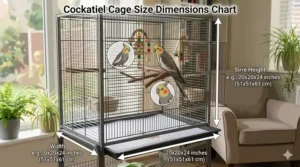
A cockatiel (Nymphicus hollandicus) is a mid-sized parrot that typically reaches 12–13 inches in length and needs horizontal flight space more than vertical height. The Association of Avian Veterinarians recommends a minimum of 2 square feet of floor space per bird, with most experts pushing for a cage at least 24″ wide × 24″ deep × 30″ tall as an absolute floor — not an ideal. Bar spacing must be between ½” and 5/8″ to prevent head entrapment. Keep these numbers in your back pocket as we walk through the top picks.
Quick Comparison Table: Best Cockatiel Cages at a Glance
| Product | Dimensions (with stand) | Bar Spacing | Best For | Price Range |
|---|---|---|---|---|
| Prevue Hendryx F050 Flight Cage | 37″L × 23″W × 60″H | ½” | Overall Best / Single-Bird or Pair | $150–$200 |
| Yaheetech 52″ Large Flight Cage | 31″L × 20.5″W × 52″H | 5/8″ | Best Value / Budget-Friendly | $80–$110 |
| Prevue Pet Products F040 Flight Cage | 31″L × 20.5″W × 53″H | ½” | Mid-Range / Everyday Use | $120–$160 |
| Kaytee Play N Learn Cage | 16″L × 16″W × 28″H (open) | ½” | Beginners / Secondary Cage | $45–$65 |
| Mcage Large Acrylic Clear Cage | 24″L × 16″D × 23″H | 3/8″ | Modern Aesthetic / Apartment Living | $60–$90 |
| Mcage Large Wrought Iron Flight Cage | 32″L × 19″W × 64″H | ½” | Multi-Bird / Maximum Space | $130–$170 |
| ZENY 53-Inch Flight Cage | 31″L × 19″W × 53″H | ½” | Budget-Large / Growing Flock | $70–$100 |
Looking at the table, the Prevue Hendryx F050 and the Mcage 64″ wrought iron offer the most cubic footage per dollar if space is your priority. The Yaheetech 52″ hits the sweet spot for budget buyers who refuse to compromise on flight room. And if you’re in a city apartment where aesthetics actually matter, the Mcage Acrylic stands alone. Budget doesn’t have to mean cramped — but it does mean managing trade-offs, which we’ll cover in detail below.
💬 Just one click — help others make better buying decisions too! 😊
Top 7 Cockatiel Cages: Expert Analysis
🥇 1. Prevue Hendryx F050 Wrought Iron Flight Cage — Best Overall
The F050 is the cage I’d recommend to a close friend without a second thought. Manufactured by Prevue Pet Products — one of the most trusted names in avian housing — this XL flight cage measures 37″ L × 23″ W × 60″ H overall, with an interior space of 36″ × 22″ × 47″. That’s not just “big for a cockatiel.” That’s actually big. The ½” bar spacing is exactly the safety standard recommended by avian veterinarians for cockatiels, meaning your bird’s head isn’t going anywhere it shouldn’t.
What separates the F050 from lookalikes is the hammertone black wrought iron construction. This isn’t powder-coated sheet metal that dents if you look at it wrong. The frame is welded, the finish is water-resistant, and the bottom features a pull-out tray with a removable grille — so your bird is never standing in its own droppings between cleanings. Two large front doors give you full-arm access for enrichment changes, and the whole unit rolls on casters, which matters more than you’d think on cleaning day.
Who should buy this? Anyone keeping one or two cockatiels who wants to buy once and be done with it. First-time tiel owners will appreciate the setup simplicity; experienced bird-keepers will appreciate that it holds up under daily use for years. Multiple customers mention their cockatiels became noticeably more active, vocal, and playful after moving into this cage from smaller enclosures — one owner specifically noted their bird began making sounds they’d never heard before within hours of the move.
✅ Roomy interior supports natural flight behavior
✅ Wrought iron construction — genuinely durable, not just “durable-ish”
✅ Rolling casters make it easy to reposition for cleaning
❌ Heavier than budget alternatives — takes two people to assemble comfortably
❌ Spring-loaded side doors can startle nervous or shy birds at first
Price range: Around $150–$200. For an enclosure you won’t replace in two years, this is genuinely good value.

🥈2. Yaheetech 52″ Large Flight Bird Cage — Best Value
The Yaheetech 52″ is what happens when you make a genuinely good cage and price it aggressively. Its footprint — 31″ L × 20.5″ W × 52″ H — clears the minimum size bar for cockatiels with room to spare, and the 5/8″ bar spacing is within the safe upper limit for tiels (though if you have a lutino or small bird, consider going with ½” spacing instead). The hammertone anti-rust paint on the welded steel frame is a smart finish choice: it hides minor scuffs and resists moisture far better than a plain powder coat.
Here’s what the spec sheet doesn’t tell you: this cage is designed with actual cleaning workflows in mind. The pull-out slide tray removes in seconds, the metal grate over it keeps birds off accumulated waste between changes, and the two main doors are large enough that you can rearrange the entire interior without performing acrobatics. Four plastic feeder cups and three polished wooden perches are included — nothing spectacular, but they’re serviceable until you upgrade to natural wood.
This is the pick for the pragmatic bird owner. If your budget is firmly below $110 and you want legitimate flight space without sacrificing structural integrity, the Yaheetech 52″ delivers. Recent buyers with two cockatiels describe it as feeling like “a hotel” for their birds. The main caveat? Heavy chewers may eventually flake the powder coat near the bars, so inspect periodically if you have an especially industrious bird.
✅ Excellent space-to-price ratio — genuinely large for the cost
✅ Latch-secured doors prevent escape artists from letting themselves out
✅ Four-wheeled rolling stand is smooth and stable
❌ 5/8″ spacing is safe for most tiels but borderline for very small individuals
❌ Assembly instructions are notoriously vague — expect to puzzle-solve for 30–40 minutes
Price range: Around $80–$110. Unbeatable per-square-inch value in this category.
🥉 3. Prevue Pet Products F040 Flight Cage — Best Mid-Range
Think of the F040 as the F050’s slightly more compact, slightly more affordable sibling. The interior still provides meaningful flight space, the wrought iron build quality is identical to Prevue’s flagship model, and the ½” bar spacing is textbook-perfect for cockatiels. Where the F050 wins on sheer volume, the F040 wins on proportionality — it fits comfortably in a standard living room without dominating the space, which matters if you live somewhere that isn’t a ranch house in the Midwest.
The spring-loaded side doors get mentioned in reviews more than any other feature. Long-time bird owners love them because clever tiels can’t manipulate the mechanism the way they can simple latch doors. New owners occasionally find them unintuitive at first — within a week, it’s second nature. Three solid wood perches come included, and the bottom shelf below the cage body is genuinely useful for storing spare food cups, cleaning supplies, or a backup toy set.
This is the cage for the thoughtful mid-range buyer who wants Prevue’s build quality without the F050’s footprint or price. It handles a pair of cockatiels comfortably; if you’re planning a third bird down the road, size up to the F050 from the start.
✅ Prevue’s signature wrought iron durability at a lower price point
✅ Bottom storage shelf adds real everyday utility
✅ Responsive brand — customer service issues resolved within 24 hours per multiple reviews
❌ Spring-mechanism side doors can briefly startle timid birds
❌ Check hardware carefully on arrival — a few users report missing components
Price range: Around $120–$160. A genuinely balanced buy.
4. Kaytee Play N Learn Cage for Cockatiels — Best for Beginners
This one plays a specific role in the tiel-owner toolkit, and understanding that role is the key to not being disappointed by it. At 16″ L × 16″ W × 23″ H (28″ with the play top extended), it is not a primary housing cage for an adult cockatiel — it’s a starter cage, a secondary travel cage, a vet-visit cage, or a “baby bird getting settled” cage. Kaytee designed it to encourage interaction: the pop-up play top doubles as an out-of-cage activity platform, which is genuinely brilliant for new owners trying to build trust with a skittish bird.
What Kaytee gets right is the detail work. The ½” bar spacing is spot-on, the multipurpose large front door creates easy handling access, and the three included wood perches are placed at heights that encourage natural vertical movement. For a cockatiel under six months old, or as a secondary enrichment cage in a room where you spend a lot of time, it works beautifully. For a full-time adult bird home? Look elsewhere.
✅ Play top creates interactive out-of-cage enrichment opportunity
✅ Lightweight and easy to reposition around the house
✅ Perfect sizing for travel or as a secondary cage
❌ Too small for full-time adult cockatiel housing — this needs to be said clearly
❌ Plastic components wear faster than metal alternatives
Price range: Around $45–$65. Best bang-for-buck as a supplementary cage.
5. Mcage Large 24″ Acrylic Clear Bird Flight Cage — Best for Apartments
Nobody talks about this cage enough. The Mcage acrylic model — 24″ L × 16″ D × 23″ H — sits in a completely different design philosophy from every other cage on this list. The transparent acrylic base panels on the front and back make it look like a piece of modern furniture, not a pet enclosure. For apartment dwellers where aesthetics and space are both in short supply, that distinction is meaningful. The 3/8″ bar spacing is actually tighter than the cockatiel-standard ½”, meaning it’s safe for smaller tiels and young birds that other cages can’t safely house.
The engineering is clever throughout. The cage body detaches from the acrylic base for cleaning — you’re not trying to wipe down a single unwieldy unit. Four plastic perches and two spring-loaded side feeder doors are included. The epoxy-coated finish on the wire portion is non-toxic and passes bird-safe standards. The main limitation is size: at 24″ long, this is on the smaller end for an active adult cockatiel’s primary residence. It shines as a premium setup for a single calm bird in a small apartment, or as an elevated secondary cage.
✅ Genuinely striking modern aesthetic — looks intentional in a living space
✅ Acrylic base contains mess beautifully — droppings don’t scatter onto floors
✅ Tighter 3/8″ spacing is ideal for young or petite birds
❌ Smaller footprint than most adult cockatiels ideally need
❌ Acrylic components can scratch over time with daily cleaning
Price range: Around $60–$90. Justifiable if design matters to you.

6. Mcage Large Wrought Iron Flight Cage with Stand — Best for Multiple Birds
The Mcage 32″ × 19″ × 64″ flight cage is the option for people who are serious about multi-bird setups — or who just believe that if you’re going to give a bird a home, you might as well give it a good one. At 64″ total height (37″ for the cage body, 27″ for the removable stand) with 32″ of length and ½” bar spacing, this is one of the roomiest cockatiel enclosures you’ll find at this price point. The stand detaches, so you can use the cage body alone on a tabletop if needed.
What sets the Mcage apart from simpler flight cages is the accessory package: plastic feeder cups, wooden perches, metal shelves, and metal ladders are all included. The shelves and ladders create distinct vertical zones inside the cage — important for multi-bird households where territorial behavior around perches can become an issue. The large front door and improved metal safety lock provide security without the frustration of flimsy latches that clever tiels figure out in an afternoon.
For two or three cockatiels, this is the cage that makes behavioral sense. Different birds can claim different zones, reducing stress-related aggression and giving each bird a sense of personal space within shared housing.
✅ Enormous interior volume for multi-bird households
✅ Metal shelves and ladders create distinct territory zones — critical for harmony
✅ Removable stand gives flexible placement options
❌ 64″ height is substantial — measure your ceiling clearance and doorways before ordering
❌ Assembly is more complex than single-level designs
Price range: Around $130–$170. Smart investment for pairs or small flocks.
7. ZENY 53-Inch Wrought Iron Standing Flight Cage — Best Budget-Large Option
The ZENY 53″ closes this list as the dark-horse budget pick for owners who need flight-cage dimensions but have a tight spending ceiling. At roughly 31″ L × 19″ W × 53″ H on its rolling stand, with ½” bar spacing and a wrought iron construction, it covers all the technical bases for cockatiel safety. The pull-out tray and slide-out bottom grille make cleaning manageable, and the rolling stand means repositioning for weekly deep-cleans isn’t the ordeal it would be with a stationary cage.
Be honest with yourself about the trade-offs here. The ZENY’s coating isn’t as robust as Prevue’s or Yaheetech’s long-term, and the assembly instructions will test your patience. But if your primary objective is flight space and safety for a cockatiel at the lowest possible cost, this delivers. Think of it as the reliable economy car of bird cages: nothing flashy, everything functional, and it’ll get you where you’re going.
✅ Large flight dimensions at a genuinely budget-friendly price
✅ ½” bar spacing meets cockatiel safety standards precisely
✅ Rolling stand included — essential for easy cage maintenance
❌ Build quality is adequate rather than exceptional — inspect finish on arrival
❌ Assembly can be challenging for one person working alone
Price range: Around $70–$100. Strong budget choice for space-first buyers.
✨ Don’t Miss These Exclusive Deals!
🔍 Take your cockatiel’s habitat to the next level with these carefully selected cages. Click any highlighted product name to check current pricing and availability on Amazon. Your tiel deserves the best home you can give them — and these picks make it easy!
How to Choose the Best Cockatiel Cage: A Practical Framework
There’s no single “right” cage — there’s the right cage for your specific bird, living situation, and budget. Here’s how to think through it without getting overwhelmed.
Step 1: Start with Minimum Dimensions — Then Go Bigger
The Hepper avian care resource puts it plainly: a cockatiel’s cage should be at minimum 36″ long, 24″ wide, and 36″ tall for one bird. Avian veterinarians from Lafeber Company — one of the most respected names in pet bird nutrition and care — consistently emphasize horizontal length over height, because cockatiels fly side-to-side, not up-and-down like parrots. Don’t get seduced by a tall, narrow cage that looks impressive. Width is what matters.
Step 2: Non-Negotiable Bar Spacing
Between ½” and 5/8″ — that’s your range. Narrower is safer for small or young birds. Wider than 5/8″ and you’re risking entrapment injuries that happen fast and scare both bird and owner badly.
Step 3: Material Safety Check
Powder-coated wrought iron is the gold standard at this price range. The coating must be lead-free and zinc-free. Galvanized wire is a hard no — it contains zinc, which causes potentially fatal zinc toxicosis in birds. Stainless steel is safest of all but enters expensive territory quickly.
Step 4: Cleaning Accessibility
You will clean this cage every day (droppings) and deep-clean it weekly. If accessing the interior requires you to be a contortionist, you’ll clean it less, and your bird will suffer for it. Multiple doors, a pull-out tray, and a removable bottom grille are non-negotiable quality-of-life features.
Step 5: Match Cage to Bird Count
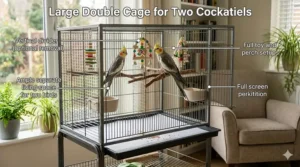
One bird → minimum 24″ × 24″ floor space. Two birds → add 50% space minimum, preferably double. Three birds → go full flight cage with vertical zoning features.
Step 6: Think About Placement Before You Buy
Will this cage sit near a window (good — light exposure matters)? Near an air vent (bad — direct airflow stresses birds)? In a frequently-used room (good — social stimulation)? Near a kitchen (bad — Teflon/PTFE fumes from non-stick cookware are lethal to birds). The cage itself is only half the equation.
Step 7: Budget Honestly
The cheapest cage that meets safety specs will always beat an expensive cage that doesn’t. But buying a cage twice because the first one failed costs more than buying the right one initially. For most cockatiel owners, the $120–$200 range is the sweet spot between quality and affordability.
Real Cockatiel Owner Profiles: Which Cage Fits Your Life?
Not all tiel owners are the same, and the right cage depends as much on your circumstances as your bird’s needs. Here’s how I’d match the field to specific situations.
🏠 The First-Time Owner in an Apartment You’re nervous, your bird is nervous, and your studio apartment has exactly one corner that will accept a cage without making the space feel like a pet store. The Mcage Acrylic Clear Cage is your answer. It contains mess within the transparent base, looks genuinely intentional as a design element, and won’t overwhelm a small room. Pair it with the Kaytee Play N Learn as a secondary enrichment cage on your coffee table during out-of-cage time.
🏡 The Suburban Home with Space to Spare You have a living room, patience, and a genuine commitment to giving your bird the best setup possible. The Prevue Hendryx F050 is the obvious call. Its 37″ × 23″ interior is what a cockatiel’s daily movements were designed for. You’ll never second-guess whether the cage is “big enough” because the answer is definitively yes.
👨👩👧👦 The Multi-Bird Household Two or three tiels, a dynamic that includes territorial squabbles over perch priority, and a need for structural flexibility. The Mcage 32″ × 19″ × 64″ with stand was built for you. The metal shelves and ladders create distinct vertical zones that reduce competition, and the sheer interior volume means each bird gets meaningful personal space.
💰 The Budget-Conscious Buyer Who Won’t Compromise on Space You don’t have $150–$200, but you also refuse to squeeze your bird into something inadequate. The ZENY 53-inch gives you legitimate flight dimensions at the lowest price on this list that still meets safety standards. It’s not luxurious, but it’s honest.
Common Mistakes When Buying a Cockatiel Cage (And How to Avoid Them)
Buying a cage is where new cockatiel owners most often go wrong. Here are the mistakes I see repeatedly — and the thinking that prevents them.
Buying Too Small and Calling It “Temporary” The “I’ll upgrade later” cage almost always becomes the permanent cage. Birds get accustomed to their space; moving them creates stress. Buy the right size from day one. Your bird’s long-term behavioral health depends on it more than almost any other single factor.
Prioritizing Height Over Width A 24″ × 24″ × 60″ cage looks impressive and checks the “large cage” mental box. But a cockatiel needs horizontal flight distance, not a vertical column to perch at the top of. A 36″ × 24″ × 36″ cage is functionally better for a tiel than a tall, narrow tower.
Ignoring Bar Spacing It sounds like a minor detail until you come home to a bird with its head caught between bars. Check the spec sheet before purchasing. If a listing doesn’t specify bar spacing, that alone is a reason to look elsewhere.
Buying Galvanized or Unknown-Metal Cages That suspiciously cheap cage on an unknown brand’s listing? It may be galvanized wire, which contains zinc — a toxic metal for birds. Stick to named brands that explicitly state their coatings are lead-free and zinc-free.
Skipping the Placement Assessment Even the perfect cage in the wrong location creates problems. Draft from an AC vent, direct sun through glass that creates heat concentration, proximity to a Teflon-coated pan — all of these cause real health issues. Plan placement before the cage arrives.
Underestimating Cleaning Demands If a cage’s design makes daily spot-cleaning a 15-minute ordeal, you’ll clean it less. Droppings accumulate fast and create bacterial environments that cause respiratory disease in birds. Choose cages with pull-out trays and removable grilles as baseline requirements.
Setting Up Your New Cockatiel Cage: The First 30 Days
The cage arrives. It’s assembled. Now what? The setup phase shapes your bird’s entire relationship with their new home — rush it, and you’ll spend months undoing the anxiety.
Week One: Placement and Introduction Position the cage at eye level or slightly below — not on the floor, which makes birds feel exposed and vulnerable. Place it in the room where your family spends the most time. Social stimulation matters. Let your tiel sit in the closed cage and observe the room for 48–72 hours before attempting interaction. Resist the urge to reach in constantly. Let them initiate curiosity.
Perch Setup: Variety Over Matching Sets The three wooden dowels that come with most cages are fine as a starting point. Within the first two weeks, add at least one natural wood perch of varying diameter (manzanita or java wood are excellent choices) and one rope perch. Varying perch texture and diameter exercises the muscles and tendons in your bird’s feet, preventing the arthritis that becomes a genuine welfare issue in older cockatiels kept on uniform dowels.
Enrichment Placement Strategy Foraging toys go at mid-height, where birds naturally explore. Swings go near the top — tiels love height when they feel safe. Mirrors are controversial (they can cause obsessive behavior in single birds); skip them initially and introduce only if your bird seems under-stimulated. Rotate toys every two weeks. Novelty is enrichment.
Cleaning Schedule for Long-Term Health
- Daily: Wipe down perches, replace paper liner in tray, freshen water
- Weekly: Remove and wash tray fully, wipe all surfaces with bird-safe cleaner (diluted white vinegar works; bleach does not, as residual fumes harm respiratory systems)
- Monthly: Full disassembly and deep clean, inspect bar coating for chips or wear
Covering at Night Cockatiel care guides at Lafeber consistently recommend covering the cage at night with a breathable cloth. Cockatiels are prone to night frights — sudden movements or sounds in the dark can cause panicked thrashing that leads to injury. A cover creates a dark, stable sleeping environment and dramatically reduces night terror frequency.
Cockatiel Cage Features That Actually Matter (And Marketing Fluff That Doesn’t)
The bird cage market is full of language designed to make things sound more impressive than they are. Here’s how to cut through it.
Actually Matters:
- Bar spacing — the most safety-critical spec on any cage listing
- Bar coating certification (lead-free, zinc-free)
- Pull-out tray with grille — the difference between a 5-minute cleaning and a 20-minute one
- Door count and placement — more doors at different heights means better access and faster enrichment changes
- Wheel quality — you will move this cage. Ball-bearing casters roll in all directions and save your floor
Mostly Marketing:
- “Multiple activity levels” — vague phrasing that usually means two perches at different heights. Not the same as genuine vertical zoning
- “Includes perches and feeders” — included accessories are typically the bare minimum. You’ll replace them within weeks
- “Rust-resistant finish” — every metal cage claims this. What matters is whether the finish is lead and zinc-free and whether it’s a welded vs. assembled frame
- Decorative finials and ornamental tops — pretty. Completely irrelevant to bird welfare. Don’t pay a premium for them
Long-Term Cost & Maintenance: What Cockatiel Cage Ownership Really Costs
The sticker price is the smallest part of what you’ll spend. Here’s a realistic picture of total ownership cost over three years — because cockatiels live 20+ years and your setup decisions compound.
Year One Setup Costs (Beyond the Cage) Natural perches, foraging toys, proper food/water dishes (the included plastic cups are fine temporarily), a cage cover, cleaning supplies, and ideally a night light for the fear-prone tiel. Budget roughly $75–$150 beyond the cage purchase in year one.
Ongoing Annual Costs Toy replacement ($30–$60/year — rotate quarterly), perch replacement ($20–$40), cleaning supplies ($15–$25), and a cage inspection to check for coating chips or bent bars that could create sharp edges or escape gaps. The higher the initial cage quality, the lower these maintenance costs become over time. A Prevue wrought iron cage inspected and touched up annually will outlast three budget-brand cages over a decade.
When to Replace a Cage Visible rust on bars (especially concerning if your bird chews bars, as rust ingestion causes health issues), significant coating chips at bird-accessible surfaces, bent bars that create gaps wider than 5/8″, or compromised door mechanisms that can no longer be secured. On a quality cage with proper care, this timeline is measured in decades, not years.

FAQ: Best Cockatiel Cages
❓ What is the minimum cage size for a cockatiel?
❓ What bar spacing is safe for cockatiels?
❓ Are Yaheetech bird cages safe for cockatiels?
❓ How often should I clean a cockatiel cage?
❓ Can two cockatiels share one cage?
Conclusion: Your Tiel Deserves a Home Worth Living In
Here’s the bottom line. Cockatiels are not decorative objects. They are highly social, emotionally intelligent birds that vocalize, bond deeply, and remember. The cage you choose sets the stage for everything that follows — their confidence, their activity level, their health, and ultimately the quality of the relationship you build with them.
The best cockatiel cages on this list all share the same core virtues: adequate flight space, safe bar spacing, durable non-toxic construction, and practical cleaning access. What differentiates them is scale, price point, and specific use case. The Prevue Hendryx F050 is the gold standard for single-bird or pair housing. The Yaheetech 52″ wins on value. The Mcage 64″ wrought iron is unmatched for multi-bird setups. And the Mcage Acrylic is the one beautiful option for people who live where design actually matters.
Don’t overthink it. Pick the largest cage your space and budget allow from this list, set it up thoughtfully, and watch your bird’s personality emerge. Cockatiels kept in appropriate enclosures are different creatures entirely from those kept in cages that constrain them — louder, more curious, more interactive, more themselves.
✨ Don’t Miss These Exclusive Deals!
🔍 Ready to upgrade your tiel’s home? Click any product link above to check current pricing and availability on Amazon. Your bird’s happiness is one good decision away!
Recommended for You
- 7 Best Small Bird Cage Under $50 in 2026
- 7 Best Compact Bird Cages for Apartment Living 2026
- 7 Best Airline Approved Bird Carriers in 2026
Disclaimer: This article contains affiliate links. As an Amazon Associate, I earn from qualifying purchases. If you purchase products through these links, we may earn a small commission at no additional cost to you.
✨ Found this helpful? Share it with your friends! 💬🤗
