
In This Article
In This Article
Here’s the reality most pet blogs won’t tell you upfront: not every cage marketed as “small” is actually apartment-friendly. Some are small in footprint but tall enough to dominate a corner of your living room. Others are genuinely compact but so flimsy that a curious cockatiel could escape in an afternoon. The wrong choice doesn’t just waste your money — it stresses your bird, clutters your space, and makes your landlord nervous.
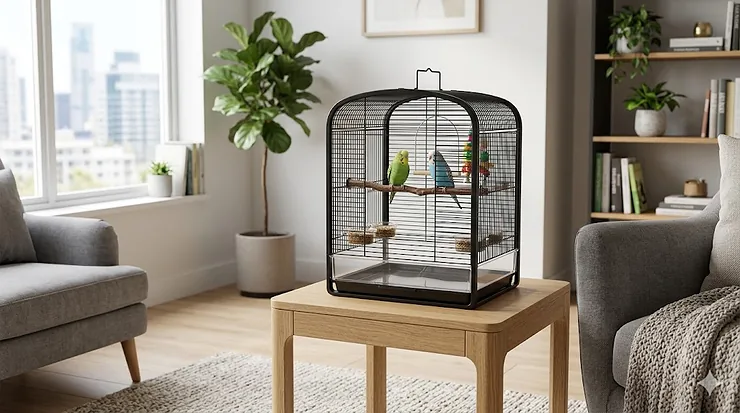
What does a great compact bird cage for apartment living actually look like? At its core, it’s an enclosure small enough to fit comfortably in a typical 600–900 sq ft apartment without swallowing the room, sturdy enough to keep your bird safe, easy enough to clean that you’ll actually do it regularly, and thoughtfully designed enough that your feathered roommate stays mentally stimulated. Bar spacing matters enormously (we’ll get into this). So does tray depth, door placement, and whether the finish is actually bird-safe. These are the details that separate a good cage from a regrettable one.
I’ve dug into the current Amazon listings, cross-referenced customer feedback, and put together a carefully curated shortlist of seven cages that genuinely work in small spaces. Whether you’re housing a lone canary in a studio apartment or a pair of cockatiels in a one-bedroom, there’s an option here built for your exact situation. Let’s get into it.
Quick Comparison Table: Top 7 Compact Bird Cages for Apartments
| Product | Dimensions | Bar Spacing | Best For | Price Range |
|---|---|---|---|---|
| Prevue Pet Parakeet Manor | 12″L × 9″W × 16″H | 3/8″ | Finches, canaries, travel/temp | Under $40 |
| Prevue Pet Products Small Bird Cage (Blue/Black) | 18″L × 14″W × 22″H | 1/2″ | Canaries, finches, songbirds | $40–$65 |
| Capuca Small Bird Starter Cage | 16″L × 11″W × 20″H | 3/8″ | Beginner parakeets, lovebirds | $35–$55 |
| Kaytee Ultimate Cage Medium+ | 24″L × 18″W × 24″H | 1/2″ | Budgies, lovebirds, small conures | $70–$95 |
| VEVOR 30-Inch Stackable Flight Cage | 29.9″L × 18.1″W × 17.9″H | 0.4″ | Cockatiels, medium birds, pairs | $55–$80 |
| VIVOHOME 30-Inch Wrought Iron with Stand | 17″L × 17″W × 30″H | 1/2″ | Cockatiels, conures, lovebirds | $60–$90 |
| Yaheetech 41-Inch Open Top Bird Cage | 23″L × 16″W × 41″H | 1/2″ | Parakeets, cockatiels, small parrots | $85–$120 |
The table above tells a quick story: this lineup spans genuine nano-cages all the way up to what I’d call a “maximum viable apartment cage” in the Yaheetech. Budget buyers get real options under $55. The mid-range sweet spot ($60–$95) is where you’ll find the best balance of footprint, build quality, and livability for your bird. The VEVOR’s stackable design is a genuinely clever apartment-specific feature that most competitors skip entirely.
💬 Just one click — help others make better buying decisions too! 😊
Top 7 Compact Bird Cages for Apartments: Expert Analysis
1.Prevue Pet Products Parakeet Manor Bird Cage with Handle
The Parakeet Manor is the kind of cage that earns its place in every bird-keeper’s arsenal — not as a permanent home, but as a brilliantly practical space-saving option for the apartment dweller who needs flexibility. At just 12 inches long, 9 inches wide, and 16 inches high, it fits on a bookshelf, a side table, or inside a closet when not in use. That’s a genuinely rare quality in the bird cage world.
The 3/8-inch wire spacing and powder-coated black steel construction are the real stars here. That wire gap keeps finches and canaries secure — many cheaper “small” cages use 1/2-inch spacing, which is fine for parakeets but dangerously wide for tiny songbirds. The cage comes with two plastic feeding bowls, a swing, and two plastic perches, which is everything a small bird needs for temporary or starter housing. The removable tray slides out cleanly for daily spot-cleaning — a feature you’ll appreciate on Tuesday mornings before work.
What most buyers overlook: this cage ships with a sturdy carrying handle, making it double as a travel carrier for vet visits. For apartment dwellers who don’t own a car and rely on rideshares or the subway, that single feature is worth its weight in gold. It’s compatible with Prevue’s tubular hanging stands if you want to elevate it permanently in your apartment. Prevue has been making cages since 1869, and that experience shows in the quality of the latch and the evenness of the wire gauge.
That said, be honest with yourself: this is not a long-term home for a single bird. It’s ideal as a temporary cage, a second cage for travel, or a first cage while you figure out your setup. A canary or finch pair living in this full-time will need daily out-of-cage time.
✅ Budget-friendly entry point
✅ Doubles as a travel carrier
✅ Perfect wire spacing for tiny birds
❌ Too small for permanent solo housing of larger species
❌ Plastic perches should be upgraded for long-term use
Price range: under $40 — unbeatable value for a backup or travel cage.
2. Prevue Pet Products Small Bird Cage (Blue and Black)
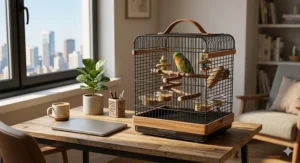
This is Prevue’s step-up model — and it’s the kind of apartment-friendly cage that looks intentional, not improvised. The Blue and Black colorway is genuinely attractive, which matters more than people admit when you’re decorating a 700-square-foot apartment and your bird’s home is going to live on the desk or dresser.
At roughly 18 inches long, 14 inches wide, and 22 inches high, it’s compact enough to sit on a countertop without dominating the room. The 1/2-inch bar spacing opens it up to canaries, finches, and small songbirds while keeping everything secure. The lightweight construction — this cage is noticeably easier to move and reposition than wrought iron alternatives — makes rearranging your apartment a non-event. Need it by the window in the morning and away from the afternoon glare by 3pm? Two-second relocation.
The spec sheet won’t tell you this, but the real advantage of this cage for apartment living is the noise profile. Lighter cages rattle and vibrate more than heavier wrought iron models, which means bar-biting or active birds create more ambient noise. If you’re in a thin-walled building or working from home on Zoom calls, factor this in. For calm species like canaries or finches, it’s a non-issue. For a restless budgie, go heavier.
Customers consistently praise the easy assembly and the quality of the latch mechanism. One recurring note: the included plastic perches are smooth, which can cause foot problems over time. Swap them for natural wood dowels within the first week — your bird’s feet will thank you.
✅ Attractive design that fits apartment aesthetics
✅ Lightweight and easy to reposition
✅ Solid latch security
❌ Lighter build means more vibration/rattle with active birds
❌ Plastic perches need replacement
Price range: $40–$65 — the right move if aesthetics matter to you.
3. Capuca Small Bird Travel Cage Starter Kit
The Capuca is the cage equivalent of a Swiss Army knife — and if you’re a first-time bird owner setting up in an apartment, its “starter kit” positioning is genuinely useful. It comes bundled with accessories: perches, food containers, a swing, and enough extras to get a small bird comfortable on day one without a separate shopping trip.
At approximately 16 inches long, 11 inches wide, and 20 inches high, it occupies roughly the same footprint as a microwave. The 3/8-inch bar spacing makes it suitable for parakeets, lovebirds, parrotlets, finches, and canaries. The lightweight plastic base is easy to clean and doesn’t stain the way fabric or wood does — pour some warm water, wipe down, done. The pull-out tray design means you don’t need to reach inside during cleaning, which is both more hygienic and significantly less stressful for your bird.
What I appreciate most about the Capuca is that it acknowledges something most cage manufacturers pretend isn’t true: apartment bird keeping often starts messy, improvisational, and budget-conscious. This cage meets you where you are. It’s not the cage you’ll keep forever, but it’s the cage that gets you through the first year while you figure out exactly what kind of bird parent you’re becoming.
Customers report that the latch clips are straightforward but could be sturdier for escape-artist lovebirds. A small padlock or cage lock clip solves this for under $5 on Amazon.
✅ Comes with all starter accessories included
✅ Ultra-lightweight and easy to clean
✅ Great footprint for studio apartments
❌ Latch clips are basic — add a cage clip for security
❌ Not suitable as a permanent home for active fliers
Price range: $35–$55 — strongest value proposition for first-time bird owners.
4. Kaytee Ultimate Cage Medium+
Step up to the Kaytee Ultimate Cage Medium+ and you’re entering genuinely livable territory — a cage that can serve as a permanent home for a pair of budgies, lovebirds, or a single small conure without any compromise. At 24 inches long, 18 inches wide, and 24 inches high, it’s the smallest cage I’d recommend for full-time housing of an active bird species.
The 1/2-inch bar spacing covers the sweet spot for this bird size range — secure enough for small bodies, wide enough for comfortable visibility. But the real engineering achievement here is the cleaning system. The deep pull-out tray with a plastic liner means daily cleaning takes about 90 seconds. Apartment bird keeping lives or dies on cleaning convenience; a cage that’s tedious to clean is a cage that gets cleaned infrequently, which means a sick bird and a smelly apartment. Kaytee clearly designed this with busy urban owners in mind.
The easy-click perch brackets are genuinely clever — you can rearrange your bird’s environment without any tools in under a minute. For cockatiels and budgies especially, environmental variety reduces boredom-driven screaming, which your neighbors will appreciate. The double-door design allows safe, confident entry without chasing a scared bird around the cage interior. Rounded corners and a baked-on enamel finish round out a thoughtfully designed package.
Customer feedback is consistently strong, with owners citing durability and ease of cleaning as standouts. Occasional criticism centers on the somewhat basic included accessories — the perches work but aren’t textured enough for foot health. Worth upgrading immediately.
✅ Truly livable size for budgies, lovebirds, small conures
✅ Industry-leading cleaning system
✅ Easy-click perch rearrangement for environmental enrichment
❌ Included accessories are functional but basic
❌ Assembly requires patience with the instructions
Price range: $70–$95 — the best all-around permanent housing option in this footprint.
5. VEVOR 30-Inch Stackable Flight Bird Cage
The VEVOR 30-Inch Stackable Flight Cage is the most apartment-specific engineering on this list — and it’s an idea so obvious you’ll wonder why more manufacturers haven’t done it. The stackable design means you can run two or three units vertically, creating a multi-bird setup with a floor footprint barely larger than a suitcase. For apartment bird keepers who want multiple birds without sacrificing floor space, this is genuinely transformative.
At 29.9 inches long, 18.1 inches wide, and 17.9 inches high per unit, each cage is wider than it is tall — a flight cage orientation that encourages lateral movement rather than just vertical climbing. For cockatiels and budgies, horizontal flight space matters more than height; they’re not climbers by nature. The 0.4-inch grid spacing is ideal for medium-sized birds, and the slide-out tray cleans in seconds. VEVOR’s carbon steel construction feels solid without being as brutally heavy as some wrought iron alternatives.
The handle built into each unit solves a problem most cages ignore: how do you transport a cage full of birds when you move apartments, visit the vet, or rearrange your home? Just grab and go. The locking mechanism between stackable units is secure and straightforward — no wobble, no toppling risk. VEVOR has over 10 million customers worldwide and their quality control shows in the evenness of the weld points.
What to watch: the 0.4-inch bar spacing is safe for cockatiels and medium budgies but may be slightly wide for smaller finches. For tiny birds, stick with the 3/8-inch options above.
✅ Stackable design maximizes vertical space — apartment game-changer
✅ Built-in handle for easy portability
✅ Horizontal flight orientation benefits active birds
❌ Bar spacing too wide for small finches
❌ Units require flat, stable surface when stacked
Price range: $55–$80 per unit — exceptional value for the stackable innovation.
6. VIVOHOME 30-Inch Wrought Iron Bird Cage with Rolling Stand
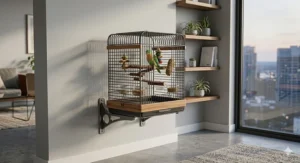
If you want one cage that does everything — permanent home, attractive centerpiece, easy-clean maintenance machine — the VIVOHOME 30-Inch is where I’d land. The wrought iron construction gives it a visual authority that lighter cages simply can’t match, and the rolling stand transforms the whole unit from a cage into a piece of furniture. In a nicely decorated apartment, this doesn’t look like an afterthought. It looks intentional.
At 17 inches wide by 17 inches long, the footprint is remarkably modest for a cage this substantial. The 30-inch height (including stand) fits under most apartment-standard 8-foot ceilings with room to spare and doesn’t trigger the claustrophobic “the cage is eating my apartment” feeling. The 1/2-inch bar spacing is correct for cockatiels, conures, and lovebirds — the birds most commonly housed in apartments by serious urban bird enthusiasts.
The rolling casters are a more significant feature than they look on paper. Anyone who’s tried to clean under a stationary cage understands the appeal: roll it aside, vacuum the floor, roll it back. In an apartment where every square foot serves double duty, that mobility is worth its weight. The included accessories (perches, feeders) are solid, and the powder-coat finish has proven durable in customer testing over extended periods.
With over 1,700 reviews and a 9.7/10 CPR rating from Cherry Picks, this is one of the most trusted compact options in the market. Customers particularly note the sturdiness of the latch and the ease of assembly — roughly 45 minutes start to finish.
✅ Premium wrought iron build with genuine furniture-quality presence
✅ Rolling stand enables effortless apartment repositioning
✅ Excellent long-term durability based on verified owner feedback
❌ Heavier than other options on this list — less ideal if you move frequently
❌ Higher price than comparable-footprint alternatives
Price range: $60–$90 — the premium pick for permanent apartment bird keeping.
7. Yaheetech 41-Inch Open Top Medium Bird Cage with Rolling Stand
The Yaheetech 41-Inch is the largest cage on this list — and I include it deliberately, because “compact” doesn’t mean “cramped,” and a cockatiel in a cage this size will be demonstrably happier than one in anything smaller. At 23 inches long, 16 inches wide, and 41 inches high with stand, it fits against any wall without jutting awkwardly into living space, and the open play-top transforms it from a cage into an activity hub that keeps curious birds engaged without constant owner intervention.
Founded in 2003, Yaheetech has built one of the most recognizable bird cage brands on Amazon through sheer consistency — the company maintains 6.3 million square feet of warehousing across 7 countries, which translates practically to reliable stock, faster shipping, and consistent quality control. The wrought iron frame with 1/2-inch bar spacing and rolling casters mirrors the VIVOHOME’s best features, with the added dimension of the open top design.
Here’s what the open play-top actually does for apartment owners: it gives your bird a designated out-of-cage perch zone, reducing the frantic cage-pacing that drives owners (and neighbors) crazy. Birds allowed regular out-of-cage time in a structured space are calmer, quieter, and less destructive. The included feeders and slide-out tray make daily maintenance genuinely fast. At 41 inches tall, this is the maximum height I’d recommend for standard apartment ceilings.
Customer reviews consistently cite the assembly quality and value proposition — it’s one of the most feature-rich cages at this price range. The main caveat: assembly takes 60–90 minutes and the instructions could be clearer. Watch a YouTube assembly video first.
✅ Open-top design provides enrichment and reduces anxiety-driven noise
✅ Maximum livable space within an apartment-viable footprint
✅ Yaheetech’s supply chain reliability means consistent quality
❌ Largest and heaviest cage on this list — commits floor space
❌ Assembly takes longer than average
Price range: $85–$120 — the right investment if you’re serious about bird keeping for the long term.
How to Set Up Your Compact Bird Cage for Apartment Life: A Practical Guide
Getting the right cage is only half the battle. How you set it up — and where — determines whether bird keeping enhances your apartment living or turns it into a daily negotiation. Here’s what I’ve learned actually works.
Placement is everything. Position your cage where your bird can see the room’s activity without being in the center of it. Birds are prey animals; they need to observe their environment without feeling exposed. A corner placement with one wall behind the cage is ideal. Avoid direct window sunlight for more than a few hours daily — temperatures inside a small cage can spike dangerously near glass on a sunny afternoon.
The seed-scattering problem. Every apartment bird owner encounters this: seeds and feather dust accumulate on the floor, the wall behind the cage, and inexplicably on every horizontal surface within three feet. Cage skirt guards (available for under $20 on Amazon) attach to the lower perimeter of any cage and dramatically reduce scatter radius. Alternatively, position your cage on a washable mat — a simple silicone kitchen mat works perfectly and wipes clean in seconds.
Noise management for thin-walled apartments. Canaries and finches are consistently quieter than parakeets, cockatiels, or conures. If your lease has noise restrictions or you share walls with light sleepers, species selection matters more than any cage feature. For birds you already own, cage placement away from exterior walls (where sound travels most easily) reduces noise bleed. A cage cover for sleeping hours — typically a breathable cloth — quiets most birds within 10 minutes of covering.
First week setup tips:
- Place food and water at a consistent, easily accessible height from day one
- Include one natural wood perch of varying diameter for foot health
- Avoid mirrors in the first week — they cause territorial confusion in new environments
- Keep the cage in the same room you occupy most; isolation creates anxiety
- Establish a predictable uncovering/covering schedule within the first 48 hours
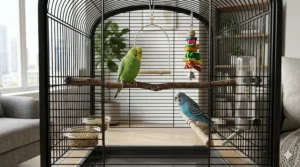
Real Apartment Bird Keeper Profiles: Which Cage Fits Your Life?
Apartment bird keeping isn’t one-size-fits-all. Who you are and how you live shapes which of these seven cages actually serves you best.
The Studio Dweller on a Budget. You’ve got 450 square feet, a lofted bed, and the kind of optimism that comes from thinking “a canary won’t take up much space.” You’re right — a single canary in the Prevue Parakeet Manor or the Capuca Starter Kit will barely register spatially or financially. Add a cage skirt guard, position it near your workstation for passive companionship, and you’ve got a genuinely enriching setup for under $60 total. Your bigger concern is explaining the bird to your landlord, not finding shelf space.
The Work-From-Home Professional. You’re in a one-bedroom, spending 8+ hours a day at your desk, and want a bird that provides background company without background chaos. The Kaytee Ultimate Medium+ is your cage. It’s quiet to clean, compact enough for a desk corner, and sized right for a pair of budgies — the ideal WFH birds. They chirp pleasantly without screaming, interact with each other when you’re on calls, and don’t require the constant attention a cockatiel demands.
The Serious Urban Bird Enthusiast. You’ve had birds before. You know what you want: a permanent, enriching, furniture-quality setup in your apartment that accommodates a cockatiel or a small conure long-term. The VIVOHOME 30-Inch or the Yaheetech 41-Inch are built for you. Spend the extra money, get the better cage, and your bird will reward you with years of engaged, happy behavior instead of the anxious bar-biting that comes from undersized housing.
The Multi-Bird Apartment Keeper. Three finches, a pair of lovebirds — you know who you are. The VEVOR Stackable is your answer. Stack two units vertically, keep your floor footprint under 30 inches per side, and house your birds comfortably with separate visual territories. This is genuinely the most space-efficient multi-bird solution for apartments currently available on Amazon.
✨ Don’t Miss These Exclusive Deals!
🔍 Take your apartment bird keeping to the next level with these carefully selected cages. Click on any highlighted product to check current pricing and availability on Amazon. Your feathered roommate deserves a home worth coming back to.
How to Choose a Compact Bird Cage for Apartment Living: 7 Criteria That Actually Matter
So many buying guides throw a list of “features to consider” at you and call it advice. This is different. These are the seven criteria that separate a genuinely good apartment bird cage from one that looks fine in the listing photos and frustrates you in real life.
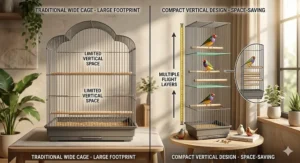
1. Footprint versus volume. The cage’s floor footprint (length × width) determines how much apartment real estate it consumes. The interior volume determines your bird’s quality of life. These are in direct tension, and the best apartment cages optimize both — typically by going taller rather than wider. Measure your intended placement space before purchasing. A cage that looks compact in Amazon photos can surprise you in a 9′ × 11′ bedroom.
2. Bar spacing matched to your species. This is non-negotiable and nothing else on this list matters if you get it wrong. Finches and canaries need 3/8-inch spacing maximum. Parakeets and lovebirds: 1/2-inch. Cockatiels: 1/2 to 5/8-inch. Conures: 5/8-inch. A head-stuck-in-bars situation is a veterinary emergency, and it happens more often than cage marketing suggests.
3. Tray design and cleaning access. You will clean this cage every 1–2 days for the life of your bird. A pull-out tray that clears without dragging debris is worth an extra $20 every single time. Test this mentally: can you access the tray without opening the main door? Can you run it under a faucet? These details determine whether you become a responsible bird keeper or an apologetic one.
4. Door placement and size. Multiple access doors are a luxury in a small cage, but they dramatically reduce the stress of daily feeding and maintenance. A single small door means squeezing your hand past a nervous bird twice a day. Two well-positioned doors mean you can maintain the cage professionally even when your bird is inside.
5. Weight and mobility. Apartment life means rearranging. Cleaning floors. Moving furniture. A 30-pound wrought iron cage on a rolling stand is manageable. A 30-pound wrought iron cage without wheels — or an awkward shape that won’t grip a hand dolly — becomes something you avoid moving and therefore avoid cleaning under.
6. Finish safety. This matters more than price. Powder-coated finishes are safe when intact; chipped powder coat exposes metal that can harbor bacteria and cause heavy metal toxicity in birds. Reputable brands like Prevue, Kaytee, VIVOHOME, and Yaheetech all test for lead-free, zinc-free finishes. Budget cages from obscure brands on Amazon do not always make this guarantee. Check the product listing for “bird-safe” coating language before purchasing.
7. Noise dampening design. Heavier cages — particularly wrought iron — absorb bar-rattling noise better than lightweight steel or plastic models. If your bird is a cage-bar enthusiast (many cockatiels and conures are), a lighter cage turns this habit into an auditory event that will test your WFH patience and your neighbors’ patience equally.
Common Mistakes When Buying a Compact Bird Cage for Apartments
Even experienced bird owners stumble on these. Consider this a pre-purchase checklist.
Choosing by footprint alone. The most common apartment mistake. A 12-inch footprint cage that’s 12 inches tall is a holding box, not a home. Birds need vertical space to bob, climb, and engage with perches at different heights. A cage at least 1.5–2× the wingspan of your bird in every direction is the accepted baseline from avian veterinarians — and the Association of Avian Veterinarians maintains excellent species-specific housing guidelines worth consulting before purchase.
Ignoring the seed mess radius. Apartment floors suffer. Bird seed husks, feather dust, and the occasional fruit bit will spray outward from any cage. Without a seed catcher or cage apron, this radius extends 12–18 inches around the cage perimeter. New owners discover this on day three and wish someone had warned them on day zero.
Buying for the bird you want, not the bird you have. A cockatiel cage purchased with optimism for a “future cockatiel” that sits empty for three months while your finches rattle around in it is money misspent. Buy for your current bird at your current life stage, then upgrade when the bird does.
Skipping the bar spacing research. As noted above — but worth repeating because it’s genuinely dangerous. A small finch pushed through 1/2-inch bars can injure a wing or neck. According to PetMD’s avian care resources, bar-related injuries are among the leading causes of preventable bird accidents.
Overlooking ventilation. Cages positioned against walls or in corners with poor airflow accumulate ammonia from droppings faster than open-placement cages. In a small apartment, poor air circulation around a bird cage contributes to respiratory issues — for the bird and, to a lesser extent, for you. Ensure at least 6 inches of clearance on three cage sides.
Space-Saving Bird Cage vs. Standard Bird Cage: Is “Compact” Really Better?
Let’s settle something the buying guides dance around: a compact bird cage for apartment use isn’t inherently better or worse than a standard-size cage. It’s a response to a specific constraint. The question worth asking isn’t “is this cage small enough for my apartment?” but “is this cage large enough for my bird?”
| Feature | Compact Cage (Under 24″ footprint) | Standard Cage (30″+ footprint) |
|---|---|---|
| Floor space used | Minimal — desk or shelf viable | Requires dedicated floor area |
| Bird enrichment space | Adequate for small species | Better for active fliers |
| Cleaning ease | Generally faster | Larger tray takes more time |
| Apartment noise impact | Lower visual dominance | More presence in small spaces |
| Suitable species | Finches, canaries, budgies, lovebirds | Cockatiels, conures, small parrots |
| Price range | Under $40–$95 | $85–$200+ |
| Best for | Solo birds or small pairs in tight spaces | Single birds needing enrichment space |
The data here points to something nuanced: if you’re housing a single cockatiel or conure in an apartment under 700 sq ft, a compact cage (even a well-chosen one) will produce a less happy bird than a properly sized standard cage positioned thoughtfully. The Yaheetech 41-Inch — the largest option on our list — is technically “compact” for a cockatiel but genuinely adequate. A true standard 52-inch cage would be better for the bird but potentially overwhelming for the room.
The sweet spot for most apartment bird keepers: choose the largest cage your space realistically accommodates — not the smallest cage your budget and square footage tempt you toward.
Long-Term Cost and Maintenance: What Apartment Bird Keeping Actually Costs
The cage purchase is the beginning of the financial picture, not the end. Here’s what experienced urban bird owners actually spend over a bird’s lifetime.
Accessories and enrichment: Natural wood perches ($8–$15 each), cage skirt guards ($15–$25), cage covers ($10–$20), stainless steel food and water dishes ($6–$12 each), and rotating toy inventory (birds bore quickly — budget $10–$20 per month for small toys or DIY paper-shredding enrichment). Over a year: $150–$300 in accessories beyond the cage itself.
Feed and nutrition: Quality pelleted diets for small birds run $15–$25 per month. Seed mixes are cheaper but nutritionally incomplete — Cornell Lab of Ornithology provides excellent species-specific dietary guidance confirming that pellets dramatically improve long-term health outcomes versus seed-only diets. Factor a weekly fresh produce supplement (leafy greens, carrot, bell pepper) at minimal cost — most birds share your vegetable prep.
Veterinary care: An avian vet visit runs $75–$200 depending on location. Annual wellness checks for small birds are strongly recommended. Budget $150–$250 per year for routine care, more for unexpected illness. This is the expense apartment bird keepers most commonly underestimate.
Cage replacement timeline: A quality cage from the brands on this list (Prevue, VIVOHOME, Yaheetech, Kaytee) should last 5–10 years with proper cleaning and maintenance. Powder-coat touch-up paint ($10–$15) extends cage life significantly when chips appear. Cheap cages need replacement every 1–3 years — the math favors spending more upfront.
Features That Actually Matter (And Those That Don’t)
The Amazon listings are full of spec language designed to impress rather than inform. Let me decode what actually moves the needle.
Matters enormously: Bar spacing (see above — this is safety-critical), tray slide quality, bar gauge thickness (thicker wire = longer lasting and harder for birds to bend), coating safety certification, door latch security.
Matters for daily life: Rolling casters on taller cages, door count and placement, tray depth (deeper trays catch more mess), included accessories quality.
Sounds impressive, usually isn’t: “Play top” on tiny cages (play tops require landing room — a 12-inch play top is meaningless), “anti-rust” claims on budget cages (real anti-rust performance shows in the coating certification, not marketing text), exact internal perch count (you’ll replace them anyway).
Irrelevant for apartment use: Cage “capacity” claims (manufacturers wildly overstate how many birds a given cage can house), decorative features like crown finials or ornate roof shapes (pretty in photos, annoying when cleaning).
One underrated feature worth seeking: seed/feeder cups that can be accessed from outside the cage without opening the main door. In apartments where birds aren’t yet fully tame, this lets you top up food and water without a daily catch-the-bird adventure.
FAQ: Compact Bird Cages for Apartment Living
❓ What is the best compact bird cage for apartment living for a single parakeet?
❓ Can I keep a bird in a studio apartment without disturbing neighbors?
❓ What size bird cage is too small for an apartment bird?
❓ How often should I clean a compact bird cage in an apartment?
❓ Do apartment bird cages require any special noise-reducing features?
Conclusion
Finding the right compact bird cage for apartment living comes down to one honest question: are you optimizing for your convenience or for your bird’s quality of life? The best answer is both — and the seven cages on this list prove those goals aren’t mutually exclusive.
For the absolute beginner on a tight budget, the Prevue Parakeet Manor or the Capuca Starter Kit get you in the game affordably and responsibly. For the serious apartment bird keeper who wants a permanent, beautiful, enriching setup, the VIVOHOME 30-Inch and the Yaheetech 41-Inch deliver the goods without consuming your living room. The Kaytee Ultimate Medium+ is the everyday workhorse — the cage I’d recommend to 90% of people without knowing anything else about their situation. And the VEVOR Stackable is a genuinely clever solution that the multi-bird apartment community has been waiting for.
Whatever you choose, invest in the right accessories from day one — natural perches, a cage skirt guard, and a proper cover. Learn your bird’s daily rhythms and adjust your maintenance schedule accordingly. And when in doubt, go one size larger than you think you need. Your bird lives in that cage 16 hours a day. You live in your apartment 24 hours. Bet on both of your comfort levels.
✨ Don’t Miss These Exclusive Deals!
🔍 Check current pricing and availability on all seven cages by clicking through to Amazon. These are actively stocked, regularly reviewed listings — your bird’s new home is one click away. 🐦
Recommended for You
- 7 Best Airline Approved Bird Carriers in 2026
- 7 Best Bird Travel Carriers 2026: Safe & Stress-Free Picks
- 7 Best Flight Cage for Multiple Finches in 2026 — Don’t Buy Wrong!
Disclaimer: This article contains affiliate links. As an Amazon Associate, I earn from qualifying purchases. If you purchase products through these links, we may earn a small commission at no additional cost to you.
✨ Found this helpful? Share it with your friends! 💬🤗
