
In This Article
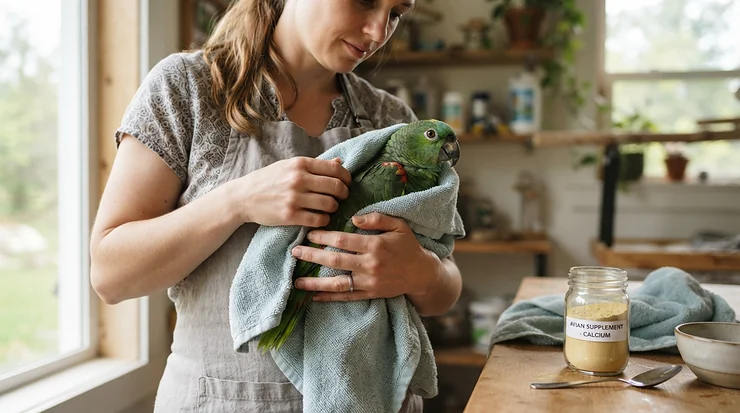
It always happens at the worst possible moment. Your cockatiel spooks at a shadow, thrashes against the cage bars, and suddenly there’s a bright red drip where a growing feather used to be. Your heart does a backflip. This is exactly when styptic powder for broken blood feathers earns its spot in your kit, because a few calm seconds can decide how the next hour goes.
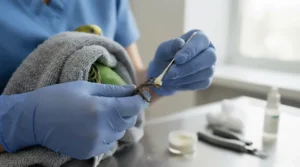
Here’s why a snapped blood feather is such a big deal. According to VCA Animal Hospitals’ guide to blood feathers, a growing feather is nourished by blood, and a damaged one can bleed heavily. The same guidance says to contact an avian vet if the bleeding hasn’t stopped within two to three minutes. In other words, you have a short window, and fumbling through a junk drawer isn’t a plan.
I’ll be upfront about how this article works. I haven’t handled these products on your bird, and I won’t pretend otherwise. What I’ve done is dig through manufacturer directions, avian veterinary sources, and retail review pages, then translate the specs into plain English. You’ll find seven real products, an honest look at where the experts disagree, and a few pieces of context the product pages leave out.
Think of this as the friend who read all the fine print so you don’t have to.
Quick Comparison: Styptic Powder for Broken Blood Feathers at a Glance
| Product | Format | Price Range (check current price) | Best For |
|---|---|---|---|
| Miracle Care Kwik Stop Styptic Powder | Powder with benzocaine | Roughly $8-$15 by size | Owners who want the category benchmark |
| Miracle Care Kwik Stop Styptic Gel Swabs | Gel on single-use swabs | Around $10-$15 per pack | Owners worried about powder mess or inhalation |
| Remedy+Recovery Professional Groomer’s Styptic Powder | Powder, 1.5 oz | Around $10 | Budget-conscious multi-pet homes |
| Durvet Styptic Powder | Powder, talc-free, 1.5 oz | Typically under $15 | Households that want a simple ferric subsulfate formula |
| Safari Styptic Powder | Powder, 0.5 oz | Around $10-$12 | Small kits and small-bird households |
| Jorgensen Labs Curved Hemostats (5½ inch) | Locking forceps | Under $10 | Owners trained by an avian vet to remove feathers |
| Miracle Care Kwik Stop Styptic Pads | Pre-soaked pads, 90 count | Under $20 | Travel bags and carrier kits |
The table tells a quieter story than it first appears. The three Kwik Stop formats share the same brand backbone but suit three different situations. If you want a single no-regrets purchase, Miracle Care Kwik Stop Styptic Powder is the safe default. If you’d rather avoid loose powder around a bird that preens constantly, Miracle Care Kwik Stop Styptic Gel Swabs deserve a hard look. And because a styptic can’t pull a feather, the Jorgensen Labs Curved Hemostats (5½ inch) matter more than their tiny price suggests.
💬 Just one click — help others make better buying decisions too!😊
Top 7 Styptic Powder for Broken Blood Feathers and Related Essentials: Expert Analysis
1. Miracle Care Kwik Stop Styptic Powder — the benchmark with built-in pain relief
Retail copy calls this the leading styptic powder for over 40 years, and it shows up on nearly every parrot first aid list. The formula combines ferric subsulfate, which contracts blood vessels, with aluminum chloride, diatomite, bentonite, copper sulfate, ammonium chloride, and benzocaine. In plain terms, you get an astringent that seals fast plus a numbing agent that takes the edge off the sting.
The directions call for a moistened cotton applicator and moderate pressure for five to ten seconds. They also warn against deep wounds and body cavities. That matters for feathers. A broken shaft acts like a tiny straw, so a fine powder that clings to a damp swab can plug the opening better than a loose dusting.
Based on the spec comparison, this is the right pick for owners who want the proven default. One caveat: the label is written around nails and minor cuts, so feather use comes from avian guidance, not the package.
Reviewers on retail pages report a consistent pattern. A farm-supply listing showed roughly a 4.8 out of 5 average from about 59 reviews at the time of research. Common praise is fast clotting and the fact that a small amount goes far. Common complaints are no built-in applicator, powder getting everywhere, and one shopper unsure about bird safety.
Pros:
- ✅ Fast-acting ferric subsulfate formula
- ✅ Benzocaine reduces discomfort
- ✅ Widely stocked and easy to replace
Cons:
- ❌ No applicator included
- ❌ Loose powder can be messy
Price range: roughly $8-$15 depending on size, so it’s a low-cost insurance policy and a clear value pick.
2. Miracle Care Kwik Stop Styptic Gel Swabs — mess-free application on single-use swabs
The Merck Veterinary Manual’s first aid kit list for pet birds specifically names styptic gel with an applicator tip, while cautioning that powders may be toxic if swallowed. That’s the opening Miracle Care Kwik Stop Styptic Gel Swabs walks through. Each swab arrives pre-loaded with the original Kwik Stop gel, and the listing says it’s suitable for birds of all sizes and ages.
What does that mean in practice? You’re not scooping powder or hunting for a cotton bud with shaking hands. You open, press, and hold. For a feather that’s actively dripping, that simplicity counts.
Here’s what to weigh. A gel sits where you put it, which helps near a bird’s face and beak. The trade-off is volume. One reviewer felt the applicator didn’t dispense enough to stop their bleeding, so expect to use more than one swab on a stubborn shaft.
Reviewers who like it call it convenient and easy, and some report using it on dogs, cats, and birds alike. I couldn’t verify a large pool of bird-specific reviews, so treat that as a general signal, not a bird-specific one.
Pros:
- ✅ Pre-loaded swabs, no scooping
- ✅ Gel stays put near the face
- ✅ Matches the gel style vets list
Cons:
- ❌ Reported low dispensing on some swabs
- ❌ Costs more per use than powder
Price range: around $10-$15 per pack, a worthwhile premium if mess and inhalation are your worries.
3. Remedy+Recovery Professional Groomer’s Styptic Powder — the budget-friendly groomer’s staple
Billed as a professional groomer’s formula for dogs, cats, and birds, Remedy+Recovery Professional Groomer’s Styptic Powder targets nicks and scratches from nail clipping. The retail copy describes the dry powder as clotting blood on contact, within seconds.
The 1.5 oz jar is the interesting spec. That’s a lot of powder for a single bird, but a sensible amount if you also trim a dog’s nails or keep a multi-pet household. More powder in the cabinet means you won’t hesitate to use a pinch when it counts.
Here’s the honest part. The review base I could verify was thin: a single five-star comment on a specialty retailer page from a customer who had trusted another brand for years and switched with no regrets. That’s a kind word, not a trend. I’d treat this as a promising but under-reviewed alternative, and ask your avian vet which powder they prefer.
Pros:
- ✅ Large 1.5 oz jar at a modest price
- ✅ Labeled for dogs, cats, and birds
- ✅ Simple groomer-grade formula
Cons:
- ❌ Limited verifiable review data
- ❌ Bigger jar than a bird-only kit needs
Price range: around $10, which makes it a solid value for homes with more than one species.
4. Durvet Styptic Powder — talc-free, ferric subsulfate simplicity
The manufacturer lists a short formula: ferric subsulfate as the hemostat, plus bentonite, potassium aluminum sulfate, diatomaceous earth, and ammonium chloride. It also advertises that it’s talc-free. The packaging says to apply a pinch to the bleeding area using moderate pressure.
Why does the ingredient list matter? Because there’s no benzocaine here, so you give up the numbing agent. For some owners that’s a feature, not a bug, since there’s one less active ingredient to worry about. If your avian vet has opinions about benzocaine, this is where you’d have the conversation.
On paper, Durvet Styptic Powder is the minimalist option. It suits owners who want a plain astringent, and it fits a first aid tin as easily as a grooming bag. The label repeats the standard warning against deep wounds, body cavities, and burns, plus a prompt to consult a veterinarian if bleeding doesn’t stop.
I couldn’t verify consumer reviews specific to this product, so I won’t characterize sentiment. Judge it on the formula and the label.
Pros:
- ✅ Short, straightforward ingredient list
- ✅ Talc-free formula
- ✅ Clear label guidance for vet follow-up
Cons:
- ❌ No pain-relief ingredient
- ❌ No review data I could verify
Price range: typically under $15, a reasonable value for a plain-vanilla backup jar.
5. Safari Styptic Powder — compact 0.5 oz for small-bird kits
At half an ounce, Safari Styptic Powder is the small-footprint option. The label directs you to apply generously to the nail quick or affected area with a clean, moistened applicator, then hold moderate pressure until bleeding stops. It’s marketed for dogs, cats, and small animals.
Here’s where the spec sheet needs interpreting. The label says not to use it on open wounds, burns, or body cavities. A broken blood feather bleeds from a shaft, not a gaping wound, but the label wasn’t written with feathers in mind. That’s another reminder that avian first aid advice, not packaging, guides feather use. Ask your vet whether they’re comfortable with that.
The small jar is convenient for a pocket-sized kit or a carrier pouch. The flip side is that half an ounce disappears fast in a busy household. Keep the lid tightly sealed, as the label itself instructs.
Review data on retail pages was mixed in format and hard to attribute cleanly, so I’m not drawing conclusions about satisfaction here.
Pros:
- ✅ Compact size fits travel pouches
- ✅ Familiar groomer-style powder
- ✅ Clear application instructions
Cons:
- ❌ Label warns against open wounds
- ❌ Small jar runs out quickly
Price range: around $10-$12, a fair price for the convenience of a pocket-sized container.
6. Jorgensen Labs Curved Hemostats (5½ inch) — the tool vets name for feather removal
Powder stops a bleed. It can’t remove the feather. The HARI-approved avian first aid list recommends 5½ size hemostats for removing blood feathers, and Jorgensen Labs Curved Hemostats (5½ inch) matches that size. They’re stainless steel, curved, with locking box-lock handles, built for veterinary-type work.
The locking handles are the clever part. Once clamped, they hold a firm grip without you maintaining finger pressure, which frees your other hand to steady the wing. Standard tweezers can’t do that.
Here’s the caution. Veterinary sources disagree on whether owners should pull blood feathers at home. VCA says home removal isn’t recommended because it can leave an open shaft and cause more blood loss. LafeberVet notes removal is best done by a vet or two experienced people. Buying hemostats doesn’t make you qualified to use them, so get hands-on training from your avian vet first.
I couldn’t verify consumer reviews for this specific product, so the vet-source endorsement is the evidence here.
Pros:
- ✅ Locking grip frees your other hand
- ✅ Curved tip suits tight feather bases
- ✅ Durable stainless steel
Cons:
- ❌ Needs vet training before use
- ❌ Overkill if you’ll never pull feathers
Price range: under $10, a strong value if your vet has trained you, and a pointless purchase if not.
7. Miracle Care Kwik Stop Styptic Pads — pre-soaked pads for the road
The 90-count box of Miracle Care Kwik Stop Styptic Pads is pitched as perfect for hiking or traveling. The ingredient list is short: water, ferric subsulfate, isopropyl alcohol, and benzocaine. You peel a pad and press it to the bleeding area with moderate pressure for five to ten seconds.
On paper, that means a liquid styptic that doesn’t dust the inside of a carrier. For a parrot on a road trip, that’s a real advantage. The caution is the alcohol. Isopropyl alcohol is a common ingredient in pre-soaked pads, but I’d confirm with your avian vet before using alcohol-based products near a bird’s skin.
The 90-count size is generous, far more than one household typically needs. You could split the box across a home kit, a car kit, and a travel bag. I couldn’t verify consumer reviews specific to the pads.
Pros:
- ✅ No loose powder in a carrier
- ✅ Individually soaked, ready to press
- ✅ Large count covers several kits
Cons:
- ❌ Contains isopropyl alcohol
- ❌ Pads can dry out over time
Price range: under $20, good value if you actually split it across kits.
Top 7 Specs and Value Side by Side
| Product | Active Hemostat | Pain Relief | Applicator Needed | Best For |
|---|---|---|---|---|
| Miracle Care Kwik Stop Styptic Powder | Ferric subsulfate | Benzocaine | Yes (cotton tip) | Benchmark reliability |
| Miracle Care Kwik Stop Styptic Gel Swabs | Ferric subsulfate | Benzocaine | Built in | Low-mess application |
| Remedy+Recovery Professional Groomer’s Styptic Powder | Styptic powder blend | Not stated | Yes | Multi-pet value |
| Durvet Styptic Powder | Ferric subsulfate | None listed | Pinch by hand | Minimal formula |
| Safari Styptic Powder | Styptic powder blend | Not stated | Yes (moistened) | Compact kits |
| Jorgensen Labs Curved Hemostats (5½ inch) | Not applicable | Not applicable | Tool itself | Trained feather removal |
| Miracle Care Kwik Stop Styptic Pads | Ferric subsulfate | Benzocaine | Pad itself | Travel |
Looking at the grid, the real divide isn’t brand, it’s format. Powders reward you with cheap, fast clotting but ask for a steadier hand. Miracle Care Kwik Stop Styptic Gel Swabs and Miracle Care Kwik Stop Styptic Pads trade a little cost for easier use in a panic. Budget buyers should note that Durvet Styptic Powder drops benzocaine entirely, while the Jorgensen Labs Curved Hemostats (5½ inch) sit in a category of their own.
Blood-Feather Bleeding First Steps: A Calm Practical Guide
Panic is contagious, and birds catch it from you. So step one is breathing. These blood-feather bleeding first steps follow common avian first aid guidance, not a veterinary prescription.
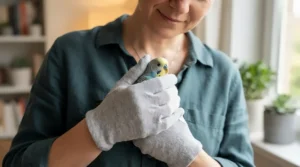
Gently restrain your bird. A towel helps, and the Avian Enrichment first aid basics page advises calm restraint before anything else. Locate the exact feather that’s bleeding. Then apply a clotting agent such as styptic powder or cornstarch, and hold gentle pressure. Avian Enrichment’s guidance adds that flour or baking powder can stand in if you have no styptic on hand.
Keep your bird warm and quiet afterward. Shock is a real risk when a small body loses blood. Warmth, dim light, and a low-stress environment make a difference.
Here’s the critical detail. VCA says to contact an avian vet if bleeding hasn’t stopped within two to three minutes, and to seek help sooner if there’s a constant fresh drip. Don’t wait out the clock for comfort. Call while you’re setting up the carrier.
One more point, and it’s honestly debated. Some sources say a clotted blood feather should still be removed because the clot can break loose again, while others say vets sometimes leave the feather alone and let the bird push it out naturally. Your avian vet gets to settle that, not a blog post.
Styptic Powder Application: Step-by-Step Technique
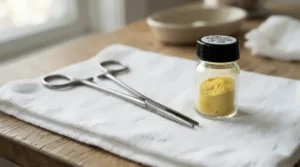
Good styptic powder application is a small skill that’s worth rehearsing before you ever need it. Here’s the general approach based on the product directions I reviewed.
- Prepare your tools. Moisten a cotton-tipped applicator, as the Kwik Stop directions specify.
- Pick up a small amount. A little goes a long way. Both retailer listings and review themes agree on that.
- Apply to the bleeding point. Press gently with moderate pressure, holding for five to ten seconds per the manufacturer.
- Check for clotting. If blood is still flowing, repeat once and call your vet.
- Stay close. Watch the bird for several minutes to confirm the bleeding doesn’t restart.
A few cautions matter here. Merck’s list notes that powders may be toxic if swallowed, and birds preen. Use as little as you can, and keep your bird from picking at the site. One veterinary safety data sheet I found for a different brand of styptic powder also flags possible respiratory and eye irritation, so apply it in a calm, well-lit space and avoid puffing it into the air.
Common first-week mistakes: dumping on too much, skipping the moistened tip, and trying a first-ever application during a real emergency. Practice with an empty swab and a towel so your hands know the motions.
Case Studies: Matching Styptic Powder for Broken Blood Feathers to Real Households
Product pages tell you what something is. These three scenarios, which are hypothetical profiles rather than reported experiences, show how to choose.
The apartment cockatiel owner on a tight budget. One small bird, a modest income, and a tiny closet. Remedy+Recovery Professional Groomer’s Styptic Powder or Durvet Styptic Powder gives plenty of coverage for a low price. Pair it with a pack of cotton swabs and your vet’s phone number taped to the lid. Add the Jorgensen Labs Curved Hemostats (5½ inch) only if your vet agrees to train you.
The frequent-traveler parrot owner. Weekend trips, a car, and a carrier. Miracle Care Kwik Stop Styptic Pads and Miracle Care Kwik Stop Styptic Gel Swabs keep things neat on the road. A small jar of Safari Styptic Powder can ride in the glove box as a backup.
The two-adult household with a medium parrot. Two people means one can steady the bird while the other works, which is exactly what LafeberVet says feather removal usually requires. Miracle Care Kwik Stop Styptic Powder at home, the Jorgensen Labs Curved Hemostats (5½ inch) if trained, and a rehearsed plan covers the bases.
✨ Don’t Miss These Exclusive Deals!
🔍 Take your bird’s emergency readiness to the next level with these carefully selected products. Click on any highlighted item to check current pricing and availability. A well-stocked kit gives your flock a safer home, and you a calmer mind!
What Is Styptic Powder for Broken Blood Feathers?
Styptic powder for broken blood feathers is a clotting agent, usually built on ferric subsulfate, applied to the bleeding shaft or follicle of a damaged growing feather. It helps slow blood flow while you stabilize your bird and contact an avian veterinarian. It is a first aid aid, not a replacement for veterinary care.
So why does a feather bleed like that? LafeberVet explains that the broken shaft acts like a straw, letting vessels bleed much longer through capillary action. The loss can be significant, especially in small birds. According to a Veterinary Practice News article on common avian emergencies, a blood feather contains an artery and a vein within the shaft, so damage can cause significant acute hemorrhage. The same article notes that to prevent repeat bleeding, the feather should be removed completely.
That context explains why styptic powder is a stopgap. It buys time. The real fix, whether that means removal or monitoring, belongs with a professional.
How to Choose Styptic Powder for Broken Blood Feathers
Here are seven steps for choosing wisely.
- Check the label’s animal list. Look for birds explicitly named, as most products here do.
- Compare formats. Powder is cheap and fast, gel is tidier, pads travel well.
- Read the ingredient list. Benzocaine appears in the Kwik Stop products but not in Durvet Styptic Powder. Ask your vet about preferences.
- Think about swallowing risk. Merck notes powders may be toxic if swallowed, so consider gel for a heavy preener.
- Match size to use. A 0.5 oz jar fits a carrier. A 1.5 oz jar suits a multi-pet home.
- Look for applicator options. Built-in swabs save fumbling in a crisis.
- Plan for replacement. Check your kit regularly, especially when your bird is molting.
If you remember one thing, make it this: the best styptic is the one you can open and use correctly with trembling hands. Practice beats perfect product selection every time.
Styptic Powder for Bird Nail Bleeding Reviews: What Buyers Actually Report
Searching styptic powder for bird nail bleeding reviews turns up an important truth: most reviews come from dog owners, not bird owners. That doesn’t make them useless, but you have to read them with context.
Across retail listings for the Kwik Stop line, I kept seeing the same themes. Buyers describe fast clotting, a little powder going a long way, and a feeling of peace of mind. The complaints are equally consistent. Powder is messy, there’s no applicator, and some owners say a styptic pencil handled a dog’s nails more neatly.
One reviewer on a retail page noted that they weren’t sure the product was safe for birds. That’s a fair question, and the manufacturer’s labeling lists birds. Even so, the Merck manual’s warning about swallowing is worth pairing with it.
Honestly, I couldn’t verify extensive bird-specific review pools for the smaller brands, so I haven’t invented any. When review evidence is thin, lean on veterinary guidance and your own avian vet’s preferences.
Tweezers for Blood Feather Removal: When Tweezers Work and When You Need a Hemostat
The phrase tweezers for blood feather removal comes up constantly in bird forums, so let’s sort fact from folklore.
Avian Enrichment’s first aid basics suggest needle-nose pliers or heavy-duty tweezers, gripping the shaft close to the skin. Meanwhile, the HARI-approved kit list recommends 5½ size hemostats for removing blood feathers. The difference matters. Regular tweezers can slip, and a feather pulled badly can leave a broken shaft behind.
The professional literature is more careful. The Veterinary Practice News article describes a broken blood feather being removed with hemostats, and notes that rounded base on a fully removed feather indicates complete extraction. Complications, though rare, include incomplete removal of the follicle or failure of the feather to regrow.
My honest read: tweezers are fine for splinters and general kit use, while a locking hemostat like the Jorgensen Labs Curved Hemostats (5½ inch) is the tool aimed at feathers. But the people who disagree about whether owners should pull feathers at all are avian vets, and that’s the conversation to have before you buy.
Styptic Powder vs Gel vs Cornstarch: Which Clotting Agent Wins?
| Factor | Styptic Powder | Styptic Gel | Cornstarch |
|---|---|---|---|
| Speed | Fast on contact | Fast with pressure | Slower, a pantry fallback |
| Mess | Loose powder | Minimal | Loose powder |
| Swallow concern | Merck cautions | Preferred in Merck’s list | Considered gentler by many owners |
| Cost | Lowest per use | Higher per use | Pennies |
| Best For | Home kits | Travel and neat application | Emergencies without a kit |
The table shows why no single option wins outright. Miracle Care Kwik Stop Styptic Powder is the cost-effective default, while Miracle Care Kwik Stop Styptic Gel Swabs align with the format Merck lists. Cornstarch appears on multiple avian first aid pages as an acceptable fallback when you have nothing else.
For most households, the practical answer is both: a proper styptic in the kit, and cornstarch in the kitchen as a backup. Just remember, none of these replaces your vet.
DIY vs Pre-Made Bird First Aid Kit Comparison
The DIY vs pre-made bird first aid kit comparison comes down to a trade-off between control and convenience.
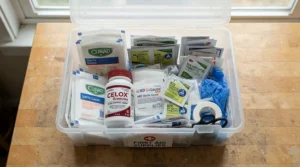
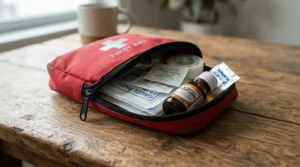
A pre-made example is the Northern Parrots Emergency Parrot First Aid Kit, a UK-based product listed in the mid-£30s. It includes gauze bandage, adhesive tape, gauze pads, eye and skin wash, powdered styptic, cotton swabs, antiseptic wipes, PVP iodine wipes, scissors, locking forceps, latex gloves, a hand wipe, emergency care and records cards, and a snap-lock case. It’s described as suitable for all parrots, though it was marked sold out at the time of research, so availability may vary.
| Factor | DIY Kit | Pre-Made Kit (e.g. Northern Parrots Emergency Parrot First Aid Kit) |
|---|---|---|
| Cost | Core items are cheap individually | Mid-£30s for the example kit |
| Customization | Total control | Fixed contents |
| Convenience | You do the shopping | Ready to go |
| Completeness | Depends on your research | Includes forceps and styptic |
| Best For | Experienced owners | New owners wanting a starting point |
Here’s the analysis. A long-time forum contributor argues that the biggest flaw of store-bought kits is an undersized container that can barely hold what’s supplied, leaving no room for a towel. That’s a fair critique. The best compromise is to buy a pre-made kit, then add your own styptic, towel, and vet numbers.
Merck’s list also stresses that phone numbers are the most important item. No kit includes your vet, so write it down.
Travel First Aid Kit for Parrot Owners: What to Pack Beyond the Basics
A travel first aid kit for parrot owners needs to be smaller than your home kit but more thoughtful. The northwest bird rescue guidance I found suggests bringing a miniature version of your standard list whenever you travel.
Start with portable styptic formats. Miracle Care Kwik Stop Styptic Pads and Miracle Care Kwik Stop Styptic Gel Swabs avoid loose powder in a carrier. A small jar of Safari Styptic Powder is a sensible backup.
Then add the non-obvious items. Merck’s list includes a stockinette or sock to hold wings still, and bandage materials that won’t stick to feathers. HARI suggests a small bag of your bird’s familiar food in case of an emergency evacuation or hospital stay. Add copies of your bird’s medical records and the number of an emergency clinic near your destination.
Here’s a practical wrinkle. One parrot-owner source points out that emergency clinics often lack an avian vet, so call ahead. Look up avian-capable clinics along your route before you leave, not from the roadside.
When to Call an Emergency Vet
Knowing when to call an emergency vet is the single most valuable piece of knowledge in this article.
VCA’s guidance gives clear markers. Call if there is a constant drip of fresh blood, or if bleeding hasn’t stopped within two to three minutes. Avian Enrichment adds that bleeding continuing beyond a few minutes means a call to your avian vet. A bird can lose a large amount of blood quickly, so hesitation is the enemy.
Don’t wait if the wound looks deep. One parrot-owner site advises skipping styptic powder if the wound has penetrated a body cavity, and heading to the vet. Several sources also suggest calling on the way, not after you arrive.
To locate an avian specialist, the Association of Avian Veterinarians maintains a “Find a Vet” tool, which VCA also points readers toward. Bookmark it now, not mid-crisis.
When in doubt, call. A vet who says “you did fine” costs you a phone call. A vet who says “you should have come sooner” costs far more.
Common Mistakes When Buying and Using Styptic Powder
Mistakes come in two flavors: shopping errors and panic errors.
On the shopping side, many buyers grab the biggest jar thinking more is better. A huge tub is wasteful if only one bird will ever use it. Others assume dog-focused reviews apply perfectly to birds, which they often don’t.
On the usage side, the biggest error is trying a first application in a real emergency. Practice the motions beforehand. Another is piling on powder, which increases the amount your bird could swallow while preening.
A third mistake is believing styptic powder solves the problem. It doesn’t. Veterinary Practice News notes that to prevent recurrent bleeding the feather should be completely removed, and that’s a vet-level decision.
Finally, don’t ignore the label. Several products warn against use on deep wounds, body cavities, or burns. Respect those limits, and when a situation seems outside them, stop and call your avian vet.
Long-Term Cost and Maintenance of Your Bird First Aid Supplies
Good news: this is a cheap hobby. A jar of styptic powder, a hemostat, and cotton swabs together cost less than a single decent bag of treats.
The real expense is neglect. Check your kit regularly, especially during molt, when blood feathers are most common. A farm-supply and bird-supply blog I reviewed recommends exactly that habit. Replace anything you use, and check dates on gels, pads, and any wound products.
Storage matters too. Safari’s label tells you to keep the container tightly sealed, and pre-soaked pads can dry out if their packaging is left open. Keep your kit accessible but out of your bird’s reach, as one kit guide advises.
One reviewer even reported that a styptic powder kept for over five years in a medicine cabinet still worked. That’s an anecdote, not a guarantee, so check labels and replace anything that looks clumped or compromised.
Over a bird’s lifespan, a few dollars of annual upkeep is a rounding error compared to a single emergency vet bill.
FAQ
❓ Can I use cornstarch instead of styptic powder for a bleeding blood feather?
❓ How long should I hold pressure before calling the vet?
❓ Is styptic powder safe if my bird swallows a little?
❓ Should I pull a broken blood feather myself?
❓ Does a styptic powder jar expire or go bad?
Conclusion
A snapped blood feather doesn’t have to become a catastrophe. With the right preparation, it becomes a stressful but manageable event.
Here’s the short version. For an everyday home kit, Miracle Care Kwik Stop Styptic Powder is the proven benchmark, while Remedy+Recovery Professional Groomer’s Styptic Powder and Durvet Styptic Powder are budget-minded alternatives. If you worry about loose powder, Miracle Care Kwik Stop Styptic Gel Swabs match the gel format Merck’s list names. Travelers will appreciate Miracle Care Kwik Stop Styptic Pads and a compact jar of Safari Styptic Powder. And the Jorgensen Labs Curved Hemostats (5½ inch) belong in your kit only once your vet has shown you how to use them.
Most important of all, remember what styptic powder for broken blood feathers can and can’t do. It slows bleeding and buys you time. It doesn’t replace an avian vet, and sources disagree about what happens next, so settle those questions with a professional before an emergency.
Stock your kit, tape your vet’s number inside the lid, rehearse the motions, and breathe. Your bird is counting on a calm human.
✨ Ready to build your bird’s emergency kit?
🛒 Check current prices on the products above and give your feathered family member the safety net they deserve! 🦜
Recommended for You
- Bird Heating Pad: 7 Best Safe Picks For Emergencies (2026)
- Small Animal Incubator For Bird Emergencies: 7 Proven Picks 2026
- Bird Mite Spray: 7 Best Safer Picks For Pet Birds In 2026
Disclaimer: This article contains affiliate links. As an Amazon Associate, I earn from qualifying purchases. If you purchase products through these links, we may earn a small commission at no additional cost to you.
✨ Found this helpful? Share it with your friends! 💬🤗
