
In This Article
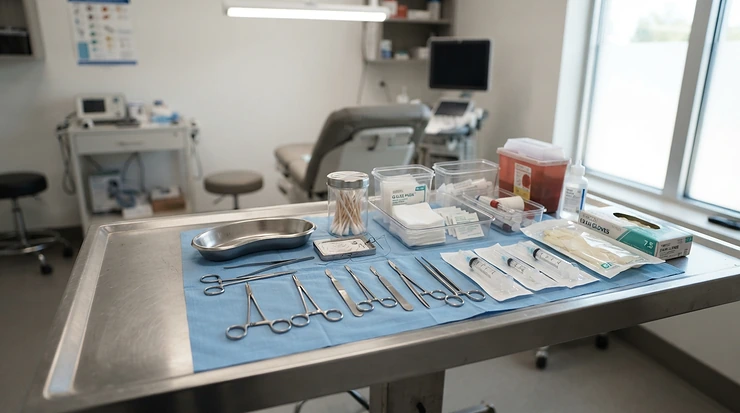
Anyone who’s ever tried to catch a fresh dropping from a startled cockatiel before it gets stepped on, pooped over, or pecked into oblivion knows the truth: birds do not care about your veterinary appointment schedule. A sample collection kit for bird vet visits exists precisely for this chaos — a small, purpose-built set of containers, tools, and sometimes magnifiers designed to capture a usable dropping or fecal sample cleanly enough that a lab can actually read it.
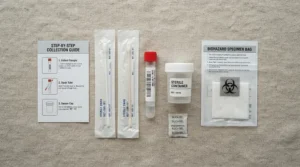
At its simplest, a sample collection kit for bird vet testing is a leak-proof container (sometimes with a built-in spoon or scoop) paired with instructions for gathering a fresh dropping without contamination, so a veterinarian or diagnostic lab can screen for parasites, bacterial imbalance, or yeast overgrowth. Get the collection wrong — a sample that’s dried out, mixed with cage litter, or too old — and even the best lab in the country can’t give you a reliable answer.
This guide breaks down seven real, purchasable options that cover the full spectrum: bulk fecal containers for multi-bird households, a mail-in diagnostic test built specifically for exotic species, precision specimen cups, and — because half the battle is actually seeing what you’re dealing with — a couple of magnifiers built for close-up inspection of droppings and eye sign. According to avian veterinarians rely on tests like Gram’s stain, culture and sensitivity testing, and parasitology alongside physical exam findings to diagnose illness in birds, so getting a clean sample matters more than most owners realize.
We’ll walk through honest, spec-driven analysis of each product, real comparison data, and the practical stuff nobody puts on the packaging — like why your parakeet’s droppings dry out in eleven minutes flat if you don’t act fast.
Quick Comparison Table: 7 Sample Collection Kits at a Glance
| Product | Best For | Price Range | Type |
|---|---|---|---|
| BioRx Sponix Pet Fecal Test Kit (50-Pack) | Multi-bird households, bulk stocking | Budget ($15-$30) | Collection containers |
| Affordable Pet Labs Bird Fecal Diagnostic Test | Owners who want lab results without a vet visit | Mid-to-premium ($40-$70) | Mail-in lab kit |
| Vakly Sterile 4 oz Specimen Cups | Precise, graduated sample volumes | Budget-mid ($10-$18) | Specimen containers |
| Angoily 25-30ml Stool Sample Container | First-time buyers, small budgets | Budget (under $15) | Collection containers |
| Pigeon Supplies Plus 20X Magnifier Loupe Glasses | Hands-free dropping and eye-sign inspection | Mid-range ($20-$35) | Magnifier |
| 4-Lens LED Handheld Magnifier (2.5X-16X) | Flexible at-home visual screening | Budget ($10-$20) | Magnifier |
| Eggzamin McMaster Fecal Egg Count Slide | Serious parasite quantification | Premium ($25-$45) | Diagnostic slide |
Look at that spread for a second: you’ve got three-dollar-a-unit bulk containers sitting right next to a $40+ mail-in lab test, and that’s not an accident — it reflects how differently people actually approach avian health monitoring. If you’re a breeder cycling through a dozen birds a month, the BioRx Sponix Pet Fecal Test Kit wins purely on cost-per-sample math. If you’ve got one beloved macaw and you want an actual diagnosis without an office visit, the Affordable Pet Labs Bird Fecal Diagnostic Test does the heavy lifting for you. And if you just want to look before you decide whether a vet trip is even necessary, the magnifiers earn their keep.
💬 Found a combo that fits your setup? Bookmark this table — you’ll want to compare it again before checkout.
Top 7 Sample Collection Kits for Bird Vet Testing: Expert Analysis
1. BioRx Sponix Pet Fecal Test Kit (50-Pack) — best bulk value for multi-bird households
Fifty individual fecalyzers for the price most brands charge for ten — that’s the entire pitch here, and it’s a fair one. Each tube in this pack was engineered with a built-in collection spoon for a “no-touch” sampling process, plus a secure-locking cap designed to prevent odors and leakage during transport. In practice, that no-touch spoon matters more than it sounds — anyone who’s fumbled a dropping with a popsicle stick knows the sample-to-hand ratio can get ugly fast.
These were designed with veterinary clinics, animal shelters, and professional breeders in mind, and the tubes are built to fit most laboratory centrifuges and diagnostic setups. That standardization is the real value-add: if your avian vet’s lab already runs flotation on this exact tube shape, you’ve eliminated one entire step of friction between “I collected a sample” and “I got an answer.” For a single-bird household, 50 tubes will outlive your bird’s next several checkups — which is exactly why breeders and rescue operations are the ideal buyer here, not the person with one budgie.
Because these tubes are marketed toward dogs and cats first, verified bird-specific review data wasn’t something we could confirm during research — the design itself (leak-proof cap, centrifuge compatibility, built-in spoon) transfers directly to avian samples, but we’d rather say that plainly than invent a five-star bird-owner quote that doesn’t exist.
Pros:
- ✅ Fifty tubes means an incredibly low cost-per-sample for repeat testing
- ✅ Built-in spoon avoids direct hand contact with the sample
- ✅ Standardized shape fits most lab centrifuges and flotation setups
Cons:
- ❌ Marketed for dogs/cats, so bird-specific packaging guidance is absent
- ❌ Fifty tubes is overkill if you own a single pet bird
At a price that typically lands in the $15-$30 range for the full pack at the time of research, this is the cheapest per-unit option on this list by a wide margin — and for anyone testing multiple birds regularly, that math is hard to argue with.
2. Affordable Pet Labs Reptile, Amphibian & Bird Fecal Diagnostic Test — most complete mail-in lab option
This is the one kit on this list that skips the “collect and hope your vet reads it right” step entirely and routes your sample straight to a diagnostic lab. The kit is designed for reptiles, amphibians, and birds, helping detect common gastrointestinal parasites such as Giardia and Cryptosporidium, with results delivered in 3-5 business days. That turnaround window is honestly competitive — a lot of general vet clinics send out-of-house fecal tests take just as long, minus the office-visit fee stacked on top.
What sets this apart from a bare-bones container is the full loop: the kit includes a user-friendly fecal cup, a prepaid shipping label, and a detailed report processed in the same diagnostic labs used by veterinarians. For someone whose avian vet is two hours away, or who just wants a baseline screen before a wellness visit, that’s a legitimately useful shortcut. One verified customer noted the process was easy, with results coming back quickly — a small but real data point, and one of the few pieces of genuine bird-owner feedback we could confirm during research rather than infer from adjacent products.
The tradeoff is obvious: you’re paying for lab interpretation, not just a container, and this test screens for GI parasites specifically — it won’t catch a bacterial gram-stain imbalance or a respiratory issue the way an in-clinic panel would.
Pros:
- ✅ Full mail-in service with prepaid shipping and lab-grade processing
- ✅ Specifically validated for bird, reptile, and amphibian samples
- ✅ 3-5 day turnaround, comparable to many in-clinic send-out tests
Cons:
- ❌ Screens for GI parasites only, not a full diagnostic workup
- ❌ Costs more per use than a standalone container kit
Expect to pay in the $40-$70 range depending on any add-on panels, positioning this firmly as the “I want an actual answer” option rather than the “I just need a cup” option.
3. Vakly Sterile 4 oz Specimen Cups — best graduated cups for precise samples
Sometimes you don’t need a bird-specific label on the box — you need a genuinely sterile, properly sized container, and Vakly’s cups deliver exactly that. Each cup comes individually bagged, made from clear polypropylene with graduated volume markings, leak-proof lids, and an ID label for urine, stool, and general specimen collection. The graduated markings are the underrated feature here — for larger birds where your vet wants a specific volume rather than “whatever fit on the spoon,” having visible measurement lines removes the guesswork.
Because these are general-purpose lab specimen cups rather than a pet-branded product, they lean into a different kind of trustworthiness: this is the same container format used across human and veterinary diagnostic labs, which means compatibility with whatever your clinic’s standard intake process looks like. The individual bagging also matters more than it seems — it keeps every cup sterile until the moment you actually need it, which is exactly the kind of detail an Amazon listing photo won’t show you but a lab tech will appreciate.
Pros:
- ✅ Graduated markings help you hit a specific sample volume
- ✅ Individually bagged for guaranteed pre-use sterility
- ✅ ID labels make multi-bird households easy to track
Cons:
- ❌ Sold in small packs (5), so restocking is more frequent
- ❌ No bird-specific instructions included in the packaging
Priced around $10-$18 for a five-pack at the time of research, these sit in the budget-to-mid range — cheap enough to always have a spare, precise enough to satisfy a lab that actually cares about sample volume.
4. Angoily 25-30ml Stool Sample Container with Spoon Lid — best budget starter containers
If your entire goal is “I need a container in my hand before my vet appointment tomorrow,” this is the one to grab. It’s a small, screw-top jar with an integrated spoon lid, and — notably — the listing explicitly covers pet dogs, puppies, chickens, and horses, which puts it a step closer to poultry-adjacent use than most fecal containers that only mention cats and dogs. That’s not a bird-specific claim we’re going to stretch further than it deserves, but it does suggest the container size and format are already validated for smaller-bodied animal droppings, not just large-dog stool volumes.
The spoon-in-lid design is the whole value proposition at this price point: no separate scoop to lose, no direct hand contact, and a screw-top seal tight enough to survive a car ride to the clinic without leaking into your cupholder. For ten containers at a genuinely low price, this is the entry point for someone who’s never bought a fecal collection kit before and doesn’t want to overthink it.
Pros:
- ✅ Ten-pack keeps cost per container extremely low
- ✅ Built-in spoon lid avoids a separate scooping tool
- ✅ Screw-top seal designed to prevent transport leakage
Cons:
- ❌ Smaller 25-30ml capacity than dedicated lab specimen cups
- ❌ No graduated volume markings for precise measurement
At under $15 for the full ten-pack, this is the cheapest way to have a proper container on hand — perfect for the “just in case” drawer next to the bird cage supplies.
5. Pigeon Supplies Plus 20X Magnifier Eye Glasses Loupe with LED Light — best hands-free magnifier for droppings and eye sign
This one’s a genuine niche gem. Built specifically for pigeon fanciers to view a bird’s eye sign, this eyeglasses-style magnifier flips up when not in use so you never have to remove the frame. What makes this relevant well beyond pigeon racing is the hands-free format — when you’re trying to inspect a fresh dropping and hold a squirming bird and keep a container steady, having a magnifier that just sits on your face like glasses is a genuine upgrade over juggling a handheld loupe.
At 20X magnification with a built-in LED, this lets you catch visual red flags — undigested seed, unusual coloration, visible parasite segments, blood streaking — before you even decide whether a full lab test is warranted. Is it a substitute for microscopy? Absolutely not, and we’re not going to pretend otherwise. But as a first-pass screening tool that costs a fraction of a vet consult, it earns its spot.
Pros:
- ✅ Hands-free glasses design frees both hands for handling your bird
- ✅ Built-in LED light for close inspection in low light
- ✅ 20X magnification catches visible parasites or debris
Cons:
- ❌ Niche product with a smaller buyer/review pool than mainstream magnifiers
- ❌ Not a replacement for lab-grade microscopy
Typically priced in the $20-$35 range, this sits comfortably in the mid-tier — a specialty tool for people who actually want to look closely, not just collect and ship.
6. 4-Lens LED Handheld Magnifier (2.5X-16X) — most versatile magnification levels
Where the loupe glasses above are a specialist’s tool, this one is the generalist’s toolbox. It ships with four interchangeable lenses at 2.5X, 5X, 10X, and 16X magnification, plus built-in LED lights powered by three AAA batteries. The swap-lens system uses a simple two-button release, so you’re not stuck committing to one magnification power before you even know what you’re looking at.
For avian health checks specifically, that range flexibility matters: 2.5X is plenty for a general once-over of feather condition or dropping consistency, while 16X gets you close enough to spot mite activity or fine parasite detail that a lower-power lens would blur past. The LED lighting solves the other real-world problem — most bird cages aren’t sitting under a surgical lamp, and low ambient light is exactly when fine detail disappears.
Pros:
- ✅ Four swappable lenses cover a wide magnification range
- ✅ Built-in LED lighting for low-light inspection
- ✅ Ergonomic handle designed for extended handheld use
Cons:
- ❌ Battery-powered, so performance depends on fresh AAAs
- ❌ General-purpose design, not marketed specifically for avian use
Sitting at roughly $10-$20 at the time of research, this is one of the most affordable tools on the list — and arguably the most flexible, since it adapts to whatever level of detail your inspection actually calls for.
7. Eggzamin McMaster Method Fecal Egg Count Slide — most precise for parasite counting
This is the tool that separates “I think there might be worms” from “there are 340 eggs per gram, and here’s the count to prove it.” The McMaster method is a quantitative fecal analysis technique, and this slide is built specifically as a double chamber counting slide for livestock and veterinary use in fecal egg counts. Rather than just confirming presence or absence of parasites, it lets you (or your vet) actually count eggs per gram of feces — which is the metric used to gauge parasite burden and track whether a treatment protocol is actually working over time.
This is squarely a premium, precision-oriented pick. It requires a compound microscope to use properly, so it’s not a standalone purchase for someone without one — but for bird owners managing a chronic parasite issue, or breeders running regular flock-wide screening, the ability to quantify rather than guess is a genuinely different tier of information than a simple flotation test provides.
Pros:
- ✅ Quantifies parasite egg count rather than just detecting presence
- ✅ Double-chamber design built for the validated McMaster method
- ✅ Reusable slide, unlike single-use collection containers
Cons:
- ❌ Requires a compound microscope you’ll need to already own
- ❌ Steeper learning curve than a basic float test
Priced around $25-$45, this is the most technical — and arguably most powerful — tool here, best suited to owners already comfortable with a microscope rather than someone doing their first-ever fecal check.
Looking across all seven, the pattern is clear: BioRx Sponix and Angoily win on raw cost-per-unit, Affordable Pet Labs wins on convenience and actual lab interpretation, Vakly splits the difference with precision sizing, and the magnifiers plus the Eggzamin McMaster slide cover the “I want to actually see what’s happening” half of the equation that plain containers can’t touch.
✨ Ready to build your own kit?
Mix and match from the picks above — a container plus a magnifier covers 90% of at-home screening needs.
Practical Usage Guide: How to Collect a Bird Sample Without a Battle
At-home bird sample prep comes down to timing more than technique. Bird droppings dry out fast — often within 15-20 minutes at room temperature — and a dried sample is close to useless for flotation or microscopy. The moment you spot a fresh dropping (ideally the first one of the morning, before your bird has eaten and mixed in seed hulls), transfer it into your container immediately using the built-in spoon or a clean applicator stick.
Line the cage floor with plain, unprinted paper the night before your collection window — newspaper ink and colored cage liners can interfere with a lab’s visual read of the sample. Avoid scraping up anything that’s touched cage litter, sand, or gravel, since contamination is one of the most common reasons a lab has to reject and re-request a sample. If your vet wants a pooled sample (common for parasite screening), collect droppings across 2-3 consecutive days into the same sealed container, refrigerated between collections but never frozen.
The most common first-30-days mistake new bird owners make isn’t collection — it’s storage. A sample sitting in a warm car for two hours before drop-off degrades just as badly as one collected wrong in the first place. Keep it cool, keep it sealed, and get it to the lab or vet within a few hours whenever possible.

Real-World Scenarios: Matching the Right Kit to Your Bird
Picture three different owners. First, there’s the college student with a single budgie in a dorm room, testing once a year for a wellness check — for her, the Angoily 25-30ml container plus the 4-Lens LED magnifier covers everything she needs without overcomplicating a simple annual routine. Then there’s the breeder running a 12-bird aviary, screening new arrivals for parasites before introducing them to the flock — the BioRx Sponix 50-pack is the obvious fit, since the cost-per-sample math only works at volume, and a centrifuge-compatible tube keeps their vet’s lab process smooth.
Finally, there’s the owner two hours from the nearest certified avian vet, managing a macaw with recurring digestive symptoms — for her, the Affordable Pet Labs mail-in test paired with the Eggzamin McMaster slide for ongoing monitoring gives her both a professional diagnosis and a way to track parasite load between formal vet visits, without a four-hour round trip every time symptoms flare up.
Problem → Solution: Common Sample Collection Headaches
Problem: The dropping dried out before I could collect it. Solution — check the cage every 15-20 minutes during your collection window instead of waiting for a convenient moment; a slightly damp paper towel under the cage liner can also slow drying without contaminating the sample.
Problem: My vet says the sample was contaminated with litter. Solution — switch to plain paper lining (see the Practical Usage Guide above) and use a container with a built-in spoon, like the BioRx Sponix or Angoily kits, so you’re lifting only the dropping itself.
Problem: I can’t tell if what I’m seeing is actually a parasite. Solution — start with a mid-power magnifier like the 4-Lens LED Handheld Magnifier before assuming the worst; plenty of undigested seed fragments get mistaken for parasite segments by first-time inspectors.
Problem: My bird’s droppings look off, but I don’t want to pay for a full vet visit just to find out it’s nothing. Solution — the Affordable Pet Labs mail-in test screens for common GI parasites at a lower cost than an in-office visit, giving you a data point before deciding whether an appointment is warranted.
Problem: I want to track whether treatment is actually working. Solution — this is exactly what the Eggzamin McMaster slide is built for: quantifying egg count over time rather than a simple yes/no flotation read.
How to Choose a Sample Collection Kit for Bird Vet Testing
- Match the kit to your sample volume needs. One bird tested occasionally needs a handful of containers; a breeding operation needs bulk stock like the 50-pack options.
- Decide whether you need interpretation or just collection. A container gets you a sample; a mail-in kit like Affordable Pet Labs gets you an actual answer.
- Check for a built-in spoon or scoop. No-touch collection reduces contamination risk and is genuinely more pleasant than the alternative.
- Consider whether visual pre-screening would help. A magnifier lets you catch obvious issues before committing to a full lab test.
- Factor in storage and transport time. If your vet is far away, prioritize leak-proof, tightly-sealed containers over anything flimsy.
- Think about long-term monitoring, not just one-off testing. If your bird has a chronic condition, a quantitative tool like the McMaster slide pays for itself over repeated at-home checks.
- Read the fine print on species applicability. Most fecal kits are marketed toward dogs and cats — the format still works for birds, but don’t expect bird-specific instructions in the box.
Common Mistakes When Buying Bird Health Test Kits
The single most common mistake is buying based on the cheapest per-unit price without checking what the container is actually rated for — a container designed for large-dog stool volumes may be comically oversized for a finch dropping, making it harder to gauge how much sample you actually collected. The second mistake is assuming a magnifier alone can diagnose anything; even the sharpest 20X loupe only helps you decide whether to pursue lab testing, not replace it. Third, people frequently skip reading whether a kit is a standalone container or a full mail-in service — and end up disappointed when a $12 container doesn’t come with a lab report attached. Finally, plenty of buyers ignore expiration or sterility packaging on specimen cups, which matters more for accurate results than most product photos let on.
At-Home Testing vs Traditional Vet-Only Fecal Testing
At-home fecal sample vet testing and traditional in-clinic testing aren’t really competitors — they’re different stages of the same process. Collecting at home and mailing to a lab, or bringing a properly collected sample into your existing vet appointment, both rely on the same underlying science; what changes is convenience and interpretation. A veterinarian evaluating a fresh sample in-office can immediately correlate findings with the fecal reference. VCA notes that a Gram’s stain is a quick diagnostic tool commonly used to monitor a patient’s progress during treatment, with samples mounted on a microscope slide and examined for cellular components alongside other findings — something that requires an actual clinical setting, not a mail-in kit.
Where at-home collection genuinely shines is in reducing the number of unnecessary trips: a quick visual check with a magnifier, or a baseline mail-in parasite screen, can tell you whether a full clinic visit is actually warranted right now, or whether monitoring at home for another few days is reasonable. It’s a triage tool, not a replacement for professional diagnosis — and any kit or test result should still be interpreted with a vet’s input, especially for symptomatic birds.
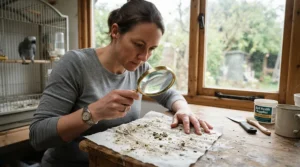
What to Expect: Real-World Performance of At-Home Bird Sample Kits
In practice, the containers on this list perform almost exactly as advertised — leak-proof caps hold up fine for a car ride, spoon lids genuinely reduce mess, and graduated cups make hitting a target volume painless. The magnifiers are where expectations need the most calibration: a 16X handheld lens or a 20X loupe will absolutely let you see texture, color variation, and larger parasite segments clearly, but they will not resolve microscopic eggs or protozoa the way a lab’s compound microscope does. Translation: use magnification for “does this warrant a vet call,” not for a final diagnosis.
The mail-in Affordable Pet Labs test is where real-world performance tends to exceed low expectations — a 3-5 day turnaround genuinely rivals many in-clinic send-out labs, and the confirmed customer feedback we found described the process as straightforward with quick results. That said, it’s built for parasite screening specifically, so a bird with a non-parasitic issue (bacterial imbalance, yeast overgrowth) would need a different diagnostic path entirely.
Bird Sample Collection Kits for Different Types of Owners
First-time owners generally do best starting simple: a budget container like Angoily plus a general-purpose magnifier removes the intimidation factor without overspending on tools they’re not ready to use. Experienced hobbyists and breeders lean toward volume and precision — bulk containers like BioRx Sponix, paired with a quantitative tool like the Eggzamin McMaster slide, reflect the reality of managing multiple birds’ health data over time. Owners of a single high-value or geriatric bird, meanwhile, often get the most value from the Affordable Pet Labs mail-in test, since professional lab interpretation matters more to them than raw cost-per-sample.
Avian Diagnostic Checklist: What Your Vet Actually Looks For
Before your next avian appointment, it helps to know what’s actually being evaluated beyond the sample itself. A well-bird exam typically involves the veterinarian asking about the bird’s housing, diet, and activities, then examining the feathers, eyes, ears, and nares for signs of illness, often followed by a Gram’s stain. Your at-home checklist before a visit should include: a fresh, uncontaminated dropping sample collected within a few hours of the appointment; notes on any changes in dropping color, consistency, or frequency over the past week; observations about appetite and activity level; and any visible feather or skin changes you noticed during a magnifier check. Bringing organized notes alongside a properly collected sample genuinely speeds up the diagnostic process — vets can spend their time interpreting results instead of reconstructing a week of history from memory.
Safety, Hygiene & Zoonotic Risk When Handling Bird Droppings
A few bird-transmissible conditions, including certain bacterial and fungal organisms found in droppings, carry zoonotic potential, which is exactly why no-touch collection tools matter beyond just tidiness. Always wash hands thoroughly after handling any sample container, even ones with built-in spoons, and avoid touching your face during collection. Store samples away from food preparation areas, and dispose of single-use containers according to your local guidelines rather than reusing them across different birds, which can cross-contaminate results. If you keep multiple birds, using individually labeled containers (the ID labels included with the Vakly cups are handy here) prevents mixing up which sample belongs to which bird — a mistake that can send you chasing the wrong diagnosis entirely.
Long-Term Cost & Maintenance: Budgeting for Routine Avian Health Checks
Thinking in terms of total cost of ownership changes the math considerably. A single BioRx Sponix tube costs pennies once you divide the 50-pack price across a year of quarterly testing for multiple birds — genuinely cheaper per use than almost any alternative here. The Affordable Pet Labs mail-in test costs more per use, but it replaces an entire vet visit’s diagnostic fee, so for occasional testing it can actually work out cheaper than the in-clinic equivalent. Reusable tools like the Eggzamin McMaster slide front-load their cost but pay off over months or years of repeated use, especially for tracking chronic conditions. The practical takeaway: match your kit choice not just to your budget today, but to how often you’ll realistically be testing over the next year.
Frequently Asked Questions
❓ What is a sample collection kit for bird vet testing?
❓ How do I collect a fresh dropping without contaminating it?
❓ Can I use a dog or cat fecal test kit for my bird?
❓ How much does bird fecal testing cost?
❓ What magnification do I need to inspect bird droppings at home?
Conclusion
There’s no single “best” sample collection kit for bird vet testing — there’s only the best fit for how often you test and what you’re actually trying to find out. If you’re managing a busy aviary, the BioRx Sponix 50-pack makes the cost math work in your favor. If you want an actual diagnosis without loading your bird into a carrier, the Affordable Pet Labs mail-in test does that job well. And if you just want to look closely before deciding your next move, either magnifier on this list — the Pigeon Supplies Plus loupe or the 4-Lens LED Handheld Magnifier — gives you that first line of information cheaply.
Whatever you pick, remember that collection technique matters as much as the tool itself: fresh, uncontaminated, promptly stored samples are what actually make any test — home or lab — worth running.
Recommended for You
- Handheld UV Light For Bird Feather Checks: 7 Top Picks (2026)
- Digital Bird Scale For Home Health Checks: 7 Picks For 2026
- Bird Scale For Large Macaws: 7 Top Picks For 2026
Disclaimer: This article contains affiliate links. As an Amazon Associate, I earn from qualifying purchases. If you purchase products through these links, we may earn a small commission at no additional cost to you.
✨ Found this helpful? Share it with your friends! 💬🤗
