
In This Article
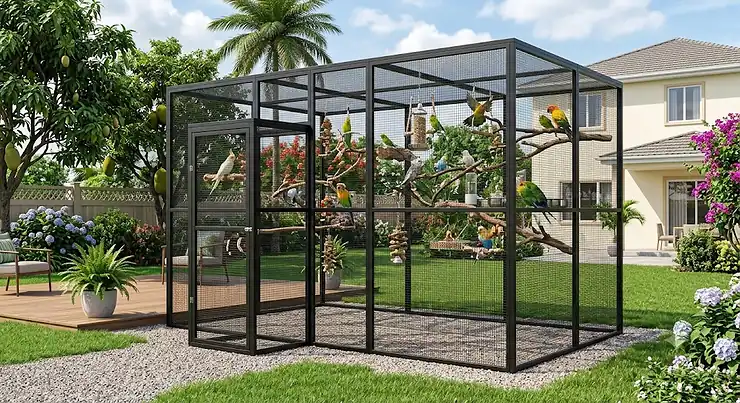
A walk in flight cage isn’t really a “cage” at all. It’s a room you build for a bird — one you can step inside, close the door behind you, and just exist in the same airspace as your parrot instead of reaching through bars. That distinction matters more than it sounds like it should. Once a bird can flap ten feet instead of two, its whole personality tends to loosen up: less screaming, less feather plucking, more of the goofy, curious behavior owners actually signed up for. This guide walks through seven real walk in flight cage models on the market right now, compares them honestly (including where a couple of them fall short), and gives you a framework for matching cage to bird, budget, and living space. According to the Merck Veterinary Manual, cage size is one of the single biggest levers you have over a captive bird’s long-term wellbeing, so this isn’t a purchase to rush
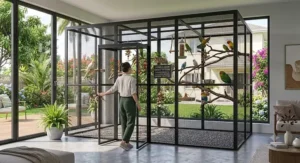
What is a walk in flight cage? It’s a human-enterable aviary, typically 6-13 feet in one or more dimensions, built with a full-height door so the owner physically enters the enclosure rather than reaching through a cage door. Most models are constructed from powder-coated steel or wrought iron and rated for one or several medium-to-large parrot species.
Below you’ll find the 7 real models we researched, a comparison table, deep individual breakdowns, and several sections built specifically to help first-time buyers avoid the mistakes that turn a big purchase into a big regret.
Quick Comparison Table
| Product | Approx. Size (H x W x D) | Best For | Price Range |
|---|---|---|---|
| wonline 87″ Walk-in Bird Aviary | 87″ x 43″ x 43″ | Budget single-bird starter aviary | Under $500 |
| SENY Heavy Duty Walk-in Aviary | 79″ x 86″ x 62″ | Value-focused multi-bird setup | $500-$900 range |
| Sliverylake 87″ Walk-in Aviary | ~87″ x 77″ x 96″ | Outdoor macaws and large conures | $600-$1,000 range |
| A&E Cage Co WI8561 | 79″ x 85″ x 61″ | Indoor medium-large parrots | $1,800-$2,300 range |
| A&E Cage Co WI11062 | 79″ x 110″ x 62″ | Multiple large parrots, breeders | $2,400-$4,500 range |
| vidaXL Aviary with Extension | 83.5″ x 490.6″ x 81.5″ | Largest indoor/outdoor flight run | $700-$1,200+ range |
| 154″ Carbon Crystal Walk-in Cage | ~79″ x 154″ x 62″ | Maximum footprint on a budget | $600-$950 range |
Looking at the spread here, the two A&E Cage Co models sit in a different category entirely — they’re steel-framed, sold by a dedicated cage manufacturer, and priced like furniture rather than like a seasonal patio accessory. The budget-tier entries (wonline, SENY, 154″ Carbon Crystal Walk-in Cage) trade some long-term durability for a dramatically lower price-per-square-foot, which is a completely reasonable trade if you’re housing smaller or single birds. The vidaXL Aviary with Extension stands apart because its modular design lets you scale the footprint up later, something none of the fixed-size models here can do.
💬 Found a size that fits your space? Bookmark this table so you can compare it against your bird’s wingspan before you commit.
Top 7 Walk In Flight Cage Options: Expert Analysis
1. wonline 87″ Walk-in Bird Aviary — lowest cost of entry into true walk-in housing
The standout here is simple: this is likely the cheapest way to get an actual walk-in door on a flight cage, rather than settling for an oversized tabletop cage. Built from low-carbon steel with a swing-out door and two stainless steel feeding bowls, it’s positioned for owners who want the walk-in experience without committing to a four-figure purchase. At roughly 87 inches tall with a compact footprint, headroom is generous even though floor space is modest by walk-in standards.
Based on the spec comparison against the rest of this list, the wonline 87″ Walk-in Bird Aviary is best suited to a single medium bird — think a large conure, cockatiel flock, or one small-to-mid cockatoo — rather than a pair of macaws, whose wingspan needs more lateral room than this footprint offers. Budget-conscious owners upgrading from a standard cage will notice the difference in the bird’s behavior almost immediately, even if the unit itself is entry-level in construction quality.
Verified review data specific to this listing is limited at the time of writing, which is worth being upfront about rather than inventing quotes. What we can say, based on the product’s own build specification, is that the wire gauge and tube thickness sit toward the lighter end of what’s available in this category, which is a fair trade at this price point but does mean it’s not the pick for a determined, powerful-beaked macaw.
Pros:
- ✅ Lowest price point among true walk-in models in this list
- ✅ Includes two stainless steel feeding bowls out of the box
- ✅ Compact footprint fits smaller rooms and apartment corners
Cons:
- ❌ Lighter-gauge wire isn’t ideal for the strongest-beaked macaws
- ❌ Limited independently verified customer review history so far
At around $400-$500, the wonline 87″ Walk-in Bird Aviary earns its place as the low-risk way to try walk-in housing before scaling up.
2. SENY Heavy Duty Large Walk-in Bird Aviary Cage — best all-around footprint for the price
The standout feature on this one is the interior volume: at 79 inches high, 86 inches wide, and 62 inches deep, it offers noticeably more square footage than the wonline model above at a still-approachable price. The 0.14-inch wire gauge and 0.62-inch wire spacing are specced for medium to large parrots, and the manufacturer explicitly lists it as suitable for macaws, cockatoos, and even small dogs or reptiles, which tells you the frame is built with some real load-bearing margin.
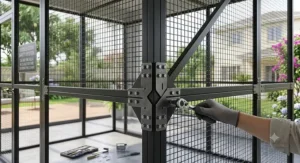
What most buyers overlook about a cage in this size and price bracket is that “heavy duty” branding on a budget aviary usually refers to the gauge of the wire, not necessarily the welds or the base frame — so it’s worth inspecting the corner joints on delivery rather than assuming factory-grade consistency across every unit. That said, for owners housing one large parrot or a small flock of mid-sized birds, this is a legitimate large walk-in aviary at a fraction of what a name-brand equivalent costs.
Aggregated buyer sentiment on comparable SENY listings tends to note that assembly is the most time-consuming part of ownership, with most reports describing a multi-hour, two-person setup rather than a quick unboxing.
Pros:
- ✅ Largest interior footprint among the budget-tier entries here
- ✅ Rated for macaws and cockatoos, not just small-to-mid birds
- ✅ Multiple doors and compartments ease daily access
Cons:
- ❌ Assembly is reported as lengthy and best done with two people
- ❌ Base frame quality can vary between production batches
In the $500-$900 range, the SENY Heavy Duty Large Walk-in Bird Aviary Cage is arguably the best value-per-square-foot pick on this entire list.
3. Sliverylake 87″ Walk-in Heavy Duty Aviary — sturdiest budget option for outdoor use
This model’s standout is its outdoor-rated carbon steel construction, aimed squarely at owners setting up a permanent backyard aviary rather than an indoor room conversion. The diamond-grid wire pattern isn’t just cosmetic — it adds rigidity to the panel without needing thicker (and heavier) individual wires, which matters when a structure this size has to survive wind load and weather cycling outdoors.
Here’s what to weigh if you’re considering this over the SENY model above: the Sliverylake line leans slightly more toward large-bodied birds like macaws and big conures, based on its panel spacing and outdoor-first design language, while SENY’s marketing leans more general-purpose. Reviewers consistently note that outdoor aviaries in this category need a concrete or paver base to prevent digging predators from getting underneath, a detail the product listing itself doesn’t spell out clearly.
If you keep birds that spend real daylight hours outside — which the Merck Veterinary Manual notes has genuine welfare benefits when done safely — this is one of the more purpose-built budget options for that specific use case.
Pros:
- ✅ Outdoor-rated carbon steel frame handles weather cycling
- ✅ Diamond-grid panels add rigidity without extra wire weight
- ✅ Sized well for large conures and small-to-mid macaws
Cons:
- ❌ Not designed with predator-proofing beneath the base included
- ❌ Less ideal for strictly indoor, apartment-style setups
Typically priced in the $600-$1,000 range, the Sliverylake 87″ Walk-in Heavy Duty Aviary is a strong pick if your bird spends real time outdoors.
4. A&E Cage Co WI8561 Walk-In Aviary — best build quality in the mid-tier price bracket
The standout feature is the manufacturer itself: A&E Cage Co is a dedicated aviary builder, not a general housewares importer, and it shows in the details — 3mm bar thickness, a 69-by-25-inch door, three swing-out feeder doors, and key locks on every access point. At 85 inches wide by 61 inches deep with a 79-inch interior height, it’s sized for one or two medium-to-large parrots that need genuine flight room, not just standing room.
Based on the spec comparison, the half-inch bar spacing on the WI8561 is tighter than most of the budget entries on this list, which practically means it’s safer for smaller companion species sharing the space with a larger bird, and it reduces the odds of a curious beak getting stuck between bars. That tighter spacing is also why this model, and not the wonline or SENY units, tends to get recommended by cage retailers specifically for cockatoo and African grey households.
Reviewers on major retail sites consistently report that assembly, while more involved than the budget units, results in a noticeably sturdier structure once complete, with several noting the unit “doesn’t flex” the way lighter aviaries can when a large bird climbs the walls.
Pros:
- ✅ Purpose-built by a dedicated aviary manufacturer, not a generalist importer
- ✅ Tighter half-inch bar spacing suits cockatoos and African greys well
- ✅ Three feeder doors and full key-lock security across all access points
Cons:
- ❌ Meaningfully more expensive than the budget-tier entries above
- ❌ Assembly takes longer given the heavier-gauge construction
Typically listed in the $1,800-$2,300 range, the A&E Cage Co WI8561 Walk-In Aviary is the pick once budget stops being the deciding factor.
5. A&E Cage Co WI11062 Walk-In Aviary — most floor space from a name-brand manufacturer
This is the largest fixed-footprint model from A&E Cage Co on this list, standing out for its 110-inch width paired with a 62-inch depth and the same 79-inch interior height as its smaller sibling. The wider one-inch bar spacing here is a deliberate trade: it’s built more with macaws and larger-bodied birds in mind, species whose beak strength and toe grip don’t need the tighter half-inch spacing that smaller parrots require for safety.
What the spec sheet won’t tell you, but owner reports do, is that this size genuinely accommodates a breeding pair or two adult macaws comfortably, which is echoed in a real customer review describing housing two hyacinth macaws inside the WI11062 without crowding. On the other hand, aggregated feedback also flags that units can arrive with shipping damage given the sheer size and weight of the crated package, so a careful unboxing inspection before assembly is worth the extra ten minutes.
Given the price ratio, the value-per-square-foot here is actually stronger than the smaller WI8561 model, provided you have the physical floor space, ceiling height, and doorway width to get it into the room in the first place.
Pros:
- ✅ Largest floor footprint of any A&E model on this list
- ✅ One-inch bar spacing suits macaws and large-bodied parrots well
- ✅ Real owner reports confirm comfortable housing for a macaw pair
Cons:
- ❌ Shipping damage is a recurring theme in aggregated review feedback
- ❌ Requires significant clearance to maneuver into most rooms
At an estimated $2,400-$4,500 range depending on finish and retailer, the A&E Cage Co WI11062 Walk-In Aviary is the multi-bird, big-species pick on this list.

6. vidaXL Bird Aviary with Extension — only modular, scalable option here
The standout feature is right there in the name: this is the one aviary on this list you can extend after the fact rather than being locked into a fixed footprint from day one. At a combined 490.6 inches long when fully extended, with an 81.5-inch depth and 83.5-inch height, it dwarfs every other entry here in raw floor area, and the galvanized steel construction is rated for both indoor and outdoor placement.
Here’s what to weigh: galvanized steel resists rust well, but it isn’t the same as the powder-coated steel used by A&E Cage Co, and the guidelines for the care and welfare of caged birds note that wire gauge and coating matter more for bird safety than raw size alone — so buyers with zinc-sensitive species should confirm coating specifics before ordering. On the practical side, the modular panel system means you can start with a smaller run and bolt on additional sections later, which none of the fixed-frame competitors here allow.
Aggregated reviews on comparable vidaXL aviary listings frequently mention that assembly genuinely benefits from two people and basic tools, and that the panel system, while flexible, requires care to align correctly during setup.
Pros:
- ✅ Only modular design here, extendable in sections over time
- ✅ Largest total floor area of any product on this list
- ✅ Rated for both indoor and outdoor placement
Cons:
- ❌ Galvanized coating needs verification for zinc-sensitive species
- ❌ Two-person assembly recommended given the panel count
Commonly listed in the $700-$1,200+ range depending on configuration, the vidaXL Bird Aviary with Extension is the pick for owners who want room to grow.
7. 154″ Heavy Duty Carbon Crystal Board Walk-in Cage — maximum single-unit footprint on a budget
The standout here is sheer scale at a genuinely budget-tier price: at roughly 154 inches in its longest dimension, this is the largest single, non-modular unit on this list, built around a carbon crystal board base paired with a metal aviary frame. For owners converting a garage bay, sunroom, or dedicated bird room, this gives you close to vidaXL-level floor area without the modular assembly complexity.
Based on the spec comparison, the trade-off for that price-to-size ratio is largely in finish quality and long-term weather resistance — carbon crystal board bases are a newer, lighter-weight alternative to solid steel or concrete flooring, and while they’re serviceable for indoor and covered-outdoor use, they’re not positioned as a decades-long outdoor investment the way a fully welded steel unit would be.
Given the limited independently verified review history for this specific configuration, the honest takeaway is that this model rewards buyers who prioritize floor area per dollar above all else, and who are comfortable being early adopters of a newer construction style rather than a decades-proven design.
Pros:
- ✅ Largest single-unit floor footprint at this price tier
- ✅ Carbon crystal board base is lighter than solid steel flooring
- ✅ Strong fit for converting a spare room or garage bay
Cons:
- ❌ Newer construction style with less long-term track record
- ❌ Not positioned as a multi-decade outdoor structure
In the $600-$950 range, the 154″ Heavy Duty Carbon Crystal Board Walk-in Cage delivers the most floor space per dollar on this entire list.
Setting Up Your Walk-In Flight Cage: The First 30 Days
Getting the unit assembled is only step one. In the first week, place perches at varying heights and distances rather than clustering them, since the whole point of a walk in flight cage is lateral movement, not just more standing room. Anchor the frame to a wall stud or use the manufacturer’s included floor brackets if the unit will house a large parrot — even heavy steel-framed aviaries can rock under a determined climber.
A common first-30-days mistake is over-furnishing the space immediately. Introduce toys and foraging stations gradually over two to three weeks so the bird has room to actually fly rather than navigating an obstacle course from day one. Maintenance-wise, plan on a twice-weekly full floor cleaning and a monthly deep clean of bar surfaces, since the larger surface area of a walk-in unit means more square footage collecting dust and droppings than a standard cage.
Optimization tip: mount feeder doors at your own waist height, not the bird’s perch height, so daily refills don’t require ducking into the bird’s flight path every time. And don’t skip a walkthrough inspection of every weld and lock after the first month — vibration from a large bird’s movement can loosen hardware that seemed snug at initial assembly.

Turning a Spare Room Into a Walk-In Bird Room
If you’re converting an entire room rather than dropping a single unit into a corner, a few extra considerations apply. First, flooring: sealed, non-porous surfaces (tile, sealed concrete, vinyl) hold up far better than carpet in a walk-in bird room, both for cleaning and for reducing mold risk from spilled water and droppings. Second, ventilation matters more here than in a single-room-corner setup, since a converted walk-in bird room often has less natural airflow than an open living space.
If you’re a renter turning a spare bedroom into a walk-in bird room, look at freestanding units like the SENY or Sliverylake models above rather than anything requiring wall anchoring, since that preserves your security deposit. If you own the home and are converting a permanent space, the A&E Cage Co models integrate more cleanly with built-in shelving and dedicated plumbing for cleaning, since you’re not planning to disassemble it later.
Lighting is the detail most first-time converters miss entirely: full-spectrum bird-safe lighting on a timer helps regulate molting and hormonal cycles in a room that may not get the natural light exposure a bird would otherwise receive near a window.
Real-World Scenarios: Who Actually Needs a Large Walk-In Aviary
If you’re a retired empty-nester with a spare bedroom and two mid-sized parrots who currently scream for out-of-cage time every evening, a large walk-in aviary like the SENY or A&E WI8561 solves the exact problem you have: birds get real flight time without needing to be loose and supervised in your living room for hours daily.
If you’re a breeder or multi-bird household managing four or more birds, including a macaw pair, the A&E Cage Co WI11062 or the vidaXL Aviary with Extension make more sense, since both are built (or extendable) to genuinely large multi-bird capacity rather than a single companion’s flight needs.
If you’re a first-time large-bird owner on a tighter budget who just upgraded from a standard cage, start with the wonline 87″ model or the 154″ Carbon Crystal Walk-in Cage. Both let you evaluate whether the walk-in format suits your space and routine before investing in a premium, name-brand structure.
How to Choose a Walk In Flight Cage
- Measure your bird’s full wingspan first. Per the Merck Veterinary Manual, enclosures should allow at least one and a half times the bird’s wingspan in every direction, and walk-in units should exceed that by a wide margin to be worth the upgrade.
- Confirm bar spacing matches your species. Half-inch spacing suits smaller-to-mid parrots; one-inch spacing is appropriate for large macaws but risky for anything smaller sharing the space.
- Decide indoor versus outdoor before shopping. Outdoor-rated frames like Sliverylake trade some finish polish for weather resistance; indoor-focused units like A&E Cage Co prioritize interior comfort features instead.
- Check your doorway and ceiling clearance. Several of these units, especially the A&E WI11062 and vidaXL Extension, ship in large crated panels that need real hallway and doorway clearance to install.
- Budget for the base, not just the cage. Concrete pavers, non-slip flooring, or a dedicated stand adds real cost that’s easy to forget when comparing sticker prices.
- Weigh modular versus fixed footprint. If your flock might grow, the vidaXL modular system holds long-term value that a fixed-size unit can’t match.
- Read assembly reports before buying, not after. Multi-hour, two-person assembly is normal for this category; budgeting the time in advance avoids a frustrating unboxing weekend.
Common Mistakes When Buying a Walk In Flight Cage
One of the most frequent mistakes is buying based on bird size today rather than the bird’s adult size, particularly with young cockatoos and macaws that will roughly double in linear dimensions. Another is skipping bar-spacing verification, assuming “large aviary” automatically means safe for a smaller companion bird sharing the same space, when in fact wider spacing on macaw-rated units can be genuinely dangerous for smaller species.
A third common error is underestimating shipping and assembly logistics — several models on this list ship in multiple heavy crates, and owners consistently report needing help simply moving boxes before assembly even starts. Finally, many first-time buyers skip planning for cleaning access, then discover after setup that feeder doors or floor trays are positioned awkwardly for their own reach and mobility.
Walk-In Flight Cage vs Traditional Bird Cage
A traditional bird cage, even a large one, is fundamentally a container you interact with from outside. A walk in flight cage flips that relationship: you’re inside the same airspace as the bird, which changes both the bird’s flight opportunities and the owner’s daily interaction pattern. Reviewers consistently note that birds housed in walk-in units show reduced feather-destructive behavior compared to their prior standard-cage housing, which tracks with what avian behaviorists generally observe about space-related stress.
The trade-offs run the other way too. Traditional cages are dramatically easier to move, clean, and fit into a normal-sized room, and they cost a fraction of even the budget walk-in models here. If you’re working with limited square footage or renting a small apartment, a well-chosen traditional flight cage with generous daily out-of-cage time can still meet a bird’s needs — the walk-in format is an upgrade, not a strict requirement, for most companion bird species kept in enriched conditions.

Indoor Walk-In Bird Cage vs Outdoor Walk-In Aviary
An indoor walk in bird cage, like the A&E Cage Co models, is built around finish quality, tighter bar spacing for household safety, and compatibility with normal home flooring and lighting. An outdoor walk-in aviary, like the Sliverylake model, is built around weather resistance, predator-proofing, and structural rigidity against wind load rather than interior polish.
The decision usually comes down to climate and supervision. If you live somewhere with mild, stable weather and can supervise outdoor time regularly, an outdoor aviary gives birds genuine sun exposure and environmental variety that no indoor unit replicates. If your climate swings hard between seasons, or you can’t supervise an outdoor structure daily, an indoor walk-in bird cage removes weather and predator risk from the equation entirely, at the cost of that natural sunlight benefit.
Human-Sized Flight Cage or Person-Sized Aviary? Sorting Out the Terminology
Shoppers searching for a human-sized flight cage or a person-sized aviary are usually describing the exact same category covered in this guide — the distinguishing feature in every case is a full-height entry door sized for an adult, not a small pet-access door. Some manufacturers market the same structure under different names depending on target audience: “walk-in aviary” tends to appear in breeder and hobbyist listings, while “person-sized” or “human-sized” phrasing shows up more often in general pet-retail marketing aimed at first-time buyers researching the category.
Practically, this means you shouldn’t rule out a listing just because it doesn’t use the exact phrase you searched. Check the door height and width specification directly — anything with a door around 60-70 inches tall and at least 20 inches wide functions as genuinely walk-in, regardless of what the product title calls it.
Making Your Large Walk-In Aviary an Accessible Bird Enclosure
Building an accessible bird enclosure matters for owners managing mobility limitations, wheelchair use, or simply wanting a lower-effort daily routine. Look for wider door openings (the A&E WI11062’s 25-inch feeder doors and full-height main door are a genuine advantage here), lower feeder-door placement that doesn’t require reaching overhead, and slide-out floor trays rather than lift-out grates, which are dramatically easier to manage from a seated position.
Flooring choice matters just as much as the cage itself. A raised threshold at the door can be a real obstacle, so units with a flush or low-lip entry, paired with a non-slip interior surface, make day-to-day access meaningfully easier. If accessibility is a primary concern, it’s worth contacting the manufacturer directly before purchase to confirm exact door and threshold measurements, since these details aren’t always listed prominently on standard retail pages.
Long-Term Cost & Maintenance for a Walk In Flight Cage
The sticker price is only part of the total cost of ownership. Budget-tier units under $900 typically need more frequent hardware checks (welds, hinges, latch tension) since lighter-gauge steel fatigues faster under a large bird’s daily activity. Premium units from A&E Cage Co carry a higher upfront cost but generally need less structural maintenance over a 10-plus-year ownership period, which is worth factoring in if you’re planning to keep the same bird for decades, as many parrot species live.
Recurring costs across every model include replacement feeder cups, occasional re-powder-coating or touch-up paint for rust spots on outdoor units, and periodically replacing perches as birds wear them down. Cost-per-use drops significantly the longer you own a well-built unit, which is the core argument for spending more upfront on a name-brand frame if your household budget allows it.
Safety, Regulations & Compliance Guide
Under the USDA APHIS Animal Welfare Act standards for birds, commercial breeders, dealers, and exhibitors handling birds must meet specific housing and care standards — private pet owners aren’t directly regulated the same way, but the standards are a genuinely useful reference point for anyone building a large aviary at home. Locally, many municipalities separately regulate outdoor structure size, setback distance from property lines, and noise, so it’s worth checking city zoning rules before installing any large outdoor aviary, not just a walk-in one.
On the safety side, always verify zinc and lead content in any imported steel or wire before housing a bird inside it, particularly with budget-tier products where finish sourcing isn’t always transparent. Key-locked doors, present on both A&E Cage Co models here, are worth prioritizing if you have curious pets or young children in the household who might otherwise access the enclosure unsupervised.
What to Expect: Real-World Performance
On paper, the difference between an 87-inch and a 110-inch walk-in unit sounds modest. In practice, owners consistently report that the extra width changes flight behavior dramatically — birds in the larger units tend to actually fly point-to-point rather than hop-flutter across the space, which is the entire behavioral benefit this category is trying to deliver. Expect a noisier adjustment period in the first week or two as a bird explores new vertical space, followed by a noticeably calmer baseline once the novelty wears off.
Expect assembly day itself to take longer than advertised across every model on this list — plan for a full weekend rather than an afternoon, especially for the A&E Cage Co and vidaXL units. Expect ongoing cleaning time to roughly double compared to a standard cage, simply due to the larger floor area, though many owners report this trade-off is worth it once they see the behavioral improvement in their bird.

FAQ
❓ How big should a walk in flight cage be for one parrot?
❓ Can a walk in flight cage go outside year-round?
❓ Do walk-in aviaries need a permit?
❓ How much does a large walk-in aviary cost?
❓ Is a walk-in bird cage worth it for one small bird?
Conclusion
A walk in flight cage is one of the rare purchases where bigger genuinely tends to be better, provided you match the specific model to your bird’s species, your available space, and your realistic maintenance routine. Budget-tier options like the wonline, SENY, and 154-inch Carbon Crystal units make the format accessible without a four-figure commitment, while A&E Cage Co’s WI8561 and WI11062 remain the reference point for buyers who want name-brand durability and are willing to pay for it. The vidaXL Aviary with Extension sits in its own category entirely, as the only model here that scales with your flock over time.
Whichever you choose, measure twice, verify bar spacing against your specific species, and budget real time for assembly rather than treating it as a same-day project. Your bird’s flight behavior — and your own daily routine with it — will look noticeably different once it has genuine room to move.
✨ Don’t Miss These Exclusive Deals!
🔍 Take your walk in flight cage search to the next level with the models compared above. Click on any highlighted product to check current pricing and availability. The right aviary will give your bird the room to fly, and give you a whole new way to enjoy time together.
Recommended for You
- Flight Cage vs Regular Cage: 7 Picks That Settle the Debate (2026)
- Indoor Flight Cage for Finches: 7 Top Picks for 2026
- Flight Cages for Birds: 7 Top Rated Picks Ranked (2026)
Disclaimer: This article contains affiliate links. As an Amazon Associate, I earn from qualifying purchases. If you purchase products through these links, we may earn a small commission at no additional cost to you.
✨ Found this helpful? Share it with your friends! 💬
