
In This Article
Picture this. It’s 9 p.m., your avian vet closed hours ago, and your normally sassy cockatiel is a puffed-up feather ball slumped at the bottom of the cage. That isn’t a mood. It’s a warning.
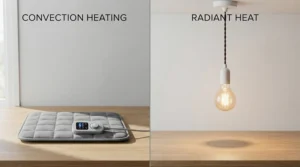
Sick birds lose body heat fast, and warmth is the first thing you can actually do before help arrives. That’s where a bird heating pad earns its keep. A healthy budgie runs around 105°F (40°C), according to the Birds-Online care guide, and an ill bird spends precious energy just trying to hold that line. A bird heating pad takes some of that burden off.
Here’s the catch. The wrong pad, in the wrong spot, at the wrong temperature, can hurt a bird as badly as the chill. Birds have thin skin, they hide weakness until they’re in trouble, and many can’t scoot away from heat once they’re truly sick.
So this guide covers seven real products, how to choose among them, and the signs of shock in birds. It also covers safe heating-pad placement, emergency warmth duration, heat lamps, and a travel setup for the dash to the clinic.
One boundary up front: this is research-based analysis, not veterinary advice. If your bird is huddled, weak or on the cage floor, the Merck Veterinary Manual calls that an emergency. Call an avian vet.
Quick Comparison: Best Bird Heating Pad Options at a Glance
| Product | Type & Power | Size | Price Range | Best For |
|---|---|---|---|---|
| K&H Snuggle-Up Bird Warmer | 12V cage-mount panel, fixed thermostat | Small ≈ 5×3 in | Around $35-$55 | Daily cage-side warmth |
| K&H Thermo-Peep Heated Pad | 25W plug-in pad, internal thermostat | 9×12 in | $35-$65 range | Hospital crates, big enclosures |
| Feneya Bird Cage Heater | 10W or 15W aluminum panel | 3.7×5.7 or 5×8 in | Budget tier | Medium birds on a budget |
| H&G Lifestyles Bird Heater | Snuggle-style panel | 4.7×7.9 in | Budget tier | Wider panel for less |
| Fenocran USB Bird Warmer | USB-powered pad | 4.5×7 in | Budget tier | Car and carrier use |
| RIOGOO Pet Heating Pad (Waterproof, Auto-Off, Small) | Adjustable temp plus timer | Varies by model | Budget-to-mid tier | Under-tub hospital setups |
| Pecute Heating Pad | Digital temperature display | Varies by model | Budget-to-mid tier | Owners who want numbers |
Looking at the table, the K&H Snuggle-Up Bird Warmer and K&H Thermo-Peep Heated Pad are the two with the clearest published safety details. One is a low-voltage wall-mount; the other is a floor pad you place under half an enclosure. The Fenocran USB Bird Warmer is the odd one out because USB power is what makes it travel-friendly. Prices move constantly, so check current price before you buy.
💬 Just one click — help others make better buying decisions too!😊
Top 7 Bird Heating Pad Picks: Expert Analysis
1. K&H Snuggle-Up Bird Warmer — best for cage-side recovery warmth
Instead of lying under your bird, this panel mounts on the cage wall, so your bird decides when to lean in. That choice matters more than it sounds.
It runs on 12-volt low-voltage power, and the thermostat is fixed rather than adjustable. K&H says it feels warm to the touch, not hot. The small size is roughly 5×3 inches, and the medium/large version is listed at about 7W. Low voltage means a chewed cord is far less scary than with mains-powered pads. A fixed thermostat means you can’t crank it up for a chilled bird.
On paper, this is a comfort device, not an intensive-care unit. A bird too weak to climb to the cage wall gets nothing from it, so for floor-bound patients pair it with a pad under a hospital enclosure. Retail reviewers generally say birds love it, though some owners report that suspicious birds take days or even weeks to trust a new panel.
Pros:
- ✅ Low-voltage 12V design
- ✅ Thermostat keeps surface warm, not hot
- ✅ Can stay on with a cage cover
Cons:
- ❌ Temperature isn’t adjustable
- ❌ Useless if bird can’t reach the wall
Expect to pay around $35-$55. Fair value as an everyday warmer; add a second heat source for true emergencies.

2. K&H Thermo-Peep Heated Pad — big enough for a hospital crate
At 9×12 inches, this is the roomiest purpose-built option here, and room is exactly what a safe hospital setup needs.
It draws 25 watts, has an internal thermostat, carries a MET safety listing, and wraps the first 18 inches of cord in steel. K&H notes it stays on whenever it’s plugged in, so there’s no timer. That generous footprint means you can slide it under one end of a plastic tub or dog crate and leave the other end cool. That cool zone is the escape route a bird needs once it warms up.
One honest caveat: K&H markets this for chicks and small-animal houses, not parrots specifically. Its own instructions warn against confining an animal on the pad with no way off. Ask your avian vet whether it fits your bird’s case. Review sentiment I found came mostly from poultry keepers, so bird-specific feedback is thin.
Pros:
- ✅ MET safety listed
- ✅ Steel-wrapped cord start resists chewing
- ✅ Sips just 25 watts
Cons:
- ❌ No adjustable temperature or timer
- ❌ Oversized for a single budgie cage
Roughly $35-$65. Strong value if you’re building a proper hospital cage.
3. Feneya Bird Cage Heater — aluminum shell, two power options
The listing pitches an aluminum shell for better heat transfer, which is a marketing claim worth translating.
It comes in 10W (about 3.7×5.7 inches) and 15W (about 5×8 inches) versions. Metal conducts heat evenly and wipes clean easily, so droppings don’t turn into a hygiene headache. The bigger panel suits medium birds who want a wider surface to lean on.
My analytical take: more wattage in a small cage means more risk of overshooting. Whichever version you pick, park a thermometer at bird level. I couldn’t verify enough independent review data on this model to describe real-world sentiment, so treat the performance claims as the seller’s, not as proven.
Pros:
- ✅ Two size and wattage options
- ✅ Wider panel suits medium birds
- ✅ Metal shell wipes clean
Cons:
- ❌ Thin verifiable review history
- ❌ 15W demands thermometer vigilance
Budget tier; check current price. Reasonable value if you accept the research gap.
4. H&G Lifestyles Bird Heater — roomy 4.7×7.9 inch panel for less
This one follows the cage-mounted warmer formula but offers a wider face than the smallest K&H panel.
The listed 4.7×7.9 inch surface gives a larger bird more contact area for its chest and feet. Wider means a cockatiel or conure can actually press against it instead of perching awkwardly beside it. It’s a familiar design, and familiar is good for wary birds.
What the spec sheet won’t tell you is how well the thermostat behaves over months. Verified reviews were sparse in my research, so confirm the adapter, voltage and any listed safety certifications on the exact listing before plugging in. Never assume a lookalike matches the original’s engineering.
Pros:
- ✅ Larger surface than small panels
- ✅ Familiar, easy-to-adopt design
- ✅ Budget-friendly price
Cons:
- ❌ Few verifiable independent reviews
- ❌ Safety details need listing-level checks
Budget tier. Good value only if the listing’s safety information holds up.
5. Fenocran USB Bird Warmer — USB power for carriers and cars
USB power is the whole point here. It’s the only pick built around portability.
The 4.5×7 inch pad plugs into a wall adapter or a power bank. Pair that with a bird carrier and you have a gentle heat source for the ride to the clinic. Just verify the listing’s power draw and make sure your battery bank can sustain it without shutting off after a few minutes. Many banks have auto-off for low-draw devices.
My honest read: USB warmers are modest. They take the edge off a chilly carrier but won’t rescue a deeply hypothermic bird alone. Combine one with a warm car cabin and a towel-covered carrier. Reviewer data was limited, so I’m not claiming a satisfaction level.
Pros:
- ✅ USB power works with banks
- ✅ Compact, carrier-friendly size
- ✅ Low entry cost
Cons:
- ❌ Dependent on power bank behavior
- ❌ Limited verified feedback
Budget tier; check current price. Worth it as a travel companion, not a stand-alone solution.
6. RIOGOO Pet Heating Pad (Waterproof, Auto-Off, Small) — timer plus adjustable temperature
This is the “numbers and safety nets” option, though it was designed for cats and dogs.
RIOGOO’s pads advertise an adjustable range of roughly 80-130°F, a 1-12 hour timer and thermostat cutoff. Verify those specs on the exact small model you buy, since I saw them on a related RIOGOO listing. The waterproof surface shrugs off droppings, and a farm-focused roundup picked it as a smart choice for owners prone to forgetting a pad overnight.
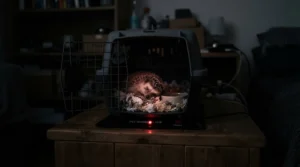
Here’s the twist: auto-off is double-edged. A sick bird may need warmth at 3 a.m., so use an always-on setting if offered, or set an alarm. Never let a bird sit directly on the pad. Slide it under a tub or carrier and keep a cool side.
Pros:
- ✅ Adjustable temperature range
- ✅ Auto shut-off timer
- ✅ Waterproof, wipe-clean surface
Cons:
- ❌ Designed for dogs and cats
- ❌ Timer may cut warmth when needed
Budget-to-mid tier. Good value for under-tub setups when you manage the timer wisely.
7. Pecute Heating Pad — digital readout removes the guesswork
A digital display showing surface temperature beats a vague low/medium/high switch for anxious owners.
That readout answers “is this warm enough?” with a number. Useful, with a caveat: pad surface temperature is not the air temperature your bird feels. You still need a thermometer at perch level, because that’s where emergency targets are measured.
Like the RIOGOO Pet Heating Pad, this isn’t bird-specific, so apply the same rules. Use it under half the enclosure, add a towel layer, and watch the bird’s behavior. Reviews I could verify focused on general pet use, not birds, so I won’t pretend otherwise.
Pros:
- ✅ Digital display shows surface temp
- ✅ Finer control than three-setting pads
- ✅ Handy for tracking changes
Cons:
- ❌ Not designed for birds
- ❌ Shows pad heat, not cage air
Budget-to-mid tier; check current price. Excellent for control freaks, as long as a thermometer stays in the picture.
✨ Don’t Miss These Exclusive Deals!
🔍 Take your bird’s emergency preparedness to the next level with these carefully selected products. Click on any highlighted item to check current pricing and availability. A little preparation now can make a stressful night far calmer for your feathered family member!
What Is a Bird Heating Pad?
A bird heating pad is a low-wattage, thermostat-regulated warming surface that gives pet birds supplemental heat when illness, injury or chilling makes it hard to maintain body temperature. It’s placed beside or under part of an enclosure, and it never replaces veterinary care.
Think of it as a warm hand, not a furnace. Most designs fall into three families. Cage-mounted panels (the Snuggle-Up style) let a bird lean in. Flat under-enclosure pads warm a hospital tub or crate from below. USB or portable warmers handle travel. Each trades control for convenience differently.
Why does this matter? Birds fluff feathers to trap heat, and a fluffed, sleepy bird is often a bird in trouble. Merck notes that a slightly warmer environment helps a sick bird conserve energy it would otherwise burn staying warm, as long as you don’t overheat it. That’s the job description: reduce the heating workload, nothing more heroic.
How to Choose a Bird Heating Pad
Here’s the short version, with reasoning for each step:
- Match the size to the bird and the enclosure. A 5×3 inch panel suits a budgie; a 9×12 inch pad suits a crate. Oversized pads in tiny cages leave no cool zone.
- Prefer thermostat control. Fixed thermostats are simple and predictable. Adjustable ones add flexibility but demand more monitoring.
- Check electrical safety. Look for low voltage or a recognized safety listing (MET or similar), and chew-resistant cord design.
- Think about the escape route. Whatever you choose must leave the bird able to move away from heat.
- Consider timers carefully. Auto-off prevents forgotten pads but can interrupt needed warmth.
- Plan for cleaning. Waterproof or wipe-clean surfaces matter when droppings are involved.
- Buy a thermometer too. An aquarium-style thermometer placed out of the bird’s reach is the cheapest safety upgrade available.
Notice what’s missing: bells, whistles, and brand mythology. In an emergency, predictability beats features every time.
Signs of Shock in Birds: What to Watch For
Recognizing signs of shock in birds early is the difference between a calm vet visit and a crisis. Here’s the pattern avian sources describe.
Posture and energy: Fluffed feathers, heavy sleepiness, and an inability to stay on the perch. Veterinary guidance on hospitalised avian patients notes that sick or injured birds generally present in some degree of shock, and that fluffing is a heat-conservation attempt.
Balance and coordination: Staggering, walking in circles, lying on the cage floor, or being unable to rise can signal severe weakness, shock or neurological trouble, per Chewy’s veterinary-reviewed advice.
Temperature clues: Cold feet, a general drop in body temperature, and in severe cases seizures or unconsciousness.
What to do immediately: Reduce handling, since excess stress can worsen shock. Keep the bird warm and quiet, and call an avian vet. Delay treating non-life-threatening injuries until the bird is out of shock.
Shock isn’t a diagnosis you make at home, but the signs of shock in birds tell you when to stop guessing and start driving. And remember: hiding illness is a bird’s default setting, so by the time you notice, things are often advanced.
Heating Pad for Sick Bird Emergency Care: A Step-by-Step Plan
Using a heating pad for sick bird emergency care works best as a sequence, not a scramble.
- Call your avian vet first. Even a phone consult shapes everything else, including how warm to go.
- Move the bird to a quiet, dim spot. Warm, humid and dim is the commonly cited target, with an ambient temperature around 80-85°F, according to Chewy’s guidance.
- Set up a hospital cage. A smooth-sided tub or tank works, with food and water in shallow dishes on the floor.
- Place the pad under half. Add a towel layer and keep a thermometer at bird level, out of beak reach.
- Adjust toward a vet-confirmed range. Some sources push 85-90°F for hospital cages; your vet decides.
- Watch for overheating. Panting and wings held away from the body mean too warm.
- Minimize handling. Rest is medicine.
A heating pad for sick bird emergency care is a bridge to the vet, not the destination. Once the clinic takes over, their equipment and instructions replace your improvised kit.
Safe Heating-Pad Placement: Where It Goes (and Where It Doesn’t)
Safe heating-pad placement beats expensive hardware every time. Get it wrong and the best bird heating pad becomes a hazard.
The half rule. Cover no more than half the floor with heat. Heated-pad makers advise leaving an off-pad option so the animal can choose, and K&H explicitly warns against confinement on its pads.
The barrier rule. Put a towel or paper liner between bird and pad. Birds have thin skin, so direct contact can burn.
The thermometer rule. Measure where the bird sits, not where the pad sits. An aquarium thermometer placed out of reach works, per Chewy’s advice.
The cover myth. A towel over the cage doesn’t generate warmth. The SAVA vet newsletter points out that a blanket only traps heat a sick bird isn’t producing. Covers are for calm and drafts, not heating.
The cord rule. Route cords away from beaks, and keep pads flat since folded heating wires can fail.
Good safe heating-pad placement looks boring: warm half, cool half, towel in between, thermometer visible. Boring is exactly what you want at midnight.
Emergency Warmth Duration: How Long Should the Heat Stay On?
Emergency warmth duration has no universal number, and anyone who gives you one is guessing. Here’s what the sources actually support.
Until the vet sees the bird. Most advice treats home warmth as a bridge. Keep the bird warm continuously from the first sign until a veterinarian examines it.
Until the bird stops seeking heat. One care guide suggests leaving a heat source on until the bird is no longer drawn to it, which is a behavioral endpoint, not a clock.
Rest matters. Avian first-aid guidance notes sick birds may need up to 16 hours of restful sleep, so keep the environment quiet and stable rather than constantly adjusting.
Step down gradually. As the bird perches normally, fluffs less, and wanders off the warm half, ease the temperature down with your vet’s blessing.
Monitor often. My practical suggestion: check thermometer and bird every 15-30 minutes in the first hours, then less as things stabilize.
Honest emergency warmth duration planning means asking your vet two questions: what target temperature, and when to reduce it. Write the answers down. At 2 a.m., memory is a poor storage device.
Heating Pad vs Heat Lamp for Sick Birds
The heating pad vs heat lamp for sick birds debate comes down to how heat reaches the bird.
| Factor | Bird Heating Pad | Heat Lamp / Ceramic Emitter |
|---|---|---|
| Heat delivery | Conductive (contact) | Radiant (ambient/directional) |
| Burn risk | Contact burns if no barrier | Overheating if too close |
| Light disruption | None | Standard bulbs yes; ceramic no |
| Warms whole enclosure? | No, local only | Yes, raises ambient temp |
| Cost | Budget to mid | Budget, plus fixture |
| Best For | Small birds, cage-side or under-tub | Larger enclosures, hospital cages |
Looking at the comparison above, a pad warms what touches it, while a lamp warms the air and the bird together. Critically ill birds may not be able to move away from either source, as Vet Times points out, so a set temperature matters. Plastic sockets can melt under infrared lamps, and one owner discovered an infrared setup reaching 104°F, too hot for a slow-reacting bird.
My take: for the heating pad vs heat lamp for sick birds question, combining both often works. A pad under half the enclosure plus gentle ambient warmth gives a gradient. Merck also describes a shaded 60- to 100-watt incandescent bulb outside the cage as a gentle option. Ceramic heat emitters avoid light that disrupts sleep.
Affordable Emergency Heat Source for Injured Bird
Need an affordable emergency heat source for injured bird care at 10 p.m.? You probably own one already.
| Option | Approx. Cost | Controllability | Best Use |
|---|---|---|---|
| Rice sock (microwaved, not too hot) | Under $5 | Low | Short transport |
| Wrapped hot water bottle | Under $20 | Low | Carrier warmth |
| 60-100W bulb outside cage | Under $15 | Medium | Home hospital cage |
| Budget bird heating pad | Budget tier | Medium to high | Overnight support |
| Commercial avian incubator | Expensive | High | Vet-level care |
Looking at the table, the cheapest options are the least controllable, which is why they suit short hops, not long nights. Bird-tricks advice suggests pouring rice into a sock, tying it off and warming it briefly in the microwave, then bringing it along on the drive. Wrap it in fabric and test it on your wrist first.
A good affordable emergency heat source for injured bird care is the one you can control. That’s why a budget bird heating pad plus a thermometer usually beats any improvised hot object. Spend ten dollars on the thermometer before the fancy extras. Keep injured birds’ handling minimal; the heat is supportive, not curative.
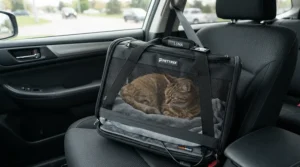
Emergency Travel Cage for Bird Transport
An emergency travel cage for bird transport is the other half of preparedness. A heating pad won’t help if you can’t get the bird to the clinic safely.
Size matters. The Prevue-style travel carrier lineup ranges from compact cages around 9×5.6×6 inches (the small Prevue model, often in the mid-$20s) to the Prevue Playtop Bird Travel Carrier, about 18¾×14⅞×18 inches with seat-belt collars. That larger one typically sits around the $100-$130 range, and the maker markets it for short-term and emergency use.
Train before you need it. HARI’s guidance stresses desensitizing birds to the carrier in advance so you aren’t wrestling a panicking bird into an unfamiliar box. Treat the carrier as a second perch with snacks.
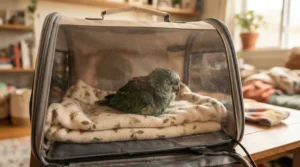
Keep it warm and dark. Cover the carrier to reduce stress and add a warm source, such as a wrapped hot water bottle or USB warmer, keeping a cool corner.
Double duty. Merck notes a carrier can serve as a temporary recovery cage at home.
The best emergency travel cage for bird transport is one your bird already knows. Practice quietly now, rather than rehearsing during the crisis.
Real-World Scenarios: Matching Bird Heating Pads to Your Situation
Scenario 1: The apartment budgie owner. Budget is tight, the bird is small, and you live twenty minutes from the nearest avian clinic. A K&H Snuggle-Up Bird Warmer for daily comfort, a rice sock for the ride, and a compact travel cage cover the basics. Frequency: occasional emergencies, daily mild warmth.
Scenario 2: The conure parent with a hospital setup. You want a dedicated recovery tub in a spare bathroom, a quiet space Merck itself recommends for sick birds. A K&H Thermo-Peep Heated Pad under half the tub, a towel layer, and a thermometer create a proper gradient. Budget: moderate. Environment: stable indoor.
Scenario 3: The weekend road tripper. You take your parrot to family gatherings and worry about evening chills. A Fenocran USB Bird Warmer with a power bank, plus a familiar travel carrier, keeps things cozy. Check output and battery pass-through before departure.
Scenario 4: The numbers person. You like data. The Pecute Heating Pad or RIOGOO Pet Heating Pad (Waterproof, Auto-Off, Small) under a tub, plus a cage-level thermometer, gives you adjustable control, as long as you respect the cool-zone rule.
Match the tool to your life, not the other way around.

FAQ
❓ Can I use a human heating pad as a bird heating pad?
❓ Does covering the cage replace a bird heating pad?
❓ How do I know my bird is too hot on a bird heating pad?
❓ Can a bird heating pad run on a power bank in the car?
❓ Do baby birds need a different bird heating pad?
Conclusion
Warmth is the quiet hero of avian first aid. A good bird heating pad won’t diagnose anything or fix an injury, but it buys time, reduces stress and gives a struggling bird a fighting chance until professional help arrives.
The pattern across every credible source is consistent: keep the bird warm but never overheated, keep it quiet and dim, minimize handling and call a vet. Pair your pad with a thermometer, follow the half rule for placement, and treat emergency warmth duration as a conversation with your veterinarian, not a stopwatch.
If you want one practical starting point, the K&H Snuggle-Up Bird Warmer suits everyday cage-side comfort, the K&H Thermo-Peep Heated Pad suits a proper hospital setup, and the Fenocran USB Bird Warmer handles travel. The RIOGOO Pet Heating Pad (Waterproof, Auto-Off, Small) and Pecute Heating Pad suit owners who want adjustability, with extra vigilance.
Prepare now: a carrier your bird trusts, a thermometer, your vet’s after-hours number and a bird heating pad ready to go. Future you, standing in a dim kitchen at midnight, will be very grateful.
✨ Ready to build your emergency kit?
🔍 Click any highlighted product above to check current pricing and availability, and give your feathered friend the safest warm start possible! 🐦
Recommended for You
- Small Animal Incubator For Bird Emergencies: 7 Proven Picks 2026
- Bird Mite Spray: 7 Best Safer Picks For Pet Birds In 2026
- Quarantine Cage For New Bird Parasite Isolation: 7 Best Picks 2026
Disclaimer: This article contains affiliate links. As an Amazon Associate, I earn from qualifying purchases. If you purchase products through these links, we may earn a small commission at no additional cost to you.
✨ Found this helpful? Share it with your friends! 💬🤗
