
In This Article
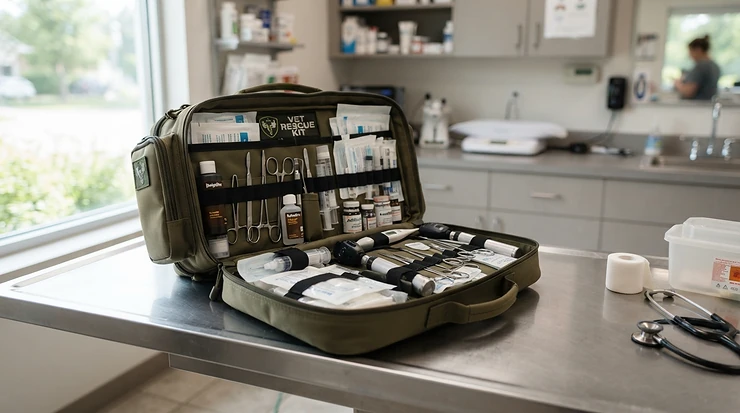
A bird first aid kit is a purpose-built box of supplies (styptic, gauze, wraps, wound wash, a warmth source, and vet contact numbers) that lets you control minor bleeding and stabilize a sick or injured bird until an avian veterinarian can take over. It cures nothing on its own. What it buys you is time, and with birds, time is the whole game.
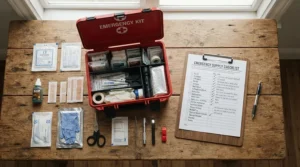
Here’s the uncomfortable truth: birds are professional at hiding illness. By the time one looks “off,” the problem has often been brewing for a while. And emergencies love bad timing: a snapped blood feather at 9 p.m. Saturday, a toenail catastrophe on a holiday. A well-stocked bird first aid kit turns that panic into a checklist.
The veterinary literature is blunt about the priorities. The Merck Veterinary Manual’s first aid kit guide for pet birds puts phone numbers (your avian vet plus a backup emergency clinic that treats birds) at the very top, ahead of every bandage and bottle. Supplies come second. Knowing how to use them comes third, and it’s the part most owners skip.
This guide does three jobs. First, it ranks seven real products, from complete ready-made kits to the single add-ons that earn their space. Second, it gives you a plain-English contents checklist, a budget path, and storage rules. Third, it tells you when to stop playing medic and drive. Prices below are ranges only, so check current price and availability before you buy.
Quick Comparison: Which Bird First Aid Kit Pick Fits You?
Start here if you want the fast version. Every row below gets a full breakdown further down.
| Product | Type | Price Range | Best For |
|---|---|---|---|
| Avian Enrichment Avian First Aid Kit | Complete ready-made kit | Check current price | Avian Enrichment kit suits first-time owners who want everything in one box |
| Northern Parrots Emergency Parrot First Aid Kit | Complete ready-made kit (UK retailer) | Mid-£30s at the time of research | Northern Parrots kit suits owners wanting a labeled, card-guided kit |
| Miracle Care Kwik Stop Styptic Powder | Bleeding control add-on | Under $15 | Kwik Stop suits anyone trimming nails at home |
| Vetericyn Plus All Animal Wound & Skin Care | Wound wash spray | Around $15-$20 (3 oz) | Vetericyn Plus suits minor scrapes and wound flushing |
| Harrison’s Recovery Formula | Recovery nutrition | Roughly $8-$24 by pouch size | Recovery Formula suits owners whose vet approves assist-feeding |
| SnuggleSafe Microwave Heat Pad | Warmth source | Check current price | SnuggleSafe suits keeping a stressed bird warm in transit |
| First Aid for Birds (Mancini & Gallerstein) | Reference book | Check current price | First Aid for Birds suits owners who want the “why” behind every step |
Read the table as a stack, not a menu. The two ready-made kits cover the basic bleeding, bandaging, and cleaning jobs. The Avian Enrichment kit and Northern Parrots kit are alternatives to each other; you only need one. The rest (Kwik Stop, Vetericyn Plus, Recovery Formula, SnuggleSafe) are layers you add when your kit needs to grow. The book is the multiplier that makes every other item safer to use.
If budget is tight, one complete kit plus Kwik Stop covers the most common emergency: a bleeding nail.
💬 Just one click — help others make better buying decisions too!😊
Top 7 Bird First Aid Kit Picks: Expert Analysis
Every pick below is judged on real specs and on what real buyers and veterinary sources say. A caution up front: I haven’t hands-on tested any of these, so everything here is analysis of spec sheets, listings, and published guidance.
1. Avian Enrichment Avian First Aid Kit — most complete ready-made starter
The standout is breadth: this kit packs the core bleeding-and-wound toolkit into one box.
According to Avian Enrichment’s own contents list, you get styptic powder, latex gloves, eye and skin wash, a sterile gauze bandage, scissors, 5-inch locking forceps, PVP iodine swabs, gauze pads, cotton swabs, adhesive tape, a hand wipe, and two instruction cards (an emergency info card and a directions card). The forceps matter because they’re designed for pulling broken blood feathers, a job you should only do once your vet has shown you how.
On paper, this is the strongest “open the box and you’re covered” option for a beginner. Notably, the retailer itself recommends adding a carrier, towel, heating pad, flashlight, feeding formula, Pedialyte, and pipettes, which tells you the kit is a foundation, not a finished hospital.
Reviewer sentiment for this exact kit wasn’t verifiable. Bird-forum owners do repeat one criticism of store-bought kits in general: the container is often too small to add a towel or extras.
Pros:
- ✅ Covers bleeding, wounds, and bandaging in one box
- ✅ Includes locking forceps and printed instruction cards
- ✅ Retailer lists sensible add-ons to build outward
Cons:
- ❌ Container may be too tight for extras
- ❌ No warmth source or feeding supplies included
Check current price; verdict: best value for first-timers if the price sits in a modest range.
2. Northern Parrots Emergency Parrot First Aid Kit — card-guided kit with records sheet
The hook here is the paperwork: it ships with an emergency care card and a records card, so vet details and health history live in the lid.
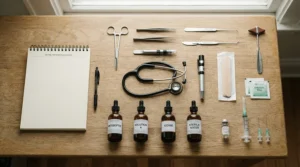
Contents per the UK retailer: gauze bandage, adhesive tape, gauze pads, eye and skin wash, powdered styptic, cotton swabs, antiseptic wipes, PVP iodine wipes, scissors, and the two cards (one listing also shows locking forceps). It’s very close to the Avian Enrichment kit, with the wipes as the main difference.
A fair analytical take: it’s a solid fit for owners who value a documented system over a pile of supplies. The big caveat for a USA audience is that this is a UK retailer, listed in the mid-£30s and showing as sold out when I looked, so shipping and availability need checking.
Verified review sentiment wasn’t available for this specific kit, so I won’t characterize it. The listing itself reminds buyers to still speak with an avian vet, which is exactly the right framing.
Pros:
- ✅ Emergency and records cards built in
- ✅ Antiseptic and PVP iodine wipes included
- ✅ Clear “treat minor injuries, then call the vet” framing
Cons:
- ❌ UK retailer, so US availability is uncertain
- ❌ Listed as sold out at the time of research
Mid-£30s; verdict: good design, but only worth it if you can actually get it.
3. Miracle Care Kwik Stop Styptic Powder — cheapest insurance against a bleeding nail
The standout is price-to-panic ratio: a small tub that solves the single most common home emergency.
The manufacturer lists ferric subsulfate as the clotting agent (it constricts blood vessels) plus benzocaine for discomfort, and positions it for minor cuts, nail clippings, and wing clippings on birds. In practice, that means one pinch handles a nicked nail before it becomes a mess.
Now the part the spec sheet won’t tell you. The Merck Veterinary Manual prefers a styptic gel with an applicator tip and warns that powders may be toxic if swallowed, while HARI’s kit guidance says to use styptic powder on nails only. Reading those together: keep powder for toenails, keep it away from the beak and deep wounds, and ask your vet which format they prefer for your species.
Buyer sentiment across retailer listings is broadly positive on speed of clotting. A recurring minor complaint is that some people wish they’d bought the gel or pads instead of powder, and one reviewer prefers a styptic pencil.
Pros:
- ✅ Fast clotting for nicked nails
- ✅ Inexpensive and widely stocked
- ✅ Labeled for birds of all sizes
Cons:
- ❌ Powder can be messy and risky if swallowed
- ❌ Not for deep wounds or burns
Under $15; verdict: a no-brainer add-on, used carefully.
4. Vetericyn Plus All Animal Wound & Skin Care — gentle flush for minor wounds
Its hook is the chemistry: hypochlorous acid cleans without the sting of old-school antiseptics.
Retailer descriptions say it’s safe around the eyes, ears, mouth, and nose, doesn’t sting or burn, and is non-toxic if ingested. For a bird, “safe if licked” is a real feature, because birds preen everything. A spray bottle also lets you flush debris from between feathers without scrubbing.
My analytical take: this is the add-on that upgrades a kit that came with only swabs and iodine. It supports cleaning minor cuts and scrapes, but it doesn’t replace a vet for bites, deep wounds, or anything that looks infected.
Reviews I could verify were for the poultry version of the line, where buyers report redness easing within days and little reaction at application. I couldn’t verify a deep pool of bird-specific reviews for this exact all-animal bottle.
Pros:
- ✅ No-sting formula suited to sensitive areas
- ✅ Non-toxic if a bird preens or licks it
- ✅ Spray flushes debris between feathers
Cons:
- ❌ Not a substitute for vet care on infections
- ❌ Bird-specific review data is thin
Around $15-$20 for 3 oz; verdict: strong value for wound cleaning.
5. Harrison’s Recovery Formula — recovery nutrition for sick or injured birds
The draw is purpose: a powdered nutritional support formula made specifically for sick or injured birds.
The maker’s mixing guidance is one part dry formula to one to three parts warm bottled water at about 103°F. That tells you it’s meant for assist-feeding. It also warns that incorrect feeding technique can cause inhalation, pneumonia, and death, which is exactly why Merck advises against force-feeding unless your avian vet instructs you to.
So here’s the honest analysis: buy it only if your vet is on board and has taught you the technique. In a flock-wide emergency kit, it’s more of a “doctor-directed” item than a DIY one.
I couldn’t verify a meaningful pool of independent reviews, so I’ll stay silent on sentiment rather than guess.
Pros:
- ✅ Formulated specifically for sick or injured birds
- ✅ Gives your vet a ready recovery option
- ✅ Small pouch sizes keep waste low
Cons:
- ❌ Wrong feeding technique can cause serious harm
- ❌ Needs vet guidance before any use
Roughly $8-$24 by size; verdict: worthwhile only with your vet’s blessing.
6. SnuggleSafe Microwave Heat Pad — wireless warmth for transport and recovery
The standout is safety by design: a microwave-heated disc with no cord, so there’s no chewable wire.
The manufacturer says it provides up to ten hours of warmth and that the interior settles at roughly 120°F. That number is the key. The World Parrot Trust’s avian first aid handout advises keeping a sick bird in a quiet space at about 80-85°F, so a 120°F disc must be wrapped in a towel and placed to one side, never under a bird that can’t move away.
Honest take: it’s superb for a carrier on a cold drive, but it demands judgment. The maker itself advises against using it with unconscious animals and says recovering animals must be able to move off the heat.
Retailer reviews (mostly for dogs and cats) praise heat retention and cordless convenience; some note it’s rigid and heavy. Bird-specific feedback wasn’t verifiable.
Pros:
- ✅ Cordless, so no chewing hazard
- ✅ Holds warmth for many hours
- ✅ Wipe-clean, reusable, no refills
Cons:
- ❌ Runs hotter than a bird’s target temperature
- ❌ Heavy and rigid for tiny carriers
Check current price; verdict: excellent when used with insulation and supervision.
7. First Aid for Birds: An Owner’s Guide to a Happy Healthy Pet — the manual that makes every item usable
The hook is knowledge: a kit you can’t use is just clutter, and this book teaches the use.
Written by Julie Rach Mancini with veterinarian Gary Gallerstein, it appears on HARI’s recommended reading list and is called user-friendly by Best Friends Animal Society. That matters because owners in bird forums openly admit they can’t guess how to use things like forceps or a hemostat.
My analytical take: pair it with a ready-made kit and you’ve covered both the supplies and the skill. It won’t replace hands-on training from your vet, but it gives you the language and the sequence of steps before your heart rate spikes.
Reader reviews weren’t something I could verify here, so I’m relying on the two professional recommendations above.
Pros:
- ✅ Co-authored by a veterinarian
- ✅ Explains what each item is actually for
- ✅ Builds confidence before an emergency
Cons:
- ❌ Reading isn’t the same as hands-on training
- ❌ Contains no supplies, only knowledge
Check current price; verdict: the highest-leverage purchase on this list.
✨ Don’t Miss These Exclusive Deals!
🔍 Take your bird’s safety to the next level with these carefully selected products. Click on any highlighted item to check current pricing and availability. These tools will help you create a calm, prepared home your flock can count on!
Practical Usage Guide: Your First 30 Days With a Bird First Aid Kit
Buying the kit is day one. Learning it is the other 29. Here’s a simple schedule that turns a box of supplies into a skill.
Week 1: assemble and label. Tape your avian vet’s number and a 24-hour clinic that treats birds inside the lid. Slip in a copy of your bird’s records. The Lafeber veterinary handout, Do’s and Don’ts of Avian First Aid, is a useful read at this stage, since it covers stocking a kit, setting up a home hospital cage, and basic supportive care.
Week 2: practice the boring stuff. Ask your avian vet to show you safe towel restraint. Rehearse grabbing the kit, the towel, and the carrier with a timer running. Practice with a stuffed toy, not your bird.
Week 3: set up a hospital zone. Decide where a sick bird would sit: quiet, dim, warm. Test your heat source for a few hours so you know how it behaves.
Week 4: audit and calendar. Open every package, check expiration dates, and set a recurring reminder to re-check.
The mistake to avoid in the first month is treating the kit as a treatment plan. It’s a stabilizer. If your bird is fluffed up, struggling to breathe, or bleeding that won’t stop, the next step is a vet, not another product.
Real-World Scenarios: Matching a Bird First Aid Kit to Your Flock
Specs are abstract; households aren’t. Here are three profiles (illustrative, not real customers) and how the picks map to each.
The first-time cockatiel owner on a tight budget. A small bird, one cage, no emergency fund. Priority: a complete starter plus nail-bleeding insurance. The Avian Enrichment kit plus Kwik Stop covers the likeliest accident, and a towel and carrier cost almost nothing. Add First Aid for Birds later.
The multi-bird household with a large parrot. More birds means more squabbles, more clipped nails, more chances for a bleed. Here, a ready-made kit plus a second styptic supply and the SnuggleSafe heat pad makes sense, because a big parrot in a cold carrier is a real transport problem.
The owner far from an avian vet. If your nearest bird-savvy clinic is an hour or more away, stabilization matters more. Add warmth, a hospital container, and, only with your vet’s agreement, Recovery Formula. Call ahead to confirm they’ll take emergencies for existing clients.
The pattern: the farther you are from help, the deeper your kit should go. But depth without training is just weight.
Problem → Solution Guide: Common Bird Emergencies
Treat this as orientation, not treatment. Always phone your vet, because first aid only stabilizes.
Problem 1: A bleeding toenail. Solution: use a styptic on the nail only, or cornstarch or flour if that’s what you have, and call your vet if it doesn’t stop. The Kwik Stop pick is built for this.
Problem 2: A broken blood feather. Solution: these can bleed heavily, and Merck cautions inexperienced owners against trimming a bleeding quill themselves, since it may bleed more. Control bleeding and call your vet before reaching for forceps.
Problem 3: A fluffed-up, lethargic bird. Solution: keep the bird warm (the World Parrot Trust guidance suggests roughly 80-85°F) in a quiet place, and don’t give medication unless it’s been prescribed for that bird. Then get to a vet promptly.
Problem 4: A bite from a cat or dog. Solution: treat it as an emergency even if the skin looks intact. Vet sources say bites need antibiotics and pain control, so no home remedy is enough.
Problem 5: A bird that’s stopped eating. Solution: don’t force-feed. Merck says not to unless your avian vet specifically instructs you to.
What Is a Bird First Aid Kit? How to Choose the Right One
A bird first aid kit is a dedicated emergency box for pet birds, stocked with avian-appropriate supplies to manage minor injuries and stabilize serious ones before veterinary care. Human kits overlap a little, but they lack styptic, avian-friendly wound wash, and a carrier-ready warmth plan.
How to choose one, in six steps:
- Check the contents against a vet-backed list. Compare any kit to the Merck guidance: bandage material, swabs, a safe disinfectant, gauze, styptic, and phone numbers.
- Match the kit to your bird’s size. A budgie’s nail and a macaw’s beak call for different scale of supplies.
- Look for instructions. A kit with printed directions beats one that’s just a bag of things.
- Pick a container with room to grow. You’ll want to add a towel, formula, or heat source.
- Decide what you’ll realistically use. Forceps you don’t know how to use add confidence, not safety.
- Confirm your vet agrees. Ask which styptic format and which add-ons they prefer.
Pre-Made First Aid Kit for Pet Birds vs. Building Your Own
A pre-made first aid kit for pet birds wins on convenience. You buy once, the supplies are pre-matched, and instructions are included. The trade-off is flexibility: you may pay for items you won’t use and still need to add the ones you will.
| Factor | Ready-Made Kit | DIY Kit |
|---|---|---|
| Speed | Fast; one purchase | Slow; many purchases |
| Cost control | Fixed bundle | Flexible, can start small |
| Customization | Limited | Full |
| Best For | Avian Enrichment kit and Northern Parrots kit for beginners | Kwik Stop plus Vetericyn Plus for owners who already have basics |
The table points to a clear split. If you’re new to birds, the pre-made first aid kit for pet birds spares you the research spiral. If you’re experienced or already own gauze and tape, a DIY approach with targeted add-ons, such as Kwik Stop and Vetericyn Plus, avoids paying twice. A hybrid often wins: start with a kit, then customize it with your vet.
Avian First Aid Supplies Checklist Kit: What Belongs in the Box
An avian first aid supplies checklist kit should cover five jobs: stop bleeding, clean wounds, protect and wrap, keep the bird warm, and contact help.
- Stop bleeding: a styptic suited to your vet’s preference, plus cornstarch as a backup.
- Clean: sterile saline or eye and skin wash, and a gentle wound spray such as Vetericyn Plus.
- Protect: sterile gauze pads, roll gauze, vet wrap, and tape.
- Handle: towel, gloves, small scissors, a flashlight.
- Warmth and transport: a small carrier and a controlled heat source like the SnuggleSafe pad.
One real conflict worth knowing: some kit lists include styptic powder, while Merck prefers gel and warns about swallowing powder. Neither side is wrong for every bird, which is why you ask your vet which format to keep.

First Aid Kit Contents Checklist: The Quick Reference
Use this first aid kit contents checklist as the “tape it in the lid” version.
Paperwork
- Vet number, backup emergency clinic number, and a copy of records
Bleeding and wounds
- Styptic, gauze pads, roll gauze, tape or vet wrap, cotton swabs
Cleaning
- Saline or eye and skin wash, wound spray, PVP iodine or diluted chlorhexidine (used away from eyes and mouth)
Tools
- Scissors, gloves, a 3 mL syringe without a needle, flashlight, locking forceps (only with your vet’s training)
Support
- Towel, carrier, heat source, vet-approved feeding formula and pipettes
Notice what’s missing: human medications and over-the-counter creams. Never medicate your bird without veterinary direction.
Affordable Bird Emergency First Aid Kit: Building One on a Budget
An affordable bird emergency first aid kit isn’t about cutting corners; it’s about sequencing. Buy the items that solve your likeliest emergencies first, then expand.
| Tier | What to Buy | Price Range | Best For |
|---|---|---|---|
| Essentials | Kwik Stop plus gauze, tape, towel | Roughly $15-$30 total | New owners watching every dollar |
| Core | One ready-made kit such as the Avian Enrichment kit | Check current price | Owners who want zero guesswork |
| Expanded | Add Vetericyn Plus and a heat source | Around $15-$20 each, plus heat source | Multi-bird homes |
The takeaway: the essentials tier already handles bleeding, and everything else is incremental. Resist the urge to buy every gadget at once, since expired items are the real money-waster. An affordable bird emergency first aid kit that’s checked every few months beats an expensive one nobody has opened since purchase.
Top Bird First Aid Kit for Beginners: Where to Start
If you’re brand new, the top bird first aid kit for beginners is the one that comes with directions and room to grow. That points toward the Avian Enrichment kit (or the Northern Parrots kit if you can source it) because both include instruction cards.
Beginners should do three things in order. First, find an avian vet before you need one; the Association of Avian Veterinarians runs a Find-a-Vet tool for exactly this. Second, add First Aid for Birds so each tool has a “why.” Third, schedule a baseline wellness visit, since a vet who knows your bird’s normal can spot “abnormal” faster.
A top bird first aid kit for beginners should reduce decisions, not multiply them. Start with one kit, one vet, and one book. Everything else can wait.
Kit Storage Tips: Keep It Findable, Fresh, and Bird-Safe
Good kit storage tips come down to three rules: reachable, dry, and checked.
- Pick one permanent home. Fumbling during an emergency wastes minutes. Keep the kit where everyone in the household knows to look.
- Keep it out of beak range. Store it away from your birds’ free-roaming areas, since gauze, tape, and swabs are chewable.
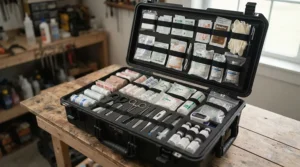
- Use a roomy, sturdy container. A small toolbox or tackle box works well, and it leaves space for a towel.
- Add a “grab and go” companion. Keep the carrier and towel beside the kit.
- Check on a schedule. Every few months, open everything, replace used items, and discard anything expired.
The most useful of these kit storage tips is the habit of replacing what you use immediately. A half-empty kit is worse than none, because you trust it.
Frequently Asked Questions
❓ How much should a bird first aid kit cost?
❓ Can I use a human first aid kit for my bird?
❓ Do I still need an avian vet if I own a kit?
❓ How often should I check my kit?
❓ Is cornstarch a good backup for styptic?
Conclusion: Prepared Beats Panicked
The best bird first aid kit isn’t the biggest or the priciest. It’s the one that’s stocked sensibly, stored where you can find it, and backed by a vet whose number you’ve already written down. For most beginners, that means a complete starter like the Avian Enrichment kit, a styptic such as Kwik Stop, and the knowledge in First Aid for Birds. Experienced keepers can layer on Vetericyn Plus for wound flushing, SnuggleSafe for warmth, and Recovery Formula only with their vet’s approval.
Remember the scope: a kit buys time, and a vet provides the cure. Find your avian vet this week, assemble your bird first aid kit this month, and set a reminder to audit it every few months. Your bird will never know you prepared, which is exactly the point.
Recommended for You
- Styptic Powder For Broken Blood Feathers: 7 Proven Picks 2026
- Bird Heating Pad: 7 Best Safe Picks For Emergencies (2026)
- Small Animal Incubator For Bird Emergencies: 7 Proven Picks 2026
Disclaimer: This article contains affiliate links. As an Amazon Associate, I earn from qualifying purchases. If you purchase products through these links, we may earn a small commission at no additional cost to you.
✨ Found this helpful? Share it with your friends! 💬🤗
