
In This Article
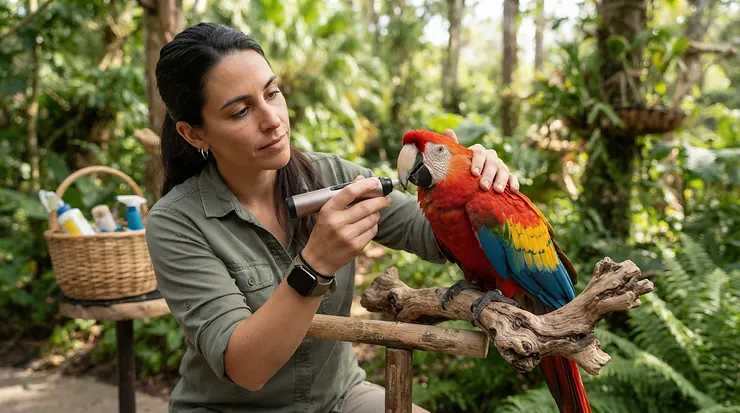
Nail trimmers for large parrot claws are the clippers, low-speed rotary grinders and abrasive or cement perches used to shorten the thick, curved keratin nails of macaws, cockatoos, Amazons and African greys. Done well, they blunt the claw without crushing it or nicking the blood-filled quick.
A budgie’s claw is a toothpick. A macaw’s claw is a small curved tent peg attached to a very strong foot. Grab the wrong tool and you get a split nail, a cranky bird, or a nail that bleeds more than you expected. Bleeding matters more in a bird than in a dog, so it’s worth getting the tool choice right.
Some honesty before we start. Most of the clippers and grinders on this list were designed for dogs, not birds. Avian veterinary references do list quality dog clippers and rotary tools among the accepted instruments. A good vet-reviewed guide to trimming bird nails also walks through the basics. I haven’t handled any of these products, and I won’t pretend otherwise. What follows is spec analysis plus aggregated owner feedback gathered from retailer listings and parrot forums.
Prices are ranges only and shift often, so check current pricing before you buy. If your bird’s nails are badly overgrown, book an avian vet first.
Quick Comparison: Nail Trimmers for Large Parrot Claws at a Glance
| Product | Type | Best For | Price Range |
|---|---|---|---|
| Dremel 7300-PT Pet Nail Grooming Kit | Cordless rotary grinder | Thick, blunt-finish trims | Around $40-$60 |
| Millers Forge 767C Large Dog Nail Clipper | Plier-style clipper | Macaws, large cockatoos | Around $12-$20 |
| Safari Professional Nail Trimmer (Large) | Plier-style clipper | Budget-minded multi-bird homes | Around $10-$20 |
| Living World Pedi-Perch Extra-Large | Cement perch | Macaws, large cockatoos | Around $15-$30 |
| Living World Pedi-Perch Large | Cement perch | Amazons, African greys | Around $12-$25 |
| Polly’s Pet Products Bird Roll or Swing (X-Large) | Pumice swing perch | Active, playful birds | Around $25-$45 |
| Prevue Pacific Perch Beach Walk | Seashell-coated perch | Medium to large birds | Around $10-$25 |
The table splits the field into two camps. The first is active tools (clippers and a grinder), which you control but must use carefully. The second is passive tools (perches), which work slowly and gently on their own. Active tools fix a problem today. Passive tools prevent the next one.
Most large-parrot households end up with one of each. The Millers Forge 767C Large Dog Nail Clipper or the Dremel 7300-PT Pet Nail Grooming Kit handles scheduled maintenance, and a perch like the Living World Pedi-Perch Extra-Large keeps nails from racing ahead between sessions.
💬 Just one click — help others make better buying decisions too!😊
Top 7 Nail Trimmers for Large Parrot Claws: Expert Analysis
1. Dremel 7300-PT Pet Nail Grooming Kit — quiet, controllable rotary option
The Dremel 7300-PT Pet Nail Grooming Kit is the best-known rotary nail grinder for pet birds that wasn’t built for pet birds. Its appeal is control: you remove a little nail at a time, and the friction leaves a smoothed tip instead of a sharp edge.
The kit uses a 4.8V rechargeable battery, two speeds (roughly 6,500 and 15,000 RPM) and 60-grit sanding bands. It weighs about 9 ounces and takes around three hours to charge. The low speed is the useful one. It lets you work in short, light touches, which matters when the thing you’re sanding has nerves.
On paper, this suits keepers who flinch at the “snip” of a clipper or whose bird has dark nails where the quick is invisible. Grinding in small stages is more forgiving than one decisive cut. The caveat is noise and vibration, which some birds hate. One parrot-forum poster who used a Dremel 7300 on birds later switched to a smaller micro tool because its motor ran smoother.
Reviewers on dog-focused listings consistently describe it as quiet, low-vibration and good at leaving a smooth finish. That feedback comes from dog owners, so treat it as indirect evidence for birds.
Pros:
- ✅ Two speeds allow gradual, low-risk shaping
- ✅ Smooth finish with no sharp edges
- ✅ Cordless and light enough for one-hand control
Cons:
- ❌ Designed for dogs, so bird-specific guidance is absent
- ❌ Older NiCd battery and some bird-startling noise
Expect a price around the $40-$60 range. It earns its money if you have a patient bird and several nails to maintain.
2. Millers Forge 767C Large Dog Nail Clipper — heavy-duty snip for thick claws
The Millers Forge 767C Large Dog Nail Clipper is the brute-force answer to large-parrot nail thickness. A macaw nail is dense and curved, and cheap clippers tend to flatten it instead of cutting it.
This is a plier-style design with surgical-steel blades, a spring-loaded action and non-slip handles. The spring reduces hand fatigue, which matters when you’re gripping a wriggling bird’s foot. A positive lock lets you store it closed.
The analysis is simple. Plier-style clippers cut from both sides at once, so they slice instead of crush. That is the main reason groomers prefer them over lower-quality guillotine rings for hard nails. For a macaw or large cockatoo, this tool’s capacity is a better match than the medium size sold to dog owners. For a smaller Amazon, it can feel oversized.
Listing reviewers who clip large dogs say it cut nails where previous clippers had broken or taken real effort. Again, that is dog-owner feedback.
Pros:
- ✅ Clean cutting action on hard, thick nails
- ✅ Spring-loaded handles reduce hand strain
- ✅ Locking mechanism for safe storage
Cons:
- ❌ Oversized for smaller parrots
- ❌ No built-in guard suited to bird nail shapes
Expect a price around the $12-$20 range. For macaw-class nails it’s a strong value, but only if you can keep the bird calm and still.
3. Safari Professional Nail Trimmer (Large) — groomer-shelf staple on a budget
The Safari Professional Nail Trimmer (Large) is the dependable second pair that sits next to your first. It’s inexpensive enough that nobody agonizes over owning two.
It’s a plier-style trimmer with stainless blades, a non-slip grip and a built-in safety guard, and it comes in two sizes. One review roundup calls its blades slightly less keen than the Millers Forge. That is a fair trade for the lower price, though sharpness matters more with dense nails.
The analytical take: choose this if you have several birds of different sizes, or if you want a backup clipper in your emergency kit. A dull blade on a thick claw can crush instead of cut, so replace it if it starts to feel gritty.
Vet-focused dog-clipper guides rank it a top all-round pick, and listing reviews for the Large size sit in the mid-to-high 4-star range across hundreds of dog-owner reviews. I couldn’t verify bird-specific review data, so I won’t invent any.
Pros:
- ✅ Very low price for a two-blade plier clipper
- ✅ Comfortable non-slip grip
- ✅ Easy to find and replace
Cons:
- ❌ Blades slightly less keen than premium options
- ❌ Dog-sized guard is of limited help with bird nails
Expect a price around the $10-$20 range. It’s a smart value buy, but don’t make it your only tool for thick macaw claws.
4. Living World Pedi-Perch Extra-Large — heavyweight cement perch for macaws
The Living World Pedi-Perch Extra-Large is the classic cement perch for natural nail trimming. Its wavy, textured surface wears nails down as your bird shuffles along it.
It measures about 35 cm (13.5 inches) long and 6.5 cm (2.5 inches) in diameter, and it’s sized for large cockatoos and macaws. The wavy shape changes the angle under the foot, which supports circulation and keeps a bird from standing in one position all day.
The analysis is practical. Put it near the food dish and keep the smooth side up so your bird can settle in comfortably. Retailers advise one per cage, two at most, and never as the highest perch. A cement perch is a supplement to varied perching surfaces, not a replacement for them.
Reviewers on resale listings call it excellent for macaws and large parrots. They also say it’s very heavy and large in girth. One reviewer added a fixed wood perch underneath for stability, and another noted a bird can take days to accept it.
Pros:
- ✅ Right diameter for macaw-sized feet
- ✅ Durable cement that can last for years
- ✅ Wavy surface encourages foot movement
Cons:
- ❌ Heavy enough to need solid mounting
- ❌ Some birds reject it at first
Expect a price around the $15-$30 range. It’s good value as a maintenance tool, provided your cage can handle the weight.
5. Living World Pedi-Perch Large — right-sized cement perch for Amazons and greys
The Living World Pedi-Perch Large is the same concept scaled for smaller large-parrots. It suits Amazons, African greys and small cockatoos.
It’s about 34 cm (13 inches) long and 5 cm (2 inches) wide. That smaller diameter is the whole point: a perch that’s too wide forces a bird’s toes into an unnatural spread, while one that’s too narrow doesn’t wear the nails evenly.
The analytical take: match the size to the foot, not the bird’s name on a chart. If your grey has delicate feet or arthritis, go for the smaller diameter and watch how it grips. Cement is abrasive by design, so check your bird’s foot soles regularly for redness or sores. The manufacturer itself recommends keeping a variety of perches in the cage to prevent foot problems such as bumblefoot.
Aggregated review feedback is similar to the extra-large version: sturdy, long-lasting, and sometimes rejected by nervous birds at first.
Pros:
- ✅ Sized for Amazons and African greys
- ✅ Washable with soap and water
- ✅ Long-lasting and non-toxic cement
Cons:
- ❌ Too small for large macaws
- ❌ Needs variety perches alongside it
Expect a price around the $12-$25 range. It’s a sensible pick if your bird is a mid-size parrot with moderately fast nail growth.
6. Polly’s Pet Products Bird Roll or Swing (X-Large) — pumice swing that trims while they play
The Polly’s Pet Products Bird Roll or Swing (X-Large) mixes fun and function. The perch insert is pumice stone, which naturally wears nails, and the swinging motion mimics a tree bough.
The X-Large size is intended for large birds such as macaws, and it’s made in the USA. The sway matters for foot health because it makes your bird use leg and toe muscles continuously. A pumice surface is gentler than rough cement, which may suit birds with sensitive feet.
My take: this is best for energetic, curious birds that will actually use a swing. A shy bird may ignore it, and then it’s an expensive toy. Inspect the hanging hardware regularly, since big beaks test every attachment.
Customer reviews on the retailer listing describe birds enjoying the swing and jumping between perches. One reviewer said it worked well for two senior birds. I couldn’t find verifiable data on nail-wear performance specifically, so treat the nail benefit as supplementary.
Pros:
- ✅ Pumice surface is gentler than rough cement
- ✅ Swing adds exercise and enrichment
- ✅ Made in the USA
Cons:
- ❌ Costs more than a basic perch
- ❌ Nail-wear effect is gradual and unproven in reviews
Expect a price in the mid-$20s to $40s range, depending on size. It’s worth it if you want enrichment and light nail maintenance in one item.
7. Prevue Pacific Perch Beach Walk — seashell-coated perch for medium to large birds
The Prevue Pacific Perch Beach Walk is a quieter alternative to cement. It’s coated in ground natural seashell, so your bird gets a nail-and-beak grooming surface plus a little calcium if it chews.
It has a tapered diameter, which means your bird can choose a spot that fits its foot. Variation is good for circulation and nail wear. It attaches directly to the cage and comes in assorted colors only, so you can’t pick one.
The analysis: this is a gentler “maintenance” perch. The hard shell coating is intended for grooming beaks and nails on medium to large birds. If your parrot has sensitive feet, it may be easier to accept than raw cement. I couldn’t find enough independent review data to describe real-world durability, so I won’t guess.
If you’re curious about this style, check the live reviews and photos on the product page before buying, especially for chewing durability on a macaw.
Pros:
- ✅ Tapered diameter offers choice of grip width
- ✅ Natural shell coating is gentler than cement
- ✅ Mounts directly to the cage
Cons:
- ❌ Colors can’t be chosen
- ❌ Limited independent review data available
Expect a price around the $10-$25 range. It’s an affordable add-on, but not a first-choice tool for severely overgrown claws.
Top 7 Specs and Review Signals Compared
| Product | Key Spec | Tool Type | Review Signal | Best For |
|---|---|---|---|---|
| Dremel 7300-PT | 2 speeds, 60-grit bands | Grinder | Quiet, low vibration (dog owners) | Dark nails |
| Millers Forge 767C | Spring-loaded, surgical steel | Clipper | Cuts thick nails (dog owners) | Macaws |
| Safari Professional (Large) | Stainless blades, guard | Clipper | Strong overall pick, slightly less keen | Backup tool |
| Pedi-Perch Extra-Large | 35 cm x 6.5 cm | Cement perch | Good for macaws, heavy | Large cockatoos |
| Pedi-Perch Large | 34 cm x 5 cm | Cement perch | Sturdy, slow acceptance | Amazons, greys |
| Polly’s Roll or Swing (X-Large) | Pumice insert | Swing perch | Birds enjoy it | Active birds |
| Pacific Perch Beach Walk | Ground seashell coating | Perch | Limited data | Sensitive feet |
Read the table as a decision tool. Dark nails push you toward the Dremel 7300-PT because it lets you shave gradually. Thick, light-colored macaw nails favor the Millers Forge 767C, since you can see the quick and make a clean cut. For everything between trims, the Pedi-Perch Extra-Large and Polly’s Roll or Swing do the slow work. Notice that review signals are indirect for several products, so use them as a starting point and read current listings.
Large-Parrot Nail Thickness: Why Ordinary Clippers Struggle
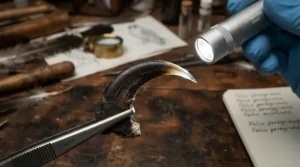
Large-parrot nail thickness is the reason a cheap small-animal clipper can fail at the worst moment. A macaw’s claw is dense and curved, with a thicker keratin wall than a cockatiel’s. A weak blade pinches before it cuts.
The result is a crushed or splintered nail. Splits can reach toward the quick and make bleeding more likely.
One veterinary reference notes that for a big bird, you need a clipper that cuts thick nails quickly and cleanly. PetMD’s guide to trimming a bird’s nails makes the same point.
Practical rule: match the tool’s jaw capacity to the nail. If the nail has to be forced into the clipper, the tool is too small. Plier-style clippers like the Millers Forge 767C give leverage. A grinder like the Dremel 7300-PT sidesteps the problem by sanding instead of cutting.
Overgrown nails add a second problem. A veterinary reference on avian nail trimming explains that the quick extends further into very overgrown nails, so you can’t simply cut them back to a normal length in one session. That’s why regular, small trims beat dramatic catch-up cuts.
Nail Clipper vs Grinding Perch for Bird Nails: The Detailed Comparison
Nail clipper vs grinding perch for bird nails is really a question of speed versus safety margin. Clippers and grinders are active tools you operate. Perches are passive tools that work slowly while your bird lives its life.
| Method | Speed | Risk Level | Best For |
|---|---|---|---|
| Clipper (Millers Forge 767C) | Fast | Higher (cut quick) | Overgrown, light nails |
| Grinder (Dremel 7300-PT) | Moderate | Moderate (heat, noise) | Dark nails, smoothing |
| Perch (Pedi-Perch Extra-Large) | Very slow | Low (foot irritation) | Maintenance |
A clipper gets a long nail back to a safe length in seconds, but it asks for a steady hand and a visible quick. A grinder gives you incremental control at the price of noise and a bird that must tolerate vibration. A perch asks nothing of your bird beyond standing, but it can’t rescue a claw that’s already too long.
My recommendation: never rely on a perch alone for large parrots. Use it to extend the time between trims, not to eliminate them. If your bird’s feet show redness or sores, reduce abrasive perches and talk to your avian vet.
Grinding vs Clipping Thick Claws: Which Method Wins?
Grinding vs clipping thick claws comes down to your bird’s nail color, temperament and your own steadiness.
A veterinary reference on avian nail trimming notes that grinding with a variable-speed rotary tool causes some cauterization, which lets you trim a nail shorter than clipping would. It also lets you shape the nail and remove sharp edges. Avian veterinary guidance on nail trimming lists dog clippers and rotary tools as accepted options.
Clipping wins on speed. If your macaw tolerates handling for only a minute, a single clean cut with the Millers Forge 767C may be all you get. Grinding wins on forgiveness. If you can’t see the quick, the Dremel 7300-PT lets you remove tiny amounts and stop.
The compromise many keepers use: clip the hook, then grind the edge smooth. Avoid trimming too short either way, because a bird with nails that are too short can slip off perches.
Watch the heat. Friction warms the nail, so work in brief touches and pause often. Keep the room ventilated, because nail dust is not something you want a bird breathing.
Quick-Vein Avoidance: A Practical Guide
Quick-vein avoidance is the whole game. The quick is the blood vessel and nerve running inside the nail, and cutting it hurts and bleeds.
Step 1: Gather supplies first. Have styptic powder and cornstarch within arm’s reach before you pick up the bird. Several vet-reviewed guides recommend cornstarch or flour as a backup if you don’t have styptic powder.
Step 2: Find the quick. On light nails, it looks pink inside the white keratin. On dark nails, you can’t see it, so remove tiny slivers only.
Step 3: Use good light. A bright lamp helps you see where the pink ends.
Step 4: Trim the tip only. You can always take more later. Taking too much can’t be undone.
Step 5: If it bleeds, act at once. Press styptic powder or cornstarch onto the nail tip with gentle pressure. Birds can lose dangerous amounts of blood, so call your avian vet if bleeding doesn’t stop.
Handling matters too. Don’t compress a bird’s chest, since restraint that squeezes the body can impair breathing. Ask your avian vet to demonstrate safe holding. Beak School’s cooperative trimming approach is worth reading if your bird is nervous.
Regular trimming also helps. Reports from keepers and vets suggest the quick recedes over time with consistent, modest trims.
✨ Don’t Miss These Exclusive Deals!
🔍 Take your bird’s nail care to the next level with these carefully selected tools. Click on any highlighted item to check current pricing and availability. They’ll help you keep your parrot’s feet comfortable and healthy!
Rotary Nail Grinder for Pet Birds: Setup and Technique
A rotary nail grinder for pet birds works best when your bird has had weeks to get used to it. Start by letting your parrot see the tool turned off, then hear it at low speed, then feel it near (not on) a nail.
Setup checklist:
- Charge the Dremel 7300-PT fully, since a weak battery slows and stalls.
- Use the lowest speed first. The kit’s 6,500 RPM setting is the sensible starting point.
- Fit a fresh 60-grit sanding band. A worn band generates more heat for less result.
- Work in a quiet room with a second person if possible.
Technique: Touch the band to the nail tip for one to two seconds, lift, check, repeat. Round the tip instead of grinding a flat face. Stop if the nail feels warm or your bird flinches.
Common mistakes in the first 30 days: grinding too long on one nail, using too high a speed, and skipping the habituation stage. Reward each calm moment with a treat so your bird links the grinder with good things.
Clean the dust off the tool afterward and store the bands somewhere dry. If your bird panics at the sound even after weeks of gentle introduction, switch to a clipper or lean on perches and vet visits.
How to Choose Nail Trimmers for Large Parrot Claws
Choosing nail trimmers for large parrot claws is easier with a checklist. Here are the steps:
- Measure your bird’s nail and foot. A macaw needs a bigger jaw and a wider perch than a small Amazon.
- Check nail color. Light nails allow clippers. Dark nails favor a grinder.
- Assess your bird’s temperament. A hand-tame bird accepts clippers. A nervous one may do better with a perch plus vet trims.
- Pick plier-style clippers for thick claws. They slice from both sides.
- Add a perch for maintenance. The Living World Pedi-Perch Extra-Large suits macaws, and the Living World Pedi-Perch Large suits Amazons.
- Stock styptic powder. It’s not optional.
- Plan for vet backup. Your avian vet can demonstrate technique and handle badly overgrown nails.
Common mistakes when buying: choosing the cheapest tiny clipper, ignoring perch diameter, placing an abrasive perch as the highest perch, and trusting a “top-rated” label without reading current reviews.
Cement Perch for Natural Nail Trimming and the Top-Rated Nail File Perch for Macaws
A cement perch for natural nail trimming is the simplest passive tool. The Living World Pedi-Perch Extra-Large and Pedi-Perch Large both use textured cement to wear nails down.
Placement matters. Retailer guidance suggests putting it near the food dish so your bird uses it daily, with the smooth side up. It should never be the highest perch, and one or two per cage is plenty.
The phrase top-rated nail file perch for macaws deserves a caution. I can’t verify live ratings, and ratings change. Look for a diameter that suits large feet, secure mounting for the weight, and a surface your bird tolerates. Compare the Pedi-Perch Extra-Large (cement), Polly’s Roll or Swing (pumice) and the Pacific Perch Beach Walk (shell) on current reviews.
Safety: abrasive perches can irritate feet if overused. Rotate perch types, wash with soap and water, dry completely, and replace any cracked perch. Check your bird’s foot soles weekly, and call your avian vet if you see redness, swelling or limping.
Real-World Scenarios: Matching Tools to Birds
These are illustrative profiles, not personal case histories.
Scenario 1: The rescue macaw with long nails. Budget is moderate, and nails are overgrown. Start with an avian vet visit. Then use the Millers Forge 767C for scheduled trims and add a Pedi-Perch Extra-Large. Expect monthly maintenance at first.
Scenario 2: The African grey with dark nails. The quick is invisible. A Dremel 7300-PT at low speed, used in short touches, gives you the safety margin. Add a Pedi-Perch Large near the food bowl.
Scenario 3: The hand-shy cockatoo. Forcing handling backfires. Lean on passive tools (Polly’s Roll or Swing and a cement perch), train cooperative nail presentation, and schedule vet trims. A Safari Professional clipper stays in the drawer as a backup.
In each case, nail trimming frequency depends on your bird, so ask your avian vet to set an interval.
Long-Term Cost and Maintenance
| Item | Upfront Range | Lifespan Signal | Value Verdict |
|---|---|---|---|
| Dremel 7300-PT | $40-$60 | Battery-dependent | Good if bird tolerates it |
| Millers Forge 767C | $12-$20 | Durable steel | Excellent value |
| Safari Professional | $10-$20 | Replace if dull | Good backup |
| Pedi-Perch Extra-Large | $15-$30 | Can last years | Strong value |
| Polly’s Roll or Swing | $25-$45 | Check hardware | Moderate value |
Total cost of ownership is lower than most keepers expect. A clipper that lasts years costs pennies per trim. A grinder costs more upfront and needs replacement bands and an eventual battery. A cement perch can last years, though it needs cleaning and eventual replacement.
The biggest hidden cost is a wasted purchase: a clipper too small for your bird, or a perch your parrot refuses. Measure first. Factor in styptic powder and an occasional vet trim.
Looking at the table, the Millers Forge 767C and Pedi-Perch Extra-Large combination gives the strongest value for macaw owners. Budget buyers can pair the Safari Professional with a Pacific Perch Beach Walk. If dark nails are your issue, the Dremel 7300-PT justifies its higher price.

FAQ
❓ Can I use dog nail clippers on a macaw?
❓ How often should large parrot nails be trimmed?
❓ Are cement perches safe for parrot feet?
❓ What should I do if my parrot has black nails?
❓ Do I still need trims if I use a nail perch?
Conclusion
The best nail trimmers for large parrot claws are less about one magic gadget and more about matching tools to your bird. A plier-style clipper like the Millers Forge 767C Large Dog Nail Clipper handles thick, light-colored claws. The Dremel 7300-PT Pet Nail Grooming Kit gives careful control when the quick is hidden. A Living World Pedi-Perch or Polly’s Pet Products Bird Roll or Swing keeps nails in check between sessions.
Remember the ground rules. Trim small amounts, keep styptic powder within reach, protect your bird’s breathing during handling, and lean on your avian vet when nails are overgrown or bleeding won’t stop. Most of these tools were designed for dogs, so treat the review feedback as helpful but indirect.
Start with one active tool and one perch, add more if your bird needs them, and check current prices before you buy.
✨ Ready to give your parrot comfortable, healthy feet?
🔍 Pick the tool that matches your bird, click through to check current pricing and availability, and get your nail-care routine started today! 🦜
Recommended for You
- Bird First Aid Kit: 7 Must-Have Picks & Checklist For 2026
- Styptic Powder For Broken Blood Feathers: 7 Proven Picks 2026
- Bird Heating Pad: 7 Best Safe Picks For Emergencies (2026)
Disclaimer: This article contains affiliate links. As an Amazon Associate, I earn from qualifying purchases. If you purchase products through these links, we may earn a small commission at no additional cost to you.
✨ Found this helpful? Share it with your friends! 💬🤗
