
In This Article
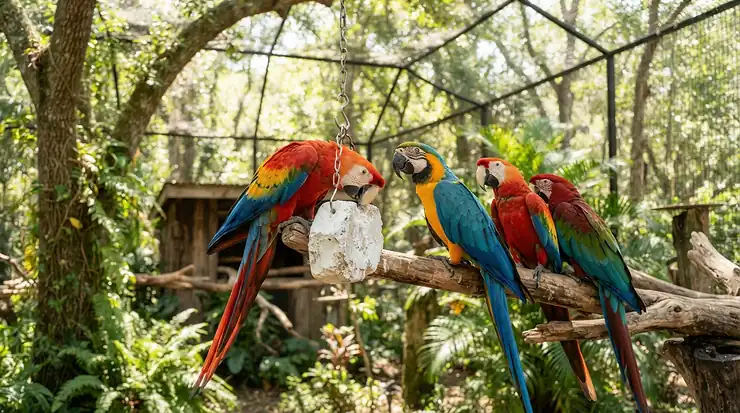
Picture a macaw beak at work. A Brazil nut? Cracked. A cage bolt? Interrogated. Your favorite wooden spoon? Gone by Tuesday. That curved tool is bone sheathed in keratin, and like a fingernail it never stops growing. In the wild, macaws wear it down on tough nuts, bark and mineral-rich clay. In a living room, that job falls to whatever you hang from the bars, which is exactly where a calcium block for macaw beak health earns its keep.
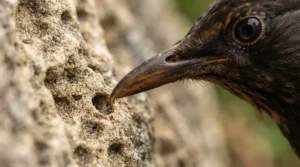
Think of a calcium block for macaw beak health as three tools in one: an abrasive surface for natural beak wear, a mineral top-up, and a cheap hit of enrichment. It is not a magic wand, though. A block won’t rescue a diet built on sunflower seeds. It won’t fix a beak growing crooked because of an underlying health problem either. Veterinary nutrition sources agree on this: the diet comes first, and the block supports it.
So this guide does the sorting for you. You’ll get seven real products: a hefty mineral block, an edible calcium perch, and a mix of stone perches. Each is judged on what its specs mean for a bird that can dismantle hardware. You’ll also see how cuttlebone stacks up, how much calcium large parrots realistically need, and where mineral block placement makes or breaks the whole exercise.
One note before we start. Every price below is a range, and review sentiment appears only where real reviews could be verified. Nothing here replaces an avian vet’s exam. Ready? Let’s get chewing.
Quick Comparison: 7 Beak-Care Picks at a Glance
| Product | Type | Format | Price Tier | Best For |
|---|---|---|---|---|
| Loro Parque Mineral Block | Mineral block | 400g, center hole for mounting | Low-to-mid teens (USD) | Macaw owners wanting one durable, calcium-rich block |
| Parrot Essentials Jumbo Calcium Block | Calcium block | Jumbo, calcium/limestone/oyster shell | Budget tier | Simple, calcium-focused chewing |
| Zoo Med Bird Banquet Mineral Block | Mineral block | Small format, veggie or seed formula | Under $10 range | Testing your bird’s interest cheaply |
| Polly’s Cuttlebone & Calcium Perch | Edible perch | 11″ x 1.75″ (Large) | Mid-teens range | Mini macaws and accessory perch spots |
| Sweet Feet & Beak Safety Pumice Perch | Pumice perch | Large 30.5 cm; XL 35 cm | Roughly $17-$25 for larger sizes | Daily beak and nail conditioning |
| Parrot Essentials Natural Lava Beak Care Stone | Lava stone/mineral hybrid | Hanging stone with minerals | Budget tier | Birds that like a hanging abrasive |
| Living World Pedicure Perch | Pedicure perch | XL 35 cm | Budget-to-mid tier | Dish-side beak wiping |
Looking at the table, the real split is between consumable options (the blocks and the edible perch) and durable ones (the stone and pedicure perches). Consumables deliver minerals but vanish under a heavy chewer. Durables deliver abrasion but add no calcium. For most macaws the smartest setup pairs one of each rather than betting on a single product. Budget buyers should note that the Zoo Med Bird Banquet Mineral Block is the cheapest way in, but its small size means a big macaw will treat it as a snack.
💬 Just one click — help others make better buying decisions too!😊
Top 7 Calcium Block for Macaw Beak Health Picks: Expert Analysis
Each pick below is judged on what its specs mean in practice, what verifiable owner feedback says, and who it suits. Availability and sizing vary by retailer, so confirm details before you buy.
1. Versele-Laga Loro Parque Mineral Block (400g) — most calcium per block
At 400g, this is a block meant to be worked on for weeks, not nibbled and forgotten. The listing’s analytical constituents show roughly 25% calcium, 94% crude ash, 0.31% sodium and very little phosphorus (0.025%). Crude ash at that level means the block is almost entirely inorganic mineral, so there’s little filler. The calcium-heavy, phosphorus-light profile also pushes in the opposite direction from a seed diet, which Merck notes is high in phosphorus and low in calcium. The listed grit, sea algae, trace elements and iodine round it out, and the center hole makes mounting simple.
Based on the spec comparison, this suits owners who want one dependable block that doubles as an abrasive. Retailers list it for Amazons, African Greys and both small and large macaws. Keep in mind that a block is a supplement, so don’t let it excuse a weak diet.
Review sentiment: I couldn’t verify a meaningful body of written owner reviews for this exact block, so I won’t characterize one.
Pros:
- ✅ High listed calcium content for a single block
- ✅ Dense 400g format lasts longer than small blocks
- ✅ Center hole simplifies secure mounting
Cons:
- ❌ Verified owner reviews were thin at research time
- ❌ Hard texture may be ignored by picky birds
Price: low-to-mid teens in USD at typical retailers (check current price). Strong value if your macaw actually chews it.

2. Parrot Essentials Jumbo Calcium Block — simplest calcium-only formula
Where the Loro Parque block is a multi-mineral blend, this one keeps things plain. The listing names calcium, limestone and oyster shell, all calcium carbonate sources. That simplicity is a selling point: you know what the bird is eating. It’s sold in a jumbo format, with listings recommending it for small and large macaws.
The honest take is that a calcium-focused block does one job. It won’t supply iodine or the broader trace minerals a multi-mineral block lists, so a balanced diet still has to carry that load. Owners with pellet-fed birds, whose calcium is already partly covered, may like this as a chew with a mild mineral bonus. Seed-leaning households need to fix the diet first.
Review sentiment: no verifiable owner reviews turned up in my research, so the sentiment here is simply unknown.
Pros:
- ✅ Plain calcium carbonate ingredient list
- ✅ Jumbo size suits large-beaked birds
- ✅ Encourages gnawing and shredding behavior
Cons:
- ❌ Calcium-only, with no broader mineral listing
- ❌ Sold mainly through specialist retailers, so check shipping
Price: budget tier (check current price). Good value as a chew-and-supplement combo.
3. Zoo Med Bird Banquet Mineral Block — cheapest way to test interest
Mass-market shelves stock this block, which is part of its appeal. It’s sold in veggie and seed formulas, and the listings I found show the small size most prominently. For a macaw, small is the catch. A bird with that much beak power will reduce it to crumbs, so it works better as an experiment than as a primary beak-wear tool.
Where it shines is trial. Some macaws ignore plain blocks, and a flavored formula can be the nudge that gets them to investigate. The “seed formula” naming suggests it leans toward treat territory, so offer it as an extra, not as a staple that crowds out pellets.
Review sentiment: no reliable review text surfaced at research time, so I can’t summarize owner opinions fairly.
Pros:
- ✅ Easy to find at big retailers
- ✅ Low cost makes experimenting painless
- ✅ Flavored formulas may tempt picky chewers
Cons:
- ❌ Small size vanishes quickly under a macaw
- ❌ Seed formula blurs the line between supplement and treat
Price: under the $10 range (check current price). Fair value as a trial, weak value as a long-term macaw solution.
4. Polly’s Cuttlebone & Calcium Perch (Large) — double-duty perch and calcium source
This one is an edible perch: real cuttlebone plus ground calcium in a flavored shape (the common version is Banana Split). The Large size is listed at about 11″ x 1.75″ x 1.75″ (roughly 28 cm by 4.4 cm). That diameter is fine for medium parrots and small macaws, but it’s slim for a big macaw’s grip. Treat it as an accessory perch near the food dish, not a main roost.
On paper, cuttlebone is roughly 85% calcium carbonate, so the calcium payoff is real. The trade-off is durability, since an edible perch is designed to be eaten.
Review sentiment (retailer listings): owners describe it as thick and flavorful, and some birds love it. Others say their bird rarely chews it, one reported the dye staining a light-colored bird, and one needed larger washers to fit a parrot cage.
Pros:
- ✅ Real cuttlebone calcium in a perch format
- ✅ Flavored surface encourages chewing
- ✅ Thick profile suits larger birds than typical perches
Cons:
- ❌ Some birds ignore it entirely
- ❌ Dye can transfer to lighter feathers
Price: mid-teens range for the large size (check current price). Decent value if your bird is a chewer, and wasted money if not.
5. Sweet Feet & Beak Safety Pumice Perch — daily conditioning built into the perch
Here the beak work happens on every landing. The Large measures about 30.5 cm long and 4 cm thick, while the XL stretches to 35 cm and 5.5 cm thick. A US retailer recommends it for African Greys and Amazons, and macaw owners should lean toward the XL for a better foot fit. Remember that overly small perches are one reason vets link to overgrown nails.
The abrasive surface wears the beak gradually as the bird wipes and grips. It adds no calcium, which is why it pairs well with a block rather than replacing one.
Review sentiment: I could only verify a small number of reviews. One owner reported it did wonders for a Grey’s beak and nails, but hoped the grit would last longer than roughly ten months. They also noted it still costs far less than professional trims.
Pros:
- ✅ Provides passive beak and nail conditioning daily
- ✅ XL size better matches large-bird feet
- ✅ Long-lasting compared with consumable blocks
Cons:
- ❌ Grit wears down over time, per one reviewer
- ❌ Zero calcium contribution
Price: roughly $17-$25 for larger sizes at US retailers at research time, with the XL higher (check current price). Strong value for a durable tool.
6. Parrot Essentials Natural Lava Beak Care Stone — hybrid mineral block and abrasive
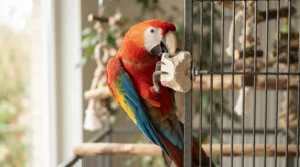
This hanging stone mixes two jobs. It’s built from calcium, limestone, oyster shell, stomach grit and red clay, and the rough lava surface adds abrasion. That makes it a cross between a mineral block and a lava stone perch for beak wear, minus the perch.
One marketing phrase deserves skepticism. The listing says it “sharpens” the beak, but a healthy beak isn’t a knife. What you want is conditioning and wear. Another caution comes from owner discussions of natural lava: pore size and hardness vary, and broken pieces can leave sharp edges. Inspect it often.
Review sentiment: no verifiable owner reviews surfaced, so I’ll leave sentiment unrated.
Pros:
- ✅ Combines minerals with a rough chewing surface
- ✅ Easy to hang near a favorite perch
- ✅ Red clay and grit add variety
Cons:
- ❌ Natural stone can fracture into sharp pieces
- ❌ Limited verified feedback from owners
Price: budget tier (check current price). Good value if you inspect it regularly.
7. Living World Pedicure Perch — best for dish-side beak wiping
Pedicure perches are rough-surfaced perches meant to condition nails and beaks. The listing I found shows an XL, 35 cm version, but detailed specs were thin, so check the diameter before buying for a macaw. Its best trick is placement. One avian-focused source suggests mounting a rough pedicure perch near the food dish, because birds naturally wipe food off their beaks after eating, and that wiping does gentle conditioning work.
For owners who want a no-fuss durable option, this is a sensible companion to a mineral block. It’s also a less dramatic purchase than a premium pumice perch.
Review sentiment: I couldn’t verify written reviews for this specific model, so I’m not summarizing any.
Pros:
- ✅ Rough surface supports passive beak conditioning
- ✅ Works naturally beside the food dish
- ✅ Durable compared with consumable options
Cons:
- ❌ Specs were sparse, so verify diameter
- ❌ No mineral contribution
Price: budget-to-mid tier (check current price). Solid value as a supporting player.
Mineral Block Placement: A Practical Setup Guide
Most blocks fail not because they’re bad but because they’re in the wrong spot. Mineral block placement is the cheapest upgrade you can make.
Where to hang it
Put the block near your macaw’s primary perch, ideally around head height. A block tucked in a far corner tends to get ignored, while one within easy reach gets investigated. Keep it away from food and water dishes and out from under perches where droppings land, because Loro Parque’s own guidance says to replace a block once it’s contaminated.
Hardware matters
Hyacinth macaws are reported to dismantle welded cage bars, so assume a determined macaw will test any wire tie. Use sturdy, bird-safe stainless fittings and check them weekly. Loose hardware is a bigger risk than the block itself.
The first 30 days
- Hang it, then leave it alone for a few days; novelty needs time.
- Rotate it near a favorite perch if it’s ignored after a week.
- Inspect weekly for cracks, sharp edges or contamination.
- Replace it when it’s much smaller or soiled.
Common first-month mistakes include mounting it too high, hanging it above the dishes, and giving up after two days. If your bird still ignores it after several weeks, try a different type rather than forcing the issue.
✨ Ready to Upgrade Your Macaw’s Beak Care?
🦜 Click any highlighted product above to check current pricing and availability, then pair one block with one durable perch for a setup your macaw will actually use!
Real-World Scenarios: Three Macaw Households, Three Setups
These are hypothetical profiles built from the spec and review analysis above, not real testimonials.
The seed-heavy Blue-and-gold on a budget
Picture a Blue-and-gold on a seed-leaning diet, with an owner watching costs. The priority is fixing the diet gradually, since a seed-heavy diet is a known calcium problem. The Loro Parque Mineral Block plus an XL Sweet Feet & Beak Safety Pumice Perch covers minerals and abrasion without a big outlay.
The apartment-dwelling Scarlet that destroys everything
A heavy chewer demolishes soft items in days. Consumables like the Polly’s Cuttlebone & Calcium Perch disappear quickly, so durable stone is smarter here. The Parrot Essentials Natural Lava Beak Care Stone gives a hard, long-lasting chew, provided you inspect it for sharp breaks. Mount everything with heavy-duty hardware.
The light-chewing Hahn’s macaw
A mini macaw that only nibbles doesn’t need a jumbo setup. The Zoo Med Bird Banquet Mineral Block is enough to test interest, and a Living World Pedicure Perch near the dish handles passive conditioning. Skip anything oversized.
The pattern: match durability to destructiveness, and always pair a mineral source with an abrasive.
What Is a Calcium Block for Macaw Beak Health?
A calcium block for macaw beak health is a hard, chewable block of calcium carbonate, often blended with limestone, oyster shell, grit or trace minerals, that a macaw gnaws to wear its beak while ingesting small amounts of calcium. It supplements a balanced diet rather than replacing pellets, fresh foods or veterinary care.
Calcium block vs mineral block
The two terms overlap. One buyer’s guide describes calcium blocks as calcium-focused and mineral blocks as broader, with a wider range of minerals. Product naming isn’t consistent, so read the ingredient list rather than trusting the label.
Why macaws chew minerals at all
In the wild, macaws are documented visiting clay licks to eat mineral-rich clay. A block is a captive stand-in for that behavior. Its appeal is as much instinct as nutrition, which is why a mineral block for bird beak health works best when the bird finds it interesting, not just present.
How to Choose a Mineral Block for Bird Beak Health
Choosing a mineral block for bird beak health comes down to a few decisions. Walk through them in order.
- Match size to your bird. A macaw reduces a small parakeet block to dust in minutes, so go jumbo or 400g.
- Read the ingredient list. Look for calcium carbonate sources (limestone, oyster shell) and check whether iodine and trace minerals are included.
- Check hardness. A block that’s too soft vanishes, and one that’s too hard may be ignored. Heavier chewers tolerate denser blocks.
- Plan the mounting. A center hole or sturdy attachment saves frustration with strong birds.
- Decide on flavor. Flavored blocks can help picky birds, but plain ones avoid dyes and extras.
- Think durability. Pair a consumable with a stone or pumice perch so abrasion continues after the block is gone.
- Start with one. Add a second type only after you see what your bird actually uses.
Based on this checklist, the Loro Parque Mineral Block and Parrot Essentials Jumbo Calcium Block fit most large-bird needs, while smaller formats suit lighter chewers.
Common Mistakes When Buying a Calcium Block for Macaws
Treating the block as a diet fix
A calcium block for macaws can’t cancel a seed-heavy diet. University of Florida avian veterinarians warn that seed-heavy feeding is linked to obesity and other serious problems, and they lay out a gradual seed-to-pellet transition plan. Start there, and use the block as backup. Their avian care guidance also notes that overgrown nails can reflect poor nutrition, perches that are too small, or systemic disease.
Buying too small
Tiny blocks suit tiny birds. For a macaw, anything under jumbo disappears quickly and increases your cost per week.
Ignoring placement
A block hung where the bird never goes is a decoration. See the placement guide above.
Assuming “natural” means safe
Natural lava and stone can chip into sharp edges, so inspect them regularly.
Skipping the vet
If a beak looks overgrown, flaky, discolored or misshapen, a block won’t diagnose why. Causes range from nutrition to infection, so have an avian vet look first.
Cuttlebone vs Mineral Block for Beak Trimming: Which One Wins?
A quick clarification before the verdict: neither product literally trims a beak. They support natural wear, and the phrase “cuttlebone vs mineral block for beak trimming” is shorthand for which supports that wear better.
The case for cuttlebone
Cuttlebone is roughly 85% calcium carbonate, and one retailer describes it as softer and easier for many parrots to chew than a manufactured block. That makes it a gentle everyday calcium source.
The case for mineral blocks
Mineral blocks are manufactured and tend to be harder, so they offer more abrasion and often a broader mineral list. Some owners raise concerns about old cuttlebone becoming brittle or harboring bacteria, and about cuttlefish harvesting. Others report using both without trouble.
| Option | Calcium Source | Texture | Beak Wear | Best For |
|---|---|---|---|---|
| Polly’s Cuttlebone & Calcium Perch | Cuttlebone + ground calcium | Soft, edible | Mild | Gentle chewers and accessory perches |
| Loro Parque Mineral Block | Calcium plus minerals | Hard | Moderate | Steady abrasion and mineral variety |
| Sweet Feet & Beak Safety Pumice Perch | None | Abrasive stone | High | Daily conditioning |
Looking at the table, cuttlebone-style products win on palatability, while the mineral block wins on durability and breadth. For beak wear specifically, the pumice perch beats both but contributes no calcium. The practical answer for most macaws is a block plus a durable perch, with cuttlebone as an optional extra.
Calcium Needs for Large Parrots: What the Science Says
Calcium needs for large parrots are tied to diet quality more than any single product. The Merck Veterinary Manual notes that seeds have a poor calcium-to-phosphorus ratio (high phosphorus, low calcium), so birds on seed diets can become seriously depleted. It also flags African grey parrots as especially prone to acute hypocalcemia linked to low vitamin D3, and it recommends natural sunlight exposure where possible.
What that means for you
- Diet first. Pellets and fresh foods address calcium needs for large parrots far more reliably than a block.
- Vitamin D3 matters. Calcium that can’t be absorbed doesn’t help, so ask your vet about D3 and sunlight.
- Blocks are insurance. They add a little mineral support and a lot of chewing.
A word of caution
Over-supplementing isn’t harmless. Some sources note a bird can over-consume calcium from a block, and individual needs differ, especially for breeding females. Ask an avian vet before adding supplements beyond a basic block. Based on this, calcium needs for large parrots are best met by diet, with blocks in a supporting role.
Natural Beak Wear: What to Expect in Real Life
Natural beak wear is the whole reason these products exist, so it helps to know what normal looks like. A macaw’s beak is bone with a thin keratin covering, and some flaking or peeling is typical as new keratin replaces old. Owners often mistake normal peeling for damage.
What good wear looks like
A healthy beak looks even, with the upper and lower halves meeting properly. Birds that chew regularly tend to keep it conditioned without help.
What a block can and can’t do
A block supports natural beak wear, but it won’t correct a crossed or misaligned beak, and it won’t treat disease. Avian vets list many causes of overgrown beaks, from nutrition to infection, including psittacine beak and feather disease. If your macaw’s beak is changing shape or color, book a vet visit instead of buying another block.
Realistic expectations
Don’t expect overnight change. Wear is gradual, and the best signal is a bird that uses its chew items daily.
Lava Stone Perch for Beak Wear vs Top-Rated Pumice Perch for Beak Maintenance
These two stone options look similar but behave differently. Here’s how to sort them.
Lava stone perch for beak wear
A lava stone perch for beak wear offers a porous, rough surface. Natural lava varies widely in hardness and pore sharpness, and broken pieces can have sharp edges. Inspect it often and retire it if it chips.
Top-rated pumice perch for beak maintenance
Shoppers searching for a top-rated pumice perch for beak maintenance should look at what the rating actually measures. Verified review counts for pumice perches are often small, so check the diameter, length and recommended species rather than relying on stars. The Sweet Feet & Beak Safety Pumice Perch in XL is the macaw-appropriate size in this lineup.
Which should you choose?
Pumice perches work through everyday perching, while hanging lava stones work through deliberate chewing. If your macaw is a chewer, the Parrot Essentials Natural Lava Beak Care Stone suits it. If your bird mostly sits and preens, a pumice or Living World Pedicure Perch placed by the dish is the better bet. Either way, supervise the first week and replace worn or chipped pieces.
Long-Term Cost & Maintenance
Beak care is cheapest when you prevent problems. The World Parrot Trust’s guidance cites avian medicine texts saying beak trimming isn’t necessary unless an underlying issue causes overgrowth. When it is needed, a vet should do it, because the beak has blood vessels and nerves.
| Product | Price Tier | Lifespan Pattern | Value Verdict | Best For |
|---|---|---|---|---|
| Loro Parque Mineral Block | Low-to-mid teens | Consumable; depends on chewer | Strong if used | Steady supplement |
| Zoo Med Bird Banquet Mineral Block | Under $10 | Short under a macaw | Fair as a trial | Testing interest |
| Sweet Feet & Beak Safety Pumice Perch | Roughly $17-$25+ | Months; grit wears down | Strong, durable | Daily conditioning |
| Parrot Essentials Natural Lava Beak Care Stone | Budget | Consumable stone | Good with inspection | Chewers |
The takeaway: spread your budget across one consumable and one durable item. Replace blocks when they shrink or get soiled, and inspect stone and pumice monthly. Compared with the stress of a vet-performed trim, a few dollars of prevention is a bargain.

FAQ
❓ Can a macaw eat too much of a mineral block?
❓ How often should I replace a mineral block in a macaw cage?
❓ Is a lava stone perch safe for macaws?
❓ Do macaws still need a calcium block if they eat pellets?
❓ Will chewing a block stop my macaw's beak from growing?
Conclusion
A calcium block for macaw beak health is a small purchase that does honest work: it gives your bird something worthwhile to chew, a little mineral support, and a reason to keep that beak busy. The best results come from a simple pairing, one consumable and one durable perch, hung where your macaw will actually use them.
For most owners, the Loro Parque Mineral Block is the strongest all-round starting point, with the Sweet Feet & Beak Safety Pumice Perch (XL) as the durable partner. Budget buyers can begin with the Zoo Med Bird Banquet Mineral Block and the Living World Pedicure Perch, while chewers who like a hanging stone may prefer the Parrot Essentials Natural Lava Beak Care Stone. Remember that diet drives calcium needs for large parrots, and any change in beak shape deserves a vet’s eyes, not another block.
Recommended for You
- Bird Nail Clippers: 7 Best Safe Picks For Small Birds (2026)
- Nail Trimmers For Large Parrot Claws: 7 Safest Picks 2026
- Bird First Aid Kit: 7 Must-Have Picks & Checklist For 2026
Disclaimer: This article contains affiliate links. As an Amazon Associate, I earn from qualifying purchases. If you purchase products through these links, we may earn a small commission at no additional cost to you.
✨ Found this helpful? Share it with your friends! 💬🤗
