
In This Article
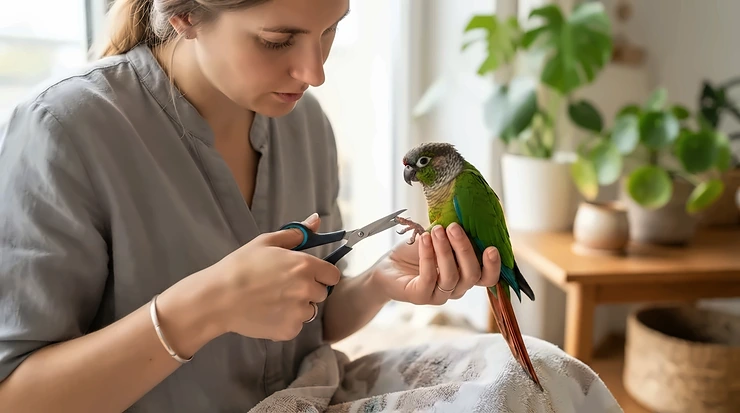
Bird nail clippers are small, sharp-bladed trimming tools sized for avian toenails, usually scissor-style or notched-blade designs around 4 to 5 inches long. They snip the tiny pointed tip of a nail cleanly without crushing it, so you can shorten claws safely at home.
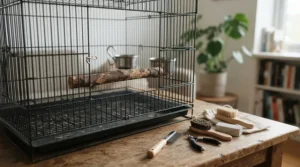
Here’s what first-time owners rarely hear: the clippers are the easy part. The hard part is a toenail about as thin as a pencil lead, wrapped around a blood vessel, attached to a creature that treats your hands like a predator’s talons. The budgerigar, the common “parakeet” most households keep, is a small, long-tailed, seed-eating parrot native to Australia. Like every parrot, it uses its feet as hands. Those nails climb, grip, and perch all day.
That’s why the right bird nail clippers matter. A dull blade crushes the nail and splinters it. A clumsy handle shakes. A tool built for a Labrador turns a budgie’s toe into a high-stakes gamble.
This guide compares seven real tools: five clippers or trimmers, one rotary grinder, and one grooming perch. It draws on manufacturer specs, avian-vet guidance, and the aggregated feedback visible on retail listings. Nothing here was hands-tested by the author, so where review data runs thin, the article says so. Prices appear as ranges because they change constantly, and you should check current listings before buying.
Quick Comparison: 7 Bird Nail Clippers and Grooming Tools at a Glance
| Product | Type | Best Fit | Price Range | Best For |
|---|---|---|---|---|
| Kaytee Pro-Nail Trimmer | Scissor-style, 4 in. | Budgies, lovebirds, finches | Under $10 | Tight budgets |
| HARI Nail Clippers for Grooming Small Birds | Scissor-style, XS and Small sizes | XS: budgies, lovebirds; Small: cockatiels, conures | Under $10 | Size-matched trimming |
| Safari Professional Nail Trimmer (Standard) | Double-blade with adjustable safety stop, 5 in. | Cockatiels, conures | Roughly $10-$15 | Nervous trimmers who want a depth guide |
| Burgham PRO PLUS Nail Trimmer | Notched-blade scissors | Small birds, small animals | Check current price | Seeing exactly what you cut |
| Dremel 7350-PET | Cordless rotary grinder | Cockatiels and up; budgies with caution | Roughly $30-$50 | Smooth, gradual shortening |
| Windy City Parrot Cordless Rotary Bird Nail & Beak Trimmer | Rotary kit with accessories | All sizes | Check current price | A bird-specific all-in-one kit |
| Living World Pedi-Perch | Cement grooming perch | XS to Medium sizes | Under $15 | Between-trim upkeep |
Looking at the table, the Kaytee Pro-Nail Trimmer and HARI Nail Clippers for Grooming Small Birds are the cheapest ways in, and only HARI is explicitly sized by bird species. The Safari Professional Nail Trimmer (Standard) is the only clipper here with a built-in depth stop, which is useful if you’re nervous. The Dremel 7350-PET and the Windy City Parrot kit cost more but trade clipping risk for noise, which is a real concern for small birds.
💬 Just one click — help others make better buying decisions too!😊
Top 7 Bird Nail Clippers and Nail-Care Tools: Expert Analysis
1. Kaytee Pro-Nail Trimmer — best budget all-rounder
The cheapest tool in this lineup is also the one most small-bird owners will recognize. It’s a 4-inch metal trimmer with an easy-grip handle and a finger rest, sold for small animals and birds.
That finger rest matters more than it sounds. When you’re holding a wriggling budgie’s foot with one hand, a rest for your finger steadies the blade and keeps the cut from drifting. At 4 inches, it’s also compact enough to work between a small bird’s toes without crowding your view.
Based on the spec sheet, this suits budgies, lovebirds, and finches. A caution: it’s built for “small animals” generally, so there’s no bird-specific sizing and no depth stop. Buyers on retail listings praise the sharp, straight cut and prefer it to baby human clippers for precision. One reports a year of use with no change in feel. Much of that feedback comes from guinea pig and cat owners, though, so bird-specific reviews are thinner.
Pros:
- ✅ Sharp blades give a clean, straight cut
- ✅ Compact 4-inch body suits tiny toes
- ✅ Finger rest steadies your hand
Cons:
- ❌ No depth stop to protect the quick
- ❌ Not sized specifically for birds
Expect to pay under $10, which makes it the sensible default for first-timers.
2. HARI Nail Clippers for Grooming Small Birds — the only one sized by species
HARI sells this trimmer in two sizes. Extra Small is meant for budgies and lovebirds, and Small for cockatiels and conures. Few competitors bother with that distinction.
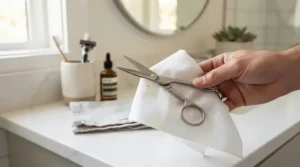
The manufacturer advises using it on nails under a quarter inch thick. It also warns that opening the blades wider makes the inner shape irregular and raises the risk of unclean cuts. In practice, this is a one-smooth-stroke tool. If you’re forcing the blades, you’ve picked the wrong size or the nail is too thick. HARI’s own guidance is to check nails weekly and trim only when needed.
That weekly check suits a bird that’s easy to inspect. A budgie that steps onto your finger on cue can have its toes examined in seconds, which means you only reach for the clippers when a nail genuinely needs it.
On review data, this is a spec-based pick. The retailer listings found carried little buyer feedback, so this recommendation rests on the sizing logic rather than a crowd verdict.
Pros:
- ✅ Separate sizes for budgies versus cockatiels
- ✅ Designed for a single clean stroke
- ✅ Comfortable, controlled handle
Cons:
- ❌ Little independent buyer feedback available
- ❌ Blade-opening limit rules out thick nails
Expect roughly under $10. Good value if you want sizing done for you.
3. Safari Professional Nail Trimmer (Standard) — adjustable safety stop
The standard size is a 5-inch, double-bladed trimmer with a tension spring and non-slip handle, usable left- or right-handed. The maker lists it for small-to-medium pets including birds.
The feature that earns its place is the adjustable safety stop, a small metal guard that limits how far the nail can slide into the blade. Retailers note it’s still tricky on dark nails, where the quick is invisible. Shining a flashlight behind the nail helps you set the stop sensibly.
Reasoning from the specs: the stop is a seatbelt, not an autopilot. It reduces the chance of overcutting but can’t see the blood vessel for you. And at 5 inches with a dog-sized heritage, it feels like a lot of tool for a finch. For a cockatiel or conure it’s a better match than for a budgie.
Most reviews come from dog owners, who praise the sharpness and heavy-duty feel, while one calls it light and flimsy. Bird-specific buyer feedback is thin.
Pros:
- ✅ Safety stop helps limit cutting depth
- ✅ Works for either hand
- ✅ Sharp stainless blades
Cons:
- ❌ Bulky for budget-sized budgies
- ❌ Stop can’t reveal a dark nail’s quick
Expect roughly $10-$15. A smart pick for nervous trimmers with bigger small birds.
4. Burgham PRO PLUS Nail Trimmer — notched blades for visibility
This trimmer is listed for birds, small animals, and cats. The standout is its notched blades, which help you position the scissors so you can see exactly how much nail you’re removing.
Visibility is the whole game with small-bird nails. A notch acts like a gun sight: you cradle the nail tip in it, check the alignment, and only then squeeze. It slows you down just enough to catch a bad angle.
What the listing won’t tell you is whether the blades stay sharp. That’s the thing to check in reviews. No verified buyer reviews turned up during research, so treat this as a design-based option rather than a proven favorite. The honest comparison is against the Kaytee Pro-Nail Trimmer, which has a longer track record, versus this one’s clearer aiming aid.
If you tend to miscut because you can’t see what’s between the blades, this design directly addresses that. If you’re steady-handed, the extra visibility is a bonus rather than a necessity.
Pros:
- ✅ Notches help you aim precisely
- ✅ Labeled for birds and small animals
- ✅ Encourages slower, more deliberate cuts
Cons:
- ❌ No verified buyer reviews found
- ❌ Current price not confirmed
Check the current price before buying. Worth considering if visibility is your biggest worry.
5. Dremel 7350-PET — quieter cordless grinder
The Dremel 7350-PET is a cordless pet nail grinder with a 4V lithium-ion battery and micro-USB charging. The maker says it runs about 7% quieter than the discontinued Dremel 7300-PT and lasts about 30% longer per charge. The kit includes 60-grit sanding bands and a drum mandrel.
It’s a single-speed, entry-level tool aimed at dogs and cats. That matters here because small-bird nails are a different scale. Avian references note that a variable-speed grinder can cauterize a nail slightly while working, which lets a nail be taken a little shorter. That sounds helpful until you remember the downside: too-short nails upset a bird’s balance.
Noise is the real wildcard. Forum owners report that some birds are frightened by a Dremel, and one groomer suggested clipping instead after a cockatiel reacted badly to an electric file. Reviewers of the older 7300-PT, mostly dog owners, describe it as quiet with little vibration.
Pros:
- ✅ Cordless with USB charging
- ✅ Leaves a smooth, filed finish
- ✅ Lighter and quieter than its predecessor
Cons:
- ❌ Designed for dogs, not tiny bird nails
- ❌ Motor noise may frighten small birds
Roughly $30-$50. Best for owners with calm, tolerant cockatiels or larger birds.
6. Windy City Parrot Cordless Rotary Bird Nail & Beak Trimmer — bird-specific all-in-one kit
This rotary kit measures about 8 x 1.625 x 1.5 inches and ships with accessories. The seller says it also works on beaks.
The seller’s commentary is the interesting part. After watching “hundreds” of birds groomed both ways, the retailer argues that a properly toweled bird is better off with a grinder than risking the quick with a clipper. The same page recommends two people, one to hold the toweled bird. Given the seller sells the tool, read this as informed opinion with a commercial interest, not independent proof. Still, it’s a coherent argument, and avian vet material agrees that grinders let you shorten gradually.
The seller also admits that the only advantage over a corded Dremel is no cord. So if you already own a rotary tool, the case for this kit shrinks.
Independent buyer reviews weren’t verifiable, and availability varies by retailer, so confirm stock first.
Pros:
- ✅ Bird-specific accessories included
- ✅ Compact, comfortable to control
- ✅ Can also shape beaks
Cons:
- ❌ Claims come mostly from the seller
- ❌ Two-person handling recommended
Check current price. Best for owners committed to the grinder route.
7. Living World Pedi-Perch — the between-trim maintenance perch
This cement grooming perch has a wavy, multi-grip surface. It comes in an XS size (about 1 inch across and 4.75 inches long), a Small (1.3 by 6 inches, suggested for cockatiels and lovebirds), and a Medium (1.5 by 8 inches, for conures and caiques).
It doesn’t replace clippers. It slows the return of sharp, overgrown tips. The maker says bird feet should wrap about two-thirds around the perch without the toes meeting, and that it should go on the cage door and never be the highest perch.
Reviewers split. Some praise the sturdy build and grip. Others say the bumpy surface looks aggressive but files less effectively than hoped. A few warn that a bird can be wary of it at first. That mixed signal is useful: a grooming perch is a bonus, not a strategy.
Pros:
- ✅ Solid cement, no loose grit
- ✅ Multiple sizes for different species
- ✅ Cheap and easy to clean
Cons:
- ❌ Some birds ignore it entirely
- ❌ Slower and less precise than clipping
Expect under $15, depending on size. Excellent value as a companion to any clipper.
Step-by-Step: How to Trim a Small Bird’s Nails at Home
Good technique matters more than any tool on this list, so here is a practical sequence built from avian-vet guidance.
Before you start
- Gather your bird nail clippers, a towel, a flashlight, and styptic powder or cornstarch.
- Work in a well-lit room, and decide in advance who holds and who cuts. Two people make this far easier.
- Get your bird used to the towel in the days before, so it isn’t a surprise.
During the trim
- Hold the bird gently but firmly. Never squeeze the chest, because birds need to move it to breathe.
- Isolate one toe and find the quick. On pale nails it shows pink. On dark nails, shine the flashlight behind the nail.
- Clip only the sharp tip, one small cut at a time.
- Release the toe and check for bleeding before moving on.
Afterward
- Give your bird a break and a treat. You want trimming to feel survivable.
- Watch for limping or reluctance to put weight on a foot, and call an avian vet if you see it.
The first thirty days are where most mistakes happen. Don’t try all ten nails in one anxious sitting. Trimming two or three at a time is perfectly fine and far less stressful for both of you.
Real-World Scenarios: Matching Tools to Your Flock
Specs are abstract. Here are three owner profiles and the setups that fit them.
The first-time budgie owner on a tight budget. One bird, handled daily, nails getting sharp. A Kaytee Pro-Nail Trimmer or HARI Nail Clippers for Grooming Small Birds (XS), plus styptic powder, covers it. The total stays small, and the reasoning is simple: a budgie’s toes are tiny, so you want a compact blade and a size-matched tool.
The cockatiel household with a nervous trimmer. A cockatiel is bigger, and the person holding the clippers is anxious. The Safari Professional Nail Trimmer (Standard) adds a depth stop, and pairing it with a Living World Pedi-Perch (Small) reduces how often the stress happens. Use the perch where the bird steps toward its food cup, and the clippers only when needed.
The multi-bird flock with calm, hand-tame birds. If several birds tolerate handling and noise, a rotary tool like the Dremel 7350-PET or the Windy City Parrot kit becomes efficient. Do one nail per bird per session at first, keep the tool on its lowest setting, and watch every bird’s reaction.
The pattern across all three: start with the lowest-risk tool, add a perch for upkeep, and consider a grinder only when your bird has shown it can handle the sound.
How to Choose Bird Nail Clippers: 6 Steps That Matter
- Match the tool to the bird’s size. A finch needs a smaller, finer tool than a conure. A tool sized for a dog is an invitation to overcut.
- Prioritize visibility. Notched blades or an open cutting window let you see the tip before you commit.
- Check for a depth stop if you’re nervous. It helps limit how deep the blade can reach, though it can’t see the quick on dark nails.
- Pick sharp, stainless blades. A dull clipper crushes instead of slicing, which splinters the nail and hurts.
- Consider your handling style. If you work alone, a comfortable handle and a finger rest matter more than extras. If you work with a partner, almost any option works.
- Decide whether you want clipping, grinding, or both. Clippers are quick and quiet. Grinders are gradual but noisy. A perch handles upkeep.
Small-Bird Claw Anatomy: What You’re Actually Cutting
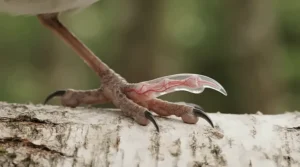
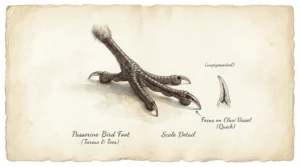
Small-bird claw anatomy decides where the safe cut lives, so a quick tour pays off. Parrots have four toes per foot in a zygodactyl arrangement, with two pointing forward and two backward. According to this avian anatomy guide, each claw contains a central blood vessel that reaches about halfway, or slightly further, into the claw. The tip beyond it carries no blood supply.
In light nails, that vessel (the quick) shows as a pink core. In dark nails it’s essentially invisible, which is why a flashlight behind the nail helps. The practical takeaway is to treat the clear, sharp tip as your safe zone and stop well before the pink.
Remember the scale, too. Because the birds are so small, a little blood loss by human standards can be serious for a budgie. That’s why styptic powder or cornstarch should be on the table before the first cut.
Safe Nail-Trim Length: How Short Is Short Enough?
The safe nail-trim length is shorter than a cut but longer than a stub. Most guidance converges on removing just the sharp, pointed tip. Owners with budgies often report taking off only about a millimetre, after which the nail wears normally again.
Three checks tell you whether the length is right. A bird’s toes should wrap at least halfway around its perch, a standard from VCA’s avian care guidance. On a flat surface, the nails shouldn’t force the toes up off the ground. And when the bird perches, nails shouldn’t wrap around each other.
Err on the long side. Avian practitioners warn that nails trimmed too short can make a bird slide off a perch, and Lafeber’s team notes short nails really affect balance. One more wrinkle: sources disagree on cut angle, with some saying cut straight across and others angling toward the foot. Ask your avian vet to demonstrate on your bird.
Trimming Frequency for Budgies (and Other Small Birds)
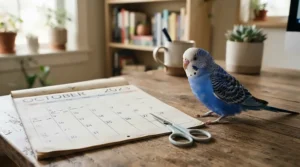
Trimming frequency for budgies is more variable than most guides admit. Lafeber’s team suggests that around three times a year is a good average for nails that truly grow too long, and that monthly trims are too often. Other sources suggest every four to eight weeks for small birds. Grooming services cite six to twelve weeks.
How do you reconcile that? Nails often become too sharp before they become too long, and active birds that climb and perch on varied surfaces wear them down naturally. Birds that handle a lot, or fly and climb less, may need more attention.
So check weekly, trim only when you see a problem, and let the bird’s behavior guide you. If nails grow unusually fast, don’t just trim more often. Lafeber and avian vets suggest looking for an underlying cause such as nutrition or health.
Bird Nail Clippers for Small Parakeets: Sizing and Blade Style
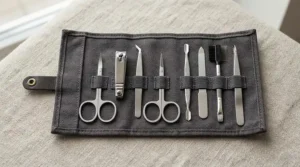
Bird nail clippers for small parakeets need to be small, light, and sharp. A budgie’s toe is delicate, so a tool built for dogs adds leverage you don’t want.
Blade style splits into three camps. Scissor-style trimmers, like the Kaytee Pro-Nail Trimmer and HARI Nail Clippers for Grooming Small Birds, give you the most control. Notched designs like the Burgham PRO PLUS Nail Trimmer emphasize aiming. Bigger trimmers like the Safari Professional Nail Trimmer (Standard) suit cockatiels better than budgies.
Human nail clippers also work on small birds. VCA’s guidance notes that human clippers suit small birds and dog nail scissors suit larger ones. The catch is that they can hide the nail from view. Whatever you choose, replace it when it starts to snag.
Bird Nail Grinder Perch Reviews: Do Grooming Perches and Grinders Earn Their Keep?
The phrase “bird nail grinder perch reviews” actually covers two different tools, so it’s worth separating them.
Grinders. Reviews of the Dremel 7350-PET‘s predecessor praise quiet running and a smooth finish, but nearly all of that comes from dog owners. Bird owners on forums are split: some use small pet grinders happily, others find their birds are scared of the sound. The retailer behind the Windy City Parrot Cordless Rotary Bird Nail & Beak Trimmer is strongly pro-grinder, though that’s a seller’s view.
Perches. The Living World Pedi-Perch draws mixed feedback: sturdy and grippy, but not always effective at filing. Lafeber’s avian team recommends rough, solid-surface grooming perches rather than anything with loose grit, sized a bit larger than the bird’s usual perch so the nails actually touch. They also say a grooming perch should never be the highest or main perch.
Verdict: a perch is a low-cost helper, and a grinder is a commitment to your bird’s noise tolerance.
Nail File for Cockatiel Claws: When Filing Beats Clipping
A nail file for cockatiel claws makes sense when you can’t trust yourself to judge the quick, or when your bird’s quick runs long. One bird-supply retailer notes that a cockatoo’s quick traveled nearly the entire length of her nails, so filing was the safer option.
Ordinary human emery boards usually fail, because bird nails rip right through paper or foam, according to one maker. A rigid option like the Parrot Wizard Nail Trimmer Stone is sold as a sturdier alternative, though that’s the manufacturer’s claim and not independent proof. Filing also smooths the sharp edge that clipping can leave, which is why some groomers clip and then file.
The trade-off is patience. Filing is slower, and many cockatiels dislike being held still for it. Some owners train their bird to accept filing in the cage. Treat that as a long-term project, not a quick fix.
| Tool Type | How It Works | Main Strength | Watch-Out | Best For |
|---|---|---|---|---|
| Clippers | Snips the tip | Fast, quiet | Risk of clipping the quick | Calm, handled birds |
| Grinder | Sands gradually | Smooth finish | Noise can frighten | Tolerant, larger birds |
| Hand file or stone | Manual filing | Precise, no noise | Slow | Birds with long quicks |
| Grooming perch | Passive wear | Zero handling | Inconsistent results | Upkeep between trims |
The table shows why no single tool wins. Clippers are quickest but least forgiving, grinders trade risk for noise, and files trade speed for control. Most households end up combining a clipper with a perch.
Affordable Bird Nail Grooming Kit: Build One for Less
An affordable bird nail grooming kit doesn’t need to arrive in a box. You can assemble a better-fit set from individual pieces, and the costs below are estimates based on the ranges above.
| Kit Tier | What’s Included | Estimated Total | Best For |
|---|---|---|---|
| Barebones | Kaytee Pro-Nail Trimmer + styptic powder + towel | Under $25 | New budgie owners |
| Balanced | HARI Nail Clippers for Grooming Small Birds + Living World Pedi-Perch + styptic powder | Under $35 | Cockatiels and lovebirds |
| Full | Clippers + perch + Dremel 7350-PET | Roughly $45-$75 | Multi-bird, tolerant flocks |
The barebones set is enough for most. The balanced option costs a little more but reduces trim frequency. The full kit only pays off if your birds accept a grinder. As a rough value test, professional trims recur every visit, so even a modest set tends to pay for itself after a few appointments, though local rates vary.
Common Mistakes When Buying Bird Nail Clippers
Five pitfalls come up again and again.
- Buying for the wrong species. A tool sized for a dog makes tiny nails harder, not easier.
- Ignoring blade sharpness. A dull clipper crushes and splinters, so replace it when it stops slicing cleanly.
- Skipping styptic powder. Even careful trimmers sometimes nick the quick. Have it ready before you start.
- Trusting a perch to do everything. Perches slow nail growth. They rarely eliminate trims.
- Trimming too short. Short nails hurt balance and perching, so cut small and leave length.
One more point, from avian guidance: sandpaper perches or any perch with loose grit are a bad idea, since grit can abrade the soft skin on a bird’s foot.
FAQ
❓ Are human nail clippers okay for a budgie?
❓ How much do bird nail clippers cost?
❓ Can I use a dog nail clipper on a cockatiel?
❓ What should I keep on hand in case of bleeding?
❓ Is a grinder better than clippers for small birds?
Conclusion
The best bird nail clippers aren’t the fanciest. They’re the ones that match your bird’s size, give you a clear view of the nail, and stay sharp. For most small-bird owners, that means a compact scissor-style trimmer like the Kaytee Pro-Nail Trimmer or a size-matched option like HARI Nail Clippers for Grooming Small Birds. If you’re nervous, the Safari Professional Nail Trimmer (Standard) adds a depth stop, and the Burgham PRO PLUS Nail Trimmer helps with aiming. Add a Living World Pedi-Perch for upkeep, and consider the Dremel 7350-PET or the Windy City Parrot Cordless Rotary Bird Nail & Beak Trimmer only if your bird tolerates the noise.
Beyond the tool, three habits do the heavy lifting: trim only the tip, keep styptic powder within reach, and ask an avian vet to demonstrate on your own bird the first time. Be honest about the limits of this guide too. Review data for several products is thin, so lean on sizing logic and vet advice.
✨ Ready to make nail time less scary?
🐦 Pick the tool that fits your bird, click through to check current pricing and availability, and give your feathered friend the safe, calm trim they deserve!
Recommended for You
- Nail Trimmers For Large Parrot Claws: 7 Safest Picks 2026
- Bird First Aid Kit: 7 Must-Have Picks & Checklist For 2026
- Styptic Powder For Broken Blood Feathers: 7 Proven Picks 2026
Disclaimer: This article contains affiliate links. As an Amazon Associate, I earn from qualifying purchases. If you purchase products through these links, we may earn a small commission at no additional cost to you.
✨ Found this helpful? Share it with your friends! 💬🤗
