

In This Article
You spot it during morning seed-cracking. The upper beak curls a little further over the lower one than it did last month. Your instinct says to search for a beak file for overgrown parakeet beak, add it to your cart, and fix the problem tonight. Hold that thought.

Most shopping guides skip one point. PetMD’s guide by a board-certified avian veterinarian explains that pet birds often get less natural beak wear than wild ones. It also lists infections, nutritional deficiencies, liver disease, and trauma as causes of overgrowth. The beak is often the messenger, not the problem, and filing the messenger doesn’t help the patient.
This guide does three jobs. First, it explains what causes an overgrown beak and when a vet visit isn’t optional. Second, it lays out a careful, vet-cleared routine for at-home upkeep. Third, it compares seven real, budget-friendly products (cuttlebones, mineral blocks, and holders) that give a healthy beak somewhere productive to work.
Everything below comes from published specs and aggregated retailer reviews. Nothing is claimed as hands-on testing, and where I couldn’t verify reviews, I say so.
Some roads lead to your cart, and a few lead straight to the avian vet’s door. Knowing which is which is the whole game.
Quick Comparison: 7 Beak-Care Picks at a Glance
| Product | Type | Price range* | Review signal found | Best For |
|---|---|---|---|---|
| Kingmo Large Bird Cuttlebone with Plastic Holder (2-Pack) | Cuttlebone + holder | Budget tier; check current price | Thin; one buyer note on cleanliness | One-box setup |
| Living World Large Cuttlebone (2-Pack) | Cuttlebone + metal clip | Budget tier; check current price | Not verified | Parakeets, cockatiels, parrotlets |
| Zoo Med Bird Banquet Vegetable Formula Mineral Block | Mineral block | Under ~$5 | Positive; birds took to it fast | Picky chewers |
| Hari Mineral Block with Vegetables | Mineral block | Under ~$4 | Mixed start, then accepted | Tight budgets |
| Prevue Mineral Blocks with Toys on Chain | Block + hanging toy | Around $10-$13 | Not verified | Bored, active chewers |
| JW Pet Insight Cuttlebone Holder | Holder | Roughly $2-$7, by retailer | Not verified | Basic, reliable mounting |
| Caitec Featherland Paradise Cuttlebone Holder | Holder | Around $4-$6 | Mixed: great grip, edge complaints | Cuttlebone “pullers” |
*Prices change constantly; these are ranges at the time of research. Check current price before buying.
Looking at the table, the Zoo Med Bird Banquet Vegetable Formula Mineral Block and Hari Mineral Block with Vegetables are the cheapest ways to add a chewable calcium outlet. The Kingmo Large Bird Cuttlebone with Plastic Holder (2-Pack) is the tidiest all-in-one buy. If your bird keeps yanking cuttlebones loose, the Caitec Featherland Paradise Cuttlebone Holder solves that, with one safety caveat covered below.
💬 Just one click — help others make better buying decisions too!😊
Top 7 Beak-Care Picks: Expert Analysis
1. Kingmo Large Bird Cuttlebone with Plastic Holder (2-Pack) — cuttlebone and holder in one box
The headline here is convenience. The listing pairs two cuttlebones of roughly 5.9 to 6.53 inches with a plastic holder that doubles as a perch and debris catcher.
At that length, a cuttlebone suits a parakeet or cockatiel cage without dominating it. The catcher matters because cuttlebones shed chalky dust, and this design aims to keep it off your floor.
Based on the spec comparison, this fits owners who want supply and mounting solved in one purchase, especially in small apartments. One thing to check is whether the built-in perch tempts droppings onto the bone. Rinse the holder regularly.
Verified review data was thin. One buyer answer in the listing’s Q&A says the cuttlebone arrives cleaned and the holder can be rinsed. Treat that as anecdotal, not a verdict.
Pros:
- ✅ Cuttlebone and holder in a single purchase
- ✅ Debris-catching design limits cage-side mess
- ✅ Large size lasts longer than mini bones
Cons:
- ❌ Few verified reviews to lean on
- ❌ Plastic holder durability is unproven
Pricing sits in the budget tier, so check current price. It’s good value if you need both pieces and redundant if you already own a holder.

2. Living World Large Cuttlebone (2-Pack) — metal clip included, sized for small hookbills
This one is a classic. The listing describes natural cuttlefish bone in the 6 to 7 inch range, sold with a metal holder, for parakeets, cockatiels, and parrotlets.
A metal clip is a double-edged feature. It resists chewing better than plastic, but any metal part deserves a quick inspection for rough edges before it goes into the cage. Run a fingertip over it first.
My analytical take: this is the “no surprises” option for owners whose bird already accepts cuttlebone. The listing itself notes that color, size, and texture vary, which is normal for a natural product. If you want a uniform look, this isn’t it.
Expect the bone to work as a calcium source and chew outlet, not as a beak treatment. I couldn’t verify detailed customer reviews for this exact pack, so I won’t characterize sentiment.
Pros:
- ✅ Natural, single-ingredient chew
- ✅ Metal holder included for easy attachment
- ✅ Suits several small hookbill species
Cons:
- ❌ Natural variation in size and texture
- ❌ No verified review base to cite
Pricing is in the budget tier, so check current price. It’s a sensible value pick for anyone replacing cuttlebones regularly.
3. Zoo Med Bird Banquet Vegetable Formula Mineral Block — fast acceptance among fussy chewers
Zoo Med markets this as a mineral block and beak conditioner, and the listing names parakeets, cockatiels, lovebirds, finches, and conures among suitable species.
The vegetable flavoring is the clever part. Birds that ignore plain, chalky blocks sometimes need a scent or taste cue to start chewing. A block that never gets touched conditions nothing.
Reviewers on a major pet retailer’s page describe birds taking to it immediately, including a little cockatiel. A buyer of the fruit-formula sibling says they now need fewer cuttlebones in their cages. These are individual reports, not lab data.
My take: this is the best first try for a bird that has rejected cuttlebone. It gives the beak something abrasive and interesting, and it supports the calcium side of the diet.
Pros:
- ✅ Flavored to win over picky birds
- ✅ Multi-species suitability
- ✅ Low cost per block
Cons:
- ❌ Flavored blocks can stain a face or cage floor
- ❌ Not a substitute for a vet exam
Expect to pay under about $5. It’s among the best values here, assuming your bird actually chews it.
4. Hari Mineral Block with Vegetables — the bargain block with a slow-burn start
This is the cheapest option in the lineup, and a cockatiel owner’s review adds some useful nuance. Their three-year-old bird panicked when the block first appeared, then began chewing within minutes.
That reaction is common with new objects and has little to do with the block’s quality. Birds are cautious. Introduce anything new at a distance from the food dish, and give it a few days before judging.
Based on the spec comparison, this works for owners who want to test whether a mineral block suits their bird without much spend. If the bird shreds it, you’ve found a chew outlet. If it ignores it, you’ve lost very little.
One buyer says their cockatiel ignored most blocks they’d tried before this one. That’s a single data point, but it hints that texture and flavor vary meaningfully between brands.
Pros:
- ✅ Extremely low entry cost
- ✅ Vegetable formula appeals to some fussy birds
- ✅ Easy to rotate with other blocks
Cons:
- ❌ New-object fear can delay first use
- ❌ Limited review depth
Pricing is around the low single digits. The value is excellent as a trial buy.
5. Prevue Mineral Blocks with Toys on Chain — block plus a built-in distraction
Prevue Mineral Blocks with Toys on Chain blend a ground seashell and limestone mineral block with a hanging toy. The retailer description mentions fruit-scented treats that also contain iodized salt, which it presents as a required nutrient. Another listing gives the toy’s dimensions as roughly 3 inches wide and 10 inches long.
Chain-hung mineral toys work on a simple principle: a bird that’s busy chewing a toy isn’t chewing your blinds. The retailer notes that birds shave the material away, so these tend to last a while, though durability depends on the bird.
My take: this is the “enrichment first, conditioning second” pick. For a bored parakeet with a normal beak, a chewable toy beats a bare block.
I couldn’t verify review sentiment for this exact model, so no ratings are cited. Size matters too. A ten-inch hanging toy may crowd a small cage, so measure before buying.
Pros:
- ✅ Combines mineral source and enrichment
- ✅ Hanging design keeps it off the cage floor
- ✅ Fruit scent encourages interest
Cons:
- ❌ Costs more than plain blocks
- ❌ May be too large for compact cages
It runs around $10 to $13, and it’s worth it if boredom is the real issue.
6. JW Pet Insight Cuttlebone Holder — plain, small, and built for the job
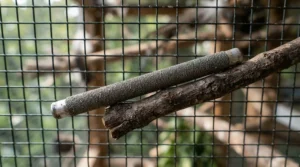
A listing for the JW Pet Insight Cuttlebone Holder gives its length as about 18 centimeters, for parakeets, canaries, cockatiels, and finches. A wholesale-style listing describes it as plastic that holds all cuttlebones. It’s about as unglamorous as bird gear gets.
Unglamorous is a virtue here. A holder’s only job is to keep a cuttlebone upright and reachable, and plastic won’t corrode if a damp bird sprays it. A simple design also leaves fewer sharp edges to worry about than a decorative metal one.
My take: this is the right pick for a “just give me a holder” buyer who’s already chosen a cuttlebone. It’s the sort of purchase where reliability matters more than features.
Pricing varies widely by seller, from about $2 in some listings to the mid-single digits elsewhere. I couldn’t verify customer reviews, so I’m not summarizing sentiment.
Pros:
- ✅ Simple, lightweight plastic build
- ✅ Fits a range of small hookbills
- ✅ Very low cost
Cons:
- ❌ No debris catcher
- ❌ No verified review base
Expect roughly $2 to $7 depending on the retailer. It’s a strong value if you shop around.
7. Caitec Featherland Paradise Cuttlebone Holder — keeps the bone put, but check those edges
The Caitec Featherland Paradise Cuttlebone Holder is built for small to medium birds, according to its listing. The retailer notes it doesn’t include a cuttlebone.
Reviews tell two stories. One buyer says it finally stopped their bird from pulling the cuttlebone off. Another reports a parakeet foot injury from sharp aluminum edges. The reviewer’s advice was to tape or file the edges first, and I’d go further: inspect it before installation.
My take: the secure grip makes it ideal for cuttlebone “pullers,” but treat the edges as a pre-use checklist item. A holder that injures feet defeats its own purpose.
Based on aggregated reviews, the product’s quality seems to depend on the individual unit. Check the metal leaves and smooth anything sharp.
Pros:
- ✅ Strong hold against cuttlebone-pulling
- ✅ Metal design resists chewing
- ✅ Fits small to medium birds
Cons:
- ❌ Some reviewers report sharp edges
- ❌ Cuttlebone sold separately
Pricing falls around $4 to $6. It’s good value only if you check the edges before use.
What Is a Beak File for Overgrown Parakeet Beak?
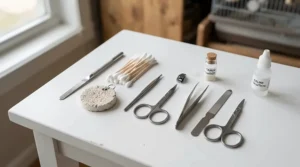
A beak file for overgrown parakeet beak is a fine-grit file or emery-style board used to gently smooth or shorten a parakeet’s beak tip, ideally under veterinary guidance. Passive alternatives, such as cuttlebones, mineral blocks, and rough perches, let the bird wear its own beak down.
There are two camps of tools. Active tools (files, rotary sanding bits) are what avian vets use during beak corrections. Passive tools are the products reviewed above.
VCA Animal Hospitals is blunt about the active camp: routine beak trimming isn’t needed when the beak looks normal, and home trimming risks injuring blood vessels and nerves. That’s why this article spends more words on causes and vet triage than on filing. Passive tools support a healthy beak. They don’t repair a diseased one.
Overgrown-Beak Causes: What Avian Vets Actually Look For
Understanding overgrown-beak causes is the single most useful thing you can do before buying anything. Melbourne Bird Vet’s overview of abnormal beaks and similar clinical sources list the usual suspects:
- Chronic liver disease: Most commonly seen in birds on high-fat diets, such as all-seed menus.
- Circovirus (PBFD): Beak elongation and fractures are classic signs of this viral disease.
- Mites: Scaly face mites burrow into skin and change the beak. Early treatment often allows a normal beak to regrow.
- Trauma: Injury to the beak’s base can permanently alter growth, leading to lifelong trims.
- Nutritional problems: Poor diet and metabolic issues are frequent culprits, and Lafeber’s veterinary Q&A repeatedly flags nutrition and scaly face mites for budgies.
- Lack of wear and genetics: Captive birds simply wear less, and some have structural quirks like scissor beaks.
One reassuring note from the same Melbourne source: a sharp beak isn’t automatically a long one. Many healthy birds have pointy tips, so compare against what’s normal for the species before worrying.
Safe Filing Technique: A Cautious, Vet-Cleared Routine
Mainstream avian guidance leans hard against home beak trimming, so treat this safe filing technique as upkeep only. It’s for a bird that your avian vet has examined, cleared of underlying illness, and shown you how to maintain.
- Get the exam first. Ask what’s causing the growth, and ask specifically whether light home smoothing is appropriate.
- Acclimate the bird. Let your parakeet sniff and tolerate the file near its beak for several days, with treats and no restraint.
- Use a fine-grit file. Fine grit shapes gently, and coarse grit takes too much too fast.
- Set up good light and a calm room. Work when your bird is relaxed, not at bedtime.
- Hold gently. If towel restraint is needed, never compress the chest, because birds breathe by moving it.
- Use a few light strokes along the beak’s natural contour. Stop after a few seconds. Avoid pushing hard or filing near the base.
- Never use nail clippers on the beak. PetMD’s vet author warns that clipper-style tools can split or crack the beak and jar its base, risking future deformity.
- Stop at the first flinch, crack, or sign of bleeding. Call your vet.
- Reward and log it. Note the date and the bird’s response, then compare against your vet’s schedule.
Nails are different. VCA says nails can be trimmed at home with care and the right clotting agent, but ask your vet which agents are bird-safe.
When to See an Avian Vet for Beak Issues
Knowing when to see an avian vet for beak issues can save your bird’s health. Book an exam soon if you notice any of the following:
- Visible overgrowth, especially if it appeared within weeks
- A crossed or shifted beak, or a scissor-like misalignment
- Discoloration, flaking, crusting, or a soft, rubbery texture
- Trouble eating, dropping food, or sudden weight loss
- Swelling or masses around the beak
A cracked or bleeding beak is an emergency. VCA’s guidance on beak and nail care notes that vets may recommend bloodwork and radiographs to find the cause. Fixing the root problem can reduce or even eliminate the need for lifelong trims, according to one Australian exotic-pet vet practice.
A beak that’s merely sharp, or a bird that eats and preens normally, may not need anything. The easiest way to know is a baseline checkup.
How to Choose a Beak File for Overgrown Parakeet Beak (and Its Alternatives)
Here’s a straightforward decision path:
- Confirm the beak is actually overgrown. Compare against photos of healthy birds of your species, and ask your vet if unsure.
- Rule out illness first. If a medical cause exists, no product will fix it.
- Pick passive options for healthy beaks. A cuttlebone or mineral block covers gentle wear and calcium.
- Match size to the bird. Small, parrotlet-sized hookbills need smaller pieces than bigger parrots.
- Skip dyed or heavily decorated products. Plain, natural materials reduce guesswork, and a vet can advise on additives.
- Check mounting and edges. A holder with sharp metal edges can hurt feet.
- Buy a file only on a vet’s recommendation. If you do, choose fine grit and ask for a demonstration.
✨ Don’t Miss These Budget-Friendly Picks!
🔍 Ready to give your parakeet a safer way to wear its beak naturally? Click on any highlighted product to check current pricing and availability. A good cuttlebone, block, and holder cost little, and your bird gets a healthier daily routine! 🐦
Cuttlebone for Parrot Beak Conditioning: What It Does (and Doesn’t)
Cuttlebone for parrot beak conditioning is popular, so let’s separate the facts from the folklore. Cuttlebone is mostly calcium carbonate, and birds can nibble it at their own pace. It also gives them something satisfying to gnaw.
But Omlet’s budgie care guide pushes back on a common claim. It says the idea that budgies need cuttlebone to keep their beaks ground down isn’t true. It positions the bone as a calcium safeguard and a pleasure to nibble. Some owners also report that their avian vets say cuttlebone is unnecessary on a pellet-and-vegetable diet.
Practical takeaways:
- Offer the soft, porous side, since the hard side is tough going.
- Treat it as enrichment and a mild calcium source, not a beak repair tool.
- Ask your vet about calcium and vitamin D balance before adding more supplements, especially for egg-laying hens.
If a bird needs real beak correction, the answer is a vet, not more cuttlebone.
Beak Conditioning Stone for Cockatiels: Do They Need One?
A beak conditioning stone for cockatiels is a mineral block or pumice-style chew that gives the beak something abrasive to work on. Cockatiels are the species where soft or rubbery beaks from low calcium and vitamin D are most often mentioned, according to Chewy’s veterinary-reviewed health content.
So the stone’s best role is supportive: calcium, texture, and a place to chew. Here’s what to look for:
- Plain minerals over novelty. Many marketplace “beak grinding stones” come with bells and colored beads. Fun, but plain minerals are easier to evaluate.
- Flavor can help acceptance. The Zoo Med Bird Banquet Vegetable Formula Mineral Block is one example reviewers say cockatiels took to quickly.
- Expect face stains. Colored blocks can tint a bird’s face, as Omlet’s readers have noted with pigment-heavy blocks.
- Give it time. The Hari Mineral Block with Vegetables story shows how a cockatiel’s initial panic can turn into chewing within minutes.
If your cockatiel’s beak is soft, flaky, or misshapen, skip the stone and book a vet visit.
Beak File vs Cuttlebone vs Mineral Block vs Vet Trim
| Option | What it does | Main risk | Cost level | Best For |
|---|---|---|---|---|
| Beak file (home) | Smooths the tip | Pain, bleeding, deformity if misused | Low | Vet-cleared upkeep only |
| Living World Large Cuttlebone (2-Pack) | Calcium plus gentle gnawing | Over-supplementation if unchecked | Low | Daily enrichment |
| Prevue Mineral Blocks with Toys on Chain | Minerals plus chew play | Cage crowding | Low-mid | Bored chewers |
| Vet trim | Corrects shape, finds cause | Cost, stress of the visit | Higher | Any true overgrowth |
Reading across, the products at the bottom of the cost scale are the safest for healthy birds, while the vet trim is the only option that addresses a real overgrowth and its cause. A home file sits in an awkward middle: cheap, but with the highest downside if it’s used wrongly. If you’re torn, spend a little on a cuttlebone or block for enrichment and put the rest toward a checkup.
Affordable Beak Grooming Block for Parrots: Cost and Value
An affordable beak grooming block for parrots delivers mineral content and chewing satisfaction for pocket change. Here’s how the tiers compare:
| Tier | Examples | Typical range | Value note |
|---|---|---|---|
| Entry | Hari Mineral Block with Vegetables, Zoo Med Bird Banquet Vegetable Formula Mineral Block | Under ~$5 | Best for testing acceptance |
| Enrichment | Prevue Mineral Blocks with Toys on Chain | Around $10-$13 | Pays off if boredom is the issue |
| Cuttlebone sets | Kingmo Large Bird Cuttlebone with Plastic Holder (2-Pack) | Budget tier | Convenient if you lack a holder |
The ownership math is simple. A block’s value depends entirely on whether your bird chews it. A cheap block that gets used beats a pricey toy that gets ignored.
Long-term, the bigger cost is a missed diagnosis. If a nutritional or liver problem is behind the growth, early treatment is usually cheaper than years of repeated corrections.
Top-Rated Cuttlebone Holder Under $10: What to Look For
Shoppers search for a top-rated cuttlebone holder under $10, but I couldn’t verify star ratings across every listing, so judge by review themes instead. These matter most:
- Smooth edges. The Caitec Featherland Paradise Cuttlebone Holder shows why: one reviewer reported a foot injury from sharp aluminum edges.
- Fit. Holders like the JW Pet Insight Cuttlebone Holder list a length of about 18 cm, so check that your cuttlebone matches. The All Living Things Cuttlebone Holder at PetSmart is described as fitting most sizes, at about 4.5 inches, and sits in the low single-digit price range.
- Mounting. Screw holes or clips should hold firmly, especially if your bird pulls at the bone.
- Debris control. A tray or catcher, like the one on the Kingmo Large Bird Cuttlebone with Plastic Holder (2-Pack), reduces mess.
Everything in this category tends to cost under $10, so the real shopping criterion is safety, not price.
Real-World Scenarios: Matching Gear to Your Bird
These are illustrative scenarios, not case histories.
Scenario 1: A budgie with a normal beak and a seed-heavy diet. The beak is fine, but the diet is the long-term risk. The owner works on a gradual dietary upgrade with a vet’s help and adds a Zoo Med Bird Banquet Vegetable Formula Mineral Block for enrichment.
Scenario 2: A cockatiel with a soft, rubbery beak. No product is the right first move. Calcium and vitamin D problems are a medical conversation, so the vet comes first, and the cuttlebone is a supporting character at best.
Scenario 3: A tight-budget household with a visibly overgrown beak. Beak growth needs a real exam. Call a few avian clinics and ask about exam fees, and meanwhile provide a basic Living World Large Cuttlebone (2-Pack) and a safe perch. Avoid forum-style do-it-yourself trimming.
Each case follows the same logic: diagnose first, then supply the right passive tools.
Common Mistakes When Buying and Using Beak-Care Products
- Treating products as treatment. Cuttlebones and blocks don’t fix liver disease, mites, or viruses.
- Reaching for clippers. PetMD’s avian vet specifically warns about splitting and cracking.
- Skipping the edge check. A holder with rough edges can injure feet.
- Over-supplementing calcium. More isn’t better. Ask your vet, especially if you offer several calcium sources at once.
- Ignoring early signs. Overgrowth can appear in weeks or take months, so photograph your bird monthly for comparison.
- Buying novelty. Dyed stones with bells and beads are harder to evaluate than plain minerals.

FAQ
❓ Can I use a nail file on my parakeet's beak?
❓ Does cuttlebone keep a parakeet's beak trimmed?
❓ How often should a parakeet's beak be trimmed?
❓ Can an overgrown parakeet beak go back to normal?
❓ Are mineral blocks safe for parakeets every day?
Conclusion
The honest answer to “which beak file should I buy?” is often “none, yet.” An overgrown beak is frequently a symptom of diet, mites, infection, injury, or liver trouble. Finding the cause matters more than shaving the tip. If your vet signs off on gentle upkeep, the safe filing technique above applies. Otherwise, let the vet handle corrections.
For healthy beaks, the budget lineup works as enrichment and calcium support. Try the Zoo Med Bird Banquet Vegetable Formula Mineral Block or Hari Mineral Block with Vegetables if your bird needs a gentle introduction. Add the Kingmo Large Bird Cuttlebone with Plastic Holder (2-Pack) or Living World Large Cuttlebone (2-Pack) for a classic chew, and use the JW Pet Insight Cuttlebone Holder or a carefully inspected Caitec Featherland Paradise Cuttlebone Holder to mount it. If boredom is the issue, the Prevue Mineral Blocks with Toys on Chain give a restless beak a better target than your furniture.
Watch the beak monthly, compare against healthy examples, and book that checkup before problems grow.
Recommended for You
- Calcium Block For Macaw Beak Health: 7 Best Picks For 2026
- Bird Nail Clippers: 7 Best Safe Picks For Small Birds (2026)
- Nail Trimmers For Large Parrot Claws: 7 Safest Picks 2026
Disclaimer: This article contains affiliate links. As an Amazon Associate, I earn from qualifying purchases. If you purchase products through these links, we may earn a small commission at no additional cost to you.
✨ Found this helpful? Share it with your friends! 💬🤗
