
In This Article
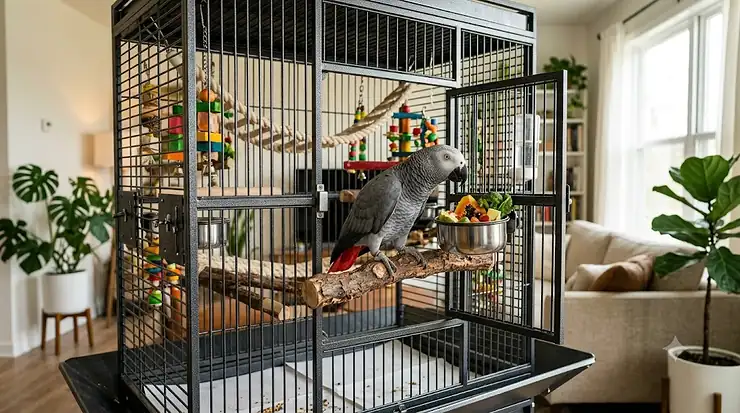
A cage for an African grey’s lifespan isn’t really a cage you buy once and forget — it’s housing for a bird that can live 40 to 60 years with good care, which means the materials, hardware, and size you choose now will get tested for decades, not months. That’s a different shopping problem than picking a cage for a cockatiel or a canary, and it’s why “cute” or “cheap” can quietly become the most expensive choice you make.
African greys are also famously strong with their beaks and famously bored when under-stimulated, so a cage built for their lifespan has to satisfy two things at once: it has to physically survive years of chewing, climbing, and weight-shifting, and it has to be roomy enough that the bird doesn’t develop the stress behaviors that VCA Animal Hospitals and other avian-care sources associate with cramped or understimulating housing — feather plucking, screaming, and self-trauma chief among them. We’ll walk through seven real cages currently sold on Amazon, organized by budget, mid-range, and premium, and then dig into sizing, bar spacing, and the buying mistakes that shorten a cage’s useful life long before the bird’s.
Quick Comparison Table
| Cage | Footprint | Height | Bar Spacing | Approx. Price Range | Best For |
|---|---|---|---|---|---|
| Yaheetech 63″ Open Play Top | 32″ x 30.5″ | 63″ | 3/4″ | $180–$280 | First-time buyers, tight budget |
| HSM 62″ Flight Cage | ~24″ x 22″ (cage) | 62″ | 3/4″ | $180–$280 | Renters who need to move it often |
| Sinopet 69″ with Stand | 31.6″ x 29.8″ | 69″ | 0.69″ | $200–$320 | Owners who want a cage cover/swing included |
| Prevue Hendryx Signature Select | ~30″ x 22″ | 63″ | 3/4″ | $230–$340 | Buyers who want a long-track-record brand |
| Mcage Castle PlayTop | 32″ x 23″ | 56″–66″ | 3/4″ | $260–$380 | Owners prioritizing playtop/ladder features |
| A&E Cage Co. 4030FL X-Large | 40″ x 30″ | 72″ | 1/2″ | $380–$520 | Owners with the floor space for a true flight cage |
| King’s Cages SLP 3426 | 34″ x 26″ | 66″ | 3/4″ | $480–$650 | Long-term buyers who want vet-recommended sizing built specifically for African greys |
Looking across the table, the size jump between the sub-$300 cages and the A&E or King’s Cages models is the real story here — an extra 6 to 10 inches of depth or width sounds small on paper, but it roughly doubles the usable floor area a grey has to climb and move in. Budget cages in the 24″–30″ footprint range meet the bare minimum that veterinary guidance suggests for this species, while the A&E and King’s Cages options sit closer to what the American Veterinary Medical Association considers genuinely comfortable housing for a bird that’s going to live in it for decades. If your home has the floor space, sizing up now is usually cheaper than buying a second, bigger cage in three years once your grey outgrows the first one behaviorally even if it never outgrows it physically.
Found a cage that fits your space?
Comparing a few models side by side before you buy is the easiest way to avoid a costly resize later.
💬 Just one click — help others make better buying decisions too!😊
The 7 Best Cages for an African Grey’s Lifespan: Expert Analysis
1. Yaheetech 63″ Open Play Top Bird Cage
The Yaheetech 63″ Bird Cage with Stand is the brand’s African-grey-specific listing, and the headline feature is the 32″ x 30.5″ floor footprint — that’s noticeably deeper front-to-back than most cages in this price bracket, which matters more for wing and tail clearance than height does. It ships with a welded wrought-iron frame, stainless steel bowls, and four casters, and the 3/4″ bar spacing is the standard safe minimum for a grey’s beak size — anything wider risks a curious bird getting a head or foot stuck.
Buyer feedback on Yaheetech’s large cages tends to cluster around two themes: people are happy with the floor space relative to the price, and assembly is the most common complaint, with some owners reporting it takes longer than the box suggests. That’s a fair trade for the cost. Yaheetech is best for someone bringing home their first grey on a tight setup budget, or a backup/travel cage for a bird that already has a larger primary enclosure.
✅ Large floor footprint for the price
✅ Stainless bowls, not painted metal
✅ Reasonably easy to relocate on casters
❌ Assembly reportedly takes longer than advertised for some buyers
❌ Lighter-gauge bars than the premium options here
Price range: roughly $180–$280 at the time of writing. Verdict: the best entry point if budget is the deciding factor and you’re prepared to size up later.

2. HSM 62″ Wrought Iron Flight Cage with Rolling Stand
The HSM 62″ cage is explicitly marketed for African greys and similarly sized parrots, and its standout feature is four lockable feeder doors plus a flat-top design that doubles as extra real estate for hanging toys or a small potted plant. In practice, that flat top matters more than it sounds — it’s one of the easier upgrade paths if you later want to add a play stand without buying separate furniture.
What the spec sheet doesn’t say outright is that the swivel casters and slide-out tray system are clearly built around frequent cleaning rather than occasional cleaning, which suits owners who deep-clean weekly rather than monthly. Buyer feedback generally highlights the easy-clean tray and the mobility; the main gripe across similar HSM listings is that hardware finish can show wear faster than the powder-coated competitors.
✅ Four lockable feeder doors — fewer chances for a bird to pop one open
✅ Flat top adds usable space without buying a separate stand
✅ Slide-out tray makes weekly cleaning fast
❌ Bar gauge is on the lighter side for a heavy chewer
❌ Best suited to a single grey, not a multi-bird household
Price range: roughly $180–$280. Verdict: a strong pick if frequent cleaning and mobility matter more to you than maximum bar thickness.
3. Sinopet 69″ Large Bird Cage with Stand
The Sinopet 69″ cage ships with more included accessories than most cages in its price tier: five stainless feeders, two wooden perches, a toy swing, and — usefully for night routines — a fitted cage cover. The 0.69″ bar spacing is slightly tighter than the 3/4″ standard, which is a small plus for households that also keep smaller birds nearby, since it removes one more way a curious grey could wedge something through the bars.
The two-tray cleaning system (one under the main cage, one for the play top) is genuinely practical rather than a marketing checkbox — it means you’re not pulling toys and bowls out just to wipe down the floor. Reported buyer feedback skews positive on value-for-accessories included; some owners note the carbon-steel construction is sturdy but the included cover runs slightly undersized for the cage once the play-top accessories are mounted.
✅ Comes with a fitted cover, swing, and five feeders — fewer separate purchases
✅ Two-tray system speeds up routine cleaning
✅ Tighter bar spacing than the 3/4″ standard
❌ Cover sizing can run tight with full play-top accessories installed
❌ Carbon steel needs the same rust vigilance as any powder-coated cage near humidity
Price range: roughly $200–$320. Verdict: good if you’d rather buy a complete kit once than assemble accessories separately.
4. Prevue Hendryx Signature Select Series Wrought Iron Bird Cage
Prevue has been making bird cages since 1869, and the Signature Select Series is one of the company’s long-running large-bird cages, with a roughly 30″ x 22″ footprint, a 63″ height, and the same 3/4″ bar spacing as most of this list. The headline practical detail buried in the manual is that the side panels slide into the frame on a track rather than bolting directly — it looks less reassuring during assembly than a fully bolted frame, but in practice it doesn’t compromise rigidity once the cage is together.
This is the cage with the most direct, multi-year owner feedback specific to African greys: reviewers have described greys living in this exact model for years without the frame loosening, and one long-term owner directly compared it favorably to a 20-year-old predecessor cage. The recurring complaint across reviews is the seed-skirt design — it’s set far enough below the door that cleaning underneath it is awkward, and a few owners noted their bird learned to climb down past the skirt to the bars below it, which is worth checking for if your grey is an escape artist. Prevue also publishes replacement parts for this model directly, which matters more than it sounds once a tray or grille clip eventually wears out after years of use.
✅ Long manufacturing track record and replacement-parts availability
✅ Multiple owners report years of heavy beak use without structural failure
✅ Castered stand makes relocating it manageable despite the weight
❌ Cleaning below the seed skirt is reportedly awkward
❌ A bird that’s a determined climber may find a path below the skirt
Price range: roughly $230–$340 depending on color/finish. Verdict: the safest bet if you want a brand with a real multi-decade history with this exact species.
5. Mcage Castle PlayTop X-Large Bird Cage
The Mcage Castle PlayTop is built around a genuinely large play-top section — 32″ x 23″ — with its own slide-out tray, removable panel, two stainless cups, and a double dome ladder, on top of a 32″ x 23″ main cage with four more cups inside. The practical upshot is that this cage functions almost like two enclosures stacked together: a secure lower cage and a semi-open upper play area, which is useful if your grey spends supervised time out of the locked cage but you don’t want it fully loose in the room.
Because the play top is open rather than enclosed, it’s a better fit for households where the bird is supervised during out-of-cage time rather than left alone — an open top isn’t a substitute for a closed flight cage if you’re not in the room. Reported buyer feedback is generally positive on the amount of included hardware (perches, ladders, bowls) relative to price; the main caution flagged in product details is that, like most imported wrought-iron cages, the included assembly instructions are minimal.
✅ Genuinely large, separate play-top area included
✅ Six total feeding/water cups between the two levels
✅ Castered base for easier relocation
❌ Open play top requires supervision, not unattended use
❌ Assembly instructions are reportedly sparse
Price range: roughly $260–$380. Verdict: best for owners who want a built-in supervised play area without buying a separate stand.
6. A&E Cage Co. 4030FL X-Large Flight Cage
The A&E Cage Co. 4030FL is the first cage on this list that crosses into true flight-cage territory: a 40″ x 30″ footprint with a 72″ exterior height and a 62″ interior — more than enough for a grey to actually flap and gain a few feet of lift, not just hop between perches. The tighter 1/2″ bar spacing (versus 3/4″ on most of this list) is a meaningful upgrade for safety, since it removes more of the gap a foot or head could wedge into.
A&E backs its non-toxic powder coating with avian-veterinarian-reviewed finishes, which is a real point in its favor rather than a marketing phrase — the company has built cages for over 30 years and the welded-bar construction is noticeably heavier-gauge than the budget imports earlier on this list. The eight feeder stations and two large front doors are clearly designed around multi-bird or breeding setups, which is more capacity than a single companion grey strictly needs, but it means there’s no ceiling to grow into.
✅ True flight-cage dimensions, not just “large”
✅ Tighter 1/2″ bar spacing
✅ Heavier welded-bar construction than most cages in this price range
❌ Footprint requires real floor space — measure your room first
❌ More feeder stations than a single-bird household will use
Price range: roughly $380–$520. Verdict: the best choice if you have the floor space and want a cage that functions as an actual flight cage, not just a roomy box.
7. King’s Cages SLP 3426 Superior Line Playpen
The King’s Cages SLP 3426 is explicitly designed and marketed for African greys, Eclectus, Amazons, and small cockatoos — it’s the only cage on this list sized and branded specifically for this exact bird category rather than a general “large parrot” catch-all. At 34″ wide, 26″ deep, and 66″ tall with a 41″ interior height, it sits in the sweet spot vets describe for a grey: noticeably roomier than the budget options without the floor footprint of a full flight cage. Full specifications and assembly instructions are published directly by King’s Cages, which is worth a look before you buy if you want to confirm exact measurements for your space.
The 4mm bar thickness is heavier-gauge than anything else on this list except the A&E flight cage, which matters most for owners whose grey is an aggressive chewer rather than a casual one. The knock-down frame design is a genuinely useful long-term feature — most cages in this category aren’t built to be disassembled and moved, but this one is, which matters if you expect to relocate over the bird’s 40-plus-year lifespan. The trade-off is straightforward: this is the most expensive cage on the list, and the heavier steel means it’s also the heaviest to move once assembled.
✅ Sized and marketed specifically for African greys
✅ 4mm bar thickness — heavier gauge than most competitors here
✅ Knock-down design for long-term relocation
❌ Highest price point on this list
❌ 120 lbs assembled — moving it solo is impractical
Price range: roughly $480–$650. Verdict: the strongest pick if you want a cage purpose-built for this species and you’re planning to keep it — and possibly move it — for the long haul.
Setting Up a Cage That Lasts the Full 40+ Years
A cage’s hardware survives decades better when the setup avoids a few predictable wear points. Skip flooring with newspaper alone under the grate long-term — it’s fine short-term, but a washable grate liner or cage paper saves the powder coating from constant moisture exposure. Rotate perch materials (natural wood, rope, concrete) rather than relying on the one or two perches included in the box; varied textures reduce foot strain and reduce how hard any single perch gets chewed.
Check the seed-guard and tray hardware every few months rather than waiting for it to fail — on most of the cages above, the tray slides and grate clips are the first parts to loosen with heavy use, and replacing a $10–$20 part is far cheaper than the cage looking shabby or, worse, becoming unsafe. Finally, place the cage against at least one solid wall rather than in an open room corner; greys generally settle faster with one side they can retreat toward, and it reduces how much the bird tests the bars on an exposed side.
Which Cage Fits Your Situation? A Quick Decision Framework
If you’re a first-time grey owner on a tight setup budget — the Yaheetech or HSM cages get you a safe, appropriately sized enclosure without overspending before you know your bird’s habits. You can always upgrade once you understand how your specific bird uses the space.
If you already have a dedicated bird room or open floor space — the A&E 4030FL flight cage is worth the larger footprint; a grey that can take a few real wingbeats indoors is measurably better off than one that can only hop.
If you want one cage that’s sized specifically for this exact species and you’re not moving again soon — the King’s Cages SLP 3426 is the most purpose-built option here, and the knock-down design means “not moving soon” doesn’t have to mean “never.”
How to Choose a Cage for an African Grey’s Lifespan
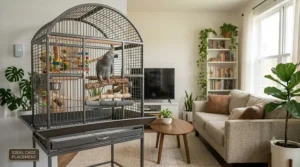
- Start from the minimum size, then size up. The Merck Veterinary Manual recommends a cage at least one and a half times the bird’s wingspan in every direction — treat that as a floor, not a target.
- Confirm bar spacing is 3/4″ or tighter. The Association of Avian Veterinarians notes that cages advertised for birds are often too small or too widely spaced for the species to express natural behaviors safely — African greys are strong enough to test gaps other birds wouldn’t.
- Prioritize floor footprint over height. A tall, narrow cage looks impressive but limits the side-to-side movement that matters more for a grey’s daily activity.
- Check the lock mechanism, not just the door size. Greys are notorious for working out simple latches — push-button or double-lock mechanisms hold up better over years.
- Look for removable trays and grates before buying, not after. Cleaning access determines whether you’ll actually keep up with maintenance over a 40-year ownership window.
- Weigh material against your bird’s chewing intensity. Lighter wrought iron suits a calmer chewer; heavier welded steel (like the A&E or King’s Cages models) suits an aggressive one.
- Budget for a stand or casters separately if the cage doesn’t include them. A cage you can’t move for cleaning becomes a cage you clean less often.
Common Mistakes When Buying a Long-Term African Grey Cage
The most common mistake is buying for the bird’s current size rather than its adult behavior — a young grey in a “large enough” cage today can outgrow it behaviorally within a year as it becomes more active. A close second is underestimating bar spacing: cages marketed broadly for “medium to large birds” sometimes use spacing that’s technically safe for a cockatiel but riskier for a grey’s stronger beak and curiosity. Owners also frequently skip checking the actual interior dimensions versus the marketed exterior dimensions, which can differ by several inches once seed guards and play-top sections are factored in — always check the interior cage measurements, not just the overall footprint with accessories attached.
Long-Term Cost & Maintenance: What a Cage Really Costs Over 40 Years
The sticker price is a small fraction of the real cost of housing a bird for decades. Across this list, replacement trays, grates, and cup holders typically run $10–$40 each and are worth budgeting for every few years rather than treating the cage as disposable once one part wears out. Powder-coated cages (most of this list) generally need a full repaint or replacement somewhere in the 5–10 year range if used heavily indoors, while stainless steel cages — not covered above, since they run well above this list’s budget and mid-range focus — can last decades without refinishing, which is why some long-term owners eventually upgrade to stainless once budget allows. Casters and locks are the parts most likely to need mid-life replacement regardless of brand, so checking parts availability (Prevue and King’s Cages both stock replacement parts directly through their own sites) is worth factoring into the purchase decision, not just the upfront price.
Features That Actually Matter (And a Few That Don’t)
Bar spacing, bar gauge, and lock security matter every single day — they’re the difference between routine safety and a preventable injury. Removable grates and slide-out trays matter almost as much, because they determine whether cleaning stays manageable for years rather than becoming a chore you start skipping. Decorative finishes, color options, and add-on toy hooks matter far less than they’re marketed — a grey doesn’t care what color the powder coat is, and most owners end up buying separate enrichment toys anyway regardless of what’s bundled with the cage.
FAQ
❓ How big should a cage be for an African grey's full lifespan?
❓ What bar spacing is safe for an African grey cage?
❓ Do African grey cages need to be stainless steel to last 40 years?
❓ How much does a good African grey cage cost?
❓ Can an African grey live in a cage with 1-inch bar spacing?
Conclusion
There’s no single “best” cage for every African grey owner — the right pick depends on your floor space, your budget, and how your specific bird chews and climbs. What stays constant across all seven options here is that bar spacing, bar gauge, and floor footprint matter more over a 40-to-60-year lifespan than any included accessory or finish color. If you’re working with a tight budget, the Yaheetech or HSM cages get the fundamentals right without overspending. If floor space allows, the A&E flight cage or the species-specific King’s Cages SLP 3426 give your bird genuinely more room to live an active, enriched life for decades rather than years.
Whichever cage you choose, treat it as the foundation of your bird’s daily wellbeing rather than a one-time purchase to check off a list — the cage that’s slightly bigger and slightly better-built than you think you need today is usually the one you won’t regret in fifteen years.
Ready to compare these side by side?
Checking current availability and exact measurements before you buy is the best way to make sure your space and your bird’s needs actually match up.
Recommended for You
- African Grey Cage Buying Guide: 7 Top Picks for 2026
- 7 Best African Grey Parrot Cages in 2026
- Cockatiel Cage vs Conure Cage: 7 Proven Picks for 2026
Disclaimer: This article contains affiliate links. As an Amazon Associate, I earn from qualifying purchases. If you purchase products through these links, we may earn a small commission at no additional cost to you.
Found this helpful? Share it with another bird owner who’s cage-shopping! 🦜
