
In This Article
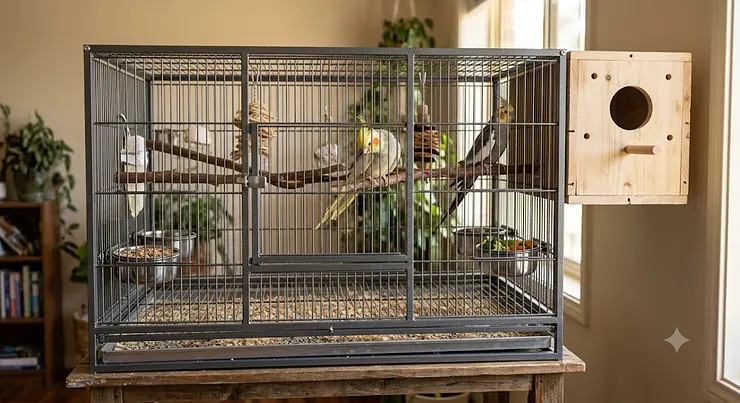
So you’ve got a bonded pair eyeing each other like they’re already picking out curtains, and now you need a breeding cage for cockatiels that won’t turn into a monthly headache. Here’s the short version: a breeding cage for cockatiels needs to be at least 30 inches long, offer a lockable external or side-mounted nest box, use bar spacing no wider than 1/2 inch, and give you full access for cleaning without disturbing a sitting hen. Get those four things right and you’re 80% of the way to a successful clutch.
I’ve spent the last few weeks digging through real product listings, manufacturer spec sheets, and aggregated owner feedback to build this guide — not because breeding cockatiels is complicated, but because most articles online just regurgitate Amazon bullet points and call it a day. That’s not helpful when you’re trying to figure out whether a $150 stackable cage or a $900 triple-tier setup actually makes sense for your situation. Cockatiels (Nymphicus hollandicus) are cavity nesters by instinct, originally hollowing out dead eucalyptus limbs in the Australian outback, as detailed on Wikipedia’s cockatiel entry — which is exactly why the enclosure you choose matters so much more than it would for a bird that’s content on an open perch.
Below, you’ll find seven real, currently available products spanning budget stacker cages to premium multi-pair aviary systems, honest analysis of who each one actually suits, and the practical groundwork — setup, mistakes, cost — that most listings leave out entirely.
Quick Comparison Table
| Product | Best For | Price Range |
|---|---|---|
| Prevue Pet Products Hampton Deluxe Divided Breeder Cage (#F070) | Hobbyists who want to scale up later | $150-200 |
| A&E Cage Co. Double Stack Flight Cage | One active, established breeding pair | $500-650 |
| A&E Cage Co. Triple Stack Cage | Multi-pair aviary operations | $850-950 |
| Yaheetech Stackable Divided Breeder Cage | Budget-conscious first-time breeders | $140-190 |
| Yaheetech 64″ Open Top Bird Cage | Converting a starter cage into a breeding setup | $90-130 |
| Trixie Cockatiel Breeding Nesting Bird Avery | A dedicated nest-box-and-aviary combo | $50-90 |
| HiCaptain Wooden Nesting Box | Upgrading a nest box on an existing cage | $20-35 |
At a glance, the split here comes down to whether you’re outfitting one pair or building toward a small breeding program. The Prevue Pet Products Hampton Deluxe Divided Breeder Cage and both A&E Cage Co. units are built to stack and expand, which matters if this is the first of several pairs you plan to house. The two Yaheetech options and the Trixie and HiCaptain picks, meanwhile, are the right call if you’re testing the waters with a single proven pair before committing real money to a permanent setup.
💬 Found a favorite already? A quick click on any product above helps you compare current availability without losing your place in this guide!😊
Top 7 Breeding Cages for Cockatiels: Expert Analysis
1. Prevue Pet Products Hampton Deluxe Divided Breeder Cage (#F070) — best stackable all-rounder for serious hobbyists
The headline feature here is the center divider, which turns one 37.5″L x 18″W x 40.25″H unit into either a single large flight or two independent breeding compartments — a rare bit of flexibility at this price point. Each half gets its own front door with a secure lock, a side nesting door for attaching a box without spooking a sitting hen, and a pull-out tray with grille secured by a wind-bell lock, plus four wooden perches and four cups split between the two sides. What that means in practice: you’re not locked into one configuration for the life of the cage, and the side-access nesting doors are the detail that actually separates a real breeding cage for cockatiels from a repurposed flight cage — you can check on eggs without opening the main door and triggering a defensive dive from the male. Based on the design, this is the pick for hobbyists who suspect one pair will become three within a year or two, since Prevue’s F070 and F075 units are explicitly built to stack into a tower system. Verified reviews specific to this exact model weren’t fully accessible during research, but this cage shares its hardware — the same wind-bell lock and pull-out tray — with Prevue’s broader flight-cage catalog, which owners consistently flag for making routine cleaning fast rather than a wrestling match.
Pros:
- ✅ Divider lets you run it as one cage or two
- ✅ Side nesting doors avoid disturbing a sitting hen
- ✅ Stacks with matching Prevue units as your flock grows
Cons:
- ❌ 18-inch depth feels tight for two active adult tiels
- ❌ Included perches are thin for a bird this size
Typically found in the $150-200 range at the time of research, and for a cage this adaptable, that’s genuinely good value — check current price before buying, since availability shifts.
2. A&E Cage Co. Double Stack Flight Cage — roomiest flight space for an active breeding pair
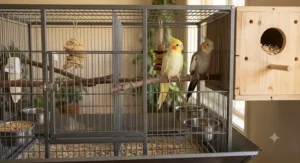
The 32″x21″x74″ footprint with a full 27 inches of interior height is the standout here — most breeder cages in this price bracket sacrifice vertical space for width, and cockatiels genuinely use that height during courtship flapping and display behavior. With 0.5-inch bar spacing, bird-proof half-moon locks on both the front and feeder doors, two dedicated breeder box doors, and four rolling casters, this is built as a real working setup rather than a converted display cage. What the spec sheet won’t tell you, but buyer feedback on A&E’s flight-cage line consistently notes, is that the side doors on some units can be worked open by a determined, larger bird if the latch isn’t fully seated — worth a physical check after assembly rather than assuming the lock is secure out of the box. On the flip side, the same feedback repeatedly praises the bar spacing as correctly sized for cockatiel-class birds specifically, which isn’t true of every “universal” flight cage on the market. This is the pick for one committed pair that needs genuine flight room rather than just floor space, and it doubles as two separate cages if you split the interior later.
Pros:
- ✅ 27-inch interior height supports real flight and display behavior
- ✅ Two dedicated breeder box doors for nest access
- ✅ Bottom storage shelf keeps supplies within arm’s reach
Cons:
- ❌ Side door latches need a manual security check after setup
- ❌ At roughly 50+ pounds, it’s not a cage you reposition often
Generally landing in the $500-650 range depending on finish and retailer, this is a mid-tier investment that makes sense once you’re confident this pair will actually breed rather than just cohabit.
3. A&E Cage Co. Triple Stack Cage — built for multi-pair aviary operations
Three fully separate 36″x24″ cage compartments stacked into one 76-inch-tall unit, each with its own breeder box door, front safety latch, and pair of swing-out feeder doors — six feeder doors and three breeder doors total — is what puts this in a different category from everything else on this list. The 21-inch interior height per tier is shorter than the Double Stack’s, which makes sense once you realize the trade-off: you’re prioritizing pair count over per-bird flight room, which is the right call once you’re managing three separate breeding programs instead of one. Six stainless steel feeder cups and three perches come included, and the slide-out grill-and-tray system is identical across all three tiers, so cleaning day doesn’t require three different routines. Based on the spec comparison against the Double Stack, this only makes financial sense once you’re actually running multiple pairs simultaneously — buying it for a single pair “to have room to grow” is expensive room you may never use. Aggregated owner sentiment on A&E’s stacked-cage line highlights sturdiness of the powder-coated steel frame as a consistent strength, with occasional mentions that the slide-out trays on lower tiers require a bit more shoulder room during cleaning than the top tier.
Pros:
- ✅ Three independent breeding compartments in one footprint
- ✅ Six feeder doors mean less disruption during daily care
- ✅ Durable powder-coated steel frame built for repeated use
Cons:
- ❌ Overkill and expensive for a single breeding pair
- ❌ Bottom tier requires more floor clearance to service
Typically in the $850-950 range at the time of research, this is a premium purchase that pays for itself only if you’re scaling to multiple pairs — otherwise, the Double Stack above is the smarter spend.
4. Yaheetech Stackable Divided Breeder Cage — most budget-friendly true breeder cage with a stand
At 53.74″L x 41.34″W x 37.6″H including its included rolling stand, this unit undercuts most dedicated breeder cages on price while still keeping the core features that actually matter: a center divider, side nesting access, and a heavy-duty crescent lock rather than a basic slide latch. What that lock upgrade means practically is fewer instances of a clever cockatiel figuring out the door — crescent locks require more coordinated motion than a simple hook, which is a small but real deterrent for a species known for problem-solving with its beak. At roughly 107 pounds shipped, the steel gauge here is heavier than you’d expect at this price, which reviewers on Yaheetech’s broader breeder-cage line tend to credit for the stand feeling stable rather than wobbly under an active pair’s movement. This is the honest budget pick: it won’t match the A&E units on interior height, but it delivers the two non-negotiables — divided space and secure nesting access — without the premium price tag.
Pros:
- ✅ Crescent lock is harder for tiels to work open
- ✅ Includes rolling stand at no extra cost
- ✅ Heavier steel gauge than most cages in this price tier
Cons:
- ❌ Interior height is noticeably shorter than the A&E options
- ❌ Assembly instructions are reportedly minimal for first-timers
Usually priced in the $140-190 range, making it the strongest value pick if this is your first true breeding cage for cockatiels and you’re not ready to commit to a premium tier yet.
5. Yaheetech 64″ Open Top Bird Cage — easiest single-pair starter cage to convert for breeding
This one wasn’t designed as a dedicated breeder cage, and that’s actually worth saying plainly rather than dressing it up — but its 18″L x 14″W x 64″H footprint, 3/8-inch bar spacing, and four side feeding doors make it a workable conversion for owners who already own a single tiel pair and want to test breeding readiness before buying a purpose-built unit. The open-top design lets you prop the roof for supervised out-of-cage time, and the four side feeding doors mean you can refill food and water without opening the main door and disturbing nesting behavior once a box is attached externally. Here’s what most buyers overlook about this model: at 13.67 pounds it’s light enough that an aggressively defensive breeding-season male can rock it against a wall-mounted nest box, so this setup works best pushed into a corner rather than freestanding. Reviewer sentiment across Yaheetech’s open-top line is generally positive on ease of assembly and cleaning via the slide-out tray, with a recurring caution that the tray hooks can loosen over months of repeated use and should be checked periodically.
Pros:
- ✅ Lowest-cost entry point into a real breeding setup
- ✅ Four side doors reduce disturbance during feeding
- ✅ Detachable rolling stand doubles as a storage shelf
Cons:
- ❌ Not purpose-built for breeding — needs an external nest box
- ❌ Light frame can shift under an active pair’s movement
Generally available in the $90-130 range, this is best framed as a trial-run cage rather than a long-term breeding cage for cockatiels — a stepping stone, not a destination.
6. Trixie Cockatiel Breeding Nesting Bird Avery — dedicated nest-box-and-aviary combo, not a converted flight cage
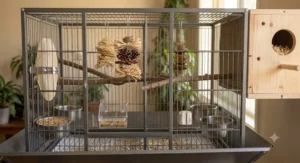
Unlike every other entry on this list, the Trixie Cockatiel Breeding Nesting Bird Avery was engineered from the ground up as a breeding box rather than adapted from a general flight cage, and that distinction shows in the details — solid wood construction designed to mimic the enclosed, low-light cavity cockatiels instinctively seek out, per the nesting behavior documented by Animal Diversity Web’s Nymphicus hollandicus profile. Practically, that means less time spent convincing a reluctant pair that a wire-and-plastic box is an acceptable nest site, since the wood interior already resembles what the species evolved to look for. This is a strong lesser-known pick for breeders who’ve struggled to get a pair to commit to nesting in a converted cage — sometimes the fix isn’t more space, it’s the right material and darkness level. On the trade-off side, because it’s not a full flight cage, most owners pair it with an existing enclosure rather than using it as a standalone home, so budget for that combination rather than expecting one purchase to solve everything.
Pros:
- ✅ Solid wood mimics a natural nesting cavity
- ✅ Purpose-built rather than adapted from a flight cage
- ✅ Encourages nesting commitment in reluctant pairs
Cons:
- ❌ Not a standalone housing solution — needs a paired cage
- ❌ Wood requires more monitoring for chewing damage than metal
Typically priced around $50-90, this is best treated as a specialized upgrade rather than your only piece of equipment.
7. HiCaptain Wooden Nesting Box — best standalone nest box upgrade for existing cages
If you already own a solid flight or breeder cage and the only thing missing is a proper nest box, the HiCaptain Wooden Nesting Box solves that specific gap. At 9.2″L x 6.5″W x 6.9″H, it’s sized for two to three birds comfortably, built from unpainted natural fir, and includes an entry perch plus a lockable side-access door for cleaning and egg checks without disturbing the main compartment. The non-toxic, unpainted construction matters more than it sounds — cockatiels chew constantly, especially during breeding season, and a painted or varnished box introduces a real ingestion risk that a plain fir box avoids entirely. Installation is straightforward with the included hardware, mounting either inside or outside the cage bars depending on your existing setup. Verified customer review data specifically for this HiCaptain model was limited in our research, so rather than guess at sentiment, it’s worth noting the honest gap: judge this one primarily on its non-toxic, unpainted build and lockable access door, both of which are objectively verifiable from the manufacturer spec sheet rather than aggregated opinion.
Pros:
- ✅ Unpainted natural fir avoids toxic ingestion risk
- ✅ Lockable side door for cleaning without full disturbance
- ✅ Mounts inside or outside existing cage bars
Cons:
- ❌ Verified owner review data is limited for this specific model
- ❌ Small size suits one pair, not multiple birds sharing
Usually in the $20-35 range, this is the cheapest single upgrade on this list and often the difference between a pair that ignores their space and one that settles in.
Cockatiel Breeding Cage Setup: A Step-by-Step Practical Guide
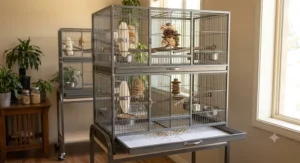
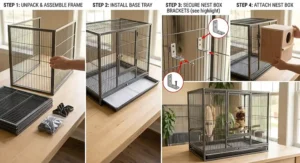
Getting the physical cage right is half the job — the other half is how you set it up, and this is the part most product pages skip entirely. A proper cockatiel breeding cage setup starts with placement: position the cage against a wall or in a corner, never in a high-traffic walkway, since constant movement past the nest box is one of the most common reasons a pair abandons eggs mid-clutch. Mount the nest box on the outside of the cage or against a side door if your model supports it — this keeps interior floor space clear and lets you check on eggs without opening the main door.
Before introducing the pair, line the nest box with a few inches of pine shavings (never cedar, which is toxic) and add a shallow depression in the center so eggs don’t roll apart and lose incubation warmth. In the first 30 days, expect a predictable pattern: increased chewing on the nest box entrance as the pair “customizes” it, a spike in droppings size right before the first egg, and a noticeably more territorial male. The most common first-timer mistake is opening the nest box daily to check progress — limit inspections to every two to three days, briefly, and only when the hen has left to eat. Maintenance from there is simple but non-negotiable: replace soiled bedding weekly, keep a cuttlebone and mineral block available at all times for calcium, and wipe down perches and feeding stations every few days to prevent bacterial buildup during the humid, high-activity breeding period.
✨ Ready to Start Your Setup? 🔍 Compare current pricing on any cage above and get your pair settled before breeding season peaks!
Real-World Cockatiel Breeding Pair Housing: Three Buyer Scenarios
Cockatiel breeding pair housing needs shift dramatically depending on your situation, so here’s how three common profiles actually map to the products above. If you’re a first-time hobbyist with one proven pair and a spare bedroom corner, the Yaheetech Stackable Divided Breeder Cage paired with the HiCaptain Wooden Nesting Box covers the essentials without overspending — you get secure nesting access and a budget under $250 total. If you’re an intermediate breeder with two to three pairs and a dedicated bird room, the A&E Cage Co. Double Stack Flight Cage gives each pair genuine flight room, and running two units side by side often beats a single cramped setup for hatch rates. If you’re further along and managing a small breeding program with four or more active pairs, the A&E Cage Co. Triple Stack Cage becomes the more economical choice per bird once you calculate floor space and cage cost together — three separate compartments in one footprint saves both room and money compared to three standalone cages.
Frequency of use matters too: a pair breeding once or twice a season, as recommended by most avian care standards, does fine in a mid-tier setup, but anyone running back-to-back clutches needs the more durable, easier-to-clean hardware found on the premium A&E units, since daily wear adds up fast on budget latches and trays.
Problem → Solution: Fixing Common Cockatiel Nesting Cage Issues
Even with the right cockatiel nesting cage, things go sideways. Here are the five problems breeders run into most often, with practical fixes rather than vague reassurance. First, a pair that ignores the nest box entirely usually means insufficient darkness or the wrong material — switch to a solid wood box like the Trixie Cockatiel Breeding Nesting Bird Avery rather than a wire-and-plastic conversion, and cover three sides of the cage to increase perceived privacy. Second, eggs that go cold because the hen won’t settle often trace back to noise or foot traffic near the cage; relocating even a few feet from a doorway frequently resolves it. Third, a male becoming aggressive toward the hen during incubation typically signals overcrowding — this is where upgrading from a converted starter cage like the Yaheetech 64″ model to a true divided breeder cage solves the root cause rather than the symptom. Fourth, chewed or destroyed nest box entrances point to boredom or excess energy outside the nesting period; adding foraging toys to the main cage area redirects that chewing drive away from the box itself. Fifth, and most serious, a hen showing signs of straining or lethargy near egg-laying time may indicate egg binding, a condition covered in detail by Merck Veterinary Manual’s overview of reproductive diseases in pet birds — this requires immediate avian veterinary care, not a home remedy.
How to Choose a Breeding Cage for Cockatiels
Picking the right breeding cage for cockatiels comes down to seven criteria, in rough order of importance:
- Minimum footprint — aim for at least 30 inches in length; anything smaller cramps flight and courtship behavior that directly affects breeding success.
- Bar spacing — 1/2 inch or tighter prevents a curious cockatiel from wedging its head between bars, a genuine injury risk during hormonal, more reckless breeding-season behavior.
- Nest box access point — side or external access beats top-only access, since it lets you check eggs without disturbing the whole cage.
- Divider capability — even if you only need one compartment now, a dividable cage protects your investment if you add a second pair later.
- Cleaning access — pull-out trays and grilles save real time; without them, weekly cleaning becomes a genuine chore that gets skipped.
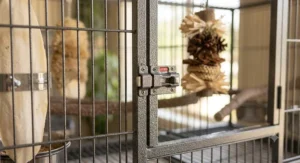
- Lock security — cockatiels are notoriously good at working simple hook latches open; crescent or spring-loaded locks hold up better over months of daily use.
- Material safety — unpainted or non-toxic-coated surfaces matter enormously given how much breeding-season birds chew on their enclosure.
Common Mistakes When Buying a Tiel Breeding Enclosure
The single most common mistake with a tiel breeding enclosure is buying based on price alone and ending up with bar spacing too wide for safety, or a cage with no true side nesting access — forcing constant main-door disruption that stresses a sitting hen. A close second is skipping the nest box entirely and assuming a bare cage floor will do; cockatiels are cavity nesters by instinct, and without an enclosed space, many pairs simply won’t attempt to breed at all. Third, buyers frequently underestimate vertical space, focusing entirely on floor footprint while ignoring interior height — courtship flight and wing-stretching during incubation breaks both need real headroom. Fourth is neglecting lock quality; a $20 latch upgrade is far cheaper than losing a clutch to an escaped, stressed pair. Finally, many first-time breeders buy a single-tier cage without checking whether it’s expandable, then find themselves replacing the entire setup within a year once a second pair joins the mix — a mistake the stackable Prevue and Yaheetech options above specifically avoid.
Cockatiel Nest Box Cage Essentials: What Actually Matters
Not every feature marketed on a cockatiel nest box cage earns its price tag, so here’s an honest filter. What actually matters: unpainted, chew-safe wood construction; a lockable access panel separate from the main cage door; and dimensions that give a hen room to turn around and settle without touching all four walls at once — roughly 9 to 12 inches on each side works well for the species. What doesn’t matter nearly as much as marketing suggests: decorative paint or stain (skip it — it’s a chewing hazard, not a feature), oversized boxes marketed as “extra roomy,” which can actually make hens feel less secure since cockatiels prefer snug, enclosed spaces over open ones, and elaborate multi-chamber designs that look impressive in photos but complicate cleaning without adding real breeding benefit. The HiCaptain Wooden Nesting Box and the Trixie Cockatiel Breeding Nesting Bird Avery both stick to the essentials rather than the marketing extras, which is exactly why they made this list over flashier alternatives.
Breeding Cage vs Standard Cockatiel Cage
| Feature | Standard Cockatiel Cage | Breeding Cage for Cockatiels |
|---|---|---|
| Nest box access | Rarely included | Side or external door standard |
| Bar spacing | Often 5/8″ – 3/4″ | Typically 1/2″ or tighter |
| Divider option | Uncommon | Common on breeder-specific models |
| Cleaning access | Basic bottom tray | Pull-out tray plus grille, often per-side |
| Lock security | Basic slide or hook | Crescent, spring, or wind-bell locks |
| Best For | Single pet bird, daily handling | Bonded pair actively breeding |
The gap isn’t just marketing — a standard cage’s wider bar spacing and single-access design work fine for a pet cockatiel that never needs privacy, but both become active liabilities once a pair starts nesting. Wider bars increase injury risk during the more erratic, hormone-driven movement of breeding season, and without side nesting access, every egg check means opening the main door and risking a defensive reaction from the male. If you’re currently using a standard cage and your pair has started showing courtship behavior — bowing, mutual preening, the male tapping his beak against the cage floor — that’s your signal to upgrade before eggs appear, not after.
Features That Actually Matter (And Those That Don’t)
Marketing copy loves to highlight things that sound impressive but rarely move the needle for actual breeding success. Decorative rooftop designs, multiple stacked play tops, and elaborate color options add cost without improving hatch rates or chick health. What genuinely matters: correct bar spacing for the species, a divider that lets you adapt the space, secure locks that survive a determined cockatiel’s beak, and enough vertical clearance for natural flight behavior. One underrated feature worth specifically seeking out is a full-width pull-out tray rather than a partial one — during a six-week incubation and fledging cycle, you’ll be cleaning far more often than with a pet-only setup, and a partial tray turns a five-minute task into fifteen. Another is feeder-door placement; side doors that don’t require opening the main compartment reduce stress-related nest abandonment more than almost any other single design choice.
What to Expect: Real-World Performance in a Cockatiel Reproduction Cage
Specs on paper translate to specific day-to-day realities once a pair is actually using a cockatiel reproduction cage. Expect noise to increase noticeably in the two weeks before the first egg — both birds vocalize more, and the male often drums or taps rhythmically against surfaces, including the nest box itself. Expect droppings to become larger and less frequent right before laying, a normal physiological shift rather than a health concern. Once incubation begins, which typically lasts around 18 to 21 days, expect the hen to leave the nest only briefly to eat, drink, and defecate, while the male often takes over daytime incubation shifts — a genuinely cooperative pattern typical of the species. After hatching, expect a dramatic uptick in food consumption from both parents as they feed chicks, so fresh food and water availability becomes even more critical during this window than during incubation itself. Cockatiels reach independence from their parents relatively quickly compared to larger parrots, generally fledging within four to five weeks of hatching, a timeline consistent with the species profile documented by Animal Diversity Web.
Long-Term Cost & Maintenance
Sticker price is only the starting point for total cost of ownership on a breeding cage for cockatiels. Beyond the initial purchase, budget for recurring bedding replacement (roughly weekly during active breeding), calcium supplements like cuttlebone and mineral blocks, and periodic hardware replacement — locks, hinges, and perches all wear faster under breeding-season stress than they do on a single pet bird’s cage. Cage-per-use economics favor the more expensive options over time: a $550 A&E Double Stack Flight Cage used across several breeding seasons for one pair works out to a lower annual cost than repeatedly replacing a $100 budget cage every year or two as hardware fails. Preventable health costs matter here too — a cage with correct bar spacing and no chewing-hazard paint substantially reduces the odds of an emergency avian vet visit, and conditions like egg binding, discussed by WikiVet’s clinical overview of egg binding, are far more common in birds kept in inadequate or nutritionally poor breeding setups. Factor in that a single avian vet emergency visit can easily exceed the cost of the premium cage outright, and the long-term math tends to favor investing upfront rather than repeatedly patching a budget setup.
FAQ: Cockatiel Breeding Cage Questions
❓ What size cage do you need to breed cockatiels?
❓ How do you set up a breeding cage for cockatiels?
❓ Can you use a regular cockatiel cage for breeding?
❓ How many eggs do cockatiels lay per clutch?
❓ What temperature is best for a cockatiel breeding cage?
Conclusion
Choosing the right breeding cage for cockatiels really comes down to matching the setup to where you actually are in your breeding journey, not where you hope to be in two years. If you’re testing the waters with one pair, the Yaheetech Stackable Divided Breeder Cage or a converted Yaheetech 64″ Open Top Bird Cage paired with the HiCaptain Wooden Nesting Box gets you there without overcommitting financially. If you know this is a long-term hobby, the Prevue Pet Products Hampton Deluxe Divided Breeder Cage offers room to expand without replacing the whole setup, while the A&E Cage Co. Double Stack Flight Cage and Triple Stack Cage serve intermediate and multi-pair breeders respectively, each scaling cost against pair count in a way that actually makes financial sense. Whichever tier you land on, the details that matter stay constant across every price point: correct bar spacing, secure side nesting access, non-toxic materials, and a cleaning routine you’ll actually keep up with once chicks arrive. Get those right, and the cage itself stops being the bottleneck between you and a healthy, successful clutch.
Recommended for You
- Stackable Breeding Cages: 7 Best Picks for 2026
- Bird Breeder Cages: 7 Best Picks for Serious Breeders in 2026
- Tall Flight Cage: 7 Best Vertical Bird Cages Reviewed (2026)
Disclaimer: This article contains affiliate links. As an Amazon Associate, I earn from qualifying purchases. If you purchase products through these links, we may earn a small commission at no additional cost to you.
✨ Found this helpful? Share it with your friends! 💬🤗
